
2025’s hiring challenges and lessons learned

90%
of companies missed their hiring goals in 2025
90%
of companies missed their hiring goals in 2025


Hiring goal attainment hits a five-year high but still signals a systemic struggle
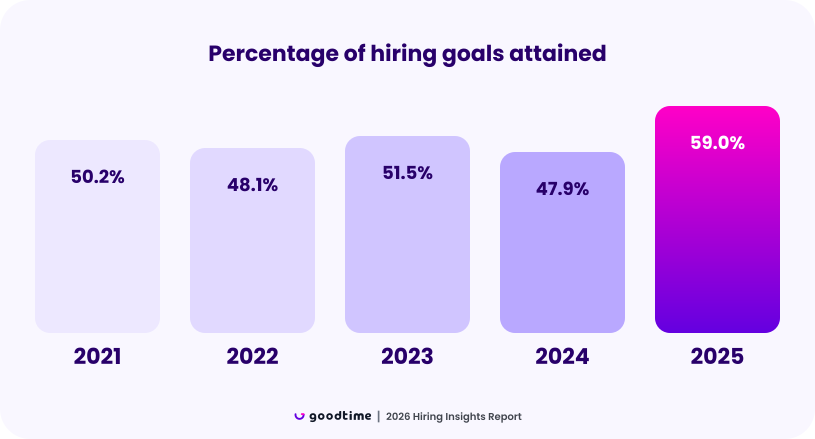
More than a third of companies (34%) hit less than half of their hiring goals, and only a small fraction (10%) came close to achieving 90–100% of their targets. Most landed somewhere in the middle, filling between 50–74% of roles but still failing to meet organizational needs.
This paradox—the best year in five years, yet still deeply underperforming—reflects mounting competitive pressures, rising process complexity, and an increasing mismatch between talent acquisition teams’ capacity and the demands placed on them. For many organizations, hitting goals is no longer a matter of marginal improvement; it requires a structural transformation of how hiring operates.

“The headcount plan can often be a moving target. Criteria shift mid-search and teams are adjusting hiring priorities in response to changing business needs. When targets move often, it becomes almost impossible for TA teams to hit their goals. The quickest way to improve is early alignment between Executives, Finance, TA, and Hiring Managers, with clear priorities and expectations.”
Shelby Wolpa
Founder, Shelby Wolpa Consulting
Top overall hiring challenges
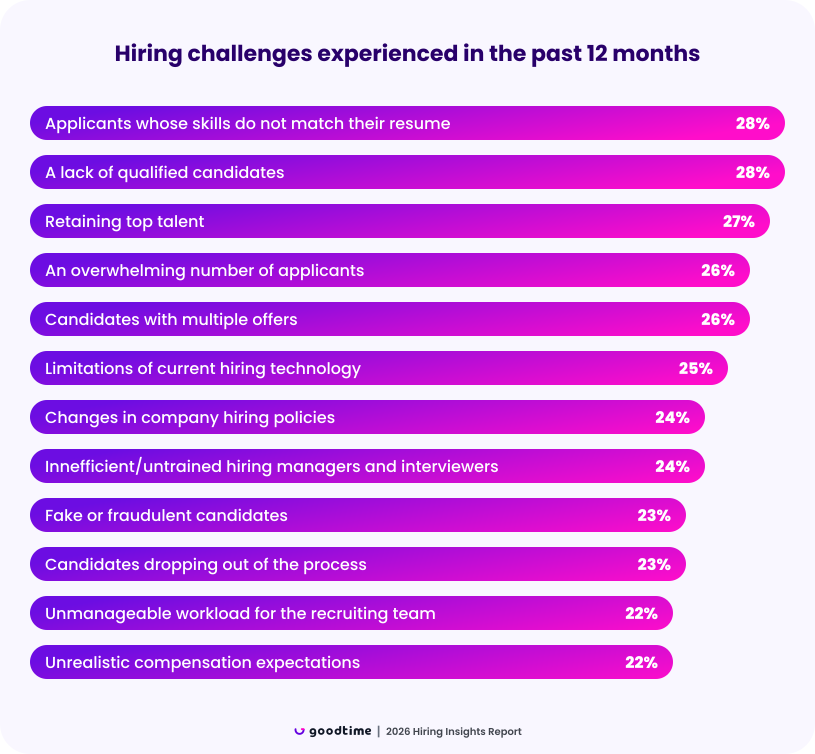
The most widespread challenge was skills misalignment, cited by 28% of TA leaders. Even when candidate pipelines were strong, recruiters struggled to find applicants whose capabilities matched the expectations set on their résumés. This reflects a growing disconnect between what candidates present and what organizations need, a theme that resurfaces repeatedly throughout this year’s findings.
28% of organizations also reported a lack of qualified candidates, continuing a long-standing pain point for TA teams. Yet the data suggests this shortage is now being compounded by other dynamics, including shifting work models and compensation expectations.
Retention pressures persisted as well, with 27% of TA leaders citing retaining top talent as a major challenge. As skilled workers continue to command multiple offers and leverage competitive markets, companies face mounting pressure to deliver compelling experiences both before and after hire.
The emergence of fake or AI-assisted candidates, cited by 23% of leaders, marks one of the most notable new pressures. Although not the most common challenge this year, their rising prevalence signals an accelerating shift in candidate behavior and sets the stage for why fraudulent candidates become the top anticipated threat for the coming year.

“AI and generalized economic precarity across the globe has created the perfect storm which has deluged traditional hiring funnels with job applications. Recruiters and hiring managers alike are both now aware of the challenge of separating signal from noise. ID verification, background checks, fraud detection and cybersecurity are now becoming much more important elements of a recruiter’s job.”
Hung Lee
Founder, Recruiting Brainfood
How the hiring landscape changed this year
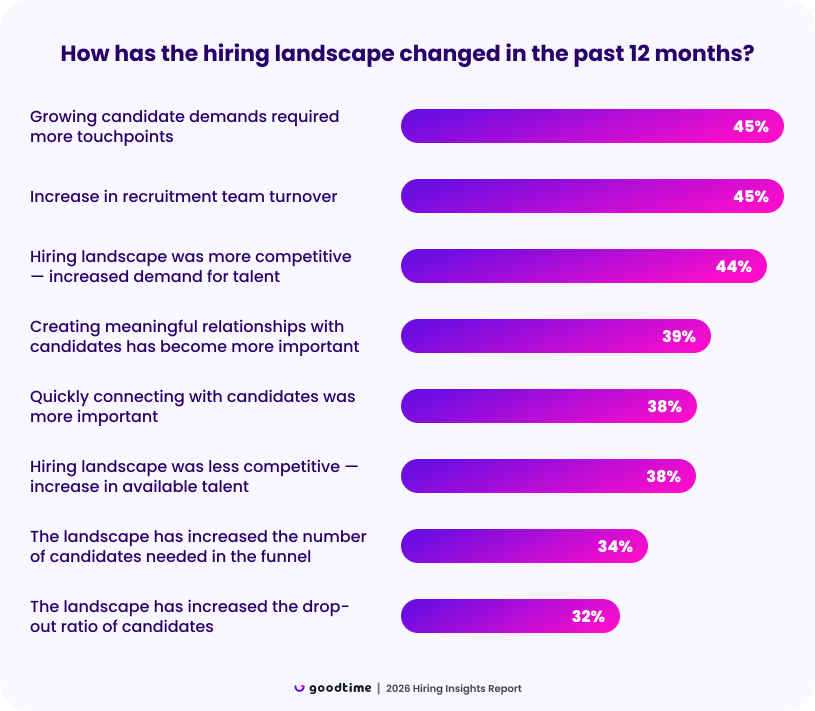
Competition for talent also intensified: 44% said the landscape has become more competitive due to increased demand, while 39% reported that building meaningful relationships with candidates has become more important. Speed of engagement rose in priority as well, with 38% noting the growing importance of connecting with candidates quickly.
At the same time, shifts in available talent created mixed conditions across industries. 38% said the landscape feels less competitive due to greater talent availability, while 34% now need more candidates in the funnel to meet hiring goals.
Overall, hiring in the past year became higher touch, higher urgency, and more operationally demanding—challenging TA teams to do more with less in an increasingly dynamic talent market.
Time-to-hire continues to worsen for most teams
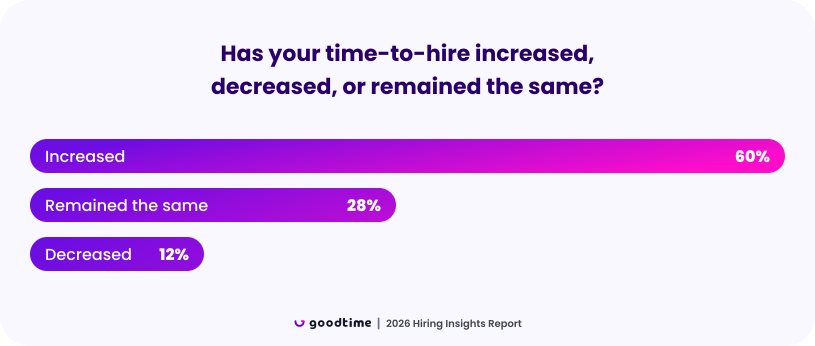
- 60% of companies reported that time-to-hire increased in 2025.
- Only 12% managed to reduce it, an elite minority.
The year-over-year persistence of this trend reveals a deeper issue: technology adoption alone is not enough to create speed. Without disciplined workflows, streamlined communications, and clearer ownership across the hiring process, new tools often reinforce existing complexity instead of reducing it.

The elite faster cohort: how the top 12% pulled ahead
Compared to slower teams, the faster cohort was:
28%
more likely to use AI agents for interview scheduling
26%
more likely to prioritize improving scheduling efficiency
26%
more likely to use centralized texting platforms
85%
more likely to choose quality-of-hire as their top metric
- 40% less likely to rely on sourcing bots
- 56% less likely to use chatbots for early candidate engagement
Scheduling remains the top operational burden in hiring
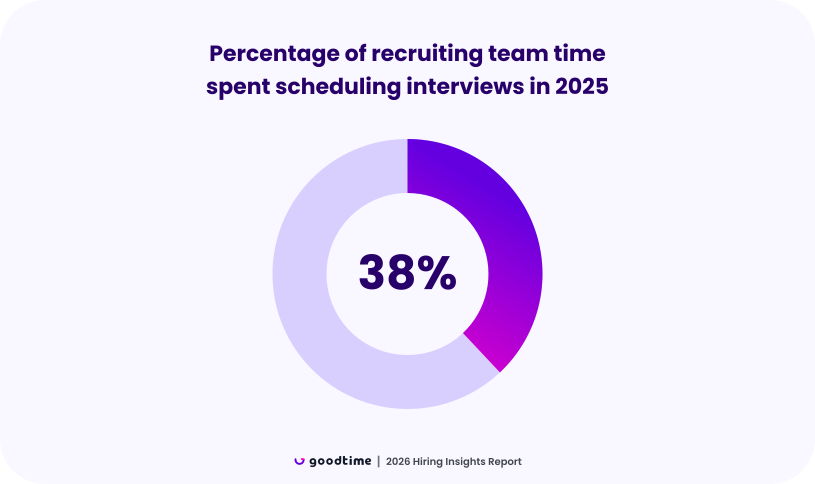
Despite advancements in hiring technology, scheduling remains the single most time-consuming and disruptive part of the process.
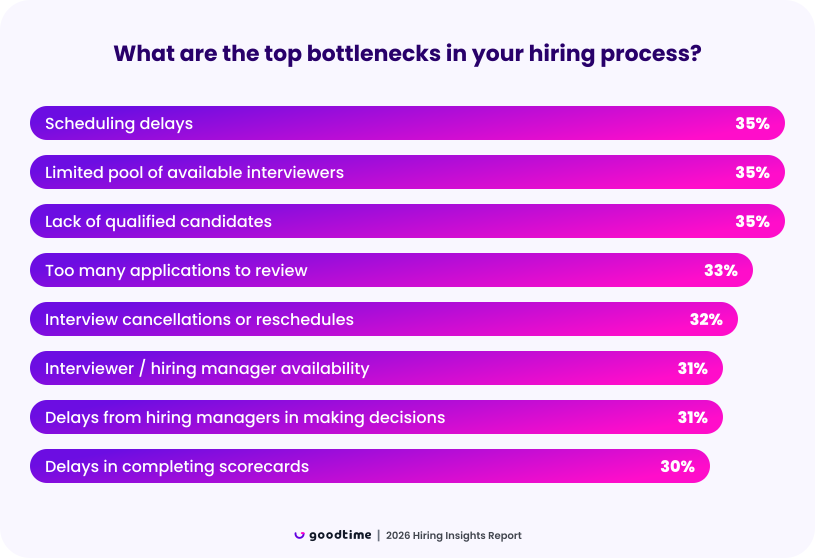
- Scheduling delays (35%)
- Limited interviewer pool (35%)
- Cancellations/reschedules (32%)
- Hiring manager availability (31%)

“If recruiters are still spending over a third of their time on scheduling, we’re not just missing hiring goals — we’re misusing talent. AI should handle at least 75% of the operational work so TA can focus on what humans do best: building trust, challenging bias, and hiring diverse teams that move the business.”
Kobi Ampoma
Head of Talent Acquisition (NL), The HEINEKEN Company
Automated scheduling strongly correlates with higher goal attainment
1.6x
more likely
Companies using automated or AI-driven scheduling were 1.6x more likely to achieve near-perfect hiring goal attainment.
This year’s data shows that it does.
Companies using automated or AI-driven scheduling were 1.6x more likely to achieve near-perfect hiring goal attainment (13% hitting 90–100%, compared with 8% of non-users). This marks scheduling automation not just as a time-saver, but as a meaningful operational advantage tied directly to hiring outcomes.
The correlation makes intuitive sense: when coordination delays, back-and-forth rescheduling, and interviewer bottlenecks are reduced, TA teams regain bandwidth to nurture candidates and make timely decisions. In contrast, organizations still relying on manual scheduling are struggling under operational weight that compounds with every requisition.
Current scheduling benchmarks
The benchmarks below reflect the three most important scheduling metrics TA teams should monitor to keep hiring moving efficiently.
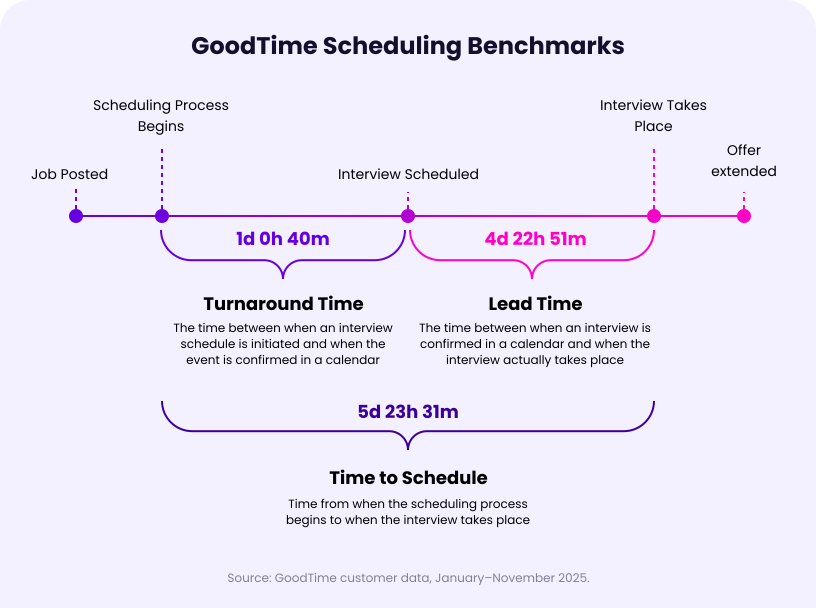
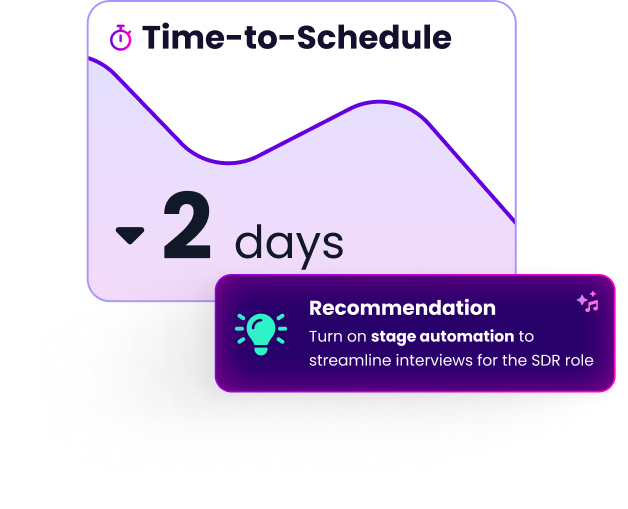
GoodTime provides TA leaders with instant visibility into key hiring metrics and AI-powered recommendations to continuously improve their hiring processes.
Learn more

AI’s role evolves: from basic automation to decision intelligence
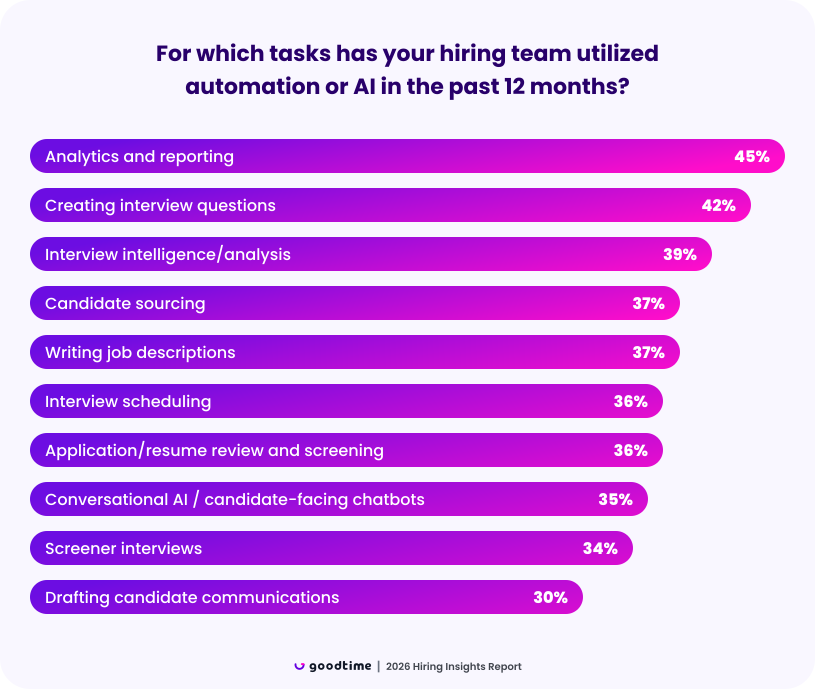
The top AI use case this year was analytics and reporting, with 45% of teams leveraging AI to surface insights, track funnel health, and identify inefficiencies. Scheduling (36%) and resume screening (36%) remain widely used but no longer dominate the narrative.
This signals a critical shift: AI is becoming the decision-making infrastructure behind hiring, not merely a way to automate repetitive tasks.
TA teams are increasingly relying on AI for:
- Diagnostic visibility into bottlenecks
- High-resolution quality-of-hire signals
- Resource allocation insights
- Predictive performance indicators

“The goal isn’t just speed. It’s to free people to focus on what matters most. Our coordinators can now focus on the interactions that matter — guiding candidates, coaching hiring managers, and refining the experience instead of chasing calendars.”
Tiffany Clark
Head of HR Strategy & Shared Services, S&P Global
How talent teams changed this year
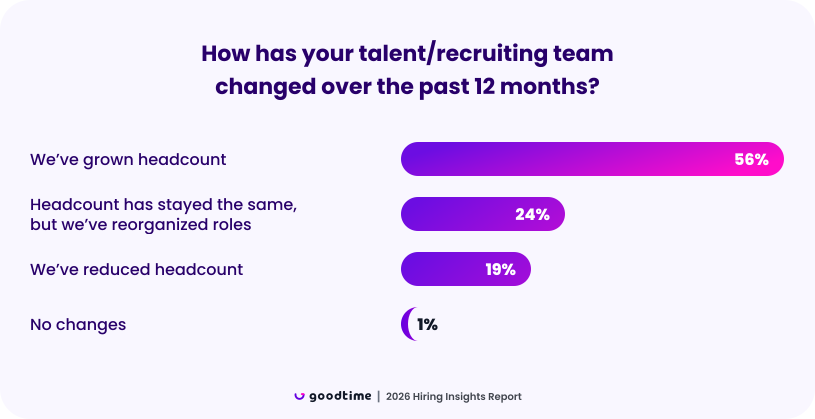
Talent teams underwent significant restructuring last year, driven by shifting hiring demands and evolving organizational priorities. More than half of companies (56%) grew their TA headcount, reflecting increased pressure to meet hiring goals and support more complex workflows. Another 24% kept headcount steady but reorganized roles, often redistributing responsibilities to adapt to new tools, expectations, or process requirements. Meanwhile, 19% reported reducing TA headcount, forcing smaller teams to manage the same or greater workload with fewer resources.
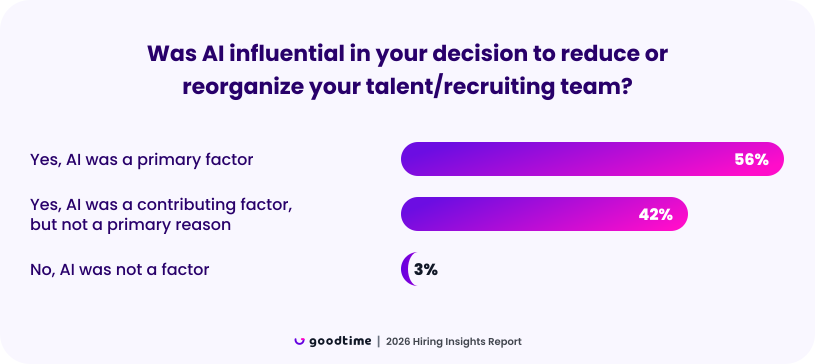
Collectively, these adjustments reflect a larger transition: TA teams are not simply shrinking or growing—they are transforming.
Roles are being redesigned to align with an AI-enabled hiring ecosystem where operational work is streamlined and human expertise is focused on higher-value decision-making and engagement.
Candidate communication trends: texting becomes central—and centralized
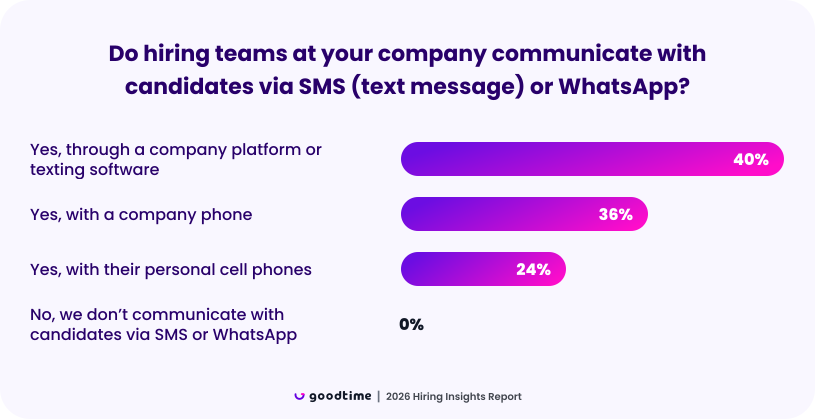
Another 36% text candidates using company-issued phones, while 24% still rely on recruiters’ personal cell phones, introducing risks around tracking, data security, and uneven candidate experience. Notably, 0% of respondents say they avoid SMS or WhatsApp altogether, underscoring how essential mobile communication has become in the hiring process.
More layoffs than we’ve seen in four years
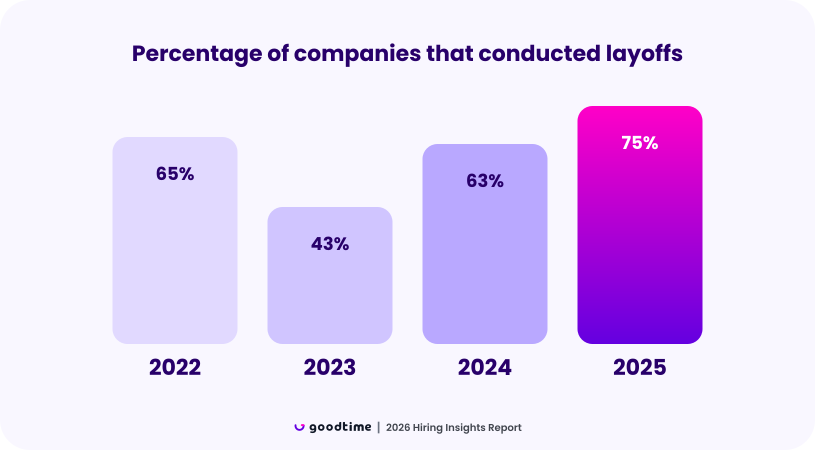
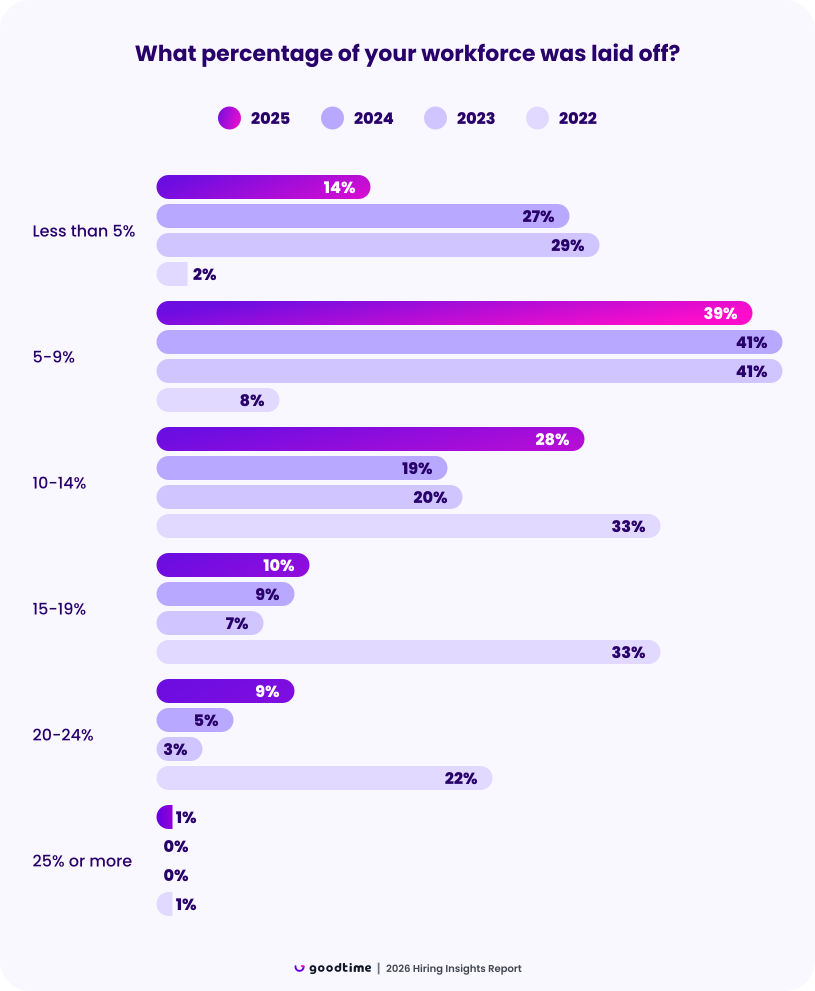
The severity of layoffs also increased. While the majority of organizations kept reductions relatively limited, the distribution reveals escalating pressure across the workforce:
The end of the RTO debate: Office-first becomes the dominant reality
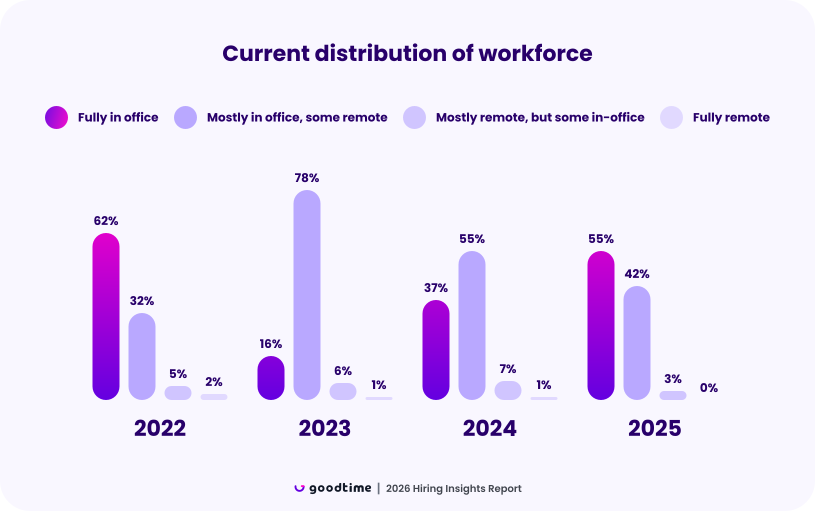
- 55% fully in office
- 42% mostly in office
- Only 3% mostly remote
- None were fully remote
This shift adds complexity for TA teams who must now navigate redefined candidate expectations, changing geographic recruiting strategies, and evolving internal policies.
A year defined by pressure, and by clarity
The path forward is no longer ambiguous.
To succeed in 2026, talent acquisition must become more efficient, more insight-driven, and more resilient, all while safeguarding authenticity in a rapidly evolving talent landscape.
Copyright © 2026. Built with ❤️ all over the world.
