
Winning top talent in 2026

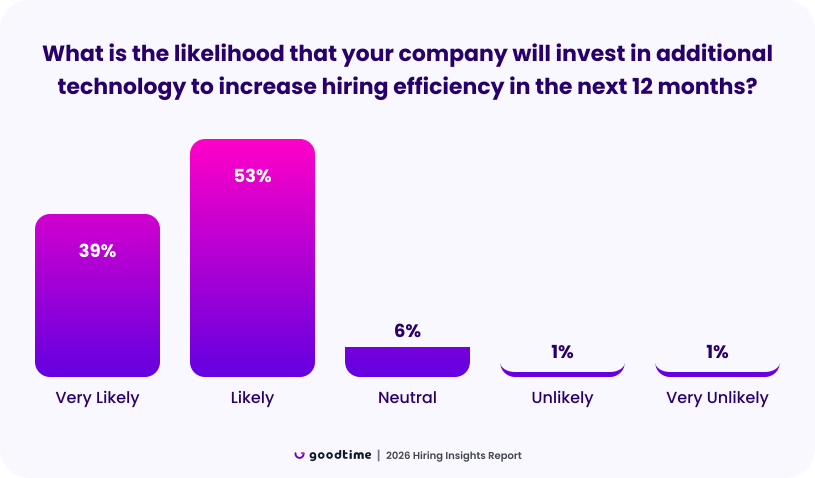
91%
of TA leaders plan to invest in hiring tech in 2026
91%
of TA leaders plan to invest in hiring tech in 2026


The data shows that modernization is no longer optional. 91% of TA leaders plan to invest in additional hiring technology, and AI adoption has reached a pivotal threshold: 99% of teams now use, pilot, or plan to use AI agents. With this shift, hiring is entering an era where speed, clarity, and system-level intelligence determine competitive advantage.
New pressures redefine how teams compete in 2026
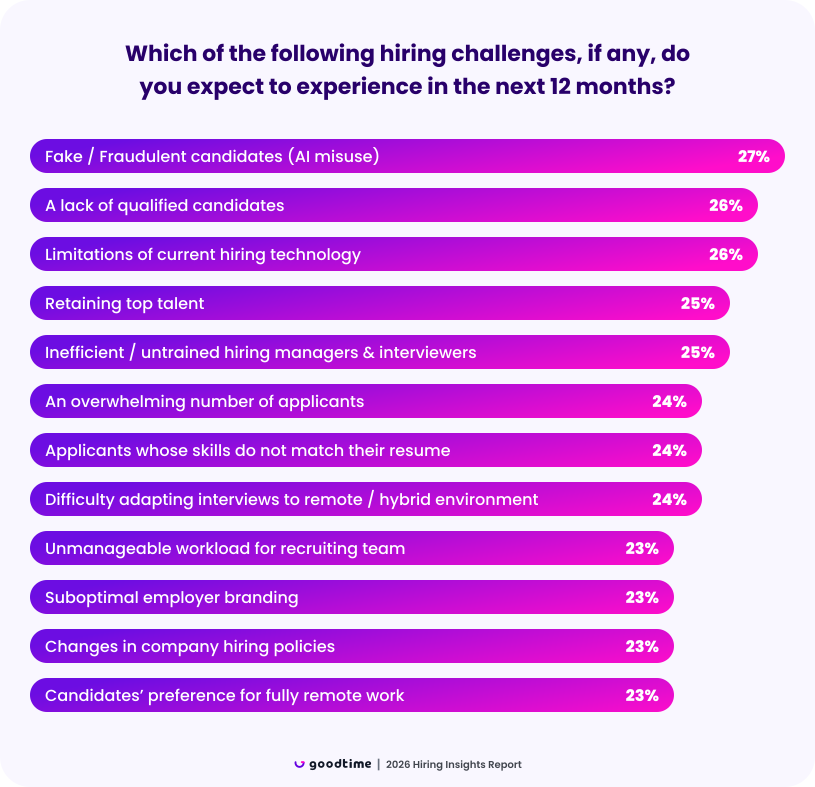
Fake and fraudulent candidates become the #1 anticipated challenge
This shift signals a profound change in the hiring environment. As generative AI raises the floor of resume quality and candidate presentation, teams must increase their focus on skill validation, structured interviews, and identity assurance. The challenge is no longer just finding talent—it’s confirming authenticity.

“Resumes, answers to application questions, even online portfolios—core data points in assessing candidate quality not so long ago —have all lost value in the era of GenAI. It's one of the most urgent tasks of TA teams today to find methods of assessment which are suitable for this era. We’re seeing much greater use of synchronous assessments for skills, traits and behaviours, as well as (somewhat ironically) the return of in-person interviews.”
Hung Lee
Founder, Recruiting Brainfood
Why tech limitations persist despite widespread adoption
Many organizations now rely on fragmented tech stacks made up of point solutions that don’t work together cleanly. Instead of reducing effort, these systems introduce more handoffs, data silos, and manual coordination. Automation often exists in pieces, but recruiters are still left to connect workflows, manage scheduling, chase feedback, and maintain candidate communication across platforms.
Compounding this, limited visibility into bottlenecks makes it harder to diagnose and fix delays before they escalate. When technology doesn’t clearly surface where hiring slows down, teams end up reacting to problems rather than preventing them.
In short, tech becomes a constraint when it adds complexity instead of removing it, especially as hiring speed and candidate expectations continue to rise.

“To successfully leverage AI, you need individuals who dare to disrupt and challenge your existing hiring processes. You can no longer achieve great results by adhering to rigid legacy processes — you need innovators who understand the rules well enough to know how to break them.”
Anastasia Pshegodskaya
Global Director, Talent Acquisition, Remote
Rising candidate expectations and dropout risks intensify
Candidates expect immediate responses, flexible scheduling, and mobile-friendly communication. When teams fall behind, dropout rates spike. Leaders anticipate these pressures increasing, making responsiveness and process clarity key differentiators in 2026.
Recruiter turnover threatens continuity
Turnover within TA teams is expected to disrupt candidate flow and reduce operational stability. As workloads fluctuate and hiring needs rise, teams must build systems that maintain consistency even when people transition.
TA leaders anticipate uneven hiring conditions in 2026
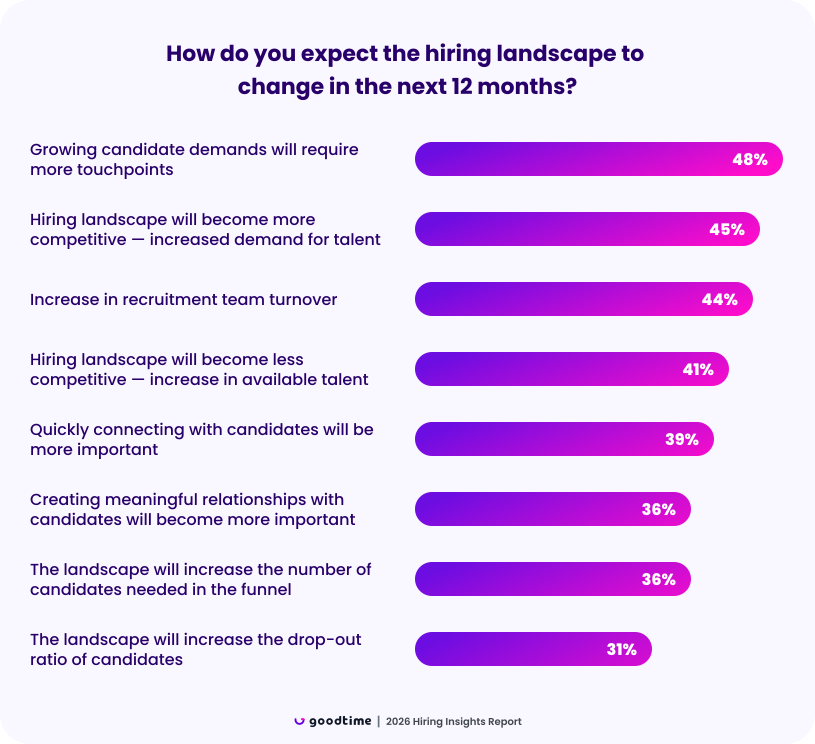
While 45% of TA leaders expect the hiring landscape to become more competitive due to increased demand for talent, nearly as many (41%) believe it will become less competitive as talent availability increases. Rather than signaling confusion or contradiction, this split reflects the reality that hiring conditions are increasingly uneven across roles, skills, and labor pools.
In practice, this suggests that competition in 2026 will be more situational than universal. Some teams, particularly those hiring for scarce, high-impact, or specialized roles, are likely to face intense competition and sustained pressure on speed. Others will contend with larger candidate pools that still require careful screening, faster decision-making, and stronger process discipline to convert interest into hires.
The takeaway is not that the hiring market is moving in two directions at once, but that there is no single hiring market anymore. Conditions will vary meaningfully depending on what roles organizations are hiring for, where those roles sit, and how efficiently teams can move candidates through the process.
As a result, speed, clarity, and execution discipline matter regardless of whether talent is scarce or abundant. Teams that move slowly or inconsistently risk losing candidates either to faster competitors or to disengagement.
What TA teams are prioritizing in 2026
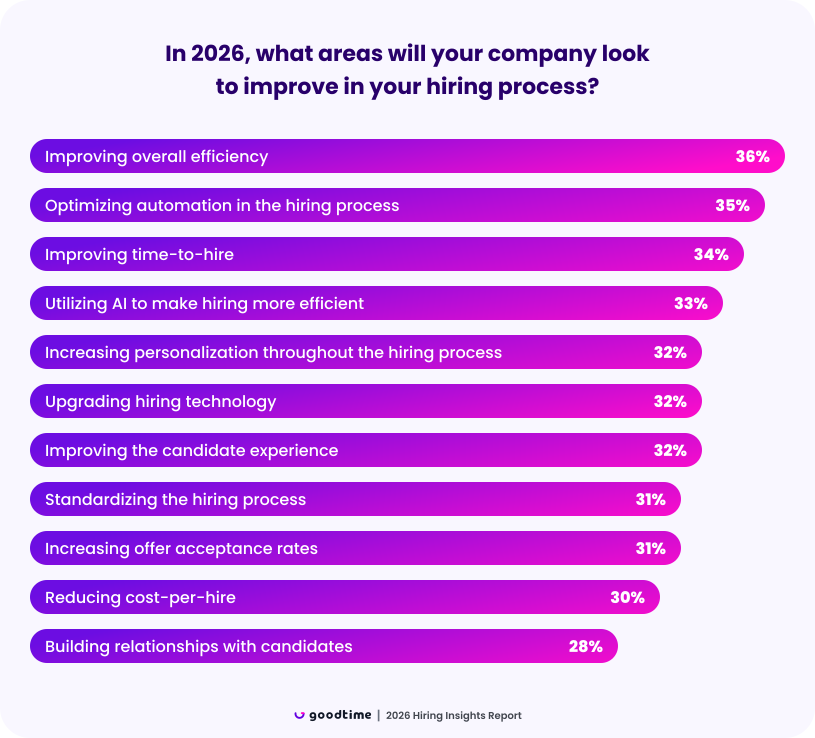
The priorities for the year ahead reveal a discipline-focused mindset. Leaders are no longer trying to “add more candidates” to the top of the funnel. Instead, they are focused on fixing the entire system.
Improving efficiency is the top priority
Organizations overwhelmingly cite efficiency as their top focus for 2026. Speed is no longer just a metric; it’s a core capability. The teams that move fast are the ones that will win candidates who often hold multiple offers.
Upgrading hiring technology
- Automated scheduling
- Centralized communication
- Analytics and bottleneck detection

“When you think about how we translate that hospitality mindset into our candidate interviewing, having a really rock-solid scheduling platform and tools is really important to deliver the experience we’re looking for.”
Jeff Moore
VP of TA Operations and Workspaces, Toast
Elevating the candidate experience through speed and flexibility
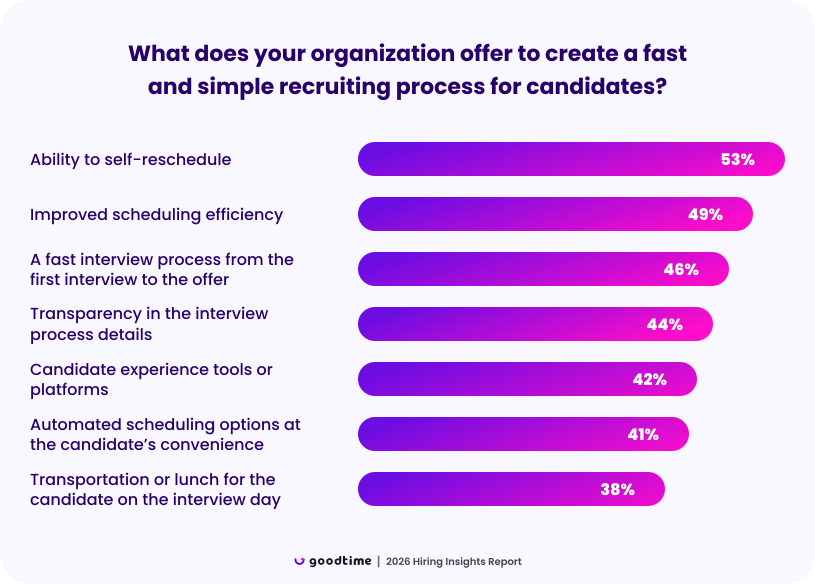
- Self-scheduling and self-rescheduling
- Transparent, automated updates
- Fast interview-to-offer timelines
- Mobile-first communication
Speed becomes the primary differentiator
Self-service scheduling becomes standard
Transparency drives trust
Mobile-first communication is universal
AI’s ever-expanding role in talent acquisition
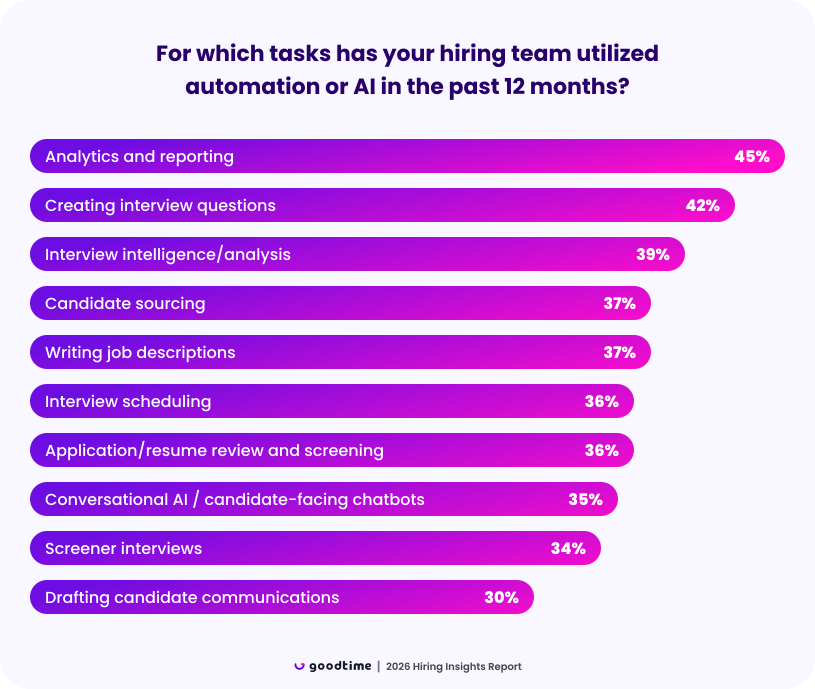
TA teams are most likely to apply AI to tasks where value is clear, risk is low, and outputs are easy to validate. Analytics and reporting (45%), interview question generation (42%), and interview intelligence (39%) all rank at the top, use cases where AI augments decision-making without replacing human judgment.
By contrast, even some of the most operationally straightforward uses of AI remain under-adopted. Interview scheduling stands out as the clearest missed opportunity: it’s widely understood, low-risk, and directly tied to the biggest bottlenecks teams face today. Scheduling is often the best place to start with automation because it delivers immediate efficiency gains without introducing new decision-making risk.

“AI agents handle orchestration, not just execution — leveraging data and insights to make more informed decisions. We’ve been able to cut our scheduling time from 30 minutes to five.”
Tiffany Clark
Head of HR Strategy & Shared Services, S&P Global
The pattern is telling: teams are embracing AI fastest where it provides insight without requiring structural change, and moving more cautiously where adoption would force deeper workflow redesign. As AI becomes infrastructure rather than experimentation, the next wave of differentiation will come from teams willing to rebuild processes, not just layer intelligence on top of them.
AI-powered scheduling gains strategic importance

“Recruiters aren’t slow—scheduling is. Until companies adopt systems that absorb complexity instead of pushing it onto humans, scheduling will remain the single biggest bottleneck in hiring.”
Shelby Wolpa
Founder, Shelby Wolpa Consulting
The metrics that matter in 2026
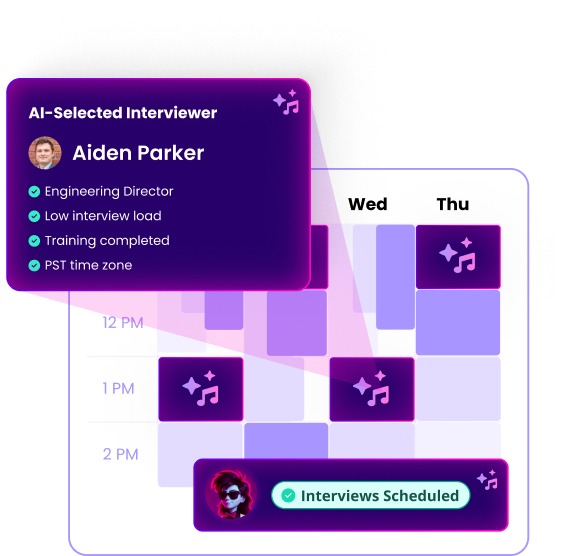
GoodTime automates even the most complex interview scheduling scenarios, so your team can move faster without adding headcount.
Learn more

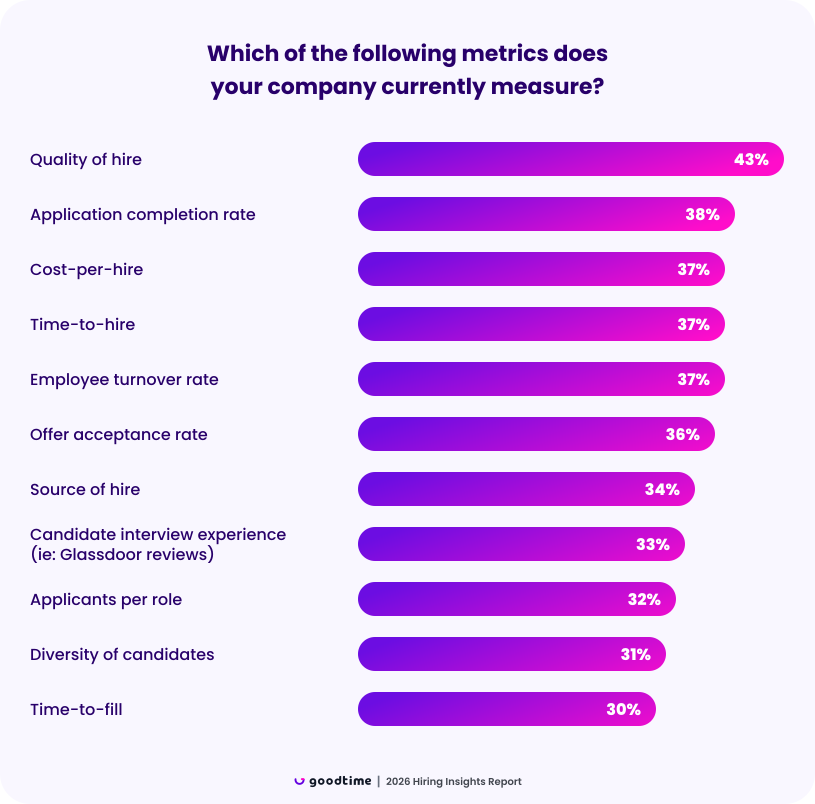
Quality of hire leads all metrics
Quality of hire is now the most tracked metric at 42%, and the most prioritized, with 22% naming it their top measure of success. As candidate authenticity becomes harder to assess, quality signals become more vital.

“The real competitive advantage will be applying AI in ways that drive quality: quality of process and hire. By quality of hire, we mean improving the rigor of our assessment, accuracy of our decision making, and ultimately, the success of the hires that we make relative to historical benchmarks”
Ben Sesser
Co-Founder, BrightHire
Efficiency metrics gain momentum
- Time-to-hire (37%)
- Offer acceptance rate (36%)
- Application completion rate (38%)
The bottom line: How teams will win talent in 2026

Build AI-first workflows
AI should orchestrate scheduling, detect delays, surface insights, and simplify complexity throughout the hiring process.

Modernize scheduling and remove manual coordination
Automation must replace back-and-forth messaging, fragmented calendars, and human bottlenecks.

Strengthen verification and assessment
With fake candidates on the rise, structured interviews, skills tests, and identity protocols are essential.

Standardize processes for consistency and scale
Standardization reduces confusion, speeds decision-making, and improves measurement.

Redesign TA roles to maximize human value
Free teams from administrative burden and shift focus toward relationships, advisory work, and better hiring decisions.
The takeaway
Organizations that modernize now—adopting AI-driven workflows, upgrading communication systems, and prioritizing quality of hire—will be the ones best positioned to hire confidently in a challenging and rapidly evolving hiring landscape.
Copyright © 2026. Built with ❤️ all over the world.
