Efficiency
 Experience
 Intelligence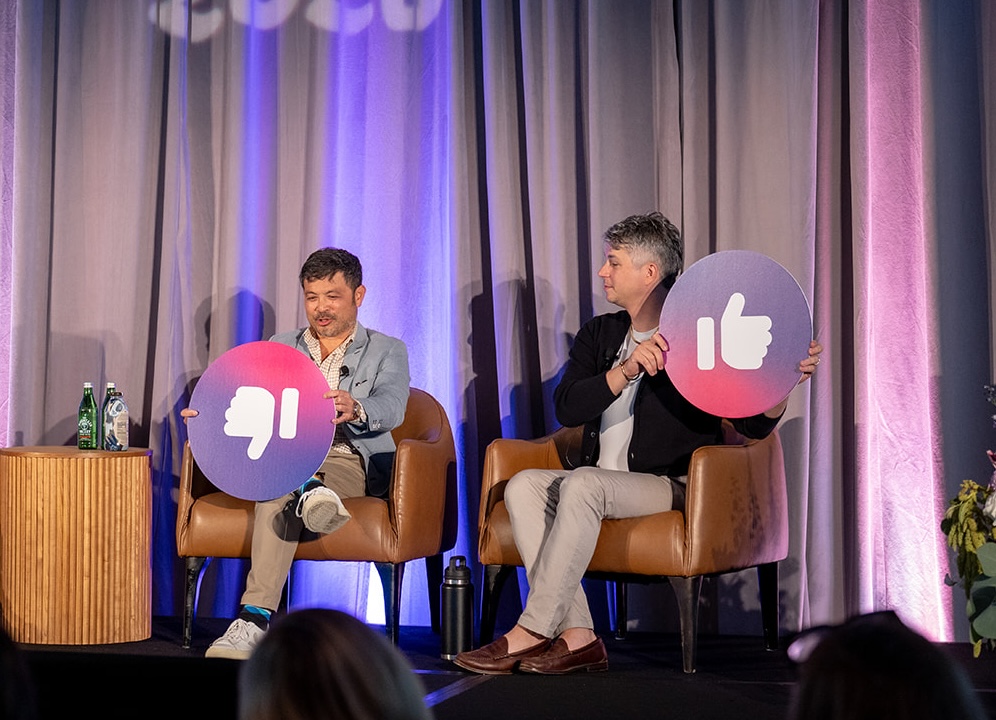
Table of Contents



Join 12,000 TA pros who stress less and crush their goals with our monthly expert-vetted tips and insights.
By submitting this form, you agree to be contacted and to receive the requested information, as well as occasional related insights from GoodTime about our products, services, and content. You may unsubscribe at any time. For details, view our Privacy Policy and Terms of Use.
A rapid-fire debate on recruiting headcount, candidate fraud, interview bloat, AI gatekeeping, and the politics of productivity
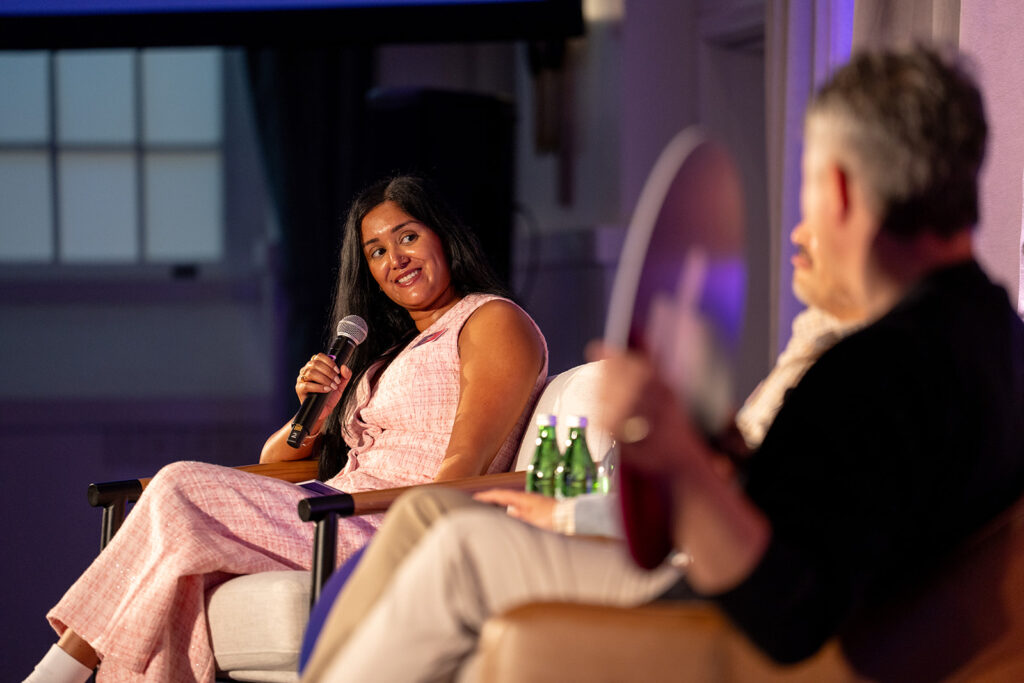
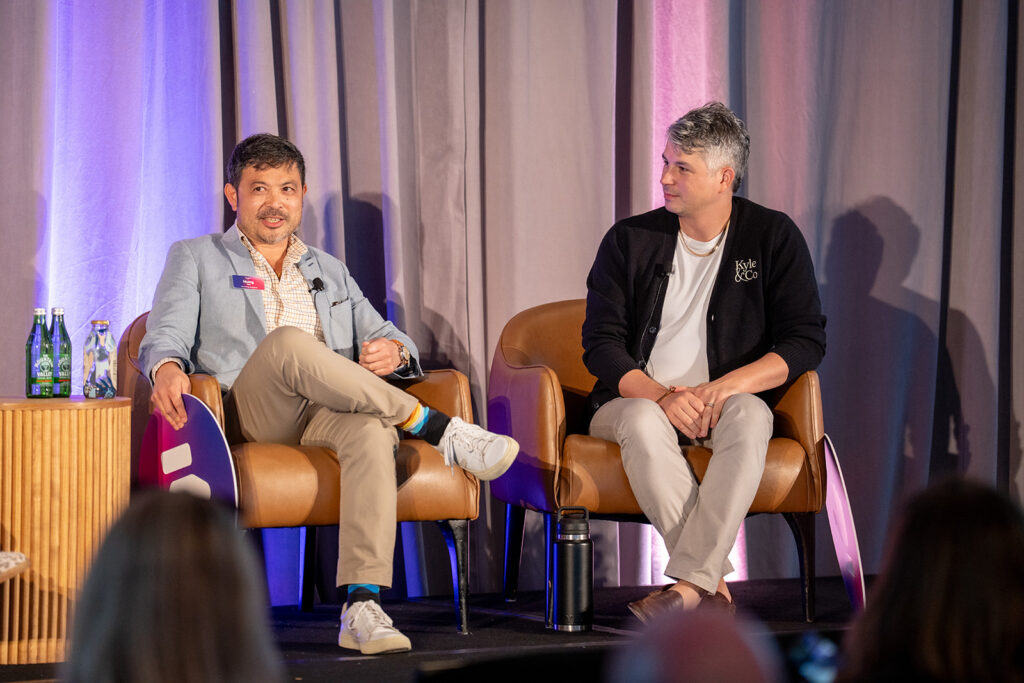
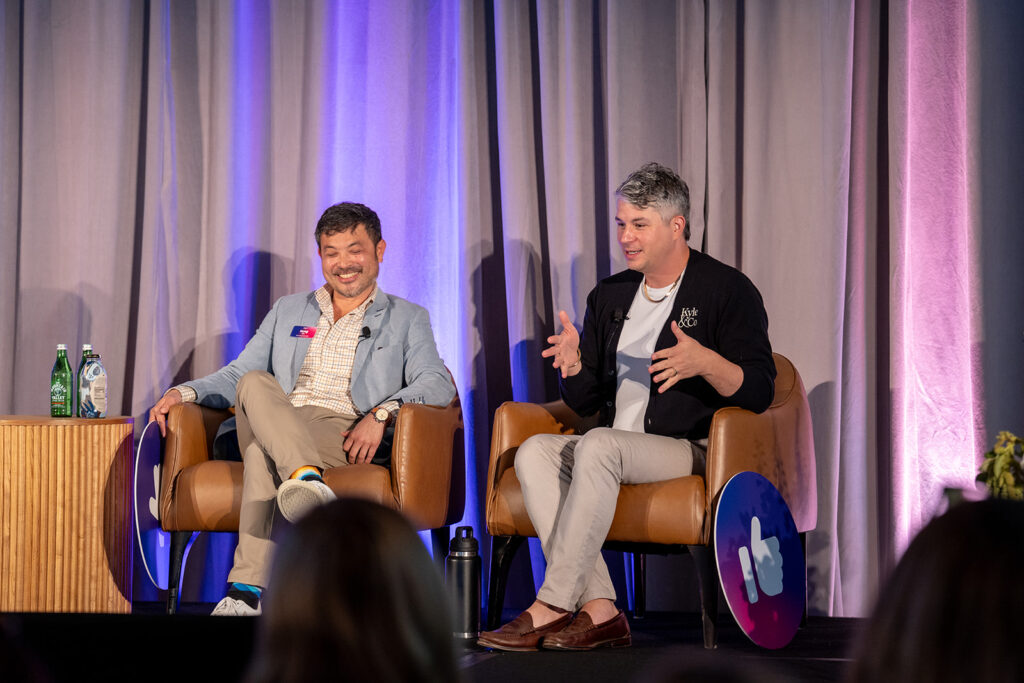
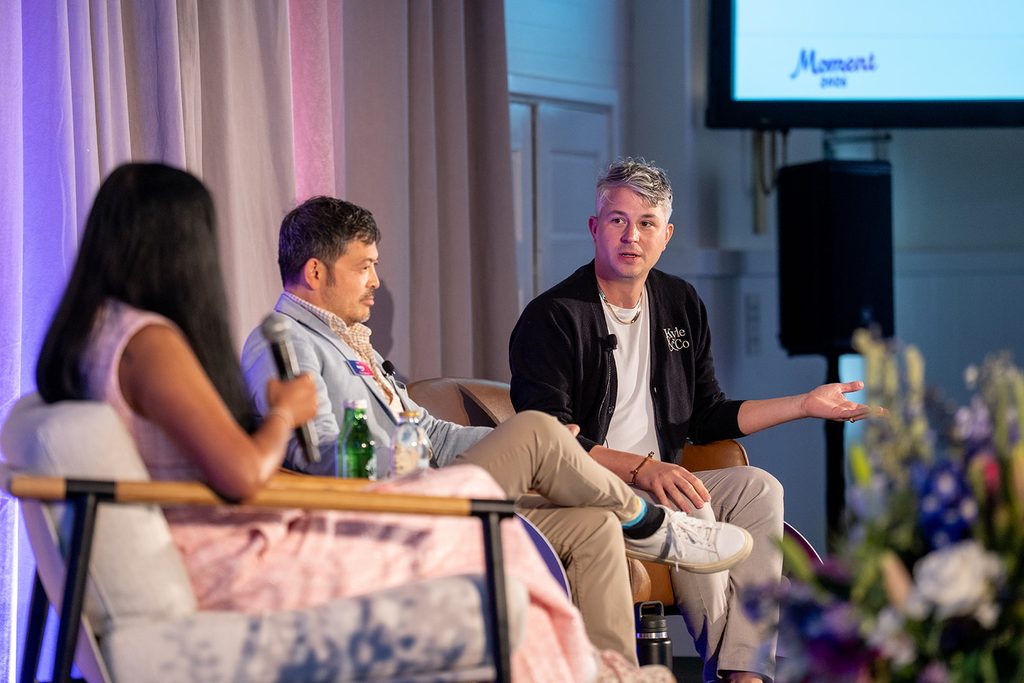
Panelists Sejal Madhubhai, GoodTime, moderator; Kyle Lagunas, Kyle & Co; and Hung Lee, Recruiting Brainfood
The rules were simple: Sejal Madhubhai would read a statement, Kyle Lagunas and Hung Lee had to choose a side, and nobody was allowed to hide behind ‘it depends.’ The questions were built to provoke. The answers were funnier, messier, and more useful than a series of polished predictions would have been.
Some propositions collapsed immediately. Requiring executives to apply for jobs at their own companies sounded like empathy but, Lee argued, carried a whiff of punishment. A universal three-interview limit ignored the difference between frontline and business-critical executive hiring. Other questions split the panel because the terms themselves were contested: What counts as sourcing? What counts as fraud? Who owns quality of hire? Who gets the time that AI saves?
Under the jokes and oversized thumbs-up signs, a harder picture of talent acquisition emerged. AI will probably reduce the number of traditional recruiting roles. The people who remain will need sharper judgment, stronger business partnerships, and the confidence to challenge managers with evidence. Automation can make recruiting more human, but only if TA deliberately claims the recovered capacity. And as candidates adopt AI faster than employers write policy, ambiguity is becoming an operational risk of its own.

Unlock 2026’s top hiring strategies: Insights from 500+ TA leaders
Be the first to uncover deep hiring insights specific to your sector — straight from the highest-performing TA teams.

TA needs receipts before it asks for accountability
The panel’s first argument over transparency exposed a familiar problem. Lee favored publishing how many candidates a company interviewed for a role and how long the process took. His case was straightforward: recruiting should move from describing its process to showing it. Lagunas pushed back. Raw numbers can create a target for candidates and competitors who lack the context to interpret them.
They found firmer common ground on interviewer behavior. Hiring managers often become the bottleneck when they fail to protect calendar time, delay feedback, or participate inconsistently. The problem is no longer that TA cannot see the behavior. Digital interviews, scheduling records, transcripts, and interview intelligence can expose where time is lost.
“Recruiting has the receipts.”
Sejal Madhubhai
Having the data does not guarantee the conversation will go well. Lagunas noted that evidence can suddenly become ‘subjective’ when it implicates a stakeholder. Still, it gives recruiters a stronger basis for distinguishing a broken process from an interviewer who is not doing their part. The same logic applies to metrics. Time to schedule is useful because TA controls much of it. Time to hire still matters because the business cares about it, even though ownership is shared.
The sharper operating model is to separate direct control from shared accountability. TA should report the speed and quality of the work it owns while using broader measures such as time to hire and quality of hire to align with the business. Dropping a recruiting metric because recruiting cannot control every input gives away influence instead of clarifying responsibility.
Key takeaway: Use operational evidence to challenge interviewer behavior, but distinguish the measures TA owns from the outcomes it shares with the business.
Stop gatekeeping what counts as AI
Both panelists rejected the claim that most companies talking about recruiting AI are merely using better automation. Lee’s objection was partly semantic. Automation is not a lesser form of progress, and AI can now create automations. Debating whether a useful workflow qualifies as AI, agentic AI, or something else can become a status contest with little connection to the result.
“If the technology is actually creating better experiences, better outcomes, then we don’t really need to care too much as to whether it’s AI, ASI, AGI, or whatever AI.”
Hung Lee
Lagunas went even further. He had watched recruiting operations teams build their own tools using coding assistants and emerging protocols. Dismissing that work because it fails somebody’s technical purity test shuts people out of the learning process at exactly the moment when broad experimentation matters.
Talent leaders still need to understand what a system can access, decide, and execute. Those distinctions should inform governance and risk, not decide who is allowed to call an improvement innovative.
Key takeaway: Judge AI by the work it changes, the outcomes it produces, and the risk it introduces instead of treating terminology as a prestige test.
AI will shrink recruiting and raise the bar
On the session’s bluntest question, Lagunas and Lee agreed: AI will eliminate more recruiting jobs than it creates. Lee pointed to smaller TA teams, fewer open roles, and employers maintaining their systems while reducing user licenses. Productivity gains mean companies can handle more hiring with fewer people, and he expects that pressure to continue.
Lee also expects the structure of recruiting work to change. Companies may shift fixed headcount toward agencies and RPOs. Inside TA, high-volume inbound hiring may move toward an automated operations model while scarce and senior talent receives deeper, longer-term cultivation.
Lagunas argued that the surviving recruiter role will become more defensible because it will be harder to perform casually. During the hiring surge, organizations often solved volume problems by adding inexperienced recruiters. AI gives them another option now. Recruiters who remain will need real craft: business judgment, tenacity, market knowledge, and the ability to engage and convert talent rather than produce generic AI-assisted activity.
“I think net-net we’re not going to have as many bodies because we have other solutions to the problem.”
Kyle Lagunas
This is not a comforting prediction, and Lee resisted attaching a reassuring ending to it. Leaders cannot assume that every remaining role will simply become more strategic. They have to redesign the work and develop the skills that remain scarce.
Key takeaway: Plan for a smaller TA function and define the judgment, relationship, and business skills that will make the remaining roles more valuable.
The time AI saves is politically contested
The claim that AI will make recruiting more human drew a qualified response. Lagunas said the thoughtful implementations discussed at Moment showed teams protecting the manual work that matters to candidates. Lee agreed with the goal but rejected the idea that it happens automatically.
“What happens to the time saved by AI? If we’re very passive with this, then actually that time will not be ours to spend.”
Hung Lee
That distinction cuts through one of the easiest promises in HR technology. A team can automate administrative work and still receive a larger requisition load, a smaller headcount, or both. If leaders want recruiters to spend recovered time building relationships, advising managers, or improving candidate care, they have to claim that capacity and make the new work visible.
Lee described a policy in which employees or functions that create efficiency retain the saved time and decide how to reinvest it. The specific mechanism will vary, but the principle is useful for TA: define the intended destination of productivity before the savings disappear into a capacity target.
Recruiters who expect every efficiency to reduce headcount have little reason to contribute their best automation ideas. A credible stake in the gain can make experimentation safer.
Key takeaway: Decide who controls the capacity AI creates and name the higher-value work it will fund before automation goes live.
Sourcing is splitting into discovery and persuasion
Lagunas and Lee both gave a thumbs down to the prediction that an AI agent would become better than the average recruiter at sourcing within two years, but for opposite reasons. Lagunas argued that sourcing includes far more than search. Finding a profile is the beginning; engaging and converting a person is deeply human work.
Lee argued that AI is already superior at discovery for digitally visible talent. He drew the line earlier, treating engagement, audience building, employer reputation, and relationship cultivation as separate work. He also added an important limit: AI’s advantage is strongest where people and skills leave rich digital signals. Hiring a knowledge worker and finding a truck driver in São Paulo are not the same sourcing problem.
“There’s way more that goes into sourcing than searching. Search is easy. Discovery is just the beginning. You’ve got to engage and convert.”
Kyle Lagunas
The disagreement forces leaders to unbundle the role. Identification is ripe for AI now; persuasion and relationship development preserve a larger human advantage. Organizations need to decide which activities sit inside the job before choosing the technology.
Key takeaway: Separate candidate discovery from engagement and conversion, then automate and measure each part according to the signals and judgment it requires.
Interview rigor should match the role
The panel rejected a universal limit of three interviews. Lagunas argued that rigor matters, especially when a shallow process leaves a new hire discovering organizational dysfunction after joining. Lee said the number and form of assessments should reflect the impact and nature of the role. Three interviews may be excessive for a high-volume cohort and insufficient for an executive whose decisions could reshape the business.
That does not excuse bloated processes. Every stage still needs a purpose and a clear decision owner. The point is that candidate experience cannot be reduced to fewer interviews in every case. A demanding process can be reasonable when the role warrants it, the employer explains the value, and each interaction generates new evidence.
On structure, the panel was unequivocal. Hiring managers interview episodically and benefit from guidance that recruiters may take for granted. Asking every candidate comparable questions also improves the consistency and equity of decisions. Lagunas said this is one reason he is bullish on AI interviewers: a system can follow an approved guide and redirect a candidate who avoids the question.
“Many hiring managers episodically recruit. They have jobs to do, they occasionally go and interview, and I think they would really benefit from us giving them some structural guidance.”
Hung Lee
Key takeaway: Do not optimize for an arbitrary interview count. Match the rigor to the role, give every stage a purpose, and use structure to make evidence more comparable.
Candidates will use AI so employers need rules
The session’s candidate-AI debate exposed how far policy trails behavior. Lagunas asked the room how many employers had clearly told candidates when they could and could not use AI. Even among a group he described as highly progressive, only about half raised their hands.
Without clear guidance, companies are punishing candidates for rules that exist only in an interviewer’s head. Some employers treat AI-assisted resume tailoring as abuse, even though they have long told candidates to tailor their resumes. At the other end of the spectrum are coordinated identity and employment fraud. Calling both behaviors ‘AI fraud’ makes the policy unusable.
Lagunas also warned that crude detection can create new bias. He described a company that disabled an IP-location signal after managers treated every mismatch as proof of fraud. A legitimate candidate using a VPN could appear to be elsewhere. A weak signal had become a verdict.
“How can I hold them accountable for something that’s in my head about how they should or shouldn’t use it?”
Kyle Lagunas
A better assessment may actively permit the tools employees will use on the job. Some technical and consulting interviews now give candidates the employer’s own tools and ask them to solve a realistic problem. That reveals how the person works with AI instead of relying on an easily ignored ban.
Key takeaway Publish explicit candidate-AI rules, distinguish assistance from deception, and treat fraud indicators as signals for review rather than automatic proof.
Clean metrics can miss the work that matters
Both panelists rejected an automatic six-month deadline for proving an AI tool’s value. Lee questioned the confidence behind the measurement and the arbitrary window. Teams tend to count what is easy while overlooking results that take longer or resist a clean number. Lagunas added that an enterprise can spend six months selecting and launching a tool, then give the implementation too little time to mature. A weak result should trigger investigation and iteration before another expensive round of replacement.
Their disagreement on internal mobility exposed the same measurement problem. Lagunas argued that companies need external hires who bring new skills and perspectives. Lee emphasized the institutional knowledge held by long-tenured employees, especially the informal connectors who help departments work together. Those contributions can be nearly invisible in performance data until the person leaves and coordination begins to fail.
“Too often we end up measuring the easily measurable and then ignoring the stuff that is hard to measure, which actually might be the most important thing.”
Hung Lee
Quality of hire is real and still hard to use
The audience rejected the claim that quality of hire is mostly a myth. If a business can determine whether an employee succeeds, some evidence exists. The larger failure is that TA and performance teams often do not connect the information.
Lagunas warned against declaring the concept imaginary simply because the measure is elusive. Lee offered the opposite caution. Organizations often measure what is easy and ignore the collaborative, connective, or cultural work that matters. Employees who make colleagues better may look ordinary in an individual performance dashboard even as the team deteriorates after they leave.
“If you treat it as a myth, it’s going to remain elusive. There are signals right there in front of you. You’ve just got to go get them.”
Kyle Lagunas
An audience member added a second problem: the signal arrives late. By the time a company knows whether an engineer or product manager became a strong hire, the role, manager, and definition of success may have changed. Measures can be more actionable in jobs such as sales, where performance appears faster and maps to clearer outcomes.
The implication is neither to abandon quality of hire nor worship a single score. Talent teams should connect downstream performance and retention data to hiring decisions, use several signals, and be honest about lag and attribution. The metric is most useful when it changes a current decision, not when it produces a retrospective number nobody can act on.
Key takeaway: Build quality of hire from multiple downstream signals and use it where the feedback arrives quickly enough to change hiring behavior.
AI readiness may begin with process work or a leap
The audience split over whether most TA teams are unready for AI because they are still repairing old processes. One view held that organizations must understand the current state, define the problem, and design the future state before choosing technology. Lagunas reframed that work as part of AI readiness itself rather than a prerequisite that delays the project.

Lee challenged the sequence. Some processes are too entrenched to improve through analysis alone. New technology can change behavior and let the old process wither. The rapid shift to remote work was his example: organizations did not perfect the operating model first; they adopted available tools and learned through use.
The final audience question tested how much authority TA should have when managers repeatedly make poor hires. The room initially favored veto power, until one participant argued that TA’s responsibility is to help managers improve. The answer captured the panel’s larger theme. Better data should increase TA’s influence, but influence is not the same as punishment.
“It’s not like you should have veto power. It should be your responsibility to help them get better.”
Audience participant
Readiness therefore has two legitimate paths. When the failure is understood and the process can be redesigned, do that work. When behavior will not move and a credible tool creates a better way to operate, run a bounded experiment and learn from the new behavior. In both cases, TA earns authority by improving the system and the people inside it.
Key takeaway: Use process analysis when it clarifies the problem, use technology experiments when they can change stuck behavior, and turn evidence into coaching rather than a power struggle.
The positions worth carrying forward
- Report what TA controls and keep shared business outcomes in the conversation.
- Stop using AI terminology to dismiss useful experimentation or inflate ordinary automation.
- Prepare for fewer traditional recruiting roles and higher expectations for the people who remain.
- Protect the time automation saves by deciding how the team will reinvest it.
- Separate talent discovery from engagement and conversion, and match interview rigor to the role.
- Tell candidates exactly how AI may be used before trying to police misuse.
- Treat quality of hire as a set of imperfect signals that must connect back to current decisions.
The spicy format worked because the first answer was rarely final. Lagunas and Lee changed their framing, challenged the premise, and sometimes reached the same vote from opposite directions. That is a better model for the next phase of TA than a stack of confident predictions. The function does not need safer answers. It needs clear definitions, visible tradeoffs, and leaders who state automation’s costs as plainly as its benefits.