New AI notetaker records, transcribes, summarizes interviews, and more! Explore AI notetaker

Expedia Group cut scheduling time by a third in just 90 days: inside the GoodTime adoption

  1. Customer Stories
  2. Expedia Group

Expedia Group cut scheduling time by a third in just 90 days: inside the GoodTime adoption

10,000+

interviews scheduled
in the first 3 months

27%

drop in
reschedule rate

33%

drop in average
scheduling time

Industry

Travel Technology

Location

Seattle, Washington, USA

Company Size

10,000+

ATS

How it started: scheduling through too many tools

Every trip Expedia Group books starts with someone finding a time that works. So does every hire.

Expedia Group helps millions of travelers in more than 70 countries explore the world — and its People Services organization runs the scheduling and lifecycle operations behind the hiring that supports it.

A single interview loop can span Singapore, London, and the US. Scheduling those interviews used to be highly manual, with individual teams bouncing between Slack, Outlook, Workday, JIRA, and time-zone tools. The team at Expedia Group would reach out to interviewers or their assistants, confirm availability, adjust to the appropriate time zones, and make a schedule that worked for everyone. Every hour spent nailing down availability was an hour not spent with a candidate.

“Sometimes it was hours, sometimes days, just due to the delay of time zones,” said Emily Schorr, Director of People Services at Expedia Group.

And time zones were only part of the complexity. The team had more than 25 different interview templates to manually enter and schedule, depending on the interview. Within JIRA, multiple requests arose for multiple schedulers, and a hiring manager might have to work with multiple coordinators. A reschedule could undo a day’s work, while limited reporting capabilities made it tough to see the bigger picture.

“We couldn’t be proactive at that point in time because those requests would keep coming in,” Emily said.

25 templates, one place to run them

In GoodTime, Expedia Group found a place to put it all.

“GoodTime ultimately has been very easy to adopt. What stood out for us was just how quickly we could merge templates,” Emily said.

The team merged 25 templates, standardizing hiring manager screens, interviews, and on-sites. Prep materials and expectations live in the invite instead of popping up across conversations and email attachments. Recruiters can check GoodTime instead of combing through multiple calendars for answers.

“Within GoodTime, we actually have visibility into who has sent in a request, have one scheduler that’s attached to that by way of coordination groups, and can get ahead of it,” Emily said.

Templates, availability, and time zones now live together, sidestepping a lot of the manual coordination that once slowed things down. Self-scheduling automatically accounts for time zones and locations, so candidates can pick times based on their schedules.

In that Singapore-London-U.S. interview loop, candidates can now see compatible availability in their own zone at a glance and schedule directly.

“It’s not only saved hours. It’s saved days in terms of scheduling,” Emily said.

What 90 days later looks like

Within three months after adopting GoodTime, a team of nine schedulers supported more than 10,000 interviews. Expedia Group also cut their reschedule rate from 55% to 40%, and reduced the average scheduling time from three days to two.

“What excites me the most is the value of time that it can give back to our team members so that they can provide a white-glove, high-touch experience,” Emily said.

Internally, adopting GoodTime meant merging five tools into one platform. Externally, candidates report a clearer overall understanding of the scheduling process and feel better equipped to properly prepare for interviews.

“It’s all about a much more seamless experience,” Emily said. “In the past, we had to have much more prep conversations with interviewers. Here, we’re providing all of that in a one-stop shop for our interviewing teams.”

Rather than relying on scattered signals, the People Services team can identify where interviewers need support, dig into workflows, and lead with data.

Next stop: AI agents

Three months in, Expedia Group has started using Super Days to support high-volume hiring efforts in key areas like early careers and tech.

Next, they plan to expand their hiring manager automation and further explore how GoodTime’s AI agent, Cori, can support internal teams and candidates across the hiring cycle.

“The most exciting part is diving into what else we can activate and unlock for our candidate journey,” Emily said.

Where we landed

10,000+

interviews scheduled in the
first three months

27%

drop in
reschedule rate

33%

drop in average
scheduling time

AI for more human hiring.

Join hundreds of world-leading companies that have automated 90% of interview management tasks with human-centric AI.

BILL cuts interview scheduling turnaround by 46% with GoodTime

BILL cuts interview scheduling turnaround by 46% with GoodTime

46%

reduction in interview
scheduling turnaround

37%

reduction in scheduling
lead time

30%

fewer candidate
reschedules

Industry

Financial Technology

Location

San Jose, California

Company Size

1,001–5,000

ATS

How it started: investing in the talent behind the numbers

BILL (formerly Bill.com) brings the financial tools of the Fortune 500 to the Fortune 5 Million. Their solutions help businesses create and pay bills, send invoices, manage expenses, control budgets, and access credit.

To keep building these solutions, BILL has to hire right. BILL’s top talent acquisition priority is finding candidates fluent in AI and ML for both technical and non-technical roles.

“Our ideal candidate has already started leveraging AI to find process efficiencies, improve how they work, and increase their productivity and impact,” said Head of Talent Acquisition Daryl Escoto.

This AI-first focus extends to the Talent Acquisition team. Daryl saw AI as an opportunity to automate interview scheduling and coordination, making it as close to one-click as possible.

Where things broke: manual coordination

For BILL recruiting coordinators (RCs), scheduling was manual and ad hoc. Their days were driven by incoming requests: actioning them, tracking them in a spreadsheet or queue, and manually working through the data. Executive interviews, batch-day interviews running multiple headcount, multi-day panels, and leadership searches requiring several interviewers—all across time zones—made scheduling messy and complicated.

Every schedule change meant another round of manual coordination, with RCs going back into calendars, finding replacements, and tracking changes. And every day a role stayed open, team members were either redistributing work or asking managers to add more jobs to their plates.

The friction was also impacting candidate experience. There was extensive back-and-forth between candidates and RCs before an interview was scheduled. Last-minute interviewer changes left candidates scrambling to prepare, and the candidate experience scores reflected the inconsistency.

Another root-cause opportunity was that BILL’s ATS and existing dashboards tracked core hiring metrics, but didn’t provide the granular visibility into scheduling time, reschedule patterns, or interviewer trends needed to understand where the process slowed.

BILL turned to GoodTime to help remove manual complexity from scheduling and give the team the data and capacity to get ahead of problems.

Why GoodTime: a dashboard revealed everything

What stood out most about GoodTime was the dashboard.

“We are very data-driven. Very analytics, very historical trends. GoodTime gave us that kind of view,” Daryl said. “When we migrated everything that we had already, it was seamless … We immediately started using their reporting and visuals. It was tremendous.”

The RC-to-recruiter handoff is also seamless, happening almost in real time. Instead of a multi-step back-and-forth exchange between recruiters and RCs, everything happens within the ATS, where everyone on the hiring team has access.

“GoodTime helps us bring everything together, starting at the end and working backwards,” said Daryl. “It’s removed a lot of the ad hoc work and friction.”

BILL’s SLAs outline 12 hours to schedule an interview. RCs now average about 6.5 hours, roughly half the time allowed.

What changed: hiring data became an asset

Daryl calls GoodTime’s AI Agent, Cori, a “teammate” that automates the recruiter coordination work, consolidating candidate availability, interviewer calendars, delegates, and scheduling workflows.

“The scheduling piece is the beginning, but it’s so detrimental [to the process] if it goes off the tracks. Hiring leaders have realized the value of automating this, so the recruiter’s got more time to spend with them, and giving them more time back to their core function. This is great. And I’d say that’s what Cori has been most helpful with.”

But that’s not all. The team can now discover historical trends and nuances beneath their hiring metrics.

“Using Cori as a teammate, we’re able to see how the role has functioned in the past. What are some of the things we’ve run into? What do we need to account for this time? And the hiring leaders like that because it simplify things for them,” Daryl said.

Then, there’s the dashboard that won over the team in the first place. BILL’s team relies on GoodTime’s analytics dashboard for highlights on interview scheduling time, reschedule rates by interviewer and role, and the impact of scheduling delays on the candidate experience. With it, they have a well-rounded overview of hiring.

“The real value of GoodTime is not just automating the logistics of scheduling an interview, but what you get to see across your entire enterprise,” Daryl said. “It has given us so many insights.”

GoodTime also speaks to BILL’s AI-forward mission. Recruiters are trained in AI development and RCs build their own agents for reporting. BILL exports those agents to other departments so everyone gets time back for their core functions.

How it’s going: the numbers tell the story

With less manual coordination and more visibility across the hiring lifecycle, BILL has seen:

  • A 46% reduction in interview scheduling turnaround
  • A 37% reduction in interview scheduling lead time
  • A 30% reduction in candidate reschedules
  • 2 days shaved off average time to fill
“GoodTime has brought everybody in the hiring ecosystem into one touchpoint, creating an optimal experience for the candidate,” said Daryl.

What’s next: proactive hiring

RCs went from working the queue to building the tools that run it. Daryl has set a target of a further 25% reduction in time to fill this fiscal year, and raised the candidate favorability target from 90% to an OKR of 95% for candidates, even if they don’t join the company.

BILL’s team can now review what happened, learn from it, and use what they learn to stay ahead. Without GoodTime, BILL would be putting their capacity, visibility, and speed at risk.

“It would be going back generations,” Daryl said.

Where we landed

46%

reduction in interview
scheduling turnaround

37%

reduction in interview
scheduling lead time

30%

reduction in candidate
reschedules

2 days

shaved off average
time to fill

AI for more human hiring.

Join hundreds of world-leading companies that have automated 90% of interview management tasks with human-centric AI.

How Kantar uses GoodTime’s AI to make hiring more human

How Kantar uses GoodTime’s AI to make hiring more human

50%+

reduction in time spent scheduling

40%

reduction in scheduling
lead time

2x

productivity per
recruiter

Industry

Market Research

Location

London, United Kingdom

Company Size

12,000

ATS

How it started: AI helps meet specific staffing needs

Kantar is a brand intelligence agency, helping brands around the world make better decisions about how they use their marketing spend. Delivering intelligence that’s up to the task calls for exceptional talent, and that involves scouring almost 60 different countries, each with its own hiring criteria and pressures.

This challenge led Kantar to embrace AI across a 12,000-person-strong workforce. The initiative started with a large-scale Microsoft Copilot rollout, and the momentum expanded into hiring.

“Our people strategy is all about being AI first, and our TA teams have been at the very forefront of that thinking,” said Andy Doyle, Chief People and Agent Officer at Kantar.

Becoming an AI-first company has meant rethinking how work gets done, and using tech that can take tedious work off recruiters’ plates without decentering people.

“Human judgement is central to everything we do, and AI enables that,” explained Heidi Eckersley, Global Head of Talent Acquisition at Kantar. “AI supports us with the repetitive administrative work that carries a lot of friction.”

When global hiring creates global complexity

Kantar hires around 2,000 people every year. The team coordinates tens of thousands of interviews annually across various teams—and they used to manage it all manually.

According to Eckersley, scheduling alone could take half of a recruiter’s day or in some cases, even a whole day. Panel interviews frequently involved multiple time zones and calendars, while volume hiring initiatives like graduate recruitment involved coordinating massive numbers of candidates.

The process tanked productivity and cost recruiters time, while making it harder to maintain a consistent, enterprise-wide experience. The candidate experience was also inconsistent, which didn’t put Kantar in the best light.

“Every interaction that a candidate has in a recruitment process is a reflection of your operations as an organization,” Eckersley explained.

Kantar began the search for a platform that offered:

  • more control over scheduling and real-time information
  • comprehensive guidance to support best practices
  • increased efficiency without losing the personal touch
They found it all in GoodTime.

AI Assist simplifies complex scheduling

Kantar primarily brought in GoodTime to fix scheduling, but it transformed much more. GoodTime automates all the monotonous pre-interview prep so hiring moves fast. Integrations with Workday and Outlook allow applicants to book slots instantly. As a result, candidates can select times that work best for them, while communications stay consistent and management has real-time access to necessary information.

The platform also handles Kantar’s messiest scheduling problems. Hiring events like Superdays can now be configured in just 10 minutes. Even though candidates choose their preferred interview times, the platform evenly balances workloads across managers.

GoodTime’s AI agent makes this possible, and that agentic approach reflects exactly how Kantar wants the technology to work: continually moving things forward while preserving human judgment when and where it matters most.

“The advantage of the agentic wave is that you can translate the thinking into doing,” Doyle said. “The human will always be in the loop at the moments that really matter.”

By halving scheduling time, recruiters gain capacity

Since deploying GoodTime, Kantar has:

  • reduced recruiter scheduling time by at least 50%
  • lowered the amount of time between issuing a candidate an interview invite and booking that interview by about 40%
  • accelerated hiring while giving candidates more flexibility
The extra flexibility means candidates arrive better prepared. At the same time, hiring managers receive built-in guidance for inclusive interview practices, closing a gap that had widened as Kantar scaled.

Kantar has now effectively doubled productivity per recruiter. At the same time, reschedules have fallen by more than 50%. With these results, recruiters have greater capacity than ever.

“The biggest win isn’t the efficiency itself,” Eckersley said. “It’s what the recruiters have done with that time.”

Freed from logistics, recruiters can focus on the stuff that moves the needle: building relationships, assessing candidates, and shaping long-term talent strategy.

A partnership built on two-way learning

The technology is only half the story. The partnership behind it matters just as much.

For example, GoodTime installed an engineer within Kantar’s internal team for two months. Both teams watched workflows unfold in real time, testing fixes on the spot instead of waiting for the next release cycle. The teams continued working closely together on the various regulatory requirements attached to AI adoption.

“The partnership has been like nothing I’ve seen before,” Eckersley said. “It’s definitely a two-way partnership, where we learn from them and they learn from us.”

Through ongoing experimentation and problem-solving, the relationship has become a model for how Kantar’s Talent Acquisition team collaborates with its partners.

“Our partnership with GoodTime has been transformational for both the TA team and the wider HR function because it’s shown the art of the possible,” Doyle said.

Where we landed

50%+

reduction in time spent
scheduling since implementation

40%

reduction in scheduling
lead time

2x

productivity per
recruiter

AI for more human hiring.

Join hundreds of world-leading companies that have automated 90% of interview management tasks with human-centric AI.

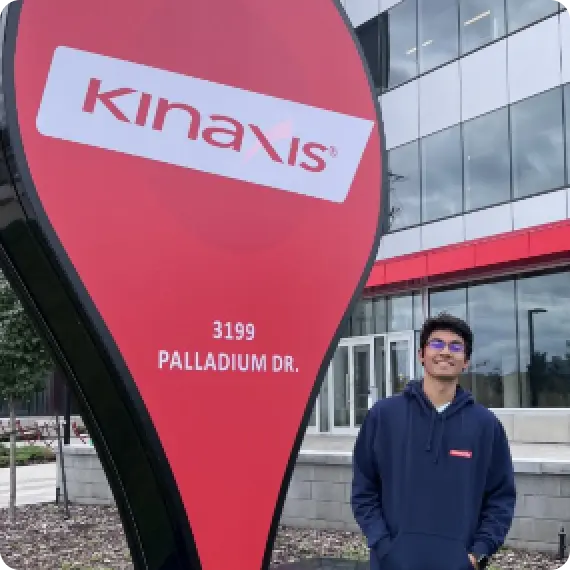
Kinaxis improves hiring coordination efficiency 8x with GoodTime

Kinaxis improves hiring coordination efficiency 8x with GoodTime

~60%

average candidate NPS survey response rate

~78 hrs

average interview
lead time

< 12

hours to schedule and confirm an interview

Industry

Software Development

Location

Ottawa, Ontario, Canada

Company Size

1,000 - 5,000

ATS

icims logo

How it started: Creating an AI-first talent pipeline

At Kinaxis, AI takes the lead in handling the modern supply chain. Their platform helps align data, decisions, and actions so companies can stay in sync and adapt to changing situations with confidence.

Agentic AI is key to their platform, and it also anchors the company’s global talent acquisition (TA) strategy.

“We’re thinking about AI as a way to help the team be more effective and to help us grow,” said Andrea Howey, Senior Director of Talent Acquisition and DEI at Kinaxis.

Specifically, Kinaxis wanted a solution to:

eliminate manual administrative tasks cut global hiring timelines deliver more data and visibility throughout the process

Wiping away these headaches would mean Kinaxis’s recruiters could spend more time on high-value activities, like deeper candidate engagement.

A global talent team gridlocked by time zones

Coordinating interviews was one of the biggest headaches for the team.

“We operate globally, which adds significant complexity to time zone coordination across regions and interview availability constraints,” said Heather Irwin, Talent Operations Manager at Kinaxis. “Last-minute changes required full rescheduling, optimizing across calendars in real time, and automating coordination and follow-ups.”

Scheduling multi-day panels across time zones could take days due to hiring managers’ busy schedules. And without a centralized dashboard, the team got trapped in a game of regional tag and manual effort. Coordinators are based in India and North America, so if a candidate outside of those time zones requested an interview reschedule when a team was offline, the process stalled completely.

GoodTime makes logistics hassle-free

Kinaxis brought in GoodTime to modernize recruitment, and Andrea calls it an “absolute game-changer.”

GoodTime automates interview coordination across regions, time zones, and interviewers—scheduling becomes simpler, teams move faster, and candidates enjoy a friction-free experience. The platform also has the capability to automate across complex global workflows, ridding the team of repetitive scheduling logistics.

Where last-minute changes once required extensive back-and-forth conversations, GoodTime optimizes across calendars in real time. Through features like self-scheduling, the platform has improved communication and clarity for interviewers while giving recruiters candidate status at a glance.

GoodTime has saved countless hours for the Kinaxis team, supercharging global hiring:

  • 90% of interviews are now recruiter-scheduled, up from 10% before GoodTime
  • Reduced the average interview lead time to ~78 hours
  • Dropped interview scheduling times to <12 hours through GoodTime
“Availability is now automatically consolidated. Interviews are scheduled in minutes, and reschedules can happen seamlessly without recruiter intervention,” Heather explained. “The biggest benefit is getting time back for the team.”

Instead of recruiters getting bogged down in calendars, GoodTime makes scheduling so seamless that recruiters can kick off automated workflows with a single click—transforming their recruiters into strategic talent advisors.

“Recruiters have time to work on other things instead of worrying about the logistics of booking interviews,” Andrea added. “We’ve even allowed our interview coordinators to grow into different roles because they’re not focusing on interviewing to the same extent.”

Data that tells the real story

Recruitment information used to live in a gray area of guesswork. Now, Kinaxis sees in color, with a more complete view of the hiring picture.

“Having cleaner, actionable data at our fingertips has improved visibility into hiring, like where the bottlenecks exist, enabling better forecasting and planning for our team,” Heather said. “It’s really allowed our leadership to be able to optimize our team’s performance.”

With real-time insights from GoodTime, leaders can share hard facts with others in the organization. These details change the dynamic with business leaders and keep hiring managers on schedule.

Andrea now incorporates GoodTime data into executive updates, which provide real numbers on who’s being interviewed, by whom, and when.

“With data and dashboards and reporting, I can report to our leaders and explain why or why not something is occurring,” Andrea shared. “Now I know what’s driving our success or what’s preventing us from achieving business goals.”

Having real-time clarity directly impacted candidate engagement, pushing candidate NPS survey response rates to an average of 60%.

“GoodTime helps us operate more efficiently, make better decisions, and deliver a better experience for both our candidates and hiring teams,” Heather said.

Enterprise hiring, smarter and faster

Kinaxis’s TA team once spent countless hours coordinating schedules and multi-panel interviews. GoodTime changed all that, and the team doesn’t want to go back.

“Not having GoodTime would slow down the process, slow down recruiters, put a ton of administrative burden on them and the coordinators, and lead to a less consistent candidate experience across the world,” Andrea said. Meanwhile, she added, “my experience with GoodTime as the global head has helped me rethink how we operate, do things more efficiently, and set the recruiters up for success to drive their portfolios and support the business—while at the same time looking for top talent across the world.”

Not only are interviews scheduled and completed quicker, but Kinaxis can now move with the times.

“The single biggest benefit of working with GoodTime is the combination of speed and scalability,” Andrea said. “We move faster without sacrificing quality or candidate and hiring manager experience, and that’s huge for talent acquisition.”

Where we landed

~60%

average candidate NPS
survey response rate

~78 hrs

average interview
lead time

<12 hrs

to schedule and
confirm an interview

AI for more human hiring.

Join hundreds of world-leading companies that have automated 90% of interview management tasks with human-centric AI.

How Red Hat transformed hiring operations with AI-powered scheduling

How Red Hat transformed hiring operations with AI-powered scheduling

91%

adoption of GoodTime within the first two months

23%

reduction in
interview reschedule rate

52%

reduction in
scheduling time

Industry

Enterprise software / Open-source technology

Location

Raleigh, North Carolina

Company Size

19,000+

ATS

How it started: Putting technology to use

Innovation usually isn’t the work of a lone genius. It’s the product of thousands of people building, refining, and improving ideas collaboratively.

That describes life at Red Hat, where software pioneers work alongside global open-source communities. Together, they turn the best ideas into enterprise-ready solutions for some of the world’s largest organizations.

Their efforts are especially impressive considering the relentless competition. In the software space, staying ahead depends on attracting the best and brightest people capable of solving the toughest problems.

“To be able to innovate in the fast software world, we need to engage the top talent in the market,” said Matúš Pástor, TA Solution Design and Optimization Lead at Red Hat. “The work of our talent acquisition team is integral to the company’s success.”

Matúš believes how people are hired matters just as much as who gets hired.

“Our open source culture is about allowing collaboration to spark innovation and giving freedom to people to be who they are,” he explained. “We’re trying to reflect the same with our hiring process. We don’t want anyone jumping through hoops for us. We want to honor their time.”

Delivering that experience consistently wasn’t always easy. Red Hat hires across a global, highly matrixed organization where employees work across time zones, teams, and customer engagements. As hiring demands grew more complex, coordinating interviews and keeping everyone aligned became increasingly difficult.

A talent team buried in busywork

The problem: Red Hat’s team was spending too much time keeping the hiring machine moving manually. Their to-do list included everything from emailing back-and-forth with candidates to scheduling interviews, sharing information with stakeholders, and coordinating across different teams with different needs.

“All of these activities require a lot of copy-pasting and a lot of lift-and-shift actions,” Matúš said. “It caused a lot of confusion and massive time loss.”

Interview scheduling was especially challenging. Employees worked across multiple regions and time zones, many solving technical challenges at customer sites. Calendars changed at a moment’s notice.

“We always struggled with finding slots in very busy calendars or because of last-minute reschedules,” Matúš shared. The impact was seismic.

Red Hat recruiters spent an average of six hours each week scheduling interviews. Across the organization, that added up to more than 2,500 hours every quarter. Every wasted minute was time lost to more strategic work.

“We reached a point where we needed to dedicate five FTEs just to interview scheduling to try to free up some time for our recruiters to focus on other tasks,” Matúš said.

An AI strategy that keeps hiring human

Red Hat launched a search for a solution that could automate repetitive work while preserving the human side of hiring.

“We specifically wanted a platform that didn’t try to replace recruiters, but at the same time went deep into the complexity of scheduling multi-round interviews quickly and easily,” Matúš said.

GoodTime could do it all. The platform’s flexibility gave the Red Hat team everything they needed to support different working styles across a global workforce while automating the manual tasks that caused friction.

“GoodTime’s ability to set user preferences was a big game changer for us,” Matúš noted. “It allowed us to remove the manual hassle but let us interview the Red Hat way.”

Today, Red Hat schedules all interviews across all functions through GoodTime. Recruiters no longer spend hours hunting for open slots across crowded calendars. They simply identify the right interview team, and GoodTime’s AI Agent, Cori, handles the coordination behind the scenes.

Interviewers manage their own availability, and candidates choose from available time slots with a few simple clicks. This seamless, automated system drove a 23% reduction in Red Hat’s overall reschedule rate. Fewer reschedules meant less coordination work for recruiters, fewer disruptions for interviewers, and a smoother experience for candidates.

“If any last-minute changes happen, Cori replaces the interviewer with somebody else who is available, so we don’t run into any disruptions,” Matúš explained. “It removes the burden completely and improves the experience for everyone.”

Half the scheduling time, 2x the impact

GoodTime achieved 91% adoption within the first two months of implementation and eliminated more than 1,000 scheduling tickets from Red Hat’s queue.

After the first quarter, the company reduced overall scheduling effort by 52%, drastically accelerating hiring lead time. This efficiency allowed Red Hat to redeploy its five full-time scheduling coordinators away from logistics and into more collaborative, advisory roles.

“All this free time is now invested into building relationships with business leaders, engaging candidates, and learning new skills,” Matúš said.

The shift has fundamentally changed the role of talent acquisition within the organization. TA team members are more present as partners and advisors, adding value at every step of the process instead of just catching up with interview requests.

“Candidates and interviewers have a better experience because they no longer have to exchange three or four messages with our TA team just to figure out when an interview is happening,” Matúš explained. “They get the right information at the right time in the right format.”

GoodTime also gives the team a real-time picture of ongoing activities across the hiring process. Everyone can access the same information, which helps hiring managers understand delays, redesign interview structures, and identify bottlenecks. Now, the team leads with evidence instead of guesswork.

“The fact that we can now have real-time insights in GoodTime really changes the dynamic with stakeholders,” Matúš said.

Sustainable, strategic, and scalable hiring

Red Hat recruiters have gained any company’s greatest resource: time. Time to focus on relationships and business partnerships. Time to engage with candidates. Time to be strategic. And time to focus on improving hiring outcomes.

“The ever-increasing hiring pace and growing expectations of what a talent acquisition organization is supposed to manage would not be sustainable without collaborating with GoodTime,” Matúš said.

As Red Hat continues to grow, GoodTime helps the team keep pace without sacrificing the candidate experience and human connections that matter the most.

“GoodTime is a very powerful tool for any company, especially those valuing speed of their hiring process, focusing on automation, and improving the user experience,” Matúš said.

Where we landed

91%

adoption of GoodTime
within the first two months

1,000+

scheduling tickets
eliminated

52%

reduction in
scheduling time

AI for more human hiring.

Join hundreds of world-leading companies that have automated 90% of interview management tasks with human-centric AI.

Talkdesk closes in on 90% automation goal with GoodTime

Talkdesk closes in on 90% automation goal with GoodTime

40%

faster turnaround
time in 1 year

300%

increase in
scheduling volume

5 hour

reduction in
time-to-schedule

Industry

Software / Customer experience automation

Location

Palo Alto, California

Company Size

1,000–2,000+

ATS

How it started: Scaling AI-powered operations

At Talkdesk, progress is all about hiring smart today while setting the stage for an AI-powered tomorrow.

Talkdesk orchestrates the Customer Experience Automation (CXA) that enterprises need to move toward hybrid human- and AI-powered operations. Navigating the changing balance between people and technology has reshaped how companies hire, scale, and compete for talent.

“We’re transitioning to an AI-first workforce,” said Shauna Geraghty, SVP of People at Talkdesk. “That means thinking about what we can automate from the very beginning so our teams can focus on more valuable work.”

With offices across North America, Europe, Latin America, and Asia-Pacific, Talkdesk set two goals for global hiring:

  1. automate at least 40% of all manual hiring tasks
  2. automate 90% of interview scheduling
Nailing these goals would expand recruiter capacity, give candidates a better experience, and accelerate hiring, all without lowering the bar.

Manual friction was a barrier to scale

Global coordination used to be a thorn in the side of the talent acquisition team. Arranging interviews and forming interview panels meant connecting with people across multiple time zones and roles. The entire process was a manual grind from top to bottom, even with a dedicated team.

“It would take days to schedule complex interviews across geographies,” Shauna explained. “There was a lot of back and forth just to align availability.”

Recruiters got sucked into logistics, while coordinators drowned in a backlog of scheduling tickets. Hiring managers also spent more time troubleshooting instead of interviewing. In the end, the lag trickled down to the candidates.

“Candidates dealt with multiple emails and delays that could stretch out for days,” added Donna Barker, Director of Global Talent Acquisition and Talent Operations at Talkdesk. “Internally, we were juggling systems, tickets, and manual inputs just to get interviews on the calendar.”

The process was functional, but it was a barrier to scale and a painful mismatch for an AI-first company.

Orchestrating an AI-first hiring engine

Talkdesk needed a system that could wrangle global complexity, support their AI-first game plan, and minimize manual effort. “We were focused on a solution that was built for complexity, orchestration versus automation, and candidate experience at the forefront,” Donna explained. “We also thought about who will innovate the fastest and who we can have a long-term partnership with.”

Talkdesk tried several platforms, but they only solved a single component of the scheduling effort. GoodTime was the only solution on the market that allowed Talkdesk to automate scheduling from start to finish. The end-to-end capabilities meant Talkdesk could not only revamp their scheduling workflow, but rebuild their talent acquisition strategy around intelligent orchestration and automation. GoodTime also checked the boxes for security, reliability, and scalability, making it an easy choice.

The Talkdesk team deployed GoodTime’s AI agent to:

  • Autonomously match candidates with interviewer availability across regions
  • Execute complex interview scheduling and rescheduling without manual intervention
  • Balance interviewer workloads while eliminating bottlenecks
  • Manage communications between candidates, recruiters, and hiring teams
Recruiters no longer need to leave their ATS to set up interviews. Essential information flows straight into GoodTime, and Cori, their GoodTime AI agent, coordinates the schedule as soon as a candidate picks a slot.

“What used to take days now happens as soon as the candidate picks a slot,” Shauna said.

Rescheduling was another major source of friction. With GoodTime, each candidate can adjust their schedules on their own without sending multiple emails, calendar updates, or Slack messages.

“It’s not just faster,” Donna shared. “It removes the cognitive burden entirely.”

From reactive coordination to strategic partners

Talkdesk talent acquisition teams used to spend a lot of time reacting—troubleshooting delays, answering scheduling questions, and solving problems. By automating the administrative heavy lifting, Talkdesk unleashed their team to focus on work with real-world outcomes.

“Now, we can spend time where it really matters: calibrating on what we’re looking for, thinking strategically about how someone will add value, and partnering with the business,” Shauna said.

GoodTime also offers a comprehensive analytics layer that gives teams real-time visibility into interviewer capacity, scheduling performance, recruiter output, and more. With that, Talkdesk teams can make decisions based on data instead of gut instinct.

“We lead with data. We can identify roadblocks early and bring solutions before they become problems,” Donna said. “We’re not just moving faster—we’re making smarter decisions at every step.”

The impact isn’t limited to one team, either. Hiring managers aren’t bogged down by scheduling conflicts or “availability tag” anymore. They show up to interviews prepared and focused on the candidate, not the calendar.

Moving fast (without breaking things)

Hiring is a huge part of brand identity for an AI-first company like Talkdesk. Where their old experience was clunky and out of sync with their values, GoodTime puts their AI-first identity front and center. Candidates are a part of a modern process as soon as they apply, and it sets the tone for the entire journey.

“That first experience showcases what it’s like to work here,” Shauna said. “They can see the automation live, and it elevates the entire experience.”

Since implementing GoodTime, Talkdesk has achieved:

  • A 17-hour average scheduling turnaround—47% faster than previous benchmarks
  • 5 hours reduction in time-to-schedule
  • A 300% increase in scheduling volume
Even though hiring volume has skyrocketed, Donna confirms the surge came with “zero drop in the candidate experience.” Candidates can track progress instead of waiting days for confirmation. They can schedule interviews at times that are convenient for them and adjust as necessary. These adjustments usher candidates smoothly through the hiring process, without any frustration.

“Speed at scale is critical, but not at the expense of what actually matters,” Donna emphasized. “With GoodTime, we can do both.”

A global partnership built to innovate

Talkdesk wanted to find a partner that could support their scale and solve long-standing scheduling problems. In GoodTime, they found everything they needed, and gained space to innovate in a way that fits their style.

“If we didn’t have GoodTime, we’d be set back,” Shauna said. “Not just in efficiency, but in our ability to make a strategic impact.”

With GoodTime handling the complexity, Talkdesk talent acquisition teams have more bandwidth, better visibility, and more influence across the business. In achieving their automation goals, they are filling roles faster so the right people can drive the business forward.

“There’s a big difference between seeing a demo and seeing it actually work at scale,” Donna said. “GoodTime delivered.”

Where we landed

40%

faster turnaround
time in 1 year

300%

increase in
scheduling volume

5 hour

reduction in
time-to-schedule

AI for more human hiring.

Join hundreds of world-leading companies that have automated 90% of interview management tasks with human-centric AI.

Toast slashes interview scheduling time by 50% with GoodTime

Toast slashes interview scheduling time by 50% with GoodTime

50%

faster interview
scheduling

55%

fewer interview cancellations

139%

growth in Toast’s
interviewer pool

Industry

Technology

Location

Boston, Massachusetts

Company Size

5,500

ATS

Prioritizing hospitality in hiring

Toast is famous for helping restaurants run better, providing an all-in-one platform that empowers hospitality businesses to operate efficiently, grow sustainably, and better serve their customers. As Toast continues to expand within and outside the U.S., their talent team has focused on bringing that same level of operational excellence to their own “back-of-house” hiring process.

“Hospitality is at our core,” said Vice President of Talent Acquisition, Operations and Workspaces Jeff Moore. “When you think about how we translate that hospitality mindset into our candidate interviewing, having a really rock-solid scheduling platform and tools is really important to deliver the experience we’re looking for.”

As hiring activity scaled, Toast’s talent team recognized the need for a system that could keep pace without compromising the empathy, responsiveness, and care that define the company’s brand.

The friction of global scheduling at scale

Rapid global expansion pushed Toast’s manual coordination efforts to a breaking point. Different time zones and multi-day technical panels caused logistical friction that threatened to stall hiring velocity and upset the experience for candidates, recruiters, interviewers, and hiring managers.

“Interview scheduling is hard, but it’s a key component to a candidate’s journey,” Jeff said. “It’s how they first experience the company.”

As hiring activity increased, the team’s manual efforts struggled to stay afloat. Recruiters and candidate experience specialists had to juggle matching the right interviewers to each role while keeping candidates informed every step of the way. Scheduling interviews often meant playing what Senior Director of Talent Operations Lori Busch called “calendar Tetris” as teams hunted for available time slots. Training and shadowing interviewers added another layer of complexity, especially for technical roles requiring specific expertise.

As these demands grew, the talent team’s manual processes made it harder to move quickly and consistently. They began searching for a platform that could reduce manual coordination while supporting a more consistent, human experience at scale.

A more human hiring experience through AI-driven automation

Toast’s search led them to GoodTime, which overhauled the team’s scheduling engine in a number of ways:


  1. GoodTime has a deep integration with the Greenhouse applicant tracking system. It plugs directly into the existing ecosystem without creating any new hiccups for recruiters.
  2. Templatized solutions allow the team to scale without risk of team members duplicating each other’s efforts.
  3. Greater flexibility means the team can accommodate various scheduling needs. GoodTime offers options like self-scheduling and bulk scheduling while maintaining manual scheduling options for complex situations.
  4. The platform delivers data and insights around metrics like the number of interviews each interviewer completes, which candidates are canceling, which ones are rescheduling, and where to find bottlenecks.

“We didn’t have that level of visibility and accountability for our interview teams prior to GoodTime,” Lori said.


Beyond scheduling, GoodTime AI agent, Cori, took on the heavy lifting, strengthening Toast’s interviewer training and shadowing programs with fresh training paths and automation. Suddenly, recruiters could spend less time managing logistics and more time focusing on candidates and interviewers.


At Toast, automation didn’t replace the human touch; it amplified it. GoodTime’s AI agent enabled the Toast team to easily handle complexity so the hiring experience remains thoughtful, responsive, and aligned with the company’s hospitality-driven values.

Faster scheduling, fewer disruptions

Since implementing GoodTime, Toast has ignited their hiring velocity and stabilized their global talent pipeline.

“With GoodTime, we’ve seen 50% faster interview scheduling and 55% fewer cancellations,” Jeff said. “When you zoom out, what’s great about that is we’re getting people scheduled faster with less internal friction.”

With scheduling data centralized in GoodTime, Toast’s talent team has a comprehensive view of their entire interview picture through transparent, actionable intelligence, making it easier to address issues before they impact candidates or hiring teams.

“Now, we can actually understand what’s happening and where things are slowing down,” Jeff said.

GoodTime has also supported Toast’s efforts to scale their interviewer pool much faster than before. Historically, the process was reliant on spreadsheets, tagging, and manual data entry, which was time-consuming for Toast’s candidate experience team. Adding automation capabilities removes the need for spreadsheets and creates a much faster way to ramp up interviewers.

“We’ve been able to increase our interview pool by about 139% because of the better visibility and better tracking in the training program. It’s easier to understand who’s scheduled and available to interview,” Lori said.

Lori also noted that GoodTime has shortened Toast’s time to schedule: “We can schedule in less than 12 hours as opposed to less than 24.”

These results have allowed Toast to move faster without sacrificing experience. Candidates benefit from quicker scheduling and fewer last-minute changes, while recruiters and interviewers spend less time managing logistics and more time engaging meaningfully in the hiring process.

“Changing a job is such a stressful experience and a big moment in people’s lives,” Lori said. “We want to make sure we’re helping people through that process and big decision in the way that we best can. It speaks to how we’re going to treat people as employees.”

For Toast, GoodTime’s impact goes beyond efficiency. By stripping away the logistical noise, GoodTime turned a scattered process into a competitive advantage. Toast is now free to build a world-class team while staying true to the hospitality-driven experience.

Where we landed

50%

faster interview scheduling

55%

fewer interview cancellations

139%

growth in Toast’s interviewer pool

AI for more human hiring.

Join hundreds of world-leading companies that have automated 90% of interview management tasks with human-centric AI.

HubSpot boosts hiring productivity by 75% with GoodTime’s AI agent

HubSpot boosts hiring productivity by 75% with GoodTime's AI agent

75%

increase in team productivity

30%

faster
scheduling

152%

increase in active interviewers

Industry

Technology

Location

Cambridge, Massachusetts

Company Size

5,000–10,000

ATS

Hiring at the speed of SaaS

Anyone who thought AI agents were a trend was wrong — they’re here to stay.

As a leading customer platform for scaling businesses, HubSpot helps more than 258,000 companies grow through its marketing, sales, and CRM software. With a global team of 8,500+ across 15 countries, their ability to attract and hire great talent at scale is critical to their continued success. For HubSpot Vice President of Talent Acquisition and Mobility Becky McCullough, AI is becoming a core part of how the talent acquisition (TA) team works.

“It’s so important that at every stage of our candidate life cycle, we are being really thoughtful about how to drive a great experience for our candidates, interviewers, and hiring managers, while also making sure that it is efficient, fast, and driving better outcomes,” Becky said. “AI is going to play a key role in automating a lot of those repetitive tasks that can oftentimes slow down a talent acquisition team.”

To bring that vision to life, HubSpot has long invested in a best-in-class hiring tech stack — including GoodTime, a partner that’s scaled alongside them from early growth to global reach.

“GoodTime has been with us even when we were smaller, and it’s grown with us. It’s been able to meet our needs through all of those changes in the lifespan of a company,” said Jennifer Walker, Global Talent Acquisition Coordination Manager at HubSpot.

Scaling smarter and defeating burnout with Cori, GoodTime's AI agent

Before GoodTime, interview coordination was slow, manual, and error-prone. Reschedules were frequent. Recruiters and coordinators were overwhelmed by logistical overhead.


“We had manual process after manual process, which required a lot of human effort and led to lots of human error. We also had logistical problems in interview coordination, which meant it took a long time to schedule interviews,” Becky said. “We were finding that we were rescheduling interviews way too often.”


That rescheduling took valuable time, contributing to burnout and productivity loss.


With thousands of interviews across 15+ countries each year, the team needed a solution that could scale intelligently without sacrificing the human touch. Enter GoodTime.


By adopting Cori, GoodTime’s AI agent, HubSpot streamlined and standardized its global scheduling engine. Cori eliminates manual delays, surfaces the right interviewers, and keeps the team in sync — all while creating space for more meaningful human connection.


“After implementing GoodTime, we’ve not only seen faster interview scheduling — we’ve seen happier candidates, happier interviewers, and a happier coordination team,” Becky said. “It’s been the rising tide that has lifted all boats.”


GoodTime was the ultimate solution for scheduling scalability. It allowed the TA team to standardize and automate core elements of interview coordination, interviewer training, and analytics. Before long, it became much easier for the TA team to scale their global interviewing engine while staying true to their human-first values.

AI that aligns with company values

HubSpot’s AI and TA strategies are one and the same. First and foremost, it features a human-centric approach to AI. This means:

  1. Humans always call the shots
  2. Transparency is non-negotiable
  3. AI should create more moments for meaningful human connections
“We need automation, but also empathy. We want to be where those two things meet,” Jennifer said.

HubSpot’s partnership with GoodTime puts that approach front and center.

With GoodTime’s AI agent, HubSpot can run sophisticated automations that simplify scheduling and get rid of routine work. These capabilities increase the talent team’s bandwidth so they can focus on other tasks.

“What stood out to me about GoodTime was how much their AI philosophy aligns with ours. They are intentional about using AI and automation to eliminate repetitive, mundane tasks. That way, our recruiters, coordinators, and interviewers can spend time building relationships with candidates and connecting with them when and where it matters most,” Becky said.

Elevated hiring experiences on both sides of the table: Candidates and interviewers

GoodTime’s solution wasn’t just good for the business, but also for the people powering the business. Feedback on the interview process has undergone a 180° turnaround.

“What used to be a pain point in the hiring process is now a bright spot, and we get continuous positive feedback that our team delivers a great level of service with GoodTime,” Becky said.

Since onboarding GoodTime, HubSpot’s active interviewer pool has surged by 152%, reaching 1,600 global interviewers who have completed over 3,000 training paths. This extra support has decreased burnout, increased scheduling speed, and elevated the candidate experience.

Tackling global scale and local nuance

HubSpot’s global hiring engine demands both structure and flexibility — and GoodTime delivers.

With Cori’s support, the team has created a globally consistent framework for interview scheduling, interviewer training, and communications, while allowing customization by region, language, and timezone.

“GoodTime tools like block scheduling, multi-day scheduling, and varying between teams allow us to meet our business locations where their needs are,” Jennifer said.

Now, all HubSpot candidates can enjoy the same seamless interactions, no matter where they are or what language they speak.

A partnership built to grow

HubSpot’s partnership with GoodTime goes beyond functionality — it’s rooted in shared purpose and vision when it comes to thoughtful, human-centric AI.

“GoodTime is not just a scheduling tool for HubSpot,” said Jennifer. “It allows us to move quickly, be bold, innovate, and be deeply human while still utilizing AI features and technology, which fit our company values.”

As AI transforms the hiring landscape, HubSpot and GoodTime are innovating together — proving that you don’t have to choose between speed and empathy.

Where we landed

75%

increase in team productivity

30%

faster scheduling

152%

increase in active interviewers

AI for more human hiring.

Join hundreds of world-leading companies that have automated 90% of interview management tasks with human-centric AI.

Glovo Prioritizes People, Scheduling Interviews 73% Faster with GoodTime

Glovo prioritizes people, scheduling interviews 73% faster with GoodTime

73%

faster interview scheduling

62%

reduction in administrative errors

25%

immediate improvement in time-to-hire

Industry

Consumer Services
Location

Barcelona, Spain

Company Size

3,000-5,000

ATS

Finding employees who believe in the mission

Glovo is on a mission to increase access to everything a locality offers, from fresh meals and groceries to gifts and gadgets. The company’s on-demand app connects customers, local businesses, and couriers so users can enjoy what they want, when they want, where they want.

Glovo depends on talented team members to power this fast-paced, global operation and is always seeking exceptional talent who shares the company’s vision for innovation, speed, and service.

“From a talent acquisition perspective, Glovo is focusing on quality of hire,” said Head of Talent Acquisition Robbie Simpson. Robbie and his colleagues are committed to leveraging modern tools and processes to ensure the company builds the strongest possible team. That means getting familiar with AI.

“AI is going to be a huge component in how we go about talent acquisition,” Robbie said.

Embedding AI in their processes will speed up decision-making and automate less strategic tasks, allowing recruiters to add more value in other places, like coaching hiring managers, finding the best candidates, and improving talent density.

Before they could reap the rewards of the technology, however, they had to determine where AI would have the greatest impact.

“Ultra-manual” hiring process burdened the team

Recruiters had to coordinate with hiring managers while balancing calendars, time zones, and competing priorities. With ~3,000 employees spread across 23 countries, coordinating talent acquisition data increasingly ate into recruiters’ time and, at times, became unwieldy.

“Our scheduling process was ultra-manual, which meant looking into people’s calendars, going back and forth with hiring managers, and trying to move meetings to make things work,” Robbie said. “Sometimes that meant one or two touchpoints — but sometimes it meant 10.”

Wanting to free his team from administrative tasks so they could engage in more strategic work, Robbie began searching for a solution that would make their lives easier while futureproofing the hiring process for the business.

That solution turned out to be GoodTime.

A smooth rollout for a forward-thinking solution

GoodTime offered Glovo strong analytics and advanced AI capabilities. More importantly, it promised to meet Glovo’s needs as the company scaled.

“We didn’t just want to partner with a company with a good product now,” Robbie said. “We were looking for a company with a strong roadmap. With the rate at which AI is developing, we wanted to partner with people already building the solutions we don’t even know we’ll need yet.”

Glovo doesn’t just use automation to speed up scheduling. GoodTime’s intelligent AI agents actively manage load balancing, rescheduling, and interviewer selection — letting recruiters focus on high-value work that actually moves the needle.

GoodTime was also compatible with Glovo’s applicant tracking system, Greenhouse, which made implementation fast and easy. The process was so frictionless that some recruiters and hiring managers didn’t even notice the switch until they started receiving messages.

“That’s great because it shows that we’re not being disruptive, and the recruiters and hiring managers haven’t had to adapt dramatically,” Robbie said. “Integrating a new tool without a huge adoption curve is super beneficial, and it allows us to use that change management capital in other areas.”

With access to detailed analytics, the team has the insights required to drive marginal gains and large-scale strategic decisions that shape the company’s trajectory. The data from GoodTime has been invaluable, even allowing Robbie and the team to reevaluate key metrics as they further develop current and long-term plans.

“We’re not just looking at metrics like quality of hire now,” Robbie said. “We’re also reassessing where our bar is for things like time-to-fill and time-to-hire. What GoodTime is really good at is enabling us to quantify how much we can improve metrics and whether those improvements are within our control.”

Other advanced features help Glovo remain agile and flexible enough to respond to immediate business needs.

They recently faced a situation where a tech team needed to dedicate all their time to a single feature and couldn’t do any interviewing. GoodTime enabled Glovo to make on-the-fly adjustments.

“Because of the GoodTime tagging system and interview load management, we were able — in a matter of minutes — to shift that workload and make sure they had no interviews for the next few weeks,” Robbie said. “We increased the number of interviews handled by another team and could guarantee the CTO that specific team wouldn’t get any interview requests.”

Moments like these build trust in the system and demonstrate that everyone works toward the same goals.

Faster scheduling, smarter hiring, and 62% fewer errors

The TA team noticed a striking difference in the first four weeks of using GoodTime. Errors, like accidentally booking someone for three interviews a week instead of two, used to cause unnecessary touchpoints and rescheduling. GoodTime eliminated those issues.

“Even without optimizing, we’ve seen a 62% reduction in admin errors,” Robbie said.

Glovo has also noted a 73% improvement in time-to-schedule, and overall time-to-hire has already dropped by 20–25%.

Leadership has welcomed the TA team’s new data-driven approach. “Going back to them with these data points helps us speak the same language and get great buy-in,” Robbie said.

The memories of manually examining calendars and engaging in multiple rounds of communication with hiring managers are still fresh, but the team has laid the groundwork for a massive overhaul in their hiring process. GoodTime gives everyone more room to breathe, allowing them to perform more valuable work and creating career growth opportunities for coordinators who previously got lost in admin work.

“Before, it was really hard for our coordinators to focus on growing in certain areas because they always had to be available,” Robbie said. “GoodTime is helping me as a leader build our future recruiters.”

The biggest benefit of adopting Good Time is knowing that it can scale to whatever size necessary to support Glovo’s growth. This knowledge means Robbie can shift his strategy to focus on people rather than tools — while staying at the forefront of AI-based hiring practices.

“When I have stakeholders ask, ‘Hey, how is TA embracing AI?’ It’s fantastic to be able to show them that we’ve got a product that is already going through restorations and we’re going to be able to integrate with more AI tooling very, very quickly,” Robbie said. “TA is spearheading AI within Glovo. Whereas traditionally, people functions have been behind the curve, I actually feel like now we’re ahead of the curve.”

Glovo’s TA team is proof of how impactful they can be when they put AI to work.

Where we landed

73%

faster interview scheduling

62%

reduction in administrative errors

25%

immediate improvement in time-to-hire

AI for more human hiring.

Join hundreds of world-leading companies that have automated 90% of interview management tasks with human-centric AI.

How Databricks scaled 10x without compromising on quality of hire

How Databricks scaled 10x without compromising on quality of hire

90k+

interviews scheduled each year

10x

growth in hiring in five years

25%

reduction in cancellations

Industry

Software Development

Location

San Francisco, CA

Company Size

5,000-10,000

ATS

A fast-growing global workforce

The Databricks story is one of massive growth.

Increased demand for AI solutions has led to significant year-over-year (YoY) growth for Databricks, a platform that simplifies and democratizes data and AI to help data and AI teams solve the world’s toughest problems. Databricks has a client base of more than 10,000 organizations, including many Fortune 500 companies, and their impressive growth meant they needed a way to quickly hire the best possible talent.

The Databricks team used to rely on manual processes, which left information scattered across multiple spreadsheets and created a lot of administrative work for the team. [b] These challenges were magnified as Databricks scaled, and the team knew something had to change.

“When you’re 400 people and you hire the next 400, it feels hard,” said Jonathan Reyes, VP of People and Talent Acquisition Operations at Databricks. “But it’s much harder when you’re 4,000 people and you hire the next 4,000.”

Using AI agents to optimize hiring

Given their industry and expertise, partnering with AI-driven technology was a top priority for Databricks.

“We believe in AI,” Jonathan said. “When it comes to hiring, we want to move really, really fast. AI is an incredible tool to help us move faster across that lifecycle.”

They discovered GoodTime, a platform designed to meet the complex needs of talent acquisition teams worldwide. With an emphasis on human-centric AI that augments human abilities, GoodTime aligned perfectly with Databricks’ values.

GoodTime gave Jonathan and his team the features and support they needed to craft an ideal hiring experience — for candidates and hiring teams alike.

“GoodTime is a key partner to us,” Jonathan said. “If we’re going to reach our hiring target this year, we’re going to do it because we have partners like GoodTime.”

High-touch experiences at scale

When any company is hiring at scale, it’s easy for teams to overlook two things:

  1. Clear communication about expectations and outcomes
  2. Transparency around processes
These oversights can leave hiring managers overwhelmed and candidates feeling like they’ve been ghosted.

Using GoodTime, the team created new workflows and automations that propel candidates through the hiring process faster while crafting a world-class, high-touch hiring experience.

“It’s an important tool on both sides of the equation to create transparency, ownership, and accountability for all parties,” Jonathan said.

Candidates feel a greater sense of control and transparency because they can monitor the hiring process through GoodTime. On the back end, increased visibility and automation help hiring managers know exactly where they need to be, how they need to show up, and what they need to do. With GoodTime’s AI agents identifying the right interviewers, auto-rescheduling, and surfacing insights behind the scenes, the Databricks team stays laser-focused on what matters: connecting with talent.

“GoodTime has allowed us to increase the productivity and output from our recruiting coordinators in a measurable way,” said Jonathan. “More importantly, it’s increasing our capacity. Now, our coordinators engage in communications and create a higher touch feel with our candidates.”

More data and insights reduce time to hire

Not surprisingly, data is at the heart of everything Databricks does. GoodTime gives them the opportunity to collect more measurable data than they could before.

“Data is the most insightful piece, and one of the most important things we get out of GoodTime,” Jonathan said.

Databricks uses this newfound data to tweak their processes, ultimately reducing the time spent on scheduling and the overall time to hire. These changes go a long way to boosting the overall velocity that’s so crucial to operations.

“When you’re in hypergrowth and hyperscale, you want to do things as quickly as possible,” said Jonathan. “We’re not just growing. We’re growing really, really fast. And GoodTime allows you to move a candidate through the funnel seamlessly.”

The team easily manages key hiring components like targets, communication, training, and scheduling. They can set and track measurable targets through GoodTime, and by doing so, they can see whether they’re on the right course.

“We use an equation to work out how many people we are going to need at each stage and how fast we need to move them through the funnel in order to get to that target,” said Jonathan. “That is really important when you’re in the situation that we are at Databricks, where growth is our principle and the most important strategic goal.”

The company now conducts around 90,000 interviews each year, with about 15% of those needing rescheduling. While recruiters and hiring teams are now much more efficient, they see even more room for improvement.

“We know that we can get essentially two people’s worth of work by reducing reschedules by even 5%,” said Jonathan. “We’re trying to be efficient with our team as well as accelerate the hiring process.”

Managing growth with stellar experiences

In 2020, Databricks had just 800 employees. By 2025, the company grew to 8,000 employees — that’s 10x growth over five years. GoodTime makes that growth much more sustainable, leading to better experiences and outcomes.

“GoodTime is an AI-powered tool that allows us to not only quickly engage and keep our candidates informed, but also create and accelerate a smooth process and design an experience to reflect what it’s like to work at Databricks,” Jonathan said.

Because of this, GoodTime is more than just another part of the Databricks tech stack. It’s an essential piece of their overall hiring strategy.

“The advantage of GoodTime is that it’s been able to scale with us as we go through our journey of growth year on year. And I think that’s become a critical and significant reason why we continue to partner with GoodTime,” Jonathan said.

Where we landed

90k+

interviews scheduled each year

10x

growth in hiring in five years

25%

reduction in cancellations

AI for more human hiring.

Join hundreds of world-leading companies that have automated 90% of interview management tasks with human-centric AI.