3 Reasons Why Exit Interviews Are Critical for Recruiting

Working in recruiting isn’t just about bringing in new talent. It’s also understanding why current talent decides to leave. Both are two sides of the same coin. In this sense, it’s crucial to take part in exit interviews with employees looking to explore other opportunities.

Yes, there’s never enough time in the day for recruiters, and burnout from stretching yourself too thin is killer. But trust us—getting involved in exit interviews will pay off. Here are three things you can learn from exit interviews to apply to your recruiting strategy.

1. Employee Dissatisfaction Trends

An exit interview is the perfect opportunity to facilitate an open discussion with employees about why they’re leaving and what wasn’t satisfactory about the company. Whether it’s the company’s culture, benefits, or salary, being a part of exit interview discussions will help you identify patterns that cause employees to leave.

If every employee leaving mentions a negative company culture, for example, this is your opportunity to make strides to fix it and reduce employee turnover.

2. Improve Your Job Offer

Not only will an exit interview help you understand why an employee wants to leave, but it’ll also help you understand why an employee accepted an offer at another company.

Did they accept because the company had better benefits? Because the salary was higher? They offered flexible work options?

Finding out why current employees left will help you make your own job offers more appealing to current talent. And in today’s competitive job market, any insight into what attracts candidates is invaluable.

3. Strengthen Your Company Brand

Your company brand impacts your recruiting and your recruiting strategy. Your brand isn’t just what you put on social media, it’s also what former employees have to say about you on employer review websites.

Meeting with employees before they leave gives you an opportunity to address any of their concerns and grievances with the company. While you can’t control what they post online, an honest conversation with an upset former employee is a great way to mend a potentially negative relationship.

Whether an employee leaves due to the commute, a disagreement with a manager, or something else, it’s important to use the exit interview to make them feel heard and apply their feedback to ensure that the negative things they experienced don’t happen to others.

Next Step: Apply Feedback to Your Recruiting Strategy

You’ve had candid conversations with former employees, repaired negative relationships, and now have a better understanding of how to differentiate yourself in a competitive market.

It’s nearly impossible to address every piece of feedback for larger organizations. However, take the time to meet with the relevant people to discuss the concerns the former employees raised. This will help you, hiring managers, recruiters, and department heads develop a game plan to make changes.

No matter the company, there will always be some form of employee dissatisfaction. Your reaction to dissatisfaction is what helps or hinders the growth of your organization.

Big or small, any feedback during an exit interview is important, and all former employees should feel heard and understood. After all, you never know if your paths will cross in the future.

Keep Talent Smiling with GoodTime Hire

We’ve gone over several crucial ways to use exit interviews to your advantage—but wouldn’t it be great if employees didn’t have a reason to leave?

Believe it or not, the secret to retention starts in the hiring process. When you successfully cater to candidates, you create new hires that are eager to stay with your company for the long haul.

And the key to exceeding the expectations of candidates? Leveraging GoodTime Hire.

Hire automates coordination, builds relationships during interviews, and provides actionable insights to continuously improve your connections with applicants.

Interested in learning all about how Hire can give your recruiting process an edge? Say no more.

How Recruiters Can Stop Ghosting Candidates

Recruiting is a two-way street: there’s the candidate that’s interested in the company, and the company that’s interested in the candidate. As a recruiter, you’re the bridge between the two. Unfortunately, recruiters have a ton of responsibilities. It can be easy to find yourself accidentally ghosting candidates because you’re balancing schedules, tracking down missing interviewers, etc.—you know how it goes.

However, ghosting candidates will do more than just burn that one candidate. It’ll significantly harm your company’s brand. In today’s competitive job market, you don’t want to take any risk of turning away top talent.

Here are three ways recruiters can put an end to ghosting candidates.

1. Keep Consistent Communication

The same way that this helps prevent a candidate from ghosting you, a consistent communication plan prevents you from ghosting a candidate.

A core part of cultivating a strong candidate relationship is keeping the candidate informed about the status of their application, when their next interview will occur, and if they didn’t make it through the process. These touchpoints are all part of a great communication plan.

While some companies might have policies in place to make sure their recruiters are reaching out in a timely manner and keeping that connection with candidates, if your company doesn’t, it’s really up to you and your team to follow up and make communication a priority.

A great way to cut through the noise of interview reminders, candidate follow-ups, and interview prep is by leveraging the different tools you have in your recruiting tech stack. Which brings us to our next tip:

2. Leverage Your Recruiting Tech Stack

You have a ton of responsibilities. Unfortunately, cloning yourself isn’t possible, and there’s just no way for you to track down interviewers while also communicating with candidates.

Luckily, there are a lot of tools out there to automate different aspects of candidate communication. One of these tools is a Meeting Optimization Engine.

A Meeting Optimization Engine automates scheduling to free up your time to focus on candidate-centric tasks. Not only that, but it also sends out automated reminders to candidates and interviewers about their upcoming interview.

This means that you can spend more time prepping candidates, giving feedback, and making sure your company is represented well.

3. Load Balancing

Sometimes, candidates get ghosted simply because there’s just too much on your plate to get back to everyone. That’s where load balancing comes in.

Load balancing is an integral part of any recruiting team, but it can be difficult to put into practice. After all, a heavy load for one recruiter might not be as heavy for another. It also depends on the reqs that each recruiter is trying to fill. Some are just more involved than others.

As a team, it’s important to have weekly check-ins to make sure that no one recruiter feels overwhelmed while others are twiddling their thumbs.

No recruiter means to ghost candidates, and the bad news is that it happens. The good news, however, is that there are processes and tools you can leverage to make sure that ghosting candidates is a thing of the past.

Ready to Level up Your Connections With Candidates?  

Time’s up for interviews full of scheduling headaches. It’s time for candidate-centered, connection-driven interviews instead.

To read more about how to make that happen for your team, download our eBook, Five Steps to Hiring Top Talent at Scale.

3 Surefire Ways Recruiters Can Prevent Candidate Ghosting

Ghosting is common when it comes to dating, but its rise in recruiting can be jarring for even the most seasoned recruiters. It’s frustrating when a candidate ghosts you. While you can’t stop every candidate from disappearing into thin air, there are certain things you can do to try and prevent candidate ghosting.

Here are three surefire ways you can reduce the chance that a candidate ghosts your hiring team.

1. Establish Consistent Communication Parameters

Consistent communication is the opposite of ghosting. In a realm where a lack of communication almost seems commonplace, it’s up to the recruiter to break the trend.

Set clear SLAs for all communication with candidates. Make sure you block off time in your schedule to respond in a timely manner. Whether it’s answering questions or sending a quick “good luck” note before an interview, keeping up communication is important for building a close candidate relationship.

This communication should also be continued after the candidate receives their offer. To recruiters, it can feel like a no-brainer for candidates to accept. However, most candidates juggle multiple offers from different companies. If you’re offering to an engineer, that becomes even more difficult.

If you built a close relationship with the candidate beforehand, you’re far less likely to experience candidate ghosting. Go out and start building those connections!

2. Keep the Process Candidate-driven

A lot of recruiting is company-focused. There are long wait times to hear back about a submitted application, interviewers tend to ask the same questions, and it can take weeks to hear back about an offer (or rejection).

Put the candidate in the driver’s seat and make sure you’re giving them the best experience possible. Make an effort to get to know the candidate outside of interviewing—which means building a personal relationship with them.

As a recruiter, you’re the first real touchpoint that candidates have with the company. You’re who candidates will imagine working alongside.

3. Use Candidate Relationship Intelligence

At the end of the day, there will always be candidates who ghost. However, creating a strong candidate relationship from the beginning and fostering consistent communication are great ways to prevent it. Candidates are less likely to ghost when they feel like their time is valued and they have a great connection with their recruiter.

Want to give your anti-candidate-ghosting efforts an extra boost? Enlist the help of the right recruitment tech—like GoodTime Hire.

Hire’s Candidate Relationship Intelligence enables candidates to drive the interview process, from scheduling their interview all the way to showcasing their skills in front of confident, trained interviewers.

Interested in learning more about how Hire can give your talent acquisition process an edge? Come right this way.

Weekend Interviews: Yes or No?

Getting an interview scheduled is more than just making sure the candidate and interviewer’s schedules line up. It also involves the candidate taking a day off from their busy work schedule to speak with your team.

While recruiters certainly shouldn’t be expected to work outside of their normal hours (though many of them do), conducting interviews between candidate outreach and regular meetings can create a lot of context switching. This makes it difficult to properly focus on one task.

The Case for Weekend Interviews

Candidates are encouraged not to prioritize their current job in favor of their potential new one. However, this can put candidates in the awkward position of taking multiple days off.

With some interviews taking an entire day, the company with the pain-free interview process is the one that nabs candidates.

Opening up free time for candidates to interview on the weekends is a way for them to have a candidate-driven experience.

However, it shouldn’t come at the expense of a recruiter’s time.

Are Weekend Interviews Worth It?

There are more jobs in the US than workers. Because of this, candidate experience is a key differentiator. There are many ways to give candidates a great hiring experience, from conveying company mission and values in the interview process, to replying to candidates in a timely manner.

Are weekend interviews part of that equation?

Candidates (and some interviewers) with busy schedules will welcome the opportunity to have an additional interview slot that fits into their calendar, but it’s important to remember that the interview is a reflection of your company and your company’s culture. For many candidates, working weekends isn’t exactly what they’d like to picture.

How Can You Prioritize Busy Candidates?

If hosting weekend interviews isn’t something you see in your future, the initial question still remains: how can you interview busy candidates without disrupting their schedule?

A lot in the interview process has stayed the same since its inception, including the prioritization and scheduling of interviews. This is where technology and tools come in. With something as fast-paced as recruiting, introducing automation is one of the few ways that you can not only see every candidate, but also genuinely connect with each of them.

Some teams (like Box) utilize a Meeting Optimization Engine to assist with hiring. This makes scheduling not only easier, but, most importantly, candidate-driven.

On the most basic level, candidate-driven scheduling is putting the candidate in the driver’s seat to choose their interview. Candidates are busy. By enabling them to choose their interview slot based on their interviewer’s calendar, companies equally prioritize their candidates and interviewers.

At the end of the day, it’s the company with the shortest time-to-hire that succeeds, and you don’t need to open up additional interviewing days to do that. 

Ready to Level up Your Candidate Experience?  

Time’s up for interviews full of scheduling headaches. It’s time for candidate-centered, connection-driven interviews instead.

To read more about how to make that happen for your team, download 5 Steps to Hiring Top Talent at Scale.

3 HR Tools All Recruiting Coordinators Need for Success

A common misconception about recruiting coordinators is that you’re only scheduling interviews and setting up candidate travel/reimbursements. However, coordinators knows that’s not the full story. Recruiting coordinators possess strong communication skills, intimate knowledge of hiring best practices, and directly impact all interviews. Yep, it’s a big job. And with a job like this, having a little help from HR tools sure does help.

Possessing a robust HR tech stack comes in handy in a multitude of ways. Above all, it’s difficult to leverage all of your knowledge to improve hiring practices without using the right HR tools to free up your schedule. Here are three tools that are key to your success.

1. A Hiring Assessment (Pre-employment) Tool

There are many different types of assessments/pre-employment tools out there, so it’s important to pick the one that will help you find the candidates with the skills necessary to excel at their future job. The most common assessments are job knowledge tests and personality tests.

Generally, recruitment teams administer these tests once a candidate passes an initial phone screen, but they can be implemented at any point within the hiring process. Administering one before a time-consuming onsite interview is a great way to filter out candidates and confirm their skills.

In fact, a recent CareerBuilder survey found that hiring managers caught 56% of candidates lying about the skills that they have on their resume. Leveraging an assessment can save you valuable time—and also provide your hiring managers and interviewers with a great pool of (actually) qualified candidates.

2. A Candidate Sourcing Tool

As a recruiting coordinator, you know more than anyone who exactly your company is looking for and how long the interview process will take. Leveraging a sourcing tool is a great way to help automate one of the most time-consuming aspects of your job.

So, how does it work? A typical sourcing tool takes any of your open job postings and automatically finds candidates with the skills to match the posting. It’s a great way to augment the outreach that you’re already doing—and you might even find candidates you wouldn’t have found on your own.

3. An Interview Scheduling Tool

The most time-consuming aspect of a recruiting coordinator’s job by far is scheduling interviews. Don’t believe us? The next time you schedule an interview, try timing yourself. You’ll be surprised (and maybe disheartened) by just how long it takes to line up busy schedules.

Software with interview scheduling capabilities, however, automate that entire process. This means that everything from phone screens to onsite interviews are on the books in under one hour. Speeding up this typically arduous process means you can spend more time talking to candidates and helping prepare them for their interviews. With a reported one million more job openings than unemployed individuals, any tool that can improve the candidate experience (and, thereby, differentiate your company) is a game changer for your organization.

Being a recruiting coordinator can feel a lot like juggling. Leveraging any of the above tools will finally give you the opportunity to use the skills you’ve been cultivating. And who knows; with all that extra time, maybe you’ll finally be able to work on an interesting project to nab that promotion.

Ready to Level up Your Candidate Experience?  

Time’s up for interviews full of scheduling headaches. It’s time for candidate-centered, connection-driven interviews instead.

To read more about how to make that happen for your team, download 5 Steps to Hiring Top Talent at Scale.

4 Calendar Hygiene Tips to Effortlessly Schedule Interviews

In the world of busy schedules and dynamic workflows, maintaining an up-to-date calendar is more than just a routine task – it’s a key aspect of effective calendar hygiene. Ensuring that your calendar accurately reflects your availability and commitments is fundamental to successful interview scheduling and efficient time management. Let’s delve into the importance of keeping your calendar updated and explore practical steps to achieve optimal calendar hygiene.

But first…

What’s Calendar Hygiene?

Calendar hygiene is just the habit of keeping your calendar organized and accurate. This ensures it accurately reflects your true availability. Not doing so means other people or software reading your calendar won’t know your availability well. This results in interviews needing to be rescheduled, further increasing your company’s time-to-hire.

Your calendar serves as a digital representation of your time and commitments. When it’s accurate and current, it becomes a reliable tool for scheduling interviews, meetings, and other activities. Calendar hygiene is essential because:

  • Minimizes Scheduling Conflicts: An updated calendar helps you avoid double bookings and conflicting commitments that could lead to rescheduled interviews.
  • Enhances Efficiency: When colleagues and recruiters can rely on your calendar’s accuracy, they can seamlessly schedule interviews without unnecessary back-and-forths.
  • Improves Candidate Experience: Consistently maintaining your calendar demonstrates professionalism and respect for candidates’ time, leaving a positive impression.

So, how can you make sure you’re not the bottleneck in your company’s hiring process? Here are four tips and tricks to maintain calendar hygiene so you can maximize your time.

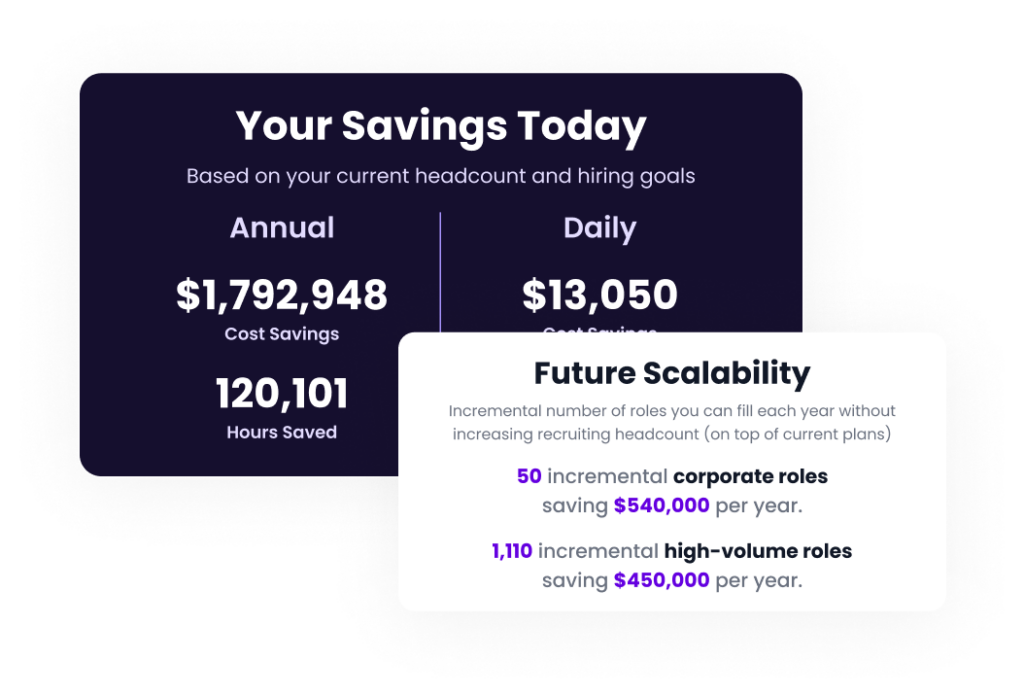
Does interview scheduling automation make sense for my team?

ROI is key. This is not a time to invest in software that won’t bring you immediate value. So let’s eliminate the guesswork with our free ROI calculator.

1. Keep Your Calendar Updated

First and foremost, make sure your calendar is up to date. This includes adding travel buffers for customer visits (or if you’re going out for a bite to eat), removing canceled meetings from your calendar, and ensuring that all meetings with coworkers are reflected on your calendar.

Additionally, make sure you RSVP to your invites right away so other people know if you are attending. Making it a habit to reply to all meeting invites as soon as you receive them will ensure you don’t miss important meetings.

2. Set Company Keywords

If your company uses interview scheduling software, you have the added benefit of leveraging company keywords. This means that the recruiting coordinator (or whoever is scheduling the interview) doesn’t have to guess if a calendar event is a hard or soft conflict.

Soft conflicts are events such as happy hours, office hours, calendar “holds” that you’ve set, and more. Hard conflicts are anything that can’t be scheduled over, such as PTO or travel buffers.

By setting up company keywords in Hire, the system will automatically recognize these events and either offer them as potential interview times for soft conflicts or avoid scheduling over them for hard conflicts. This greatly increases likely interview slots, which helps get top talent in the door faster. That’s a win-win.

3. Make PTO/OOO Events Clear

Every company and team seems to handle PTO/OOO differently, which can feel confusing. This confusion can make scheduling interviews difficult.

This is especially true when many people, usually managers, are invited to the PTO/OOO event, making it hard to tell who’s actually out of the office.

As a general rule of thumb, your team should have a separate PTO calendar so everyone can see who’s out of the office. In the title of the event, you should write your name. This decreases the possibility of confusion, even if you (or others) invite individuals to the PTO event.

4. All-day Events

All-day events are tricky simply for the fact that there are many different kinds of them.

An all-day event can just be an event title, like “John’s Work Anniversary,”  or it could be an actual conflict, like “John in Mexico.” Because of this, it’s essential to make sure that you and the other interviewers on your team follow the same naming protocols when it comes to all-day events.

When using an interview scheduling tool, the platform will likely try its best to understand if you’re available for the interview based on the words used in the event title, but it’s always just better to follow company keywords and mark yourself free or busy.

Overall, if you want to make an impact on your recruitment efforts, leveraging a scheduling platform is the way to go. The tool will help eliminate manual work (to save your team major time and money) and maximize your team’s interview availability so you can interview the best candidate before your competition.

First master calendar hygiene, then the rest of the candidate experience

Remember, calendar hygiene is an ongoing practice. By implementing these steps, you contribute to a smoother interview scheduling process, enhance collaboration, and make the most of your valuable time.

Keeping your calendar updated is more than just a routine task – it’s a strategic approach to effective time management and successful interview scheduling. By maintaining an accurate and up-to-date calendar, you create a foundation of reliability and professionalism that benefits both you and those you collaborate with. The effort you invest in calendar hygiene pays off in smoother operations, improved candidate experience, and enhanced productivity.

Time’s up for interviews full of scheduling headaches. It’s time for candidate-centered, connection-driven interviews instead.

To read more about how to make that happen for your team, download 5 Steps to Hiring Top Talent at Scale.