This month, we rolled out new features that make it even easier to automate busywork, unlock insights, and move top talent through your pipeline — all with less lift from your team.
Here’s what’s new: In June, we introduced several updates that help your team move faster, stay in sync, and deliver better candidate experiences with less effort. From smarter reminders and deeper feedback filtering to enhanced scheduling capabilities and next-level AI automation, these updates are all about one thing: helping your team focus on people, not busywork.
Whether you’re looking to speed up training, understand candidate sentiment, or put a branded AI Agent to work 24/7, our latest features — powered by Orchestra, our digital workforce of AI agents — are here to keep hiring fast, human, and in flow.
If you missed the live session, you can catch the full webinar or review the recap below to get up to speed.
First, watch highlights from Orchestra, our workforce of AI agents
Our latest update reveals significant enhancements aimed at improving the recruitment process. These agents can now automatically advance qualified candidates and trigger interview requests, ensuring a more efficient workflow. They facilitate personalized rejections to avoid leaving candidates in the dark and engage in natural conversations to assist with scheduling interviews. Additionally, the agents gather and summarize candidate sentiment, providing valuable insights for hiring teams.
Watch the full June 2025 GoodTime product updates webinar or keep scrolling for highlights
Reminders for Reading Classes & Trainee Feedback
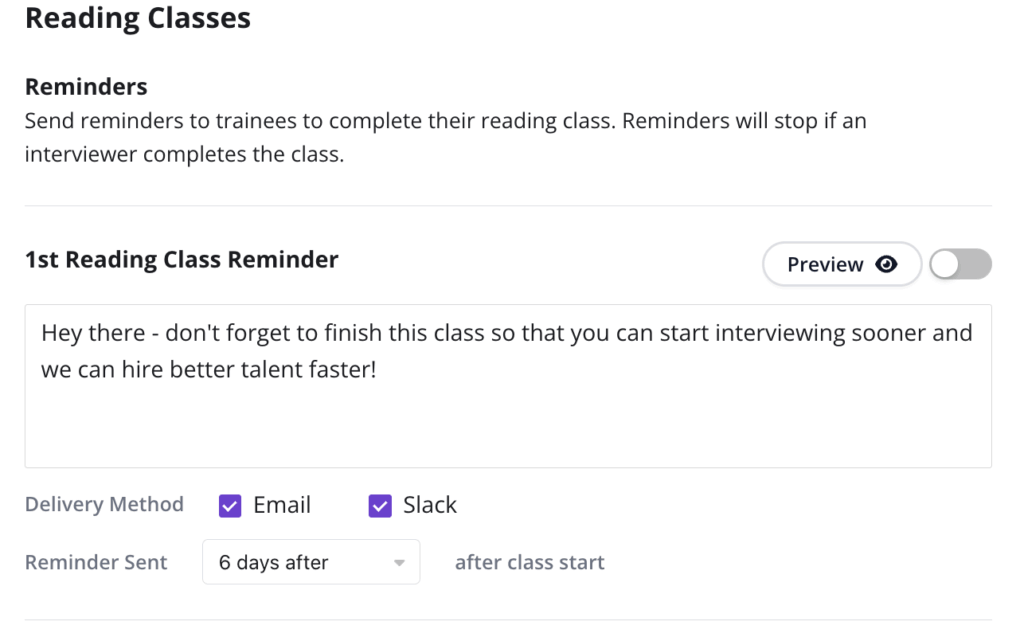
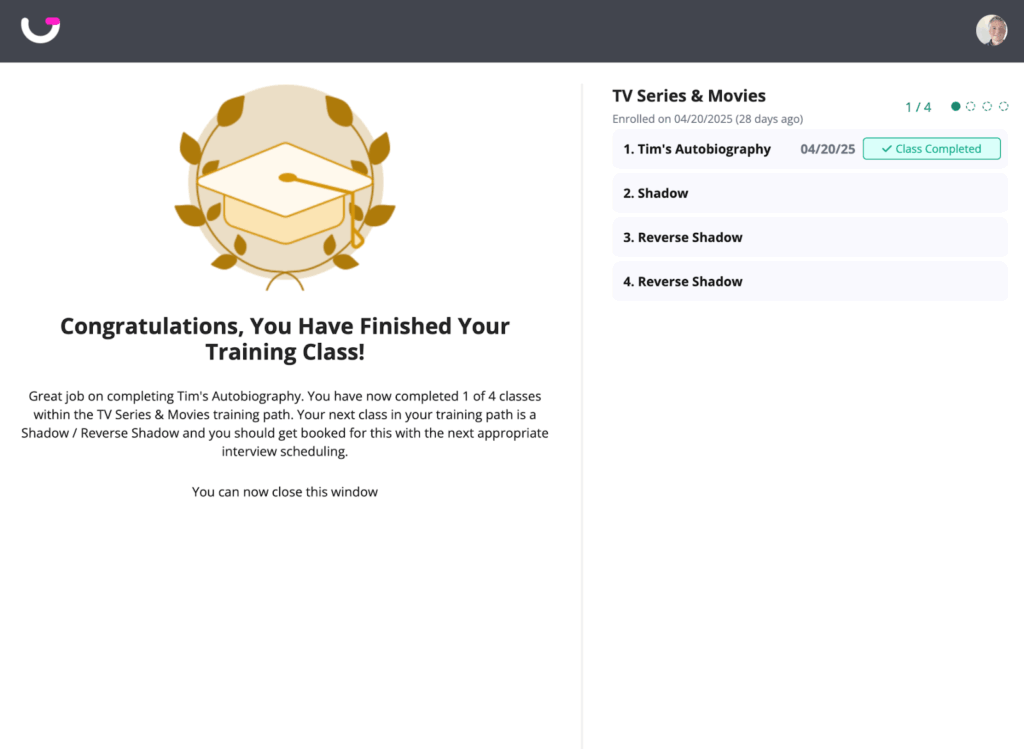
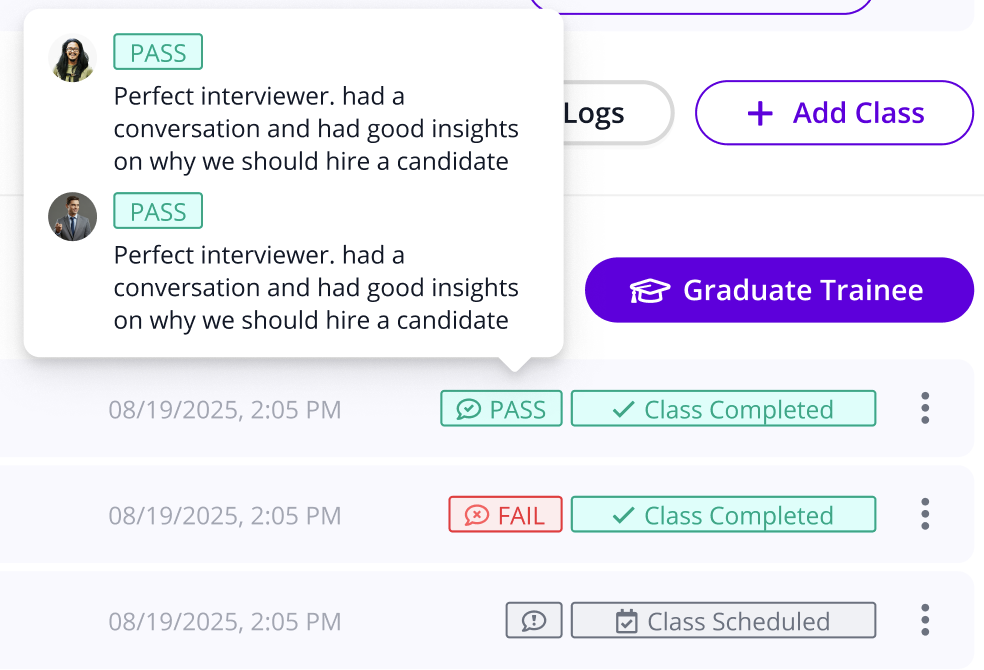
Thanks to great feedback from our valued partners, GoodTime has built out Email & Slack reminders for missing trainee feedback and reading class completion.
Why this is awesome: By automating reminders, trainees graduate faster while requiring less work from your team.
cNPS Feedback Report Filters
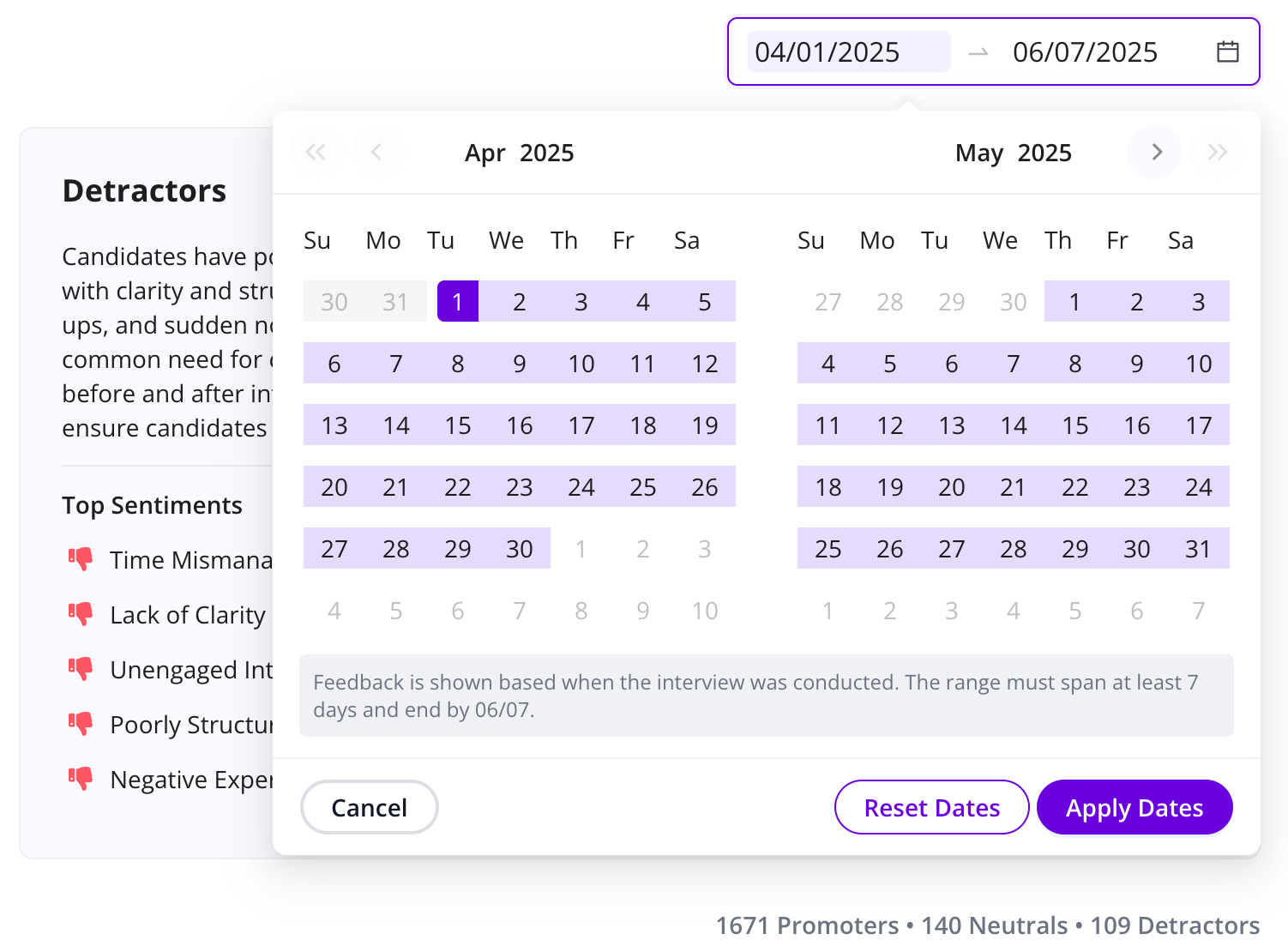
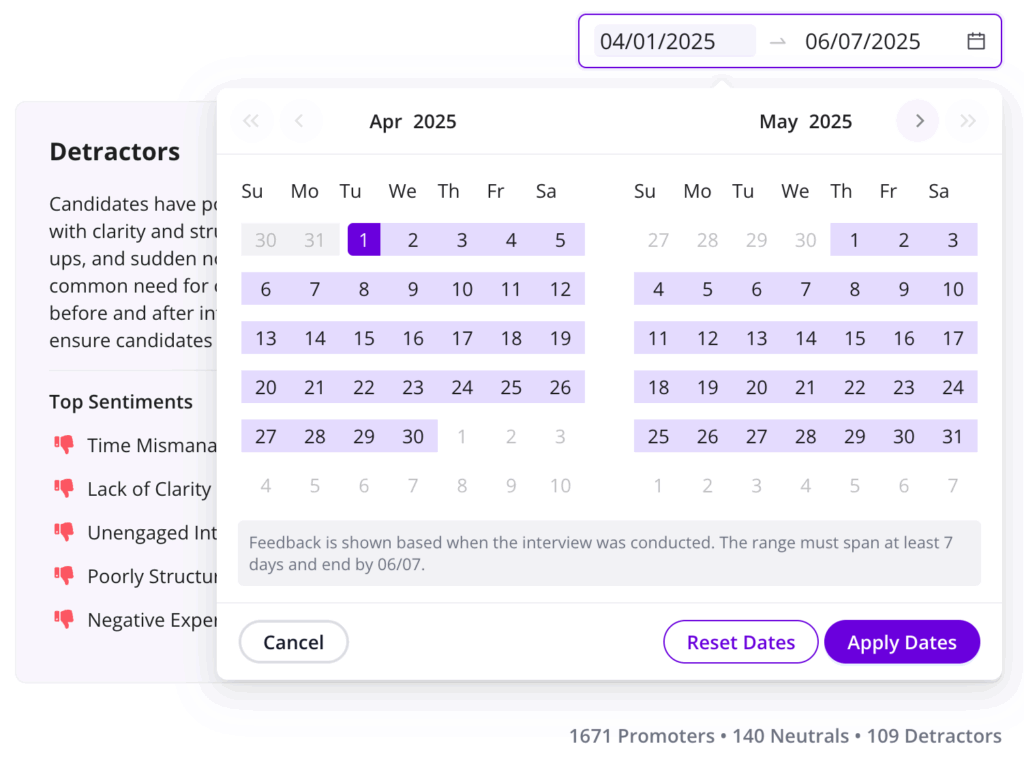
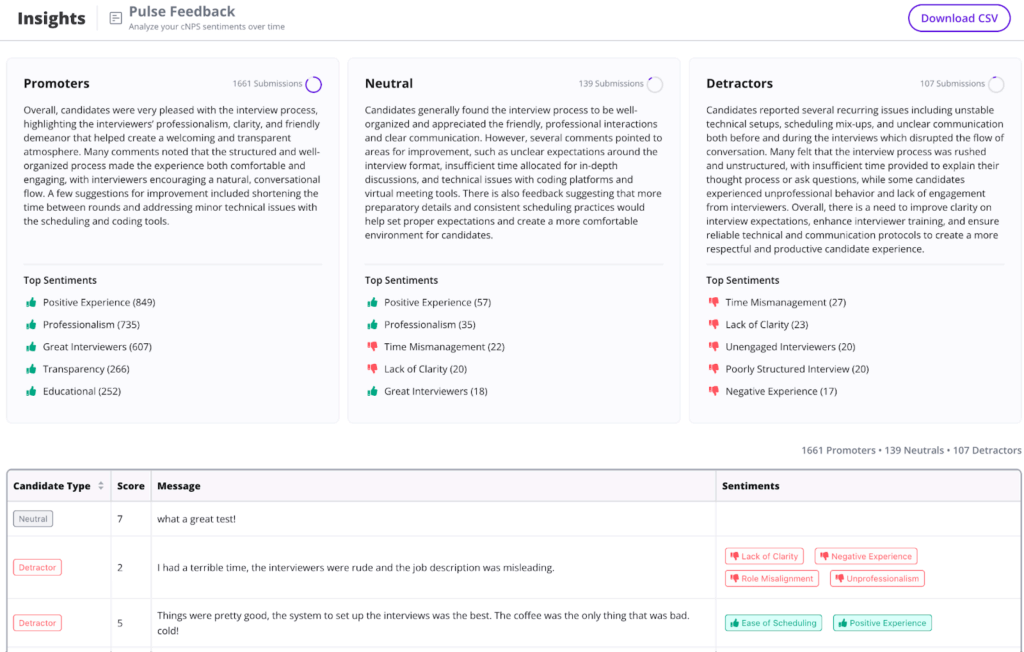
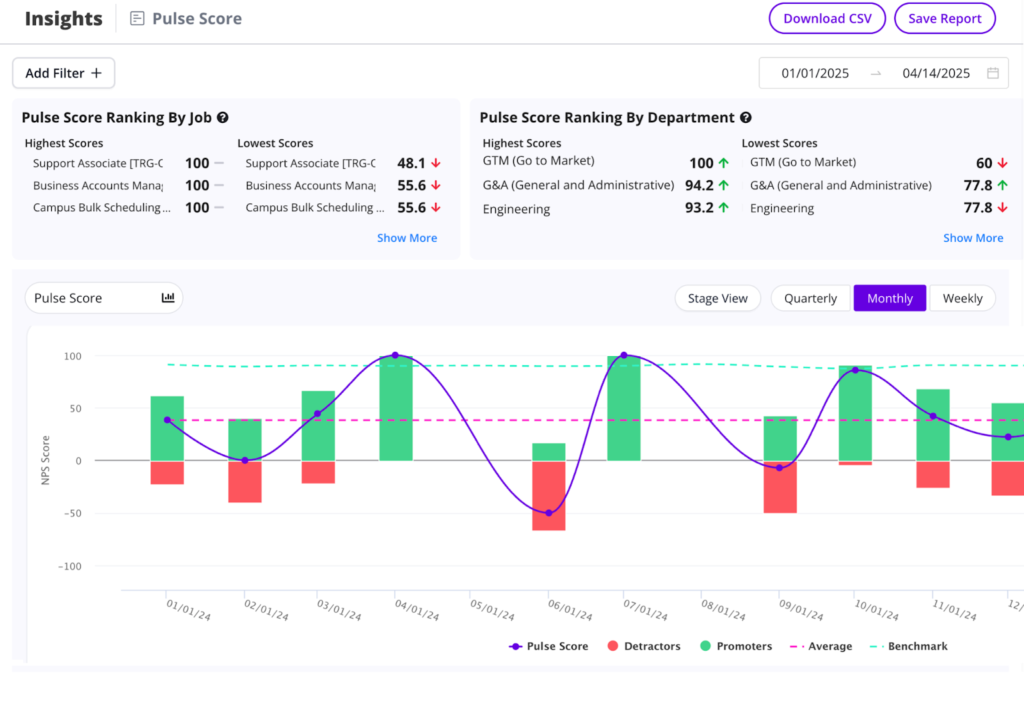
Last month, we announced the all-new AI cNPS Feedback report, which has now been updated with date pickers and department filters so that you can see how sentiments evolve over time and in different areas of your organization.
Why this is awesome: Data like cNPS is designed to tell you where to make changes, and filters like these enable you to see if those changes improve your candidate experience.
Calendar Availability Analysis
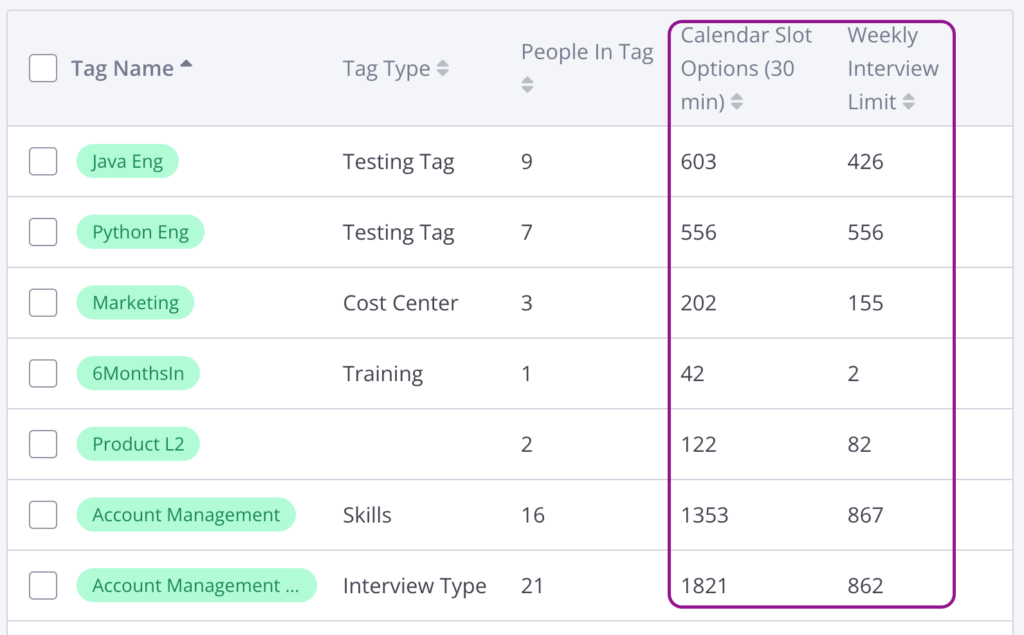
GoodTime now scans & stores the availability for all your interviewers and creates automatic team, tag & interview template capacity analysis.
Why this is awesome: Your interview capabilities are only as capable as your most restricted point in the chain. Calendar Availability Analysis helps find bottlenecks and enables capacity planning required to reach hiring goals.
Candidate-facing AI Agent
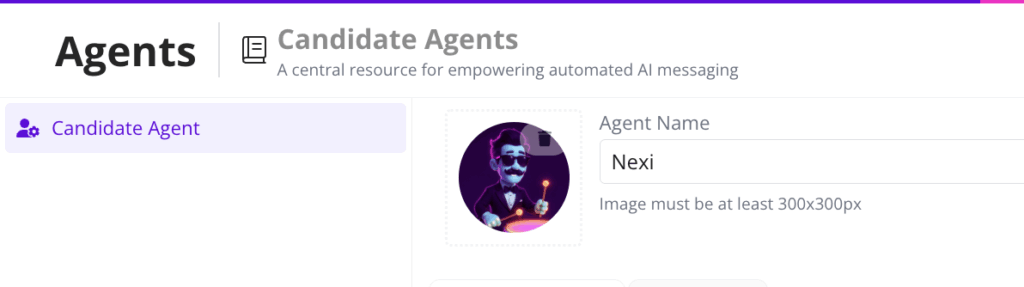
Fully configure a candidate-facing AI Agent —tailored with a custom name, avatar, and tone of voice. Admins can upload PDFs, DOCs, websites, and FAQ data to train the bot, making it an extension of your brand.
Why this is awesome: Answer candidates 24/7 while reducing recruiter workload.
Scheduling Assistance
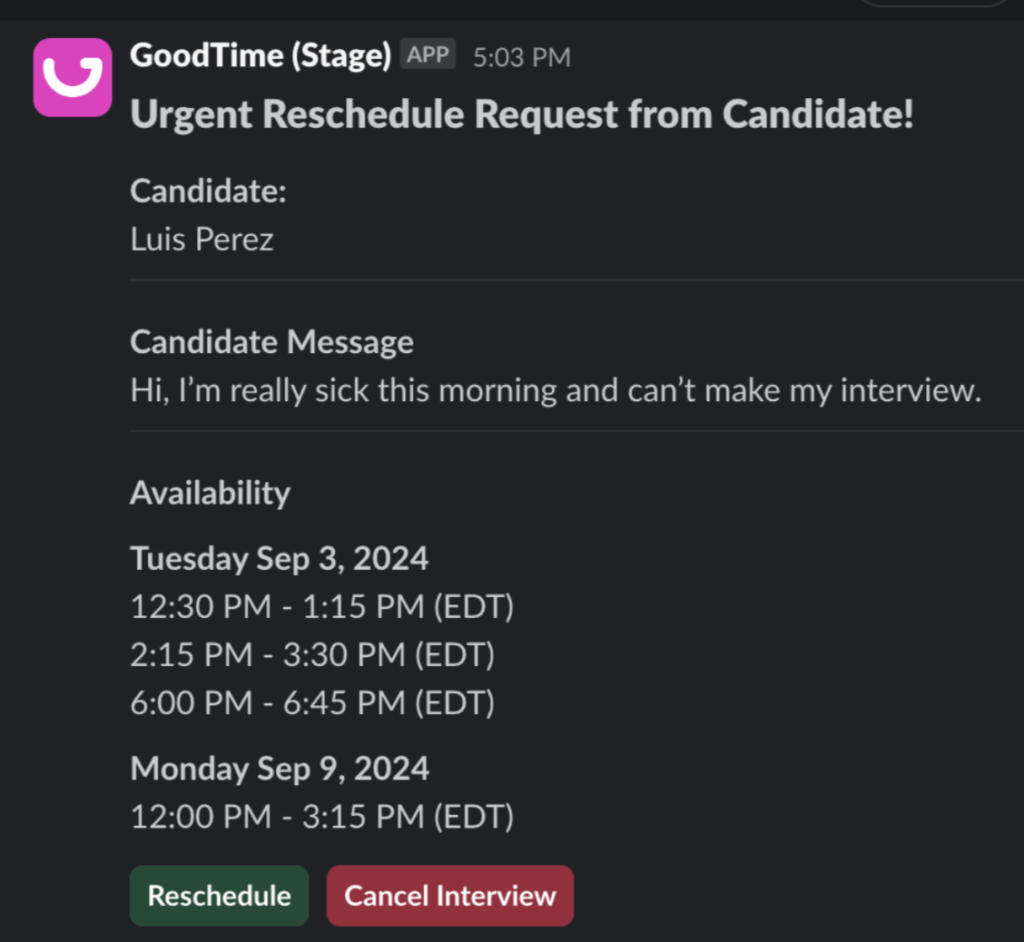
Candidates can now reschedule, share availability, and escalate urgent issues directly through AI chat—no human needed unless it’s critical.
Why this is awesome: Remove back-and-forth emails to speed up scheduling and rescheduling requests.
Customized Knowledge Base
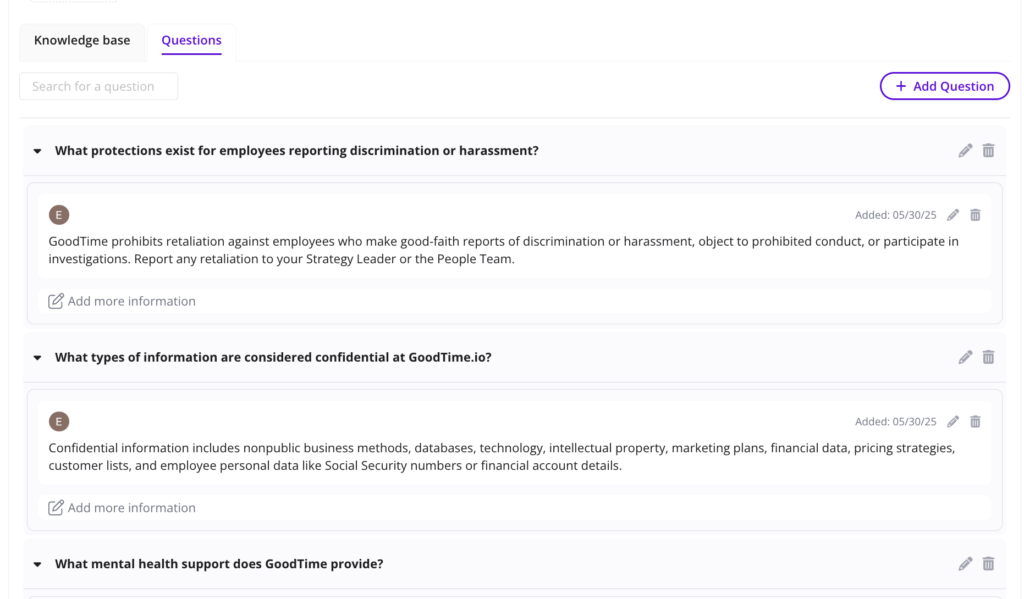
Every job post now powers an instant, AI-ready knowledge base—complete with interview prep, role expectations, and FAQs. Recruiters can also inject custom information to reduce repetitive questions.
Why this is awesome: Your AI Agent is available 24/7 to guide candidates with accurate, on-brand answers.
Start using the latest GoodTime features!
We want to help you evolve and take full advantage of the latest upgrades and improvements to our platform. Check out the GoodTime support center for tutorials and tips to help you stress less and get more done!
This month, we unveiled a game-changing leap forward in hiring orchestration — and we’re just getting started. From powerful upgrades inside GoodTime Hire to the official launch of Orchestra, our digital workforce of AI agents, this release is all about elevating every moment of your hiring journey.
Here’s what’s new: We expanded our Experience+ capabilities with a refreshed training module that now includes Reading Classes, Training Path KPIs, and custom interviewer prep right inside the Interviewer Portal. You can now also customize reminder emails, delete outdated Training Paths, and tap into updated external API endpoints for better integration.
And then came Orchestra. This bold new layer of human-centric AI brings a smarter, faster, more connected hiring experience — starting with the launch of our Recruiter Agent, offering real-time visibility into activity across the updated Job Pipeline. We also gave a sneak peek at our upcoming 24/7 Candidate Agent, and dropped a long-awaited feature: the candidate Net Promoter Score (cNPS) Sentiment AI Report, which surfaces the hidden insights behind your candidate feedback.
Missed the session? No worries. Keep reading for a full recap of everything we launched — and why this is the most powerful version of GoodTime yet.
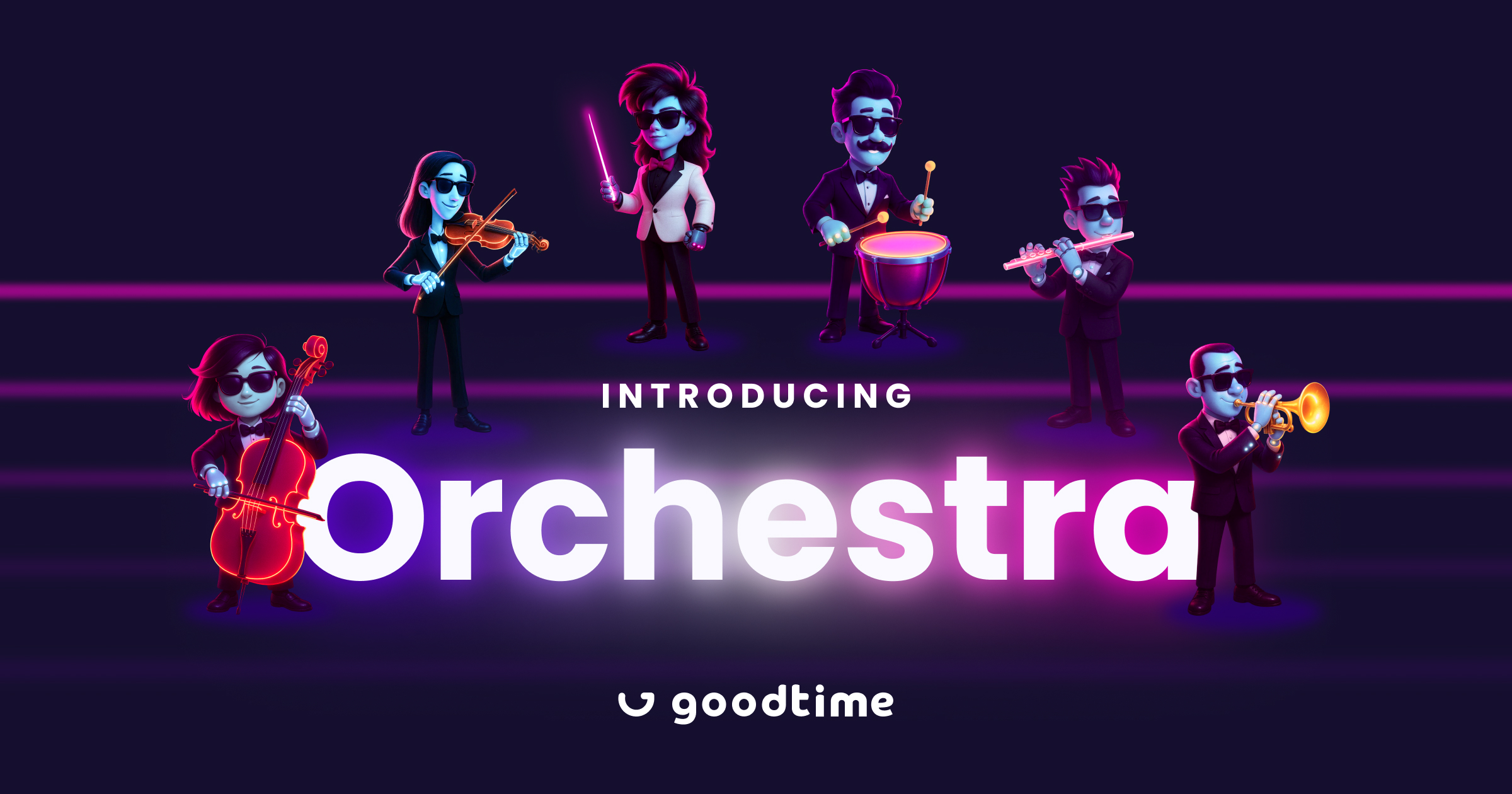
Introducing Orchestra
Orchestra is GoodTime’s new identity for our intelligent, always-on digital workforce — a coordinated team of AI agents built to act, not just react. These agents work across the hiring journey to handle tasks like screening, scheduling, updating candidates, and flagging bottlenecks — all while keeping your team in control. Unlike traditional automation, Orchestra agents work in harmony, stepping in at the right moments so your recruiting team can focus on what really matters: building relationships and making confident hiring decisions.
This update marks the official launch of our Recruiter Agent, which now streams live activity directly into the Job Pipeline, giving you unprecedented visibility into what’s happening and why. We also gave a sneak peek at our upcoming Candidate Agent — a 24/7 AI-powered assistant that answers candidate questions, schedules interviews, and keeps them warm and informed without adding work for your team. With Orchestra, we’re not just layering on automation. We’re orchestrating a smarter, more human hiring experience — and this is just the beginning.
Reading classes
The Training Module now has a brand new Class Type for LMS-style Interviewer Training that lets you build out written training material as a part of your Training Paths.
Why this is awesome: Managing interviewer training in one place increases automation, reduces mistakes, and ultimately graduates more interviewers faster,so you can hire better candidates.
Training path KPIs
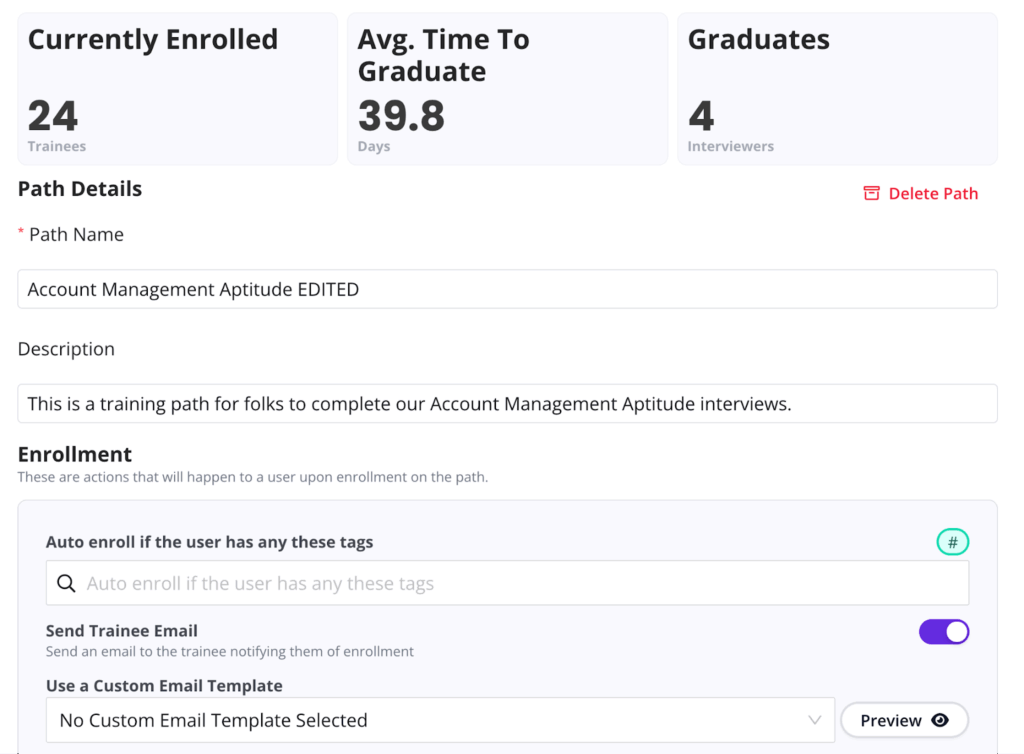
The most important KPI’s for each Training Path are now highlighted at the top of your Path so you can quickly track its progress and drill down into the numbers behind the stat.
Why this is awesome: You instantly see the progress and performance of your path without applying filters and loading reports, all while saving time with clickable shortcuts to the root data.
Custom reminder emails
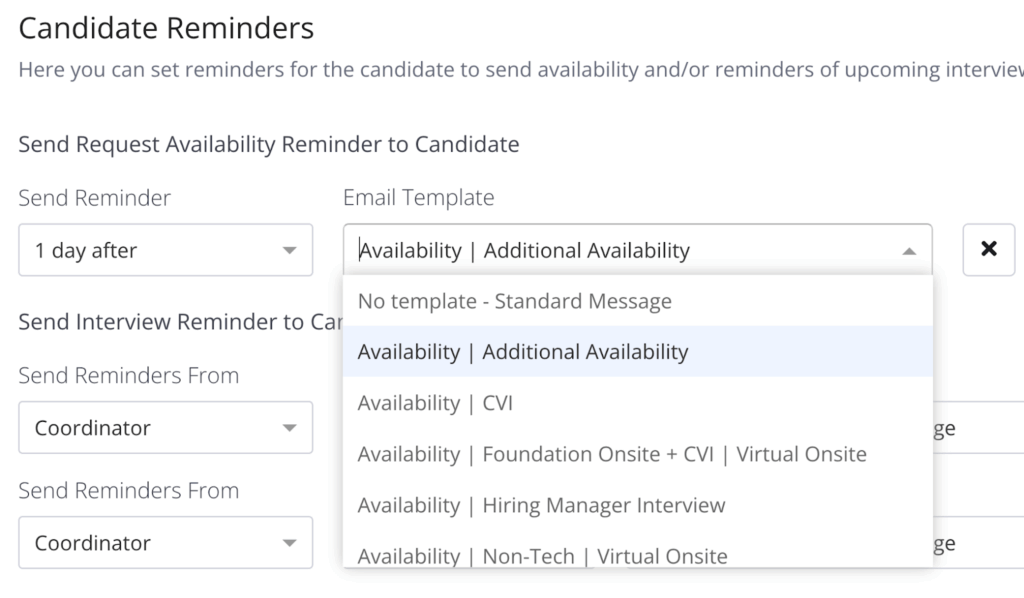
Now you can use email templates to customize the reminder emails that candidates receive for confirmed interviews and availability requests.
Why this is awesome: Users can benefit from including certain preparational information or just adding the specific language and touch that your organization stands for!
cNPS sentiment AI report
Easily and quickly analyze the Candidate feedback submitted along with Pulse score. AI will not only summarize the feedback, but also categorize it through clickable categories so you can go from summary to detail in a split second.
Why this is awesome: Reading thousands of messages would take hours. Categorizing & quantifying them would take even longer. Now it’s instant & automated, so you can spend your time taking action instead of analyzing.
Job Pipeline is now real time
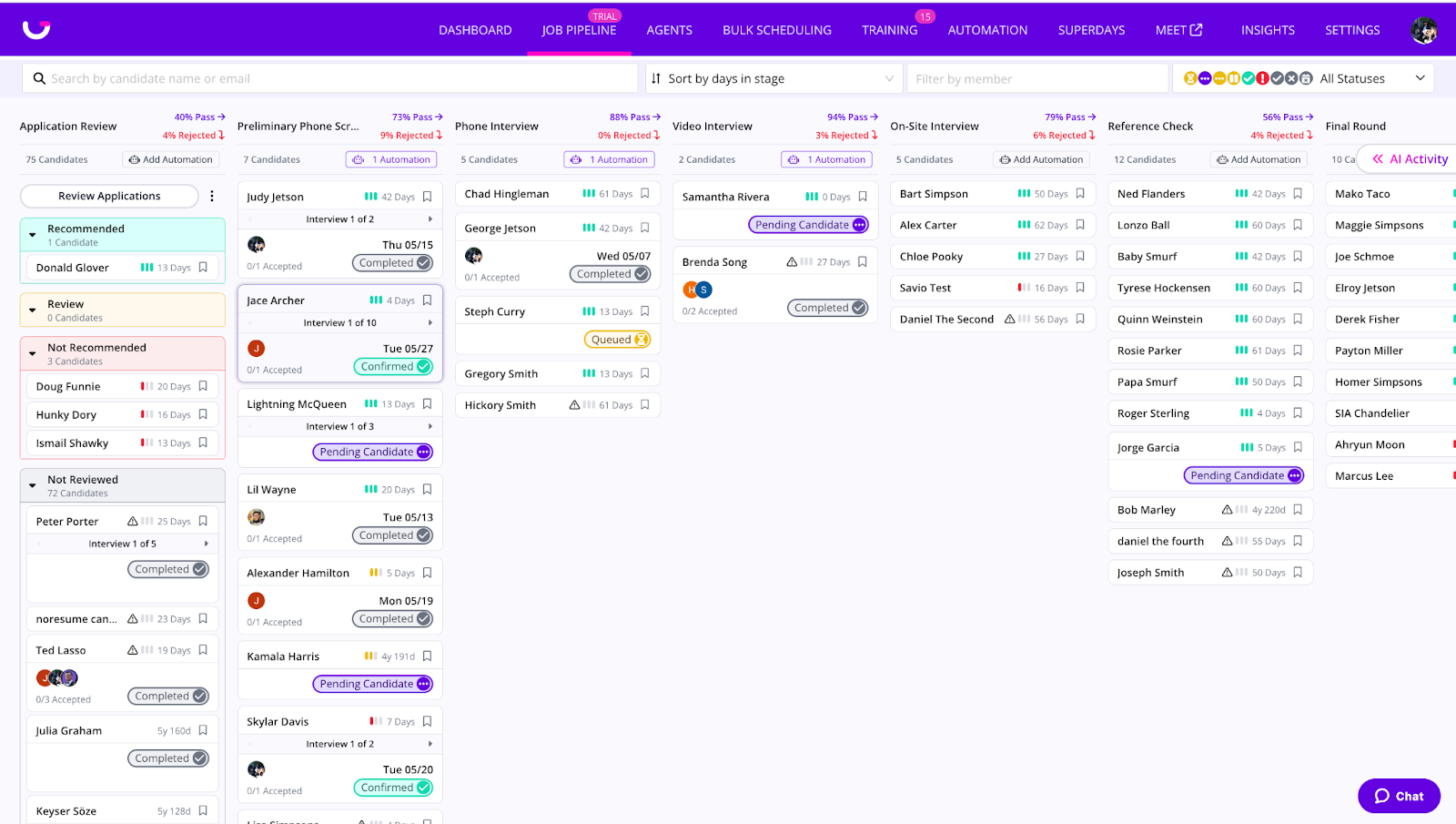
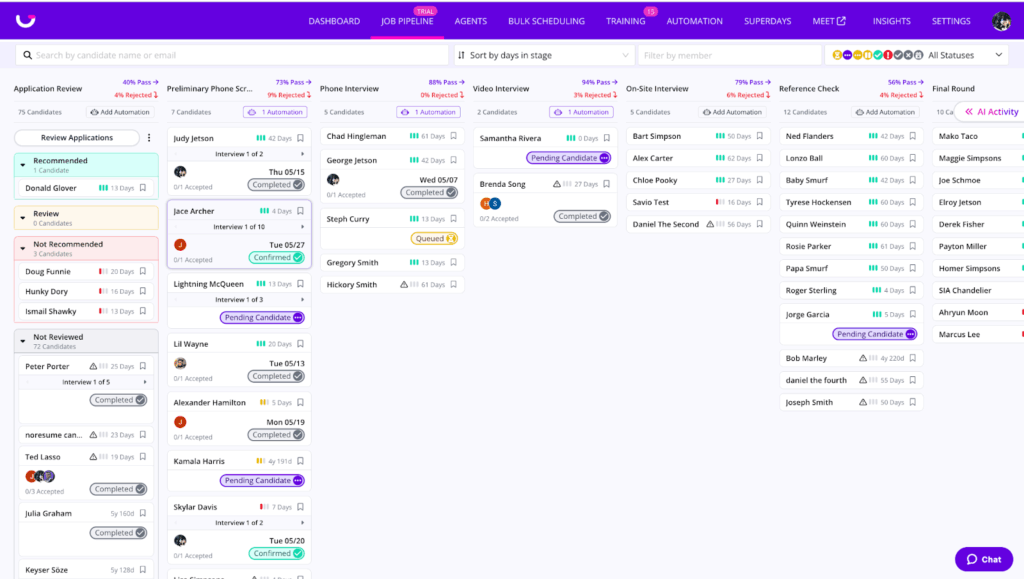
See candidates move through stages, live evaluation scores, and track interview logistics in real time—including when interview requests are sent, accepted, declined, and confirmed.
Why this is awesome: Get a live, accurate view of your candidate pipeline without refreshing—saving time and reducing confusion.
AI activity feed
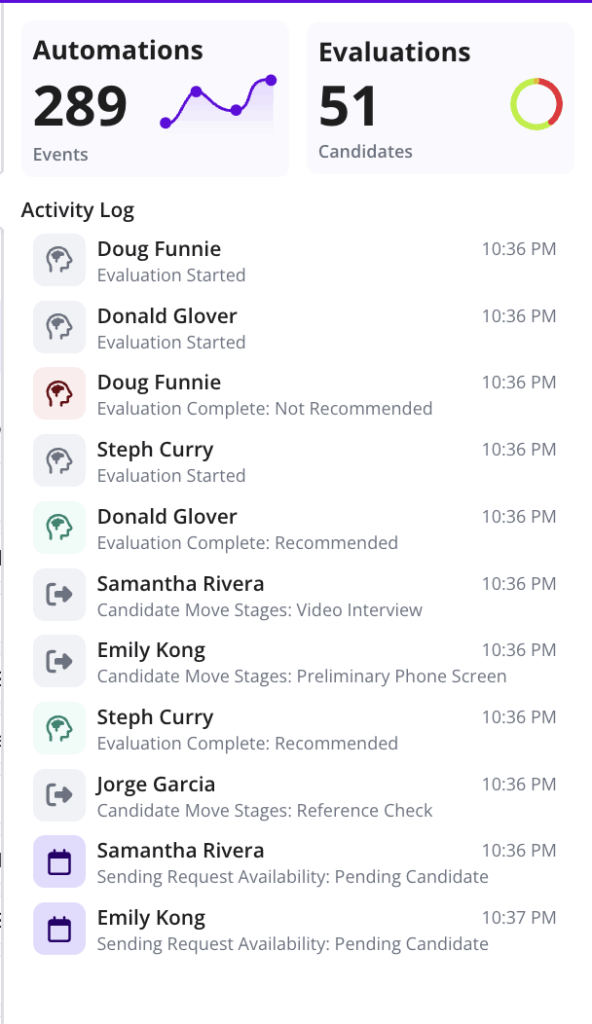
View a complete timeline of key AI-driven events: when candidates are evaluated, their scores, and every step of the interview coordination process. You can finally see what’s happening and when, all in one place.
Why this is awesome: Full transparency and audit trail of AI activity—making it easier to build trust and understand impact.
Sneak peek at our Candidate Agent
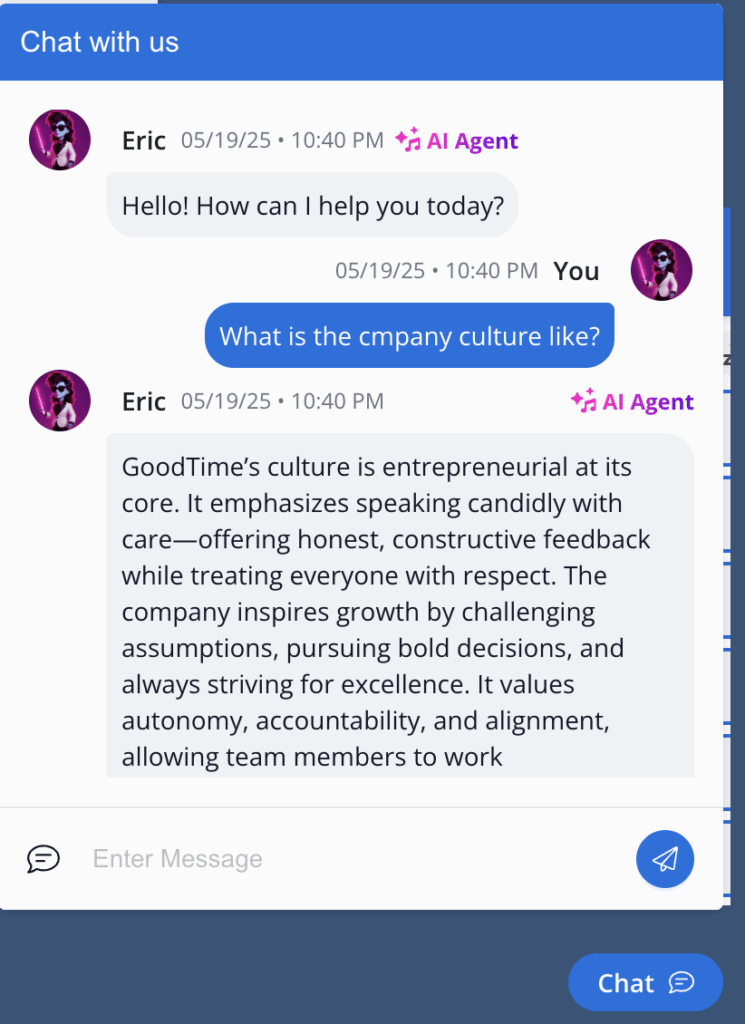
The AI Candidate Agent can help candidates schedule, reschedule, answer questions about the job or company, and guide them through the hiring process—all without recruiter involvement.
Why this is awesome: Saves recruiters hours of repetitive work while giving candidates fast, accurate help—anytime, day or night.
Start using the latest GoodTime features!
We want to help you evolve and take full advantage of the latest upgrades and improvements to our platform. Check out the GoodTime support center for tutorials and tips to help you stress less and get more done!
Today, GoodTime, a leader in human-centric AI for hiring, introduces Orchestra, a coordinated digital workforce of AI agents working behind the scenes to eliminate delays, reduce manual work, and transform the way companies hire.
The hiring landscape has changed dramatically in the last few years, but most recruiting processes haven’t kept up. Manual tasks, slow follow-ups, and scattered systems continue to drag teams down and create poor hiring experiences. That’s the challenge GoodTime solves with Orchestra.
More than a singular feature or product, Orchestra is the intelligent AI layer woven across the GoodTime experience — a digital workforce of proactive, autonomous agents that work in sync to handle hiring’s most time-consuming tasks. From resume screening and candidate matching to interview scheduling, real-time updates, and more, Orchestra keeps hiring fast, smooth, and human.
“The hiring process is overdue for a reset — and Orchestra is our answer,” said Ahryun Moon, Co-Founder and CEO of GoodTime. “We’re not building simple bots that follow scripts. We’re building AI that works like a team — constantly learning, coordinating, and making hiring smoother for everyone involved. This isn’t automation for automation’s sake. It’s AI-powered orchestration for a more human hiring experience.”
From application to offer — faster than ever before
GoodTime’s intelligent agents don’t just wait for instructions. They act. They scan resumes. They schedule interviews. They keep candidates informed and engaged. They surface insights, flag bottlenecks, and ensure every step of the hiring process runs in perfect sync.
Built for the demands of modern TA teams, Orchestra delivers:
Faster hires, fewer handoffs — Agents move the most qualified candidates forward instantly, reducing time-to-fill and helping you win top talent before competitors do.
Smarter hiring decisions — With insights and feedback summaries delivered automatically, hiring teams always have a clear view of what matters most.
A better candidate experience — Always-on support and real-time updates keep candidates engaged from start to finish.
More time for people-focused work — Agents handle the busywork so TA teams can focus on high-impact moments.
Intelligent support that works in sync with the talent team
“Orchestra isn’t here to replace recruiters — it’s here to back them up,” said Charles Mah, Chief Operating Officer at GoodTime. “We built Orchestra to give talent teams their time back. With AI agents handling the heavy lifting, hiring teams can focus on what they do best: building real relationships and making great hires.”
Orchestra agents support talent teams at every step, eliminating the operational drag that slows hiring down, while keeping people at the center of every interaction. They work in concert with recruiters, coordinators, hiring managers, and candidates to keep everyone supported through each step of the hiring journey.
Orchestra brings speed, clarity, and consistency to every step of the hiring journey:
Instantly screen applicants and match them to roles based on custom job criteria, and automatically prioritize top candidates
Build, categorize, and refine job specifications using AI-powered suggestions
Book and reschedule interviews based on real-time availability — no back-and-forth required
Keep candidates warm, informed, and engaged with timely, personalized messages
Deliver answers to candidate FAQs using company-specific documentation
Summarize interview scorecards and consolidate team feedback for faster, clearer decisions
Monitor hiring pipelines for bottlenecks and recommend fixes before issues escalate
Everything happens automatically — but never out of sight. Every action is visible, traceable, and designed to keep the talent team in control. When agents and people work together — each doing what they do best — the result is faster hires, smarter decisions, and a more human experience for everyone involved.
This is AI designed to elevate the human side of hiring, not erase it.
GoodTime transforms the way companies hire — with human-centric AI that orchestrates every step of the journey. From screening to scheduling to candidate communications and more, our AI agents eliminate delays, reduce manual work, and keep hiring moving fast. They take action at the right moments, surfacing insights, advancing top talent, and keeping your team in the loop every step of the way. Trusted by global teams at Priceline, Lyft, and Hubspot to power people-first hiring at scale, GoodTime delivers faster hires, smarter decisions, and standout candidate experiences.
Learn more at goodtime.io.
Media Contact
For more information or to arrange an interview with Ahryun Moon, please contact:
This month, we’re bringing smarter workflows, sharper insights, and a more seamless candidate experience to GoodTime Hire. From real-time AI candidate matching in your job pipeline to automated workflows and new benchmarking data, these updates are designed to make your team faster, smarter, and more candidate-centric than ever. Whether you’re training new talent, reviewing feedback, or connecting with candidates, it’s all about reducing friction and accelerating great hiring decisions.
Let’s dive into what’s new.
Watch the April 2025 GoodTime product updates webinar or keep scrolling for highlights
Trainee Feedback
The Training Module continues to grow with the newest addition of automating and collecting feedback on Trainee performance, including automated make-up classes & deadline expiration.
Why this is awesome: Graduating a trainee who isn’t ready & allowing them to conduct interviews is bad for everyone. Quality controlling their performance is now both easy and automated so that you can increase quality and save time.
cNPS Benchmarking & Leaderboards
The Recently revamped cNPS Report has been expanded with a Job & Department Leaderboard and Industry Benchmarking data.
Why this is awesome: Leaderboards help you immediately see where your org is thriving and where it needs attention. The Industry Benchmark provides metrics on how you perform compared to industry leaders only found on GoodTime.
Redesigned Candidate Portal
As the Candidate Portal has grown tremendously in popularity, we have been getting buckets of amazing feedback that has been combined to refresh the Candidate Portal to its greatest version yet!
Why this is awesome: Your organization is now better represented than ever to your candidates, while they can understand and prepare for their interview with total ease and confidence.
Real-Time Matching in Job Pipeline
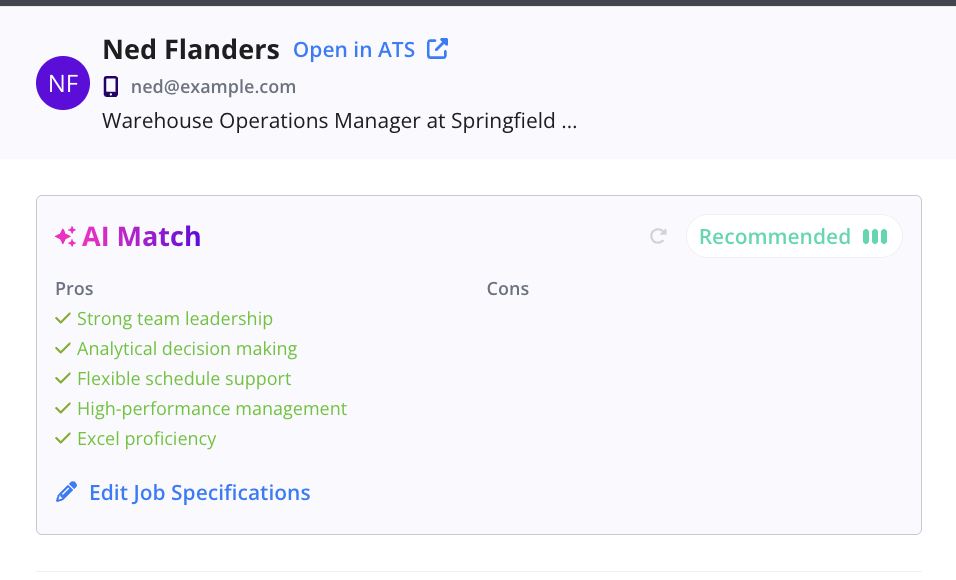
Our AI matching now evaluates every candidate when they apply, and highly recommended candidates are brought right to the top.
Why this is awesome: Save hours in screening resumes every day to focus on the top candidates in your pipeline! Learn more.
Automated Workflows
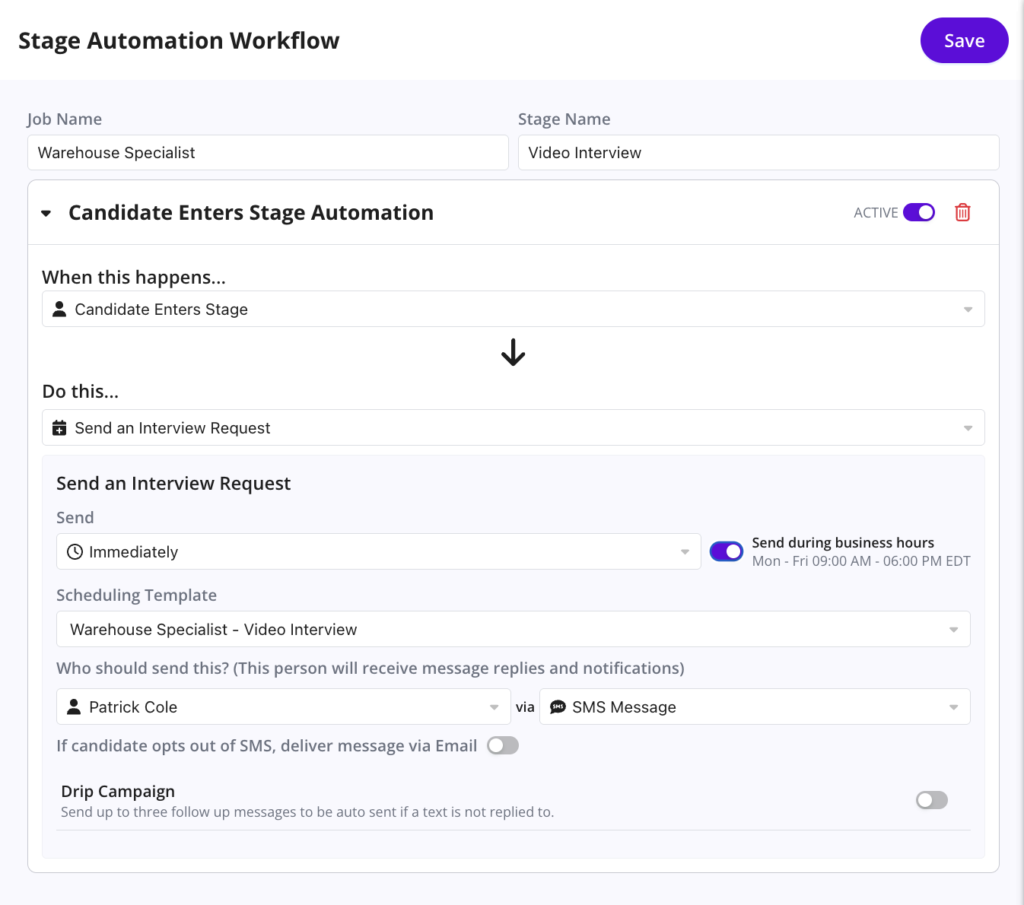
You can now configure workflow automations inside of Job Pipeline for every stage of the funnel!
Why this is awesome: Auto-progress candidates, send interview scheduling requests, or messages to candidates, all customizable and configurable inside Job Pipeline!
WhatsApp Integration updates
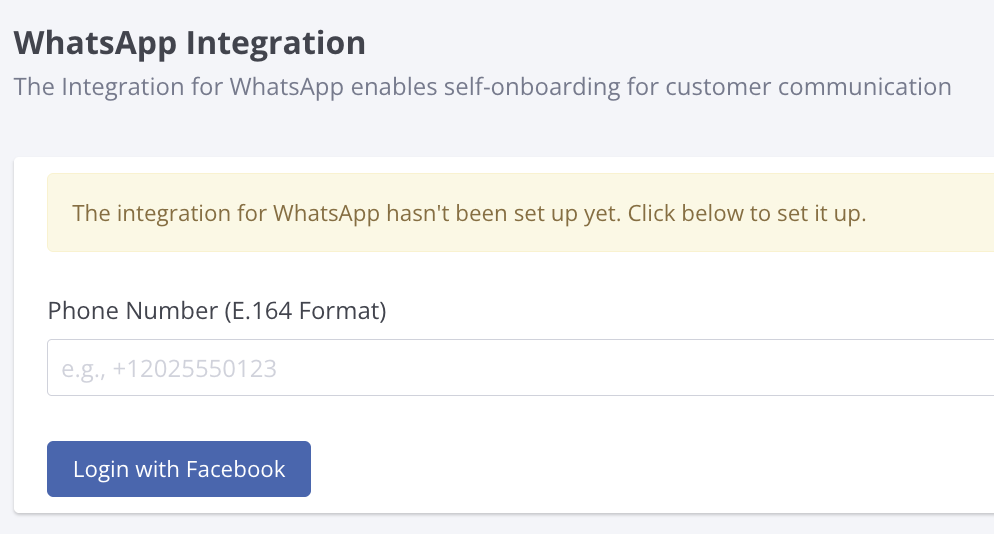
We’ve added WhatsApp to our Company Setting! Now integrating is as easy as clicking a button.
Why this is awesome: Full control over your WhatsApp integration. Set it up or disconnect without needing to reach out to our Customer Support team.
Start using the latest GoodTime features!
We want to help you evolve and take full advantage of the latest upgrades and improvements to our platform. Check out the GoodTime support center for tutorials and tips to help you stress less and get more done!
Let’s be honest: talent acquisition has never been more complex—or more critical. The pressure to fill roles faster, personalize every candidate touchpoint, and keep recruiters from burning out isn’t letting up. And all of this is happening as teams face shrinking headcounts and tighter budgets.
But something new is quietly transforming how work gets done in talent acquisition. A different kind of teammate has joined the ranks—not another recruiter or coordinator, but intelligent software. AI tools that schedule interviews. Digital agents that send personalized reminders. AI and automation that eliminates hours of manual work. This is digital labor.
Digital labor, sometimes referred to as a “digital workforce,” represents a class of software-driven assistants that can handle many of the tedious, repetitive tasks traditionally performed by people. Think of them as ultra-efficient interns: fast, tireless, and accurate—but still in need of guidance and guardrails. And when implemented strategically, they can free up your human team to focus on what truly drives great hiring: relationships, judgment, and creativity.
In this article, we’ll break down what digital labor really means in the context of talent acquisition. We’ll look at where it’s already delivering results, how forward-thinking teams are putting it to work, and what it takes to adopt it successfully. You’ll also hear examples of how tools like GoodTime are being used—not as a replacement for recruiters, but as force multipliers that enable them to do their best work.
Because when digital labor is done right, it doesn’t make recruiting less human. It makes it more human.
Unlock 2026’s top hiring strategies: Insights from 500+ TA leaders
Be the first to uncover deep hiring insights specific to your sector — straight from the highest-performing TA teams.
A new kind of teammate: The rise of digital labor in recruiting
If you’ve worked in talent acquisition long enough, you’ve seen the evolution firsthand. From spreadsheets to applicant tracking systems. From faxed resumes to AI-powered sourcing. Each wave of innovation promised to make hiring faster, better, and easier.
Now we’re entering a new phase—one that doesn’t just upgrade your tools but introduces entirely new types of “workers” to your team.
This is the rise of digital labor: software-based agents that take on real work once performed exclusively by people. They don’t punch timecards or show up to team meetings, but they’re deeply embedded in your processes—scheduling interviews, messaging candidates, syncing calendars, and even nudging hiring managers to submit feedback. And they do it all with remarkable speed, accuracy, and consistency.
The idea isn’t hypothetical. As Salesforce CEO Marc Benioff stated at the World Economic Forum in Davos, “We are really moving into a world now of managing humans and agents together.” In many talent teams, that shift has already started. And not in the flashy, sci-fi way people tend to imagine—but in practical, behind-the-scenes ways that are quietly changing how hiring happens.
Digital labor is showing up everywhere:
A scheduling assistant that finds time for a multi-round panel faster than any human could
A chatbot that answers candidate questions at 11 p.m. on a Sunday
A workflow that texts reminders before interviews and captures feedback after
An AI-powered system that flags bottlenecks in your hiring funnel before they become problems
This isn’t about gimmicks. It’s about performance. At a time when most enterprise TA teams are expected to do more with less, digital labor offers a way to scale without sacrificing experience or control.
“We are really moving into a world now of managing humans and agents together.” -Marc Benioff, CEO, Salesforce
Take GoodTime, for example. Enterprise teams use its agentic AI to fully automate complex interview scheduling—across time zones, teams, and roles. Instead of relying on recruiters to juggle calendars manually, the AI finds optimal times, selects interviewers, and even reschedules automatically when someone drops out. That’s not a hypothetical use case—it’s happening every day in companies like Salesforce and DoorDash.
But GoodTime is just one example in a broader movement. Across the TA landscape, digital labor is helping teams reclaim hours of lost time and redirect that energy toward more strategic, human-centered work. What’s important to understand is that this shift isn’t coming—it’s already here. The only question is how you’ll choose to engage with it.
What digital labor really is (and isn’t)
When people hear the term digital labor, it often conjures up images of humanoid robots or sci-fi depictions of AI run amok. But the reality is far less cinematic—and far more practical.
Digital labor in talent acquisition is about intelligent software systems that perform tasks previously handled by humans. These digital “workers” or AI agents for talent acquisition aren’t physical machines; they’re software agents living inside your hiring tech stack. They schedule interviews, answer candidate questions, generate job descriptions, and route data—all with minimal human input.
Think of them as the world’s most diligent interns: fast, reliable, and not prone to burnout. But like any intern, they don’t just show up ready to roll. They require setup, training, and oversight. You need to define their workflows, feed them clean data, and monitor their performance over time.
That’s the key distinction: digital labor doesn’t replace process ownership. It follows the processes we create and amplifies them.
Let’s break it down. A well-configured AI scheduling assistant, for example, will:
Parse calendars and time zones faster than a human coordinator ever could
Suggest the best interviewer panel based on skill tags and availability
Auto-reschedule if someone drops out
Notify candidates through branded emails or text messaging, instantly
But it won’t decide why a particular interviewer is needed for a specific role. It won’t know when to overrule its own logic to preserve a candidate relationship. That’s still human territory.
GoodTime’s approach to this balance is a strong example. The platform enables TA teams to configure how much automation they want in their scheduling process. Want full auto-confirmation for high-volume roles? Done. Prefer a manual check for executive interviews? You’re in control. The AI doesn’t dictate process—it supports it.
That’s what makes digital labor so powerful. It scales your thinking. When used intentionally, it executes your recruiting strategies with speed and consistency, without forcing you to sacrifice personalization or judgment.
And let’s be clear about what digital labor isn’t. It’s not a chatbot trying to replace your sourcers. It’s not a black-box algorithm deciding who gets hired. And it’s definitely not about cutting your recruiting headcount in half to “let the AI take over.”
What it is—at its best—is a new kind of team member. One that never sleeps, never misses a task, and makes your human team better by freeing them to focus on what they do best.
Where digital labor is making the biggest impact
If you’re wondering where to start with digital labor, look no further than the bottlenecks your team encounters regularly. The most successful TA leaders don’t begin with sweeping transformations—they start with the repeatable, time-consuming tasks that hinder great recruiting.
Here are five areas where digital labor is already making a tangible difference inside large enterprise recruiting teams:
1. Interview scheduling and coordination
It’s the classic time sink: back-and-forth emails, calendar conflicts, last-minute changes. For many recruiting coordinators, this consumes a significant portion of their week.
Digital labor alleviates this burden.
Platforms like GoodTime utilize AI-driven interview scheduling agents that manage the entire coordination process—from finding optimal times across multiple calendars and time zones to automatically replacing interviewers who cancel. This automation has led companies to experience up to a 50% reduction in time-to-hire and a significant decrease in manual rescheduling efforts.
2. Candidate engagement and communication
Candidates today expect prompt, transparent communication, and ghosting has become a dealbreaker. Digital labor helps bridge this gap.
Hilton, for instance, implemented an AI-powered chatbot named “Connie” to handle routine candidate inquiries, provide updates on application statuses, and guide applicants through the process. This not only enhanced candidate engagement but also allowed HR teams to focus on more complex tasks.
Additionally, Hilton’s use of AI in recruitment led to a reduction in time-to-hire from 43 days to just 5, demonstrating the efficiency of automated candidate communications.
3. Sourcing and screening at scale
Manual resume reviews are time-consuming and often inconsistent. Digital labor standardizes and accelerates this step without compromising quality.
Unilever revamped its recruitment process by incorporating AI-driven assessments and video interviews. This transformation resulted in a 75% reduction in hiring time and over £1 million in annual cost savings. Moreover, it improved candidate diversity and experience.
4. Data hygiene and process tracking
An ATS full of inconsistencies or outdated information can hinder the recruiting process. Digital labor addresses this by keeping systems synchronized.
AI-powered tools can automatically update candidate statuses, log interactions, and ensure that data across platforms remains consistent and up-to-date. This leads to more accurate reporting and better decision-making.
5. Compliance, consistency, and personalization at scale
Digital labor enforces process consistency across various roles and locations, ensuring that each candidate interaction aligns with company standards.
For example, AI-driven platforms can send personalized messages to candidates, reflecting company branding and maintaining a consistent tone. This balance of automation and personalization enhances the candidate experience while upholding compliance standards.
The takeaway is clear: digital labor is not confined to one aspect of recruiting. It permeates every stage of the funnel, offering efficiency and scalability without diminishing the human touch in hiring.
Why it’s not about replacing recruiters — it’s about freeing them
Let’s address the elephant in the room: fear.
For many recruiting teams, the rise of AI in hiring brings a quiet but persistent worry—what happens to my role when a bot can schedule interviews faster than I can? It’s a fair question. But the most successful TA leaders today aren’t treating digital labor as a threat. They’re treating it as a teammate.
Digital labor, when implemented thoughtfully, doesn’t reduce the need for recruiters. It reduces the burden on them. It removes the tedious, manual, high-volume work that eats up hours every week—so they can focus on the work that actually requires human intelligence: building relationships, advising hiring managers, storytelling around employer brand, and guiding candidates through big career decisions.
Let’s bring in the data. In GoodTime’s Hiring Insights Report, 99% of TA teams reported using some form of automation or AI in the past year. But what’s more telling is how they’re using it. The top use cases? Interview scheduling, screening, candidate communication, and data tracking—exactly the kinds of repetitive tasks that digital labor handles best.
When Hilton implemented its AI chatbot to support candidate engagement, it wasn’t to replace its talent team. It was to give them breathing room. Recruiters were able to step away from answering routine questions and instead focus on creating more meaningful candidate conversations. That’s what digital labor enables: deeper impact, not fewer jobs.
Same goes for companies using tools like GoodTime. Their agentic AI coordinates complex interviews, fills last-minute gaps, and handles time zone headaches—often automating up to 90% of scheduling tasks. But the result isn’t a leaner team. It’s a more strategic one. Recruiters get time back to refine their sourcing strategies, improve pass-through rates, or deliver high-touch moments that can’t be automated.
It’s what GoodTime calls a human-centric AI philosophy: the idea that technology should serve people, not replace them. “We believe in using AI to really augment humans, not to replace them,” says CEO Ahryun Moon. “The goal is to offload the mundane and give people more time for the work that matters.”
This “human-in-the-loop” model—where digital labor handles the heavy lifting and defers to humans for judgment calls—is quickly becoming the gold standard. AI sends the reminders, confirms the logistics, flags the anomalies. Humans guide the strategy, make the tough decisions, and build the trust that ultimately lands great hires.
The irony of digital labor is that it doesn’t dehumanize recruiting. Done well, it makes it more human. It gives your team space to be curious, creative, and connected. It lets recruiters be what they were always meant to be: talent advisors, not task managers.
What successful adoption looks like in enterprise TA teams
Let’s face it: it’s easy to get swept up in the AI hype. But when it comes to digital labor, success isn’t about having the flashiest chatbot or the most futuristic dashboard—it’s about solving real problems, saving time, and unlocking your team’s potential.
So, what does it actually look like to roll out digital labor in a way that sticks?
Start with a pain point, not a platform
The most effective enterprise teams don’t begin with tech for tech’s sake. They start with a clear bottleneck.
Maybe it’s interview scheduling, where recruiters are losing full days to back-and-forth emails. Maybe it’s candidate ghosting, where slow follow-up is tanking your funnel. Maybe it’s data inconsistencies between your ATS and calendar systems.
The key is to anchor your automation strategy to a visible, measurable challenge. That’s how you build momentum—and secure executive buy-in.
Pilot with purpose
Once you’ve picked the right use case, start small and intentional.
A focused pilot lets you test the tech, gather baseline data, and involve your team early—before change management becomes an uphill battle. Choose one region, one department, or one hiring stage to roll out digital labor.
For example, many companies implement GoodTime initially to tackle high-volume interview coordination for specific roles or events, like Superdays. In doing so, they can quickly quantify impact (e.g. scheduling time cut by 80%, interview no-shows down 30%) and generate internal champions who’ll advocate for broader adoption.
Bring your recruiters along for the ride
This part is non-negotiable.
If recruiters feel like automation is happening to them, not for them, resistance will follow. But when they’re looped in early—helping shape workflows, giving feedback, and seeing how digital labor reduces their busywork—they become powerful allies.
In fact, several enterprise TA leaders featured in the Hiring Insights Report said their teams were more engaged after implementing digital assistants. Why? Because they finally had time to focus on the high-impact, human parts of recruiting.
Measure what matters
Digital labor should lead to real outcomes—not just “feels faster.”
Top-performing enterprise teams track metrics like:
Time-to-schedule and time-to-hire
Interviewer utilization and load balancing
Candidate no-show rates
Scheduling error rates
Recruiter capacity (reqs per head)
And yes, they track adoption rates too—because no AI is helpful if no one’s using it.
Even as you scale automation, build in guardrails for nuance and oversight.
GoodTime, for instance, allows teams to choose how much control they want—whether that’s full auto-confirmation for high-volume roles or manual approvals for executive hires. The best implementations strike that balance: giving AI the wheel for the routine, and routing edge cases to human hands.
That’s how you ensure your digital workforce complements, not complicates, your human one.
Done right, digital labor doesn’t just “cut time”—it transforms how your team operates. It empowers people to spend less energy on admin and more energy on impact.
And when that happens, hiring gets faster, candidates feel seen, and your TA team gets the credit it deserves.
Embracing digital labor as a strategic advantage
We’re not talking about the future of recruiting anymore. We’re living it.
Digital labor has arrived—and it’s already reshaping how enterprise talent teams operate. It’s not just about speed or scale (though you’ll absolutely get both). It’s about building a recruiting function that’s more resilient, more strategic, and more human.
In the last few years, we’ve seen the pressure mount: tighter teams, higher req loads, rising candidate expectations, and relentless demands for efficiency. And yet, TA leaders have responded not just by coping—but by evolving. They’ve turned to automation, AI, and intelligent systems to carry the operational weight. They’ve embraced a new kind of teammate: one that never sleeps, never forgets a reminder, and never flakes on a calendar hold.
The results speak for themselves.
Faster time-to-hire
Better candidate experiences
More consistent data and process
Recruiters with time to focus on what matters most
And crucially, this evolution isn’t about cutting corners or headcount. It’s about elevating your team. Digital labor doesn’t replace people—it releases them. From the spreadsheet hell. From the reschedule ping-pong. From the friction that slows hiring and exhausts your staff.
Tools like GoodTime, Hilton’s chatbots, Unilever’s AI screening platform, and others are proof: when digital labor is done right, it frees people to be more human, not less.
So if you’re leading a talent acquisition team right now, here’s the call to action:
Identify your team’s friction points
Look for low-risk, high-reward areas to introduce automation
Choose platforms that align with your values and give you control
Involve your recruiters, measure outcomes, and iterate fast
Most importantly, adopt the mindset that digital labor isn’t a threat—it’s an opportunity. An opportunity to do the same job you’ve always done: build great teams. Just with better tools, less stress, and more time to focus on what actually drives hiring success.
Because in the end, hiring is about people. Digital labor just gives you the bandwidth to treat them like it.
Talent acquisition leaders today face intense pressure to do more with less – to fill roles faster, improve candidate quality, and elevate the hiring experience, all with leaner teams and tighter budgets. In this context, agentic AI has emerged as a game-changer that can transform how recruiting functions operate.
Unlike traditional automation or simple chatbots, AI agents behave like a virtual team member with the agency to act on your behalf. It’s already being applied in forward-thinking TA organizations to coordinate complex interview schedules, engage candidates 24/7, screen talent at scale, and much more.
This article explores what agentic AI really means in talent acquisition, how it’s driving real-world results today, and what emerging trends TA leaders should have on their radar.
Unlock 2026’s top hiring strategies: Insights from 500+ TA leaders
Be the first to uncover deep hiring insights specific to your sector — straight from the highest-performing TA teams.
Adoption of AI in HR is accelerating rapidly. According to Gartner, 81% of HR leaders have explored or implemented AI solutions to improve processes. Why? Because the benefits are tangible.
HelloFresh, for example, saved 73% of their time spent scheduling using GoodTime’s AI-powered interview scheduling. And an HBR study found that companies using AI in hiring are 46% more likely to achieve successful hires (better quality of hire).
WATCH: How HelloFresh cut time-to-fill by more than two weeks with GoodTime
These aren’t just efficiency gains; they translate into strategic advantages in competing for talent. Agentic AI takes these benefits a step further by not only analyzing or recommending, but actually taking action in the recruiting process. Before diving into use cases, let’s clarify what agentic AI means in practical terms for talent acquisition.
What are AI agents in talent acquisition?
At the core, AI agents, or agentic AI, refer to AI systems that have the “agency” to autonomously execute tasks and make decisions within defined parameters to achieve goals. In other words, an AI agent doesn’t just provide insights or chat – it acts on your behalf. In talent acquisition, think of AI agents specialized in tasks like scheduling, scoring, sourcing, or candidate outreach that work collaboratively to drive the hiring process forward.
Each agent is oriented toward a specific function (for example, an interview scheduling agent or a candidate screening agent), and they can even communicate with one another in a connected ecosystem to deliver smarter outcomes.
An example of AI agents in action
To make this concrete, consider a typical scenario: coordinating a panel interview for a candidate. Traditionally, a coordinator would email back-and-forth with the candidate and multiple interviewers to find a suitable time, a process that can take days. An agentic AI scheduling assistant can handle this in minutes – it checks everyone’s calendars, proposes optimal slots, sends out invites, and even reschedules automatically if conflicts arise, all without human intervention. The AI isn’t just recommending times; it’s actually booking the meeting.
Another example: an AI sourcing agent could continuously scour databases or LinkedIn for candidates who match a role, then proactively reach out and pre-screen them, only alerting a recruiter when an interested, qualified candidate is ready to move forward. In essence, agentic AI behaves like a diligent, tireless team member that takes care of the heavy lifting in the background.
What AI agents mean for recruiting
This is a big shift from earlier recruiting AI tools that were mostly predictive (e.g. algorithms that rank resumes) or assistive (chatbots that answered FAQs but didn’t drive the process). Agentic AI is about ownership of tasks. It’s like a digital workforce. As GoodTime’s team describes it on a recent episode of the Transformation Realness podcast from Aptitude Research, “Think of it as AI agents – each specialized in tasks like scheduling, sourcing or internal mobility – working together and talking to each other to deliver smarter, more connected outcomes.”
Instead of siloed tools, you have an intelligent orchestra of agents coordinating across the talent lifecycle. The result is a recruiting function that operates with far greater speed, efficiency, and personalization – while your human team focuses on strategy and the personal touches that no machine can replace.
AI agents in action: Real-world use cases driving real results
Agentic AI may sound futuristic, but it’s already here, delivering value in real organizations. Let’s explore some of the most impactful use cases in talent acquisition today – and the outcomes TA leaders are seeing.
1. Automating complex interview coordination
One of the clearest wins for agentic AI in TA is automating interview scheduling and coordination – historically one of the most labor-intensive and chaotic parts of hiring. This is where GoodTime shines as a pioneering example. GoodTime’s platform uses human-centric AI to orchestrate the entire interview process with minimal manual effort. In fact, GoodTime customers are able to intelligently automate up to 90% of interview management tasks through AI, drastically reducing the back-and-forth emails and phone tags that bog down recruiting teams.
Upgrade your hiring journey with AI
GoodTime’s AI agents orchestrate the entire hiring journey — screening, scheduling, messaging, and more — so talent teams hire faster with a better candidate experience.
How does it work in practice? GoodTime’s agents act like an expert recruiting coordinator that never sleeps. It finds optimal interview times across multiple calendars (handling single interviews, multi-round panels, all-day “super days”, across time zones – whatever your process requires) and schedules them in seconds. No matter how complex the scenario, the AI can juggle it. As GoodTime touts, their AI is powerful enough to find slots for even the trickiest multi-day and panel interviews that basic tools can’t handle.
GoodTime considers interviewer availability, time zone differences, and even rules you set (like ensuring a diverse interview panel or including a required hiring manager), then it sends calendar invites and confirms with candidates automatically.
Importantly, GoodTime’s approach is human-centric – meaning the AI is designed to make the experience better for all people involved, not to replace them. Candidates get a smooth, responsive scheduling experience (no waiting days for a follow-up), and recruiters and hiring managers get their time back. For instance, candidates can even self-schedule via a branded portal, pick a convenient slot from the available options the AI agent identified. And if an interviewer cancels last-minute, GoodTime’s AI can automatically find a qualified replacement from your interviewer pool to keep the process on track.
The impact is profound: organizations using GoodTime have cut time-to-hire by as much as 50% thanks to faster coordination. Recruiters save countless hours of admin work – our Hiring Insights Report found that talent teams spend on average about one-third of their time on scheduling tasks when scheduling is done manually.
And GoodTime doesn’t stop at scheduling. It leverages agentic AI in other parts of interview logistics, too. For example, the platform provides intelligent interviewer selection, automatically recommending the most appropriate interviewers for a given role and ensuring every interviewer is prepared with the right context. It can automate routine communications, sending personalized SMS or WhatsApp messages to candidates for reminders and updates. GoodTime essentially orchestrates interviews from end to end, as CEO Ahryun Moon explains, “It’s an AI platform that manages the entire experience for every stakeholder – candidates, interviewers, recruiters, and hiring managers.”
By turning raw scheduling and feedback data into actionable insights and recommendations, GoodTime’s AI even advises TA teams on how to improve their process (for instance, suggesting ways to reduce bottlenecks or improve interviewer training).
The end result is a dramatically streamlined operation: enterprise TA teams have used GoodTime to shorten hiring timelines, halve their time-to-hire, and significantly reduce candidate drop-off, all while creating a more engaging experience for candidates and interviewers.
2. Enhancing candidate engagement and experience
Another arena where agentic AI is making waves is candidate engagement – ensuring applicants feel heard, informed, and valued throughout the process. In today’s competitive market, a poor candidate experience can kill your hiring results; top talent won’t wait around if communication lags. AI agents can dramatically improve this by serving as a 24/7 concierge for your candidates.
Consider AI-powered chatbots and texting assistants that many TA teams now deploy. These aren’t the clunky bots you might have played with years ago, but sophisticated conversational agents that can interact with candidates in natural language. They can answer candidates’ common questions instantly (about the role, next steps, company culture), guide them through application steps, and crucially, take action like scheduling interviews or collecting additional information.
For example, an AI assistant might reach out to a promising applicant minutes after they apply – via SMS or chat – to ask a few screening questions, then seamlessly schedule their initial interview on the recruiter’s calendar by the next day. By the time a human recruiter gets involved, the candidate is already engaged and moving forward. This kind of always-on engagement ensures no candidate falls through the cracks and nobody is left waiting in limbo.
Platforms like GoodTime can send automated, personalized messages over email, text, or WhatsApp to keep candidates warm. For instance, once an interview is scheduled, the candidate might automatically get a text: “Looking forward to your interview with Acme Corp on Tues at 10am! Here’s a prep guide. Let us know if you have any questions.” This level of attentiveness is usually impossible for busy teams to maintain manually, especially at scale.
The payoff is a significantly improved candidate experience, which has downstream benefits for your hiring success. Candidates feel respected and informed, which makes them more likely to stay in the process and accept offers.
Candidates themselves are increasingly comfortable with AI-driven interactions in early stages. A recent survey by Allegis found that 58% of job seekers are comfortable interacting with AI chatbots for routine questions and scheduling in the initial application process. In other words, a well-designed AI agent isn’t viewed as a turn-off – it’s often seen as a helpful guide.
And for TA leaders, improved candidate experience is not just a “nice-to-have” – it directly ties to your ability to hire quality talent. Agentic AI gives you the leverage to provide white-glove treatment to every candidate at scale. It’s the difference between a candidate feeling like they sent their resume into a black hole versus feeling like the company is enthusiastic and on-the-ball. And when 95% of recruiters believe AI can improve the application experience for candidates, it’s clear that leveraging these tools is fast becoming a best practice to stay competitive.
WATCH: How Canva used AI to accelerate and elevate the hiring experience at the same time
3. Intelligent screening and assessment for better quality hires
Upstream from interviews and engagement, agentic AI is also transforming how organizations screen and assess candidates, with a keen eye on improving the quality of hire. Traditional screening – manually sifting hundreds of resumes or conducting one-to-one phone screens – is not only time-consuming, it’s also prone to human bias and fatigue. AI offers a way to automate initial screening objectively and efficiently, surfacing the best candidates that might otherwise be overlooked.
Agentic AI in screening might take the form of an algorithm that evaluates resumes/applications against job requirements and ranks or shortlists candidates for recruiter review. Or it could be an AI that administers and scores preliminary assessments (like skill tests or even one-way video interviews). Crucially, an agentic system doesn’t just passively score – it can decide which candidates move forward to the next stage based on defined criteria, and trigger the next steps (e.g. invite a candidate to schedule an interview, or send a polite rejection email), all without waiting on a recruiter’s manual input.
Large enterprises have reported stunning results using AI-driven screening and assessment. Hilton’s talent acquisition team leveraged AI to evaluate candidates (likely through AI assessments and scoring) and reported that their hiring rate improved by 40% while the time to fill positions decreased by 90%.
That means not only were they hiring much faster, they were getting better hires out of it – a powerful one-two punch. This was achieved by letting AI handle the heavy lifting of identifying which candidates had the highest probability of success, so recruiters only spent time on the cream of the crop.
Of course, the human touch remains vital. The recruiter and hiring manager still make the final call and conduct the nuanced assessments of culture fit, etc. But by the time they engage, AI agents have done the groundwork – the pile of 500 resumes is now a curated list of 50 highly-qualified leads, plus rich insights on each. This blend of AI efficiency and human judgment leads to better hires overall. As one Harvard Business Review study put it, companies using AI in hiring see more successful hires and more diverse, high-performing teams as a result.
4. Data-driven decision-making and process optimization
Beyond direct hiring tasks, agentic AI can also function as an ever-vigilant analyst and advisor, monitoring your recruiting data and proactively suggesting improvements. Many talent acquisition leaders struggle with questions like: Where are our bottlenecks? What’s the best source of hire for a certain role? How can we improve our interviewer training or reduce bias? Traditionally, answering these requires manual data crunching or intuition. Now, AI agents can continuously analyze your pipelines and outcomes to surface actionable recommendations.
For example, GoodTime’s platform not only coordinates interviews, it also provides AI-driven insights and recommendations on your hiring process. It might detect that interviews for engineering roles are consistently taking too long to schedule and suggest adding more interviewers or adjusting calendar settings to fix the bottleneck. Or it may notice that one team’s candidates have a lower offer acceptance rate and prompt you to investigate or adjust your candidate experience for that team. These are like having a data-savvy consultant on staff who points out where you can tweak the system for better results.
From a strategic standpoint, TA leaders can leverage these AI-generated insights to continuously refine their approach. It transforms talent acquisition into a more agile, metrics-driven function, where improvements aren’t just yearly or quarterly – they’re happening in real-time, guided by an always-on intelligence. The end results include faster cycle times (with many companies seeing 30–50% reductions in time-to-fill through AI optimization, lower cost per hire, and higher stakeholder satisfaction.
Emerging trends: Toward a fully AI-assisted TA function
Agentic AI in talent acquisition is evolving fast. What we see in leading organizations today is likely just the beginning of an AI transformation in TA. As you consider the next 12–24 months, a few emerging trends stand out:
Multi-Agent Ecosystems: Rather than single-point solutions, we’re moving toward interconnected AI agents across the hiring lifecycle. GoodTime’s partnership with Workday, for instance, hints at a future where a scheduling agent, a sourcing agent, and an internal mobility agent all talk to each other. In such an ecosystem, your ATS or HRIS becomes an intelligent hub where agents share information and coordinate action. Imagine an internal mobility AI agent identifying a great internal candidate, then pinging the scheduling agent to set up an interview, all automatically. This kind of seamless integration could dramatically improve efficiency and outcomes across HR functions.
Natural Language Interfaces: AI is becoming more conversational and easier to direct. We’ll see recruiters and hiring managers interacting with AI agents through simple natural language – “AI, find and schedule interviews with five qualified data engineer candidates in the next two weeks” could be a single command that triggers a chain of AI-driven events. Part of GoodTime’s vision, for example, is to evolve into the ultimate scheduling agent that can engage with natural language to schedule even the most complex interviews. This means less time learning software and more just telling the AI what you need in plain English (or any language), and letting it figure out the rest.
Generative AI for Personalization: The rise of GPT-4o and similar technologies is enabling AI to generate highly personalized communications and content. For TA, this trend will amplify agentic AI’s impact on candidate experience. We’re already seeing tools that auto-generate tailored outreach emails or craft personalized interview agendas. Soon, your AI assistant might create a custom interview kit for each candidate (based on their resume and the role) to help interviewers ask relevant questions – again, work that happens behind the scenes to make humans more effective. The key is these generative capabilities will be integrated into agent workflows, so the AI not only decides an email needs to be sent, it also writes a compelling version of it for you.
AI Decision Support (Not Replacement): A persuasive message for senior TA leaders is that agentic AI is there to augment your team, not replace it. We expect emerging best practices to emphasize a “human-in-the-loop” approach for critical decisions. AI might autonomously schedule and screen, but when it comes to final interviews and offers, it provides recommendations and insights to empower human decision-makers. The trend is toward AI handling the drudgery and providing data-driven counsel, while recruiters make the empathetic, nuanced judgments. AI should make hiring more human, not less – by freeing up your people to focus on relationship-building, candidate coaching, and strategic planning.
In summary, the future of talent acquisition points to a model where AI agents function as an integrated digital workforce, collaborating with your human team. Those agents will get smarter, more connected, and more capable of complex decision-making as the technology advances. For TA leaders, that means now is the time to start embracing agentic AI – not as a shiny toy, but as a core strategy to transform your talent function.
Final thoughts: Gaining a competitive edge with AI agents for hiring
Agentic AI is no longer a theory or buzzword; it’s a practical toolkit that is delivering real results in talent acquisition today. From automating the grunt work of interview scheduling to engaging candidates in a personalized way, screening talent with greater accuracy, and continuously optimizing the hiring process, AI agents are helping recruiting teams achieve what was previously impossible. And they’re doing it at scale: global organizations like Unilever, Hilton, Vodafone, and many others have already proven that AI can save tens of thousands of hours and dramatically improve key metrics like time-to-fill, quality of hire, and candidate satisfaction.
For talent leaders in large enterprises, the message is clear: those who leverage agentic AI effectively will gain a competitive edge in attracting and hiring the best talent. When your recruiters have AI assistants coordinating interviews and screening candidates, they become exponentially more productive – able to focus on building relationships and strategic initiatives instead of chasing schedules and paperwork. When your candidates get fast, thoughtful engagement through AI, they are more likely to choose your offer over a slower-moving competitor’s. And when your hiring decisions are augmented by AI insights, you assemble higher-performing teams that drive business success.
Crucially, adopting agentic AI is about empowering your people, not sidelining them. It’s about letting machines do what they do best (speed, data-crunching, routine tasks) so that humans can do what we do best – connect, persuade, judge nuance, and create. As one TA leader put it, accept that AI will change our work, but see it as an enabler – a co-pilot – for the future of talent acquisition.
Now is the time for TA leaders to lean into agentic AI. The technology has matured, the use cases are proven, and the ROI can be immediate. Start with a high-impact area (like interview scheduling or candidate outreach) and let the wins accumulate. Engage your team in the change, highlight how it will elevate their roles, and ensure you maintain a human touch where it counts. With each successful AI-driven hire, you’ll be building momentum for a recruiting organization that is not just keeping up with the times, but actively defining the cutting edge of talent acquisition. In the war for talent, an AI-augmented team is a strategic advantage – one that forward-thinking leaders are already leveraging to pull ahead.
As we kick off 2025, GoodTime is bringing even more innovation to hiring teams looking to streamline their workflows and create standout candidate experiences. This month, we’re rolling out powerful updates designed to boost efficiency, enhance collaboration, and make every hire more strategic.
Candidate Facing Event Titles are now easier than ever to write up and adjust.
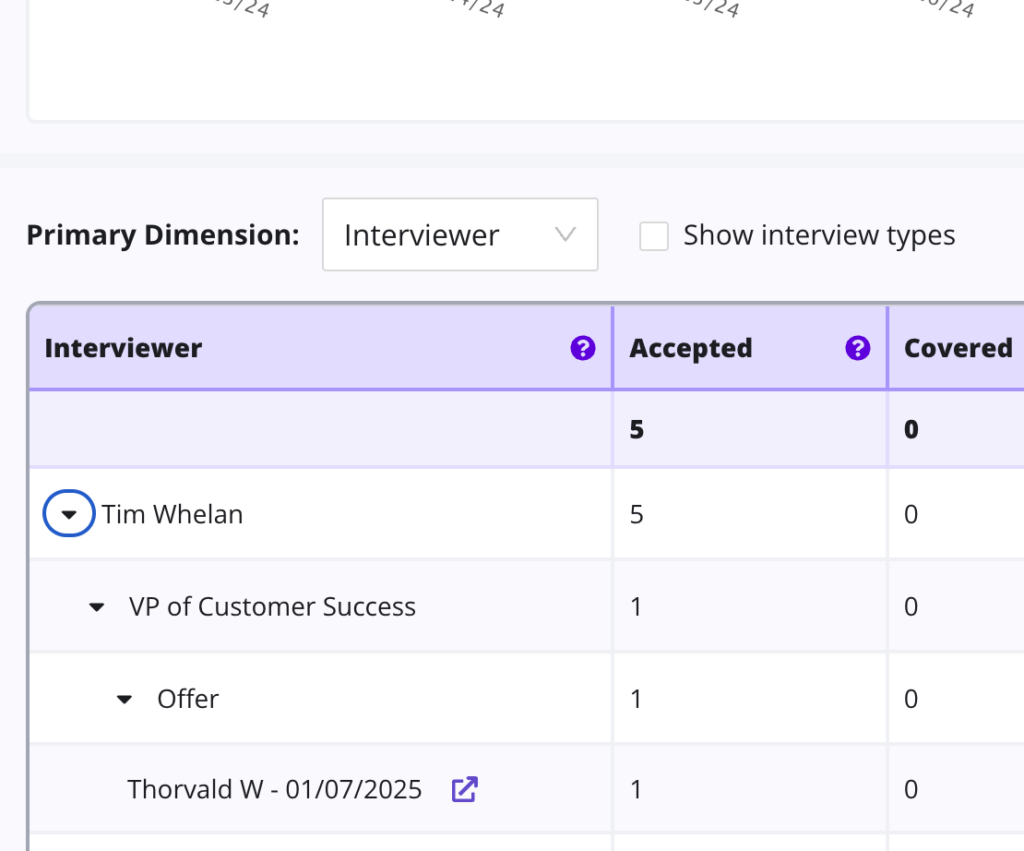
Recruiting & Interviewer Leaderboards, Lead Time Report & Turnaround Time Reports can now all drill down to individual interviews.
Interviewer Portal has been enhanced with an Interviewer Prep Area for Experience+ users
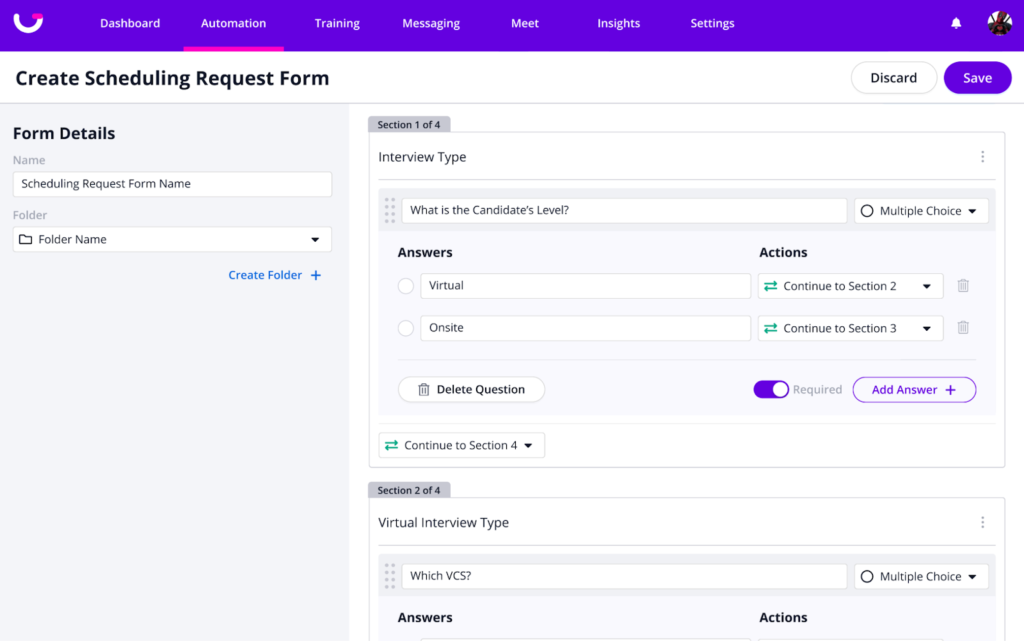
Add Logic to your Scheduling Request Forms to create dynamic questions and answers
And that’s not all, so let’s get into it! As always you can watch our full product updates webinar below or scroll for the TL;DR.
Watch the February 2025 GoodTime product updates webinar or keep scrolling for highlights
Improved Interface for Event Topics
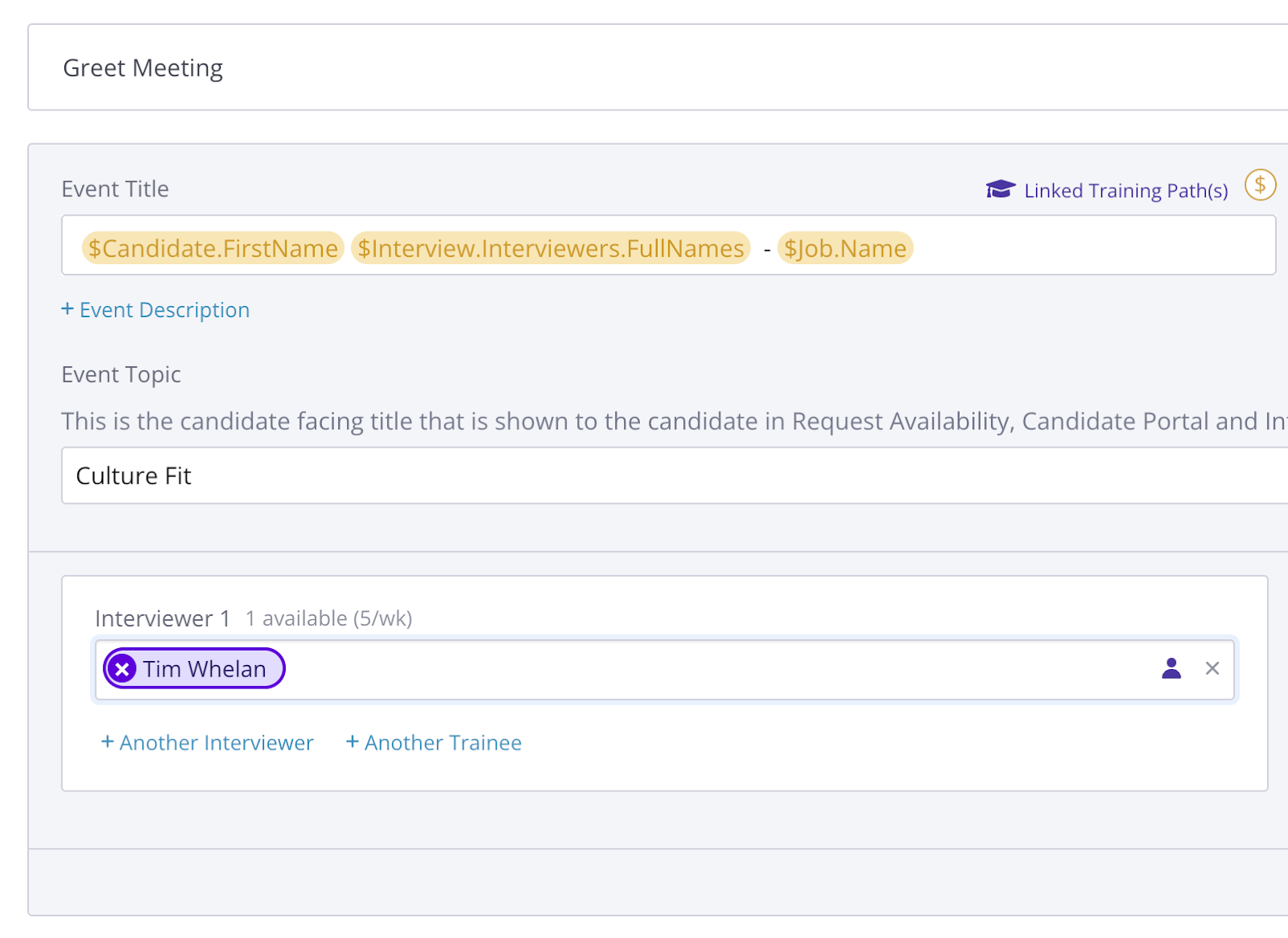
We have made it easier than ever to add or adjust the candidate-facing event titles (aka $event.topic) in your interview templates.
Why this is awesome: Event Topics are used in Request Availability, Candidate Portal, candidate itineraries and calendar events. Setting them up helps candidates have the best experience possible.
Interview Level Detail on Core Reports
Last month we introduced the ability to drill down the Cancelation & Reschedule Reasons Report to each specific interview and immediately it was requested for other reports in Data & Insights. Today we can announce it’s available in all core reports!
Why this is awesome: Being able to see the exact interviews that build up the data helps to both explain the aggregate sums at a macro level, but also improve issues on a micro level.
Enhanced Interview Links Access
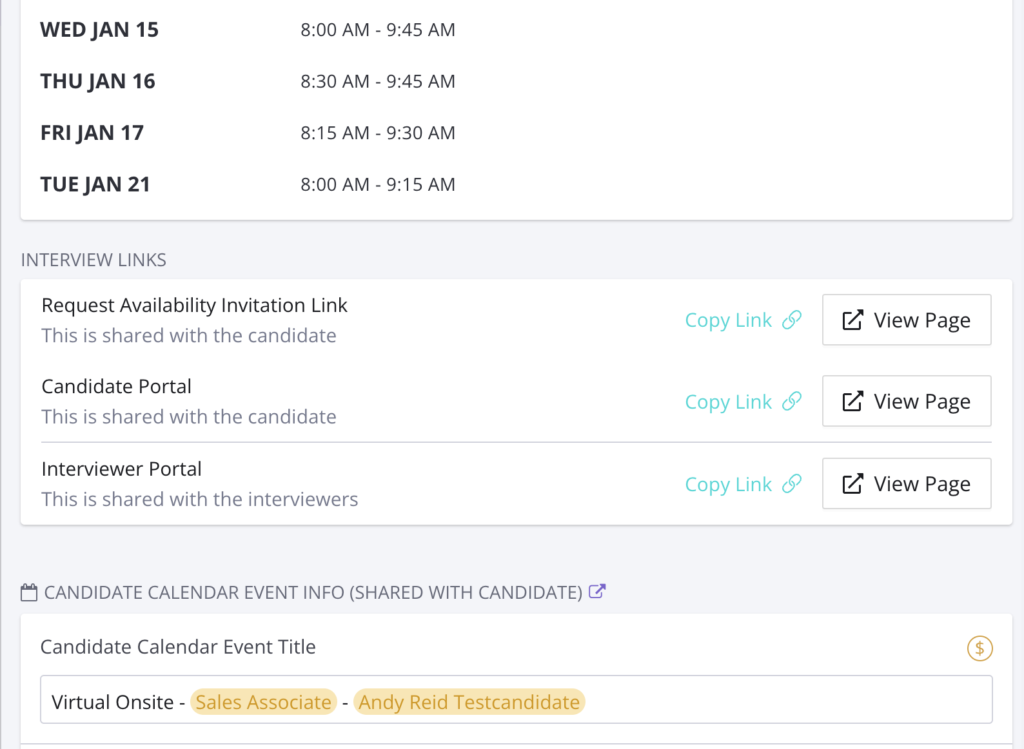
The interview drawer has been updated to include an easy access link to the Interviewer Portal as well as improved handling of the Request Availability & Candidate Portal links.
Why this is awesome: This simple but effective update makes it saves you time in accessing crucial information and increases your ability to quality check what your candidates and interviewers are experiencing.
Logic to Request Forms
Create sections to display different sets of questions based on previously answered questions.
Why this is awesome: Add advanced logic to your scheduling request forms. This allows you to have a robust form that changes questions/answers based on the inputs from recruiters!
Start using the latest GoodTime features!
We want to help you evolve and take full advantage of the latest upgrades and improvements to our platform. Check out the GoodTime support center for tutorials and tips to help you stress less and get more done!
Editor’s note: This article was originally published here by Aptitude Research.
On this episode of Transformation Realness, I’m hanging out with Ahryun Moon, CEO and Co-Founder, and Jasper Sone, Co-Founder and CPO, of GoodTime—a Workday partner that’s redefining how we think about interviews. Let’s face it: interviews are the most dreaded part of the interview process and often painful for everyone involved. But GoodTime is here to bring order to the chaos with smarter tools that streamline scheduling, empower interviewers, and improve the experience for everyone.
We get into how GoodTime orchestrates interviews from every angle, how an interviewer’s preparedness can make or break employee experience, and how agentic AI is creating a smarter, more connected talent ecosystem.
In this episode, Ahryun Moon and Jasper Sone remind us that interviews aren’t just a box to check—they’re where hiring success begins. From empowering interviewers to building smarter AI ecosystems, find out how GoodTime is helping HR teams step into the future of hiring with confidence.
Bringing Order to the Chaos
The interview process is messy. It’s chaotic. It’s the Wild West of talent acquisition, and it’s been screaming for a glow-up for years. Enter GoodTime. They’re not just smoothing out a few rough edges—they’re flipping the whole script. “GoodTime is an AI platform that orchestrates the entire experience for everyone—all stakeholders in the hiring process. So not just candidates, but also interviewers, TA teams, as well as hiring managers,” Ahryun explains.
GoodTime isn’t just about scheduling (though they nail that too). With tools like candidate and interviewer portals and training modules, they’re bringing intelligence to every step of the process. And they’ve cracked the code on turning raw data into actionable guidance. “We are providing in-depth insights and data in that interview process so that our customers can shorten time-to-hire, be more efficient, and actually do more with less,” Ahryun says.
This isn’t just an upgrade. It’s a full-blown transformation of how interviews happen. GoodTime is helping HR teams take control and make candidate interviews less of a headache and more of a strategic advantage.
Prepping Interviewers for Success
I’m going to let you in on one of the worst kept secrets… most interviewers are winging it. They’re running from back-to-back meetings, glancing at a resume at the last second and hoping for the best. It’s not their fault—interviewers are often overlooked when it comes to talent acquisition tools. But GoodTime is flipping the narrative by focusing on a group that’s critical to the hiring process.
“As an interviewer, imagine if you’re going into this interview and you feel underprepared. It’s kind of like this sense that you should have studied for the test, but you haven’t,” Jasper says. And the consequences of that? A poor candidate experience and wasted time. “Candidates are not stupid. They know that they’re underprepped. So then it really botches candidate experience,” Ahryun adds.
GoodTime’s interviewer portal gives even the busiest hiring managers the tools to get prepped in five minutes flat. Pair that with automatic prep time built into schedules, and you’ve got a recipe for interviews that are actually productive.
Building a Smarter Ecosystem
Here’s where it gets futuristic (in the good way): GoodTime’s partnership with Workday, leveraging Workday’s AI, Illuminate, is helping create a new kind of HR tech ecosystem. The GoodTime team is optimistic for a future powered by AI agents in recruiting, also known as “agentic AI.” What’s agentic AI? Think of it as AI agents—each specialized in tasks like scheduling, sourcing or internal mobility—working together and talking to each other to deliver smarter, more connected outcomes.
“The opportunity that was really interesting about Illuminate and the ecosystem that they’re building is now we actually have a place for these agents to actually start interacting together,” Jasper says. “There’s a high likelihood that if you build an agent here, you’ll be able to make sure that it and others have access to it at scale.”
For GoodTime, this means evolving into the ultimate scheduling agent. “We would like to become the ultimate scheduling agent that can engage with natural language and then be able to schedule even the most complex interview,” Ahryun says. Imagine being able to coordinate multi-round interviews for executives and high-volume retail hires alike, all without breaking a sweat.
The future isn’t just better tools in your tech stack, it’s creating an ecosystem where yout HR tech works together seamlessly to scale impact. And really, now that we’re seeing that possiblity, why would we ever settle for for less?
Hello, my little blueberries. Welcome back to Transformation Realness, the only show all about people who are doing their best to make the world of work less shitty and have the guts to share their story: the good, the bad and most of all, the real. This podcast is produced in partnership with Rep Cap and hosted by yours truly, your fearless navigator, Kyle Lagunas, Head of Strategy and Principal Analyst at Aptitude Research, the leading boutique research firm covering HR tech and transformation. Get into it.
For today’s episode, we are back on Workday’s Forever Forward Bus, and we’re diving into a game-changing conversation about rethinking the interview process from every angle. Interviews. The ultimate Wild West of talent acquisition. You know it. I know it. And my guests today, Ahryun Moon, CEO of GoodTime, and Jasper Sone, their product mastermind, they definitely know it too.
We’re talking about how this power couple in their platform are tackling one of the messiest parts of hiring: interviews. From seamless scheduling to empowering interviewers and candidates alike, GoodTime is putting intelligence into every touch point of the process. And with Workday’s partner ecosystem backing them, the stakes and the opportunities have never been higher. It’s another installment of Built on Workday: The Birth of the New HR Tech Ecosystem.
Let’s get real about how to do more with less, deliver better experiences, and make hiring smarter, not harder.
Hello, my little blueberries. Welcome back to Transformation Realness, coming to you live from the back of a bus at HR Tech. The back of the bus is the coolest place to be, of course. There is a podcasting studio in Workday’s bus. It’s so sick. It is really fun. And I am joined today by two of my new friends at GoodTime, Ahryun, Jasper. Do you guys want to say hi?
Ahryun Moon:
Yeah, definitely. I’m Ahryun, one of the co-founders and CEO of GoodTime.
Jasper Sone:
Nice to meet you. My name’s Jasper. I’m one of the co-founders of GoodTime, and I work on the product.
Kyle Lagunas:
So here this week we are talking about this major push from Workday to expand their partner ecosystem. Look, I’ve been an industry analyst for about 15 years. I used to be very young, and now I’m not as young as I was, but.
Ahryun Moon:
You look young.
Kyle Lagunas:
Thank you. Thank you. I still haven’t done any Botox yet. Gotta get that skincare going. But look, I’ve covered the space for a really long time, and I’ve seen different types of partner programs. I’ve seen a lot especially in the major HCM space. These companies like to build it themselves. They like to maintain that walled garden. And I think that with as much disruption as we’ve been through in the last couple of cycles, that the game has to change.
I’m really excited this week to be able to sit down with some of these new partners that Workday is engaging with and celebrate some of this partnership, the outcomes that are coming from it. I’m really hoping that people aren’t thinking I’m just here stanning for Workday, although I’m happy with this. I want to see others in the space take this and run with it as well.
But yeah, so that’s my setup. That’s what we’re here to talk about. Tell me about what’s going on with GoodTime and Workday as part of this. Maybe for those who don’t know, you all can tell me a little bit about who GoodTime is, what you guys do.
Ahryun Moon:
Yeah, definitely. So GoodTime is an AI platform that orchestrates the entire experience for everyone, all stakeholders in the hiring process. So not just candidates, but also interviewers, TA team, as well as hiring managers. Our core is being able to schedule extremely complex interviews for corporate roles, but also using the same technology, we now schedule high volume retail roles as well.
So the scheduling and then the brain and engine behind that is really our core. But on top of that, we’ve also built out what we call the experience layer. So we have something called candidate portal, interviewer portal, interviewer training, all those to really prep the people who will be in the interviews to put their best foot forward. And on top of that, we have an intelligence layer.
So typically what we found is the process of interview is where data is severely lacking. So we are actually providing very in-depth insights and data in that interview process so that our customers can actually shorten the time to hire, be more efficient, and actually do more with less, but with data-driven decision-making.
Kyle Lagunas:
Yeah, I love it. I mean, honestly, the interview process is kind of the Wild West in talent acquisition. It’s an area that continues to just need so much support. I feel like it’s interesting how many people that interview that aren’t trained to interview. And the hiring organization really has no insight into what people talk about and how it goes. Interviewers themselves don’t know really how they should effectively run these things, right?
Ahryun Moon:
Totally, yeah. Actually, Jasper can talk more about our experience.
Kyle Lagunas:
These stakeholders need support, and a lot of these tools we build are just for the recruiting sake. You guys are engaging other stakeholders, right?
Jasper Sone:
Absolutely. I think one of the things that from the flip side of that, as an interviewer, imagine if you’re going into this interview and you feel underprepared. It’s kind of like this sense that you should have studied for the test, but you haven’t. And oftentimes this is not their only job. This is part of the many different facets of their job. And so really understanding for us that it wasn’t just the administrative components of setting up the interview to make them successful.
It’s actually all of the actors that are around the interview itself. That was the key moment for us as we started building out more and more of these products around interviewing. As much as companies have done amazing jobs to enhance their overall candidate experience, you can’t help but wonder how much of the experience is actually determined inside of the interview.
Kyle Lagunas:
100%. 100%. It’s not even just that so many of these interviewers are… I love that notion of I didn’t study for this test, but the reason I feel like that happens, meeting culture is out of control these days. And so somebody that’s interviewing in Canada, I’m running from one meeting that ended right before this was scheduled to start, and hopefully we wrap up on time.
And then I also have another meeting immediately after this. And so for the talent acquisition organization, we need to enable that interview experience. It’s not just automating the interview scheduling process. There is a lot of efficiency to be gained there, but we need more impact than just that.
Ahryun Moon:
Oh yeah, absolutely. So actually that’s why I think the scheduling aspect and as well as experience really go hand in hand. So things like, hey, let’s always make sure that there’s 10 minute buffer before the previous interview. We can actually programmatically set that up within GoodTime, so it just happens. And then the experience portion, the interviewer portal, what it does is it actually helps interviewers prep within five minutes.
And that’s literally what they do, or they go into the interview and they’re reading resume, looking up LinkedIn. Candidates are not stupid. They know that they’re underprepped. So then it really botches candidate experience. So really I think those components really go hand in hand. That’s why we built out the platform that way.
Kyle Lagunas:
I mean, honestly, I feel like we have accelerated some of the innovation in this space. We’re realizing that we can support more of this experience. It’s really cool to see how much product you guys have built. I feel you have built a lot really recently. Are you getting any sleep, Jasper?
Jasper Sone:
Fortunately, yes, but the innovation I think comes with changing technology availability, but also customer support as well too, because a lot of the needs come directly from our customers. And so it’s amazing over the last probably three or four years, so many things have changed in our lives and these changes come with new problems, new solutions that need to match those problems.
And so we’ve been very fortunate to be at the crux of that. And it’s amazing to see companies like Workday as well to take advantage of this opportunity. That’s really huge in building out an ecosystem for all these players to actually start interacting together.
Kyle Lagunas:
I mean, that’s the perfect segue. Because like I said, historically, these major players have tried to build it all. If you had a shared customer with them, they would, yeah, here are API’s, but I’m not going to have a bidirectional with you. And for something like jumping in and enhancing the interview experience and it doesn’t have bidirectional integration with my ATS, none of this is connected. I just can push some stuff towards them. I don’t know. I feel like that is a broken experience.
It limits the amount of value that you all can bring as solution providers to the problems you’re trying to solve. So it’s cool to see Workday being like, all right, actually we’re never going to build what GoodTime has. And we do see that our customers want some of these capabilities. So yeah, let’s be partners. Let’s talk a little bit about how have you seen your experience as Workday partners, how has it made an impact on the Workday customers that you have?
Ahryun Moon:
Definitely. We actually have been Workday partner for a while now, about five years.
Kyle Lagunas:
Oh, cool!
Ahryun Moon:
Our first Workday customer is a very popular social network. And since then, in the last five years, just frankly, they’ve been a really amazing partner and also they have really good API, so we can actually have bidirectional sync and everything, but not a whole lot of proactivity in terms of partnership.
But in the recent one year, I think things completely changed. They’re a lot more engaging. We are engaging with them more. We are brainstorming together also on what we can do to actually bring more results to our customers, mutual customers. At the end of the day, I think we want to bring that result to our customers and make them more successful.
Kyle Lagunas:
I mean, that’s the name of the game, isn’t it? Look, it’s been a rough couple of cycles as solution providers in this space. It’s also been rough for the practitioners. But I have been saying consistently, the company, the vendors that are being customer obsessed, the ones that are prioritizing the customer’s needs over any other political environment or co-opetition or whatever, they’re winning, right?
So they’re starting to lean in and collaborate with you. Jasper, how’s that going for you? Because you have the product organization under you, right? Yeah. So what’s that like? Are you nerding out with these people? Are you coming with a bunch of ideas and they’re like, “Yeah, go ahead.” Just talk to me about that collaboration on that side.
Jasper Sone:
Yeah. I think what’s really amazing about the opportunity is just simply just the platform itself. And then in conversations, essentially you can really understand whenever you work with these businesses that care about their customers, you have an immediate opportunity to click with them. So I think any product discussion that you have, it makes sense. And you can clearly draw lines and say, “Hey, we’ve been trying to solve this problem, but this is not our wheelhouse. How can we help?”
Kyle Lagunas:
They’re being open about that, which I also love.
Ahryun Moon:
Actually, yeah, we had a really nice meeting with Workday and they said, “We’re not building GoodTime. We are not investing into building something like GoodTime. We actually would love for partners like GoodTime to actually help our customers.” So they’re very open about it, which we love.
Kyle Lagunas:
Have you guys had an opportunity to look at I think that they productized the name of their AI strategy now, which is Illuminate? Yeah, yeah, because I’m thinking about Agentic AI, which I wasn’t even talking about 18 months ago, but this is a real thing all of a sudden. How are you looking at your product roadmap and thinking about, all right, now I know what I can build into Workday? You probably have, I don’t know, a new toolkit to play around with.
Jasper Sone:
I feel like one of the things that was really amazing about the AI space is I remember talking to my AI professor in college and he basically said, “Where we’re at today wouldn’t be around for another 50 or 60 years.” And this is a very educated individual in this space, but that’s how humans are very… It’s very hard for us to understand exponential growth. And so it’s happened really quickly.
But one of the problems that wasn’t solved was you have all of these cool technologies swirling around and businesses taking advantage of them, but where do they all come together? For us, I think the opportunity that was really interesting about the Illuminate and the ecosystem that they’re building is now we actually have a place for these agents to actually start interacting together that there’s a high likelihood that if you build an agent here, you’ll be able to make sure that it has access and others have access to it at scale essentially that’s necessary.
Kyle Lagunas:
A huge part of scale and adoption is also trust as well. I was talking to somebody else here at the show and even the larger players in our space, not like the Workdays and Oracles of the world, but even an established player like GoodTime, the IT teams at these enterprise companies are still going to think of you as “some random startup.” So why would I give them access to this or that? Why would I integrate more deeply with this?
You guys are getting involved in having access to their most sensitive systems, which is their scheduling, their email. That’s a really sensitive space. I have to imagine that now having… Not just now, like you said, five years, but having that partnership with Workday, they’ve said, “Hey, not only do these people have a product that we think is valuable, we also trust them. We have vetted them. You can trust them too. They’re our partner. They can be trusted as your partner as well.” Are you finding that ethos in your customer engagements with Workday?
Ahryun Moon:
That’s actually a really good point, and I think that’s an amazing validation that our customers will absolutely trust. When we were at Workday Rising last week, a lot of customers actually came by and said, “Hey, we want to actually turn on this AI feature,” whether it be within Workday or within GoodTime.
And they’re like, “I actually need to get some soundbite so that I can actually have a logical conversation with my security team.” I think everyone is really at the forefront in trying to utilize AI, but at the same time, IT and security. It’s a brand new horizon for them. But yeah, I think having that partnership with Workday and Workday validating our [product] as a very safe vendor means a lot to our customer.
Kyle Lagunas:
It definitely does. Because look, the exponential growth that we have seen in innovation — by the way, we’re 18 months into widely adopted GenAI — HR teams can’t keep up with this. Because not only are they I think they’re struggling with some literacy around AI, they don’t really know how these things work, the increased scrutiny that’s coming from these security and compliance teams, HR and talent acquisition is struggling to overcome because they’re struggling to inform and respond to these questions.
And so it slows down their own innovation agenda because it’s like, I don’t know how this AI agent works. I just know that it is going to deliver value for me. That struggle to overcome those objections, I think, stalls us, which is why I’m excited then to see this is a really good time for Workday to open up this partnership so that their customers can find the right partner for the problem that’s in front of them, find the right solution and move quickly, more relatively quickly.
I mean, I study adoption trends and we saw a huge pause in AI enabled HR initiatives over the last year because this increased scrutiny from these AI councils.
Ahryun Moon:
We actually have met even some people from government, and you know how governments are, slower.
Kyle Lagunas:
Oh God, yeah. FedRAMP.
Ahryun Moon:
But even they were saying, “Hey, with AI, it’s not a matter of a few years of adoption. We need it now. Within a few months we need it.” So I think everyone understands the urgency of it. I think we just have to… Probably it’ll take a few months for everyone to be on the same page. And then if you want completely 100% security, you don’t use any SaaS. No Workday. No GoodTime. No nothing. Right?
You work in your own silo. But it’s all about calculated risks and also working with vendors that actually do care about the security of the data. And I think that at GoodTime, for example, we care deeply about it. We make sure that our engineering team has a very good stance on it, and also make sure that we do not process any PII through the AI and so on. So as long as you calculate the risks and know that the ROI is there, then I think the industry will come.
Kyle Lagunas:
I mean, I also just see alignment between your all’s philosophy and your own self-regulation for AI as well as Workday’s. I really love the advisory board that you all have built, the Human-Centric Advisory Board for… Human-Centric AI Advisory Council. I’m really excited to be working with you guys to take that and build a new coalition. What does human-centric AI mean for you guys? And I want to share with people about this coalition we’re going to do.
Ahryun Moon:
Yeah, absolutely. I think a lot of people, especially in HR and TA, are very afraid that AI will take their jobs and be replacing humans. And the process of HR and TA are just innately human. We are hiring humans. So what we believe in is using AI to really augment humans, not to necessarily replace and just make the entire process very robotic and process candidates like we are doing paper pushing.
We do not believe in that. We do believe in elevating experience using AI, elevating efficiency using AI, and also augmenting people so they can make better decisions with data. So that’s what HCAI is all about. And there are actually quite a lot of HR leaders in the industry that really believe in that.
Kyle Lagunas:
Oh, you guys have a sick crew of people that have joined you. I’m like, wow, work. Okay, these are some real legit leaders, right?
Ahryun Moon:
Totally.
Kyle Lagunas:
Well, the industry needs it. There are HR leaders that I think are more expert and just I think a little savvier when it comes to AI. And I think you all are engaging a lot of them to come and help you sit down and think through, making sure that things are human-centric, but they don’t really have a vehicle to share what they’ve learned and how they’ve gotten over these objections and how they’ve kept their AI agendas moving forward in these really chaotic times.
I mean, I think that’s where when you all came to me about you’re doing your advisory board, that’s really for GoodTime. There is some thought leadership there, but you want them leaning in on your own product roadmap. Well, I’m looking at it and I’m saying the number of AI projects, the urgency to get the enhancements, the impact from AI is so real, but the HR and TA teams are stuck.
I wanted to bring some of these folks together and say, well, let’s crowdsource some best practices. Let’s sit down as respected colleagues and look at the EU AI regulations and say, how can we adapt this to make sure that these are fit for purpose in HR and TA, and how can we create a shared standard for the industry to pick up? If you guys create technical documentation for these evaluations, you’re doing that entirely on your own.
And they’re going to scrutinize it because you put it together. But if we can put together here’s what standards are for ethical and human-centric AI, if we can put together here is an RFI template that you should send out to every potential AI partner that’s fit for HR, I feel like those kinds of shared practices, it really is going to rise the tide. And so when you’re getting scrutinized for AI, you’re not going to be out there on your own.
You’re going to say, no, actually, Aptitude’s certified us as a human-centric AI provider. And we have, which by the way, it’s like 40… I don’t know how many people we’re going to end up having in this coalition, but 40 expert HR and talent acquisition technology leaders have leaned in to say that this is what we’re all aligning to. I feel like that just helps you guys move past and get more of that trust going with external stakeholders in IT and compliance.
Jasper Sone:
And as founders, I think one of the things that we think about is oftentimes you’re working on things that people haven’t built before, and that’s what the entire industry is in right now. Together we are working with a technology that we haven’t mastered yet. It’s so important when you’re doing these things to have these voices in the room that have been in the industry for so… Collectively, there’s probably multiple centuries worth of HR knowledge in the same room.
And then you couple that with technology, and I think that’s when you can make… Even before the standards come out, we can make interesting standards available so that even though we are going to obviously learn from those and take advantage of those first, but these can eventually become standards for the entire HR industry as well too, which I think will be very powerful in helping jumpstart the adoption of new AI technology.
Kyle Lagunas:
I think so too. I mean, we need it. We really do. I mean, it’s like being an HR expert or being a TA expert is not enough, knowing my processes, knowing deep subject matter expertise and policy. And I’m not trying to undermine the value of that level of expertise, but I know and firmly believe that’s not enough anymore. We actually do have to be literate with AI. I do need to at least know functionally, generally, how do these things work, what do they do, and what do they not do.
You had mentioned calculated risk earlier, that a lot of companies are taking more calculated risk. I don’t know that I see that. I see a lot of TA and HR teams that assume risk and they don’t actually calculate any of it. They just avoid it. They’re like, “Ugh!” We do a survey, what’s the leading obstacle for adoption of AI and HR? Guess what? Bias is there. We’re afraid of bias.
I’m like, well, the actual number one obstacle of adoption of AI is a lack of understanding of AI in the HR organization. You guys work with project leaders. They’re working with you on the implementation and they know how to do this. That’s not enough to have one expert at the project level. You need to have all of TA, all of HR that knows what these things are.
And that lack of literacy I think is just a big challenge for us because that’s inhibiting that calculated… I need to know what the risk actually is so I can decide if I’m avoiding it altogether or if I’m mitigating it in some other way. You know what I mean? It’s just like that lack of literacy is just a huge obstacle for us.
Ahryun Moon:
I think that’s why HCAI is super exciting. I think it could be an opportunity for education for HR leaders so that they have the knowledge. Which means if they have the knowledge, they can have a very reasonable conversation with security leaders also.
Kyle Lagunas:
Yeah, exactly.
Ahryun Moon:
So it’s not like, hey, I want this software, and they say, why? And then you cannot really have a good sound bite there. So I think that’s why HCAI is really interesting and I think we’ll do some really great work together. So very exciting.
Kyle Lagunas:
I think so too. I mean, gosh, it’s like getting in front of the security team, getting in front of one of these AI councils, and they’re like, what is this? How is this going to work? What risk are we going to have? And TA is like, here’s the documentation that they gave me. I don’t know. That’s not my job. We really need to empower these people a lot.
Ahryun Moon:
Also, I think with AI, I think TA work may shift just my little crystal ball.
Kyle Lagunas:
Yeah? What do you mean?
Ahryun Moon:
I feel like there will be more different roles that will be generated within the TA team that actually understands and can harness the power of AI. There will be a lot of agents, for example, that will be doing different things. We are going to go towards scheduling. We would like to become the ultimate scheduling agent that a user can engage with natural language and then be able to schedule even the most complex interview with all the execs and 10 interviews back-to-back.
We can understand because we have the brain and the engine that we built out, and we would love to create an agent like Illuminate. That’s why it’s super interesting to us. We would love to create an agent that makes GoodTime ultimate scheduling agent.
Kyle Lagunas:
I mean, you’re talking about what your vision is building out, something that is going to be much more conversational with something?
Ahryun Moon:
Assuming their agent, like scheduling agent, sourcing. And so if there are multiple specialized recruiter agents, then someone has to be able to coordinate that.
Kyle Lagunas:
Absolutely. Yeah.
Ahryun Moon:
That will be a brand new role within TA.
Kyle Lagunas:
I do wonder if we’re going to have AI engineers and AI architects in the TA team, because we’re going to need it. I mean, that’s what we see with automation today. It was all rules-based. Anytime you have a use case for an automation you want to create, you’re going to build a new recipe. Who’s maintaining all these recipes? We don’t even have recruiters dispositioning candidates in the ATS. Who’s taking care of this.
No, I think that will be really interesting, and I think it’ll come up in TA first. We’ve always been at the edge, mobile, social. Here’s AI, we’re going to do it again. But let’s come back to land the plane partnership with Workday is maturing. Now it sounds like it’s accelerating. You’ve got a lot of ideas yourself. They’re bringing ideas to you. What is something that you think is uniquely available to Workday to customers that are also GoodTime customers?
Jasper Sone:
Or potential GoodTime customers.
Ahryun Moon:
Yes.
Kyle Lagunas:
Absolutely.
Jasper Sone:
We saw this in our early mutual customers, but Workday being not just an ATS, not just an HCM, not just a finance platform, enables them have all sorts of technology together. And one of the things that is very interesting is very early on when we started working with some of our mutual customers, we saw these individuals building out software on the side that actually tied our two systems together in different ways.
Kyle Lagunas:
Oh, interesting.
Jasper Sone:
And so the most exciting part about this opportunity for me is this growing feasibility of us to be able to actually make those ties more natural inside of the system. And so I’m very excited about the opportunity to continue to tie in deeper. And what this will ultimately translate to is instead of every customer having to write custom software to build out certain types of data pipelines between the two systems, whether it be connecting their HCM to their ATS to us, or vice versa, now there can be standardized systems that enable them to do this with a button click.
Kyle Lagunas:
I mean, there’s new foundational layers here too. We’re not just talking about application to application. We’re talking about skills, as an example. Tying skills relevancy from the learning space to the ATS space to the interview scheduling space, making sure that we’re actually assessing an interview for the skills that we do need. That recruiting team is having the same skills language as the learning and development teams are having. I think there’s foundational aspects now that are also going to accelerate some of that growth. You’re not just connecting one new app to another app.
Jasper Sone:
And I think the longer term arc on that is as these systems get to grow together and mature together instead of being in silos, now those types of interesting problems that once were problems because of the silo can now become opportunities for businesses to make better decisions.
One of the things that we love about the GoodTime scheduling algorithm is it considers many different aspects whenever it makes decisions to try to mimic that of a human being making the same decisions. Things like your training status or your availability, your work hours, your likelihood of declining an interview even.
Kyle Lagunas:
Oh, Interesting.
Jasper Sone:
And so when we do these things, we have all the data that’s inside of our system, but there’s also data that’s outside of our system as well, too, that can be interconnected to help the system make even better decisions. That’s what we are really interested in. We built a really solid foundation to enable us to take in an unlimited amount of parameters. And all of a sudden, here’s a solution provider that has the ability to send in an unlimited amount of parameter results. I think the opportunities are endless.
Kyle Lagunas:
So interesting. Well, I’m really excited for you guys. I’m also excited for just the HR practitioners in the space that have this opportunity to partner with who they want and have that trust and keep that AI innovation going. Thank you both for joining me today. It’s so good to see you. Can’t wait to sit down with you again.
Jasper Sone:
Yeah.
Kyle Lagunas:
Alright. Bye, everybody.
And that’s a wrap. A massive thank you to Ahryun and Jasper for a conversation that was anything but good. It was great. From bringing structure intelligence to the interview chaos to tackling one of the biggest bottlenecks in talent acquisition, they are proving that thoughtful design and a little AI magic can go a long way. Here’s what I’m taking away.
The interview process isn’t just a checkbox. It’s a critical moment that defines the entire hiring experience for candidates and interviewers alike. Platforms like GoodTime, especially with Workday’s ecosystem support, are stepping up to deliver smarter, more human-centric solutions. And let’s be real. This isn’t just about efficiency. It’s about making hiring more equitable, more engaging, and frankly, less of a headache.
Thank you so much to our friends at Workday for hosting this episode and to all of you for listening in. I will be back soon with more conversations that challenge the status quo and bring transparency to the transformation journey. Until next time, stay curious, stay bold, and stay grounded in what matters most, people. Catch you on the next one.
The key ingredient for businesses to survive and thrive is to maintain a successful human resource department. HR is a fundamental aspect of every company, but there are several challenges to overcome, especially from competition due to the increase in technology advancements and market demands. So, how do you stay ahead of the game? What makes you stand out as an HR professional?
It’s not a simple answer, but in this article, we’ll break down 10 things you should keep top-of-mind this year that can help you stay on top of this rapidly shifting profession.
Unlock 2026’s top hiring strategies: Insights from 500+ TA leaders
Be the first to uncover deep hiring insights specific to your sector — straight from the highest-performing TA teams.
Competing in HR means being ready to learn as you try to keep up with the ever-changing needs of the field. That’s why you should consider building your skills and making sure you gain knowledge that will go a long way to advancing your career. Engaging with resources that discuss the evolution of HR technology can provide valuable insights.
Participation in online courses, workshops and seminars
Where do you start? Consider enrolling in classes, webinars, seminars, workshops, or other coaching services where you can gain more skills — or attending a recruiting conference. Whether it is certification in data analysis, diversity, leadership, communication, digital literacy, or any other vital skill related to HR automation, it will boost your career and get you closer to achieving your goals.
2. Implement new tools and software to simplify workflows
In this new age of AI and automation, professionals know that tech should be viewed as a collaborator, not a competitor. The goal is to improve productivity, efficiency, and accuracy through the use of the latest HR software solutions?
Automation in repetitive tasks
The last thing you want is to waste the company’s time and resources, and thanks to automation, you can avoid issues like double data entry and reduce the chances of human error. By eliminating repetitive tasks, employees can dedicate their time to other crucial duties and leave the rest to the relevant software.
Integration of Payroll and Employee Management Services
Everyone wants smooth employee management and one effective solution is integrating advanced payroll services. Unlike manual entries, such automated solutions save a lot of time, allowing you to focus on strategic goals and growth opportunities.
3. Build strong professional relationships
Anyone in HR will tell you how invaluable networking is. It is one of the most powerful tools to use as leverage for your career if you are hoping for advancements. For example, Connecting with industry leaders can provide support, advice, and opportunities. Following HR thought leaders can offer diverse perspectives and insights.
Internal networking among employees
You can start right from your company, forming a network with other employees in HR and other departments. These are professionals that you are in close contact with, so you are certain that you can get the help you need.
Participation in local business communities
You can also gain access to local business communities where you can learn from industry leaders, seek advice, find opportunities, get referrals, and connect professionally. Luckily, it is now easier, thanks to social media and online groups.
4. Stay informed about employment regulations
You know how important labor laws are in HR. You need an excellent understanding of the current rules and regulations to make sure the employees are well taken care of. They should be safe, healthy, well-paid, and treated fairly. They shouldn’t suffer discrimination and all their workplace issues should be addressed.
5. Prioritize quality over quantity
Quality matters more than quantity when it comes to recruitment and retention. Hiring more people to take on more tasks is not as effective as hiring only a few of the most talented from the pool. Whoever you recruit must be authentic and exceptional at what they do; this way, you will be confident of consistent, excellent results. Implementing smart recruitment strategies can help you build a strong talent pipeline.
6. Pay attention to insights, not data
Data does an excellent job when it comes to guiding future decisions, but did you know that it can cause issues when in excess? It can be too overwhelming, beating the purpose of providing the necessary hiring insights that the business needs. That explains the need for effective HR management software that will still manage crucial data analysis. You can go for systems that create customized reports and collate data that you can use to make more insightful daily decisions.
7. Focus on strategic thinking
Staying competitive in the HR field also requires a change in mindset. Think strategically. Ensure all your actions are business-focused. You want a better recruitment process, proper allocation of resources, and improved automated solutions. The goal is for the business to thrive, and this is where you factor in various elements, such as skills and awareness of various dynamics.
8. Improve communication skills
Are you a good speaker who can confidently rally the team toward a common goal? Better yet, are you a great listener who listens to employee concerns and helps them work through them? Communication skills improve how you negotiate and present ideas to improve company policies. This is what other employees expect from every firm: HR professionals who are excellent at communication.
Focus on clear and transparent feedback
All the team members will appreciate your transparency as their HR. They need a leader who is honest, open, and straightforward so they can comfortably discuss their needs and understand the company’s objectives. Knowing the ‘what’, ‘why’ and ‘how’ makes them work smarter and boosts their morale.
9. Stay agile in adapting to change
HR is no longer just about managing processes—it’s about leading through disruption. The workplace is evolving at an unprecedented pace, driven by rapid technological advancements, shifting workforce expectations, and economic uncertainties.
As an HR leader, agility is your competitive advantage. This means proactively anticipating change, embracing digital transformation, and fostering a culture of adaptability within your organization. Stay ahead by continuously upskilling, leveraging HRIS and AI-driven tools, and making data-informed decisions to pivot strategies in real time. The ability to adapt quickly isn’t just a skill—it’s a strategic imperative for HR professionals in today’s landscape.
10. Practice emotional intelligence (EI)
In a world where automation and AI are transforming HR, emotional intelligence remains an irreplaceable human skill. The best HR professionals don’t just manage people—they inspire, support, and drive engagement. Mastering EI means understanding team dynamics, navigating difficult conversations with empathy, and fostering a culture where employees feel valued and heard. High-EI leaders recognize the emotions behind workplace challenges and use that insight to enhance performance, retention, and overall job satisfaction. By actively listening, demonstrating emotional resilience, and cultivating psychological safety, you position yourself as a trusted advisor—one who not only understands HR policies but also the people they impact.
Achieve your career goals by staying competitive
Human resources is one of the most important aspects of any organization, and if you are lucky to be part of it, you know that you are a key member tasked with the company’s growth. By embracing the tips above, you edge a step closer to fulfilling the organization’s objectives and, at the same time, achieving your personal career goals. Remember to stay flexible as you quickly adapt to the dynamics of tech improvements and labor laws, and always think strategically: that’s how you stay ahead of the competition.
What makes a company’s brand stand out to top talent? Just like a strong benefits package, a standout employer brand is key – highlighting and promoting why your organization is a great place to work. Now the question is, how do you bring your employer brand to life in a way that truly resonates with candidates? As an employer, you can leverage the power of technology and social media. Yes, you can use videos!
Video content has evolved through time and technology and emerged as a key tool in employer branding. With videos, you can genuinely tell your company’s story and connect more deeply with prospective employees. Videos are engaging and can effectively evoke emotions. Whether embedded in your candidate portal, shared through email campaigns, or featured on your employer brand website, videos create a deeper connection with potential hires and elevate their experience.
Unlock 2026’s top hiring strategies: Insights from 500+ TA leaders
Be the first to uncover deep hiring insights specific to your sector — straight from the highest-performing TA teams.
Why is video essential in your company’s branding?
Here’s a quick summary of why you should care about incorporating video into your employer brand strategy:
Videos are essential in employer branding because they offer an engaging and authentic way to connect with potential candidates.
By highlighting your company’s culture, videos can genuinely share a glimpse of your organization, which helps set the expectations for your potential candidates.
Video content can streamline recruitment and improve the quality of your hires by allowing candidates to understand your company first.
Lastly, videos can boost your brand’s online visibility and reach across social media platforms, furthering your conversion and marketing efforts.
So now, let’s dive deeper into why videos are essential in your company’s branding.
Videos can effectively engage candidates.
Video is one, if not the most effective medium for capturing and maintaining attention. Viewers retain 95% of a message when it’s delivered through video, compared to only 10% when reading text (Forbes). Videos have the ability to elicit what we call multisensory engagement – stimulation of both visuals and sounds makes videos immersive and, therefore, more impactful.
Essentially, videos can vividly express emotions with gestures and facial expressions. Videos can make viewers experience a roller-coaster of emotions. This makes your storytelling more personal and relatable. As cliché as it may sound, you can sell your brand efficiently if you target your audiences’ emotions.
Videos can authentically showcase your company’s culture
If executed properly, videos can powerfully highlight what it is like to be working in your company. Give them a glimpse of your company’s values, perks, and atmosphere.
Thinking about the content? Here are some examples:
Employee testimonials: Nothing beats genuine feedback from your employees themselves. As long as they are happy, you don’t have to give them scripts. You can even ask them on the spot and capture that perfect moment why they’re happy working for your company.
Day-in-the-life videos: As we all know, this gives your audience a “walkthrough” of how a typical day of an employee looks like in your company. This content shows transparency — which sets the expectations of your viewers and potential candidates. Make it more enticing by letting your employees show your company’s perks – free coffee, free food, freebies!
Behind-the-scenes tours: Grab your tripod, and it’s time to walk! Yes, walk with your viewers and show them the ergonomics. Record your company’s team-building activities, company outings, games, and more. This will give your potential candidates something to look forward to.
LEGO does a great job of day-in-the-life videos. Check out this example above!
Videos can improve your recruitment efficiency.
According to oneday.com, job postings with embedded videos received 800% more engagement than those without. Additionally, job postings with video icons are viewed 12% more, and those with embedded videos have a 34% higher application rate. This research shows that incorporating videos into your job postings can enhance viewer engagement and is proven to attract potential talents.
Adding videos to your recruitment process can expedite and improve hiring experience. Let’s take a look at video interviews, for example. Video interviews helped employers look for the best talents worldwide, overcoming geographical limitations.
A candidate portal is an essential hub for delivering engaging content. Embedding videos here allows you to enhance the user experience and keep candidates informed at every step of the hiring process. You can put some content here, like welcome videos, role-specific insights, diversity and inclusivity, team introductions, etc.
Video content is an excellent learning aid in your employee onboarding experience. This will also save time and lessen the need to do in-person sessions.
Videos can boost your brand’s online presence.
Did you know that Google prioritizes video content in search results? According to vidico.com, video content is 50 times more likely to rank on the first page of Google than traditional text-based content. If your brand appears on the first page of a search engine (in this case, Google), it is more likely that many internet users will click on your website. This can also translate to more conversion—readers or internet users being turned into your customers.
Social media platforms like Facebook, LinkedIn, Instagram, Twitter, etc. are also optimized for video content. Furthermore, videos can be easily shared and are more likely to go viral on these social media platforms.
How to create videos for your brand strategy
Creating employer brand video content can feel overwhelming, but it boils down to just a few simple steps:
Know your company’s values: Know the “why” behind what you do. This is the backbone of your company and will serve as your reference when creating the content for your brand.
Use the right features of your video creation tools: features like AI video generation, audio editing, screen recording, and stock media can simplify your video creation process. Features like video hosting and analytics can help you refocus your efforts on the content that matters.
When polishing your videos, embrace imperfections, use subtle transitions, select appropriate background sounds, and play with the pace of your videos for emphasis.
So now, let’s dive deeper and discuss how to create videos for your brand strategy.
Know your company’s values.
Your company’s values will shape what you want to communicate and how you want to communicate it. These act as the guiding principles for all your content and communications. Your values must be consistent and should represent what your company aims to achieve. It is also imperative that you know what your brand stands for. Ensure that you will create content that aligns with your brand’s tone, message, and character.
You may have the best video editing tool, or you may have chosen the best fonts or the best transitions. But have you checked the “why” behind what you do? Your company’s values must be the foundation of all your communications and brand strategy.
Use the right features of your video creation tools.
Now you know the “why” behind what you do, your next step is to create quality content. You may have the best values, mission, and vision. But if you do not deliver it creatively and with quality, it will not be heard. Therefore, using the right tools to create quality content is equally important.
A lot of user-friendly tools have proliferated in the online world. Now it is up to you which tool caters to your needs and saves your time and money, of course.
Recommended features for a video editing tool:
AI video generator: These AI video generators simplify creating videos by automating visuals, voiceovers, and sound adjustments, making it easy to produce polished content. Practically, it is a one-click magic that can fix common mistakes and nuances in your video.
Audio editors: It is truly annoying if the sound does not match what is happening in a video. So, an audio editor enhances and refines sound syncing and quality, resulting in a more cohesive and professional final product. If you want to go extra, you can use an AI Voice Cloning feature, which allows you to do automatic narration using different voices.
Screen recording tools: These are perfect for creating tutorials or walkthroughs– making learning materials, explaining complex instructions, introducing your candidate portal, or showcasing how employees use internal systems.
Stock video and audio platforms: Did you run out of ideas with short video clips and sound clips? Or do you want to save time and use any available and ready-made videos and sound clips? Stock videos and audio are your friends.
Mobile availability: For quick edits and on-the-go content creation, mobile apps allow you to adjust video clips, add captions, or apply filters directly from your phone.
Video hosting and video analyzing capabilities: Video hosting can help with video storage, embedding, and performance tracking. Video analysis can be helpful by giving you insights about how many viewers watched your videos, what time your viewers watched your videos, and which videos have the highest engagement and views. This helps you refocus your efforts on which video content matters. Both are essential in choosing a tool because it will make your storage, tracking, and analysis efficient.
There are a ton of other features available out there. You may get confused at first, but the most critical first step is to try it yourself. Video editing is one of the heaviest doors you will have to push to open new opportunities to create content for your brand. If it’s too heavy, do it with your team.
Some practices you can use when polishing your videos
Embrace “happy accidents”: You aim to create the perfect video to represent your brand. Who does not want that right? But remember that everyone starts with the first step–full of mistakes, imperfections, learning, and milestones.
Consider “invisible transitions”: You may want to be fancy and engaging, but you might overdo it. Sometimes, less is more. Exaggerated transitions may distract your audience from getting your main point.
Choose the appropriate background sound: Viewers nowadays are highly critical and can get easily distracted. Try using nature sounds or soothing sounds that boost concentration.
Use speed for emphasis and impact: Viewers may get bored with the standard pace of regular videos. Try slow motion on the most critical parts of your videos, or speed up less important parts for comedic timing. Speed manipulation can evoke different emotional responses.
Final thoughts: Video sets you apart from competititors
Your branding is what will set you apart. How do you want your company to be remembered? Would you like your company to be remembered? If yes, then video can be a powerful tool to transform your branding strategy. It is an incredible, versatile medium that can make or break your efforts.
Looking for top talents to grow your company is time-consuming. You can make your brand stand out by using videos and pairing them with your recruiting automation efforts to make it even more impactful. Automation streamlines your hiring process, while video content makes your brand unique. This integration ensures consistency, personalization, and efficiency in your recruitment strategy.
Start leveraging video today to strengthen your employer brand and attract top talent. The combination of innovation, authenticity, and strategic communication will set your company apart in the competitive hiring landscape.

 Efficiency
 Experience
 Intelligence