5 Ways to Ward off Employee Burnout

An undeniable truth for the hiring world: the COVID-19 pandemic brought about a paradigm shift in the workforce as businesses were forced to pivot to work-from-home overnight. Many increased their layoffs to stay afloat. Amidst these efforts to ensure business continuity, employer-employee relationships and the way they viewed their careers and priorities experienced a drastic change. 

Now, people are more open to career changes, often prioritizing flexibility, company values, and mission-driven work in favor of upward mobility. The rollercoaster of global events upended the state of the workforce and highlighted an underlying issue: employee burnout. Frequency of employees burning out during their work hours at home was accelerated by the uncertainty caused by financial, career and health concerns. In a socially distant world, employees also lack the support and tools to effectively identify and fight disengagement. 

A Closer Look at Addressing Employee Burnout 

With WFH variations setting pace to be the “new normal,” never has employee burnout become a more relevant topic than now, and keeping top talent is paramount. Quality employees are able to secure business objectives, effectively align with company values, and speed up productivity. On the flip side, losing these valuable workers can have a detrimental impact on the organization.

This is especially pertinent as the workforce goes through the Great Resignation – a term to describe the post-pandemic resignation boom. Led by a shift in priorities, the tidal wave of workers leaving their jobs is mostly driven by a desire to feel valued and appreciated by their employers. 

Through these changes, TA teams are inundated with hiring more people, picking up the slack of those who have left and continuing to do their own work while not compromising on their own performance. For the employees picking up more than they can carry, burnout is imminent. Unfortunately, this is also a driving factor for many to start looking at new opportunities. 

Employers must do more to keep their employees satisfied in order to secure quality hires. One of the main issues that has long plagued the workforce: a lack of mental health support. 

With employee burnout and disengagement posing a serious threat to business health, how can talent leaders tackle flight risks effectively?

Keep a Reasonable Work Schedule (And Work Load!)

With WFH blurring the lines between personal and professional life, it can be hard to tell when it’s closing time. In fact, studies have shown that remote workers tend to experience burnouts more than their on-site counterparts. Perhaps this is due to juggling work and home life simultaneously, in addition to family or pets.

Even in the office, workers are often expected to stay past the usual 9-to-5 just to fulfill manager or customer expectations. They end up feeling pressured by work, and in turn, can have a negative effect on quality and productivity. Enforcing office hours, even in remote situations, can go a long way in promoting a healthy work/life balance.

For hiring teams trying to maximize quality interviewers, interviewer training and load balancing the interview workload is critical to stave off burnout of top performing employees (ie, the folks who do most of the interviewing.)

Raise Mental Health Awareness

Employee burnout is not new. More often than not, employees themselves do not realize what they’re experiencing before it’s too late. They may just attribute this to general exhaustion or a lack of motivation, without acknowledging its severity. 

Normalize vocalization of mental health issues in the workplace. This can encourage employees who are feeling overwhelmed to speak out. Proactiveness on the employer’s part can also identify flight risks and potential burnouts.

Keep Communication Constant

Detachment from a job can happen due to a lack of support and a close relationship with their peers. Employees who work in silos may have feelings of separation and loneliness. To prevent this, it is important for managers to keep a constant line of communication. 

Schedule weekly meetings to check in on teams, manage expectations and receive feedback. Bonding sessions are a great way to build closer relationships between teams, essentially forming a robust support system for employees.

Encourage PTO and R&R 

Taking time off work can do wonders for an employee’s well being. Encourage employees to use their vacation days so that they are not constantly working. GoodTime offers flexible R&R for all employees who need to take time off, whether it’s for a vacation or just a mental health day. 

During this time, ensure that you have enough resources to manage without them. It can be frustrating for an employee when they are still required to tend to work matters, or even worse, cut short their off days to return to their desk.

Lead by Example

The chances are that your employees are spending one-third of their day in the office. It is crucial that this is an environment that they are safe and comfortable in. Promote mindfulness and a healthy work/life balance by creating an environment that employees want to work in. This can be through company initiatives, such as benefits like wellness programs. It can also be as simple as providing workers with a comfortable space, such as using ergonomic chairs or a pleasing interior design.

While burnout has a direct impact on employees, it can lead to devastating effects on business performance. Managers and leaders play a key role in warding off employee burnout. As we continue to navigate the new era of work, we must be prepared to embrace new solutions and adapt to survive.

GoodTime Transforms Interviewer Training 

It’s time to make a shift toward candidate-centered, connection-driven interviews. 

Learn more about how to make that happen for your team to win top talent faster and create more meaningful connections with candidates than ever before. 

GoodTime Hits “Next level” With Greenhouse Partnership

GoodTime, the HR industry’s first and only hiring experience solution, announced its recognition as a Greenhouse Customer-Preferred Partner. This partnership between GoodTime and Greenhouse, the hiring software company, helps recruiting teams automate the interview process to reduce the time-to-hire while improving candidate experience.

“Becoming a Customer-Preferred Partner provider is a testament to the value our customers receive when they embrace the GoodTime and Greenhouse integrated solution to enhance their interview management and candidate experience to ultimately land top talent,” said Don Darrah, Head of Partnerships at GoodTime. 

Greenhouse’s Customer-Preferred Partner Program is designed to streamline the process of creating the optimal tech stack for companies — whether starting from scratch or selecting by category, customers can get a clear sense of what tools their peers are using successfully. 

“We’re proud to welcome GoodTime to the Customer-Preferred Partner program which highlights companies that have a long history of delivering quality experiences for Greenhouse customers,” said Garret Starr, Director of Partnerships at Greenhouse. “With the demand for talent increasing, we’re seeing even more focus on technology that drives efficiency throughout every part of the funnel. GoodTime plays a key role helping with the tricky problem of complex scheduling, ensuring that recruiting teams can spend time with candidates and not calendars.”

Elevating the Candidate Experience With Tech

Greenhouse customers can easily leverage GoodTime to help recruiting coordinators match the right set of interviewers to each candidate, providing a best-in-class experience from the very first touchpoint and reducing time to hire by up to 50%.

“The fastest hiring team typically gets the best candidates. GoodTime and Greenhouse helped us accomplish that,” said Erika Thorson-Garay, Head of Talent Acquisition at LiveRamp.

“We’re committed to modernizing interviews by making them more effective at selecting the best candidates. The journey we’ve taken with our Greenhouse customers, along with the value they have realized with the integration has enabled us to elevate to the Customer-Preferred Partner status,” said Ahryun Moon, CEO of GoodTime. “We look forward to more mutual customers having their recruiting teams spend less time coordinating interviews and instead, focus on attracting the best talent to reach their company’s hiring goals.”

Greenhouse.io customers can learn more about GoodTime and schedule a demo here. 

To learn more about the Greenhouse Partner Hiring Cloud, visit greenhouse.io/integrations.

The True Cost of a Bad Hire

There’s no question that employees are the number one resource at any given company. Plainly: they’re the ones getting it done to nail business objectives that ultimately lead to success.

However, if a company hires a candidate who turns out to be a wrong fit for the role, it could bring about dire costs — and not just speaking financially. Unqualified candidates could potentially waste the time and energy of managers and existing employees in any organization, which in turn, can deteriorate culture and team dynamic.

Studies have revealed that hiring the wrong candidate can costs up to $240,000. This happens more than you might think. 74% of employers stated that they have had bad hires. Not to mention, that’s also a colossal amount of money to blow on someone who doesn’t bring value to the company.

The case with bad hires isn’t as simple as it seems. In fact, the cost can be broken down into several aspects, from sourcing, interviewing, hiring and rehiring. All these associated costs add up to the real cost of a bad hire. The good thing is that these costs are avoidable. 

So, what is the real cost of hiring the wrong fit for the role? Why is it so essential to business success that managers have to get it right the first time?

The Financial Impact of Poor Quality Hires

Direct Financial and Time Cost of a Bad Hire

When a bad hire is brought in, it means that the entire recruitment process adds up to your losses. Essentially, you’re looking at the potential cost of:

  • Writing and reviewing job postings
  • Hiring a recruiter or paying for ad space on job boards
  • Screening candidates for background and work experience
  • Reaching out and communicating with candidates, following up after interviews
  • Scheduling interviews and dealing with last-minute cancellations
  • Finding the right interviewers to conduct interviews
  • Time spent waiting for qualified candidates to respond
  • Negotiating offers

When it comes to the usual work hours, multiple interviews can end up taking up a bulk of your time. The average employer interviews six to ten candidates per job, with each candidate going through two to three rounds of interviews. If each interview goes on for 45 minutes to an hour, it could eat into more than half the work week for the typical office worker. 

These days, there are a myriad of alternatives to the hour-long back and forth interview process. Interview technology makes it possible to use machine learning and artificial intelligence (AI) to conduct asynchronous interviews. Basically, employers don’t have to sit through tedious screening of resumes and background checks anymore. However, to truly build a connection with candidates, it is crucial to at least conduct a face-to-face interview before finalizing the new hire.

Cost of Replacing the Bad Hire

Considering that all this is done to hire the bad fit in the first place, now you have to do it all over again to replace them. This means writing new job postings, buying more ad space, and screening candidates to find the right fit. 

Additionally, you are looking at the associated costs of training and onboarding the new hires. Any time an employee joins a new company, they’ll usually go through a substantial amount of training and onboarding during their first few weeks or months. When you are essentially investing a good amount of knowledge and resources into nurturing a new employee, it means that all this goes to waste when they do not generate any returns for your company.

It is also worth noting that the employee doesn’t necessarily get terminated right away, even after realizing that they may not be the best staff for the job. While there is usually a learning curve, a bad hire is someone that falls short of expectations even after. This could mean being unable to perform tasks or having a negative attitude. Bad hires usually complete their probation period, if any, and move on to being a permanent role. During this time, productivity fails to hit optimal levels, and customers get frustrated. This adds on to the price that companies have to pay for bad hires. 

Emotional Cost of a Bad Hire

It’s important not to just look at quantifiable costs. Besides the typical monetary cost per hire, the wrong type of employee could lead to productivity and morale loss that stunts business growth.

Besides losing out on important accounts and clients, hiring the wrong employee has a substantial impact on internal staff and culture. Not only does a bad hire negatively impact the HR department, this can ripple out into the other teams as well.

Whether it is due to making up for a lack of skills, disengagement, or frustration with the new employee, other employees of the organization have the potential to be affected by a less-than-desirable hire. At the very least, this would lead to tension among employees. On the other hand, if left unaddressed, employers run the risk of losing a few good employees.

Team members are expected to work together towards organizational goals. However, when there is a certain employee that pulls down the team and affects the harmony and collaboration, it could lead to a plunge in motivation and engagement. Engagement is, after all, highly contagious.

Impact on Interviewer Experience

A CareerBuilder survey found that 22% of interviewers did not have the relevant expertise in hiring effectively. More often than not, interviewers may lack the experience or knowledge to hire and interview candidates. This could mean asking the wrong questions or missing important red flags in a potential talent. Perhaps this could be because the need for talent came on a short notice and hiring managers lacked preparation. 

Seeing that bad hires create exceptional damage, it’s crucial for business success that this process is done right. Moving forward, interviewer training programs should be implemented to help an organization and its employees, protecting their time, budget and culture.

GoodTime Transforms Interviewer Training 

It’s time to make a shift toward candidate-centered, connection-driven interviews. 

Learn more about how to make that happen for your team to win top talent faster and create more meaningful connections with candidates than ever before. 

4 Legal Issues from Interviewer Training (and How to Avoid Them)

In today’s competitive job market, companies are overhauling their hiring processes to stay ahead of the curve. But in the rush to create a top-notch candidate experience, many recruiters are forgetting to focus on one of the most foundational elements of hiring — legal compliance for interviewer training.

To mitigate the risk of expensive legal trouble, a damaged brand reputation, and unnecessary headaches, hiring practices must be compliant with both state and federal laws. But with the EEOC reporting 68,000 discrimination cases in 2020 alone, it’s evident that there’s a gap between what employers should be doing and what they are doing.

Most of us aren’t experts in the law, and even the most well-meaning hiring leader can inadvertently make a wrong move. So where to begin? The first step is simply being aware of basic hiring laws, and learning best practices for how to comply with them. More often than not, legal issues stem from a lack of training.

Here are four legal issues that untrained interviewers create, and what to do about them.

Issue 1: Untrained Interviewers Can Ask Illegal Questions

Never assume your interviewers understand how to avoid inappropriate questions and statements.

While most interviewers have the best of intentions, it’s easy to let a formal interview turn into a friendly conversation that broaches topics pertaining to a candidate’s personal life and background. And doing so opens the door for illegal questions that can easily turn into a serious issue.

Instead, interview questions should be carefully selected and predetermined for each job. Keep questions role-related, asked in the same manner, and in the same order for each and every candidate. If the question has anything to do with the candidate’s age, race, ethnicity, ability, gender, sexual orientation, relationship status, or religion — leave it out. 

Hiring leaders can empower all interviewers to feel confident in the questions they ask by preparing a list beforehand, then training interviewers on how to stick to those questions — and which ones to avoid.

Issue 2: Untrained Interviewers Can Pose Legal Questions in Illegal Ways

In addition to understanding which questions are off-limits, interviewers should also have a grasp on interview “gray” areas.

When specifically related to their ability to perform the job at hand, topics related to a candidate’s height, weight, citizenship, finances, or current employment status can be appropriate. For example, in certain financial or banking sectors, it’s common to ask about potential employees’ personal finances and credit history. But for jobs in most other industries, it’s not.

As a hiring leader, if you’re unsure which topics approach gray areas and which ones don’t, make sure you stay up-to-date on current discrimination laws. Don’t forget to keep your interview team in the know, too.

Does interview scheduling automation make sense for my team?

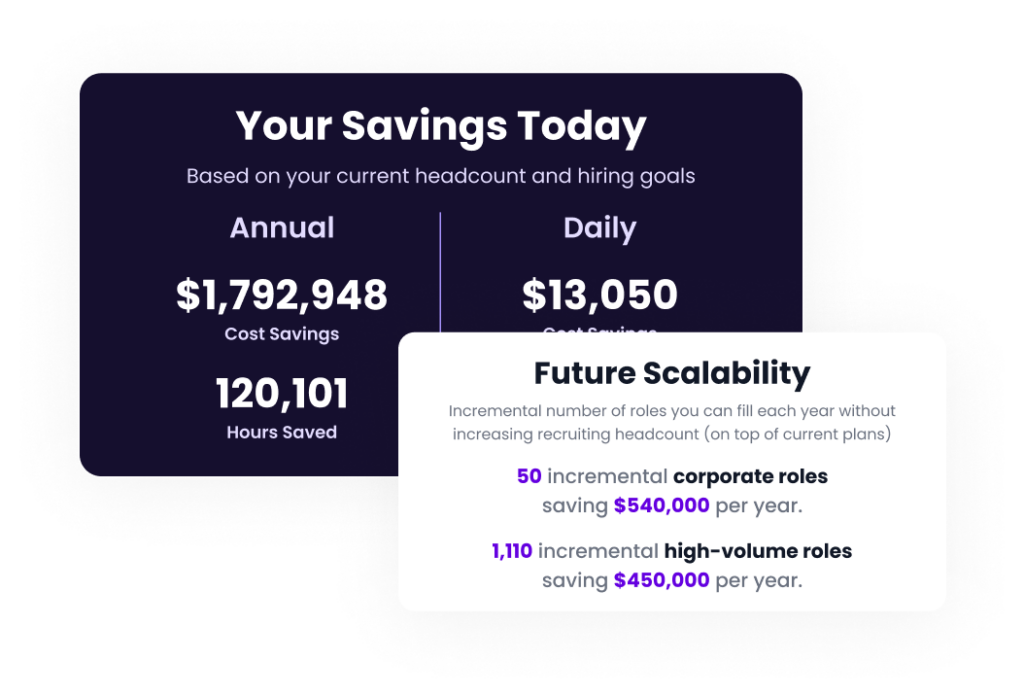
ROI is key. This is not a time to invest in software that won’t bring you immediate value. So let’s eliminate the guesswork with our free ROI calculator.

Issue 3: Untrained Interviewers Can Collect Biased Interview Data

Today, many companies are taking big steps to minimize the implicit biases that have long been a part of the hiring process, and developing new practices that are more inclusive and equitable. But unfortunately, with 42% of people saying they’ve experienced some type of discrimination during an interview, we still have a long way to go.

In the same way they can ask inappropriate questions, untrained interviewers are also prone to unknowingly using personal biases to navigate their time with a candidate. We’re all hard-wired to seek out commonalities in other people. But unfortunately, left unchecked, relying on those “instincts” too often leads to bad, biased hiring decisions.

To minimize bias, interviewers should first be trained to bring it to their awareness. With a solid understanding of the hidden biases they have, interviewers can then focus on asking meaningful, role-related questions, and collecting useful information about job fit.

Issue 4: Untrained Interviewers Make Hiring More Expensive

Don’t let an interviewer make unnecessary, costly mistakes just because they’re untrained.

When interviewers aren’t prepared, they’re likely to hire the wrong candidate for the job — and those costs add up fast. Poor hires have been proven to cost a business up to $240k in eventual employee replacement costs, and a salary with no ROI.

But when interviews take an illegal turn, it can get even more expensive. Last year, the Equal Employment Opportunity Commission won nearly $440 million for candidates. The average single discrimination lawsuit settles for $40k, which doesn’t even include legal fees. 

Fortunately, avoiding interview-related lawsuits is possible when the people facilitating the interviews are up to speed on the right rules and regulations.

It’s Time To Get Serious About Interviewer Training

When determining whether or not a candidate fits an open role, knowing how to interview well is critical. By not proactively understanding the legal implications of poorly-executed interviews, hiring teams are likely to not only lose the best talent but also become liable for discriminatory lawsuits.

The time is now to implement interviewer training. GoodTime’s interview scheduling software helps you train interviews with ease, giving you one hiring experience solution that lets you track interviewers and their progress and train them at scale. GoodTime gives you the confidence that your selected interviewers are evaluating candidates effectively.

Want to learn more? Download The GoodTime Guide to Interviewer Training.

6 Tips for Creating More Diverse Interview Panels

We’ve said it before, and we’ll say it again: hiring diverse talent starts with diverse interview panels.

Before making a decision as important as where to build their career, candidates want to feel assured that they’ll belong within an organization. One interview can make or break that decision.

Thankfully, there are several strategies you can leverage to optimize your interview panels for diversity and inclusion in your hiring process. Read on for six tips that, collectively, will give you the results you’re looking for.

1. Acknowledge Unconscious Bias in the Room 

We’re all naturally wired to make decisions and assumptions based on our unique perception of the world. Our subjective opinions are learned stereotypes—formed from our upbringing, social groups, and societal exposures—that sway our decisions, without us realizing it, day in and day out.

In order to create diverse interview panels, start by urging everyone on your team to acknowledge the part we all play in relying on unconscious bias. Create a transparent, consistent, and objective process for diversity and inclusion training so that fair hiring practices are always top of mind. 

Only then can you begin to take the necessary steps to stop gut-driven decisions from influencing your hiring decisions.

2. Train Existing Employees as Interviewers

Don’t relegate interviews to the TA team. Consider adding non-HR employees to the mix, too.

By leveraging a team-based approach, you’ll gain the perspectives of employees from all over the organization. Plus, when you include them in the hiring process, you demonstrate that you value your team’s input, leading to higher levels of engagement and quick buy-in with new colleagues.

But just like the TA team, anyone who is facilitating interviews should be trained to do so. Prompt them to consider important questions like, “Are there non-verbal cues, such as appearance or fidgeting, that are affecting my overall impression?”

The more interviewers you have trained, the more diverse your interview panels can be, which not only increases the quality of your hiring decisions but also the quality of your candidate experience.

3. Encourage a Post-interview Debrief

When done right, a post-interview debrief can add tremendous value to the hiring decision.

After completing an interview, ask each team member to provide feedback based on the candidate’s hard and soft skills. To avoid the interviewers being influenced by the “loudest voice in the room,” facilitate the feedback through a digital system.

Don’t forget to discuss what the candidate might bring to your company culture. Explore candidates who can bring a diverse range of values, beliefs, and experiences that will positively impact your company. You may consider inviting a lead recruiter to mediate the discussion and challenge bias.

4. Get Candidate Feedback and Adapt

As a hiring leader, you should always be adapting, revitalizing, and updating your practices to ensure a fair and inclusive interview process.

To make that lift a little lighter, ask for candidate feedback. Candidates are eager to share their experiences with you! Plus, the simple act of asking demonstrates to candidates that diversity and inclusion matter, and that they’re seen, heard, and valued—regardless of whether they get the job or not.

Ultimately, feedback gives you the opportunity to improve your overall candidate experience. While some feedback may be hard to hear, challenging yourself to provide an equitable experience for all candidates is worth it. And when you give your candidates a welcoming space to voice their opinions—good or bad—they are much less likely to speak negatively about your organization to outsiders, potentially harming your employer brand.

5. Provide a Standardized Interview Process

Before walking into an interview, make sure that your process is structured. Instead of encouraging free-flowing conversations, ask each candidate the same set of questions, in the same way, and in the same order every time.

When you focus on a structured, data-driven interview, you will evaluate candidates based on a strict set of criteria, which greatly improves the quality of hiring decisions. And by evaluating all candidates on a level playing field, decisions will be much more equitable as well.

6. Use Technology and Tools To Minimize Bias

While you can’t completely eliminate bias from the interview process, you can significantly minimize the impact by adding one more key member to your hiring team: technology

The right technology will automate and accelerate your hiring efforts, empowering you to gather deeper data and make better decisions.

GoodTime Hire boosts your team’s interviewing skills with powerful interviewer training paths. This effectively broadens your interviewer pool and reduces hiring bias right from the start.


Discover how GoodTime Hire’s interview scheduling software can transform your talent acquisition process.

4 Ways to Level up Your TA Ops for Remote Hiring

Talk about disruptive. The global pandemic was so disruptive that now, less than two years after its onset, up to 40% of employees are considering quitting their jobs. Talent acquisition ops teams are forced to made a big pivot to remote hiring– and do it quickly.

Why? Anthony Klotz, management professor who coined the term “The Great Resignation,” believes the rise of remote and hybrid work opportunities forced many of us to reexamine our priorities. “How we spent our time before the pandemic may not be how we want to spend our time after,” says Klotz.  

Now that the dust seems to have settled and we continue moving forward, hiring teams are in a unique position to transform not only who employers hire, but how they hire.

If you’re looking for ways to scale your talent operations so that you can hire talent who wants to work for you in a post-pandemic world, here are four ways to ramp up your remote hiring efforts.

Focus On Inclusion

While calls for DEI aren’t new, we do seem to have crossed a new threshold toward progress. TA teams now experience firsthand job seekers’ unwillingness to accept anything less than employers that provide a sense of belonging. In fact, 70% of job seekers say a company’s D&I efforts are top of mind when looking for potential employers.

  What you can do: Begin by assessing your hiring process — from sourcing, to application, to interview — and creating action items for improvement. Invest in technology that mitigates unconscious biases, helps you build diverse teams, and measures DEI success.

Compete With Employer Brand

In a candidate-driven market, job seekers look for companies that will provide a great employee experience in exchange for their skills and talent — which makes a strong employer brand the secret weapon of today.

Your employer brand introduces candidates to the type of workplace they can expect. It’s an opportunity to demonstrate your vision, your mission, and your core values. A recent LinkedIn study showed that employers who invest in their employer brand see 50% more qualified candidates than those who don’t!

In today’s job market, employers who have been diligently nurturing a strong employer brand are winning the best candidates, and the ones who have neglected it are playing catch up. But it’s not too late.

What you can do: In a recent FlexJobs survey, 65% of respondents said they wanted to continue working remotely full-time. Now is the time to get remote recruiting right, so you can demonstrate your commitment to flexibility and attract the right people.

Reskill Current Employees

 The idea of reskilling has been a hot topic for years as technology continues to advance rapidly, making some 20th century industries obsolete. In 2018, the World Economic Forum even reported that 75 million jobs would be displaced by 2022, and that 133 new roles would be created in their place.

As skilled workers continue to leave industries severely impacted by the pandemic (like hospitality, retail, and healthcare), reskilling may be more critical than ever before.

To meet this challenge, companies need to invest in a culture of continuous learning; today’s employees not only want training and development — they expect it.

What you can do: To mitigate future disruptions, take a good look at your employees’ current skills. Identify gaps and define the competencies needed to close them. This will result in a proficient and adaptable workforce that can shift to market disruptions and industry demands.

Embrace Systems Made for Remote Hiring

One of the most notable changes for TA teams over the past year is the ability to hire from anywhere. For many, this was a transition that had never been attempted at such a large scale.

But the abrupt change from in-office to remote hiring provided talent acquisition a rare window of opportunity to accelerate the adoption of recruitment automation tools, and to keep up with candidates’ desires for more flexibility.

Virtual hiring is a complete game changer, giving candidates the flexibility to complete assessments and interviews—from anywhere. And for recruiters, the implementation of technology solutions can streamline the entire recruitment process and ensure a quicker time to hire.

With 70% of professionals saying that remote recruiting is the new normal, it’s time to level up and make sure you’re prepared to meet the needs of your candidates.

What you can do: Get noticed by amplifying your online presence and offering a virtual glimpse into your employee experience. Find online tools that automate repeatable processes — from sourcing to on-boarding—and speed up your time to hire.

Stay Ahead of the Game

Sustainable growth comes when hiring leaders are empowered to manage recruitment all in one place. GoodTime Hire provides one system that tracks all of your interviewers, ensuring each one can effectively evaluate candidates, and helping you scale interview training with ease.


Learn more about how Hire can supercharge your talent acquisition process today.

GoodTime Wins Series A+ Funding to Revolutionize Talent Acquisition

As the premier hiring experience solution more and more recruiters use to streamline the talent acquisition process, GoodTime is committed to saving companies time and money in their search for the best talent available.

By adding $9.5 million to its Series A funding, GoodTime secured the funding needed to bring new innovations forward in the second half of 2021.

Newest Funding Round Will Accelerate Innovation

Led by KTB Ventures, and with Smilegate and Atinum Investment as additional participants, this new round of funding will help GoodTime accelerate go-to-market growth. With the total round of funding now at $16.7 million, the company is poised to work with a wide range of innovative clients, including Box, Shopify, Patreon, Instacart, Slack, and Snap.

By working with these and many other clients, GoodTime continues to make it easier for talent acquisition leaders to locate and hire the best job candidates quickly and efficiently. 

“GoodTime uses people data to always put the right people into each meeting, which is an absolute necessity for the future of work. Also, the caliber of customers that GoodTime works with, such as Dropbox, Box, Zoom, Slack, Pinterest, Stripe, Atlassian, Snapchat and more, impressed us as to how much this product is needed in the market.”

Hyesung Kim, Investment Manager, KTB Network

GoodTime Improves The Recruiting Process and Shifts Focus to Excellence

GoodTime offers hiring experience solutions that drastically cut down the time it takes to hire a qualified candidate, in many cases by as much as 50%. What’s more, GoodTime’s approach enables companies to save half a million dollars annually in hiring costs. 

GoodTime’s solutions streamline the interviewing and hiring process by:

  • Supporting talent acquisition leaders and hiring coordinators
  • Streamlining the steps involved in the interview process
  • Enabling candidates to self-schedule their appointments
  • Automatically syncing recruiters’ and candidates’ availability
  • Supporting a more meaningful interviewing experience
  • Reducing the burdens associated with administrative tasks
  • Increasing engagement with qualified candidates
  • Shifting the hiring focus to quality and excellence

What’s more, GoodTime is the only HR tech solution with a means to measure and manage the diversity, equity and inclusion (DEI) process for scheduling interviews. Moving forward, DEI will continue to be an important focus for recruiters. 

According to the company’s co-founder and CEO, Ahryun Moon, “GoodTime is the solution that enables companies to personalize the hiring process and improve each candidate’s experience.”

Who Benefits From GoodTime’s Ongoing Development

With this additional funding, GoodTime will be able to keep improving the recruiting process in key ways to further help companies benefit from this platform.

Hyesung Kim, Investment Manager at KTB Network, explains why GoodTime gets his vote of confidence, stating that, “We were excited about the prospect of creating a meeting platform where you have exactly the right people to discuss the right thing to move the needle.”

Kim added, “GoodTime uses people data to always put the right people into each meeting, which is an absolute necessity for the future of work. Also, the caliber of customers that GoodTime works with, such as Dropbox, Box, Zoom, Slack, Pinterest, Stripe, Atlassian, Snapchat and more, impressed us as to how much this product is needed in the market.”

So, the short answer is that with ongoing innovation by GoodTime, both sides benefit: the companies doing the recruiting and hiring, and the candidates searching for meaningful work that meets their interests and makes the best use of their skills. 

In a startling statistic, about 63% of job candidates feel that employers don’t communicate adequately throughout the hiring process. Companies that are paying attention are making the shift to using an interviewing platform that empowers their recruiters and interviewers and elevates the hiring experience for everyone involved.

About GoodTime

If your company is ready to improve the hiring process by providing your recruiters with better tools and support, significantly shortening the process of locating and hiring qualified candidates, and creating a better interviewing experience for candidates who are hired as well as for those who are declined, we’d like to talk with you.

Our demo shows you the power of GoodTime, which includes these features:

  • Automated scheduling
  • Hiring analytics and insights
  • Interviewer training
  • ATS integration
  • DEI management
  • Configurable workflows
  • Matching interviewers to candidates

Want Better Hires? Commit to Diversity Hiring

When it comes to diversity hiring best practices, we can all do better.

That’s why many organizations pledged their support for greater diversity hiring in response to protests and civil unrest that coincided with the COVID-19 pandemic.

And it’s not just employers. At least three of every four job candidates report diversity is an important factor when evaluating businesses and job offers. Likewise, 78% of recruiters state that diversity has an impact on the way they hire.

Companies can no longer afford to neglect diversity, equity, and inclusion in their hiring processes. But how do you turn the ship around? Let’s take a look.

It Starts With the Interview

Diversity hiring requires companies first to back up their commitment to diversity, equity, and inclusion (DEI) with action. And it often starts during the interview stage. In fact, 72% of underrepresented groups say they want to be interviewed by a diverse panel of interviewers with whom they share similar traits. Candidates who do not feel represented by their potential employer are five times more likely to reject an offer than candidates who feel a sense of belonging.

But coordinating interviews is already complicated enough, right? By leveraging technology, hiring teams put together interview teams comprised of members with different backgrounds and demographics. Just by using the right tool, companies have the ability to demonstrate their commitment to different people and perspectives without overcomplicating the interview process.

How does it work? GoodTime Hire allows interviewers to self-tag with specific attributes that represent different groups (i.e. Black, woman, neurodivergent). They can also tag themselves as being qualified to interview for certain job skills. 

Then, candidates who have also self-tagged are automatically connected to interviewers with those traits. As a result, candidates feel more comfortable, and companies have more interviews – which leads to a better hiring experience for all. 

Tracking Results

GoodTime’s recent Candidate Experience survey shows companies with increased DEI exposure in interviews also increase their total number of interviews by 4x. As a result, these companies experience not only a larger talent pool, but also an increase in quality candidates.  

But wait! There’s more. GoodTime Hire empowers companies to track interviews that include DEI exposure, giving them the ability to compare those measured results against overall diversity hiring goals. Armed with the data, hiring leaders can then make strategic decisions about what needs to be done to continue improving results.

The Bottom Line

It’s been proven time and again: companies who commit to DEI in recruiting and hiring increase not only the size of their talent pool, but also the quality of the candidates they hire. Yet, few companies are making real gains when it comes to providing DEI exposure in interviews, and, in turn, improving their candidate experience.

Ready to Level up Your Candidate Experience?    

Time’s up for interviews full of scheduling headaches. It’s time for candidate-centered, connection-driven interviews instead.

To read more about how to make that happen for your team, download 5 Steps to Hiring Top Talent at Scale now.

Understanding Candidate-Driven vs. Company-Driven Interviews

The hiring process can be a harrowing experience—both for companies and candidates. That’s why it’s mission-critical for teams to get hiring right the first time. Part of that means selecting the right interview style, whether that be candidate-driven interviews or company-driven interviews.

Interviews are a pivotal part of the hiring journey, so much so that 83% of candidates say a negative interview experience can change their perception of a company. Likewise, 87% of candidates say a positive interview experience can change their perception of a company they once doubted. 

In our recent Candidate Experience Survey, we delved deeper into candidate experience best practices. We found that a vast majority of candidates want to lead the interview by showcasing their skills. We also found that 87% of interviewers agree that candidate-driven, strength-based interviews are more effective than traditional employer-based interviews. 

But why? Let’s take a look. 

Scheduling the Interviews

All too often, the first stumbling block in the interview process is scheduling. A cumbersome scheduling process can lead to weeks of back-and-forth emails, reschedules, and cancellations. In fact, our data shows that HR leaders spend more than one-third of their time scheduling interviews.

Finding a suitable time for two or more busy professionals to sync their calendars is a challenge—but it doesn’t have to be that hard.

By flipping the model on its head and switching to candidate-driven interviews, interview scheduling can be seamless. For example, automated interview scheduling can allow candidates to choose a time that fits into their schedule, without going through a recruiter.

Then, once the candidate chooses their preferred time, they’re automatically sent a calendar invite that includes specific, personal details about their interviewer.

Finally, follow up is made easy when automatic SMS and email reminders are sent in advance, confirming every piece of information the candidate needs.

Interviewing Candidates 

So the candidate has self-scheduled their interview. What’s next?

It’s possible to extend this candidate-driven approach to the actual interview. In a traditional, company-driven interview, the interviewers drive the conversation. Ultimately, this confines the conversation only to what the interviewers want to know, failing to give candidates an opportunity to showcase their experience.

But with candidate-driven interviews, everybody wins. While candidates show off their skills and creativity, interviewers receive deeper insights into the candidate’s mindset and motivation.

Feedback From Candidates

Truth: feedback makes everyone better.

In a traditional, company-driven approach, interviewers often provide feedback to candidates. But as part of a candidate-driven approach, candidates get a chance to share feedback on their experience, too. After all, no one can provide better insights into your hiring process than those that experience it firsthand!

This can be invaluable to companies, as it empowers hiring leaders to improve things like weak communication, biased behaviors, or misaligned expectations—benefiting them (and future candidates) for years to come.

The Bottom Line

It’s pretty simple. A key component of a remarkable candidate experience is letting the candidates themselves guide the interview process. 

Candidate-driven interviews not only make each step more efficient and productive but also more enjoyable. The end result? Candidates who are better prepared for their big day, and interviewers who are better equipped to determine great job-fit.

It’s time to make a shift toward candidate-centered, connection-driven interviews. But if you really want to take your hiring process to the next level, you need GoodTime Hire.

Hire’s intelligent interview scheduling helps you coordinate interviews faster, hire top talent more efficiently, and boost teamwide productivity. That’s right—no simple scheduling tools here.

Discover how GoodTime Hire’s interview scheduling software can elevate your process.

5 Ways to Make Remote Hiring Amazing

It’s safe to say that remote hiring is here to stay, and it’s easy to see why. 97% of employees don’t want to go back to the office, and 61% prefer working remote. It’s no wonder that most professionals expect remote work to become the new standard. 

This ultimately means that remote hiring will remain a vital part of the recruitment process for some time to come. Remote hiring, however, brings several challenges that you’ll need to face to ensure you hire the right remote employee. 

So, what can you do to make remote hiring better? Let’s take a look. 

Look For the One 

Finding the right fit for your company is important for any job opening. It’s crucial that you craft your job listing to reflect this. This is even more important for remote jobs because you have to consider the specific remote working traits that a candidate must have. 

You also need to consider the time zone and location requirements of the job to make your workforce effective. By specifying these requirements in your job listing, you’ll narrow the talent pool and up your chances of finding the right candidate. 

Dig Deeper

Apart from the requisite skills and experience level you look for in any candidate, certain traits are crucial for a candidate to be successful at remote working. These, for example, include communication, collaboration, organization, and efficiency. 

Another thing you should consider is that remote employees should be comfortable with communicating through video and good with being on camera for collaborative meetings, simply because this will be your main mode of communication.  

When a candidate doesn’t have these qualities, they’ll probably be a bad fit for a remote position. So, absent these traits and skills, it’s not worth it to take the hiring process further.   

Use the Right Tools and Tech

For remote hiring, using the right technology is crucial. Whether it’s screening applications or conducting a remote interview, you need the right tools. 

Tech stack aside, for an optimal interview experience, you’ll need to ensure that each of your interviewers has a strong internet connection, good lighting, and the right video conferencing platform to conduct the interview as seamlessly as possible. 

Another reason for investing in the right technologies is that any tech fail will affect employer brand and make the company look bad. Apart from this, it will reduce the time your interviewers can spend with the candidate and result in a less-than-optimal candidate experience.  

More Than Three Is a Crowd

When it comes to the interview stage, you must fine-tune your strategy specifically for remote interviews. Your first step to do this would be to create a list of questions that effectively cover the candidate’s skills, experience, background, and personality.

If possible, you should also limit the number of interviewers on the interviewing team. Research shows that there are diminishing returns for each interviewer after a certain point. So, you should try to have no more than three interviewers present. 

Also, it’s a good idea to keep the interview structured and have each interviewer focus on one specific area, like skills, experience, personality, and so on. This will allow the team to get the information they need to make a decision.

Use Time Wisely

One of the most important things you should do when hiring remotely is to respect the candidate’s time. In fact, one of the most common issues candidates encounter during remote hiring, especially when it comes to the interview stage, is the amount of time wasted during the process. 

Whether it’s scheduling or the interview itself, you should implement the necessary tools and strategies to create an efficient and seamless hiring process. This greatly improves the candidate experience and makes you stand out from the crowd. 

The Bottom Line

Considering that remote hiring is here to stay, it’s crucial that you implement the necessary processes and strategies to improve your remote hiring efforts.

GoodTime Hire make remote recruiting effective, inclusive, and efficient. Hire transforms your company’s connections to candidates utilizing Candidate Relationship Intelligence to win the best talent.

Learn more about Hire today by scheduling a demo.