Set Up to Fail: 3 Stunning Learnings From Our Candidate Experience Survey

How can employers improve both the interview and the candidate experience, leading them to better hiring decisions and higher retention rates among new employees?

Ideally, an interview accomplishes two things:

  1. Generates enough valid data for both the interviewer and the interviewee to successfully assess the job.
  2. Provides an excellent candidate experience that transitions the candidate into employment. 

In contrast, poorly executed interviews and a weak candidate experience result in bad hiring decisions and a weak employer brand.

To gain better insight into current interview practices, GoodTime partnered with a third-party agency to survey a diverse set of 2,800 candidates and interviewers who had gone through the interview process within the last six months. 

In this post, we share three key findings from that survey, as well as three candidate experience best practices that interviewers can use to improve the outcome of their next interview. 

Read on to improve candidate experience in interviews and beyond.

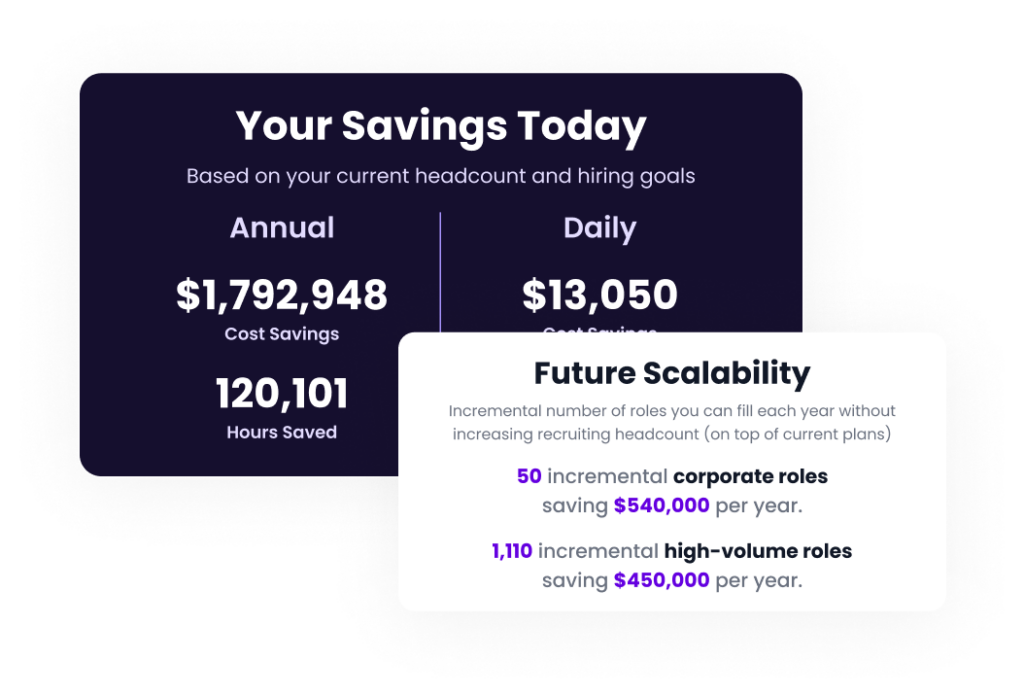
Does interview scheduling automation make sense for my team?

ROI is key. This is not a time to invest in software that won’t bring you immediate value. So let’s eliminate the guesswork with our free ROI calculator.
Key Findings on Candidate Experience

Interviewers want to create a positive candidate experience, but they don’t feel equipped to do it.

90% of interviewers believe that candidates use their interview experience to decide if they will accept a job offer, and 73% report they don’t ultimately hire the most qualified candidates.

So what? When high-performing candidates find the interview process cumbersome, frustrating, or unfriendly, they’ll likely continue their job search elsewhere — maybe even with a competitor. 

However, when candidates find interviews to be welcoming and easy-to-navigate, not only will they present the best version of themselves, but they’ll likely talk about it with friends and family, too. 

An interview should convince a good candidate to join your team — not damage your employer brand.

All Too Often, Candidates Are Set Up To Fail in Their New Role

When done well, interviews are the single best predictor of job success. However, a staggering 33% of new hires look for another job within their first six months.

Oftentimes, employee dissatisfaction can be traced back to the interview process in the form of a clumsy assessment of job fit (did you put the right person in the wrong role, or hire the wrong person altogether?) or a poorly communicated job description (did the candidate understand exactly what the job entails)?

Without optimizing the candidate interview experience, as much as one-third of your hiring budget is at risk. Don’t let that happen to you! 

Talent Teams Are Disconnected From the Experiences of Interviewers and Candidates

Interviewers and candidates agree that interviews need to be less focused on companies and more focused on candidates. However, HR leaders and talent teams believe their interview process is effective, giving it a perfect score of 10/10 on our survey.

What does that tell us? Talent teams aren’t in touch with what’s really going on. It’s time to re-think the interview process. 

What To Do?

If this all sounds a little doomsday, don’t worry. Leveling up your interview practices won’t happen overnight, but there are some best practices you can put into place today.

  1. Don’t underestimate the power of a warm welcome. RecruiterBox reminds interviewers to “let your candidates shine.” By creating a welcoming atmosphere, candidates will be more likely to open up in an interview, allowing employers to understand who the candidate really is.
  2. Understand the candidate’s mindset. Ask the right candidate experience survey questions such as, “Was your last job helpful for your career journey, or just a means to an end?” Find out where candidates are, and meet them there.
  3. Ask open-ended questions. Indeed points out that open-ended questions give interviewers an opportunity to learn more about a candidate’s experience and relevant abilities. They also give candidates a chance to demonstrate their unique problem-solving and analytical skills.

Key Takeaway

Time’s up for interviews full of scheduling headaches and unresponsive hiring leaders. It’s time for candidate-centered, connection-driven interviews instead.

To read more about how to make that happen for your team, download 5 Steps to Hiring Top Talent at Scale.

Realities and Challenges for Talent Acquisition in a Post-COVID World

Let’s face it, remote work is here to stay. It not only changes how companies and employees work, but also promises to have a significant impact on talent acquisition.

And it’s easy to see why. During the past year, in the throes of the pandemic, many employees reconsidered how they spent their time and revisited their values. 

As a result, many high-quality job candidates are now welcoming the opportunity to work from anywhere. This is in stark contrast to the past when they wouldn’t even have considered remote work as an option. For this reason, some say that 2021 will be a year of massive job turnover.

So, to bag the best talent, hiring leaders will need to up their hiring game to create best-in-class remote candidate experiences.

There are, however, certain challenges and realities they must face and deal with in the coming years. Let’s look at these realities and challenges in more detail.

Reality: Talent Will Be Increasingly Distributed

As a result of the pandemic, many employees will want to be closer to home, family, friends, or parents. The coming years will thus lead to a greater geographic redistribution of a company’s workforce. And central to this will be remote working

This presents a significant challenge for companies. They need to consider compensation for a distributed workforce or what equitable compensation looks like for a remote workforce. They’ll also have to implement the necessary systems and strategies for better capacity planning, improving company culture, using technology, and ensuring employee visibility.

Challenge: Workforce Liquidity Will Be Key

Companies will increasingly need to move away from static jobs in siloed departments. They’ll have to be liquid enough to shift employees to new departments and projects as their business needs change. This ability will allow them to adapt quicker to changes in times of uncertainty and volatility.

This will also have a significant impact on hiring. Here, recruiters will need to focus more on job candidates’ potential and transferable skills. So, candidates’ employment or educational history and their capability to do certain jobs will be shifted to the back burner. 

Challenge: Blended Workforces Are a Possibility

To achieve the agility and flexibility needed in these uncertain times, many companies will shift to blended workforces. In other words, they’ll focus on having a mix of permanent workers and contract workers. 

This gives companies the ability to fill skills gaps as and when they happen without the necessary capital outlay of hiring permanently. As a result, they’ll be able to focus on cash preservation at times when cash flow is at a premium. 

Reality: Diverse Talent Acquisition Is Key

During the pandemic, many companies pledged their support for greater diversity. Because remote work will expand the available talent pool, companies will now have access to traditionally underrepresented groups which will make this possible.

Recruiters will therefore be able to build diverse pipelines of candidates and advocate for them to be moved through the funnel. Recruiters will also play a crucial role in restructuring hiring processes to give effect to companies’ diversity goals. 

Reality: Virtual Talent Acquisition Is the New Normal

Many companies embraced virtual recruitment during the pandemic and will continue to do so. As such, for companies wanting to hire the best talent in the coming years, virtual recruitment will be vital.

Fortunately, talent acquisition software can automate many recruitment processes, making them more efficient and streamlined. One technology that can bring about further improvements in the process, is artificial intelligence (AI).

It can help companies place job ads, screen resumes, and schedule interviews. This could end up saving companies time, money, and resources and makes it the must-have recruitment tool for the coming years.

The Bottom Line

The COVID-19 pandemic had a significant impact on talent acquisition and will reshape these processes in a post-COVID world. As such, it will determine who companies hire, how they hire, and what tools they use in the process.

For this reason, companies need to implement the necessary systems and tools that will enable them to adapt to this “new normal” and ensure they’re still able to hire the best talent. 

It’s time for candidate-centered, connection-driven interviews.

To read more about how to make that happen for your team, download 5 Steps to Hiring Top Talent at Scale.

How to Reject a Candidate Without Crushing Their Soul

Getting rejected from a job hurts, and no recruiter wants to be the bearer of bad news. But look at it this way: every rejection that you deliver with grace is an opportunity to polish your company’s reputation and keep a valuable relationship alive. That’s why it’s essential to learn how to reject a candidate while building a bridge (instead of burning one).

Candidates who leave an interview process feeling satisfied and engaged—regardless of the final outcome—make up a healthy talent community and contribute to a positive employer brand image in the long term. When you reject a candidate with empathy and professionalism, they’re more likely to pursue future opportunities with you and keep your candidate pipeline full.

And in the digital world of employer review websites and social media, there’s so much at stake when it comes to rejection. The Human Capital Institute found that 72% of job seekers report sharing their poor candidate experiences online. Similarly, 55% of job seekers avoid companies with bad reviews.

If you want to discover how to reject a candidate in the most tactful way possible, you came to the right place. Use these key steps to master the fine art of turning “No” into a positive experience.

1. Email the Candidate Immediately

First things first, no one likes to have their time devalued. One of the top causes for negative candidate experience is a lack of response from employers. A candidate experience survey found that a whopping 75% of candidates never hear back from an employer.

Job hunting can be emotionally taxing. Imagine investing hours of effort into a job application only to be ignored and overlooked. Notify the candidate on the hiring decision as soon as possible so that they’re not left hanging.

While there is some debate over whether difficult conversations should be done over the phone or email, the majority of candidates prefer email. Yet regardless of how you choose to deliver the unfortunate news, it’s important to keep feelings in mind. Rejection can be difficult to hear, so timeliness and compassion are paramount.

2. Be Sensitive When Delivering Rejection

One of the hardest parts of rejection for candidates is the immediate reaction to make it personal. When planning out how to reject a candidate, you know that you’re not rejecting them as a person, but just for the particular position. Yet do they know that? Wording and tone play a significant part in providing clarity and empathy.

Examples of role-focused rejection include “have decided not to move on into the next phase” or “will not pursue your candidacy further.” If the candidate is considered for the talent pipeline, inform them that you’ll retain their application for future openings.

It’s best to personalize your communication, especially for late-stage candidates. Adding a human touch goes a long way in building a positive candidate experience. Genuinely thank them for their time. Or, if you’ve established a rapport, adding personal notes can demonstrate thoughtfulness and empathy.

3. Give Candidates Feedback

Whether this is a late-stage or early-stage candidate, they will almost always appreciate thoughtful, constructive feedback. Of course, this depends on how far the candidate got in the process, so it is up to you to decide if it would be appropriate. For instance, if the candidate’s job application was rejected simply due to a mismatch in job scope, this wouldn’t need to be communicated thoroughly. 

Remember to tie all feedback to specific examples. It could be that a candidate needs to focus on delivering more value in interviews, or ways they can “sell” themselves more effectively. As with all constructive conversations, it’s important to lead the conversation with things they did well. Chances are, the candidate already feels down. You don’t want to make them feel worse.

4. Continue Candidate Relationships

Many recruiters have close relationships with candidates, so it can be jarring if a candidate gets an automated rejection email rather than a personalized notification.

The relationship candidates have with their recruiter is a key part of continuous candidate engagement, and it’s important to nurture it. Even if the hiring team already emailed or called the candidate to let them know that they’re not moving forward with them, make it a point to contact them yourself. Additionally, keep an open line of communication with the candidate.

Some of the best practices for preserving the candidate experience include:

  • Invite the candidate to connect with you on social media. LinkedIn is a great platform for professional connections. Interact with past candidates on social media to build a closer relationship (e.g congratulating them on a new role, commenting on their posts).
  • As a recruiter, tap into HR events like career fairs. Having an available talent pool to invite to these events boosts your reliability and expands their opportunities.  
  • Keep a track record of exemplary candidates that you can contact again for future positions.   

Never Lose Sight of the Candidate Experience

You never know where your recruiting plans will take you. Whether you’re putting thought behind how to reject a candidate gracefully, or brainstorming ways to make the hiring process memorable, it’s critical to give every candidate the best experience possible.

GoodTime Hire creates a best-in-class candidate experience that’s scalable, measurable, and engaging. Plus, with Hire’s advanced interview scheduling automation, you’ll save major time and money along the way.

Discover how GoodTime’s interview scheduling software can optimize your hiring experience to win top talent, faster. 

Transforming Your Hiring Process With Continuous Candidate Engagement

Hey, TA Leader — are you starting from scratch every time you need to make a new hire?

It’s time to put on your marketing hat, and start treating your candidates like your customers by engaging — and re-engaging — them before, during, and after the hiring process.

How the Traditional Hiring Funnel Keeps You Spinning Your Wheels

Traditionally, the candidate experience starts when talent becomes a candidate and ends when they don’t get the job. But what about before and after?

By failing to engage with candidates both before and after they enter the recruitment funnel, TA leaders can run into significant barriers to fast, quality hiring, such as:

  • Missed opportunities with quality talent. You may only be hiring for one role right now…but what about next time? Chances are, there are multiple quality candidates in your funnel. 

Continuing to nurture relationships with these candidates (long after you offer the position to someone else) means that when it’s time to hire next, you won’t have to start from scratch…again.

  • A diversity needle that doesn’t budge. Did you know only 11% of diverse candidates ever get the opportunity to interview? Many companies assume it’s because diverse candidates aren’t applying; yet, oftentimes, diversity problems occur due to implicit biases found somewhere between application submission and the hiring decision. 

By engaging with quality candidates who didn’t quite make the cut the first time around, hiring leaders can feel confident they’re making decisions based on relationships – not just resumes.

  • Negative impact on the employer brand. A candidate who feels rejected, then ignored, will often air their grievances to family and friends, which ultimately erodes your employer brand.

Are you ready to take a step back and re-evaluate how you’re engaging with candidates? 

Take a Page Out of the Sales Pipeline Playbook

Most companies are dialed in when it comes to their customer experience. They develop an ongoing relationship filled with valuable content to build brand awareness, nurture emails, and  follow up phone calls.

Now, apply that same idea to your candidate pipeline.

Start by examining the elements of your company that are unique and engaging to specific individuals in your network. Then, build a pipeline of continuous engagement through your CRM that builds an ongoing emotional connection with candidates.

How, you ask?

“I think for TA, the last decade has been spent on the top [of the hiring funnel], and I think now it’s time to start focusing on the bottom.”

 – Charles Mah, Chief Evangelist, iCIMs

The Four Essential Parts to an Engaging Recruiting Model

Step 1: Learn

It begins with learning. Ultimately this touchpoint is about skills and connections—not a job. This is your opportunity to learn about your candidates and their interests.

Use resources such as newsletters, blogs, or podcasts to build connections. Then add these people to your CRM so you can start to build on their engagement.

Step 2: Participation

Then, form a participation circle where you’re connecting your engaged contacts to larger-scale events like roundtables, hackathons, or Employee Resource Groups (ERGs). 

When candidates in your CRM elect to participate, ERGs become a place where candidates come together based on their shared experiences, ultimately diversifying your candidate pool.

Step 3: Networking

Now it’s time to bring hiring managers, ERG members, or peers to a central place where they can connect one-on-one—creating genuine, lasting connections within your candidate pool.

Step 4: Hiring

Finally! All the data you’ve collected thus far through the hiring funnel, now stored in your CRM, gives you a pool of highly engaged candidates that has already been pre-vetted on soft skills, eliminating the need for multiple rounds of interviews.

And the other candidates? They return to the talent network, where you can continue to nurture those connections.

Why Care About Continuous Candidate Engagement?

It’s time to start treating your candidates like your customers by engaging — and re-engaging — them before, during, and after the hiring process.

Focusing on continuous candidate engagement will give you:

  • Faster turnaround on hiring decisions.
  • More high-quality talent in your pipeline.
  • A higher number of engaged candidates.
  • A larger pool of more diverse candidates.
  • More candidates that turn into customers.

GoodTime Hire focuses on candidate engagement through the power of Candidate Relationship Intelligence. Hire’s comprehensive solution not only lessens the burdens of administrative tasks, but brings qualified talent to the forefront. 

Learn more about how Hire can supercharge your talent acquisition process.

Redemption: Hiring Returning Citizens with Next Chapter

As part of our fireside chat series, GoodTime CEO Ahryun Moon sat down with Kenyatta Leal, Director of Reentry for Next Chapter, to learn about the challenges of hiring returning citizens. They talked about the program’s beginnings, as well as the fears and stereotypes that returning citizens are forced to contend with upon release, and how talent leaders, executives, and entire companies can actively participate in this system-breaking initiative. 

“Regardless of our past, none of us are beyond redemption. And if we try hard enough, we can build a new way for our lives.”

— Kenyatta Leal, Director of Reentry at Next Chapter

Founded by Slack in 2018, Next Chapter is a nonprofit organization that creates pathways for returning citizens to obtain gainful employment in the technology sector. To date, Next Chapter has placed 11 returning citizens across four companies, including Dropbox, Square, and Zoom. 

The Last Mile

The Last Mile was originally launched in 2010 as an entrepreneurial program that connected participants with volunteer business leaders to develop business plans and pitches. Through this program, Kenyatta met Duncan Logan, Founder and CEO of RocketSpace. The two developed a connection, and Kenyatta asked Duncan if he would hire him upon release. Ultimately, Duncan said yes, and kept his word. 

Slack and Next Chapter

Kenyatta was released from San Quentin on July 3, 2013. A week later, he began working at RocketSpace, determined to add value in any and every way possible. Then, The Last Mile pivoted away from entrepreneurship and focused on a robust coding curriculum. This included full stack development, Javascript, CSS, and other languages.

In 2016, Slack CEO Stuart Butterfield visited the program and became inspired. He gave a Last Mile student a scholarship to the coding bootcamp, Hack Reactor, and offered him job candidacy at Slack. The candidate graduated Hack Reactor, but failed the Slack technical assessment. When post-mortem was conducted, Slack found that the failed assessment was not due to lack of skill on the candidate’s part, but rather the lack of bandwidth of the hiring engineer to bring the candidate up to speed.

This started Next Chapter. Today, Next Chapter provides support to both the incoming candidate as well as the engineering team of the partner company so that the team can maintain speed and trajectory while onboarding a Next Chapter graduate. 

Next Chapter Grows

Kenyatta left Rocketspace in 2018 to work with The Last Mile fulltime to develop Next Chapter, and create a transition plan for returning citizens to enter the tech sector workforce successfully. The following year, Next Chapter became an independent organization. They now recruit candidates nationwide. 

Excerpt of Q&A

AM: What are the biggest stereotypes returning citizens must face when transitioning to employment in the tech space?

KL: There are many, but the biggest one is once a criminal, always a criminal. That people coming out of prison are just going to commit more crimes. It’s reinforced by TV and movies. It’s the worst thing we see on the 6 o’clock news—this is what people believe about people in prison. Most people have never gone to a prison; they don’t know some of the challenges these folks have to deal with to reenter society. 

People who are leaving incarcerated settings are often underestimated. People think they don’t have skill or they don’t have talent or they don’t have anything valuable to contribute to society, or even a company. 

KL: When I think of these stereotypes, what it all comes back to is fear. When people are coming out of prison, remember: they’re people. There are fathers and mothers and sisters and brothers.

They’ve made bad choices, obviously. But once they pay their debt to society, they should be able to come home and be able to build a life for themselves. We—out in the world, the taxpayers—we have an opportunity to decide what kind of world they come back to. Every single one of us has a role to play in this. 

AM: How do HR leaders prepare for questions and concerns from their employees surrounding recruiting returning citizens?

KL: Get proximate to the issue of justice reform. Life is a process of growth and development and part of that growth is educating ourselves about people and issues, and the challenges people face coming home. 

AM: What are key moves companies can take to insure successful implementation of this program? 

KL: Find a champion who can work across teams and get buy in. Understand the issue, and create a space where people can share concerns. Our program focuses on support, and wraparound services so that they can be successful. 

Learn more about partnering with Next Chapter by reaching out at info@nextchapter.org.

7 Tips for Giving Feedback to Rejected Candidates

Giving candidates feedback is an integral part of a great candidate experience, but it can be difficult to know how to give it to someone who you removed from your interview process. We sat down with Megan Panzer Kageleiry, the Talent Operations Manager at Thumbtack, for some tips on how to give rejected candidates feedback after the interview process.

What’s Your General Framework for Giving Feedback?

Megan: When you’re giving feedback to a candidate, start the conversation with what they did well during the interview. Everyone is nervous when taking a feedback call, so starting with their strengths can make the person feel more comfortable. I then continue the conversation with the areas that I would’ve liked to see them “spike” on. I always make sure that I have concrete data and examples to reference.

The data and examples come directly from the set criterion that we have for what we’re looking for during the interview. Having criteria not only reduces bias in your interview, but also creates a framework for your feedback.

If you’re giving feedback on behavioral aspects of the interview, such as their perceived attitude, it’s a lot harder. For example, if “ownership” is a core attribute we’re measuring them on, I’ll make sure to tie back the feedback to that attribute. If in walking through a situation it appears as though the candidate “passed the buck,” my feedback would be to demonstrate ownership during difficult situations.

Lastly, I always close the conversation by reiterating the things that they did well. You want them to leave the experience with a good taste in their mouth and be motivated for their next opportunity. It takes a fair amount of prep to do these feedback calls!

How Often Do You Give Feedback to Candidates?

Megan: I offer feedback to everyone that makes it past the initial phone screen. However, if someone requests it after their phone screen, I can often make that happen.

Generally, How Do Candidates React to Feedback After They’ve Been Rejected?

Megan: The candidate’s response is usually pretty positive. People that request feedback generally have a growth mindset and take the feedback to improve for their next interview.

This is especially true when you’re giving feedback with data and examples from their interview.

Has a Candidate’s Response to Your Feedback Made You Rethink Turning Them Down?

Megan: Yes! I had a candidate that didn’t knock it out of the park in either the phone screen or the take-home exercise. Because of this, we didn’t move her forward in the process.

When I called her for her feedback call, however, I learned so much about her that I put her back in the process! Her energy and her willingness to accept feedback (and her rebuttals) were huge factors as to why we brought her back in.

What’s the Most Difficult Feedback You’ve Given a Candidate?

Megan: The really difficult feedback to give is typically behavioral-related. I interview candidates for recruiting coordinator positions and, as an RC, you have to be able to give a “white glove” service to everyone that you’re working with.

A lot of candidates I interview have a lot of strengths but struggle to demonstrate strong interpersonal skills, which are important for the role. It’s really difficult to give feedback for that kind of stuff and provide data because it’s hard not to make that feel personal.

When you’re giving feedback, it’s really important to build them up and make them feel confident. In this kind of scenario, I typically tell candidates that it’s important to practice out loud and prep a lot.

I also like to remind them that when they’re interviewing, everyone is cheering them on and that everyone wants them to do well!

Are There Situations Where You Don’t Give Feedback?

Megan: Not really. I always like to give feedback if it’ll be helpful to the candidate in their search.

Generally, What Do You Tell Candidates Who’ve Been Rejected?

Megan: Getting rejected sucks! It doesn’t matter what job it’s for. I think there are a couple of things to keep in mind:

  1. You have to remind yourself that you have no idea what’s happening on the backend of the company and to not take the rejection personally.
  2. Always have a growth mindset, especially when it comes to feedback. Make sure to always thank your interviewer for giving it to you, write it down, and then ask someone close to you about this feedback and see if there’s anything you can do to work on it.
  3. Ask the person who’s giving you feedback about what success looks like for them. This gives you some core criteria that you should work on.

Everyone’s been rejected from jobs and there are so many great companies out there that would be lucky to have you! Take every rejection as a learning opportunity to get better at interviewing. And make sure you practice!

Any Closing Advice for Candidates?

Megan: Never be afraid to ask for feedback! You can always phrase it as a 5-minute conversation or some high-level bullet points that would be helpful. Also, if you love the company, ask them for recommendations of companies that have a similar culture. Especially within tech, people tend to know each other and might be willing to give some recommendations.

Put the Candidate First with an Efficient Hiring Process

Giving candidates feedback in a professional, tactful manner is one of the many ways that you can deliver a valuable candidate experience. But if you want to optimize the entire hiring process from start to finish, you need some extra firepower in your corner. You need GoodTime Hire.

Hire’s automated interview scheduling helps you coordinate faster, hire more efficiently, and boost team productivity. (Plus, you’ll save major time and money along the way).


Discover how Hire can help you transform your interview scheduling.

Survey Reveals Importance of Candidate Experience When Scheduling

How would your candidates rate your interview process? The majority of us would, of course, hope for a perfect ten—but that’s not the case the majority of the time. When it comes to candidate experience, most companies only focus on the part where the candidate comes onsite.

After all, there are a ton of opportunities to make candidates feel welcome. Whether it’s goody bags, well-trained interviewers, or a well-maintained office, there are a million-and-one different ways to give that in-person, personal touch.

However, your candidate experience doesn’t start when they come onsite. In fact, a truly great candidate experience that lands top talent starts much earlier: right when the candidate schedules their interview.

How Candidates Schedule: Then vs. Now

There used to be one main way most candidates schedule their interview: back-and-forth conversations with someone at the company. Whether it’s with a recruiting coordinator or a chat bot, the candidate experience is the same: they’re plugging in times and hoping that what they input works (and isn’t already taken on the interviewer’s calendar by the time they see their message).

Today’s candidates have options like never before. Candidates that use GoodTime Hire to schedule are empowered to schedule their interview by only seeing times and dates that are available on the interviewer’s calendar.

We were curious; we know personally from our time interviewing at GoodTime that candidate-driven scheduling makes for a better experience, but how do our customers’ candidates feel?

Candidates Prefer Candidate-driven Scheduling

After candidates completed their scheduling on Hire, we had a popup in the corner appear asking how they’d rate their scheduling experience. 

Candidates rated on a scale of 1-5. Out of the 6,000 unique candidates that viewed this popup, about half of them completed the survey and gave us an average score of 4.9 out of 5.

What Does This Mean for My Recruiting Team?

It really means one thing: acknowledge and include the interview scheduling process as a part of your candidate experience plan. Many recruiting teams participate in awesome ways to welcome candidates onsite and follow up with them if they have any questions. Those same great teams miss the scheduling process as a part of that—and it’s really not their fault for not realizing it.

As a recruiting team, it’s not as difficult as you may think to make scheduling great. It comes down to not only exploring tools that can help you get there, but also making an effort to put the candidate first.

Ready to Level up Your Candidate Experience?  

Time’s up for interviews full of scheduling headaches. It’s time for candidate-centered, connection-driven interviews instead.

To read more about how to make that happen for your team, download 5 Steps to Hiring Top Talent at Scale.

3 Reasons Why Exit Interviews Are Critical for Recruiting

Working in recruiting isn’t just about bringing in new talent. It’s also understanding why current talent decides to leave. Both are two sides of the same coin. In this sense, it’s crucial to take part in exit interviews with employees looking to explore other opportunities.

Yes, there’s never enough time in the day for recruiters, and burnout from stretching yourself too thin is killer. But trust us—getting involved in exit interviews will pay off. Here are three things you can learn from exit interviews to apply to your recruiting strategy.

1. Employee Dissatisfaction Trends

An exit interview is the perfect opportunity to facilitate an open discussion with employees about why they’re leaving and what wasn’t satisfactory about the company. Whether it’s the company’s culture, benefits, or salary, being a part of exit interview discussions will help you identify patterns that cause employees to leave.

If every employee leaving mentions a negative company culture, for example, this is your opportunity to make strides to fix it and reduce employee turnover.

2. Improve Your Job Offer

Not only will an exit interview help you understand why an employee wants to leave, but it’ll also help you understand why an employee accepted an offer at another company.

Did they accept because the company had better benefits? Because the salary was higher? They offered flexible work options?

Finding out why current employees left will help you make your own job offers more appealing to current talent. And in today’s competitive job market, any insight into what attracts candidates is invaluable.

3. Strengthen Your Company Brand

Your company brand impacts your recruiting and your recruiting strategy. Your brand isn’t just what you put on social media, it’s also what former employees have to say about you on employer review websites.

Meeting with employees before they leave gives you an opportunity to address any of their concerns and grievances with the company. While you can’t control what they post online, an honest conversation with an upset former employee is a great way to mend a potentially negative relationship.

Whether an employee leaves due to the commute, a disagreement with a manager, or something else, it’s important to use the exit interview to make them feel heard and apply their feedback to ensure that the negative things they experienced don’t happen to others.

Next Step: Apply Feedback to Your Recruiting Strategy

You’ve had candid conversations with former employees, repaired negative relationships, and now have a better understanding of how to differentiate yourself in a competitive market.

It’s nearly impossible to address every piece of feedback for larger organizations. However, take the time to meet with the relevant people to discuss the concerns the former employees raised. This will help you, hiring managers, recruiters, and department heads develop a game plan to make changes.

No matter the company, there will always be some form of employee dissatisfaction. Your reaction to dissatisfaction is what helps or hinders the growth of your organization.

Big or small, any feedback during an exit interview is important, and all former employees should feel heard and understood. After all, you never know if your paths will cross in the future.

Keep Talent Smiling with GoodTime Hire

We’ve gone over several crucial ways to use exit interviews to your advantage—but wouldn’t it be great if employees didn’t have a reason to leave?

Believe it or not, the secret to retention starts in the hiring process. When you successfully cater to candidates, you create new hires that are eager to stay with your company for the long haul.

And the key to exceeding the expectations of candidates? Leveraging GoodTime Hire.

Hire automates coordination, builds relationships during interviews, and provides actionable insights to continuously improve your connections with applicants.

Interested in learning all about how Hire can give your recruiting process an edge? Say no more.

How Recruiters Can Stop Ghosting Candidates

Recruiting is a two-way street: there’s the candidate that’s interested in the company, and the company that’s interested in the candidate. As a recruiter, you’re the bridge between the two. Unfortunately, recruiters have a ton of responsibilities. It can be easy to find yourself accidentally ghosting candidates because you’re balancing schedules, tracking down missing interviewers, etc.—you know how it goes.

However, ghosting candidates will do more than just burn that one candidate. It’ll significantly harm your company’s brand. In today’s competitive job market, you don’t want to take any risk of turning away top talent.

Here are three ways recruiters can put an end to ghosting candidates.

1. Keep Consistent Communication

The same way that this helps prevent a candidate from ghosting you, a consistent communication plan prevents you from ghosting a candidate.

A core part of cultivating a strong candidate relationship is keeping the candidate informed about the status of their application, when their next interview will occur, and if they didn’t make it through the process. These touchpoints are all part of a great communication plan.

While some companies might have policies in place to make sure their recruiters are reaching out in a timely manner and keeping that connection with candidates, if your company doesn’t, it’s really up to you and your team to follow up and make communication a priority.

A great way to cut through the noise of interview reminders, candidate follow-ups, and interview prep is by leveraging the different tools you have in your recruiting tech stack. Which brings us to our next tip:

2. Leverage Your Recruiting Tech Stack

You have a ton of responsibilities. Unfortunately, cloning yourself isn’t possible, and there’s just no way for you to track down interviewers while also communicating with candidates.

Luckily, there are a lot of tools out there to automate different aspects of candidate communication. One of these tools is a Meeting Optimization Engine.

A Meeting Optimization Engine automates scheduling to free up your time to focus on candidate-centric tasks. Not only that, but it also sends out automated reminders to candidates and interviewers about their upcoming interview.

This means that you can spend more time prepping candidates, giving feedback, and making sure your company is represented well.

3. Load Balancing

Sometimes, candidates get ghosted simply because there’s just too much on your plate to get back to everyone. That’s where load balancing comes in.

Load balancing is an integral part of any recruiting team, but it can be difficult to put into practice. After all, a heavy load for one recruiter might not be as heavy for another. It also depends on the reqs that each recruiter is trying to fill. Some are just more involved than others.

As a team, it’s important to have weekly check-ins to make sure that no one recruiter feels overwhelmed while others are twiddling their thumbs.

No recruiter means to ghost candidates, and the bad news is that it happens. The good news, however, is that there are processes and tools you can leverage to make sure that ghosting candidates is a thing of the past.

Ready to Level up Your Connections With Candidates?  

Time’s up for interviews full of scheduling headaches. It’s time for candidate-centered, connection-driven interviews instead.

To read more about how to make that happen for your team, download our eBook, Five Steps to Hiring Top Talent at Scale.
3 Surefire Ways Recruiters Can Prevent Candidate Ghosting

Ghosting is common when it comes to dating, but its rise in recruiting can be jarring for even the most seasoned recruiters. It’s frustrating when a candidate ghosts you. While you can’t stop every candidate from disappearing into thin air, there are certain things you can do to try and prevent candidate ghosting.

Here are three surefire ways you can reduce the chance that a candidate ghosts your hiring team.

1. Establish Consistent Communication Parameters

Consistent communication is the opposite of ghosting. In a realm where a lack of communication almost seems commonplace, it’s up to the recruiter to break the trend.

Set clear SLAs for all communication with candidates. Make sure you block off time in your schedule to respond in a timely manner. Whether it’s answering questions or sending a quick “good luck” note before an interview, keeping up communication is important for building a close candidate relationship.

This communication should also be continued after the candidate receives their offer. To recruiters, it can feel like a no-brainer for candidates to accept. However, most candidates juggle multiple offers from different companies. If you’re offering to an engineer, that becomes even more difficult.

If you built a close relationship with the candidate beforehand, you’re far less likely to experience candidate ghosting. Go out and start building those connections!

2. Keep the Process Candidate-driven

A lot of recruiting is company-focused. There are long wait times to hear back about a submitted application, interviewers tend to ask the same questions, and it can take weeks to hear back about an offer (or rejection).

Put the candidate in the driver’s seat and make sure you’re giving them the best experience possible. Make an effort to get to know the candidate outside of interviewing—which means building a personal relationship with them.

As a recruiter, you’re the first real touchpoint that candidates have with the company. You’re who candidates will imagine working alongside.

3. Use Candidate Relationship Intelligence

At the end of the day, there will always be candidates who ghost. However, creating a strong candidate relationship from the beginning and fostering consistent communication are great ways to prevent it. Candidates are less likely to ghost when they feel like their time is valued and they have a great connection with their recruiter.

Want to give your anti-candidate-ghosting efforts an extra boost? Enlist the help of the right recruitment tech—like GoodTime Hire.

Hire’s Candidate Relationship Intelligence enables candidates to drive the interview process, from scheduling their interview all the way to showcasing their skills in front of confident, trained interviewers.

Interested in learning more about how Hire can give your talent acquisition process an edge? Come right this way.