The Best Way to Schedule Interviews in Greenhouse

The best interview scheduling setup for Greenhouse users combines Greenhouse’s native ATS scheduling workflow with a dedicated AI scheduling layer like GoodTime when teams need deeper automation for complex panels, high-volume hiring, global coordination, interviewer load balancing, candidate communication, and rescheduling.

For many recruiting teams, Greenhouse provides a strong scheduling foundation inside the ATS. But as hiring operations become more complex, interview scheduling can quickly become more than a calendar task. It becomes an orchestration challenge across candidates, interviewers, hiring teams, calendars, time zones, communication channels, and reporting needs.

That is where GoodTime’s Greenhouse integration adds value. Greenhouse remains the ATS and system of record, while GoodTime works alongside Greenhouse as an AI-powered scheduling layer built for more complex coordination workflows.
Unlock 2026’s top hiring strategies: Insights from 500+ TA leaders

Be the first to uncover deep hiring insights specific to your sector — straight from the highest-performing TA teams.
What Greenhouse Interview Scheduling Already Does Well

Greenhouse gives recruiting teams a strong ATS-native foundation for interview scheduling. Scheduling stays connected to the candidate record, interview plan, hiring stage, and broader structured hiring workflow, which helps teams keep interview coordination tied to the recruiting process.

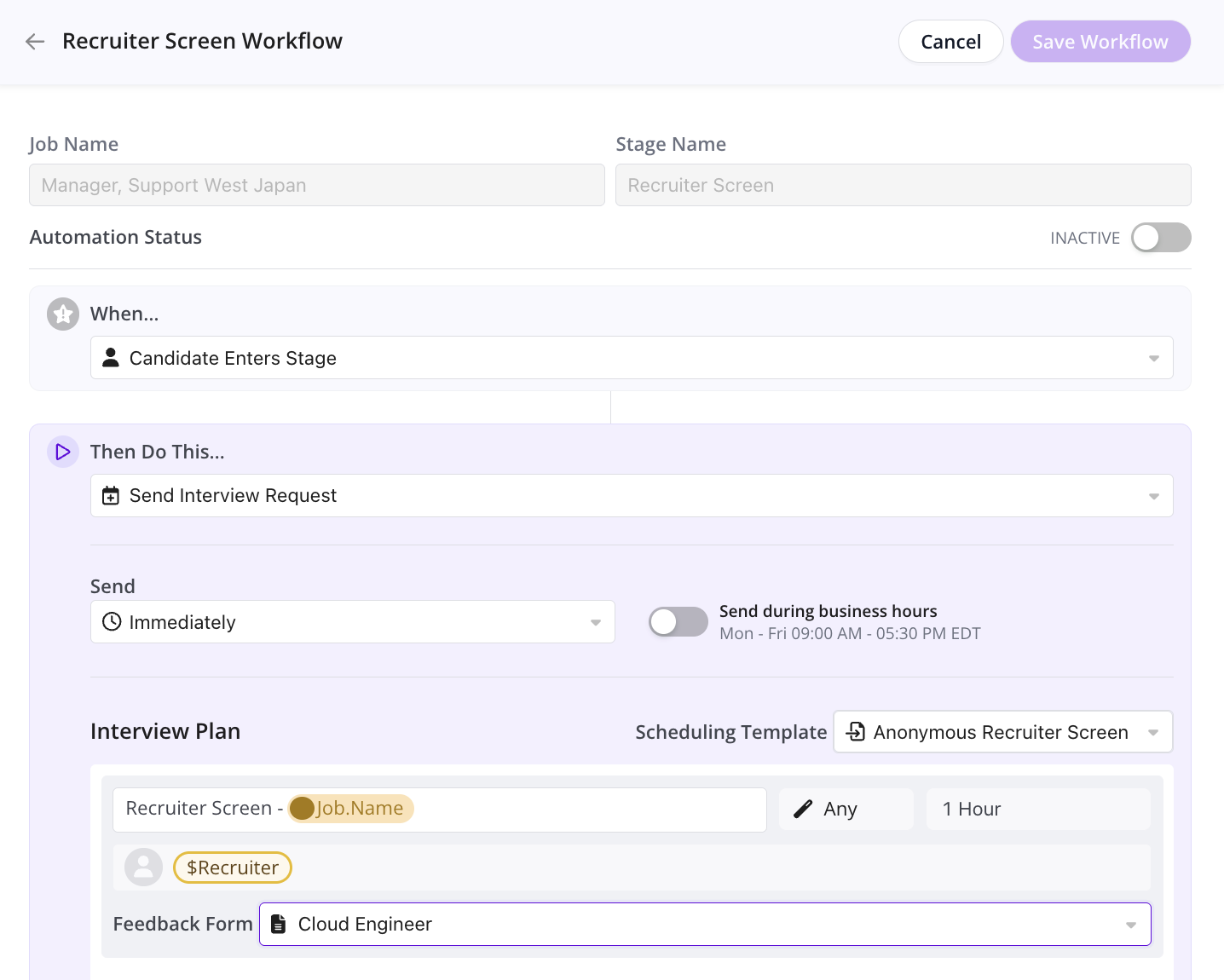
Greenhouse also offers automated scheduling capabilities that help teams move faster. Its automated scheduling feature identifies strong available interview times based on interviewer availability, candidate preferences, and team working hours. Greenhouse’s candidate self-scheduling also allows teams to send candidates a scheduling or rescheduling request based on interviewer calendar availability, with completed requests automatically scheduled and sent to candidates and interviewers.

Greenhouse also supports more control around scheduling operations, including interviewer limits and declined-interviewer replacement workflows, helping teams manage availability and reduce coordination friction.

Greenhouse gives hiring teams a strong ATS-native foundation for scheduling interviews inside structured hiring workflows.

When Greenhouse Teams May Need an Added Scheduling Layer

Native ATS scheduling may be enough for straightforward workflows, especially when teams are coordinating simple interview stages or a smaller number of candidates and interviewers.

But scheduling complexity grows quickly when recruiting teams manage:

  • Multi-day panel interviews
  • Executive calendars
  • Global hiring teams
  • High-volume roles
  • Hiring events
  • Same-day or fast-turnaround scheduling
  • Interviewer load balancing
  • Automated candidate reminders
  • Rescheduling at scale
  • Scheduling analytics for TA operations

Greenhouse self-scheduling is especially useful for single-interview stages. Greenhouse documentation notes that self-scheduled interview requests are for stages with a single interview, while stages with multiple interview sessions require a recruiter to schedule the interview normally.

That distinction matters for teams with complex hiring operations. When scheduling involves multiple interviewers, time zones, candidate communication touchpoints, interviewer capacity constraints, and recurring reschedules, coordination becomes an operational function rather than a one-off task.

This is where a dedicated AI scheduling layer like GoodTime’s automated interview scheduling can help teams reduce manual work while keeping their Greenhouse workflows connected.

GoodTime is most valuable for Greenhouse teams when scheduling complexity grows beyond simple interview coordination.

How GoodTime Works With Greenhouse

GoodTime does not replace Greenhouse. Instead, GoodTime works with Greenhouse by adding AI-powered coordination and scheduling automation around the ATS workflows recruiting teams already use.

Greenhouse remains the system of record for candidates, applications, job stages, and hiring workflows. GoodTime adds a specialized scheduling layer that helps recruiters and coordinators automate the logistics around interviews, including availability matching, interviewer selection, reminders, candidate communication, rescheduling, and scheduling visibility.

Greenhouse’s own support documentation describes GoodTime Hire as an integration that helps teams automate interview scheduling, personalize invitations, provide multiple efficient scheduling options, and use AI to identify more efficient booking options.

GoodTime’s Greenhouse page sums up the relationship simply: Greenhouse handles the candidates and applications; GoodTime handles the coordination. That “better together” model allows recruiting teams to keep Greenhouse as the ATS foundation while using GoodTime to support more complex scheduling operations.

GoodTime works with Greenhouse by adding a specialized AI scheduling layer on top of the ATS workflows teams already use.

What GoodTime Adds for Greenhouse Customers

GoodTime adds the scheduling orchestration layer Greenhouse teams need when interview coordination becomes complex, high-volume, or global.

For Greenhouse customers, GoodTime can support:

  1. AI-powered interviewer matching to help identify the right interviewers based on availability, role, rules, training, and capacity.
  2. Multi-interviewer and multi-day panel coordination for complex interview loops that require more than a single calendar match.
  3. Candidate self-scheduling so candidates can choose from approved interview times without back-and-forth emails.
  4. Automated rescheduling to reduce manual work when candidates or interviewers need to move an interview.
  5. Interviewer load balancing to help teams avoid overusing the same interviewers.
  6. Bulk and high-volume scheduling for teams managing large candidate pools or repeatable interview workflows.
  7. Email, SMS, and WhatsApp candidate communication to support faster, more flexible engagement.
  8. Scheduling reminders to help reduce no-shows and last-minute confusion.
  9. Hiring event scheduling for coordinated interview days, recruiting events, and high-volume workflows.
  10. Scheduling analytics and operational visibility so TA teams can identify bottlenecks, capacity issues, and time-to-schedule trends.

GoodTime’s automated interview scheduling product page positions the platform as built to automate complex interview scheduling scenarios, including multi-day panels, high-volume interviews, and hiring events. Its high-volume hiring solution also supports bulk scheduling and SMS/WhatsApp engagement for teams managing large candidate pools.

GoodTime adds the scheduling orchestration layer Greenhouse teams need when interview coordination becomes complex, high-volume, or global.

Greenhouse + GoodTime: A Better-Together Workflow

Greenhouse and GoodTime are not an either/or decision. Greenhouse gives teams the ATS foundation; GoodTime helps teams automate the scheduling operations that sit around that foundation.

In a better-together workflow:

Workflow areaGreenhouseGoodTime
ATS foundationManages candidates, applications, job stages, interview plans, and structured hiring workflowsWorks alongside Greenhouse while keeping hiring workflows connected
Interview schedulingProvides native scheduling, automated scheduling suggestions, and candidate self-schedulingAdds AI-powered scheduling orchestration for complex workflows
Candidate communicationKeeps scheduling communication connected to recruiting workflowsExpands communication across email, SMS, WhatsApp, reminders, and rescheduling workflows
Interviewer coordinationHelps teams work from structured interview plans and availabilitySupports interviewer matching, load balancing, and capacity-aware scheduling
Operational visibilityKeeps interview activity tied to the ATSAdds scheduling-specific analytics and operational insights

Together, Greenhouse and GoodTime help recruiting teams reduce manual coordination while keeping interview scheduling connected to the ATS.

The best Greenhouse scheduling stack keeps Greenhouse as the hiring system of record and uses GoodTime to automate the coordination work around it.

Customer Proof: What Scheduling Automation Can Unlock

For teams managing complex scheduling workflows, the impact of better coordination can be significant.

Toast used GoodTime to make interview scheduling 50% faster, reduce interview cancellations by 55%, and grow its interviewer pool by 139%.

Remote reduced time to schedule by 42%, cut time spent scheduling by 50%, and now schedules 53% more efficiently than the industry benchmark.

These results show why scheduling automation matters for modern TA teams. When coordination is faster and more reliable, recruiting teams can spend less time chasing calendars and more time creating a strong candidate and hiring team experience.

What Is the Best Interview Scheduling Setup for Greenhouse Users?

The best interview scheduling setup for Greenhouse users depends on the complexity of the hiring workflow.

For simple scheduling needs, Greenhouse’s native scheduling tools may be sufficient. Greenhouse offers ATS-native scheduling, automated scheduling suggestions, candidate self-scheduling, interviewer availability workflows, and other tools that help teams coordinate interviews inside the hiring process.

For enterprise teams, high-volume hiring teams, global recruiting organizations, or teams managing complex panels and recurring reschedules, GoodTime can extend Greenhouse with AI-powered scheduling orchestration.

In practice, the best setup is often a stack:

  • Greenhouse as the ATS and system of record
  • GoodTime as the AI scheduling and coordination layer
  • Recruiting teams focused on candidate experience, hiring quality, and strategic execution instead of manual calendar work

That combination helps teams get more value from their Greenhouse workflows while giving coordinators, recruiters, candidates, and interviewers a smoother scheduling experience.

The best interview scheduling setup for Greenhouse users is not about replacing the ATS; it is about extending Greenhouse with the right scheduling automation layer when hiring complexity grows.

FAQ

Does GoodTime replace Greenhouse?

No. GoodTime works with Greenhouse as an AI-powered scheduling layer while Greenhouse remains the ATS and system of record.

Can Greenhouse schedule interviews automatically?

Yes. Greenhouse offers automated scheduling suggestions and candidate self-scheduling. GoodTime adds deeper scheduling orchestration for teams managing complex panels, high-volume hiring, global coordination, interviewer load balancing, candidate communication, and automated rescheduling.

What is the best interview scheduling tool for Greenhouse users?

For simple scheduling needs, Greenhouse’s native scheduling tools may be sufficient. For enterprise teams managing complex, high-volume, or global interview workflows, GoodTime can extend Greenhouse with AI-powered interview scheduling automation.

Why use GoodTime with Greenhouse?

Use GoodTime with Greenhouse when your team needs more advanced scheduling automation around Greenhouse workflows, including complex panels, interviewer matching, automated rescheduling, high-volume scheduling, SMS/WhatsApp candidate communication, and scheduling analytics.

Does GoodTime work for high-volume hiring in Greenhouse?

Yes. Greenhouse support documentation describes GoodTime Hire for High-Volume as supporting text/SMS and WhatsApp recruiting, AI-powered meeting scheduling, and workflow automation without leaving Greenhouse Recruiting.

Keep Greenhouse as Your ATS. Add GoodTime for Complex Scheduling.

Greenhouse gives recruiting teams a strong ATS-native scheduling foundation. GoodTime extends that foundation with AI-powered scheduling orchestration for teams that need more automation, visibility, and flexibility around complex hiring workflows.

To see how GoodTime works alongside Greenhouse, explore the GoodTime Greenhouse integration, learn more about automated interview scheduling, or see how GoodTime supports high-volume hiring.
GoodTime Product Updates: What’s New from June 2026

June’s product updates focused on giving recruiting teams greater visibility, control, and confidence across every stage of the hiring process. From exporting GoodTime scorecards directly into Workday, to expanding ATS-based permissions, enhancing AI-powered candidate matching with application data, and introducing smarter automation workflows, these updates help teams streamline hiring operations while maintaining transparency and compliance.

Let’s dive into what’s new — and why it matters.

Watch the full June 2026 GoodTime product updates webinar or keep scrolling for highlights

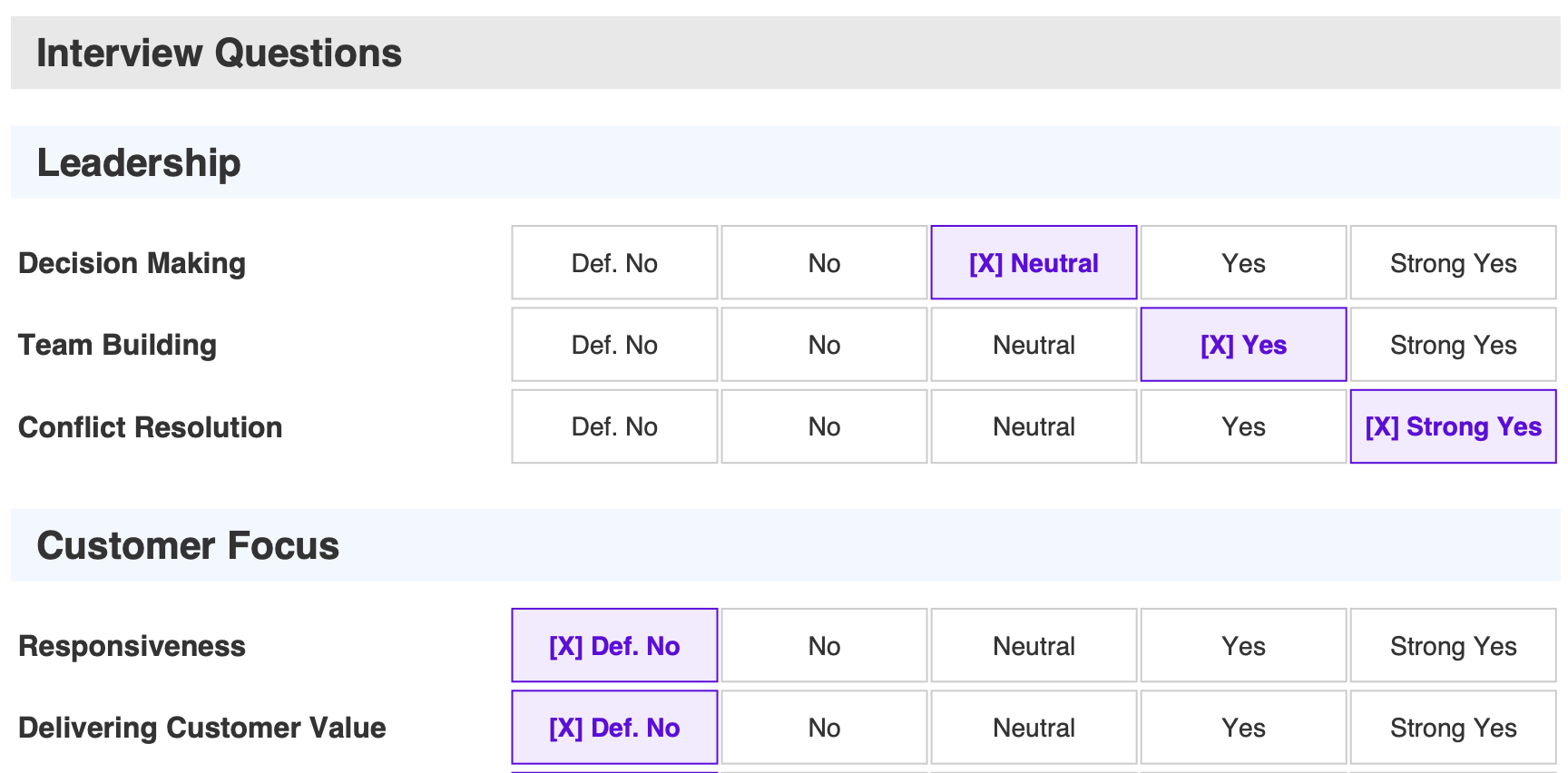
GoodTime Scorecard PDF Upload

GoodTime’s native Scorecards can now be auto converted to PDF and uploaded into Workday.

Why this is awesome: This enhancement lets you leverage GoodTime’s user friendly Scorecard feature & AI summarization, while still ensuring that all feedback is stored in your ATS.

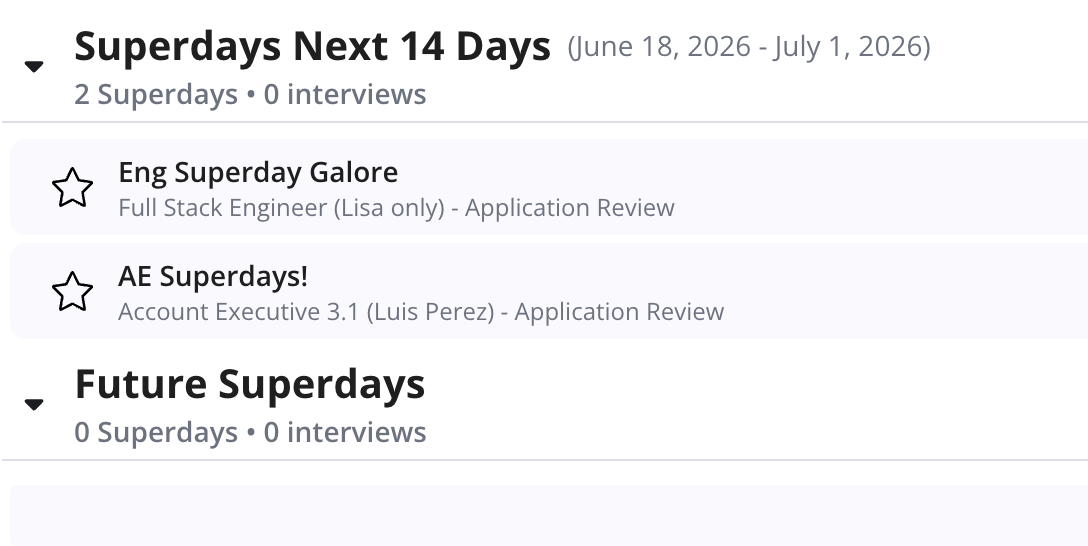
Job Permissions Extended to Superdays

The all new ATS Job Permissions has been extended to the Superdays module. This means that users can be restricted to only access Superdays for jobs which they have ATS access to.

Why this is awesome: This feature makes Superdays more secure for TA teams and simpler for coordinators without requiring any additional configuration – just let your ATS be the source of truth!

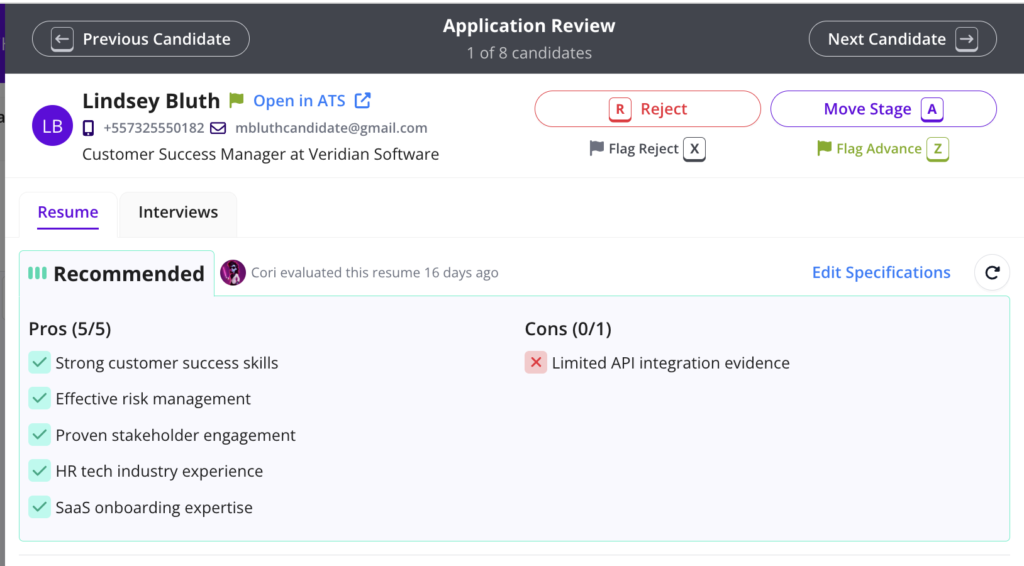
Cori Evaluation Enhancements

Cori evaluates candidates using both the resume along with the candidate’s application to provide a more complete assessment of candidate fit.

Why this is awesome: Factor in application data to quickly screen candidates out based on work authorization, location, and more.

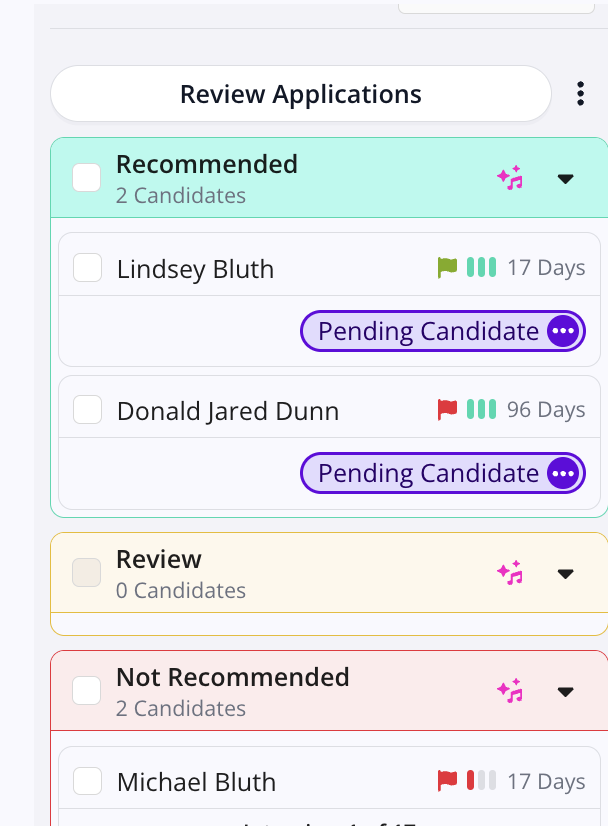
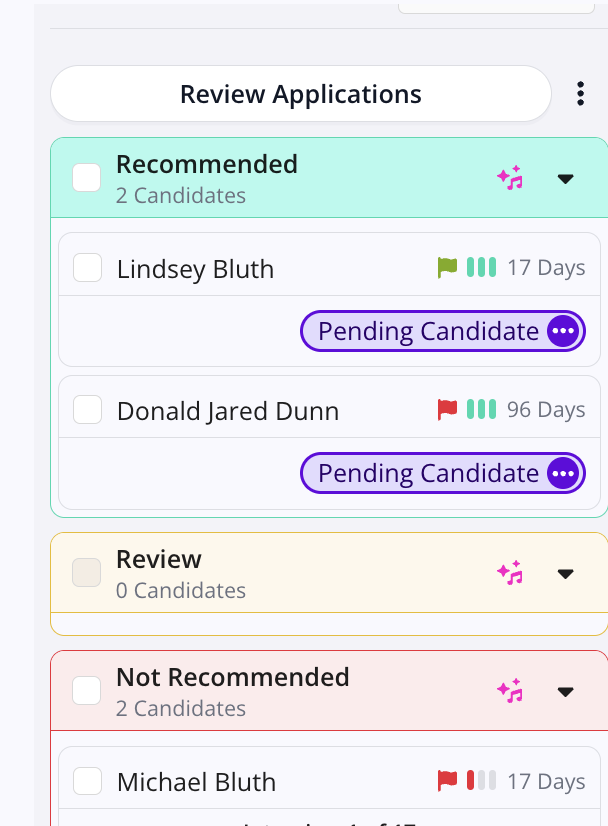
Advance & Reject Flags in Job Pipeline

Quickly flag candidates for advancement or rejection and return later to take action when you’re ready.

Why this is awesome: Simplifies batch candidate review workflows and helps recruiters keep track of hiring decisions without losing momentum.

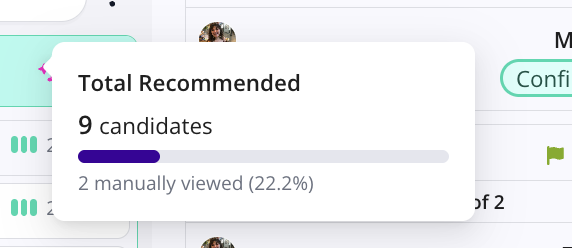
Cori Evaluation Insights & Visibility

Visibility into Cori’s recommendation data at a job level and recruiter activity tracking

Why this is awesome: Audit resume review activity and make more informed decisions with Cori’s evaluation data.

Workday Automation Improvements

Configure interview workflows once and automatically apply them across multiple hiring stages.

Why this is awesome: Reduce administrative setup, maintain consistency across workflows, and scale hiring processes with less manual effort.

Start using the latest GoodTime features!

We want to help you evolve and take full advantage of the latest upgrades and improvements to our platform. Check out the GoodTime support center for tutorials and tips to help you stress less and get more done!

GoodTime Product Updates: What’s New from May 2026

This month’s product updates are all about helping recruiting teams move faster while giving them greater visibility and flexibility throughout the scheduling process. From enabling recruiters to submit scheduling requests to Cori directly within the ATS using voice or chat, to intelligent template auto-linking, enhanced scheduling handoffs, and more transparent activity logging, these improvements are designed to reduce manual work, streamline coordination, and create a smoother experience for both recruiters and candidates.

Let’s dive into what’s new — and why it matters.

Watch the full May 2026 GoodTime product updates webinar or keep scrolling for highlights

ATS Job Permissions Matching

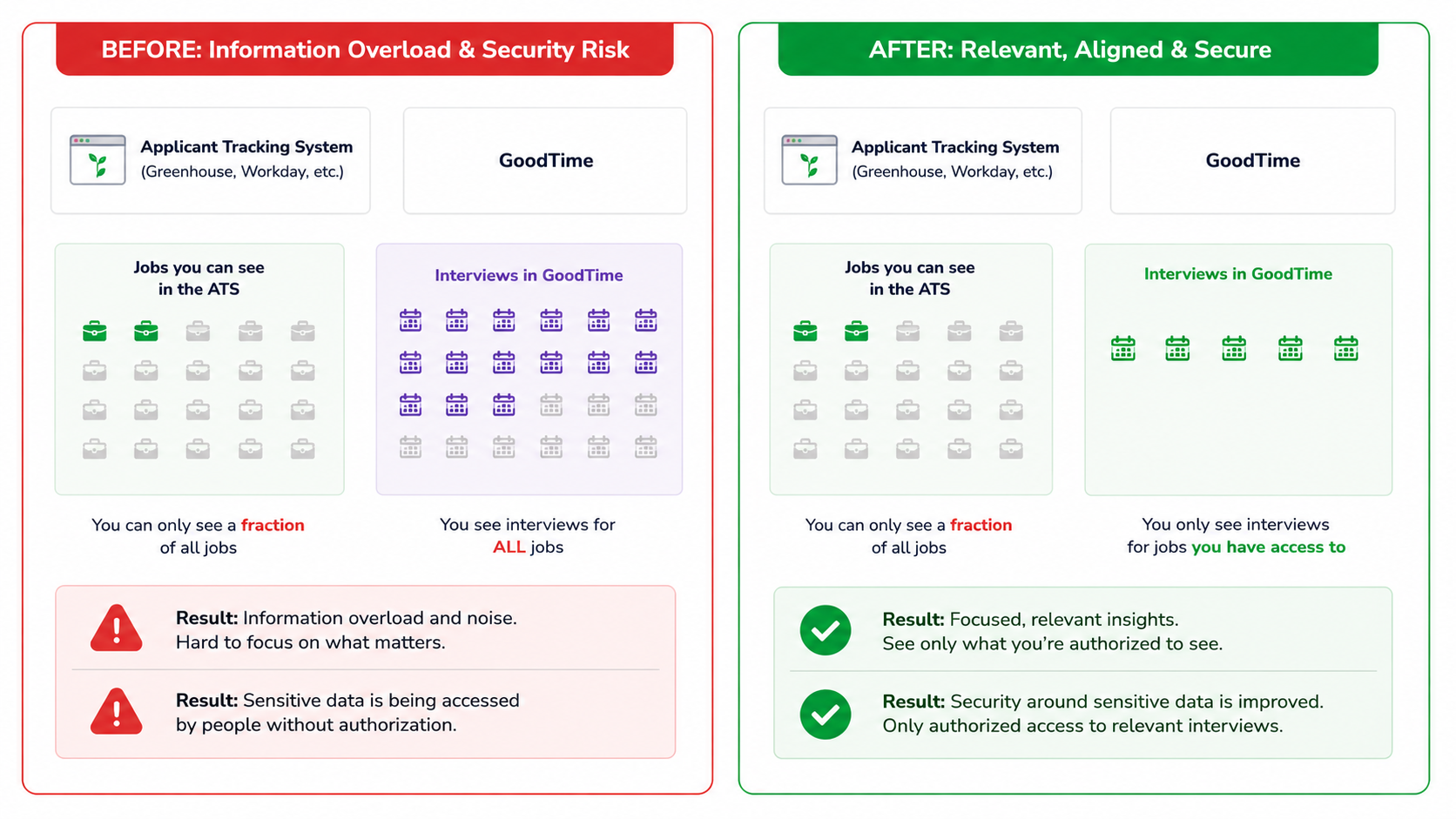
Job permission restrictions in your ATS can now be mirrored in GoodTime for Greenhouse and Workday.

Why this is awesome: Better security and fewer distractions. All this without additional configuration in GoodTime – your ATS settings are automatically followed as a source of truth.

Minimum Number of Slots Settings

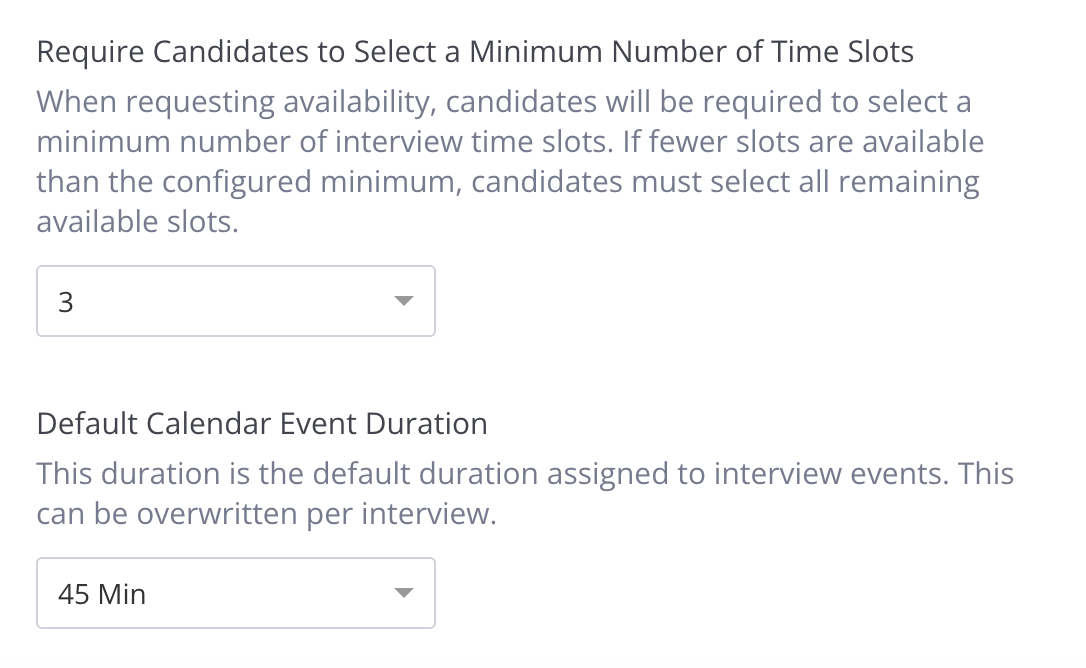
Now you can enforce candidates to select a minimum number of time slots when they provide availability.

Why this is awesome: This will ensure more options to book, fewer manual steps by Coordinators and follows the cascading settings model so you can make it as broad or granular as you like, from company level down to interview level.

Auto Scroll to Business Time Slots in Candidate Timezone

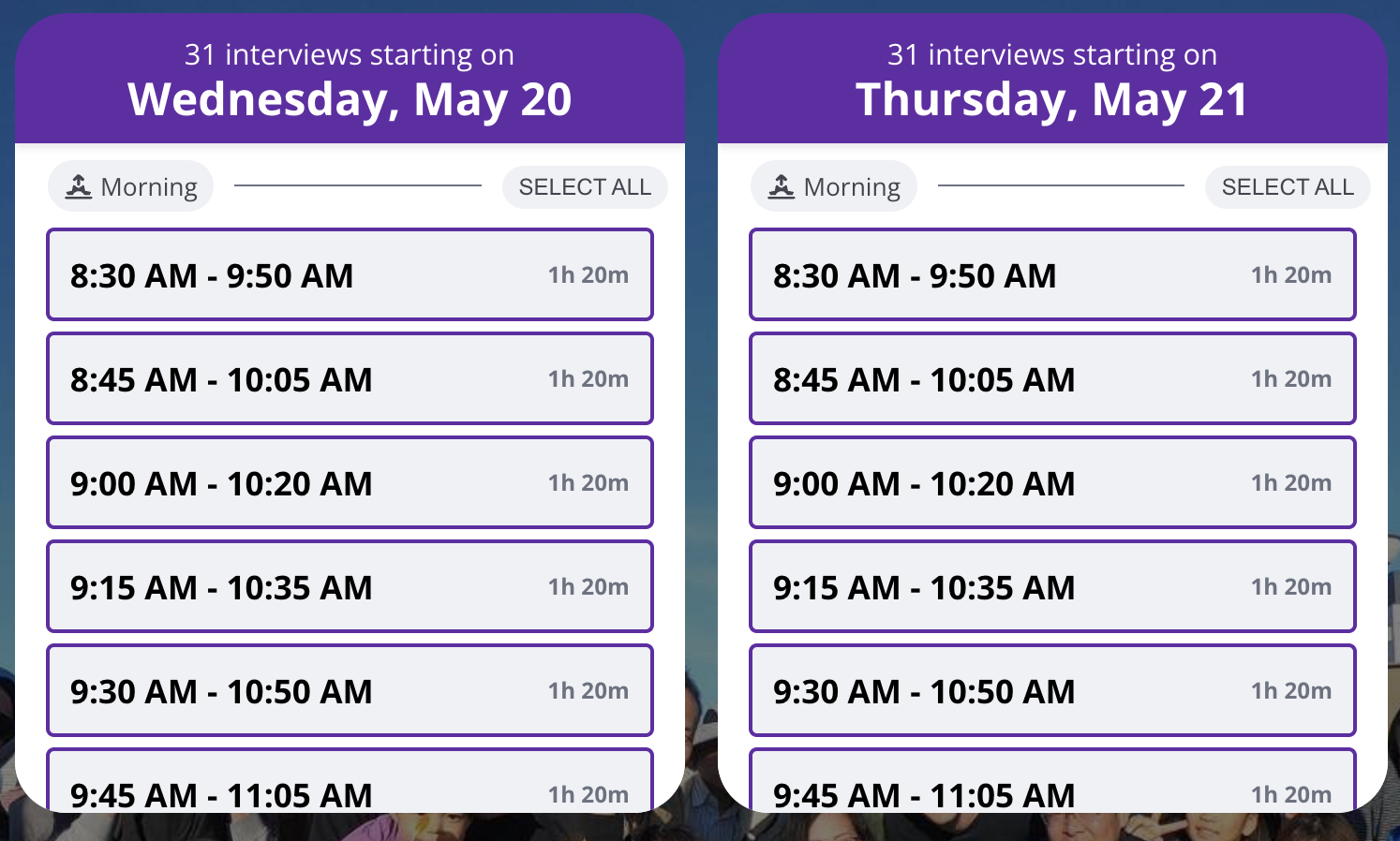
When your interview team is global, there may be interview options literally around the clock. GoodTime now auto focuses on the most user friendly and logical slots, without actually reducing or removing any slots inside the ranges you configure.

Why this is awesome: This is the best of both worlds; optimizes visibility for popular slots without losing any interview possibilities.

Cori: Template Auto-Linking

Cori will intelligently select a scheduling template based on the job and stage if one is missing or if the scheduling request requires it.

Why this is awesome: Reduces setup and maintenance overhead by minimizing manual interview template selection and configuration for new jobs and workflows

Cori: Logging Enhancements

Cori now provides context on her activity and decision making across all her actions. Users can quickly understand what actions Cori took, why those actions were taken, and the current status of interview coordination — all in a clear timeline view inside the platform.

Why this is awesome: Improves transparency and trust in AI-driven actions while giving teams better visibility.

Cori: Scheduling Handoffs

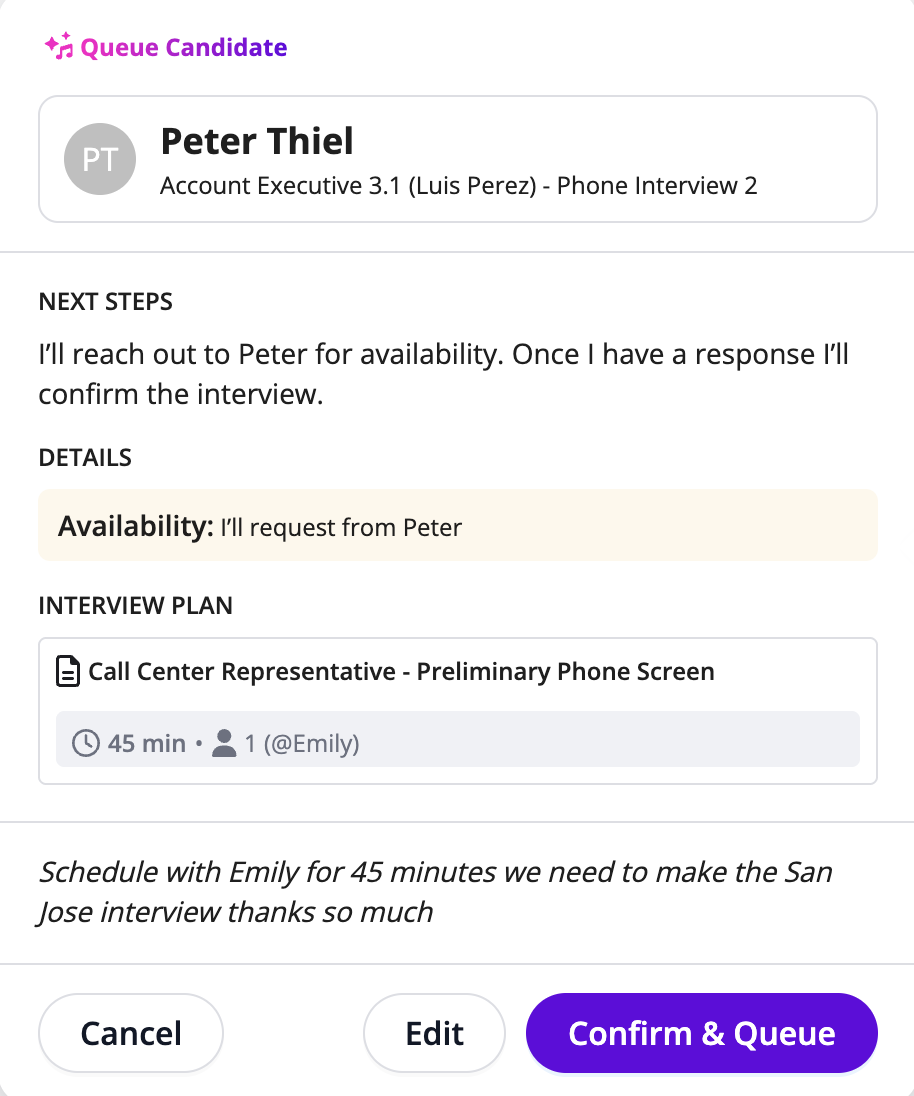
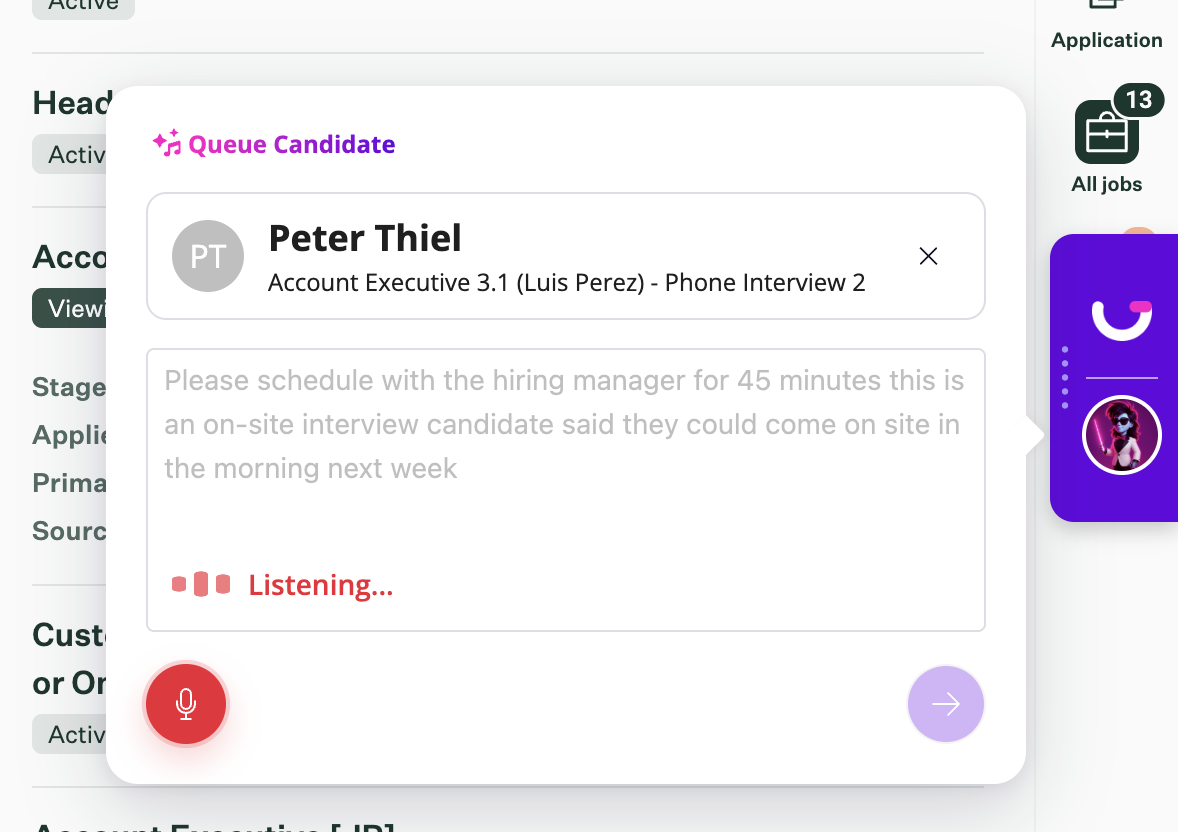
Recruiters can now directly submit scheduling requests to Cori from within the ATS using voice or chat.

Why this is awesome: Makes interview requests faster and easier while allowing recruiters to provide richer context for scheduling needs directly within their existing workflow.

Start using the latest GoodTime features!

We want to help you evolve and take full advantage of the latest upgrades and improvements to our platform. Check out the GoodTime support center for tutorials and tips to help you stress less and get more done!

The Top Recruiting Conferences for 2026

Recruiting keeps changing. Over the last year, generative AI, pay-transparency expectations, and the ongoing shift to hybrid work have continued to reshape how organizations hire. Keeping up takes more than skimming headlines. The best recruiting conferences give talent acquisition teams a chance to hear how peers are adapting, trade practical ideas, and evaluate new tools they can actually use.

This guide starts with on-demand content you can watch right away, then moves into a month-by-month look at standout recruiting conferences across 2026.

Unlock 2026’s top hiring strategies: Insights from 500+ TA leaders

Be the first to uncover deep hiring insights specific to your sector — straight from the highest-performing TA teams.

Why attend a talent acquisition conference?

If you’re a recruiter or a talent acquisition leader, you already know about 2026’s hiring statistics. And you don’t have to navigate them alone. The right event can help you spot emerging trends earlier, pressure-test your strategy, and come back with ideas you can put into practice. 

  • Stay current on trends. Conferences are one of the fastest ways to hear how practitioners are approaching AI-assisted hiring, pay transparency, and skills-based sourcing in the real world.
  • Expand your network. Connect with recruiters, hiring managers and people‑ops leaders facing similar challenges to exchange ideas and form lasting partnerships.
  • Get inspired.  Strong case studies and customer stories can help your team imagine new ways to improve the hiring experience and rethink what is possible.
  • Learn from specialists. The best agendas pair broad strategy with direct access to operators, CHROs, data experts, and talent ops leaders.
  • Earn credits. Many conferences offer continuing-education or professional-development credits that can support certification goals.

Topics to watch for at the 2026 recruiting conferences

There are going to be a lot of sessions to choose from. Here are some of the hottest topics the recruiters we talk to are most interested in hearing about:

On-demand talent acquisition conference recaps, webinars, and seminars

There’s no need to wait to get up-to-date on the latest in talent acquisition. Check out these sessions you can watch or read about right now.

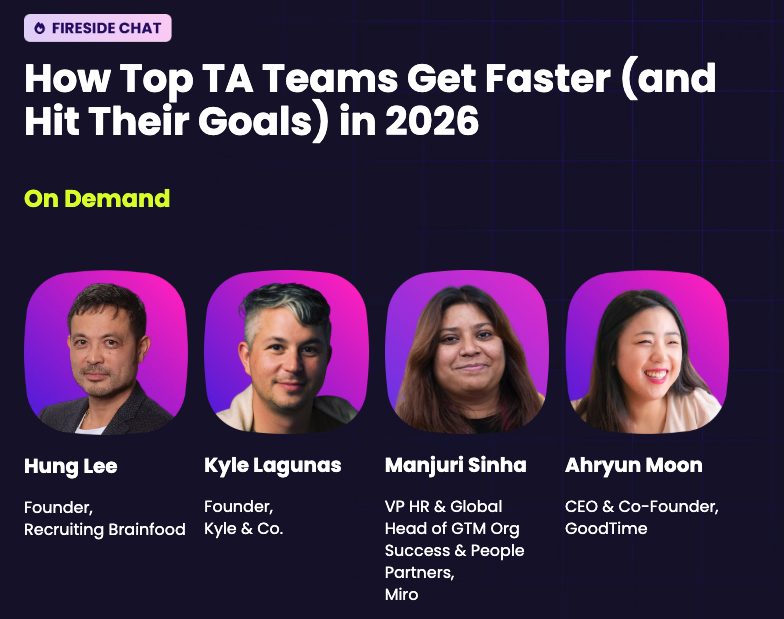
How Top TA Teams Get Faster (and Hit Their Goals) in 2026

Date: On-demand

Location: Virtual Webinar

Price: Free

Watch a candid fireside chat moderated by Hung Lee, featuring Kyle Lagunas, Ahryun Moon, and Manjuri Sinha, as we translate the 2026 Hiring Insights Report’s headline findings into an executive-ready playbook. We’ll dig into what’s changing in talent acquisition right now, plus what to do next if you’re trying to scale hiring without sacrificing quality, candidate trust, or hiring teams’ bandwidth.

Watch on demand.

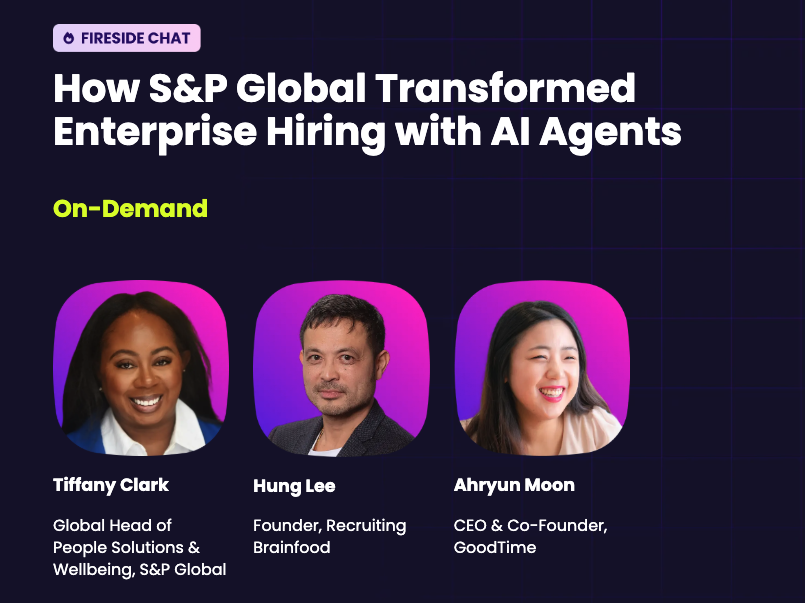
How S&P Global Transformed Enterprise Hiring with AI Agents

Date: On-demand

Location: Online

Price: Free

Moderated by Hung Lee, founder of Recruiting Brainfood, this conversation unpacks what real TA transformation looks like at scale. Tiffany Clark, Global Head of People Solutions at S&P Global, is joined by GoodTime CEO Ahryun Moon  to explore how human-centric AI agents — powered by GoodTime Orchestra — helped unify a fragmented global hiring systems to unlock agility and accelerate business outcomes.

Watch the session.

Meet Cori: The AI agent transforming hiring coordination

Date: On-demand

Location: Online

Price: Free

Get a first look at Cori, GoodTime’s AI agent, and how she’s redefining what it means to automate hiring coordination. Already the leader in complex interview scheduling, Cori elevates GoodTime with an AI agent that doesn’t just automate tasks — she handles the complexity and ambiguity of coordination end-to-end, freeing your team to focus on human interactions

Watch the session.

2026 recruiting conferences by month

January 2026

HR Vision New York

Date: January 14-15, 2026

Location: New York City

Price: $1,499 early‑bird ($2,499 standard)

This two‑day summit convenes HR and talent leaders to explore how AI, data and people‑centric strategies are transforming the workforce. Early bird tickets save $1,000 off the standard delegate rate, and the agenda pairs keynotes with interactive workshops and networking.

Learn more.

February 2026

Talent Acquisition Week 2026

Date: February 2–5, 2026
Location: San Diego, CA
Price: From $1,395 (two‑day conference pass)

TA Week combines three conferences—Social Recruiting Strategies, Talent Sourcing Strategies and Employer Branding—under one roof. The main conference runs Feb 3–4 with pre‑ and post‑conference workshops on Feb 2 and Feb 5. Networking receptions and a seaside venue make this a favorite for recruiting leaders looking to sharpen sourcing skills and share branding tactics. 

Learn more.

HR Solutions in Healthcare 2026

Date: February 26–27, 2026
Location: Toronto, Canada & Virtual
Price: Prices vary; early‑bird and virtual passes available

Canada’s only national conference dedicated exclusively to healthcare HR returns for its fourth year. Expect peer‑to‑peer learning, case studies and discussions on innovations in health‑care HR, workforce shortages, legal considerations and workplace violence. Networking receptions and interactive sessions encourage rich collaboration among HR decision‑makers. 

Learn more.

March 2026

UNLEASH America 2026

Date: March 17–19, 2026
Location: Las Vegas, NV
Price: Pricing tiers vary

Billed as the “International Festival of HR,” UNLEASH America brings together HR technology vendors, practitioners and analysts for inspiring keynotes and deep‑dive case studies. The 2026 edition promises visionary speakers and an expansive expo hall at the Caesars Forum. It’s ideal for leaders seeking the latest tech solutions and global networking opportunities. 

Learn more.

Transform 2026

Date: March 23–25, 2026
Location: Wynn Las Vegas, NV
Price: $1,495 early‑bird / $2,795 standard

Transform gathers people‑ops executives, founders and investors for three immersive days of hands‑on workshops, small‑group discussions and over 350 speakers. Attendees enjoy unlimited one‑to‑one meetings, breakfast and lunch, receptions and a closing after‑party. It’s the conference for those who want to shape the future of work and build a people‑first strategy. 

Learn more.

April 2026

SHRM Talent 2026

Date: April 19–22, 2026
Location: Dallas, TX
Price: Packages available for individuals and teams

SHRM’s premier talent‑acquisition conference dives deep into skills‑based hiring, AI governance, workforce planning and culture. Attendees can choose from multiple tracks—AI‑Powered Talent Transformation, Career Agility, Skills‑Based Workforce Planning and more. Expect data‑driven insights, networking with like‑minded peers and 30‑day on‑demand access to sessions. 

Learn more.

Workhuman Live 2026

Date: April 27–30, 2026
Location: Orlando, FL
Price: $1,095 early‑bird / $2,195 standard

Workhuman Live bills itself as the “best HR conference of 2026,” focusing on recognition, rewards and building human‑centered workplaces. Attendees can join a Women of Workhuman pre‑conference summit, enjoy a late‑night party at Universal Orlando, and hear from inspirational speakers. The early‑bird rate ends on September 28, 2025. 

Learn more.

May 2026

Engage Boston 2026

Date: May 27–28, 2026
Location: Boston, MA
Price: Registration packages vary
Bullhorn’s flagship U.S. conference for staffing and recruiting professionals offers two days of industry insights, tactical product training, and plenty of one‑to‑one networking. With more than 1,000 attendees and sessions on technology innovation and future‑of‑staffing strategies, Engage is the place to connect with agency peers and Bullhorn experts. 

Learn more.

June 2026

SHRM26 – SHRM Annual Conference & Expo 2026

Date: June 16–19, 2026
Location: Orlando, FL
Price: $2,095 individual / $1,885.50 per person for teams

As one of the largest HR conferences in the world, SHRM26 brings together more than 400 speakers across nine content tracks and offers over 28 professional development credits. Topics range from artificial intelligence and pay transparency to leadership, security, and compliance. Early registration guarantees the best rates and access to popular sessions. 

Learn more.

July 2026

RecFest UK 2026

Date: July 2, 2026
Location: Hertfordshire, UK
Price: See site for tiers

The world’s largest talent‑acquisition festival returns to Knebworth Park for a day of outdoor stages, live music and inspirational speakers. Expect specialist tracks like Tech Hiring, Diversity & Inclusion and Early Careers, as well as exhibitions, food stalls and a festival atmosphere. 

Learn more.

HR Healthcare 2026

Date: July 13-15, 2026
Location: The Westin Copley Place, Boston, MA
Price: $999 early-bird through May 31 ($1,199 standard)

HR Healthcare has now announced its 2026 details and deserves to move out of the watch-this-space bucket. The event is positioned as a peer-led forum for healthcare HR innovators, with a program that touches recruiting, engagement, development, and talent strategy in one of the toughest labor markets in the economy. The 2026 edition also includes the HR Healthcare Innovation Awards and SHRM/HRCI-accredited learning opportunities.

Learn more.

NAHCR26

Date: July 14–17, 2026
Location: Milwaukee, WI
Price: Pricing TBD

The National Association for Health Care Recruitment’s annual conference carries the theme “Fresh Perspectives: Pouring New Life into Health Care Recruitment”. Developed by practicing healthcare recruiters, the program delivers real‑world strategies for tackling workforce shortages, embracing innovation, and enhancing candidate engagement. Attendees can explore a vibrant exhibit hall and network with peers while leaving with actionable tools. 

Learn more.

August 2026

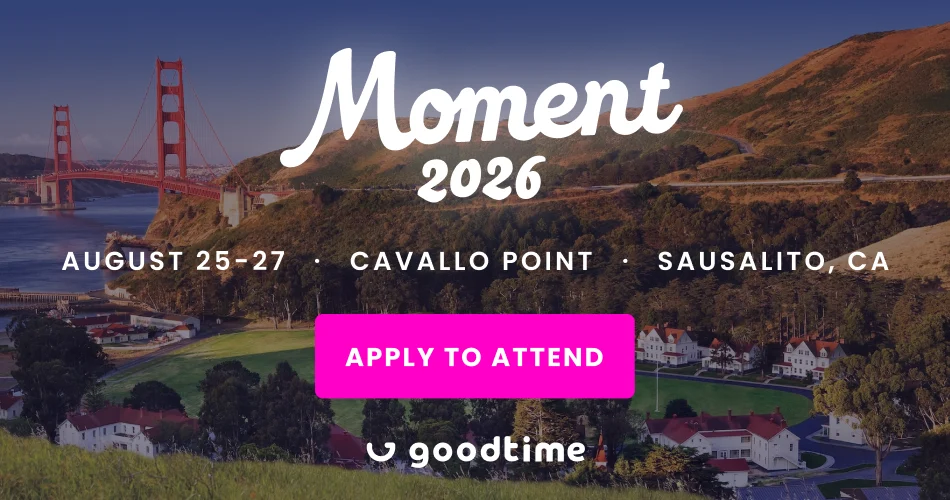
Moment 2026 from GoodTime

Date: August 25-27, 2026
Location: Sausalito, CA
Price: $250 reservation fee

This August, we’re bringing together a curated group of talent acquisition and HR leaders for Moment, an exclusive three-day event experience designed to spark new ideas, strengthen peer connections, and create space for honest conversations about the future of hiring.

Alongside the GoodTime team, a select group of industry leaders will guide conversations, share perspectives, and create an environment that feels candid, collaborative, and actionable.

There will also be incredible food, beautiful scenery, and time to recharge along the way. This is an intentionally intimate event, limited to approximately 100 attendees. Here’s a preview of who we have attending so far:

  • Kobi Ampoma, Head of Talent Acquisition at Heineken
  • Shauna Geraghty, SVP, Global Head of People at Talkdesk
  • Kyle Lagunas, Founder at Kyle&Co
  • Manjuri Sinha, VP of HR at Miro
  • Gita Wankel, Global Head of Business Recruiting, Pinterest

Apply for Moment 2026.

September 2026

Indeed FutureWorks 2026

Date: September 2-3, 2026
Location: Phoenix Convention Center, Phoenix, AZ & Virtual
Price: $999 in-person; virtual attendance is complimentary

Indeed FutureWorks has now published full 2026 details and is one of the clearest additions for the back half of the year. The event is built around what Indeed is calling “The Human Advantage,” with live product demonstrations, client insights, keynotes, and hybrid access for teams that want either the in-person Phoenix experience or a no-cost virtual option. It is especially relevant for TA leaders hiring at scale. 

Learn more

RecFest USA 2026

Date: September 23-24, 2026
Location: The Fairgrounds, Nashville, TN
Price: $99 early-bird general admission

RecFest USA is an easy add for a recruiting-conference roundup because it is explicitly designed for TA and HR professionals and uses the same high-energy festival model that made RecFest UK a staple. The 2026 event returns to Nashville with four stages, 80+ speakers, and a theme centered on “The Human Advantage” in an AI-heavy recruiting environment. 

Learn more

LinkedIn Talent Connect 2026

Date: September 28-30, 2026
Location: Javits Center, New York City & global broadcast
Price: Summit is invite-only; Show details are being released in stages

LinkedIn Talent Connect now has enough public detail to move into the main list. The in-person Summit is reserved for senior talent, HR, and recruiting leaders, while the broader Talent Connect Show gives the wider market a virtual way to tune in. The 2026 themes are especially timely for enterprise TA teams, covering AI evaluation, organizational readiness, trust and security, and how to embed AI into real workflows. 

Learn more.

October 2026

Workday Rising 2026

Date: October 12-15, 2026
Location: The Venetian Resort and Caesars Forum, Las Vegas, NV & Online
Price: In-person and digital pass options are available

Workday Rising has now confirmed its North America event, which makes it a strong addition for recruiting and HR tech leaders already operating in the Workday ecosystem or evaluating where large-platform HR innovation is going next. Workday is positioning the event around AI innovation, customer stories, networking, and more than 400 sessions, so it is likely to be especially useful for enterprise teams that want a direct look at product direction and customer use cases. 

Learn more.

HR Technology Conference & Exposition 2026

Date: October 20–22, 2026
Location: Las Vegas, NV
Price: Expo‑only and all‑access passes available starting at $1,895

The 2026 edition of HR Tech builds on its reputation as the premier event for HR innovation. You’ll find an even larger expo hall, expanded Women in HR Tech and HR Executive Strategy Summits, and sessions that tackle AI adoption, talent intelligence, and employee experience. If you can only attend one HR tech event next year, this is it. 

Learn more

November 2026

Workday Rising EMEA 2026

Date: November 17-19, 2026
Location: Barcelona, Spain & Online
Price: Registration opens in June; pass details are on the event site

Workday has also published the 2026 dates for Rising EMEA, so this one can come out of the TBA section too. For EMEA-based HR, finance, IT, and talent leaders, it is one of the most practical late-year options for seeing Workday’s AI and product direction, hearing customer stories, and networking with peers in the region without waiting for the next North America cycle. 

Learn more.

Stay ahead of the curve on recruiting technology

To get the most out of these conferences, make sure your team is prepared to act on what they learn. GoodTime’s AI‑powered interview scheduling and hiring platform can help you automate manual tasks, deliver a delightful candidate experience, and capture analytics to drive continuous improvement. Explore GoodTime today to see how AI agents can transform your recruiting process

Upgrade your hiring journey with AI

GoodTime’s AI agents orchestrate the entire hiring journey — screening, scheduling, messaging, and more — so talent teams hire faster with a better candidate experience.

How to Choose Interview Scheduling Software for Enterprise Hiring

Interview scheduling has quietly become one of the biggest operational bottlenecks in enterprise hiring.
What seems simple on the surface — finding time on a calendar — becomes far more difficult at scale. Global teams. Multi-day interview loops. Panel interviews. Candidates across time zones. Last-minute reschedules. Suddenly, a “quick scheduling task” turns into dozens of emails, calendar changes, Slack messages, and manual decisions.

And the problem is growing.

According to GoodTime’s 2026 Hiring Insights Report, talent teams now spend 38.4% of their time coordinating interviews, while nearly 60% of organizations reported increases in time-to-hire. The biggest hiring slowdowns weren’t sourcing-related — they came from operational bottlenecks like cancellations, reschedules, interviewer availability, and coordination delays.

Scheduling is no longer administrative overhead. It’s core hiring infrastructure.

That’s why interview scheduling software has become one of the fastest-growing categories in talent acquisition tech. But with that growth comes noise. Nearly every vendor now claims to offer “AI scheduling” or “automated coordination,” even when the reality still involves significant manual work behind the scenes.

Many tools can handle simple one-to-one scheduling. Far fewer can truly automate the complexity of enterprise hiring.
This guide breaks down what enterprise talent teams should actually look for when evaluating interview scheduling software — including the capabilities that matter most, the questions buyers should ask vendors, and how to distinguish lightweight scheduling tools from platforms built for real hiring complexity.

Unlock 2026’s top hiring strategies: Insights from 500+ TA leaders

Be the first to uncover deep hiring insights specific to your sector — straight from the highest-performing TA teams.

Start by defining your scheduling complexity

One of the biggest mistakes enterprise teams make when evaluating interview scheduling software is assuming all scheduling problems are fundamentally the same. They’re not.

A company scheduling occasional recruiter screens has very different needs than an enterprise coordinating executive panels across multiple time zones. Yet many scheduling tools are still designed primarily around simple one-to-one workflows.

Enterprise scheduling isn’t just about finding availability. It’s about coordinating candidates, recruiters, interviewers, calendars, workflows, and communication — while moving quickly enough to secure top talent.

Complexity usually shows up in a few predictable ways:

  • panel interviews
  • multi-day interview loops
  • high-volume hiring
  • interviewer load balancing
  • global coordination
  • last-minute cancellations and reschedules

And surprisingly, many tools that market themselves as “enterprise-ready” still struggle with workflows beyond basic scheduling.

Even one-to-two scheduling — coordinating a candidate with two interviewers simultaneously — can require manual intervention in some systems. Add interviewer requirements, multiple stages, or cross-functional panels, and recruiters often end up back in the coordination work they were trying to automate.

This is where the distinction between scheduling assistance and true scheduling automation becomes important.

Many platforms can surface available time slots. Far fewer can dynamically coordinate complex interviews end-to-end without recruiters manually reviewing options or rebuilding schedules when something changes.

That’s why platforms purpose-built for enterprise complexity — like GoodTime — tend to outperform lightweight scheduling tools over time. They’re designed around the realities of large-scale hiring, not just meeting coordination.

Questions to ask vendors

  • Can candidates self-schedule panel or multi-day interviews?
  • What happens when an interviewer declines or becomes unavailable?
  • How much manual intervention is still required from recruiters?
  • Can automation rules adapt across roles, regions, or hiring processes?
  • What scheduling workflows still require human coordination?

Don’t confuse “availability matching” with true automation

One of the biggest misconceptions in interview scheduling software today is the definition of automation.

Many platforms claim to automate scheduling because they can collect availability, recommend time slots, and send invites. But for enterprise recruiting teams, that’s only a small part of the coordination work.

In many systems, recruiters still need to review schedules manually, resolve conflicts, chase down interviewers, manage reschedules, and keep the process moving themselves.

The software reduces a few clicks, but the operational burden still sits with the talent team.

True automation means the platform can adapt dynamically as schedules change — automatically replacing interviewers, triggering communication workflows, resolving conflicts, and keeping hiring moving without recruiters constantly stepping in.

This distinction matters even more as AI becomes central to vendor messaging.

Right now, nearly every scheduling platform markets itself as “AI-powered.” But in many cases, the AI is simply recommending slots or generating responses while humans still manage the coordination work manually.

Modern enterprise hiring requires something more operationally intelligent.

The next generation of scheduling platforms is shifting from passive tools to active coordination systems that don’t just suggest what should happen — they take action to keep hiring moving.

That’s where enterprise-focused AI agents are starting to reshape the category.

For example, GoodTime’s AI agent, Cori, functions more like a digital teammate than a chatbot. Instead of simply surfacing recommendations, Cori actively coordinates interviews, adapts to scheduling changes, manages communication workflows, and handles operational work behind the scenes.

Importantly, recruiters still remain fully informed and in control. The goal of automation isn’t to remove human interaction from hiring. It’s to remove the logistical work that prevents recruiters from spending time with candidates and hiring teams.
Questions to ask vendors

  • What scheduling tasks still require manual recruiter involvement?
  • Does the system automatically adapt to cancellations and reschedules?
  • Can it replace interviewers dynamically?
  • Does the AI execute actions or simply recommend them?
  • How much oversight is required to keep interviews moving?

Calendar hygiene matters more than most vendors admit

Even the best scheduling automation can break down if calendar data is unreliable.

And in enterprise organizations, calendar hygiene is rarely perfect.

People block focus time. They create tentative holds. They forget to update recurring meetings. Some interviewers aggressively protect their calendars, while others leave everything wide open.

The result is messy availability data — and that mess creates real hiring friction.

This is one of the biggest reasons enterprise scheduling is harder than standard meeting coordination. The system isn’t just interpreting availability. It’s trying to understand intent.

Is this a hard conflict or a soft hold? Is this meeting flexible? Is this interviewer already overloaded this week?

Basic scheduling tools often treat all blocked calendar time equally. If a slot appears unavailable, the system simply moves on.

But enterprise scheduling requires more contextual intelligence.

Modern platforms should be able to distinguish between hard and soft conflicts, interpret interview holds intelligently, balance interviewer workloads, and adapt continuously as schedules change.

Without that sophistication, recruiters often end up overriding the system manually — defeating much of the value automation was supposed to provide.

This becomes especially important at scale, where poor calendar interpretation contributes directly to slower hiring, interviewer burnout, and inconsistent candidate experiences.

The best enterprise scheduling systems recognize that calendars are imperfect representations of human availability — and they’re designed to work intelligently within that reality.

Questions to ask vendors

  • Can the platform distinguish holds from confirmed meetings?
  • How does it handle last-minute calendar changes?
  • Does it balance interviewer workloads automatically?
  • How much manual calendar cleanup is required from recruiters or interviewers?

Remember: The scheduling experience is the candidate experience

For candidates, interview scheduling is not a back-office administrative process.

It is the hiring experience.

Long before candidates meet a hiring manager, they’re already forming opinions about your organization based on how scheduling feels. How quickly does the company respond? Is the process easy to navigate? Does communication feel organized? Are changes handled smoothly?

When scheduling is slow or disjointed, candidates notice immediately.

And in competitive hiring markets, delays have consequences. Candidates continue interviewing elsewhere. Reschedules create uncertainty. Poor communication damages trust.

That’s why leading organizations increasingly view scheduling technology as part of their employer brand infrastructure.

Modern candidates expect:

  • self-service scheduling
  • mobile-friendly experiences
  • easy rescheduling
  • proactive updates
  • communication through channels they already use

That increasingly means moving beyond email alone.

SMS and WhatsApp communication have become especially important for high-volume and global hiring workflows, where responsiveness directly impacts candidate engagement and conversion rates.

At the same time, enterprise teams need consistency and brand control across every touchpoint. Scheduling experiences should feel connected to the company’s broader employer brand — not like candidates are being handed off to a generic booking tool.

That’s why many organizations prioritize features like branded scheduling portals, automated reminders, conversational scheduling, multilingual support, and integrated communication workflows.

The best systems don’t just book interviews. They orchestrate communication and keep every stakeholder aligned throughout the process.

Questions to ask vendors

  • Can candidates self-schedule and reschedule easily?
  • Does the platform support SMS, WhatsApp, or conversational communication?
  • Can workflows be branded to match your employer brand?
  • Is the candidate experience consistent globally and across role types?
  • How are reminders and updates handled?

ATS integrations are table stakes — but integration depth matters

Every interview scheduling vendor claims ATS integration.

But for enterprise teams, the real question isn’t whether a platform integrates with your ATS. It’s how deeply and reliably that integration actually works.

Because shallow integrations create operational problems quickly.

Interview scheduling sits at the center of a much larger hiring ecosystem that includes calendars, communication tools, video conferencing platforms, analytics systems, and recruiting workflows. If those systems aren’t tightly connected, recruiters end up managing disconnected processes manually.

Weak integrations often create duplicate data entry, sync delays, broken workflows, inconsistent reporting, and confusion around which system is actually accurate.

This usually becomes obvious when something changes unexpectedly. A recruiter updates a stage in the ATS, but the scheduling system doesn’t reflect it immediately. An interviewer declines in Outlook, but the interview workflow doesn’t update correctly.

These small disconnects compound quickly at enterprise scale.

That’s why organizations should evaluate not just whether integrations exist, but how synchronization works between systems.

Strong enterprise scheduling platforms should offer native integrations, bi-directional sync, real-time updates, and flexible workflow orchestration across systems like Workday, Greenhouse, iCIMS, Lever, and SuccessFactors.

This is one reason enterprise-focused platforms like GoodTime invest heavily in native ATS integrations. At scale, scheduling automation only works when calendars, workflows, candidate data, and communication stay continuously aligned.

Questions to ask vendors

  • Is synchronization bi-directional?
  • How quickly do updates sync between systems?
  • What happens when workflows or ATS stages change?
  • Can the platform support global or multi-system workflows?
  • How much implementation and maintenance work is required internally?

Security and governance can’t be an afterthought

Interview scheduling platforms sit at a surprisingly sensitive intersection of enterprise systems.

They often have access to employee calendars, candidate communications, hiring workflows, and organizational data. And as AI becomes more embedded in scheduling workflows, enterprise buyers are asking tougher questions about governance, transparency, and data handling. Rightfully so.
Security is no longer just an IT checklist item. It’s a core buying criterion.

Organizations need confidence that automation can improve hiring efficiency without creating new privacy or compliance risks. That means evaluating much more than whether a vendor is SOC 2 compliant.

Enterprise teams should understand:

  • what data AI systems actually access
  • whether PII is exposed to AI models
  • how automated actions are logged and audited
  • how permissions and controls are managed
  • whether the platform supports regional compliance requirements

This is especially important because scheduling platforms frequently interact with systems employees consider highly personal — particularly calendars and communication tools.

The best enterprise scheduling platforms balance automation with transparency and control.

For example, GoodTime’s human-centric AI approach keeps automated actions visible and configurable, while anonymizing sensitive data before it’s processed through AI systems.

That distinction matters because enterprise buyers increasingly want AI systems that are explainable, governable, and built for responsible adoption.

Learn more: Decoding ‘Enterprise-Grade Security.’

Questions to ask vendors

  • What data does the AI system actually access?
  • Is candidate or interviewer PII processed by AI models?
  • Are AI actions logged and auditable?
  • Can recruiters override automated decisions?
  • Does the platform support GDPR, HIPAA, or regional compliance requirements?

Think beyond scheduling — think hiring coordination

The interview scheduling category is evolving quickly.

For years, most scheduling tools focused on a relatively narrow problem: finding open time slots and reducing manual coordination work. But for enterprise organizations, that’s no longer enough.

Because hiring complexity doesn’t stop at calendars.

Delays rarely happen because someone technically couldn’t find an open hour on a calendar. They happen because coordination breaks down somewhere across the process. An interviewer declines late. A candidate stops responding. A panel needs to be rebuilt. Communication slows down between stakeholders.
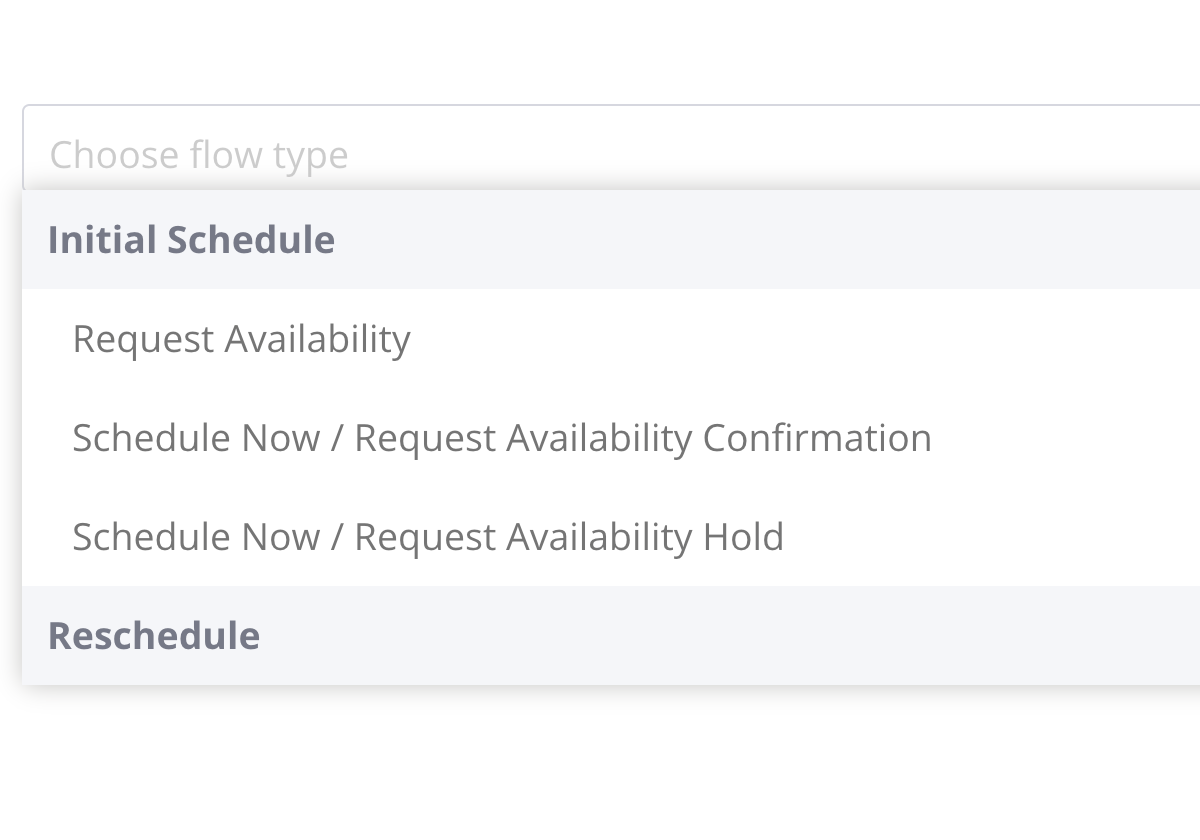
That’s why the next generation of enterprise hiring platforms is moving beyond standalone scheduling tools toward broader hiring coordination systems.

The goal is no longer just to automate calendar matching. It’s to reduce the operational burden of keeping hiring moving.
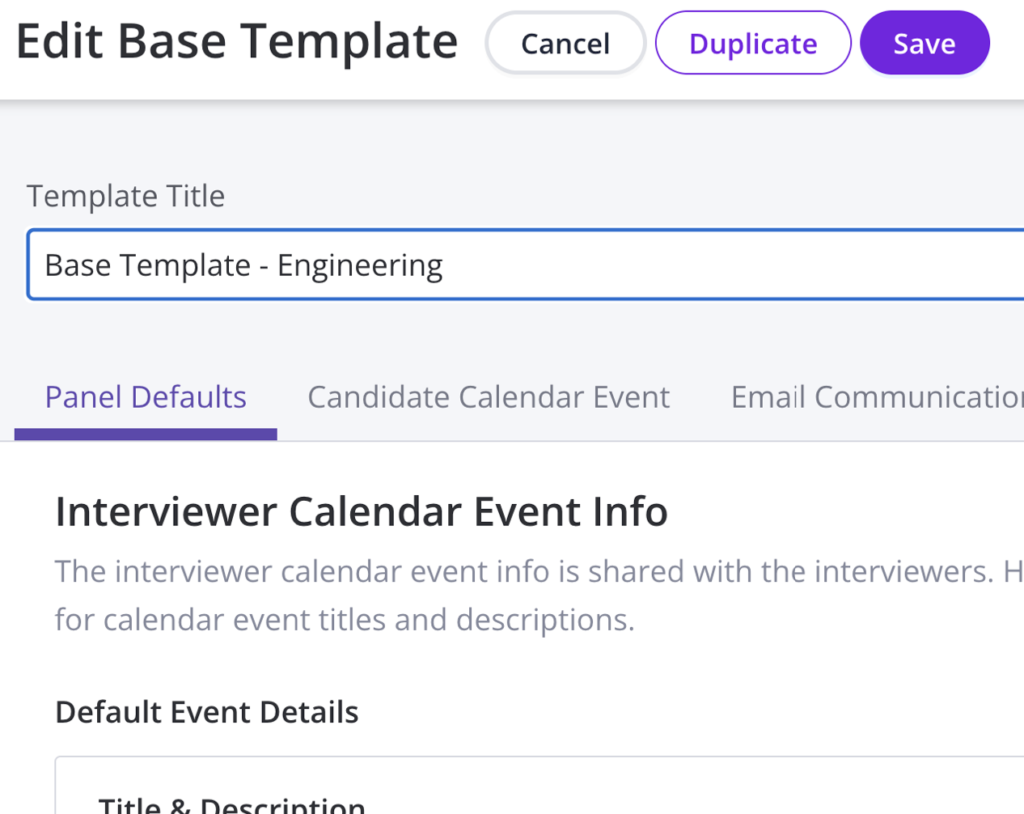
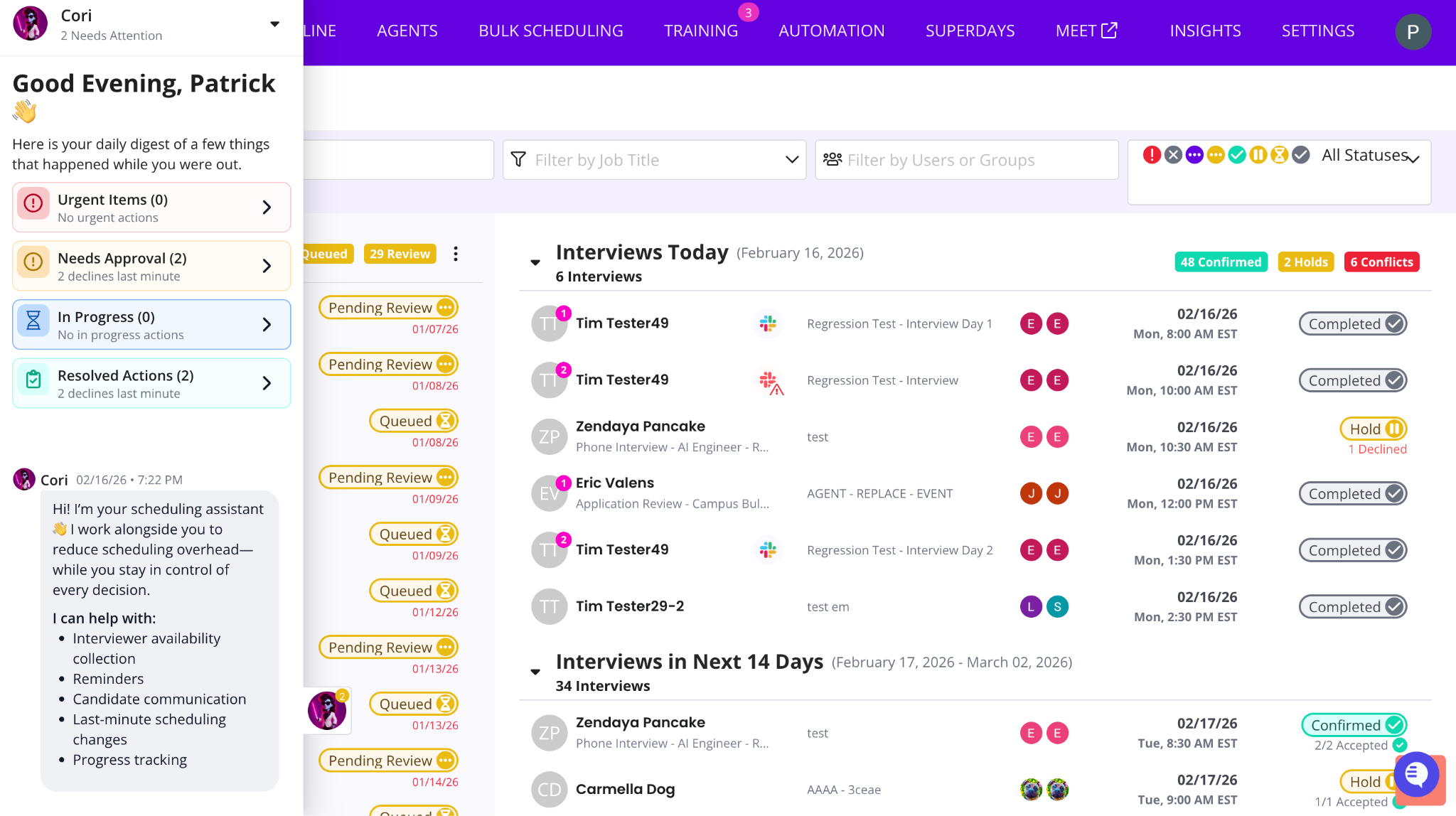
Modern platforms are increasingly expected to detect bottlenecks, adapt dynamically to changes, coordinate communication automatically, and proactively keep workflows on track.

This is where AI agents are beginning to reshape the category in meaningful ways.

Rather than simply surfacing recommendations, enterprise AI agents are designed to take action autonomously while keeping teams informed and in control.

GoodTime’s AI agent, Cori, is one example of this shift — operating as a digital teammate that handles scheduling coordination, workflow execution, communication, and real-time adaptations behind the scenes.

The broader trend matters more than the terminology itself.

Enterprise hiring teams are increasingly looking for platforms that reduce operational friction, minimize manual oversight, and create more space for recruiters to focus on people instead of logistics.

The organizations that improve hiring speed and candidate experience over the next few years likely won’t be the ones with the most recruiters. They’ll be the ones with the strongest operational infrastructure supporting them.

Enterprise hiring needs more than scheduling software

Interview scheduling software has become one of the most important — and most misunderstood — categories in enterprise hiring technology.

Many tools promise automation. Many claim AI capabilities. But once enterprise complexity enters the picture, the differences between lightweight scheduling tools and true hiring coordination platforms become very clear.

Enterprise organizations don’t just need software that finds open time slots. They need systems that can coordinate complex hiring workflows, adapt dynamically as conditions change, and reduce the operational burden on recruiting teams.

That’s why evaluating interview scheduling software requires looking beyond surface-level features and AI claims.

The best platforms don’t just schedule interviews faster.

They keep hiring moving.

Hiring Has a Coordination Problem — and It Costs More Than We Think

For years, talent acquisition has been framed as a pipeline problem. When hiring slows down, the instinct is to look upstream: sourcing strategies, employer branding, top-of-funnel conversion.

But inside most enterprise hiring organizations, a different constraint is becoming harder to ignore — and it has less to do with attracting candidates, and more to do with what happens after they enter the process.

It’s here that a new kind of solution is starting to emerge. Not another feature, or workflow tool, but something closer to a digital teammate — an AI agent designed to take ownership of the coordination work that keeps hiring moving.

GoodTime calls this agent Cori.

To understand why Cori matters, it helps to first understand the problem she’s designed to solve.

The operational bottleneck hiding in plain sight

In large, distributed organizations, interview scheduling is no longer a simple administrative task. It is a multi-variable coordination challenge involving time zones, interviewer availability, candidate preferences, role-specific requirements, and frequent last-minute changes.

The result is a level of operational friction that is both pervasive and underestimated.

Recruiters and coordinators spend a disproportionate amount of their time managing logistics rather than engaging with candidates or influencing hiring decisions. Even well-resourced teams find themselves constrained by the sheer volume of coordination required to move candidates through the process.

What makes this particularly challenging is that the work is essential but invisible. When it goes well, it’s unnoticed. When it breaks down, the impact is immediate: delays, candidate drop-off, and internal frustration.

As Shauna Geraghty, Senior Vice President, Global Head of People at Talkdesk, describes it:

“There’s no longer a back-and-forth exchange between the candidate and our coordination team. [Cori] works behind the scenes to automate the scheduling process end to end.”

That “back-and-forth exchange” is more than an inconvenience — it is a structural inefficiency that compounds at scale.

Why incremental improvements haven’t solved the problem

Over the past decade, recruiting technology has made meaningful progress in digitizing and streamlining parts of the hiring process. Scheduling links, workflow automation, and conversational interfaces have all reduced friction in specific moments.

However, these innovations have largely operated within the same underlying model: coordination remains a human responsibility, supported by tools that require input, oversight, and intervention.

This model works reasonably well in simple hiring environments. It breaks down in complex ones.

Enterprise hiring is defined by variability — across roles, regions, stakeholders, and processes. In that context, coordination is not a series of discrete tasks. It is a continuous, dynamic system that requires constant adjustment.

Static automation and reactive tools are not designed to manage that level of complexity. They reduce effort, but they do not remove ownership of the problem.

A different approach: coordination as a system, not a task

What’s beginning to change is not just the technology itself, but the way coordination is conceptualized.

Rather than treating scheduling and communication as tasks to be executed, leading teams are starting to treat them as a system that needs to be continuously managed and optimized.

This is where the emergence of AI agents introduces a fundamentally different model.

Cori, GoodTime’s AI agent, is designed around this premise. Instead of assisting with individual actions, she takes ownership of the coordination layer across the hiring process — managing scheduling, rescheduling, communication, and workflow execution as an integrated whole.

This distinction is important. Cori does not wait for prompts or rely on predefined rules alone. She operates continuously, adapting to changes as they occur and ensuring that the process remains aligned without requiring constant human intervention.

In practice, this translates into measurable outcomes. As Jeff Moore, VP of TA Operations and Workspaces at Toast, notes:

“We’ve seen 50% faster interview scheduling and 55% fewer cancellations. What’s great about that is we’re getting people scheduled faster with less internal friction.”

The reduction in friction is not simply a matter of efficiency. It changes how the entire hiring system behaves — increasing speed, improving reliability, and reducing the likelihood of breakdowns.

Reclaiming time for higher-value work

One of the more persistent concerns surrounding AI in talent acquisition is the potential erosion of the human element. In practice, the opposite effect is often observed when coordination is effectively automated.

By removing the operational burden, teams are able to reallocate time and attention to the aspects of hiring that require human judgment and interaction: building relationships, assessing candidates, and making informed decisions.

Jenn Walker, Global Talent Acquisition Coordination Manager at HubSpot, captures this shift clearly:

“Cori isn’t replacing the human side of hiring — she’s giving us more space to actually focus on it.”

This aligns with a broader movement toward human-centric AI — an approach that emphasizes augmentation rather than replacement, and outcomes rather than features.

Why this shift matters now

Several macro trends are converging to make coordination a critical focus area for talent leaders.

First, hiring complexity continues to increase. Global teams, hybrid work models, and more specialized roles introduce additional variables into an already intricate process.

Second, resource constraints are tightening. Many organizations are being asked to maintain or increase hiring output with smaller teams, placing additional pressure on efficiency.

Finally, expectations around candidate experience have evolved. Delays and disorganization are no longer tolerated in a competitive talent market, particularly for high-value roles.

Taken together, these dynamics expose the limitations of traditional coordination models. They also create an opportunity to rethink how hiring operations are structured.

Toward a more resilient hiring system

If the past era of recruiting technology focused on digitizing workflows, the next phase is likely to focus on operational resilience — ensuring that hiring processes can adapt and continue functioning effectively under real-world conditions.

This requires more than incremental improvements. It requires a shift in ownership.

By introducing an AI agent that is responsible for coordination end-to-end, organizations can move from a model where humans manage the system to one where the system actively supports humans.

Cori represents one implementation of this approach, but the broader implication is more significant. It signals a move toward treating coordination as core infrastructure rather than administrative overhead.

For talent leaders, this raises an important question: if coordination is the connective tissue of hiring, should it remain one of the most manual and fragile parts of the process?

Redefining where hiring gets stuck — and how it moves forward

The narrative around hiring challenges is starting to evolve. While sourcing and employer branding remain critical, they are no longer sufficient to ensure success.

Execution — the ability to move candidates efficiently, consistently, and thoughtfully through the process — is emerging as a defining capability.

Organizations that address coordination at a systemic level are likely to see not only faster hiring, but more predictable outcomes, stronger candidate experiences, and more sustainable workloads for their teams.

In that context, Cori is less about introducing another tool and more about redefining how hiring work gets done.

And for many enterprise teams, that shift is long overdue.

GoodTime Product Updates: What’s New from April 2026

April brought a new set of product updates focused on improving efficiency, visibility, and AI-driven coordination across the hiring process. From enhanced training paths and smarter dashboard filtering to real-time AI assistant recommendations and continued stability improvements, these updates are designed to help teams move faster — with greater precision and reliability.

Whether you’re scaling interviewer training with more flexible paths, quickly filtering performance data across teams, improving scheduling accuracy with real-time AI recommendations, or relying on AI to manage queued interviews and streamline handoffs, these enhancements help reduce friction and keep hiring running smoothly.

Let’s dive into what’s new — and why it matters.

Watch the full April 2026 GoodTime product updates webinar or keep scrolling for highlights

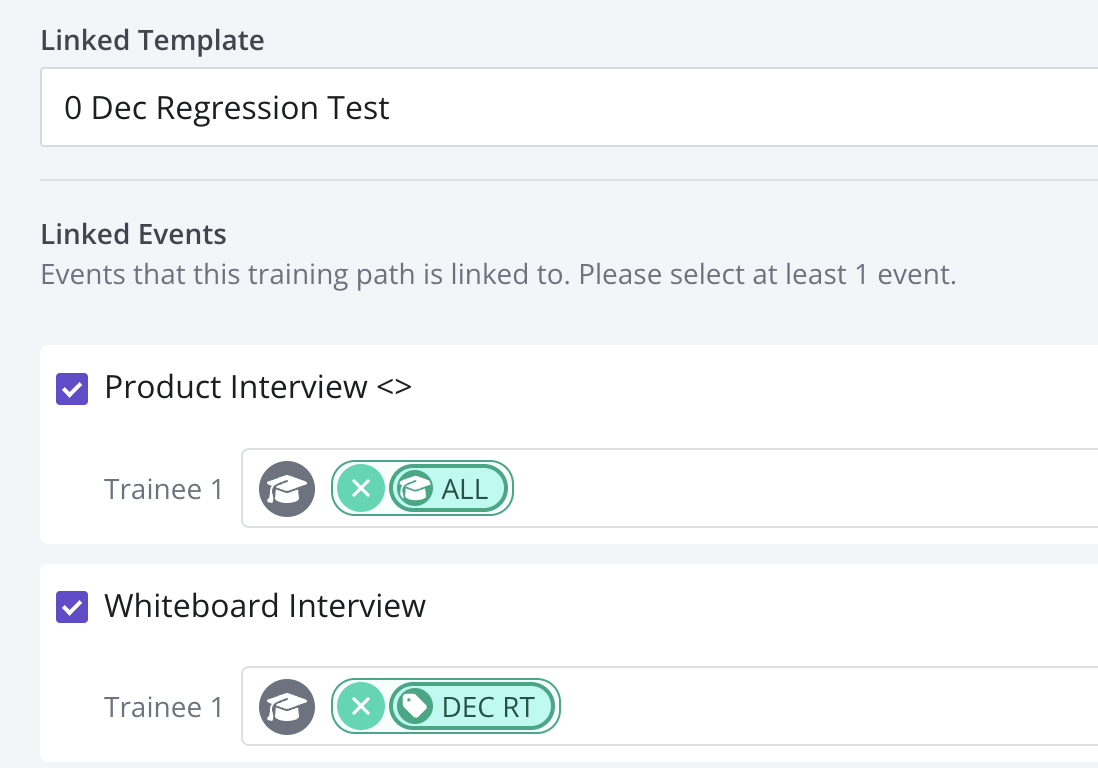
Training Path Tag Assignment

The Training Module is enhanced with fewer clicks and more automation so that when you create or edit a path, you can immediately specify which tags to pull trainees in from, straight from the path.

Why this is awesome: Less clicks, fewer tabs open, and automated tag suggestions → more trainees graduating faster!

Improved Dashboard Filtering

Filtering on the Dashboard has been empowered with a new and improved UI that also lets you filter by specific interviewer(s).

Why this is awesome: The ability to combine interviewer and hiring team filtering makes it all the possible to narrow down more granular interview lists and find specific interviews faster than ever.

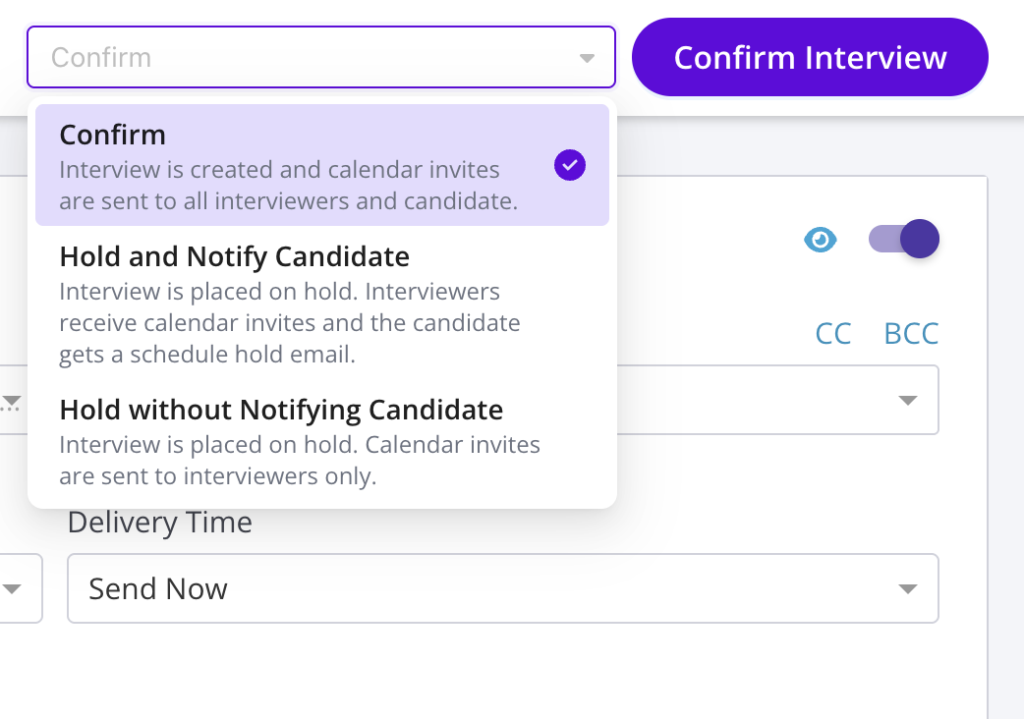
Optimized Confirmation Flow

The Confirmation Page for confirming & holding interviews has been refreshed to support all respective email types. This new flow also makes it more clear and controlable what email is sent to candidates and when.

Why this is awesome: This further enhances automation and preconfigured templates so that fewer alterations have to be made and quality is better controlled..

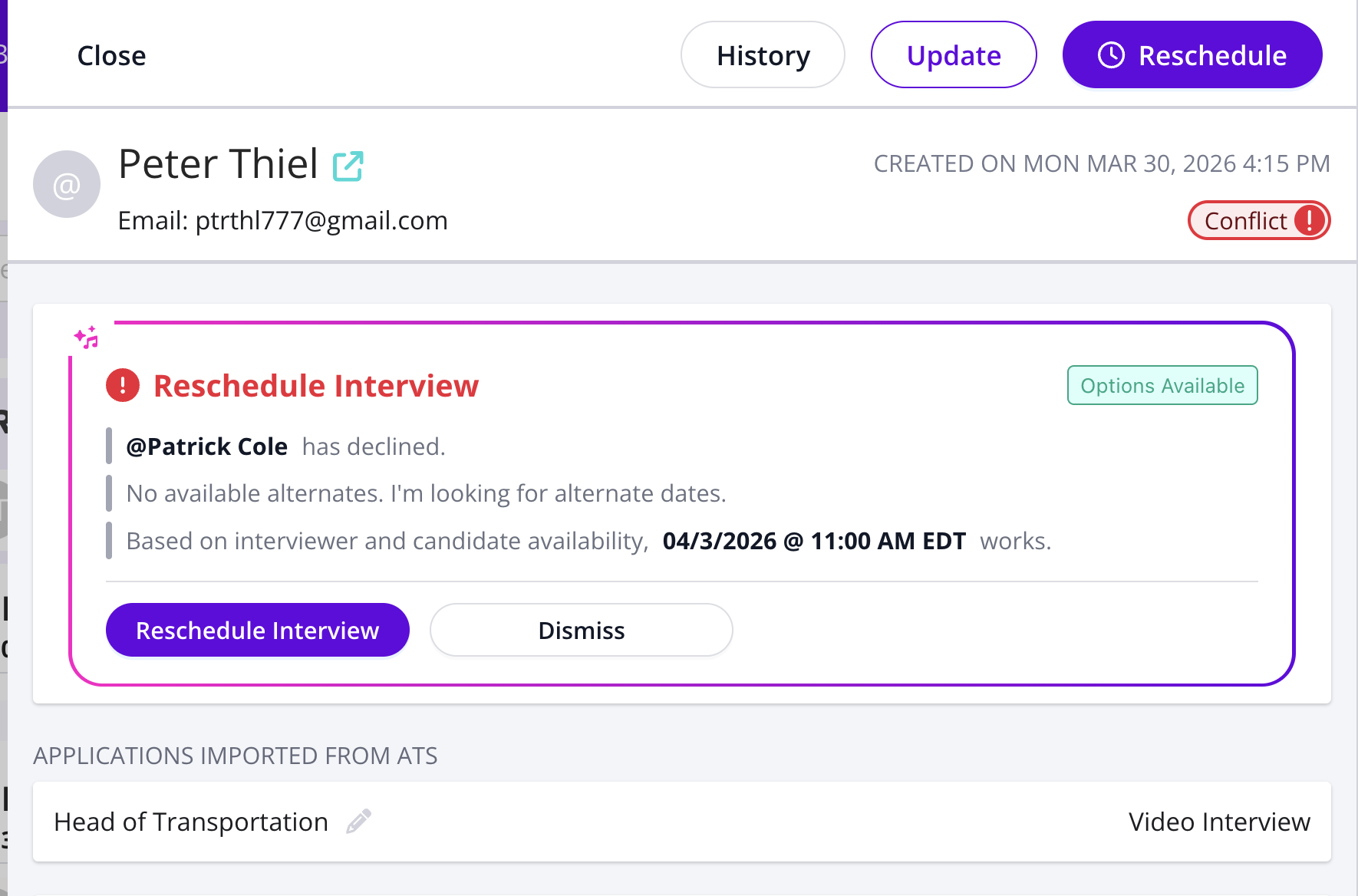
AI Recommendations in Scheduling Workflow

Get real-time recommendations directly inside the scheduling flow, so you can act instantly without switching context.

Why this is awesome: Resolve issues and take action faster with guidance exactly where you’re already working.

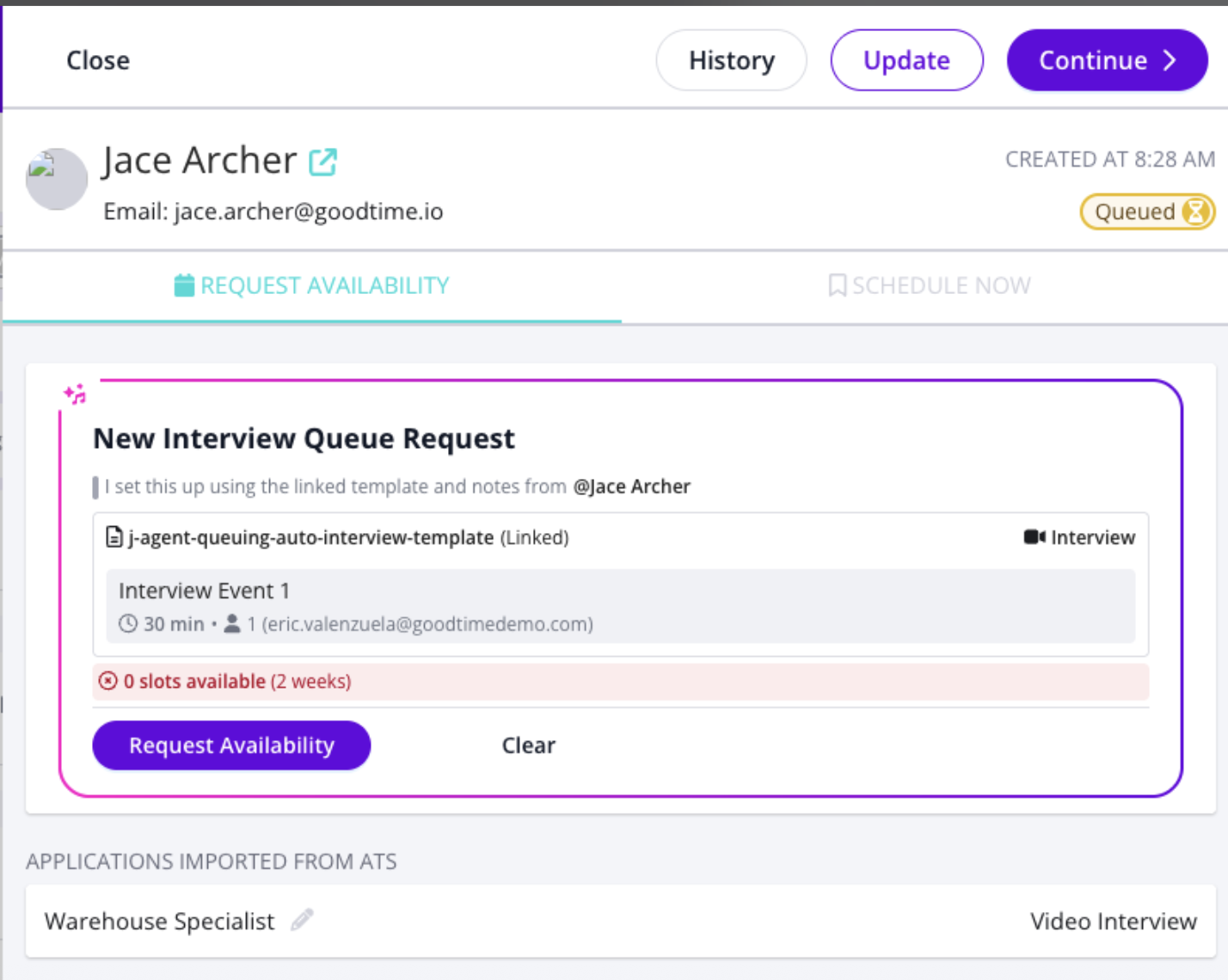
AI Interview Prep from Handoff Notes

Turn messy recruiter notes and scheduling requests into structured, ready-to-schedule interviews.

Why this is awesome: Eliminate manual cleanup and guesswork. Everything is prepared for you before you even start scheduling.

AI Scheduling from Queued Interviews

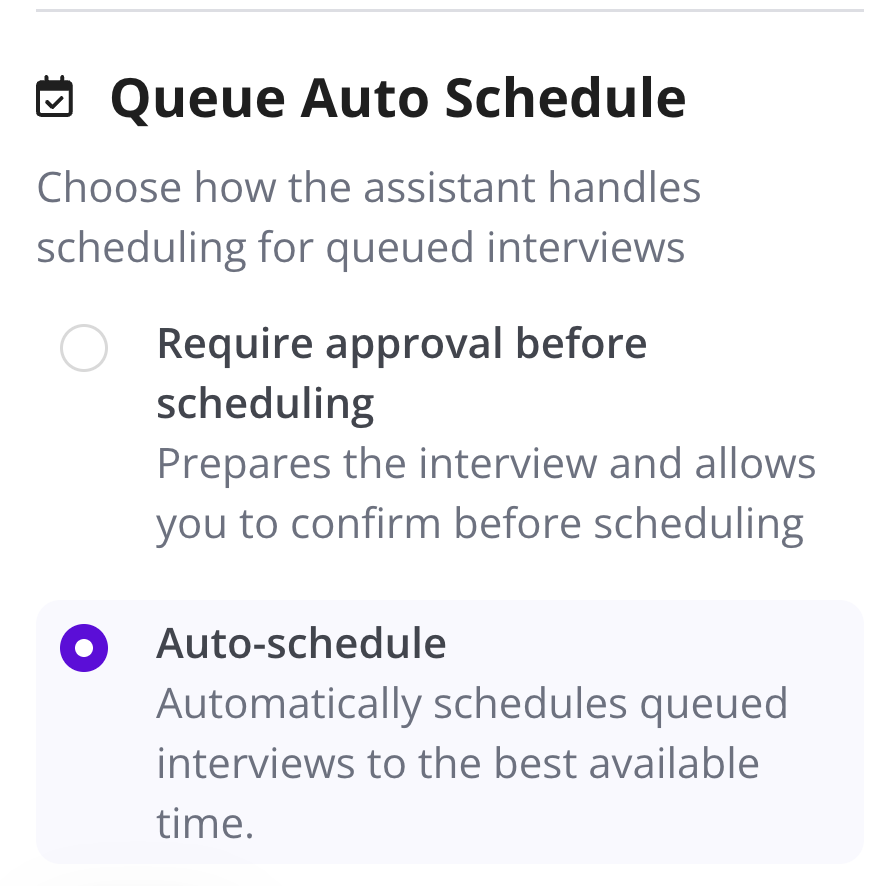
Automatically schedule low-risk, high-confidence interviews—no manual coordination required.

Why this is awesome: Go from queue -> confirmed in seconds, even when handoffs are incomplete or messy.

Start using the latest GoodTime features!

We want to help you evolve and take full advantage of the latest upgrades and improvements to our platform. Check out the GoodTime support center for tutorials and tips to help you stress less and get more done!

GoodTime Product Updates: What’s New from March 2026

March brought a focused set of product updates designed to give talent teams more control, better visibility, and smarter AI-driven coordination across the interview process. From enhanced interview logs and more flexible prep workflows to improved AI assistant rescheduling and greater transparency into AI actions, these updates are all about helping teams move faster — with more clarity and confidence.

Whether you’re tracking interview activity with deeper logs and communication visibility, standardizing interviewer and candidate prep through reusable templates, giving interviewers more control over how they’re notified, or relying on AI to intelligently reschedule interviews and clearly explain its decisions, these enhancements are built to reduce friction, increase trust, and keep hiring running smoothly.

Let’s dive into what’s new — and why it matters.

Watch the full March 2026 GoodTime product updates webinar or keep scrolling for highlights

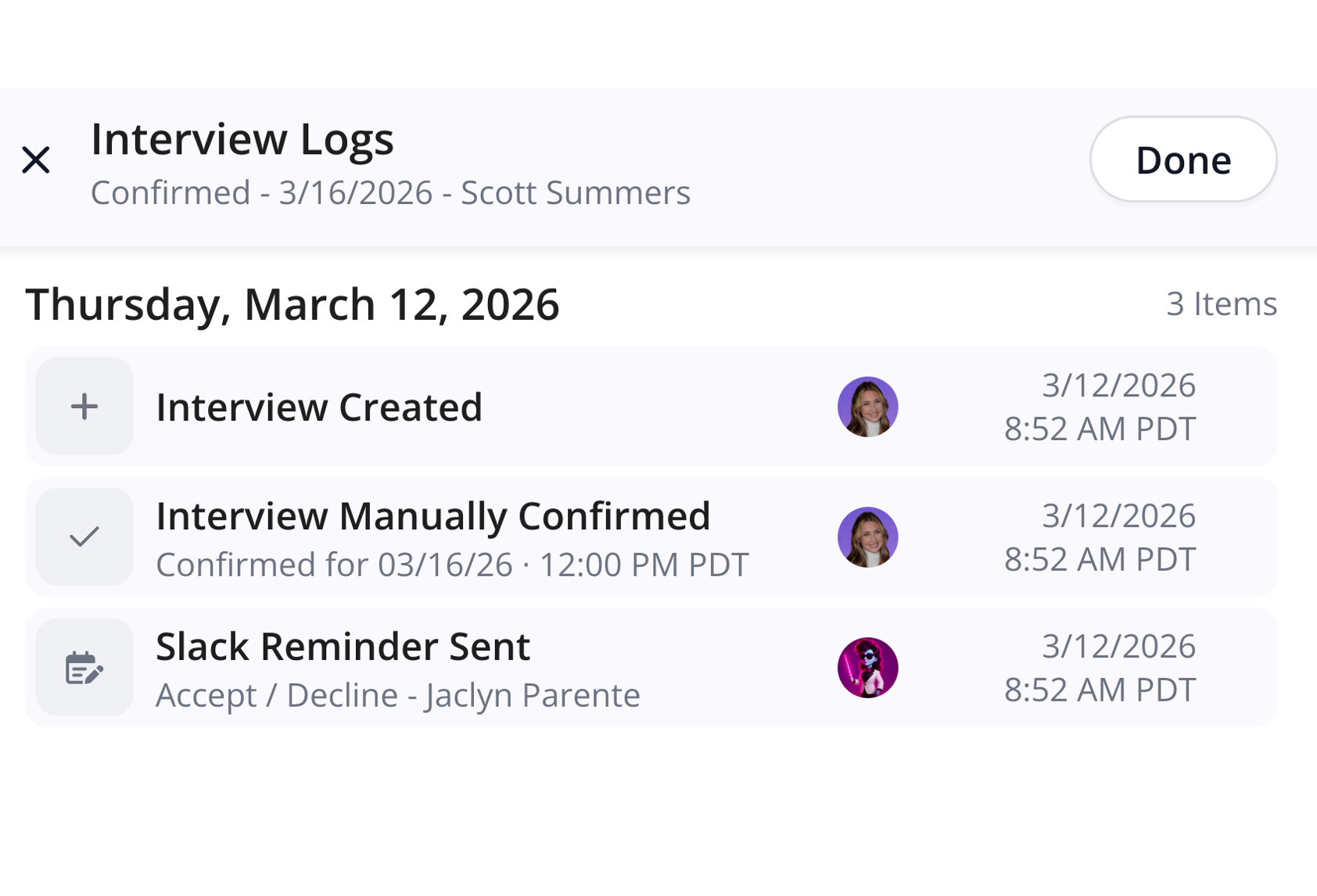
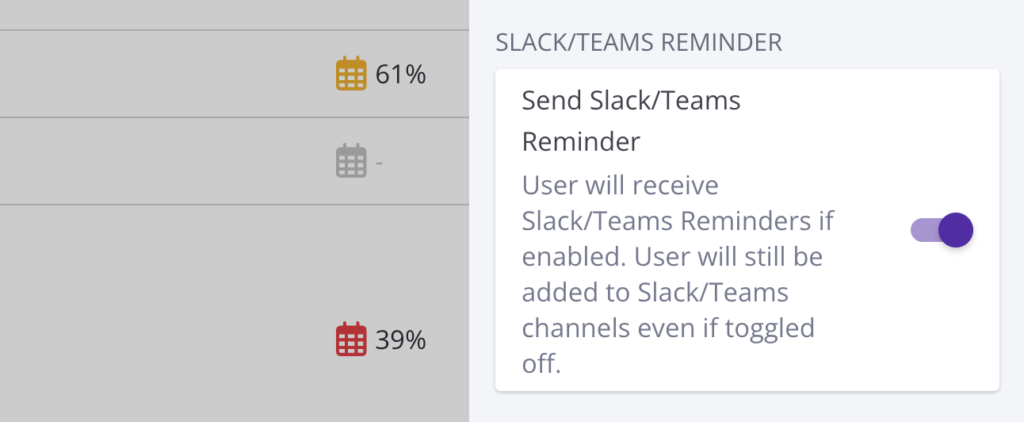
Chat Reminders in Interview Logs

Interview History has been enhanced to show logs of Slack & Teams reminders.

Why this is awesome: These logs help understand when and if interviewers have been reminded to add context on whether or not they have replied or the reminders are configured optimally for your interviews.

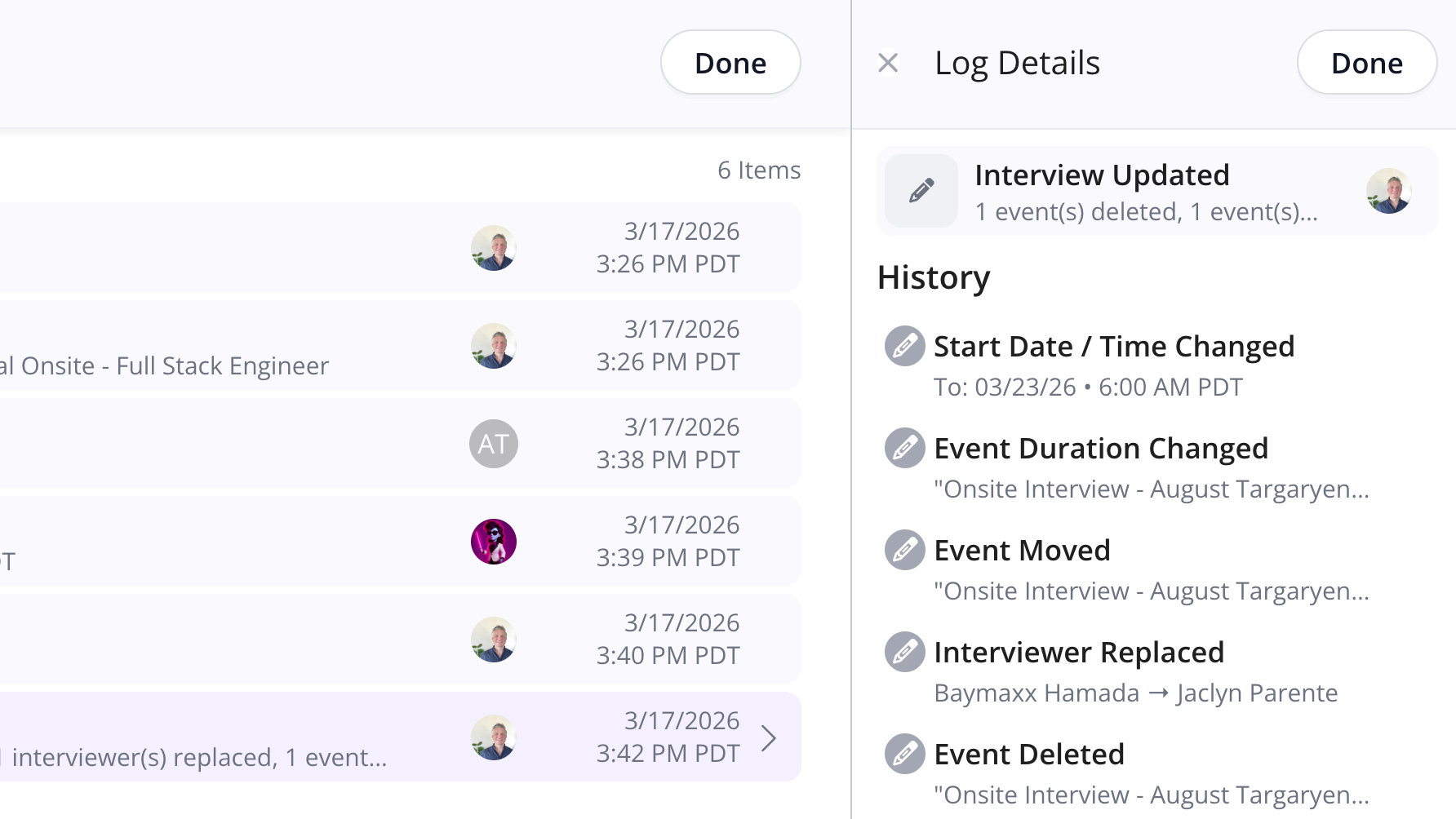
Additional Details for Interview Update Logs

Interview Logs now have an “Additional Details” drawer for Interview Updates that lays out the full details.

Why this is awesome: Interview updates can be comprehensive and many things can be changed at once. The additional details helps coordinators understand exactly what all the changes were and who made them, instantly.

Teams Chat Notification Settings

Whether or not to receive MS Teams Chat reminders can now be toggled on or off for individual users on the Company Teams page.

Why this is awesome: This allows for a more customized experience and lets your diligent interviewers who don’t need reminders opt out. It also makes it possible roll out chat reminders for just a part of your company.

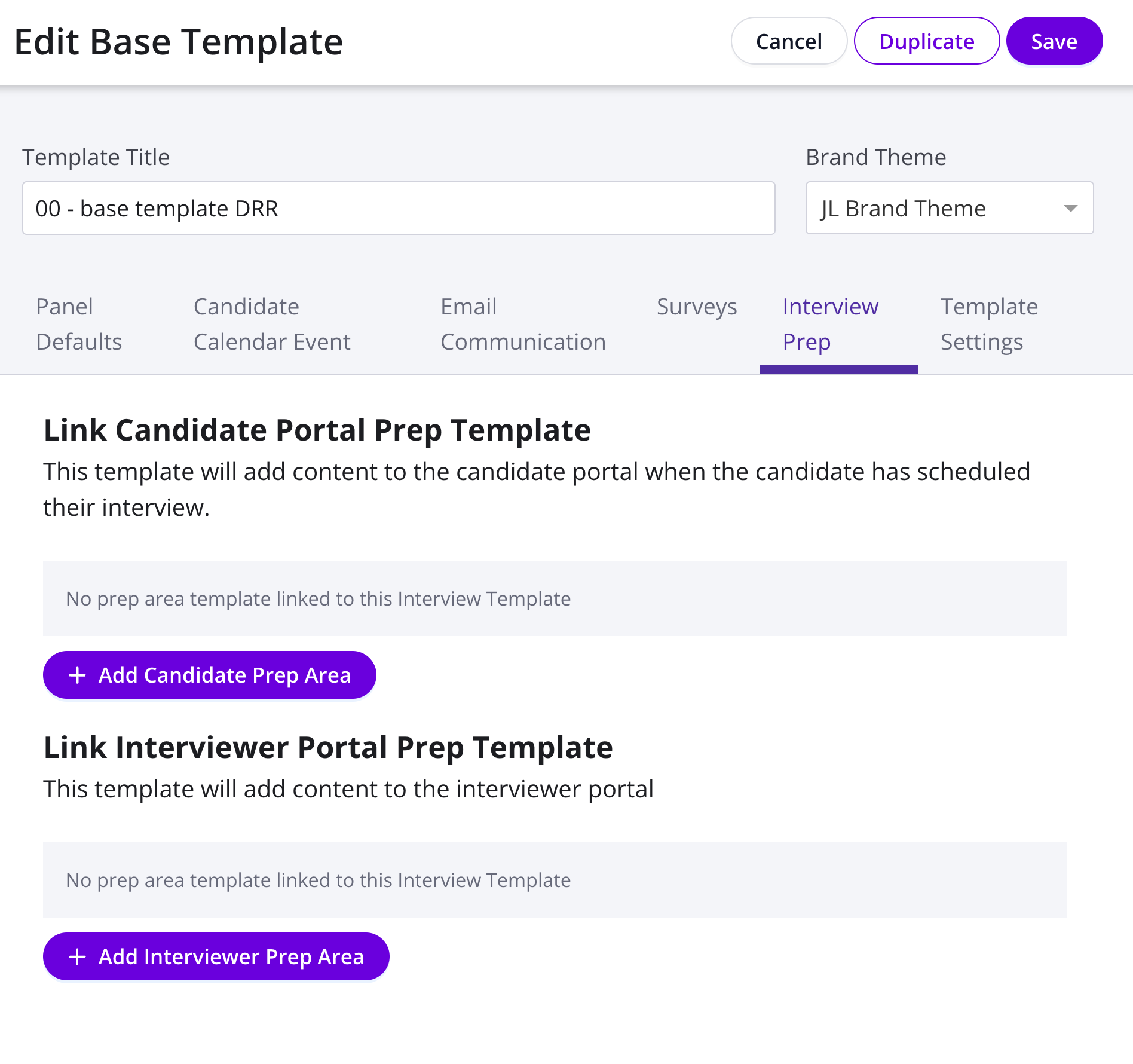
Interview Prep On Bases Templates

Interviewer & Candidate Prep forms can now be configured on the Base Template level.

Why this is awesome: This enables fast implementation of new prep forms on a truly large scale – Roll out new forms across your orgs in a matter of a few clicks!

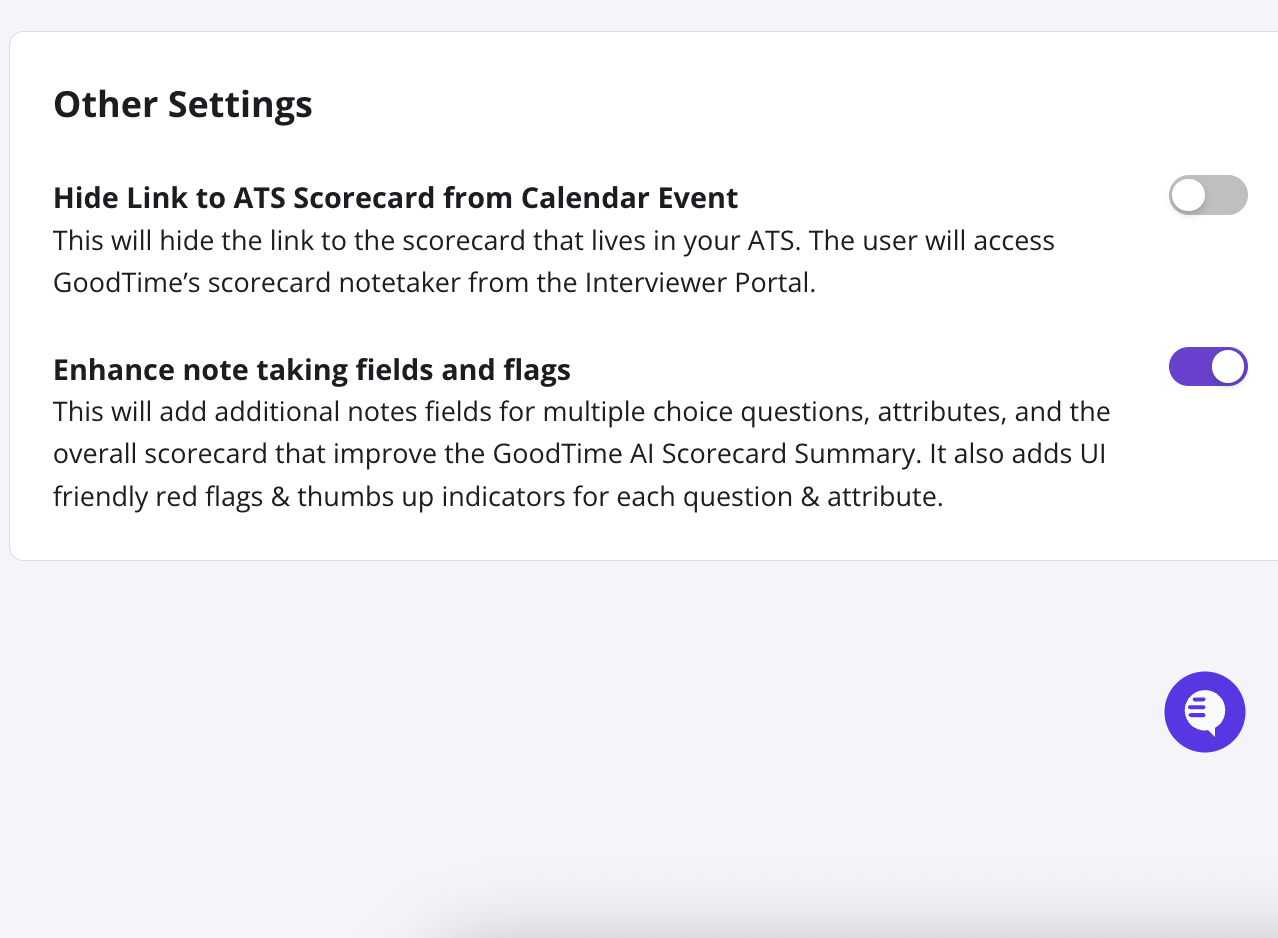
Enhanced Customization for Scorecard Integrations

A new toggle is now available for two-way scorecard integrations to control whether the Scorecard Notetaker has the enhanced note-taking fields and attributes or not.

Why this is awesome: This feature gives increased control so that you have the choice between enhancing note taking capabilities or matching the ATS experience closer than ever before.

Start using the latest GoodTime features!

We want to help you evolve and take full advantage of the latest upgrades and improvements to our platform. Check out the GoodTime support center for tutorials and tips to help you stress less and get more done!

GoodTime Product Updates: What’s New from February 2026

February brings a powerful new set of GoodTime product updates designed to give talent teams more transparency, automation, and control across the interview process. From detailed Interview Logs and smarter email handling to enhanced Assistant Hub capabilities that keep interviews on track, these updates focus on reducing manual work, preventing errors, and improving coordination at every step.

Whether you’re looking for clearer visibility into what’s happening behind the scenes of each interview, streamlining communication when plans change, automating template management, or quickly securing confirmed interviewer replacements in Slack, these enhancements are built to help hiring teams move faster — with fewer mistakes and a better experience for everyone involved.

Let’s dive into what’s new — and why it matters.

Watch the full February 2026 GoodTime product updates webinar or keep scrolling for highlights

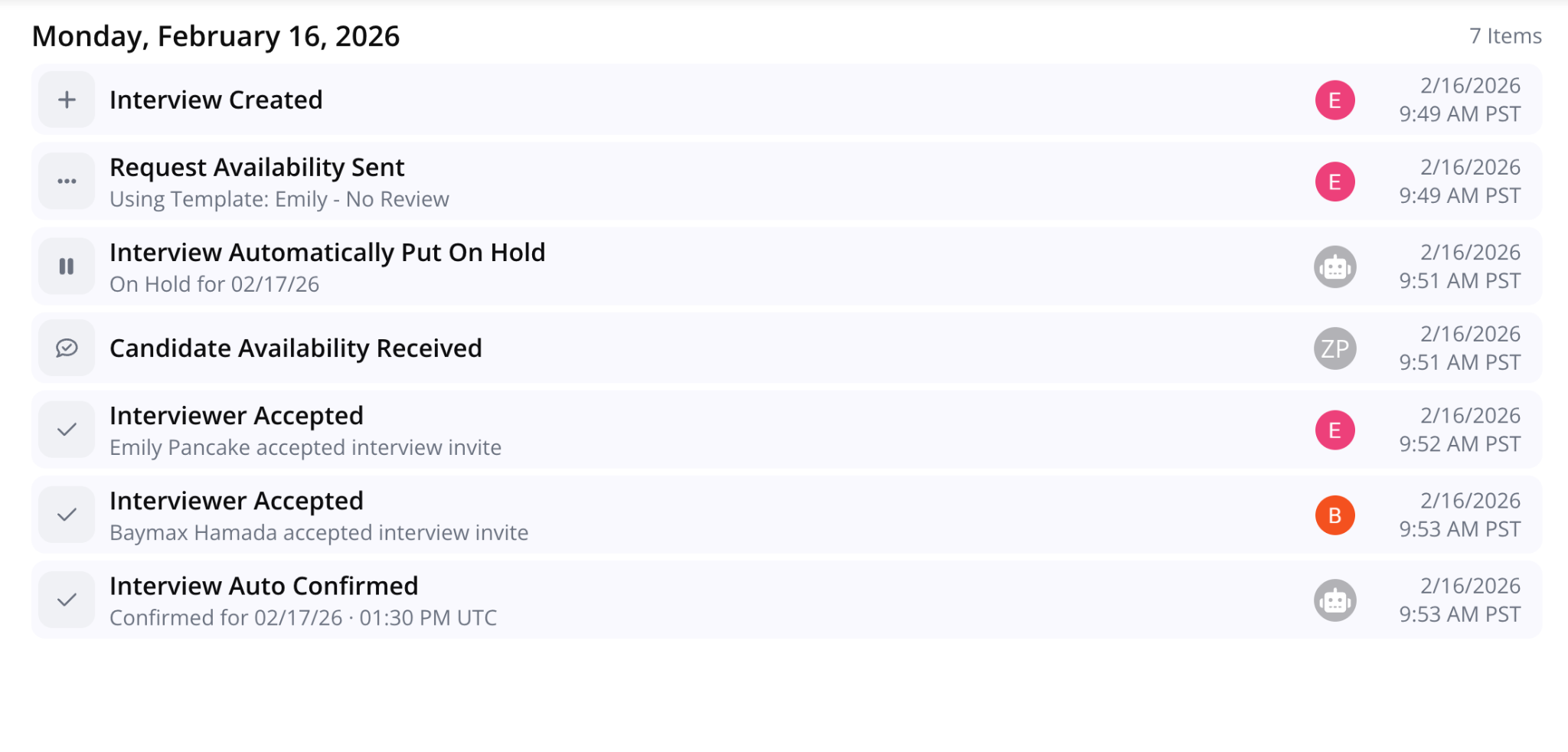
Interview Logs

GoodTime now provides detailed Interview Logs with each interview so you can enjoy full transparency in what happened as well as who did what & when!

Why this is awesome: Immediately understanding the journey of an interview allows things to move faster and reduces mistakes & confusion. The result is less work and a better experience for both interviewers and candidates.

“Hold” Email Type

Instead of making manual adjustments to confirmation email templates, you can now create and assign specific email templates for when interviews are put on hold, manually or automatically.

Why this is awesome: This new email type increases automation and reduces risk for errors.

Duplicate Base Template

The ability to duplicate interview templates has now been extended to base templates as well.

Why this is awesome: Auto-duplicating templates not only saves time but it also reduces the risk of mistakes being made when doing so manually.

Assistant Hub

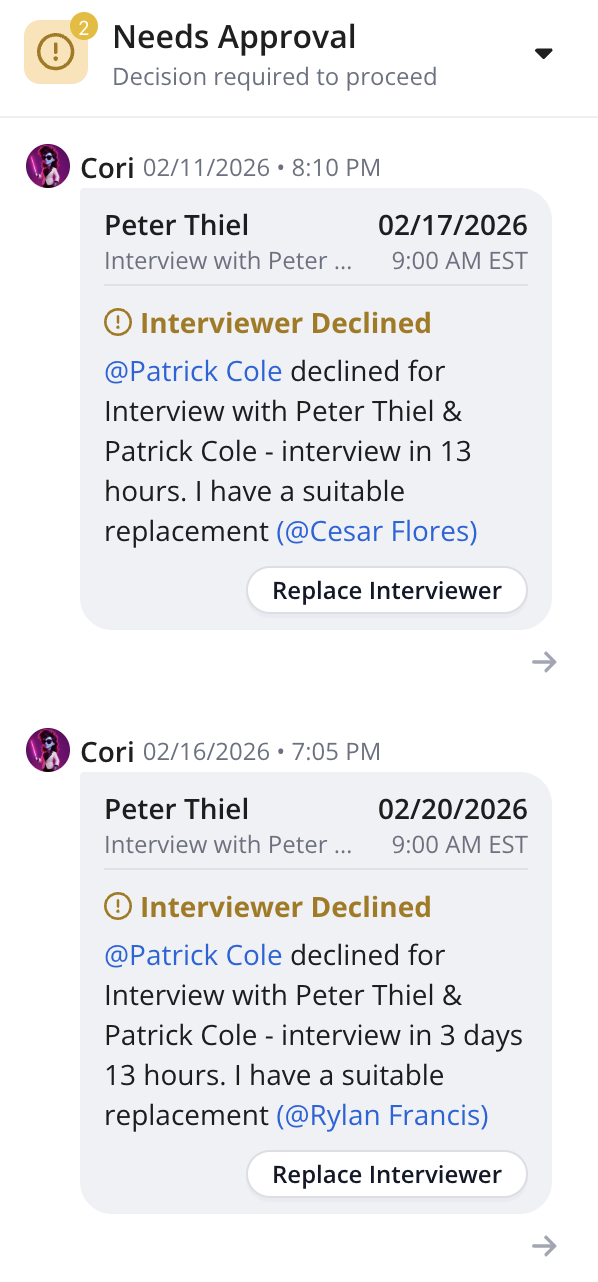
See everything GoodTime is handling in the background in one place. Items that need review or approval are surfaced at the top so you can quickly step in when needed.

Why this is awesome: You stay in control without having to chase activity, dig through emails, or monitor every workflow manually.

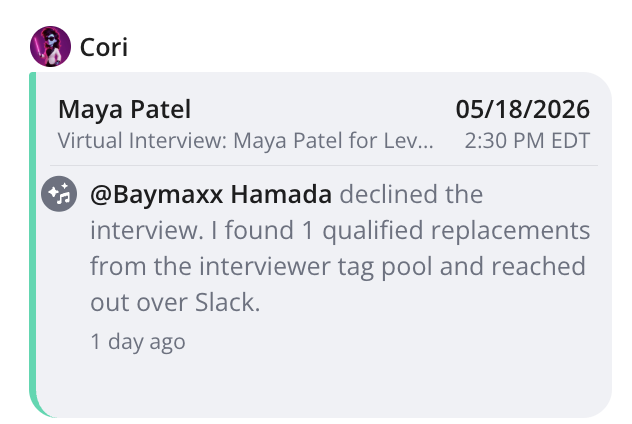
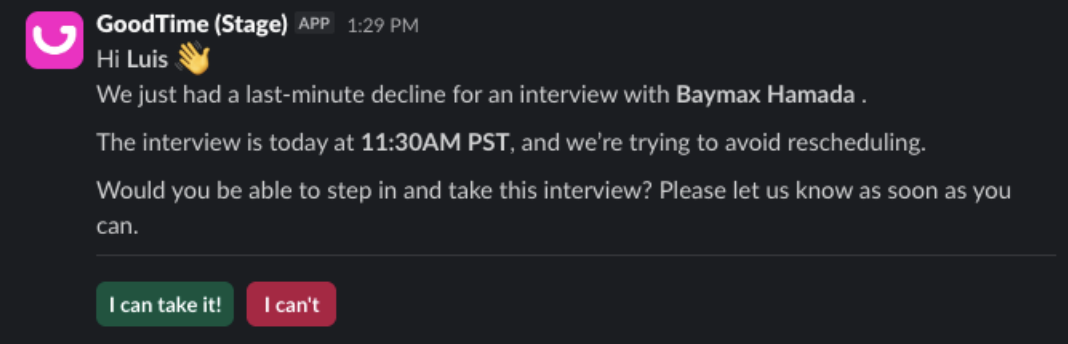
Identify and Automatically Replace Declined Interviewers

GoodTime now helps you quickly find the best replacement interviewer based on load limits, calendar availability, and interviewer pools — so interviews stay on track even when plans change.

Why this is awesome: Reduce last-minute scrambling and keep interviews moving forward with confident, data-driven replacements.

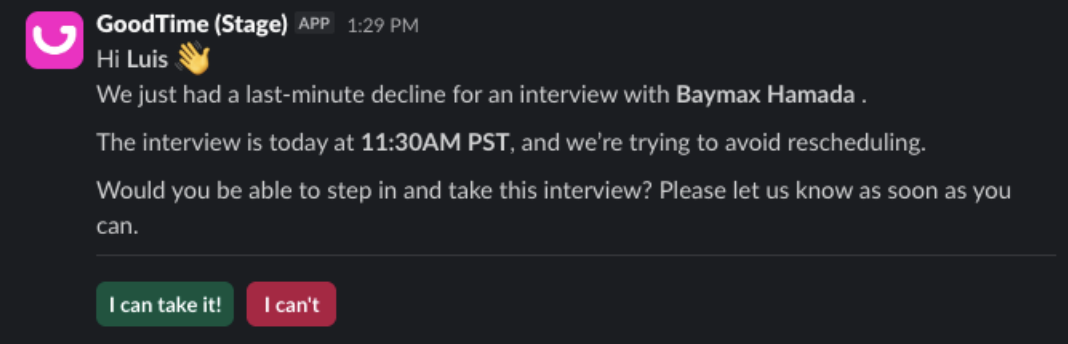
Confirm Availability with Interviewers Over Slack

GoodTime reaches out to potential replacement interviewers in Slack to confirm they can attend, then shares the response so you know swaps will stick.

Why this is awesome: No more guessing if replacements will accept, you get confirmation upfront and avoid unnecessary rescheduling.

Start using the latest GoodTime features!

We want to help you evolve and take full advantage of the latest upgrades and improvements to our platform. Check out the GoodTime support center for tutorials and tips to help you stress less and get more done!

5 Things Talent Leaders Need to Know in 2026: Insights from the Experts

If you’re a talent acquisition (TA) leader, you’ve probably felt the whiplash of the past few years. The hiring landscape has swung from frenzied job growth in 2021 to hiring freezes and layoffs in 2023—only to rebound yet again in 2024. Now, as we enter 2026, one thing is clear: recruiting has never been more complex.

So, what should TA leaders expect this year? To answer that, we turn to insights from GoodTime’s 2026 Hiring Insights Report and a discussion featuring Hung Lee, curator of Recruiting Brainfood; Ahryun Moon, CEO and Co-Founder of GoodTime; and Charles Mah, Chief Customer and Operations Officer at GoodTime. In their session, Unlocking Insights from Hiring Report, these experts broke down the biggest shifts in talent acquisition and what leaders must do to stay ahead.

“We’ve been speaking with companies investing in research because there’s a huge hunger in the market for benchmarking data,” said Hung Lee. “Everybody wants to be ‘data-driven,’ but the only data they have is their own. So, when GoodTime does a report like this, it gives TA leaders a real sense of where they stand—what’s working, what’s not, and what’s coming next.”

The findings? A massive surge in candidate volume, but fewer recruiters to manage the process. Hiring hesitation is slowing down decision-making. Interview scheduling remains a major bottleneck. And while AI is transforming talent acquisition, it’s not a magic fix.

In this article, we’ll break down the biggest trends TA leaders need to know in 2026—and share actionable insights from industry experts to help you navigate this new reality.

Unlock 2026’s top hiring strategies: Insights from 500+ TA leaders

Be the first to uncover deep hiring insights specific to your sector — straight from the highest-performing TA teams.

1. The state of hiring: More candidates, fewer resources

The job market has shifted dramatically, and TA leaders are feeling the pressure. Hiring demand is up, but so is candidate volume—and recruiting teams are struggling to keep up. Many companies downsized their TA functions over the past two years, leaving recruiters overwhelmed with applications.

“We’re seeing two forces collide right now: more candidates than ever applying for jobs, but fewer recruiters to handle the load,” said Charles Mah. “You used to post a job and get a few hundred applications. Now, some teams are dealing with thousands. It’s creating a bottleneck across every stage of hiring—sourcing, screening, scheduling, everything.”

While an influx of candidates might seem like a good problem to have, it’s actually slowing hiring down. Recruiters are drowning in applications, and the sheer volume makes it harder to identify top talent quickly. Worse yet, candidates expect faster responses than ever—if they don’t hear back promptly, they move on.

The companies that will thrive in 2026 are those that streamline their processes to handle high applicant volume without sacrificing efficiency. That means leveraging automation, setting clear hiring priorities, and ensuring recruiters can focus on engaging top candidates—not just processing applications.

2. The hiring process is slower—and that’s a problem

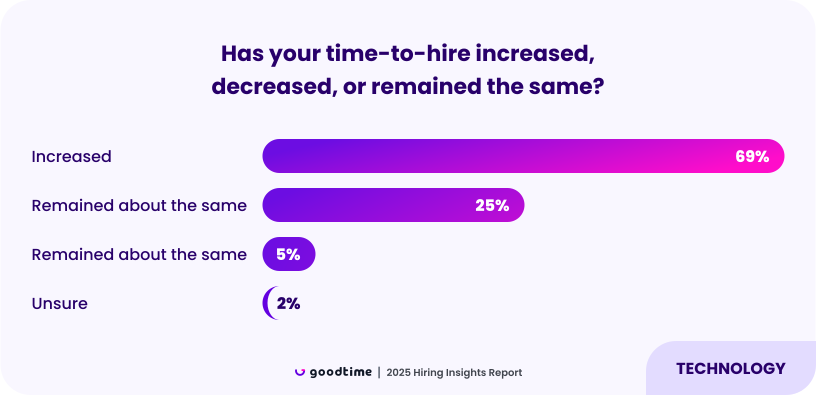
One of the most surprising trends from the 2026 Hiring Insights Report? Time-to-hire has increased significantly.

time to hire is on the rise

Instead of moving quickly on great candidates, many hiring managers are taking longer than ever to make decisions. They’re caught in what Hung Lee calls a “Tinder effect”—constantly waiting for a better candidate instead of committing to the strong ones already in the pipeline.

“It’s like Tinder for hiring—there’s always this feeling that a better candidate is just one more interview away,” Hung joked. “But the reality is, if someone meets the criteria and is a strong fit, you need to move. Otherwise, you’re just dragging out the process and missing out.”

This hesitation is costing companies top talent. Candidates aren’t waiting around. In a competitive job market, speed matters—if your process takes too long, the best candidates will accept offers elsewhere.

Ahryun Moon pointed out that this is a complete reversal from the hiring frenzy of the early 2020s:

“In 2021, companies were hiring like crazy—one interview and an offer was out. Now, it’s the opposite. Hiring managers are thinking, ‘What if someone better comes along?’ So, they wait. And then they wait some more. And by the time they’re ready to decide, their top candidate has already accepted another offer.”

To stay ahead, TA leaders must create urgency in the hiring process. That means setting clear expectations with hiring managers, ensuring faster decision-making, and using data to show when waiting too long is costing the company great hires.

3. Interview scheduling is still a top bottleneck

One of the most frustrating inefficiencies in hiring today? Scheduling interviews.

Despite advances in AI and automation, 43% of TA leaders still say scheduling is their biggest bottleneck. In many organizations, recruiters are spending 35% of their time just coordinating calendars.

Interview scheduling seems like it should be the simplest part of hiring, yet here we are in 2026, still dealing with back-and-forth emails just to find a time to meet,” said Charles Mah. “Recruiters should be spending time engaging with candidates—not chasing down hiring managers for availability.”

The problem? Many companies haven’t optimized their scheduling process. Instead of automating the process or setting predefined interview blocks, recruiters are still manually coordinating every single interview.

Ahryun Moon offered a simple fix:

“Companies need to get proactive about scheduling. Instead of chasing hiring managers for availability, set up dedicated interview blocks in advance. Tools like GoodTime can automate this, so interviews get scheduled instantly. It’s one of the easiest ways to speed up hiring.”

The takeaway? Eliminate manual scheduling as much as possible. Companies that have automated interview scheduling reduce time-to-hire by up to 50%, giving them a huge competitive advantage in today’s fast-moving job market.

4. Retaining top talent is harder than ever

For years, TA leaders have been focused on attracting talent. But in 2026, the biggest challenge isn’t just hiring—it’s keeping top performers.

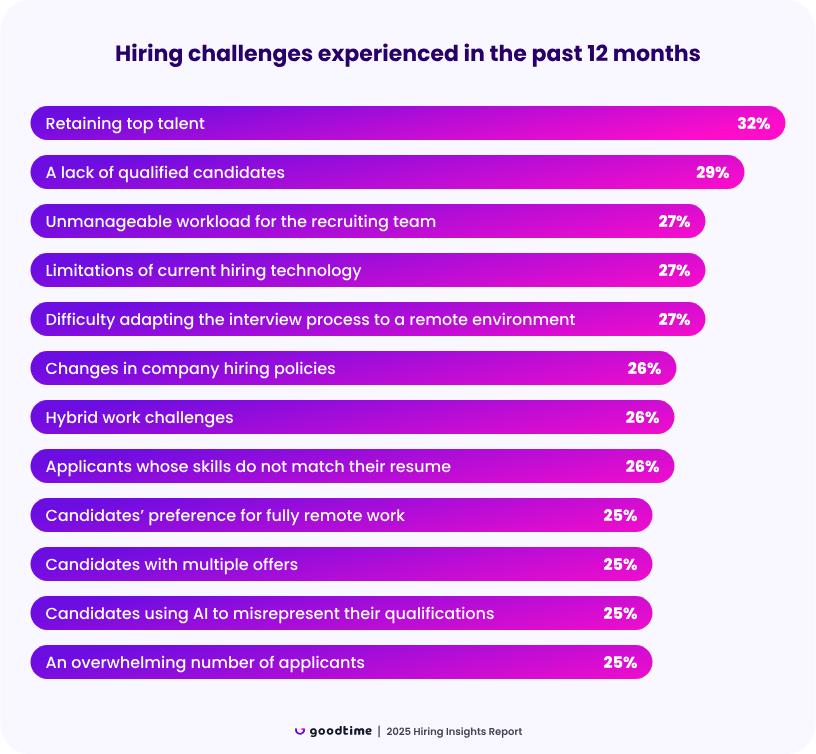
Top hiring challenges of 2025

According to the 2026 Hiring Insights Report, retention has overtaken hiring as the #1 concern for TA leaders. Even with an abundance of candidates in the market, companies are struggling to hold on to their best employees.

One reason? Layoffs over the past two years have shaken candidate trust in employers. Employees are no longer just looking for higher salaries; they want stability and long-term security.

“People used to jump jobs for bigger salaries, but now they’re thinking about stability,” said Ahryun Moon. “They’re asking, ‘Is this company going to be around in two years? Am I safe here?’ Employers need to show that they’re committed to their workforce if they want to keep their best people.”

At the same time, many companies downsized their TA teams in 2023 and 2024, leaving remaining employees overworked and disengaged. Without strong internal mobility programs or career growth opportunities, burnout is rising—and so is turnover.

To combat this, TA leaders need to work closely with HR and leadership, linking talent acquisition and retention to:

  • Prioritize internal mobility. Employees are less likely to leave if they see a clear path for career growth within their company.
  • Enhance the employee experience. From onboarding to ongoing engagement, companies need to build cultures that make employees want to stay.
  • Rebuild trust. If a company has gone through layoffs, it needs to actively communicate stability and future plans to reassure employees.

Simply put: Hiring great talent is only half the battle. Keeping them is what really counts.

5. AI in hiring: The hype versus reality

Artificial intelligence has transformed recruiting—but not in the way many expected.

In 2026, 99% of TA teams report using some form of AI. But while AI is great at automating repetitive tasks, it hasn’t replaced human recruiters—and it likely never will.

“There’s a lot of noise about AI in hiring, but the best tools aren’t the ones replacing recruiters,” said Hung Lee. “They’re the ones that make recruiters better. AI should be handling the admin work—scheduling, sorting resumes, sending follow-ups—so that TA teams can focus on what really matters: building relationships.”

The most successful companies are using AI to:

  • Automate interview scheduling to eliminate back-and-forth coordination.
  • Speed up resume screening to quickly identify top candidates.
  • Draft personalized outreach messages so recruiters can focus on engaging talent.

However, AI alone won’t fix broken hiring processes. Companies that rely too much on automation risk creating impersonal, frustrating candidate experiences.

Charles Mah emphasized the need for balance:

“AI should support recruiters, not replace them. Candidates still want human connection during the hiring process. The companies that are winning in 2026 are the ones using AI to eliminate admin work—so recruiters can spend more time actually talking to people.”

The key takeaway? AI is a powerful tool—but only when paired with a strong, human-centered hiring strategy.

Winning the talent war in 2026: Speed, strategy, and retention

As 2026 unfolds, one thing is clear: talent acquisition is no longer just about hiring—it’s about building a resilient, efficient, and adaptable workforce. The companies that succeed will be the ones that recognize hiring isn’t a pipeline problem, but a process problem.

The hiring landscape has fundamentally changed:

  • More candidates, but fewer recruiters means that talent teams must streamline their operations and embrace automation.
  • Longer hiring processes are driving candidates away, making speed a critical competitive advantage.
  • Interview scheduling remains an obstacle, but technology offers a clear solution—if companies are willing to implement it.
  • Retention has overtaken hiring as the #1 challenge, and companies must prioritize internal mobility and stability to keep their best employees.
  • AI is an essential tool—but not a replacement for human connection. The most effective companies are using AI to automate administrative tasks so recruiters can focus on relationships.

Companies that recognize these shifts and take decisive action will be the ones that attract, engage, and retain top talent. Those that cling to outdated processes—slow decision-making, manual scheduling, and lack of candidate engagement—will struggle to compete.

Final thoughts from Charles Mah:
“The companies that figure out how to balance AI, automation, and human relationships are the ones that will win the talent game. If you’re still scheduling interviews manually or waiting weeks to make hiring decisions, you’re already behind.”

The war for talent in 2026 isn’t about who has the biggest recruiting team or the most job postings. It’s about who can move the fastest, engage candidates meaningfully, and create a workplace where employees want to stay.

Talent acquisition leaders have a choice: adapt, optimize, and evolve—or get left behind.