Becoming a Data-Driven Recruiting Coordinator

When you think about the role of a recruiting coordinator, data might not be the first thing that comes to mind. Traditionally, this role has been viewed as largely administrative, focusing on scheduling interviews, managing logistics, and ensuring smooth communication between candidates and hiring teams. However, as the landscape of talent acquisition continues to evolve, so too does the role of the recruiting coordinator. Today, coordinators are increasingly expected to act as strategic partners in the hiring process, leveraging data to drive efficiency, improve processes, and ultimately, contribute to better hiring outcomes.

During our recent session, “The Data-driven Coordinator: Leveraging Insights for Process Improvement,” we explored how recruiting coordinators can transform their roles by embracing a data-driven mindset. This session highlighted that becoming data-driven isn’t just about crunching numbers—it’s about understanding what those numbers mean and using them to tell a compelling story that drives action.

In this article, we’ll dive into the key recruitment metrics that every coordinator should be tracking, explore how to utilize data to foster process improvements, and discuss actionable steps to help you start leveraging data in your role today. Whether you’re already a data enthusiast or just beginning to explore the potential of metrics, this guide will help you understand how to harness data to enhance your impact as a recruiting coordinator.
Unlock 2026’s top hiring strategies: Insights from 500+ TA leaders

Be the first to uncover deep hiring insights specific to your sector — straight from the highest-performing TA teams.

The evolving role of a recruiting coordinator

The role of a recruiting coordinator has significantly evolved over the years. No longer confined to the background, today’s coordinators are stepping into the spotlight as strategic partners in the hiring process. This transformation is driven by an increased focus on data and metrics, which provide valuable insights into recruitment processes, enabling coordinators to optimize their work and contribute more effectively to their teams.

Jennifer Walker, Global Recruiting Coordination Manager at Hubspot, emphasized this shift during the session, stating, “We’re not just the background singers. Things don’t get done without us, without the recruiting coordination function.” As the demands on talent acquisition teams grow, so too does the need for coordinators to move beyond administrative tasks and engage in more strategic activities that add value to the hiring process.

One of the most powerful ways recruiting coordinators can deepen their impact is by becoming data-driven. This means not only collecting data but also analyzing it to uncover trends, identify bottlenecks, and implement process improvements. By doing so, coordinators can ensure that every step of the recruitment process is as efficient and effective as possible, ultimately leading to a better candidate experience and more successful hires.

Walker highlighted the strategic importance of data in the coordinator role: “Once you figure out how many interviews or interviewers an RC can schedule in a month, then you can start tracking trends. You can predict how many RCs you will need, and then know when to ask for additional RC headcount, or just when to ask for help.” This proactive approach not only helps to manage workloads and model recruiter capacity, but also enables coordinators to act as advisors to their teams, guiding them on how to best allocate resources and time.

By leveraging data, recruiting coordinators can position themselves as key players in their organizations, driving both tactical execution and strategic decision-making. In the following sections, we will explore the key metrics every coordinator should track to maximize their impact and efficiency.

Key metrics every recruiting coordinator should track

To fully embrace a data-driven approach, recruiting coordinators need to focus on specific metrics that can provide actionable insights. Tracking these metrics not only helps coordinators manage their day-to-day responsibilities more effectively but also allows them to contribute to broader strategic goals within their organizations. Here are some of the most important metrics every recruiting coordinator should keep an eye on:

1. Scheduling volume

Understanding the number of interviews or interviewers scheduled over a particular period is a foundational metric for any recruiting coordinator. This metric helps gauge the workload and efficiency of the recruiting team. Walker shared her perspective on this during the session: “How many interviews or interviewers do you schedule on a weekly, monthly, quarterly basis? Some companies measure the number of interviews, but that doesn’t always capture the complexity. Sometimes it’s more about the number of interviewer calendars you’re navigating.”​

By tracking interview scheduling volume, coordinators can identify patterns in their workload, anticipate peak periods, and plan resources accordingly. This data can be crucial for capacity planning, allowing coordinators to make informed requests for additional support when needed.

2. Time to schedule

Another critical metric is the time it takes from when an interview request is received to when the interview is confirmed. This “time to schedule” metric, also known as turnaround time, is key to maintaining a positive candidate experience and ensuring efficiency in the recruitment process.

During the session, several speakers noted the importance of this metric in managing expectations with recruiters and hiring managers. Coordinators often have service level agreements (SLAs) around scheduling, such as confirming interviews within 24 to 48 hours. Keeping a close eye on this metric can help coordinators ensure they meet these SLAs consistently, which can significantly enhance their credibility and reliability.

3. Decline rates

Decline rates, or the frequency with which interviewers or candidates decline scheduled interviews, can significantly impact the recruiting process. High decline rates can lead to delays and a poor candidate experience. Walker emphasized this point by explaining, “High declines can also create a poor candidate experience. Have you had to switch out interviewers multiple times and so send multiple confirmations because your interviewers are declining so often?”​

Understanding why declines occur—whether due to interviewer availability, candidate disinterest, or scheduling conflicts—can help coordinators address these issues proactively. For instance, if declines are primarily due to interviewer availability, expanding the interviewer pool or adjusting scheduling times might be necessary.

4. Time from scheduled to completed interviews

The time between when an interview is scheduled and when it actually takes place is another crucial metric. This “lead time” can indicate how efficiently the recruitment process is moving forward. If interviews are frequently scheduled far in advance, it could signal a bottleneck that delays hiring decisions and increases the risk of losing candidates to competing offers.

Sejal Madhubhai, Customer Success Manager at GoodTime, pointed out the importance of using data to understand and mitigate these delays: “When things are placed on hold, it’s often because we’re chasing interviewers or trying to manage calendar conflicts. Using data to identify these patterns allows us to have more effective cross-departmental conversations and improve our processes.”​

By keeping track of these key metrics, recruiting coordinators can not only enhance their own efficiency but also contribute to more effective and streamlined hiring processes. In the next section, we will explore how to leverage these metrics to drive meaningful process improvements.

Utilizing data to drive process improvement

Tracking the right metrics is just the beginning. To truly make an impact, recruiting coordinators must learn how to use these metrics to drive process improvements. By identifying trends, uncovering bottlenecks, and communicating insights effectively to stakeholders, coordinators can optimize recruitment workflows and improve the overall efficiency of their teams.

Identifying bottlenecks and inefficiencies

One of the primary benefits of using data is the ability to pinpoint where delays and inefficiencies are occurring in the recruitment process. For example, if the data shows that the “time to schedule” is frequently exceeding SLAs, coordinators can investigate the root causes. Is it due to a lack of available interviewers, or are there specific times of the week when scheduling is more challenging?

During the session, Jennifer Walker highlighted the importance of using data to diagnose issues: Data doesn’t lie. If someone says it feels like all the interviews are taking a long time to get scheduled, you can pull data and actually show, ‘You’re correct; 70% of our interviews are being scheduled beyond SLA,’ or conversely, ‘95% of interviews are being scheduled within SLA.’”​

This kind of data-driven storytelling allows coordinators to present a clear picture of the current state and propose targeted solutions.

Data doesn’t lie. If someone says it feels like all the interviews are taking a long time to get scheduled, you can pull data and actually show, ‘You’re correct; 70% of our interviews are being scheduled beyond SLA,’ or conversely, ‘95% of interviews are being scheduled within SLA.

-Jennifer Walker, Global Recruiting Coordination Manager at Hubspot

Optimizing processes with actionable insights

Once bottlenecks are identified, the next step is to use this information to optimize processes. For example, if high decline rates are a recurring issue, a coordinator might suggest expanding the interviewer pool or implementing more flexible scheduling options. Sejal Madhubhai discussed how coordinators can use data insights to refine their processes: “If you’re seeing high lead times and high decline rates in the same department, this opens up a conversation about expanding interviewer pools or discussing calendar hygiene with team leads.”

Taking action based on these insights can lead to significant improvements in efficiency and candidate experience. By regularly reviewing data and making adjustments, coordinators can keep their processes agile and responsive to changing needs.

Communicating data insights effectively

For data to drive meaningful change, it needs to be communicated effectively to stakeholders. Recruiting coordinators should use data not only to understand their processes better but also to tell a compelling story that resonates with recruiters, hiring managers, and senior leadership.

As Lauren Rupert, Staff TA Project and Program Manager at Cruise, mentioned, “Even if it’s just introducing yourself, ask what data your partners care about. Get in the meeting. Introduce yourself.”​ Building strong relationships with stakeholders and understanding their pain points can help coordinators tailor their data insights to meet specific needs and drive buy-in for process improvements.

By framing data in terms of its impact on key objectives—such as reducing time to hire or improving candidate satisfaction—coordinators can make a stronger case for the changes they want to implement.

Prioritizing process improvements based on data

Not all process improvements are created equal. It’s essential to prioritize changes that will have the most significant impact with the least amount of effort. Using tools like a priority matrix, which plots potential improvements based on their effort and impact, can help coordinators focus on quick wins and strategic initiatives.

Incorporating data into decision-making allows recruiting coordinators to move beyond gut feeling and intuition, instead relying on evidence to drive their strategies. This not only enhances their credibility but also helps to ensure that resources are used effectively.

By leveraging data to identify, optimize, and communicate effectively, recruiting coordinators can play a pivotal role in enhancing recruitment strategies and outcomes. In the next section, we will look at specific tools and techniques that can help coordinators become more data-driven.

Tools and techniques for becoming data-driven

To truly harness the power of data, recruiting coordinators need the right tools and techniques to track, analyze, and apply insights effectively. Becoming data-driven isn’t just about collecting data; it’s about using it strategically to make informed decisions that improve recruitment outcomes. Here are some essential tools and methods that can help recruiting coordinators leverage data more effectively in their roles:

1. Leveraging data dashboards and reports

Data dashboards are one of the most powerful tools for recruiting coordinators. They offer a visual representation of key metrics, making it easier to spot trends and anomalies at a glance. Tools like GoodTime’s Insights tab provide comprehensive dashboards that track various aspects of the recruiting process, from scheduling volume to decline rates and turnaround times.

Sejal Madhubhai provided a practical example of how these dashboards can be used: “We have both recruiter and interviewer leaderboards. I think the RC board is great for capacity planning, but it’s also great for celebrating those wins. Like, who’s the top scheduler for last month? It’s always fun to have that healthy internal competition.”​

Recruiting coordinator metrics - turnaround time
GoodTime lets you see your key recruitment metrics — along with industry benchmarks — in one convenient dashboard.

Using dashboards not only helps coordinators stay on top of their metrics but also allows them to communicate insights to their teams and leadership more effectively. Regularly reviewing these reports can help coordinators make data-driven adjustments to their processes in real time.

The same data-driven mindset extends past hiring into ongoing performance. Employee turnover rate measures how often employees leave the company and need to be replaced within a specific period, and pairing it with analytics software for employee management like Intelogos helps close the loop between a great hire and one that lasts.

2. Implementing advanced scheduling tools

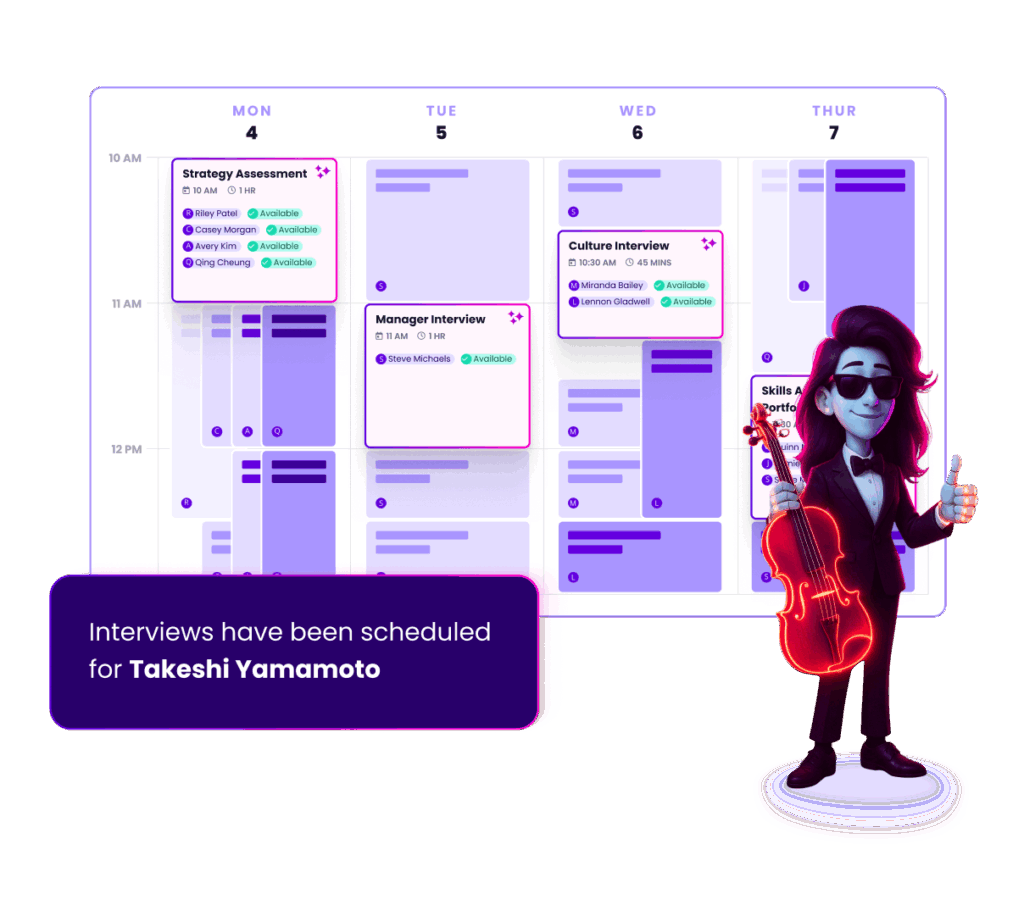
Advanced interview scheduling tools can automate many of the time-consuming tasks associated with coordinating interviews, freeing up time for recruiting coordinators to focus on more strategic activities. Features like automated scheduling, calendar integrations, and AI-driven matching can significantly reduce the time to schedule interviews and decrease the likelihood of conflicts or declines.

Ellie Harvey mentioned how even if teams aren’t using GoodTime, there are still plenty of ways to track and utilize metrics effectively: “Even if you aren’t a GoodTime customer, you’re still probably tracking this data somewhere, whether it’s your ATS or spreadsheets somewhere.”

The key is to find tools that integrate well with existing systems and workflows, ensuring that data collection is seamless and insights are easy to access.

Upgrade your hiring journey with AI

GoodTime’s AI agents orchestrate the entire hiring journey — screening, scheduling, messaging, and more — so talent teams hire faster with a better candidate experience.
3. Building customized reports and analytics

Beyond standard dashboards, customized reports can provide deeper insights tailored to the specific needs of a recruiting team. By focusing on particular metrics that are most relevant to current goals—such as improving time to hire or reducing decline rates—coordinators can develop reports that offer a more nuanced view of their recruitment processes.

These customized analytics can help pinpoint where to focus efforts for improvement. For example, if a department consistently has high decline rates, a customized report could break down the reasons behind these declines, helping coordinators devise targeted strategies to address the issue.

4. Utilizing feedback tools for continuous improvement

Feedback is a crucial component of becoming data-driven. Coordinators should regularly seek feedback from both candidates and hiring teams to gain a better understanding of the recruitment experience and identify areas for improvement. Tools that offer candidate experience surveys or interviewer feedback loops can provide valuable qualitative data that complements quantitative metrics.

As Jennifer Walker emphasized during the session, recognizing and acting on feedback is essential: “If you have an interviewer with a super low decline rate, shout them out. Call them out in a group chat or in Slack. It helps reinforce that positive behavior.”​

By integrating feedback into regular data reviews, coordinators can ensure they are continuously refining their processes and driving better outcomes.

5. Establishing data-driven partnerships with stakeholders

Being data-driven is not just about having the right tools; it’s also about fostering a culture of data use among all stakeholders. Recruiting coordinators should work closely with recruiters, hiring managers, and other team members to share insights and collaborate on process improvements.

Building these partnerships can help ensure that data is being used effectively across the recruitment process. Coordinators should aim to become trusted advisors who can provide data-backed recommendations to support decision-making and improve overall team performance.

By implementing these tools and techniques, recruiting coordinators can maximize the value of the data they collect and transform it into actionable insights that drive meaningful improvements in their recruitment processes. In the next section, we will discuss common challenges coordinators face when becoming data-driven and strategies for overcoming these obstacles.

Embracing data to elevate your impact as a recruiting coordinator

Becoming a data-driven recruiting coordinator isn’t just about crunching numbers — it’s about using those numbers to make smarter decisions, improve processes, and add strategic value to your team. By focusing on key metrics like scheduling volume, time to schedule, decline rates, and lead times, you can uncover actionable insights that enhance both efficiency and candidate experience.

Leveraging data helps you transition from a behind-the-scenes role to a key player in the recruitment process, driving meaningful change and improving hiring outcomes.

Start by adopting the right tools and building strong relationships with your team. Use data to tell compelling stories that lead to actionable improvements. Remember, each data point is a stepping stone toward more efficient processes and better recruitment outcomes. By embracing a data-driven mindset, you position yourself not just as a coordinator, but as a strategic leader who is essential to your organization’s success.

Building a Winning Talent Acquisition Strategy

The last year and a half has been quite the rollercoaster for talent acquisition teams around the world. Widespread layoffs, hiring freezes, limited resources, shifting remote work paradigms, and economic uncertainty have all contributed to an exceptionally challenging hiring environment. When combined with a globalized market and a rapidly growing demand for tech workers with specialized skill sets, it’s no surprise that many businesses are having a hard time finding the right talent. We found that 41% of talent acquisition leaders reported a more competitive hiring landscape and nearly a quarter stated that they struggled to find qualified candidates.

As the job market continues to tighten, with projections showing a significant talent shortage by 2030, a well-crafted talent acquisition strategy is a necessity. Below, we’ll cover everything from employer branding and talent pipeline development to leveraging the latest recruitment technology in order to help you build a winning talent acquisition strategy.

Unlock 2026’s top hiring strategies: Insights from 500+ TA leaders

Be the first to uncover deep hiring insights specific to your sector — straight from the highest-performing TA teams.

Understanding talent acquisition

Ever wonder why some companies always seem to have the right people at the right time? The secret is knowing the difference between talent acquisition and recruitment. While they might sound like buzzwords, they actually serve unique purposes in building a successful team.

Think of recruitment as a quick fix — it’s about filling immediate job openings fast when you need someone ASAP. It’s a speedy process focused on checking boxes and getting someone onboard quickly. Recruitment is great for urgent needs but not ideal if you’re looking at the bigger picture.

Talent acquisition is where strategy meets foresight. It’s not just about meeting today’s needs but looking ahead to tomorrow’s challenges. Charles Mah, Chief Customer & Operations Officer at GoodTime, emphasizes that “taking a ‘success’ mindset means adopting a business-first approach to talent acquisition and elevating the value talent acquisition offers.” 

By strategically building a talent pipeline and keeping in touch with potential candidates, companies can align hiring processes with broader business goals. This proactive approach means that when a key role opens up, you’re not just searching — you’re choosing from a curated list of top-tier talent already connected with your brand.

This is particularly important for industries and roles that require highly specialized skills, where the right talent might not be readily available when a position opens up. As Mah puts it, “Talent Acquisition is akin to customer success. It’s about ensuring the business grows by hiring the right talent and providing the best experience to retain every candidate they engage with because they are likely future hires or customers.”

Key benefits of a strategic approach

Implementing a strategic talent acquisition strategy offers numerous benefits that go beyond simply filling open positions. Some key advantages include:

  • Increased retention: By finding and hiring candidates who are a good fit for your organization’s culture and values, there is a higher chance of retaining them long-term. This reduces turnover costs and improves overall employee satisfaction.
  • Better quality hires: Strategic talent acquisition involves thorough screening and evaluation processes to find the most qualified candidates. This results in better quality hires who can bring more relevant skills and experience to your company.
  • Reduced costs and time-to-hire: While building a talent pipeline requires upfront investment, it leads to significant cost savings over time. With a pre-vetted pool of candidates, the recruitment process becomes faster and less resource-intensive, reducing the need for expensive external recruitment services or prolonged vacancies.
  • Improved employer branding: The focus on building relationships and engaging with potential candidates can greatly improve an organization’s employer brand. By showcasing a commitment to employee growth and development, as well as offering competitive compensation and benefits packages, your organization will attract top talent who are looking for more than just a job.
  • Adaptability to changing needs: A strategic talent acquisition strategy allows companies to anticipate future needs and proactively develop their workforce accordingly. This can provide a unique competitive advantage, as companies with a strong talent pipeline can quickly adapt to changing market conditions and business needs.

Steps to develop a talent acquisition strategy

There is no one-size-fits-all approach to developing a talent acquisition strategy. However, there are certain key steps that can help guide the creation of an effective and adaptable plan. Whether you’re just beginning to build a talent pipeline or looking to refine an established process, consider these foundational elements.

Workforce planning and forecasting

Workforce planning and forecasting are the bedrock of any successful talent acquisition strategy. This process involves assessing your current workforce, identifying skills gaps, analyzing market trends, and predicting future staffing needs based on business objectives.

You want to look ahead and ask, “What skills will we need in six months, a year, or even five years?” By taking this proactive approach, you can avoid the pitfalls of reactive hiring and make sure that your organization has the right talent in place to drive future growth.

Workforce planning should be an inherently collaborative process that gathers input from a wide variety of stakeholders, including department heads, HR, executive leadership, boots-on-the-ground employees, and even industry experts. Together, you’ll consider the external trends, internal talent capabilities, and organizational growth projections to create a clear roadmap for your talent acquisition strategy.

Additional factors to consider include:

  • Projected employee turnover rates
  • Anticipated growth or decline in certain areas of the business
  • Upcoming retirement or promotion of key employees
  • Changes in technology and skills required for future job roles
  • Diversity and inclusion goals
  • Budget constraints and cost-saving measures

Crafting effective job descriptions

Even as talent operations move into an era of automation and data-driven decision-making, the humble job description remains just as important as ever. After all, it’s often the first impression a candidate has of your organization and can play a major role in attracting top talent.

Truly effective job descriptions go beyond mere lists of qualifications and responsibilities. They tell a story about the role and your company — one that resonates with the right candidates and clearly communicates the value they’ll bring to your team.

Try to write a job description that is concise yet comprehensive, detailing the key responsibilities and required qualifications while also highlighting the unique aspects of the role and your organization. By emphasizing opportunities for growth, company culture, and the impact of the role, you’ll attract candidates who are not only qualified but also motivated to contribute to your organization’s success.

Remember to also use inclusive language and avoid any unconscious biases that may turn off potential candidates. The last thing you want is to limit your talent pool by unintentionally excluding qualified individuals.

Finally, don’t be afraid to get creative. Past research from CareerBuilder has shown that job postings with video get 12% more views and 34% higher application rates than those without. Including visuals and multimedia can bring your job description to life while helping you to stand out in a sea of generic postings.

Building talent pipelines

Most talent acquisition activities circle back to one thing: building robust talent pipelines. While the term talent pool refers to a static list of potential candidates, talent pipelines are dynamic, ongoing processes that involve nurturing and engaging with potential candidates until they are ready to fill a role. This includes not only active job seekers but also passive candidates who may not be currently searching for a new position but could be open to the right opportunity.

To source candidates effectively, go beyond job boards and tap into social media networks, industry conferences, and partnerships with universities and professional organizations. By diversifying your candidate sourcing channels, you’ll widen your reach and connect with a broader range of potential candidates. Internal promotions and employee referrals are also valuable sources of talent, as they can bring in candidates who are already familiar with your organization’s values and culture.

Once you’ve identified potential candidates, focus on building relationships and maintaining communication through various touchpoints. This could include sending out regular newsletters or updates, hosting open houses, inviting potential candidates to networking events, or even personalized check-ins. The goal is to keep these individuals engaged and interested in your organization so that when a suitable opportunity arises, they will be more likely to apply.

Incorporating feedback from both candidates and hiring managers can also help improve your talent pipeline by pinpointing areas in need of adjustment. Gather feedback from hiring managers on the quality of candidates as well as any common pain points in the recruitment funnel. Similarly, ask candidates for their thoughts on the application process, interview experience, and overall impression of your organization.

GoodTime’s Candidate Pulse feature can be invaluable here, as it captures candid, role-specific feedback from your candidates via highly configurable surveys throughout the interview process.

Upgrade your hiring journey with AI

GoodTime’s AI agents orchestrate the entire hiring journey — screening, scheduling, messaging, and more — so talent teams hire faster with a better candidate experience.

Enhancing employer branding

Another important aspect of talent acquisition is the cultivation of a positive employer brand. Candidates are looking for more than just a paycheck. They want to work for organizations that align with their values, offer opportunities for growth and development, and have a positive reputation in the industry. Think of employer branding as both a reflection of your company’s core ethos and a promise to future employees about what they can expect.

To build a compelling brand, start with a clear understanding of what makes your organization unique. This includes your company culture, the opportunities for growth you offer, and your commitment to diversity and inclusion in hiring. Use these elements to craft a brand narrative that will resonate with your target candidates.

Leverage multiple channels to communicate your brand, including social media, employee advocacy programs, and industry events. Engaging content like behind-the-scenes videos, day-in-the-life stories, and employee testimonials can bring your brand to life.

Remember, consistency is key — ensure that your messaging aligns across all touchpoints, from job descriptions to onboarding materials. Candidates are savvy and can easily see through superficial attempts at branding. Instead, focus on highlighting your company’s true strengths and highlighting real employee experiences.

Streamlining the selection process

An effective selection process is essential for maintaining momentum in talent acquisition. A lengthy or disorganized hiring strategy can turn off candidates and lead to losing out on qualified applicants.

Start by simplifying your job application process — make it easy for candidates to apply by minimizing the steps required and avoiding lengthy, repetitive forms. Standardize your screening process by establishing clear criteria for each role and using consistent evaluation methods (i.e., skills assessments, structured interviews, and diverse interview panels).

Next, establish clear timelines and communicate regularly with candidates to keep them engaged and informed about their status in the process. This shows respect for their time and increases the likelihood of a positive candidate experience.

Proper utilization of your technology stack will also go a long way in maintaining a smooth and efficient process. Applicant tracking systems (ATS) can help you efficiently screen resumes, track candidate progress, and identify top talent, while automated interview scheduling platforms, like GoodTime, can help streamline the scheduling process and eliminate back-and-forth communication. Ideally, these tools should eliminate tedious manual and administrative tasks, giving your talent operations team more time to focus on building relationships with candidates and making informed hiring decisions.

Best practices for hiring and onboarding

So you’ve successfully attracted a pool of qualified candidates and have chosen the top candidate for the job. Congratulations! But the hiring process is not over yet. Now it’s time to focus on onboarding your new hire and setting them up for success in their new role.

Effective onboarding should focus on integrating new hires into the company culture and setting them up for long-term success. Begin with a well-organized orientation program that familiarizes new employees with company values, expectations, and resources. Pair them with mentors or buddies who can guide them through the initial stages and answer any questions they may have.

Regular follow-ups during the onboarding period are crucial. These check-ins provide an opportunity to address any issues, clarify expectations, provide feedback, and offer additional support where needed. Additionally, you may want to consider extending the onboarding process beyond the initial few weeks to include continuous learning and development opportunities. This long-term approach will not only boost employee satisfaction and retention but also foster a culture of continuous growth and improvement within the organization.

Best practices in talent acquisition

As mentioned above, talent acquisition is not a singular event. It is a continuous business activity that requires constant attention and improvement. The following are some best practices to keep in mind when it comes to refining and optimizing your talent acquisition process.

Leveraging technology and data

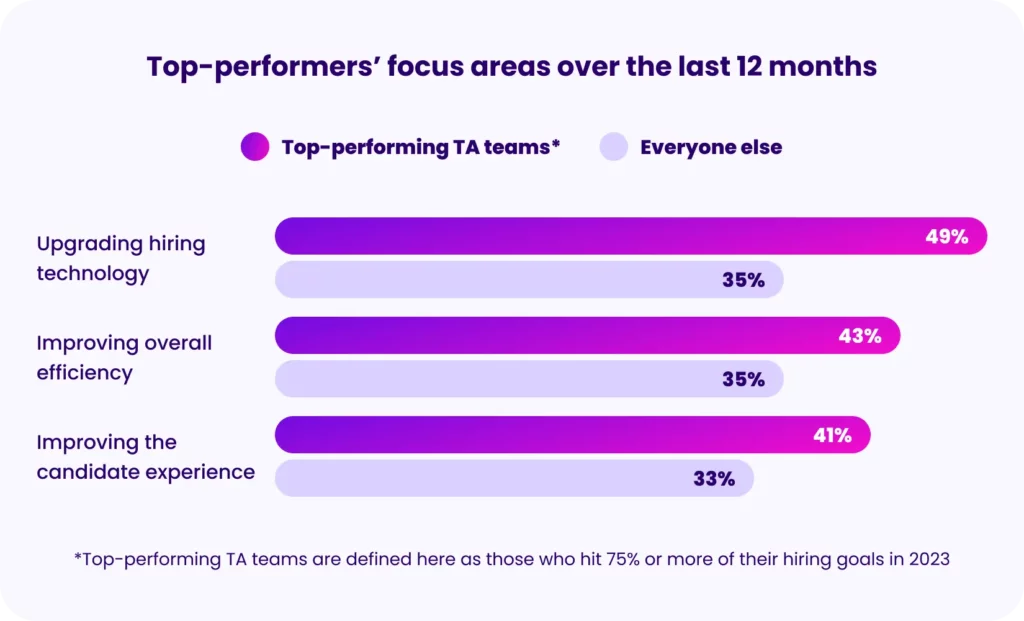
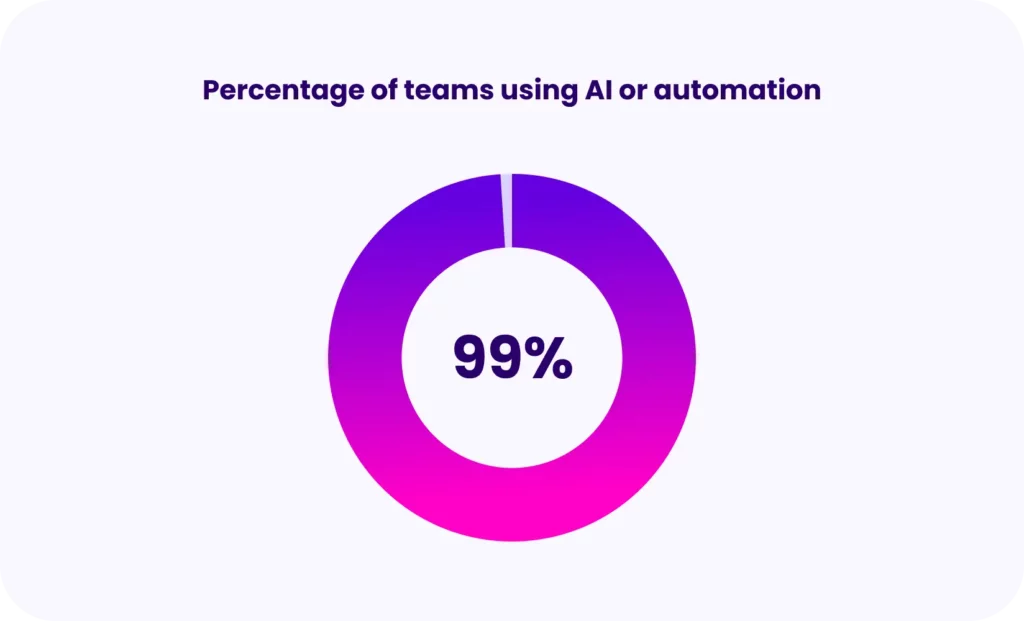
99% of talent acquisition leaders surveyed in our 2024 Hiring Insights Report said their teams used some form of automation or AI in the past 12 months. Here are some of the top tasks these teams cited using the tools for:

  • Application/resume review and screening
  • Creating interview questions
  • Writing job descriptions
  • Interview scheduling
  • Drafting candidate communications
Survey: Top uses of AI and automation in talent acquisition strategy
Source: 2024 Hiring Insights Report

What’s the through line here? Time. Efficiency. Productivity.

Technology is being used to save time on tedious and repetitive tasks, freeing up recruiters’ schedules for more impactful activities like building relationships with candidates and personalizing the candidate experience.

Mah points out that “Talent Acquisition can manage supply and demand through AI, Analytics, and AI-driven customer practices for its candidates.” However, he also cautions that simply “digitalizing or going semi-manual doesn’t cut it because it’s masking a significant operational problem when budgets and resources are being questioned.” By strategically applying technology, talent acquisition teams can elevate their processes, driving better outcomes across the board. 

Take, for instance, AI recruitment tools like GoodTime, which automates up to 90% of interview management tasks. These tools don’t just save time, they enhance the entire interview process with intelligent interviewer selection, real-time feedback collection, engagement tracking, and advanced metric reporting.

Plus, by focusing on key recruitment metrics such as time-to-fill, cost-per-hire, sourcing channel conversion rate, and candidate satisfaction, your talent acquisition team can zero in on exactly what’s working and what’s not, making data-driven decisions to continuously improve your hiring processes.

Ensuring a positive candidate experience

A positive candidate experience is a core component of any successful talent acquisition strategy. Every step of the recruitment process should be designed with the candidate in mind, making sure that they feel respected, informed, and valued from start to finish.

One of the key ways to achieve this is through effective communication. Geva Whyte, a recruiting coordinator previously with OpenAI and Google Fiber, highlights the importance of this, noting that “style, tone, consistency, and frequency” of communication are vital in shaping a candidate’s experience.

He goes on to state, “Communication gives candidates an idea of the kind of culture they will be stepping into. In your communication with the candidates, are you coming off friendly and inviting? Stiff and robotic? Are you sending follow-up emails? Are you using the default boilerplate ATS rejection email if things don’t work out? One of the biggest and easiest pain points to solve is recruiters ghosting on candidates.”

The last thing you want is former applicants spreading negative experiences on social media and job review sites, tarnishing your employer brand and potentially turning off other potential candidates. In fact, even applicants who didn’t receive offers but had positive experiences can be advocates for your company.

Putting a final point of emphasis on the subject, Whyte advises, “The talent pool isn’t as big or as deep as organizations like to believe — candidates talk to each other. Even if a candidate doesn’t make it to the offer stage, they will still mention a positive interviewing experience which could lead to them referring people they know.”

Retention strategies for high-performing staff

With the amount of blood, sweat, and capital that goes into recruiting top talent, retaining them once they’re on board is just as important, if not more so. This sentiment was echoed in our 2024 Insights Report, in which TA leaders pointed to retention as their top expected hiring challenge over the next 12 months.

Survey: Top anticipated talent acquisition challenges
Source: 2024 Hiring Insights Report

Here are some strategies to ensure your top talent stays engaged, motivated, and loyal:

  1. Offer competitive compensation and benefits: Money isn’t everything, but it certainly plays a major part in an employee’s decision to stay or leave a company. Regularly review and adjust compensation packages to ensure they are competitive with industry standards. Consider performance-based bonuses, equity options, and other financial incentives that directly tie to the employee’s contributions.
  2. Tailored development plans: High performers are driven by growth. Develop personalized career progression plans that align with their strengths and aspirations. Provide opportunities for continuous learning, advanced training, targeted mentorship, and leadership development to keep them challenged and engaged.
  3. Encourage work-life balance: Your best workers often push themselves hard. Encourage a healthy work-life balance by offering flexible working arrangements, paid time off, and wellness programs. This not only improves their quality of life but also boosts productivity and loyalty.
  4. Recognize and reward achievement: Recognition is a powerful motivator. Regularly acknowledge the hard work and achievements of your high performers, both publicly and privately. This could be through formal recognition programs, such as Employee of the Month, or more personalized gestures like a gift or one-on-one recognition with top leadership.
  5. Foster a positive work environment: A supportive and inclusive work environment is key to employee satisfaction. Ensure that your organizational culture promotes teamwork, open communication, and respect. Address any issues of workplace toxicity immediately and create a safe space where employees feel valued and heard.

Diversity, equity, and inclusion (DEI) initiatives

Diversity, equity, and inclusion (DEI) have become increasingly important in today’s workplace. Companies that prioritize DEI not only create a more equitable and fair workplace for employees, but also tend to benefit from boosted creativity, improved innovation, and even increased profitability.

Some ways to incorporate DEI initiatives into your organization include:

  • Diversifying hiring practices and actively seeking out a diverse pool of candidates
  • Providing training on unconscious bias and promoting inclusive behavior
  • Implementing diversity-focused mentorship or sponsorship programs
  • Creating employee resource groups for underrepresented communities
  • Regularly reviewing policies and processes to ensure they are equitable for all employees.

The commitment to building an inclusive environment can go a long way in strengthening your employer brand, marking your organization as a desirable and socially responsible place to work. Consider highlighting your diversity and inclusion hiring strategy in your company’s marketing materials and job postings to further amplify your commitment.

Real-world examples

Many leading companies have successfully implemented the strategies discussed, setting strong examples in the industry. For instance, Google’s approach to diversity, equity, and inclusion has been widely recognized. The company regularly publishes its annual diversity report, highlighting both progress and areas for improvement while actively working to create a more inclusive culture through targeted initiatives like unconscious bias training and employee resource groups.

By highlighting things like diversity statistics, employee testimonials, and initiatives like their “Next Billion Users” program aimed at connecting more people from underrepresented communities to the internet, Google is able to attract a segment of top talent that wants to feel a part of something bigger than just a 9-5 job.

When it comes to leveraging technology in talent acquisition, Netflix stands out. The company utilizes advanced AI-driven tools to streamline the selection process, ensuring that hiring decisions are data-driven and efficient. This approach not only speeds up the hiring process but also enhances the candidate experience by reducing biases and increasing transparency.

Looking ahead: Building a future-ready workforce

In a season where talent is scarce, and competition is fierce, a well-rounded talent acquisition strategy is your secret weapon. The entire journey, from crafting effective job descriptions to streamlining the selection process and ensuring a positive candidate experience, is about building a future-ready workforce that can drive your organization toward success.

Remember, this process is iterative. What works today may need refining tomorrow. As Whyte points out, “Having a dynamic recruiting process can allow organizations to adapt to market fluctuations,” ensuring that you can continue to attract and retain top talent even in a rapidly changing environment. The most successful companies are those that are willing to adapt, innovate, and put people at the heart of their strategy. 

By embracing these practices, you’re not just hiring talent — you’re securing the future of your organization.

8 Essential Hiring Process Steps (And 3 You Can Skip)

The hiring process can make or break a successful company. Even if you have a fully staffed talent acquisition department equipped with advanced tools, the end-to-end process is often lengthy and complex. 

You need to balance business needs with the candidate experience, speed with quality, and efficient technology with a human touch. None of that comes easily — especially with multiple stakeholders involved. 

There’s a good chance you’re adding unnecessary steps when looking for the right candidate. What if, instead, you could feel confident you were leveraging only the most crucial hiring process steps? 

The good news is, you can. By streamlining your recruiting and interview processes, you can remain thorough and provide a positive experience for candidates. Keep reading to learn what hiring process steps to keep, which to skip, and how to cultivate a top-notch process.

Challenges of a lengthy hiring process

A lengthy hiring process can result in a poor experience for the candidate and the potential to lose top talent.  In fact, according to a LinkedIn report, 65% of candidates report losing interest in a job due to a poor interview experience. 

Poor candidate experience

Regardless of whether a candidate is ultimately hired, their experience matters. Think of the golden rule — treat people how you’d hope to be treated. 

Keep in mind that even when someone is no longer a job candidate, they might still be a consumer of your company’s product or service. It’s human nature to share poor experiences. Recent research reveals that 80% of candidates will spread the word about a poor interview experience, and a third of those will go out of their way to do so proactively. You may risk a hit to your reputation if candidates feel they’ve been treated unfairly. 

Longer time to hire

Time to hire isn’t just an important recruiting metric. The more time you spend assessing and interviewing candidates, the longer your role remains open, extending the timeline to having a productive employee on staff. Plus, the longer a role remains vacant, the more work falls onto the remaining team members, which can negatively impact morale. 

If you’re struggling with a long hiring process, you’re not alone. Last year, 44% of talent acquisition teams reported hiring took longer than the previous year. Just 10% of companies were able to hire faster than in the past. 

time to hire is increasing
Source: 2024 Hiring Insights Report, GoodTime

Losing top talent

Overlong hiring processes also lead to a risk of losing top candidates. The most qualified talent tends to be in demand, and if they’re weighing several offers and still only halfway through your process, chances are they’re not going to wait around. 

This not only puts you at risk of losing a top-performing hire, but it also provides an advantage to the competing company that lands the candidate. If top candidates are snatched up by other organizations, you may find yourself faced with the decision to either settle for a less qualified candidate or hold the role open even longer. Both of these have a negative impact on your team and goals. 

Unlock 2026’s top hiring strategies: Insights from 500+ TA leaders

Be the first to uncover deep hiring insights specific to your sector — straight from the highest-performing TA teams.

8 essential steps to streamline your hiring process

Every company has its own unique way of hiring, but for a smooth hiring process, there are eight steps we recommend across the board. 

1. Nail down your requirements 

First things first: decide exactly what your business needs and how your future hire can fulfill those needs. Ask questions like these:

  • What role will they play within the team? 
  • What duties will they have?
  • What background and skills do they need to be successful? 

For example, if you’re hiring for a senior backend software developer, you’re likely targeting someone with 7-10 years of experience in a backend-focused coding language who has led important projects and mentored other developers. 

2. Hold an intake session

Before putting together a job posting, hold an intake meeting for the hiring managers and members of the recruitment team. This puts everybody on the same page regarding the expectations of the role. 

Hiring managers should share their interview plan, including the required steps and responsible party. Recruiters can use this time to share insight into the talent landscape, such as the availability of professionals, top companies from which to recruit, and the best places to source candidates. 

If the team anticipates a high volume of applicants, it can use the intake session to develop a rubric to help the recruiter determine who moves forward. 

While the intake meeting is a great way to kick off a search, recruiters and hiring managers should remain in close communication throughout the hiring process, either with regular meetings or daily updates.

3. Craft and publish a job posting

Once you’re clear on what you’re looking for in an ideal candidate, it’s time to draft a job posting and share it with the world. If your company has a specific template to structure job postings, start with that.

Use the information you discussed in the intake meeting to create a job posting that highlights why the right candidate should be interested. Show them what’s in it for them. Don’t oversell or exaggerate the positives, but make sure you explain what’s exciting and unique about the position. 

It’s equally important to describe the requirements you’re seeking. Often, this list includes:

  • Years of experience
  • Any degrees or certifications
  • Particular skills or traits

Try to build a list of only objective qualities. You don’t want unnecessary biases to seep in. 

Once ready, post the job on your company’s career site and other relevant sites like LinkedIn and niche job boards within your industry. You can also share the posting internally and ask members of the team to send it to promising candidates in their networks. 

4. Generate and screen candidates

Once the job posting is live and the applications start pouring in, the talent acquisition team can begin reviewing and filtering resumes.

If there’s a high volume of candidates, you may be able to leverage AI tools to help filter through the resumes. To increase the likelihood of finding the best candidate, the recruiter may also source passive candidates who are not actively on the job hunt but could be a good fit. 

To preserve hiring managers’ time and ensure only the best candidates move forward, recruiters should conduct an initial candidate screening conversation. This meeting, which can be done via phone or video, will give you a better idea of the candidate’s experience and their interest in the company and role, along with logistical details like compensation and location expectations. 

5. Assess candidates’ skills

Depending on the position, many companies use skills assessments to get a deeper view into the candidate’s ability to perform the role, ensuring your final decision is based on more than just interviews. Per a LinkedIn report, 73% of recruiters listed skills-based hiring as a major priority.

These assessments can be explicitly skills-based, such as a coding assessment for a developer or a writing test for a communications professional. Avoid personality-based assessments, like the Myers–Briggs Type Indicator or DISC Assessment, as these are subjective.

Set a deadline for the candidate’s assessment. Give them a few business days to a week, depending on the project. Remember that waiting for an assessment can slow down the hiring process. 

If the candidate doesn’t complete the assessment, whether due to time constraints or on principle, the recruiter should still attempt to get feedback from them. It may provide valuable insight into areas of improvement in the assessment process.

6. Interview the best candidates

The amount and length of interviews will vary based on the company and position. It’s not unheard of for large companies, especially in tech, to have five-hour interview days. 

Before conducting interviews, the hiring team should have a detailed understanding of what to assess and how to do it. Prepare for success by: 

  • Holding a pre-interview strategy session to ensure clarity across the team
  • Making sure each interviewer is knowledgeable about the position 
  • Assigning dedicated focus areas for each interviewer to avoid overlap and being unprepared

Like the job description, the interview questions should be free of bias and subjectivity. Each question should dig into the candidate’s ability to perform the job, not their personal traits.

7. Meet for debriefs

After each interviewer has completed their interviews and entered feedback into the system of record (this is frequently the ATS), the team should come together for a formal interview debrief

Usually led by the recruiter, the debrief allows the panel to discuss their impressions of the candidate. Ideally, everyone should have read the others’ feedback before the meeting, so this time can be used to dive into deeper questions or concerns. 

The goal of the debrief is to leave with a decision, whether that is to decline the candidate, make an offer, or move on to another interview.

8. Make your final selection and offer

After a candidate has completed the process and you’ve made your decision, the final hurdle is the offer process. 

This varies by company, of course, but this should include:

  • Identifying the correct level for the candidate (such as senior or principal)
  • Finalizing the salary and any other perks and monetary offerings (such as bonuses or equity)
  • Gathering any required approvals
  • Crafting an offer letter
  • Presenting the offer to the candidate 

After the candidate receives the offer, they may negotiate for more money, increased vacation time, a signing bonus, or something else. The recruiter and hiring manager should partner with relevant HR stakeholders to determine any changes to the offer. 

Strategies for an efficient hiring process

A quick, efficient hiring process does not have to compromise on quality. It’s often necessary to cut or alter parts of the process to ensure a better experience. 

According to Monika Warchol, Talent Acquisition Operations Manager at Xcel Energy: “It’s about determining what the core problem is and then finding the shortest distance between the problem and the answer,” she says. “Sometimes it’s cutting a step out of a process, or even cutting a team out of a process, or a combination of things.”

Hiring process steps to skip

There are a few steps you can remove from your hiring process altogether, including cover letters, executive sign-off, and reference checks. 

Forgo cover letters

A recent GoodTime poll found that 64% of talent acquisition professionals feel cover letters are unnecessary. While some recruiters will read them, most don’t feel it’s a valuable use of time. 

To save recruiting time, simply eliminate the cover letter requirement. The bonus is that it saves the candidate time, too, and gives them more opportunity to tailor their resume to your job. If you really want to avoid dealing with cover letters entirely, you can set your system to only allow for resume uploads. 

Skip top leadership sign-offs 

Some companies have a requirement for top executives to sign off on every hire. This often holds up the process due to executives’ busy schedules. Plus, their lack of insight into the interview process often means they have to do extra research to understand the reason for the hire. 

There are also cases where the compensation or HR team must sign off on every offer, even if it’s fully in-budget and within the salary range.

While you may have the option to automate the approval process via your applicant tracking or HR system, an even better approach is to put trust in the hiring managers for a majority of roles. This means avoiding executive approval — perhaps getting final approval from the skip-level manager or department head — and removing the need for HR approval unless there is an exception.

Remove the reference check 

A reference check has long been seen as a way to gather data about how well an employee performs. 

Reference checks may not be as helpful as they appear, however. For one thing, they can hold up the hiring process, especially if a reference is hard to reach. Also, most candidates will only list people who will speak positively about them, so you’re unlikely to get truly unbiased and objective information from any reference calls. 

Instead, resolve to cultivate a stronger assessment process, such as leveraging behavioral interviewing to understand how a candidate has performed in the past. 

Steps to improve

Per Valeria Stanga, Senior Talent Acquisition Partner with HelloFresh, there’s always an opportunity to improve your recruitment process. “Every day, you can re-evaluate your ways of working, you can re-evaluate the tools that you’re using, and you can look for new ways to work smarter instead of harder. There’s always something that you can do in a more efficient way,” she shared.

There are several ways to elevate aspects of the hiring process, including more targeted assessments, consolidated interviews, and the use of recruitment automation tools. 

Focus your assessments

While an assessment can give you a view into a candidate’s ability to do the job, it’s important to use an assessment that is focused and not too long.

  • Lengthy assessments hold up the interview process. They also impact a candidate’s experience. A better option is to leverage specific project assessments that align with the competencies established in the intake meeting
  • Avoid testing too many skills. Instead, include a brief project that directly shows how a candidate’s skills match those needed for the role. A more focused assessment should take less time for the candidate to complete and less time for your team to review.
  • Remove personality tests from your process. These are subjective and not scientifically based. Instead, gain insight into an employee’s collaboration and communication skills through the interview process. 

Consolidate interviews

There are several ways to consolidate the number of interviewers and interview rounds, such as:

  • Designate a core interview panel that can assess different competencies. Then, assign specific focus areas to each interviewer. This gives you adequate coverage while avoiding overlapping questions or assessments. 
  • Implement a structured interview process with standard questions. This leads to a fair and objective process while reducing the need for additional interviews. Provide interview training to ensure your hiring teams are equipped to ask both behavioral and role-specific questions.
  • Leverage software and AI for recruiting. Set up automatic screening questions as part of the application. Candidates can provide initial answers to basic questions, letting you easily filter and focus your interviews on only the top candidates. 

Simplify scheduling

Scheduling often holds up the interview process due to back-and-forth messaging about availability and other details. Using a solution like GoodTime Hire can streamline the scheduling process. 

GoodTime offers automated interview scheduling that integrates with your company’s calendar system to match interviewers’ availability with candidates’ availability. There is no back-and-forth required, even when you need to schedule a full interview panel. 

Alternatively, you can leverage candidate self-scheduling. This feature allows candidates to select their own interview date and time from a predefined list. This can be especially helpful for single conversations like a recruiter pre-screening. 

GoodTime can also help choose the right interviewers based on factors like availability, areas of expertise, and diversity. 

Upgrade your hiring journey with AI

GoodTime’s AI agents orchestrate the entire hiring journey — screening, scheduling, messaging, and more — so talent teams hire faster with a better candidate experience.

Start streamlining your hiring process today

A streamlined hiring process reduces time to hire while improving your reputation as an employer of choice. This is even more important in a competitive talent market. It can be the difference between hiring your top candidate and letting an open role languish. 

The goal of improving your hiring process shouldn’t simply be efficiency. Instead, strive to find the right balance between speed and thoroughness. This will help you find the right candidate quickly while providing an excellent experience to everyone who engages in your process. 

By understanding the critical steps and leveraging technology, you can design a hiring process that entices top candidates and supports your strategic goals. Of course, updating your hiring process isn’t just a one-time project. Continually analyze data — like time-to-fill and offer acceptance rate — and gather feedback from key stakeholders to implement necessary improvements over time. 

Learn how GoodTime’s AI-powered interview scheduling software can help you improve your hiring process.

Time to Fill vs Time to Hire — And How to Optimize Both

When it comes to measuring recruitment success, two metrics often come to the forefront: time to fill and time to hire. While they might seem similar at first glance, each provides unique insights into different aspects of the hiring process. Understanding these differences is crucial for talent acquisition teams aiming to optimize their strategies, reduce costs, and secure top talent.

But there’s more to these recruitment metrics than meets the eye. Time to fill gives you a bird’s-eye view of how long it takes to complete the entire hiring process, from job posting to offer acceptance. Meanwhile, time to hire zeroes in on the candidate’s journey, tracking the period from their application to the moment they say “yes” to your offer. Both are essential, but they serve different purposes and influence various parts of the recruitment pipeline.

Throughout this article, we’ll dive deep into the nuances of time to fill vs time to hire, offering strategies to optimize both. We’ll also share expert insights from leaders in the field, including Charles Mah, Chief Customer and Operations Officer at GoodTime, and Dallas Frazer, former Recruitment Operations Lead at Shopify. By the end, you’ll have a clear understanding of how to leverage these metrics to improve your recruitment outcomes—and how technology can play a pivotal role in this process.

The difference between time to fill vs time to hire

To fully appreciate the importance of time to fill and time to hire, it’s essential to understand what each metric measures and how they contribute to your recruitment strategy.

Time to fill

Time to fill is the metric that tracks the number of days from when a job requisition is posted to when a candidate accepts the offer. This metric is vital for understanding the overall efficiency of your recruitment process. It sheds light on how quickly your team can move from identifying a need to filling the position, which directly impacts operational continuity and team productivity.

Organizations that struggle with a high time to fill often face increased costs and operational disruptions, as vacant positions can leave teams short-staffed and overworked. A prolonged time to fill can also lead to a diluted candidate pool, as top talent might accept other offers if the process drags on too long.

Time to hire

Time to hire, on the other hand, measures the time from when a candidate enters your recruitment pipeline—usually when they apply for a position—to when they accept the job offer. This metric is crucial for evaluating the candidate experience and the effectiveness of your recruitment stages.

A shorter time to hire generally indicates a smoother and more efficient process, which can enhance the candidate’s perception of your company. It also reduces the risk of losing top candidates to faster-moving competitors. As Dallas Frazer, former Recruitment Operations Lead at Shopify and now Customer Success Coach at GoodTime, emphasizes, “One of the key metrics recruiters will want to track is time-to-hire. If you find your process dragging on for longer than necessary, it’s a clear sign you might be investing too much time and effort in certain stages.”

Why these metrics matter

Understanding and tracking both time to fill and time to hire is crucial for optimizing your recruitment efforts. These metrics not only impact the efficiency of your hiring process but also play a significant role in your organization’s ability to attract and secure top talent.

Key metrics including time to fill and time to hire
Source: 2024 Hiring Insights Report, GoodTime

Impact of time to fill

Time to fill directly influences how quickly your organization can maintain or scale its talent operations. A lengthy time to fill can result in extended periods where key roles remain vacant, potentially disrupting team productivity and delaying critical projects. Additionally, the longer a position stays open, the higher the recruitment costs—advertising, interviewing, and onboarding add up over time. It also increases the risk of losing candidates to other offers, especially in competitive job markets.

When time to fill is too high, it’s a signal that there may be inefficiencies within the recruitment process, such as delays in approval stages, a lack of qualified candidates, or bottlenecks in interview scheduling. By monitoring and optimizing this metric, organizations can streamline their processes, reduce costs, and ensure that teams are fully staffed to meet their objectives.

Impact of time to hire

Time to hire is a key indicator of how well your recruitment process is functioning from the candidate’s perspective. A shorter time to hire often correlates with a positive candidate experience, which is critical in building and maintaining a strong employer brand. When candidates move quickly through the hiring process, it reflects well on the organization, signaling efficiency, decisiveness, and a respect for the candidate’s time.

On the other hand, a prolonged time to hire can frustrate candidates, leading to a poor experience that can tarnish your brand and deter future applicants. This is particularly crucial for roles where top talent is in high demand; the faster you can move, the better your chances of securing the best candidates. As Erika Thorson-Garay, Head of Talent Acquisition at LiveRamp, points out, “The fastest hiring team typically gets the best candidates. GoodTime helped us accomplish that.”

Additionally, analyzing time to hire across different roles can uncover valuable insights into where your process may be lagging. Dallas Frazer further elaborates, “If time-to-hire is consistently higher for one role type versus another, it’s worth looking into and saying what part of that role’s hiring process isn’t working.”

Strategies to optimize both metrics

To effectively manage both time to fill and time to hire, it’s essential to implement strategies that address the unique challenges of each metric. By focusing on process improvements, leveraging technology, and maintaining a candidate-centric approach, you can significantly reduce both timeframes, leading to more efficient and successful hiring outcomes.

Reducing time to fill

  1. Improve job ad visibility and sourcing: One of the first steps in reducing time to fill is ensuring that your job postings are visible to the right candidates. Utilize targeted job boards, social media, and recruitment marketing tools to reach a broader and more relevant audience. This strategy increases the number of qualified candidates in the pipeline, reducing the time it takes to fill the position.
  2. Streamline internal approval processes: Delays often occur in the early stages of recruitment due to lengthy internal approval processes. By streamlining these steps—such as obtaining job requisition approvals—you can significantly cut down the time it takes to move from job posting to candidate sourcing. Automating these processes with tools like GoodTime can help accelerate the overall timeline.
  3. Leverage technology for efficiency: Incorporating AI-driven tools and automation into your recruitment process can drastically reduce time to fill. GoodTime, for instance, automates interview scheduling and candidate communications, enabling teams to focus on high-value tasks rather than administrative work. As Charles Mah, Chief Customer and Operations Officer at GoodTime, advises, “Ensure that your interviewers have cross-sets of data, including scorecards, focus areas, and pertinent candidate information.”

Reducing time to hire

  1. Enhance communication and coordination: Effective communication between recruiters, candidates, and hiring managers is critical to reducing time to hire. Implementing clear communication protocols and utilizing platforms that facilitate seamless interactions, including text recruiting, can help keep the process moving swiftly. This not only speeds up decision-making but also improves the candidate experience.
  2. Optimize the interview process: A streamlined interview process is key to reducing time to hire. Consider implementing structured interview guides, reducing the number of interview rounds, and ensuring that decision-makers are available and prepared to give timely feedback. As Dallas Frazer notes, “If you find your process dragging on for longer than necessary, it’s a clear sign you might be investing too much time and effort in certain stages.”
  3. Use data to identify bottlenecks: Regularly analyzing your recruitment data can help you identify stages in the process that are causing delays. Platforms like GoodTime provide detailed insights into where time is being spent, allowing you to make data-driven decisions to optimize the process. As Frazer emphasizes, “Platforms like GoodTime massively increase our visibility into key recruiting metrics like time-to-hire. They allow recruiting teams to not only see overall time-to-hire, but also pinpoint specific areas that might be causing delays.”

By adopting these strategies, organizations can effectively reduce both time to fill and time to hire, resulting in a more efficient hiring process that attracts and secures top talent quickly.

Upgrade your hiring journey with AI

GoodTime’s AI agents orchestrate the entire hiring journey — screening, scheduling, messaging, and more — so talent teams hire faster with a better candidate experience.

Final thoughts

Time to fill and time to hire are essential metrics that reveal different aspects of your recruitment process. Time to fill provides a broad view of the entire timeline, while time to hire focuses on the candidate’s experience. To achieve recruitment success, it’s crucial to balance both metrics, ensuring efficiency without compromising on the quality of hires or candidate experience.

Using tools like GoodTime can help streamline your process, reducing both time to fill and time to hire, as emphasized by the experts. By adopting a balanced, data-driven approach, you can enhance your recruitment outcomes and secure top talent effectively.

Talent Acquisition vs Recruitment: Key Differences Explained

In the world of hiring, the terms “talent acquisition” and “recruitment” are often used interchangeably, but they actually represent two distinct approaches to filling roles within a company. As organizations strive to navigate the competitive job market, understanding the nuances between these two functions is crucial. While recruitment focuses on the immediate need to fill positions, talent acquisition takes a broader, more strategic approach, ensuring the long-term success of the organization by building a robust talent pipeline.

In this article, we’ll explore the key differences between talent acquisition and recruitment, drawing on expert insights to provide a comprehensive understanding of when and how to use each strategy effectively. You’ll hear from industry leaders like Charles Mah, Chief Customer and Operations Officer of GoodTime, and Geva Whyte, a seasoned Recruiting Coordinator with experience at Lyft, OpenAI, and Stripe, who offer their perspectives on these critical functions.

Defining talent acquisition and recruitment

Before diving into the differences between talent acquisition and recruitment, it’s essential to define what each term means within the context of hiring.

Recruitment

Recruitment is often seen as the more immediate and tactical side of hiring. It’s a process that kicks in when there is a specific job opening that needs to be filled. The focus is on quickly sourcing, interviewing, and hiring candidates to meet the organization’s current needs. Activities in recruitment typically include:

  • Crafting job descriptions
  • Posting job openings on various platforms
  • Sourcing candidates through job boards, social media, and networking
  • Screening resumes and conducting interviews
  • Extending job offers to successful candidates

The goal of recruitment is to efficiently fill a vacancy with the best available candidate. It’s often a reactive process, driven by immediate needs within the company, such as filling a position that has become vacant or expanding the team to meet a new business requirement.

Talent acquisition

On the other hand, talent acquisition takes a broader and more strategic approach. Rather than focusing solely on filling immediate vacancies, talent acquisition is about building and nurturing a pipeline of qualified candidates who can meet the organization’s future needs. This process involves:

  • Strategic workforce planning and recruiter capacity planning
  • Employer branding and candidate experience management
  • Building long-term relationships with potential candidates
  • Using data and analytics to guide hiring decisions
  • Continuously improving recruitment processes to attract top talent

Talent acquisition is a proactive and ongoing effort, aiming to align the company’s long-term goals with its talent strategy. It requires a deep understanding of the industry, the competitive landscape, and the evolving needs of the business.

As Charles Mah, Chief Customer and Operations Officer of GoodTime, aptly puts it: “Talent Acquisition is akin to customer success. It’s about ensuring the business grows by hiring the right talent and providing the best experience to retain every candidate they engage with because they are likely future hires or customers.”

Unlock 2026’s top hiring strategies: Insights from 500+ TA leaders

Be the first to uncover deep hiring insights specific to your sector — straight from the highest-performing TA teams.

Key differences between talent acquisition and recruitment

While both talent acquisition and recruitment aim to bring new employees into an organization, their approaches, goals, and outcomes differ significantly. Understanding these differences can help companies decide when to use each strategy and how to align them with their overall business objectives.

Focus and goals

  • Recruitment is primarily focused on filling open positions as quickly as possible. The goal is to find a qualified candidate who can step into the role and start contributing immediately. This makes recruitment more of a short-term, task-oriented process driven by the immediate needs of the organization.
  • Talent acquisition, on the other hand, is focused on long-term strategic goals. It involves not only filling current positions but also anticipating future needs and building a pipeline of candidates who are well-suited to the company’s culture and long-term objectives. This approach helps the organization maintain a steady flow of talent, ready to step in as the company grows or as new roles are created.

Process and scope

  • Recruitment is often a reactive process. It starts when a vacancy arises and ends when the position is filled. This process typically involves job posting, candidate sourcing, interviewing, and hiring. The scope is limited to the immediate need at hand.
  • Talent acquisition is proactive and ongoing. It encompasses a broader range of activities beyond just filling positions. This includes employer branding, candidate relationship management, and leveraging data and analytics to inform future hiring needs. Talent acquisition also involves strategic workforce planning and maintaining a strong employer brand to attract top talent continuously.

Geva Whyte, an experienced Recruiting Coordinator, emphasizes the importance of this proactive approach: “One of the most critical components of a successful talent acquisition strategy is investing time into building out your Recruiting Operations team early on. You can eliminate a lot of the growing pains that startups go through if you invest in a RecOps team that can build a foundation and scalable recruiting process that can get you from 50 to 500 employees and 500 to 2500 employees, with the ability to make minor tweaks in the process as the needs of the organization evolve.”

Skill sets required

  • Recruitment generally requires strong skills in candidate sourcing, interviewing, and selection. Recruiters need to be adept at quickly identifying candidates who meet the job requirements and can fit into the organization immediately.
  • Talent acquisition requires a broader skill set, including strategic thinking, market research, and the ability to build long-term relationships with potential candidates. Talent acquisition specialists must also be proficient in employer branding and data analysis to continuously improve hiring strategies.

For example, a talent acquisition specialist might focus on candidate experience, ensuring that every interaction with a potential hire reflects positively on the company, even if they are not hired immediately. This approach can help build a positive reputation and attract higher-quality candidates in the long run.

The strategic importance of talent acquisition in modern organizations

In today’s competitive job market, the ability to attract, engage, and retain top talent is crucial for any organization’s success. Talent acquisition plays a pivotal role in this process by ensuring that the company is not only filling immediate vacancies but also building a workforce that can drive long-term growth and innovation.

Supporting long-term business goals

Talent acquisition is intrinsically linked to the strategic goals of an organization. By focusing on the long-term, talent acquisition helps companies align their hiring practices with their future needs, ensuring that they have the right people in place to achieve their objectives. This might involve hiring individuals with specific skills that the company anticipates needing as it grows or expands into new markets.

For instance, a company might use talent acquisition strategies to build a pipeline of candidates with expertise in emerging technologies. This forward-thinking approach ensures that when the time comes to implement these technologies, the company is already well-equipped with skilled employees.

Creating a competitive advantage

A well-executed talent acquisition strategy can provide a significant competitive advantage. Organizations that excel in talent acquisition are often seen as employers of choice, attracting top talent that drives innovation and business success. This is where employer branding and candidate experience come into play.

Companies that invest in creating a strong employer brand and positive candidate experiences are more likely to attract high-quality candidates. These efforts pay off by reducing time-to-hire, lowering turnover rates, and ensuring that the organization remains competitive in its industry.

Examples of successful talent acquisition

Numerous companies have demonstrated the power of effective talent acquisition. Organizations like Google, Apple, and Amazon have built reputations not only for their products and services but also for their ability to attract and retain some of the best minds in the industry. Their success can be attributed to a strategic focus on talent acquisition, which has helped them maintain their positions as industry leaders.

Geva Whyte highlights a growing challenge in the tech industry: “One of the biggest challenges I foresee in talent acquisition is determining a candidate’s technical aptitude in regards to hiring Software Engineers and Machine Learning experts. With the introduction of ChatGPT and all the LLMs that followed, the playing field has been leveled. Right now, it’s not enough for a hiring manager of an organization to say ‘I want a great engineer.’ The criteria for a ‘great engineer’ is already outdated, and I foresee a bigger emphasis on teams hiring for soft skills: communication, collaboration, mentorship. You know, the actual important stuff.”

This insight underscores the importance of adapting talent acquisition strategies to meet evolving industry demands, ensuring that companies continue to attract the right talent for the future.

How technology and AI are shaping both recruitment and talent acquisition

The impact of technology and AI on hiring processes cannot be overstated. As organizations seek to streamline their talent operations and make more data-driven decisions, technology has become a critical component of both recruitment and talent acquisition. However, the way these tools are applied can differ significantly between the two.

Top talent acquisition performers' focus areas
Source: 2024 Hiring Insights Report, GoodTime

Streamlining recruitment processes

In recruitment, technology is often used to automate and simplify the more repetitive aspects of the hiring process. For example, applicant tracking systems (ATS) help recruiters manage large volumes of resumes, while AI-powered tools can quickly screen candidates based on predefined criteria. These technologies help speed up the recruitment process, making it easier to fill positions quickly.

AI also plays a role in improving candidate matching. By analyzing large datasets, AI can identify candidates who are most likely to succeed in a given role, helping recruiters make better decisions faster. This is particularly valuable in high-volume hiring situations where speed is of the essence.

Enhancing talent acquisition strategies

When it comes to talent acquisition, technology and AI are used in more strategic ways. For instance, AI can help with understanding talent acquisition and recruitment metrics, allowing organizations to forecast future hiring needs based on business trends and workforce data. This enables talent acquisition teams to build and maintain a pipeline of candidates who will be ready to step into roles as they become available.

Moreover, AI-driven tools can assist in maintaining a strong employer brand by ensuring consistent communication with candidates throughout the hiring process. These tools can manage candidate relationships, provide personalized experiences, and even automate the scheduling of interviews and follow-ups. GoodTime, for example, leverages AI to streamline these processes, allowing talent acquisition teams to focus on building relationships and making strategic hires.

Charles Mah, Chief Customer and Operations Officer of GoodTime, highlights the potential of AI in talent acquisition: “Talent Acquisition can manage supply and demand through AI, Analytics, and AI-driven customer practices for its candidates.” This underscores the importance of leveraging technology not just to fill positions, but to enhance the overall hiring strategy and ensure long-term success.

Looking ahead, we can expect AI and automation to play an even larger role in both recruitment and talent acquisition. As companies continue to collect more data on their hiring processes, these tools will become more sophisticated, offering deeper insights and more precise predictions.

One of the top talent acquisition trends is the use of AI to improve candidate experience by providing personalized interactions at scale. For example, chatbots can engage with candidates throughout the hiring process, answering questions and providing updates in real-time. This not only improves the candidate experience but also frees up time for recruiters and talent acquisition specialists to focus on more complex tasks.

Percentage of recruitment and talent acquisition teams using AI
Source: 2024 Hiring Insights Report, GoodTime

When to prioritize recruitment vs. talent acquisition

Deciding when to focus on recruitment versus talent acquisition depends on the organization’s current needs, long-term goals, and the specific circumstances surrounding the hiring process. Both approaches have their place, but understanding when to use each one can make a significant difference in the effectiveness of your hiring strategy.

When to prioritize recruitment

Recruitment should be prioritized in situations where there is an immediate need to fill a specific role. This approach is particularly useful in the following scenarios:

  • Urgent vacancies: When a key employee leaves unexpectedly, or when the company needs to quickly ramp up staff to meet a sudden increase in demand, recruitment is the go-to strategy.
  • Short-term projects: If the organization is undertaking a project that requires temporary or contract workers, recruitment can efficiently fill these roles without the need for long-term talent planning.
  • High-volume hiring: For companies that regularly need to fill large numbers of positions quickly, such as in retail or customer service, recruitment processes that focus on speed and efficiency are essential.

In these cases, the primary goal is to fill the position with a qualified candidate as quickly as possible. This might involve leveraging recruitment tools that automate parts of the process, such as interview scheduling, to ensure that the company can maintain productivity and meet its operational needs.

When to prioritize talent acquisition

Talent acquisition is the better choice when the focus is on long-term growth and building a sustainable talent pipeline. Situations where talent acquisition should be prioritized include:

  • Strategic growth: If the company is planning for expansion, entering new markets, or launching new products, talent acquisition can help ensure that the organization has the right skills and leadership in place to drive success.
  • Critical roles: For positions that are critical to the organization’s long-term success—such as executive roles, specialized technical positions, or leadership roles—talent acquisition ensures that the company is not just hiring for the present but for the future.
  • Employer branding: When the goal is to establish or enhance the company’s reputation as an employer of choice, talent acquisition strategies that focus on employer branding and candidate engagement are crucial. These efforts help attract top talent who are aligned with the company’s values and long-term vision.

Prioritizing talent acquisition in these scenarios allows organizations to build a workforce that is not only capable of meeting current demands but is also prepared to take on future challenges. This strategic approach can help the company maintain a competitive edge in its industry.

Upgrade your hiring journey with AI

GoodTime’s AI agents orchestrate the entire hiring journey — screening, scheduling, messaging, and more — so talent teams hire faster with a better candidate experience.

It’s all about striking the right balance

In many cases, organizations will need to balance both recruitment and talent acquisition strategies. For instance, while a company may need to recruit quickly for certain roles, it can simultaneously invest in talent acquisition efforts to ensure a steady flow of candidates for future needs.

A well-rounded approach that combines the speed of recruitment with the strategic foresight of talent acquisition can help organizations achieve both immediate and long-term hiring goals. By understanding when to prioritize each strategy, companies can create a more resilient and adaptable workforce, ready to meet any challenge that comes their way.

Interview Training: 7 Must-Knows for Interviewers

A well-executed interview is a critical factor for candidates when deciding whether to accept a job offer. That’s why it’s incredibly important to conduct proper interview training for employees.

When interviews go poorly, they lead to low-quality hiring decisions, avoidable legal troubles, a weak candidate experience, and interviewer burnout.

1 in 5 interviewers say they feel rushed to make hiring decisions, despite being ill-equipped to do so.

As a TA leader, putting in the time and work to attract talent in a competitive, candidate-driven market is tough. This becomes even more difficult if you’re carrying most of the interview logistics load on your own.

But by spending time on interview training for employees, you can lighten the load for yourself as well as any other interviewers on your team. Great interviews start with amazing interviewer training. Run through this checklist to make sure your interview training program is setting your current and future employees up for success.

Unlock 2026’s top hiring strategies: Insights from 500+ TA leaders

Be the first to uncover deep hiring insights specific to your sector — straight from the highest-performing TA teams.

1. Always predetermine job competencies

Interviewers should never walk into an interview without knowing exactly what they’re looking for first. Make sure to make this crystal clear in your intake meeting.

Armed with a vision for what success looks like in the role they’re trying to fill, interviewers can then turn attention to evaluating their interviewees fairly and effectively. But without a picture of the ideal candidate, interviewers risk making decisions that are bad or biased—or worse, both.

As a hiring leader, you can set your entire interview team up for success by providing hiring criteria. Tie these criteria to job-specific skills and competencies to help interviewers avoid decisions based on the personal, demographic, or lifestyle chatter that often comes up during ad hoc interviews.

To get started, ask yourself these questions:

  • Are there any professional certifications or knowledge requirements that are critical to the job?
  • Are there any technical skills required for the new hire to have that can’t be trained on the job?
  • Which soft skills will make a candidate successful in this role? (Think communication skills, time management, ability to work independently, problem-solving, ability to manage a team, etc.)

Then, create templates for your interview team, and store them in an easily accessible place, like a shared drive.

Everyone benefits from interview preparation: the company, the candidates, and the interviewers.

2. Start interviewing with the end in mind

Who are you looking for? Which technical skills do they need? What soft skills should they have? If you can’t answer these questions, you’re not ready to interview.

Start by assessing the skills necessary to succeed in the open role. This will help you gather information about your candidates’ job knowledge and technical skills. 

Then, add behavior questions — which focus on soft skills such as creativity and collaboration — to gauge a candidate’s reaction to practical situations.

When you know what you’re looking for, you stand a much better chance of finding it.

When it comes to interviewing, one size does not fit all.

Many interviewers use the same conventional questions for each and every position, leading to rehearsed answers that say nothing about a candidate’s actual skills or passions.

To find the right person for the job faster, and reduce hiring bias along the way, tailor your interview questions to each individual job role.

By asking job-specific questions to every candidate, you’ll give them the opportunity to show off their skills and watch how they handle real-life, job-related scenarios.

4. Don’t skip out on standardizing

After you gather a set of questions that relate directly to the job role, it’s time to think about the way you present those questions.

It’s exceedingly common for hiring leaders to lack a consistent, standardized interview process. But unstructured interviews — which encourage free-flowing conversations and lead to subjective decisions — are one of the worst predictors of on-the-job performance.

On the flip side, structured interviews — where each candidate is asked the same set of questions, in the same way, and in the same order — help hiring leaders measure one candidate’s skills against another, allowing for much better decision-making.

When we asked Jenny Jongejan, a seasoned recruiting consultant about the importance of standardization to address tech’s hiring challenges, she told us, “Research does show that structured interviews are 81% more accurate in predicting job performance than unstructured ones, so having a set of standard questions that every interviewer asks every candidate really ensures that interviewers don’t insert their own bias and leads to better hires.”

Standardization starts with effective intake and ends with a clear, focused post-interview debrief. Don’t skip out on either meeting!

5. Mitigate implicit biases and illegal practices

Even with the utmost preparation, interviews can still go off the rails. For instance, an interviewer may inadvertently ask illegal questions or makes inappropriate comments.

Assuming that the interviewers already know which interview questions are “right” and “wrong” is the first mistake many hiring leaders make when it comes to legal compliance. To prevent discriminatory interview practices—whether intentional or not—TA leaders should educate their team about current hiring laws.

After carefully preselecting the job-specific criteria for each role, try creating an up-to-date list of questions and topics to avoid during interviews, including anything related to a candidate’s age, race, ethnicity, ability, gender, sexual orientation, religion, relationship status, or personal finances.

For example, instead of asking about the candidate’s country of origin, cue interviewers to ask if the interviewee is eligible to work in the country where the job duties must be performed. In lieu of asking if their religion would keep them from working on weekends or certain holidays, explain any scheduling requirements for the position, and ask if there are conflicts. Instead of asking candidates if they have any disabilities, ask if they’re capable of performing any physical demands of the job at hand.

With interviewer training on how to stick to appropriate topics, hiring leaders and interviewers can both feel confident about their interactions with candidates.

Cultivate a diverse interviewer team

Diverse hiring starts with diverse interviewers. When an interview panel shares similar backgrounds and lifestyles, it’s easy for unconscious bias to creep in, and for critical job-related skills to be overlooked. Not to mention, a largely homogeneous interview panel is a huge turn-off to talented candidates who may not see themselves represented.

The majority of hiring leaders acknowledge hiring for diversity as essential to growing a more competitive, innovative team. However, despite knowing the facts, many companies still struggle to implement thoughtful diversity and inclusion hiring that works.

6. Leverage the right technology

While legal compliance is critical, there’s more to an amazing interview than just following the rules. By employing technology to support the administrative parts of an interview, hiring leaders can empower interviewers to increase the quality and fairness of their interviews. 

When interviewers get bogged down with back-and-forth scheduling and rescheduling, manually updating the hiring status of each candidate, and managing interviews across various time zones, they have less capacity to focus on more important things. But when technology takes care of the tedious tasks, interviewers are freed up for more valuable work, like building rapport with candidates.

HR technology can also be leveraged to put together diverse interview panels. This boosts candidate satisfaction even more. When candidates see themselves represented on an interview panel, and trust they’ll truly be included on their new prospective team, they’re far more likely to continue through to the end of the hiring process. 

What’s more, by representing individuals from a variety of different groups and backgrounds, diverse interview panels lend themselves to higher quality hiring decisions because of the diversity of the interviewer feedback collected. Only then can your team stop making hiring decisions based solely on interviewer intuition, and start making more based on objective, quality interview data.

7. Focus on candidate engagement

In a candidate-driven market like this one, hiring leaders should assume that job seekers are interviewing with multiple companies. When that’s the reality, the engagement a candidate gets from your team could be just the advantage you need.

A focus on continuous candidate engagement will give you:

  • Faster turnaround on hiring decisions
  • More high-quality talent in your pipeline
  • A higher number of engaged candidates
  • A larger pool of more diverse candidates
  • More candidates that turn into customers

To level up your candidate engagement, train interviewers to treat your candidates like your customers by giving them the power to self-schedule their interviews. Be sure to also give them plenty of quality feedback throughout the hiring process—even if they don’t get the job.

While candidates who don’t win the job they want may be disappointed, nothing is worse than waiting too long to find out. Not only does hanging in limbo directly affect the candidate’s experience, but it also damages the employer brand. 

On the flip side, hiring teams who reject candidates quickly lessen the pain of rejection, leading to better quality hires and a still-in-tact brand reputation.

Motivate your interviewers with these stats on interview training

The fact is that some hiring managers and interviewers just seem unmotivated to participate in the interview training process, but it’s worth it. If you’re having trouble getting the hiring team on board, these stats should help convince them that it’s worth their time:

1. 99% of hiring managers who get interviewer training say they truly need it 

Most hiring managers haven’t had interviewer skills training. However, almost 100% of those that go through either agree or strongly agree that they have more knowledge about the company’s hiring process and philosophy, and feel more confident about conducting effective interviews. 

If that’s not a sign that you should implement interviewer training at the workplace right now, we don’t know what is.

2. Average time to hire Is 90 days 

The average employer interviews six to 10 people for a job. This takes a process of about 2 to 3 months. If they still haven’t successfully hired someone, they would repeat this process.

Is your process taking so long that you’re missing out on top candidates? A solid foundation with standardized hiring processes and efficient, time-saving tech tools is key to securing the right candidates faster.

3. 20% of hiring managers ask illegal interview questions

One in 5 employers have unknowingly asked an illegal interview question before, and about one in three of them are unsure about whether or not the questions they are supposed to ask are legal. 

The wrong type of questions give off the impression that the interviewer is unprepared, disinterested, or insensitive. Some questions may be intrusive or show a pattern of discriminatory practices and put the organization in a tenuous spot. Hiring managers must know what can and cannot be asked — and the TA team must insure this. 

4. Unsuitable hires cost your company up to 30% of first-year earnings

This is broken down into retention, salary, and hiring a new candidate to replace the individual. It’s important to properly assess your candidates from the start, so that hiring managers can avoid the costs of a bad hire. This doesn’t take into account the expense to productivity, team morale, or time managing poor performance.

5. Workplace discrimination suits are won over 95% of the time

In 2020, the EEOC found 67,448 charges of workplace discrimination, winning just over $106 million for charging parties and other aggrieved individuals. This is a 95.8% success rate for their district court resolution outcome. 

Untrained interviewers may not know what they can and cannot ask, and end up saying the wrong things during interviews that can aggravate candidates. This will put the company at the risk of liability, reputation damage, and losing out on quality talents. 

6. The time it takes to make a good first impression = 7 seconds 

Hiring managers only have one shot at a first impression with candidates. You have to make it count. Other studies have found that determining traits like trustworthiness takes just a tenth of a second.

7. Burnout can cost employees 34% of their annual salary 

Finding the perfect fit for the company is one thing. It’s also essential to focus on a candidate’s well-being and communicate expectations the right way.

Get serious about interviewer training

Remember, more than just a way for companies to sift through potential employees, interviews help candidates get to know possible employers, too. When that interview comes across as hasty or chaotic, a previously inspired and eager candidate can become quickly disillusioned.

But when the interview is friendly and frictionless, candidates and hiring teams alike look forward to effective, efficient hiring experiences.

Train interviewers on how to create an amazing interview experience—then teach them to trust the process.

The time is now to implement interviewer training. GoodTime Hire helps you effortlessly train interviews, allowing you to track interviewers and their progress and train them at scale. Hire gives you the confidence that your selected interviewers evaluate candidates effectively.

Discover more about GoodTime’s interview scheduling software today.

Upgrade your hiring journey with AI

GoodTime’s AI agents orchestrate the entire hiring journey — screening, scheduling, messaging, and more — so talent teams hire faster with a better candidate experience.

How to Remove Hiring Barriers for People with Disabilities

Hiring qualified candidates with disabilities for jobs is the right thing to do – ethically, legally, and morally.

There has been increased attention and progress in the rights of workers with disabilities, and yet many still face significant barriers when it comes to employment. These barriers include lower salaries, discrimination, limited opportunities for promotions, and more.

By developing workplaces with accessibility in mind, companies can not only act ethically but also build a smarter, more resilient workforce.

But what are the barriers faced by people with disabilities in securing employment today? What are the key laws designed to protect their rights, and how as an employer, you can remove those barriers and create an inclusive work environment with equal opportunities for all?

Having more than 9 years of experience in website and document accessibility, I have witnessed the struggles people with disabilities face once they deal with inaccessibility while searching and applying for jobs. In this article, I’ll answer the questions above and give you guidance on how you can remove hiring barriers in your organization

Several significant U.S. laws are in place to assist all employees with disabilities. These laws require all companies and organizations to prevent discrimination against people with disabilities throughout all stages of employment, including hiring, advancement, and termination.

The U.S. Equal Employment Opportunity Commission enforces laws protecting people with disabilities from discrimination in the workplace. The Commission investigates and resolves cases of discrimination against workers with disabilities. It also puts huge effort into preventing discrimination through different programs like education, outreach, and technical assistance. 

The Americans with Disabilities Act (ADA)

The Americans with Disabilities Act (ADA) finds illegal discrimination against employees with disabilities, including refusing to hire a professional based on disability or not providing the necessary accommodation to people with disabilities. 

Private businesses, public organizations, government institutions, educational organizations, employment agencies, and other organizations with more than 15 employees have to follow the principles of the ADA.

The Rehabilitation Act

The Rehabilitation Act is another notable law prohibiting discrimination based on disability and authorizing funding for disability-related activities. According to the law, each program that receives federal funding must provide equal employment opportunities to everyone regardless of their disability. 

The Act requires federal agencies to avoid discriminating against qualified employees with disabilities in all aspects of employment. 

The Fair Labor Standards Act (FLSA)

The Fair Labor Standards Act (FLSA) is an important federal law that sets minimum wage, labor standards for children, overtime payment, and other employment regulations for private companies as well as government organizations

The Act prohibits any discrimination against people with disabilities and ensures equal opportunities for workers with disabilities at all stages of employment. 

The Workforce Innovation and Opportunity Act (WIOA)

The Workforce Innovation and Opportunity Act (WIOA) is aimed at reinforcing the workforce system and helping everyone get a high-quality job without any discrimination or other barriers. Additionally, WIOA provides funding for education, training, and other job-related services to people with disabilities.

The FSLA 14(c) Certificate

The Fair Labor Standards Act (FLSA) Section 14(c) mandates employers to pay wages of at least the federal minimum (over $7 an hour) to people with any type of disability that can affect their ability to work. This wage certificate is called the 14(c) certificate which has been a subject of debate not once. 

Overall the Certificate encourages the employment of people with significant disabilities.

Barriers to employment for people with disabilities

The recent data provided by the U.S. Bureau of Labor Statistics (BLS) shows a positive increase in the employment of people with disabilities. In 2023, over 22% of people with disabilities in the U.S. were employed, marking a record high since 2008.

However, the report also mentions that there are still major barriers to hiring people with disabilities.

Listed below are the most significant barriers faced by employees with disabilities.

Accessibility

Despite the increasing awareness of the importance of accessibility and the presence of notable laws, people with disabilities continue to meet barriers in both physical and digital accessibility.

Many workplaces still lack the necessary accommodations for people with disabilities including elevators, accessible restrooms, ergonomic working conditions, and more. 

The lack of digital accessibility is another key aspect to consider. Most companies lack screen readers and other assistive technology vital for employees with disabilities. 

According to GoodTime’s Hiring Insights Report, in 2023, there has been a shift from a fully in-office workplace to mostly in-office, making remote and hybrid work more common. However, despite this, many tools necessary for remote work don’t meet the needs of people with disabilities completely. For example, many video conferencing tools don’t have captioning or accessible remote desktop software.

Distribution of workforce 2023
Source: GoodTime’s 2024 Hiring Insights Report.

Lack of reasonable accommodations

Lack of the necessary and reasonable accommodations is another notable barrier to the employment of people with disabilities.

Even with numerous acts and laws to promote inclusivity, many workplaces still do not offer the necessary accommodations and support for people with disabilities. This way they cannot participate in job interviews and perform their job duties. This lack of support not only restricts job opportunities for people with disabilities but also prevents employers from accessing a diverse and skilled workforce.

Discriminatory practices

Despite the numerous laws against discrimination and the increasing awareness of the rights of people with disabilities, these people still face discriminatory practices in the workplace.

They often experience exclusion from the decision-making process, non-participation in most workplace activities, and more.

Overall, discrimination practices lead to low employment rates among people with disabilities as well as affect the mental and physical health of people with disabilities.  

Limited job opportunities

Often people with disabilities don’t have the opportunity to be considered for high-paying and more promising job positions. They are restricted to low-skilled or part-time jobs. 

The lack of accessibility to learning programs and training on their turn limits the possibilities of career advancement for people with disabilities.  

Concerns about losing benefits

For many people with disabilities, the desire to find a good job is often accompanied by concerts about losing benefits such as financial aid, support services, healthcare, and so on. 

Many support programs have certain limits. Once people with disabilities start working for increased hours or earn more, the benefits are either reduced or completely cut off.

The fear of losing benefits often discourages people with disabilities from finding high-quality and better-paid jobs. 

How to remove barriers to hiring people with disabilities

As an employer, it is important to ensure that all of your current and future employees – especially those with disabilities – can fulfill their job duties without any barriers, whether physical or digital.

Here are some key steps you can take to ensure that all of your employees feel supported and appreciated while working for your business.’

Understand different needs

Each employee with any form of disability has unique needs related to their physical, mental, and cognitive health condition. As an employer, it is important to consider these different needs first. 

Most successful companies put inclusivity first and support employees with diverse needs to succeed in their roles. For example, Salesforce, a popular CRM platform, is known for its focus on employees with disabilities through its “Abilityforce” program. 

This and other similar initiatives create an inclusive environment where all employees, regardless of visible or invisible disabilities, feel valued and empowered.

Write accessible job descriptions

Clear and accessible job descriptions ensure that everyone understands your job requirements correctly. 

An accessible job description should be written with inclusivity in mind making it clear to the applicant that the company welcomes everyone regardless of disabilities. 

Make sure to write job descriptions in simple language without jargon or technical terms. Exclude any cultural or religious bias in the job descriptions. 

It is important to highlight the flexibility of the work accommodations and arrangements. This way you can ensure that candidates with disabilities feel considered and supported.

Provide an accessible job application process

The job application process should also be held following the most recent version of Web Content Accessibility Guidelines (WCAG)

If you use an online job application platform, make sure it complies with accessibility guidelines. 

Once you use your company’s website for the job application process, ensure it is user-friendly, compatible with screen readers and other assistive technology, has accessible web forms, and can be navigated using only a keyboard.

It is important to ensure that all the necessary documents for the job application process on your website or platform meet accessibility standards. To ensure everything is in order, consider accessibility remediation of documents to make sure all documents meet the required accessibility guidelines. It is desirable to have all the documents in an accessible PDF, Microsoft Word, or web-based format.

Design accessible interviews and assessments

The next important step in the hiring process is conducting interviews and assessing candidates.

To begin, inform the candidate about the date, time, and format in advance. You can also offer the candidate the option to choose the interview format, whether it be a video call, phone call, or in-person meeting. It’s also helpful to offer rescheduling for candidates. The 2024 Hiring Insights Report reveals that 54% of recruiting teams prioritize offering efficient interview scheduling options to candidates to save their time.

Data: How companies simplify their recruiting process
Source: GoodTime’s 2024 Hiring Insights Report.

If the job interview will be conducted in person, select a location that is easily accessible and equipped with necessary accommodations for people with disabilities. For online interviews, ensure you have assistive devices available upon request by the candidate. 

Assess them based on their skills, experience, and behavior.

Provide flexible work arrangements

Employees with disabilities can ask for flexible work arrangements. These arrangements can include reducing standard working hours, remote work opportunities, and/or moving start and end times of the work.

As an employer, you need to provide all employees with disabilities with the necessary work arrangement flexibility to create a supportive and inclusive work environment.

Provide training to all staff

Educating all the staff about disability awareness, legal requirements, and best practices for inclusion will help you create a workplace culture that values diversity and supports every employee. 

As an employer, you should offer training sessions about all disability forms including physical, sensory, cognitive, and mental health conditions.

Provide equal opportunities for career growth

Provide equal career growth opportunities for all employees ensuring that all the processes are clear and transparent. As a first step, you need to communicate the promotion criteria and procedures to all the employees making it clear that people with any form of disability will be provided with equal opportunities. 

Make sure to have role models such as a leadership team consisting of people with disabilities to demonstrate the willingness to be inclusive.

Be open to communication

The lack of open and effective communication is a common barrier employees with disabilities meet. To avoid this, you need to create a working environment where open and direct communication is encouraged. 

To create an inclusive workplace, you need to encourage employees to freely share their feedback, concerns, and thoughts without worrying about criticism. Holding face-to-face meetings and conducting polls can help discover the challenges and issues that employees with disabilities face in their work environment.

Prioritize accessible hiring

The advancement in technology has greatly increased opportunities for people with disabilities to be employed. A vivid example of this is Stephen Hawking, who was able to make significant scientific advancements through the use of assistive technology. By involving people with disabilities in your company’s hiring practices, you are making a valuable investment that will result in hiring a more diverse workforce, with a wider range of talents, and improved accessibility and inclusivity.

While it may not always be possible to remove all barriers for individuals with disabilities during the hiring and working process, your efforts to accommodate them will help promote equal access and benefit both these people and the company.

Pioneering Human-Centric AI in Talent Acquisition: Notes from our Advisory Board Kickoff

Human-centric AI isn’t just a buzzword for me — it’s a principle that guides everything we do at GoodTime. As the leader of a tech company in the talent acquisition space, I understand the incredible potential AI holds to transform our industry. But with that potential comes a responsibility to ensure that AI is developed and used ethically and thoughtfully. It’s crucial that we create AI that supports humans, not replaces them.

That’s why we launched the Human-Centric AI (HCAI) Advisory Board. This board represents my commitment to these principles, bringing together top industry leaders to guide our product roadmap and provide strong viewpoints on responsibly utilizing AI in talent acquisition. With senior advisory members like Jill Bone, the Chief People Officer of Alteryx, and representatives from iconic companies like Rivian, Blackstone, Databricks, and OLX, we’re setting the stage for thoughtful transformation in the TA space.

In early July, we had our kickoff meeting, and I wanted to openly share some of the key themes and insights from our discussions

A lively kickoff: Diverse perspectives and common goals

Our discussions highlighted a common goal: leveraging AI to enhance, not replace, the human element in TA. The board members shared insights on the potential of AI to automate repetitive tasks, thereby freeing up talent professionals to focus on strategic and impactful work.

One of the central themes was the importance of maintaining the human touch in recruitment processes. The board stressed that while AI can handle administrative tasks like interview scheduling, it should not replace the personal interactions and nuanced judgments that are crucial in TA. This aligns perfectly with our human-centric AI philosophy at GoodTime, where we aim to balance automation with genuine human engagement.

The leaders also emphasized that AI implementations must be transparent and accountable, ensuring that critical decisions remain in human hands to guarantee equity and fairness.

Overall, the kickoff was a powerful affirmation of our mission. The collective wisdom and shared values of the board members set a strong foundation for our future work, guiding us toward creating more efficient, intelligent, and human-centered hiring practices.

The power of integration: Highlighting ServiceNow

ServiceNow was highlighted several times for its exceptional capability to connect multiple HR systems, facilitating seamless workflow automation. This integration potential is particularly appealing for large enterprises that rely on various AI tools to manage their talent operations.

ServiceNow’s platform can act as a central hub, orchestrating a wide range of functions and ensuring that different AI tools work together harmoniously. This capability is crucial for building streamlined, organization-wide workflows that can handle the complexities of modern enterprise talent acquisition. By integrating AI tools through ServiceNow, companies can achieve greater efficiency, reducing the friction often caused by disparate systems.

Shaping the future: GoodTime’s product roadmap

The insights from our Human-Centric AI Advisory Board are already shaping the future of GoodTime’s product development.

Our focus will be on designing AI-driven tools that streamline administrative tasks such as interview scheduling and candidate communications. However, we will ensure that these tools also provide opportunities for meaningful human engagement. For instance, we’ll take administrative burdens around things like scheduling and reminders off of recruiters’ plates, allowing them more time to build relationships with candidates.

Enhancing experiences: AI tools in action

Aside from GoodTime, tools like BrightHire and MetaView were mentioned for their capabilities to transcribe and analyze interviews, providing valuable insights that help recruiters engage more deeply with candidates. By automating these tasks, recruiters can focus on building relationships and making informed decisions rather than getting bogged down in administrative details.

For example, AI note-takers can record and summarize interview conversations, allowing recruiters to concentrate on the interaction itself rather than taking notes. This leads to a more natural and effective interview process, improving the candidate experience.

Moreover, the board emphasized the potential of AI to provide deeper insights into the recruitment process. By analyzing data from interviews and other interactions, AI tools can identify patterns and trends that might not be immediately apparent to human recruiters. This data-driven approach helps in making more informed hiring decisions and improving overall recruitment strategies.

Ultimately, the goal is to create a more seamless and enjoyable experience for both candidates and recruiters. By leveraging AI recruitment tools thoughtfully, we can ensure that the human touch is not lost but rather enhanced. These tools free up TA professionals to focus on what they do best: connecting with people and making impactful hiring decisions.

Ethical AI: Transparency and accountability

The board stressed that while AI can assist in decision-making, critical decisions should always be made by humans. This ensures that the nuances and complexities of human judgment are not lost in the automation process. For example, while AI can screen resumes and suggest candidates, the final hiring decision should involve human oversight to account for factors that AI might miss, such as cultural fit and potential for growth.

Transparency in how AI tools operate is also vital. The board members advocated for clear communication about how AI algorithms work, what data they use, and how decisions are made. This transparency helps build trust among all stakeholders, including talent teams, candidates, and employees. It also ensures that any biases in the AI systems can be identified and addressed promptly.

Accountability in AI use means having mechanisms in place to review and audit AI decisions. This can involve regular assessments of AI outcomes to ensure they align with ethical standards and organizational values. By doing so, companies can ensure that their AI tools are not only effective but also fair and just.

Looking ahead: The journey continues

The kickoff meeting for our Human-Centric AI Advisory Board was just the beginning of an exciting journey. The insights and wisdom shared by our industry leaders have set a strong foundation for the future of AI in talent acquisition.

The board members’ feedback has also highlighted the need for continuous innovation and ethical practices in AI development. We will keep these principles at the forefront as we refine our product roadmap and introduce new features designed to support TA professionals in their roles. By focusing on transparency, accountability, and fairness, we aim to build AI solutions that not only drive efficiency but also maintain an empathetic, intelligent, and human-centered hiring experience.

Looking ahead, we are excited about the possibilities that lie ahead. With the collective wisdom of our advisory board and the powerful capabilities of our software, we are well-positioned to lead the way in transforming talent acquisition. Our goal is to create a future where AI supports human potential, making the hiring process smoother, faster, and more enjoyable for everyone involved.

Mastering Full Cycle Recruiting: A Comprehensive Guide

When it comes to finding the right talent, the approach you take can significantly impact your success. Full cycle recruiting offers a comprehensive method to streamline the hiring process. 

In this article, I’ll dive deep into what full cycle recruiting entails, its benefits and drawbacks, and how it compares to specialized recruiting. I’ve also got the experts’ answers to some of the most frequently asked questions about this recruitment method to help you make an informed decision for your organization.

Let’s dive in, starting with the basics!

What is full cycle recruiting?

Full cycle recruiting, also referred to as full life cycle recruiting or end-to-end recruitment, is a holistic approach to talent acquisition where a single recruiter manages every step of the hiring process. This method encompasses everything from the initial identification of a hiring need to onboarding the new employee. The recruiter acts as the main point of contact throughout, ensuring consistency and a seamless experience for both the candidate and the hiring manager.

By maintaining direct involvement in all stages, full cycle recruiters can build stronger relationships, provide better candidate experiences, and enhance the overall efficiency of the hiring process.

Most recruiters identify as full cycle

In today’s lean market, where every dollar (and second) counts, it’s no surprise that full cycle recruiting is on the rise. In fact, it’s become one of the most prevalent talent acquisition trends, with the majority of recruiters (62%) identifying as full cycle.

62% of recruiters identify as full cycle recruiters
Source: AIRS Recruiter Salary Survey

It’s clear that organizations recognize the value of having a single point of contact manage the entire recruitment process. This comprehensive approach not only ensures consistency and efficiency but also fosters stronger relationships with candidates. By overseeing every stage — from job requisition and sourcing to interviewing, hiring, and onboarding — full cycle recruiters provide a seamless and personalized experience that is essential for attracting and retaining top talent.

Steps of the full cycle recruitment process

Full cycle recruiters are responsible for the entire recruitment funnel.  Let’s take a look at where their responsibilities lie at each stage of the hiring process.

Preparation

The preparation phase sets the foundation for the entire recruiting process. It involves intake meetings to understand the hiring needs, crafting job descriptions, and defining the ideal candidate profile. This stage is critical for aligning the recruiter and hiring manager’s expectations and creating a clear roadmap for the recruitment process.

Even though many people feel preparation isn’t the most exciting, Brianna Rooney, an executive coach and recruiting trainer with 20 years of experience, offers a different perspective in her video on the subject: “Preparation in my opinion, that is the most fun part. That’s where you’re going to do your sourcing map, start building projects, and really collaborate with that hiring manager. That’s the most important part.”

During this phase, recruiters and hiring managers collaborate to:

  • Identify the key responsibilities and requirements for the role.
  • Develop a detailed job description that attracts the right candidates.
  • Plan the sourcing strategy and set clear timelines.

Sourcing

Candidate sourcing is the stage where recruiters actively seek out potential candidates. This involves leveraging various channels to find individuals who meet the job requirements.

“The sourcing is the part where you’re going to start grabbing the profiles that you think the hiring manager is going to want to talk to,” says Brianna Rooney. “Give at least five profiles to the hiring manager and sneak in a couple that you think are probably a little bit below what they were looking for so you can really get a grasp on what they do want and what they don’t want.”

Typical sourcing strategies include:

  • Posting job ads on online career sites and job boards.
  • Utilizing staffing agencies for specialized roles.
  • Attending career fairs to meet potential candidates in person.
  • Encouraging employee referrals to leverage existing networks.

Screening

Candidate screening is the critical phase where recruiters narrow down the pool of applicants to identify the most qualified candidates. This process involves reviewing resumes, conducting initial phone screens, and utilizing various assessment tools to evaluate candidate suitability.

During the screening phase, recruiters typically:

  • Review resumes and cover letters to match qualifications with job requirements.
  • Conduct phone or video interviews to assess candidates’ initial fit and interest in the role.
  • Use pre-employment assessments to gauge skills, personality traits, and cultural fit.

Effective screening helps ensure that only the best candidates move forward in the process, saving time and resources for both the recruiter and the hiring manager.

Selection

Once the initial screening is complete, the selection phase begins. This involves deeper evaluations of the shortlisted candidates through in-person or virtual interviews, work samples, and other assessment methods.

“When you ask yourself, does a recruiter actually affect a hiring decision? 100% absolutely. Empower your voice, speak up, and use data.”
-Brianna Rooney, Recruiting Trainer

In the selection phase, recruiters and hiring managers should:

  • Conduct structured interviews to ensure consistency and fairness.
  • Use data-driven evaluation criteria to compare candidates objectively.
  • Involve multiple stakeholders in the interview process to gain diverse perspectives.
  • Guide interviewer decision-making with a structured interview debrief.
  • Provide timely feedback to candidates and keep them engaged throughout the process.

Hiring

After selecting the ideal candidate, the hiring phase involves extending a job offer and conducting necessary background and reference checks. This phase is crucial for ensuring the candidate is both qualified and a good fit for the company culture.

During the hiring phase, recruiters typically:

  • Extend a conditional job offer outlining key employment details (e.g., job title, compensation, start date).
  • Conduct background checks and contact references to verify the candidate’s qualifications and history.
  • Negotiate terms of employment, if necessary, to reach a mutual agreement.

Onboarding

Onboarding is the final stage of the full cycle recruiting process, where the focus shifts to integrating the new hire into the company. Effective onboarding is vital for setting up new employees for success and ensuring they feel welcomed and supported.

“The onboarding process is something that a lot of recruiters don’t involve themselves in, but in my opinion, this is what solidifies the relationship and makes it that full cycle circle.” – Brianna Rooney

Key onboarding activities include:

  • Preparing all necessary tools and materials for the new hire before their start date.
  • Introducing the new hire to the team and providing a tour of the workplace.
  • Ensuring the new employee completes all required paperwork and training.
  • Discussing expectations, company culture, and success factors to help the new hire acclimate quickly.

Full cycle recruiting vs specialized recruiting

In the recruitment world, there are generally two approaches: full cycle recruiting and specialized recruiting. Each has its unique advantages and potential drawbacks, depending on the organization’s needs and structure.

Full cycle recruiting

As we outlined above, full cycle recruiting involves a single recruiter managing all stages of the hiring process, from job requisition to onboarding. This method ensures consistency and a seamless experience for both candidates and hiring managers.

Specialized recruiting

In contrast, specialized recruiting breaks down the recruitment process into distinct phases, with different team members handling each stage. For instance, one person might focus on sourcing candidates, another on conducting interviews, and another on onboarding.

Key differences

  1. Process management
    • Full cycle recruiting: One recruiter oversees the entire process, ensuring a consistent candidate experience and streamlined candidate communication.
    • Specialized recruiting: Different recruiters manage different stages, potentially leading to more specialized expertise but also to fragmented communication.
  2. Candidate experience
    • Full cycle recruiting: Provides a single point of contact for candidates, enhancing their experience and ensuring they always know who to reach out to.
    • Specialized recruiting: Candidates may interact with multiple contacts, which can lead to confusion but may also provide them with a broader view of the organization.
  3. Efficiency
    • Full cycle recruiting: Can be more efficient in smaller organizations where the recruiter can handle all tasks without significant bottlenecks.
    • Specialized recruiting: Often more efficient in larger organizations where high volume and complex hiring processes benefit from specialized roles.

When to Use Each Method

  • Full cycle recruiting: Best suited for smaller companies or specialized roles where a personal touch and comprehensive management are crucial.
  • Specialized recruiting: Ideal for enterprise recruitment with high hiring volumes, where breaking down the process into specialized tasks can improve efficiency and manageability.

Pros and cons of full cycle recruiting

Like any recruiting strategy, full cycle recruiting has its own set of advantages and disadvantages. Understanding these can help organizations decide whether this approach is the best fit for their hiring needs.

Pros

  1. Enhanced candidate experience
    • Candidates benefit from a single point of contact throughout the process, which can make them feel more valued and supported.
    • The recruiter builds stronger relationships with candidates, leading to better engagement and potentially higher acceptance rates.
  2. Decreased time to hire
    • With one person managing the process, there are fewer handoffs and less chance for delays.
    • The recruiter can quickly move candidates through each stage, reducing the overall time to hire.
  3. Clear accountability
    • One person is responsible for the entire recruitment process, making it easier to identify and address any issues.
    • Provides a clear feedback loop for continuous improvement.

Cons

  1. Not suitable for all organizations
    • Smaller teams or single recruiters may struggle to manage high volumes of hires.
    • Larger organizations with complex hiring needs may find the process overwhelming for one person to handle.
  2. Requires a broad skill set
    • A full cycle recruiter must be proficient in all aspects of recruiting, from sourcing and screening to interviewing and onboarding.
    • Continuous training and development are necessary to maintain high standards across all stages.

How GoodTime enables full cycle recruiters

Full cycle recruiting might sound a little unmanageable, but with the right tools, it can be a path to a world-class hiring experience — for candidates, recruiters, and hiring managers alike.

GoodTime enhances the full cycle recruiting process by automating and streamlining each stage of the hiring journey. Here’s how:

  1. Automated Scheduling and Coordination: GoodTime’s AI-driven platform automates up to 90% of interview management tasks, including complex multi-day and panel interviews. This allows recruiters to focus more on candidate engagement rather than logistics.
  2. Enhanced Candidate Experience: GoodTime ensures personalized and engaging interactions with candidates through features like candidate-driven scheduling, helping to maintain a strong employer brand and high candidate satisfaction.
  3. Data-Driven Insights: GoodTime provides powerful insights and actionable data to help recruiters continuously refine their strategies and improve hiring efficiency, ultimately leading to quicker time-to-hire.
  4. Integrated Workflows and Communication: Seamless integration with leading ATS and communication tools ensures that all stages of the recruitment process are connected and automated, making it easier for recruiters to manage high volumes of candidates efficiently.

By leveraging GoodTime’s automation and AI capabilities, full cycle recruiters can enhance efficiency, improve candidate experiences, and focus on strategic talent acquisition efforts.

Upgrade your hiring journey with AI

GoodTime’s AI agents orchestrate the entire hiring journey — screening, scheduling, messaging, and more — so talent teams hire faster with a better candidate experience.

FAQs about full cycle recruiting

What is full cycle recruiting?

Full cycle recruiting, also known as full life cycle recruiting or end-to-end recruitment, is a comprehensive approach where a single recruiter manages every stage of the hiring process. This includes everything from initial job requisition to the final onboarding of new hires.

How do you know if you are a full cycle recruiter?

You are a full cycle recruiter if you manage every aspect of the candidate journey, from posting job ads and conducting interviews to extending offers and onboarding new hires. This role requires a broad skill set and the ability to handle multiple stages of the recruitment process effectively.

Who uses full life cycle recruiting?

Full life cycle recruiting is used by a variety of businesses, from startups to large enterprises. In smaller companies, a single full cycle recruiter might handle the entire process, while in larger organizations, different team members might oversee various stages.

How long is a recruiting cycle?

The length of a recruiting cycle can vary widely based on several factors, including the industry, the nature of the position, and the employer’s needs. For example, hiring for a senior executive position might take several months, while filling a temporary or seasonal role could take just a few days.

Is full cycle recruiting difficult?

Full cycle recruiting can be challenging, especially for a single HR professional. It requires a diverse range of skills, including communication, relationship-building, negotiation, and familiarity with the latest HR technologies. However, the comprehensive involvement in the process can lead to better outcomes and stronger relationships with both candidates and hiring managers.

What are the benefits of full cycle recruiting?

Benefits of full cycle recruiting include enhanced candidate experiences, decreased time to hire, and clear accountability. The approach allows for a consistent and personalized recruitment process, which can lead to higher candidate engagement and satisfaction.

Determine the best recruiting approach for your organization

Full cycle recruiting offers a comprehensive and cohesive approach to hiring that can significantly enhance the candidate experience and streamline the recruitment process. By managing every stage, from job requisition to onboarding, full cycle recruiters ensure consistency and efficiency.

As Brianna Rooney emphasizes, “Whenever you have filled that position, you want to go to the hiring manager and say what went right, what went wrong, how can we do better. How can I be that efficient recruiter, how can we be that team.”

Understanding the pros and cons of this method, as well as how it compares to specialized recruiting, can help organizations make informed decisions about their hiring strategies. Whether you are a small business seeking a personalized approach or a larger organization aiming for efficiency, full cycle recruiting has valuable lessons to offer.

GoodTime Product Updates: What’s New from July 2024

We’re back with a couple quick, but highly coveted updates for July!

  • Insights: Save and Share Reports makes sharing hiring data easy and transparent, with controlled access
  • Recruiter to RC Handoff (Queue 2.0) sneak peek of upcoming updates to queuing workflows
  • Plenty of enhancements and bug fixes!

Let’s dive in!

Watch the July 2024 GoodTime product updates webinar or keep scrolling for highlights

Saving and Sharing Reports

The Data & Insights module now supports saving reports with any setting possible as well as sharing with anybody in your organization.

Why this is awesome: The best reports often take some time & thought to set up. Saving them saves time and sharing them spreads the knowledge.

Slack integration enhancements

You now have the ability to automate Slack channel creation by adding this inside of the Interview Templates! We’ve also expanded our ability to send reminders to interviewers to accept/decline invites for all interviews, not just interviews on Hold.

Why this is awesome: Our Early Access customers have spoken and we’ve listened! More automation and more customization are now available with our new Slack integration.

Other notable enhancements

Improved handling for Request Availability and slow Internet connections

The RA flow now performs better when the candidate’s Internet connection is slow, particularly for mobile devices.

Upload Cost Center names for Workday

Now you can upload a mapping of cost center numbers and cost center names so that the Insight reports show the names rather than the less intuitive numbers only.

Total feschedules and updates for the Recruiting Leaderboard

In addition to showing the number of rescheduled and updated interviews, the Recruiting Leaderboard now also shows the total number of reschedules and updates.

“Exclude weekends” checkbox moved

This checkbox has been moved to the graph in order to make it more clear that only the graph is updated when the option is selected/deselected.

Ability to suppress Job Title from Candidate Portal

Now you can control whether or not the Candidate Portal shows the Job Title from the ATS or not.

High Volume Enhancements

  • Default event and sender to be the user when creating a new automated workflow
  • Sped up the performance when editing or saving an automated workflow
  • Display the amount of availability in the Interview template and inside of the workflows to proactive alert if there is low availability for the candidate to pick from
  • Added a deep link button that routes you to the candidate page in the ATS right from the messenger
  • More variables supported such as $Job.Name and $Recruiter.Name
  • Superdays now supports generating collaborative coding assessments

Scheduling Link Enhancements

When creating applications and candidates in Greenhouse, the source shows as GoodTime for tracking purposes.

Start using the latest GoodTime features!

We want to help you evolve and take full advantage of the latest upgrades and improvements to our platform. Check out the GoodTime support center for tutorials and tips to help you stress less and get more done!