Today, GoodTime released its fifth annual Hiring Insights Report, a comprehensive analysis based on an independent study of more than 500 U.S. talent acquisition (TA) leaders. The report reveals a hiring market under unprecedented strain.
90% of companies failed to meet their hiring goals, but a small group of top-performing organizations has pulled ahead by embracing AI to scale hiring without adding or reducing headcount. Instead, they are scaling through automation, AI-driven scheduling, and standardized workflows, achieving better outcomes with the same or fewer resources.
Key findings from the 2026 Hiring Insights Report include:
A hiring system under strain: 90% of companies missed their hiring goals, and 1 in 3 missed by a wide margin.
Top performers scale without headcount growth: High-performing TA teams (those who achieved 75% goal attainment or more) are significantly less likely to increase headcount, relying instead on automation and AI-orchestrated workflows to improve efficiency.
Scheduling is breaking hiring: Recruiters spend 38% of their time scheduling interviews—the single biggest operational tax measured.
AI is no longer optional: 99.8% of TA teams use, pilot, or plan to use AI agents, making AI effectively mandatory.
Time-to-hire continues to worsen: 60% of organizations saw time-to-hire increase, while only 1 in 9 managed to hire faster.
Fraud becomes the top threat: Fraudulent or AI-assisted candidates are now the #1 anticipated hiring challenge in 2026, surpassing lack of qualified talent.
Talent leaders confront a new reality in 2026
“The hiring challenge in 2026 isn’t about adding more people or cutting teams. It’s about redesigning how hiring work gets done,” said Ahryun Moon, CEO and Co-Founder of GoodTime. “The teams that are outperforming everyone else aren’t increasing or reducing headcount. They’ve restructured their organizations around an AI-enabled future, where automation handles coordination and complexity so humans keep their focus on judgment, relationships, and the moments that truly require a human touch.”
The report shows that while nearly all TA teams have adopted AI, how AI is used (not whether it’s used) is what separates top performers from everyone else. Leading teams have reorganized roles and workflows around AI-powered scheduling, analytics, and orchestration, rather than adding recruiters or relying on top-of-funnel automation. This approach allows them to move faster, surface better signals, protect candidate experience, and improve quality-of-hire—without growing their teams.
How top-performing teams are adapting for 2026
The 2026 Hiring Insights Report highlights several strategies top-performing TA teams are using to succeed despite mounting pressure:
Redesigning roles around an AI-enabled operating model
Rather than adding recruiters or coordinators, leaders are reorganizing responsibilities so AI handles coordination, scheduling, and operational complexity—freeing humans to focus on judgment, candidate relationships, and hiring decisions that require context and nuance.
Replacing manual coordination with automated scheduling
Scheduling remains the single biggest operational bottleneck in hiring. Teams using automated or AI-driven interview scheduling are 1.6 times more likely to achieve near-perfect hiring goal attainment, directly tying scheduling modernization to measurable performance gains.
Using AI for insight—not just automation
Top performers prioritize AI-powered analytics and reporting to identify bottlenecks, monitor funnel health, and guide decision-making. This shift from task automation to workflow intelligence enables faster, more consistent execution without increasing team size.
Standardizing communication to protect candidate experience
High-performing teams have also centralized candidate communication and provide self-scheduling and self-rescheduling, reducing delays while delivering the speed, transparency, and flexibility candidates now expect.
A fragmented hiring market and a clearer path forward
The report finds that TA leaders are divided on whether hiring conditions will become more or less competitive in 2026, reflecting a fragmented market shaped by role-specific demand and uneven adoption of modern hiring infrastructure.
But one conclusion is consistent: teams that rely on manual coordination (and attempt to keep pace with growth by adding hiring headcount) are falling behind, while those that redesign hiring around AI-enabled systems are pulling ahead. The path forward is clear: build scalable, disciplined hiring operations where AI absorbs coordination and complexity, automates execution, surfaces insight, and enables humans to focus on judgment, relationships, and high-value decision-making.
The 2026 Hiring Insights Report offers in-depth analysis and actionable guidance for talent leaders navigating this new era of AI-driven hiring, rising fraud risk, and persistent operational strain. The full report is available at goodtime.io.
About GoodTime
GoodTime is the leader in complex interview scheduling automation for enterprise talent teams. Built for scale, our platform handles the complexity others can’t—automating every type of interview, from multi-day panels across time zones to high-volume hiring events, with unmatched speed and precision. Behind every seamless schedule is our digital workforce of AI agents that eliminate delays, surface insights, and keep hiring teams perfectly in sync. Leaders at companies like Databricks, Aon, HubSpot, and HelloFresh trust GoodTime to orchestrate smarter, faster, people-first hiring experiences for their candidates, interviewers, and talent teams.
GoodTime.io
Media Contact
For more information or to arrange an interview with Ahryun Moon, please contact:
The start of 2026 brought a major set of GoodTime product updates designed to help talent teams hire with more speed, reliability, and control. From expanded scheduling automation and an active Job Pipeline to smarter workflows, embedded Orchestra intelligence, and deeper insights, these enhancements focus on reducing manual work while making it easier to scale hiring with confidence.
Whether you’re keeping interviews on track with end-to-end scheduling automation, actively moving the right candidates forward through automated workflows, improving interview quality with built-in training and intelligence, or gaining clearer visibility into what’s slowing hiring, these updates are built to support modern talent teams facing growing workloads and tighter resources — without sacrificing experience or control.
Let’s dive into what’s new — and why it matters.
Watch the full January 2026 GoodTime product updates webinar or keep scrolling for highlights
Scheduling Automation
In 2025, we automated interview scheduling with auto-confirm, auto-hold, auto-replace, real-time availability, and queue balancing to reduce failures and manual coordination.
Why this is awesome: Fewer breakdowns, faster interviews, less coordinator work.
Job Pipeline
We turned Job Pipeline into an active recruiter workflow with real-time updates, stage-based automation, scorecards, and AI evaluation that moves well qualified candidates forward automatically.
Why this is awesome: Recruiters manage flow, not tools.
Workflow Automation
We introduced a new workflow builder with conditional logic and escalation handling, enabling teams to automate complex hiring processes while maintaining visibility, safety, and control.
Why this is awesome: Powerful automation that scale to thousands of candidates.
Orchestra Agent
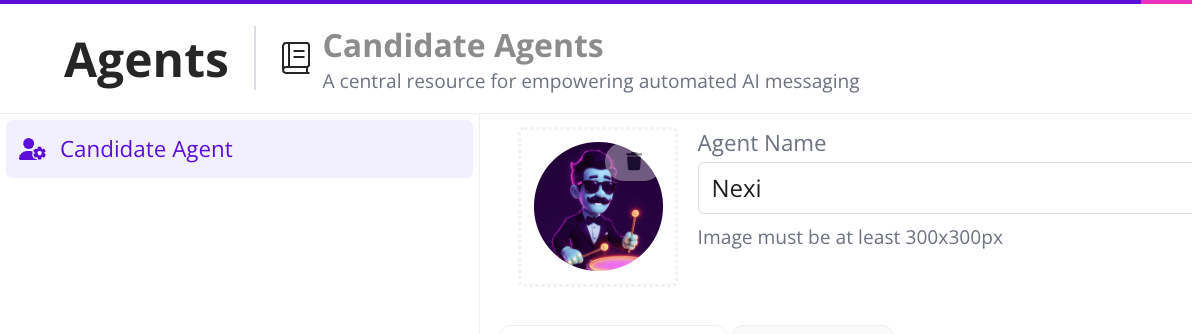
We launched the Orchestra AI Agent to review applications, prioritize candidates with matching skills, and answer candidate FAQs, embedding consistent intelligence directly into high-volume recruiting workflows.
Why this is awesome: Faster decisions with consistent signals.
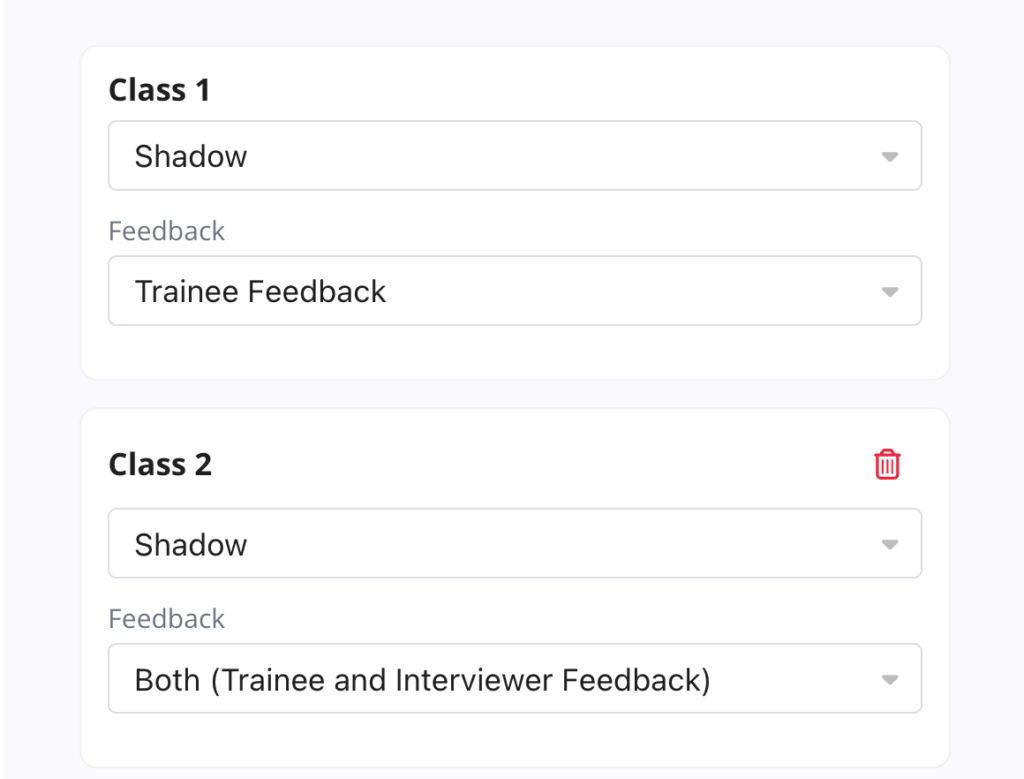
Interviewer Training
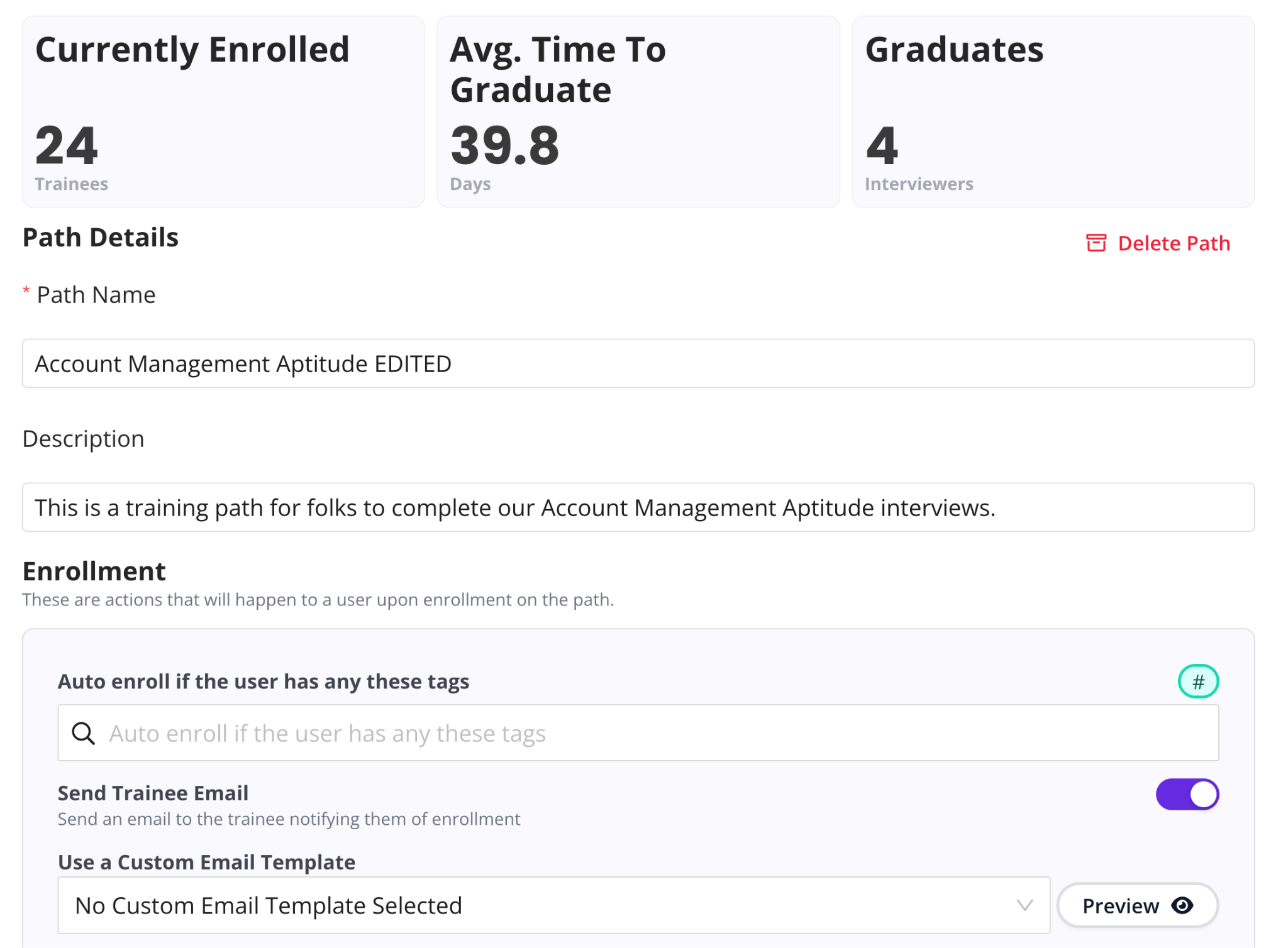
Interview training evolved with reading classes, on-the-fly enrollment, training KPIs, and feedback loops that connect interviewer readiness directly to interview execution.
Why this is awesome: Better interviews, less manual follow up and coaching.
Insights & Reporting
We expanded insights with Interview Time, Load Balance, Capacity Planning, cNPS benchmarking, and Bias Audit reports to give teams actionable, decision-grade visibility.
Why this is awesome: Clear visibility into what slows hiring
Orchestra Agent
Throughout the year, Orchestra Agent will mature from an intern level assistant to a capable member of your team to help automate repetitive tasks and eventually manage complex scenarios with minimum oversight.
Why this is awesome: Directly addresses the growing workload demands and shrinking resources of modern talent teams
Enterprise Essentials
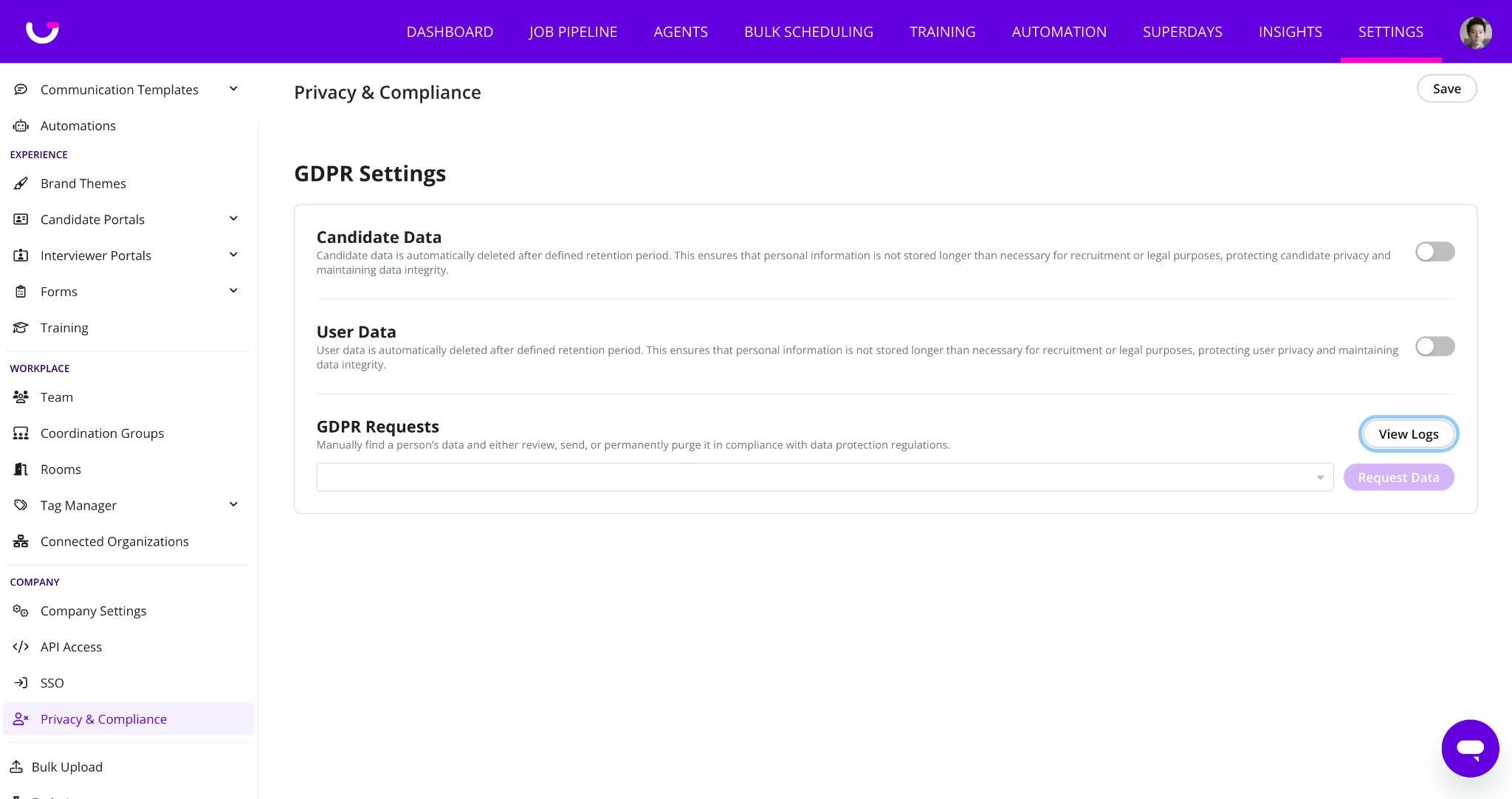
Enterprise Essentials strengthen GoodTime’s foundation with secure access, reliable integrations, and consistent core systems that large organizations depend on at scale.
Why this is awesome: Enterprise reliability, security, and compliance without operational overhead.
Interview Intelligence
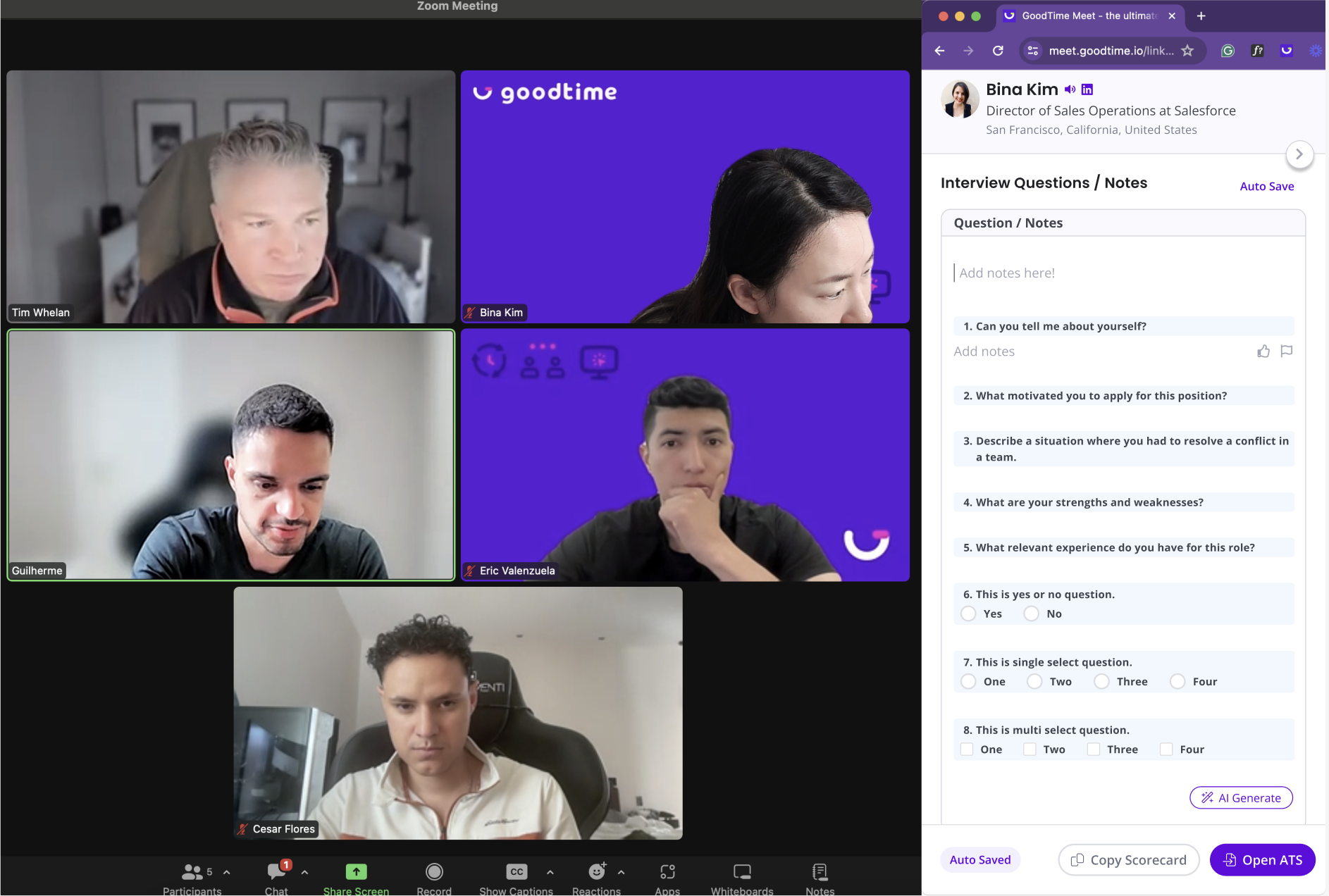
Interview Intelligence records, transcribes, and structures interviews so insights improve consistency, reduce bias, save recruiter time, and flow directly into GoodTime’s automation and workflows.
Why this is awesome: Better decisions, less busywork, no extra tools
Start using the latest GoodTime features!
We want to help you evolve and take full advantage of the latest upgrades and improvements to our platform. Check out the GoodTime support center for tutorials and tips to help you stress less and get more done!
In 2026, hiring is about so much more than filling open roles—it’s about creating the exceptional hiring experiences that continuously grow a world-class workforce.
We surveyed over 500 TA, HR, and recruitment leaders to get the real scoop on what’s working and what’s not. You can find all of our findings and the experts’ advice in the 2026 Hiring Insights Report, but in case you’re short on time, I’ve got the seven of 2026’s talent acquisition trends that you can’t miss if you want to hit hiring goals in the coming year.
Unlock 2026’s top hiring strategies: Insights from 500+ TA leaders
Be the first to uncover deep hiring insights specific to your sector — straight from the highest-performing TA teams.
1. AI adoption is surging, with 93% of TA leaders planning additional technology investments in 2026
99% of the leaders we surveyed said their teams used some form of automation or AI in the past 12 months. And most did so with the goal of limiting ‘administrivia’, as Jonathon Wall calls it. Jonathon is the Founder of Cassillon.AI and a seasoned recruiting leader with over two decades of experience. More recently, he has focused on helping companies use automation and AI to hit their goals.
“We should be leveraging automation and AI to do those things that aren’t fun,” he tells us. “Recruiting is a very defined process and a lot of what I call ‘administrivia,’ it’s the stuff that recruiters don’t like… They kind of keep us from doing the things that really are our superpowers. We’re people people. The message I would give is to leverage all of those tools so that you can have higher-quality human interactions.”
2. Tech investment leads to higher goal achievement
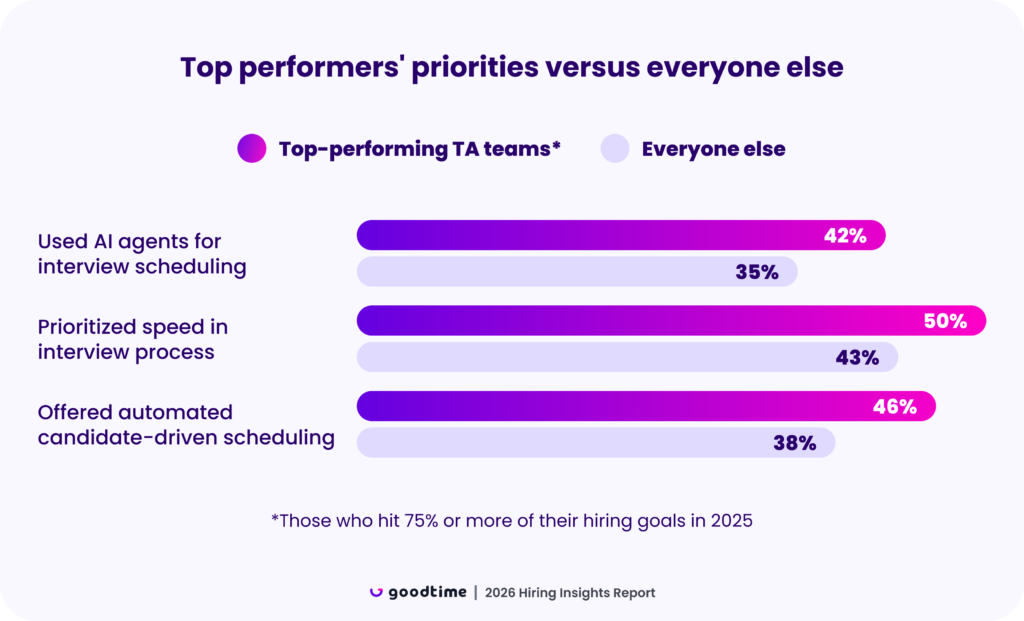
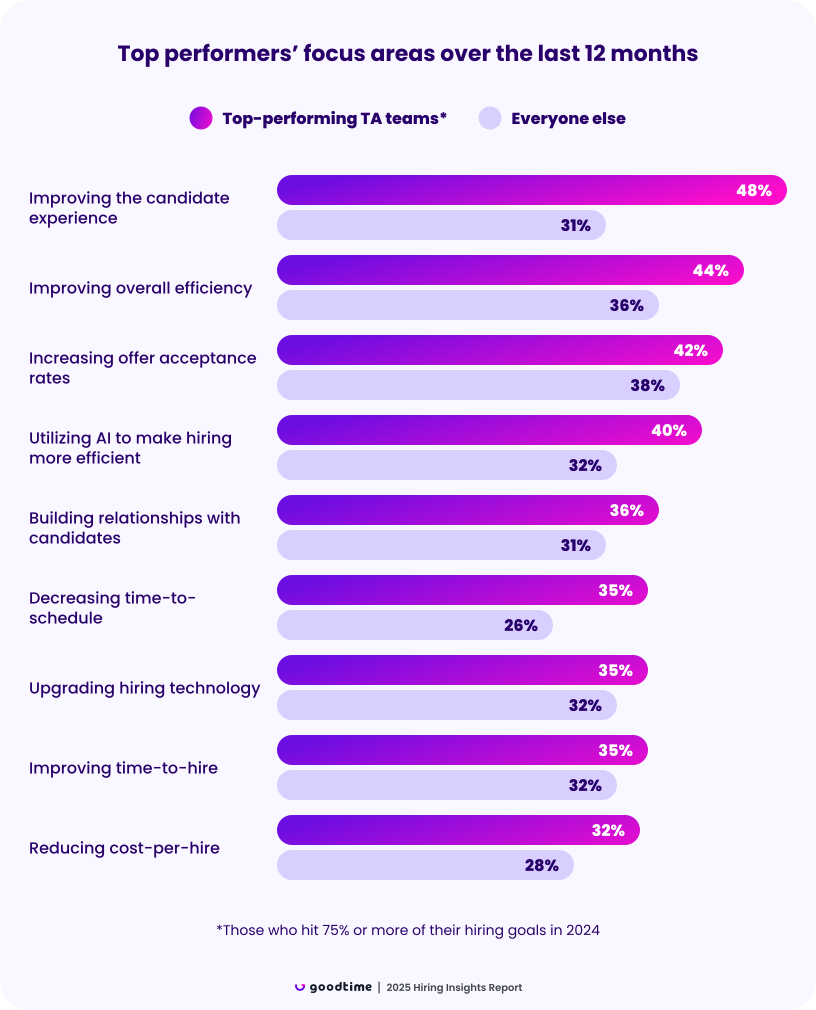
For our report, we analyzed top-performing TA teams — those who hit 75% or more of their hiring goals over the last 12 months — to see what they did differently and what their focus areas are for 2026.
Compared to everyone else, the highest-achieving recruitment teams were 40% more likely to focus on upgrading their hiring technology.
Drilling into specific tech, top performers were:
28% more likely to adopt automated, candidate-driven interview scheduling
25% more likely to use AI-powered interview scheduling tools
28% more likely to use AI-powered analytics and reporting
3. Texting candidates the right way
In 2023, nearly every company reported that their talent aquisition teams embraced text recruiting in the past year.
And most companies (52%) are doing so through a centralized platform or text recruiting software. That’s good news because when recruiters text candidates from personal cell phones, or even from a company-provided phone, major compliance risks and process inefficiencies enter the chat.
Risks of texting candidates with a phone instead of a centralized platform:
Lack of visibility: You can’t see what your recruiters are communicating to candidates.
Non-standardization: Going off-script and outside of company systems leads to disconnected, inconsistent candidate experiences.
Inefficient handoff: If a recruiter has something come up or takes time off, there’s no way for someone else on the TA team to seamlessly pick up the conversation with a candidate.
Security and compliance risks: Personal phone use leaves organizations more vulnerable to data breaches, unauthorized access to sensitive information, and noncompliance with laws regulating unsolicited text messages.
4. The end of manual interview scheduling
As of the end of 2023, over half (51%) of companies were automating interview scheduling, contributing to the significant reduction we saw in the amount of time recruitment teams spent scheduling this year (from 42% in 2022 to 35% in 2023).
Let’s examine this talent acquisition trend against data from our platform, GoodTime, which automates all aspects of interview scheduling, from candidate communication and availability collection to new interviewer training, performance tracking, and reporting.
And that time savings can make a major impact on a team’s ability to achieve their goals.
TA teams that automated interview scheduling saw a 13% lift in hiring goal attainment in 2023 versus those that didn’t.
5. Talent retention becomes a shared responsibility
Talent retention broke out far and away as the top hiring challenge of 2023, cited by 34% of TA leaders. With 24% also observing a shortage of qualified candidates, the opportunity cost of replacing employees rises significantly. Not only must organizations invest more to recruit and train new hires, but they also face the added challenge of sourcing candidates who can meet the increasingly complex demands of today’s roles.
But to what extent are TA leaders actually responsible for employee retention? Manjuri Sinha, Global Director of Talent Success & DEI at OLX, thinks TA leaders absolutely share in that responsibility, as it starts with being authentic and realistic in the hiring process.
“I think selling great things about an organization just to get that hire — those days are gone. Today, we have to be really realistic about things,” she tells us. “People would ask you questions or say, ‘We heard last year you had 15 percent layoffs.’ If that’s the case, be very honest about it.”
In addition, she says TA teams can bolster talent retention by making sure to hire the right managers, who have a major influence on the employee experience. In the current high-pressure market, she says it’s also key to prioritize candidates who can clearly demonstrate adaptability and resilience.
6. Measuring quality of hire
The only way TA teams can know if they are hitting their goals is if they’re measuring their performance properly. We asked which recruitment metrics they’ve got their eye on in 2026.
Far and away, quality of hire was the most important, with a quarter of companies saying it’s their number one performance metric. And while surely every TA leader would say that quality of hire is important, it’s not as straightforward to measure as, say, application completion rate.
So how do you measure quality of hire? Craig Pyke, Director of Talent Acquisition at Rivian, recommends starting simple with data you already have: “You can look at attrition within the first 90 days as one indicator of quality of hire,” he shares. “And when you combine exit survey data of why that they’re leaving with the factor of them attriting within 90 days, you can really start to pinpoint if that’s a TA challenge or if that’s a challenge somewhere within the business. That’s super, super important.”
We like that Craig’s approach measures quality of hire as a function of talent retention, addressing the top challenge TA leaders pointed to in 2023. After all, the right hires will certainly stick around past their probationary period, and the wrong hires will churn and leave your team back at square one.
But what about the other metrics? Skyla Lambeth, Recruiting Operations Manager for Collective Health, laid out a simple starting point to help reveal efficiency gaps from your current data: “It’s crucial to monitor time-to-hire data. Pay close attention to pass-through rates, understanding how many candidates are required at the top of the funnel to make a job offer. Additionally, it’s vital to assess how many candidates successfully progress from the on-site stage or panel interview, especially when multiple people are involved in the interview process.”
7. Candidates are still king
One thing leaders from every sector (mostly) agreed on: The hiring landscape will become even more competitive in 2026 and candidate experience will become increasingly important.
To create a candidate experience that lands top talent in 2026, TA teams think they’ll need to focus on:
Quickly connecting with candidates (46%)
Spending more time building meaningful relationships with candidates (45%)
Increasing the number of candidate touchpoints in their process (42%)
And all of this needs to be done with leaner teams, with 45% anticipating challenges due to recruitment team turnover. Providing a stellar, but sustainable candidate experience requires focusing on the highest-value perks and touchpoints you can offer — the ones that will make a huge difference for candidates, but won’t wear heavily on your recruiting team’s limited resources.
“I would challenge every recruiter to apply to a job on their website and then apply to a job on their competitor’s website. Just spend the time going through and understand what your process is already and you will immediately find ways to improve your candidate experience.”
Amanda Richardson, CEO and Head of People | CoderPad
Another way to ensure you’re making the most of your team? Establishing a reliable and realistic recruiter capacity model.
Use these trends to win top talent in 2026
So how do we put these talent acquisition trends into action? Of course, it will depend on the needs of your specific organization, but you can’t go wrong with a dual approach of embracing new tech and optimizing your processes. Here are three key themes to put on sticky notes:
Embrace automation and tech to hit more of your hiring goals. Top-performing TA teams were 40% more likely to focus on upgrading hiring technology.
Renew your commitment to understanding candidates — and addressing their evolving preferences and needs.
Take it back to basics and enforce standardized processes to support efficiency efforts as well as eliminate unconscious biases.
December brought a powerful set of product updates designed to give talent teams deeper insight, faster coordination, and smarter automation across the interview lifecycle. From a fully revamped Interview Time Report to real-time interviewer availability and expanded workflow automation, these enhancements are all about helping teams move faster — with more clarity and control.
Whether you’re analyzing how interview time is distributed across roles and teams, nudging interviewers to respond and submit scorecards directly in Microsoft Teams, planning interviews with real-time calendar accuracy, or building sophisticated, decision-based automations that reflect how your process actually runs, these updates are built to eliminate busywork and elevate the experience for coordinators, interviewers, and candidates alike.
Let’s dive into what’s new — and why it’s awesome.
Watch the full December 2025 GoodTime product updates webinar or keep scrolling for highlights
Interview Time Report
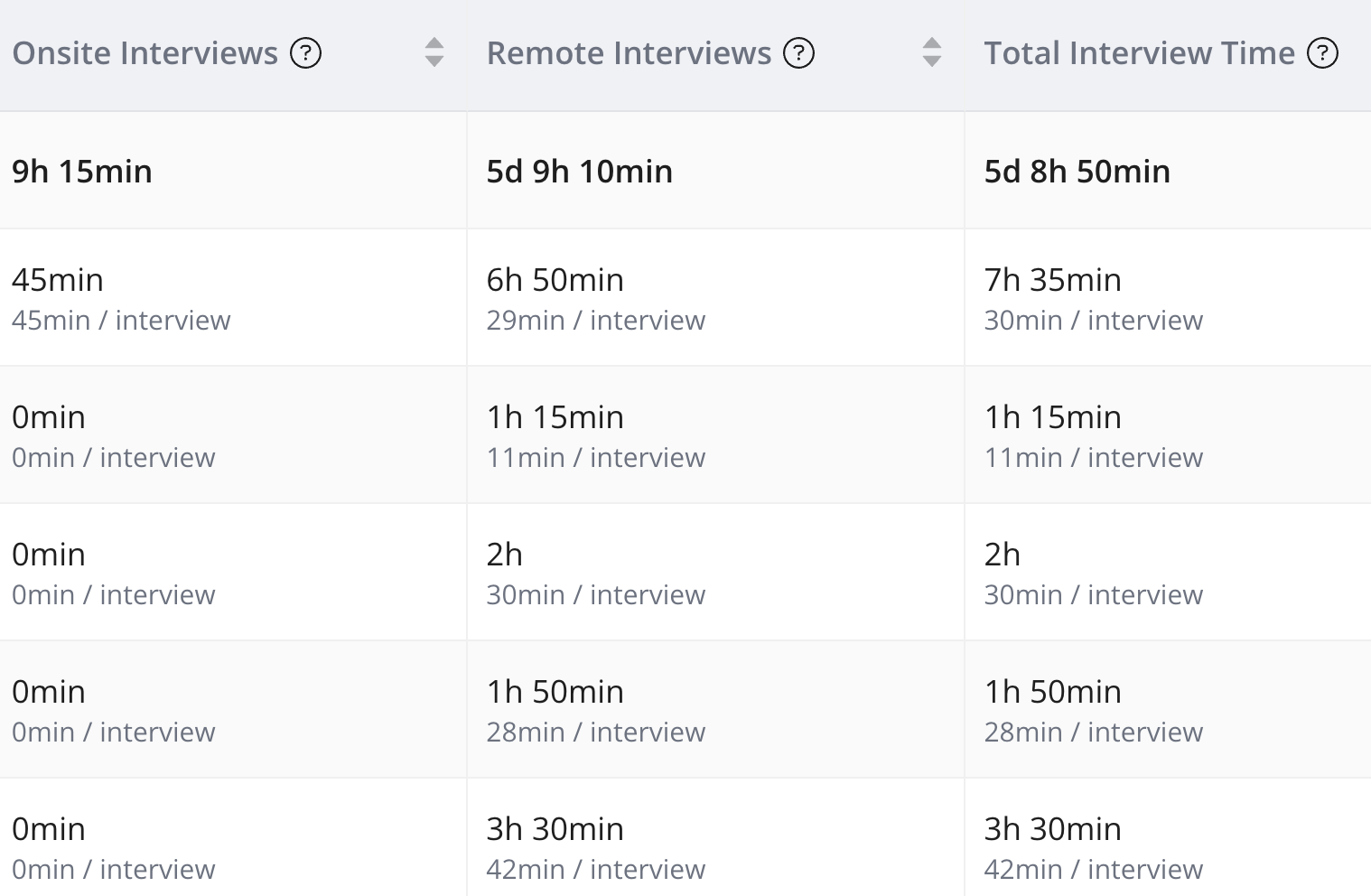
The legacy Interview Time report has been revamped in a new format that loads wider date range with more dimensions and more information.
Why this is awesome: The number of interviews only paints part of the picture. Being able to accurately report on how much time each person or tag spends completes it. It’s also an excellent way to see how much time has been spent on various jobs or departments.
MS Teams Chat Integration
The highly popular Reminder & Chat Integration is now available for Microsoft Teams customers. This integration automates and ensures that interviewers are reminded to respond to interviews and fill out their scorecards.
Why this is awesome: This feature automates dreary coordinator tasks AND increases response & scorecard submission rates, which are both critical for high-performance hiring.
Real Time Interviewer Availability
The calendar availability for interviewers, tags & templates now updates in real time when the calendar of your interviewers are updated.
Why this is awesome: Real-time availability empowers coordinators to do more accurate planning, but also get faster results when searching for interview times or replacing interviewers.
New Automated Workflow Builder
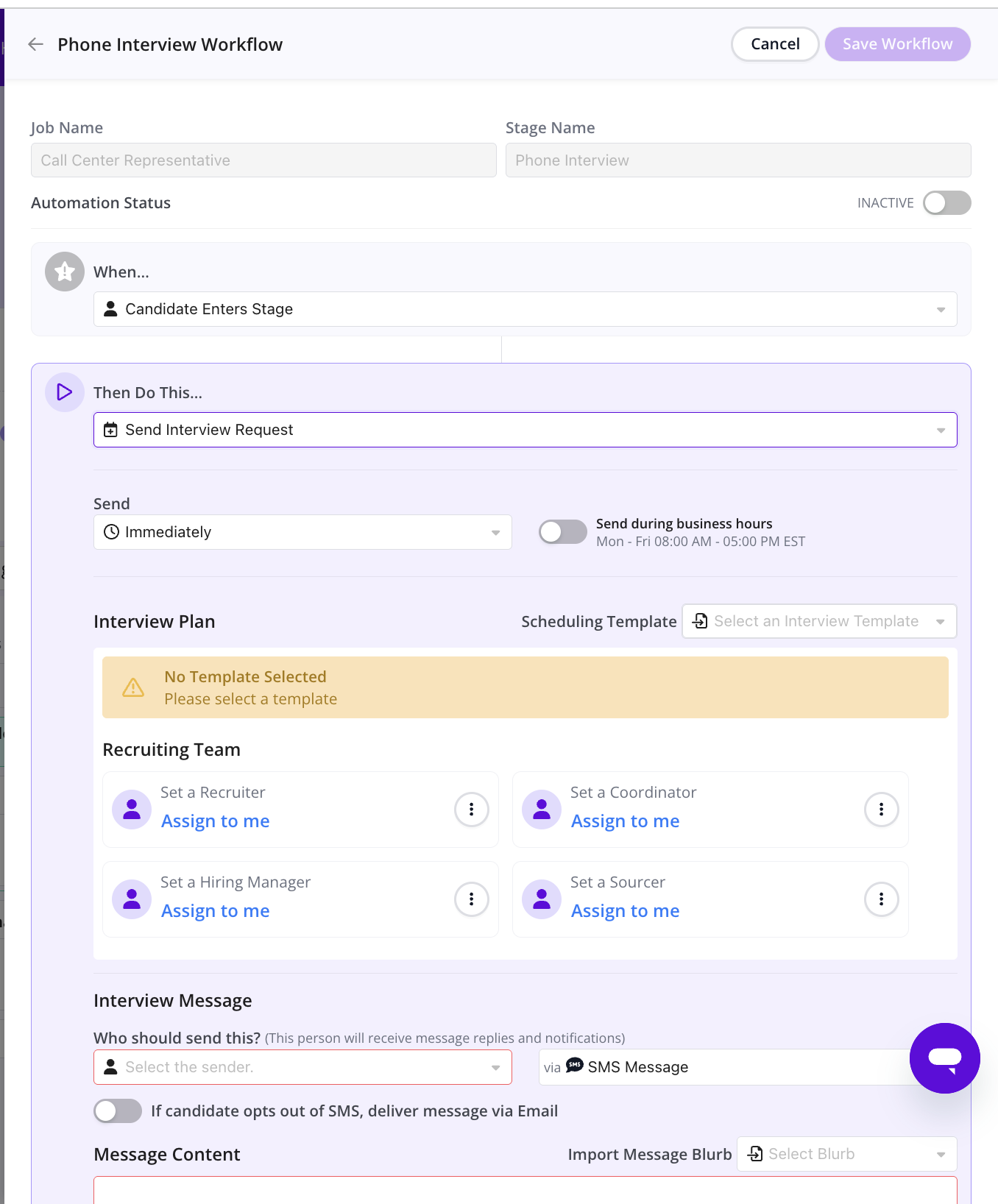
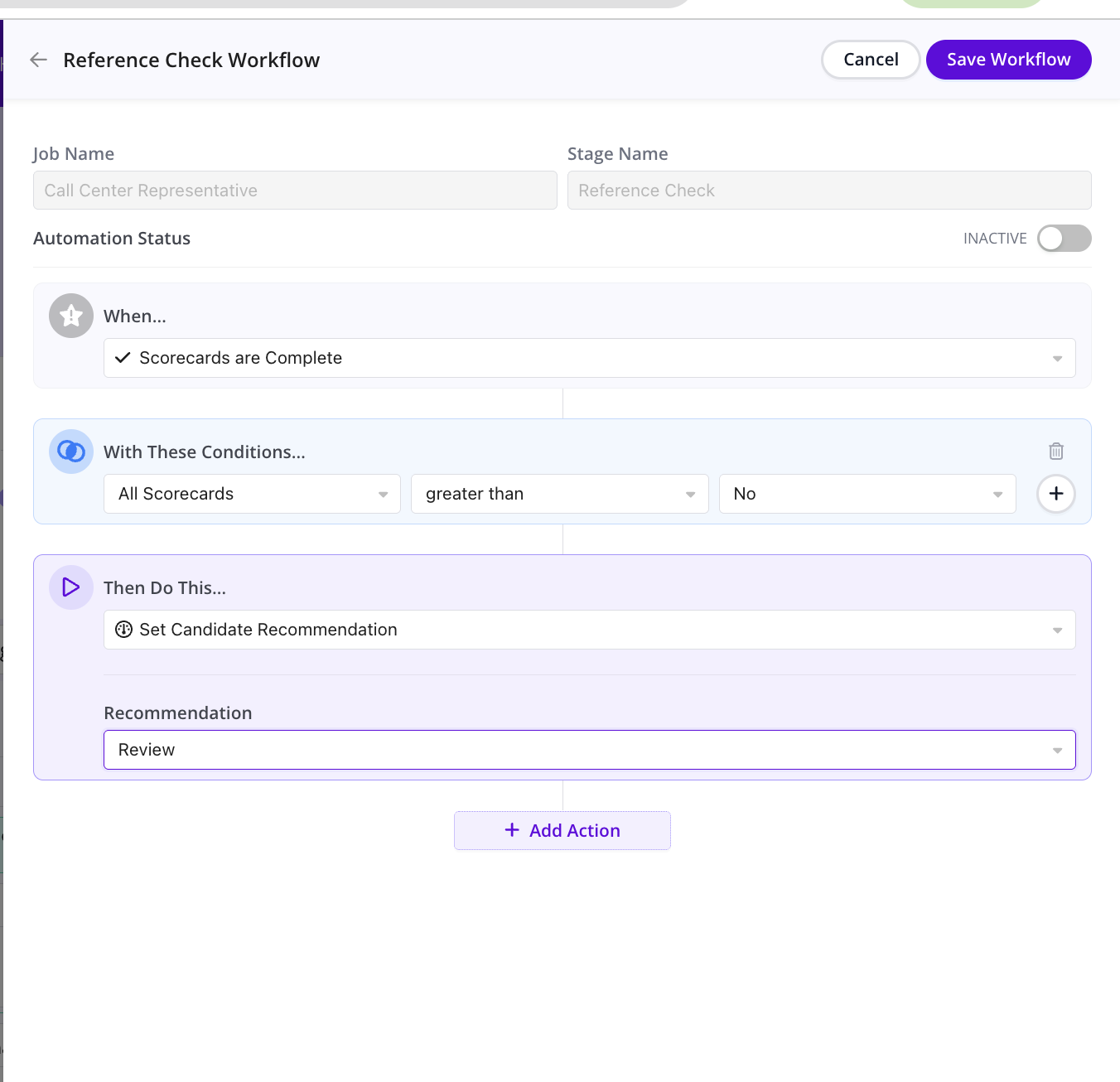
You can now create multiple automated workflows per stage, with a cleaner, more intuitive builder that makes it easy to manage complex automation across the interview lifecycle.
Why this is awesome: Creating and managing complex automations is easier than ever!
Conditional Logic for Automated Workflows
Automations can now trigger actions based on conditional logic, like scorecard outcomes, enabling smarter decisions such as progressing candidates or canceling roundups.
Why this is awesome: This unlocks a whole new class of sophisticated, decision-based automations that mirror how your process actually operates
Start using the latest GoodTime features!
We want to help you evolve and take full advantage of the latest upgrades and improvements to our platform. Check out the GoodTime support center for tutorials and tips to help you stress less and get more done!
November brought a powerhouse lineup of enhancements designed to make hiring more efficient, equitable, and effortless. From brand-new compliance safeguards to smarter automation and richer communication tools, this month’s updates are all about helping teams move faster and make better decisions.
Whether you’re monitoring the fairness of your AI-driven candidate matching, keeping coordinator workloads balanced, or fine-tuning interview plans and templates, these updates are built to streamline your workflow and elevate the candidate and coordinator experience.
Let’s dive into what’s new—and why it’s awesome.
Watch the full November 2025 GoodTime product updates webinar or keep scrolling for highlights
AI Bias Audit Report
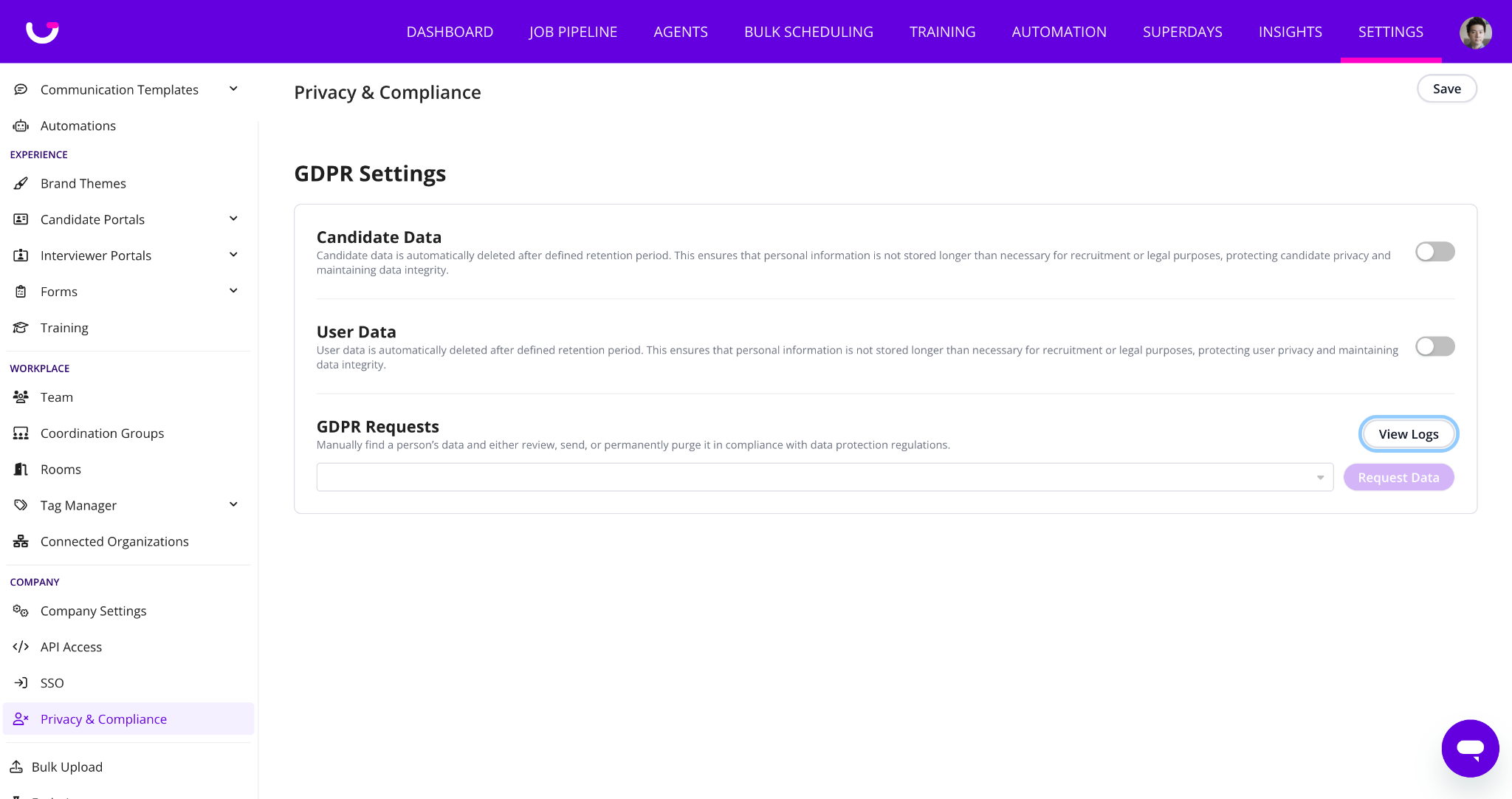
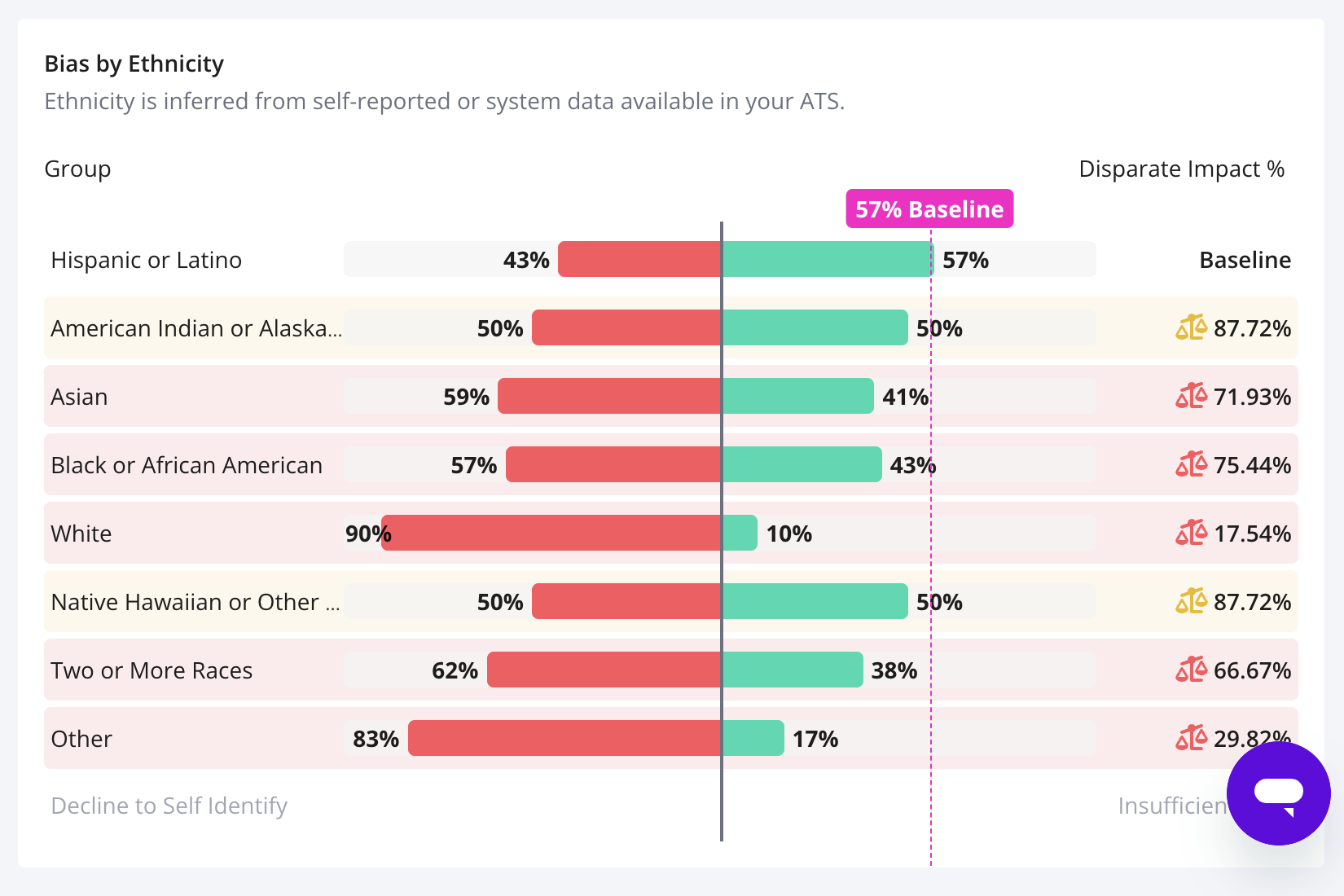
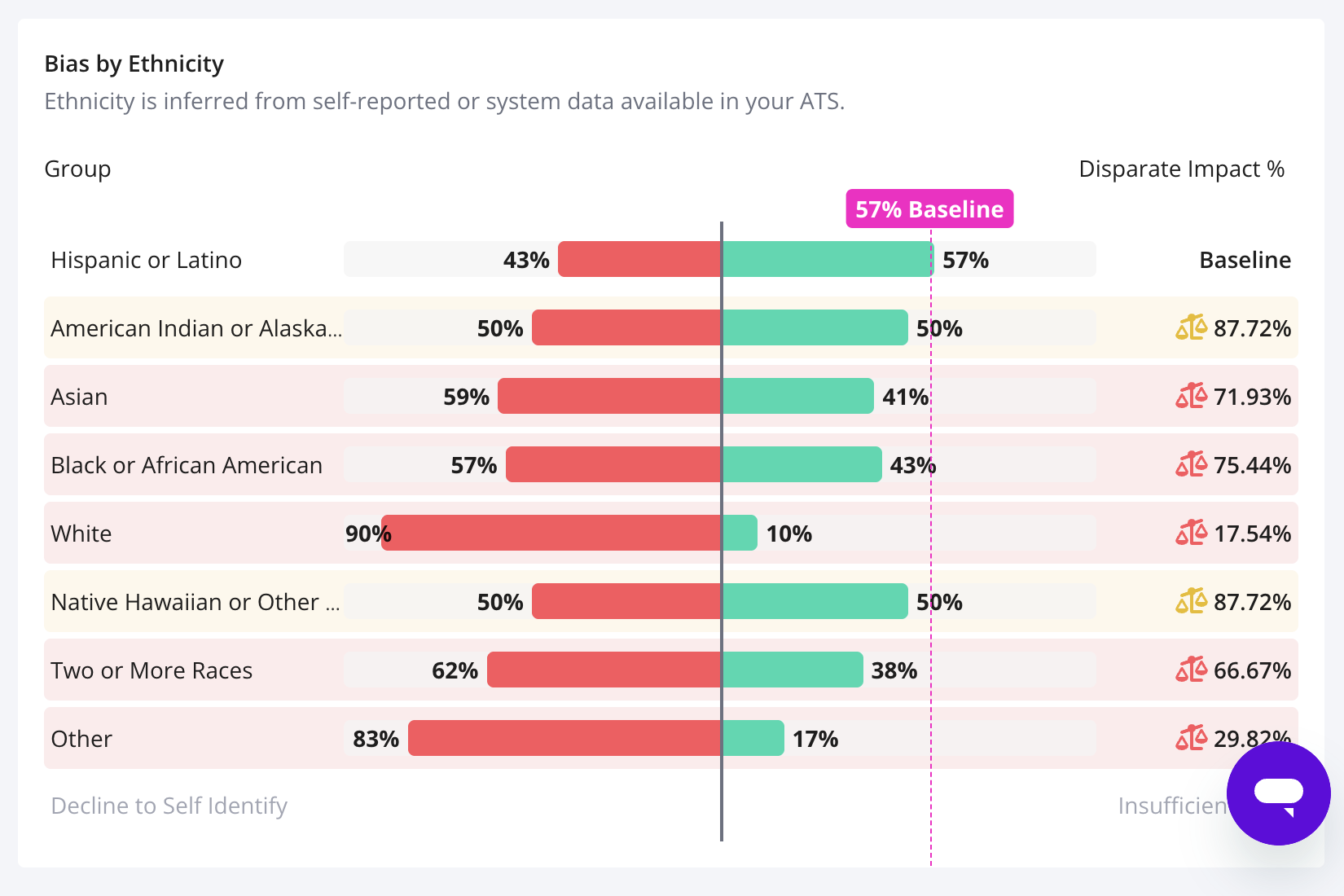
The all new AI Bias Audit report allows you to monitor GoodTime’s AI Matching suggestions by gender and ethnicity to ensure compliance in accordance to New York Local Law 144 and similar regulation.
Why this is awesome: As GoodTime’s AI Match helps find the absolute most ideal candidates in your tall stack of applications, it’s vital to stay compliant and ensure that your automated screenings are not biased.
On The Fly Training Enrollment
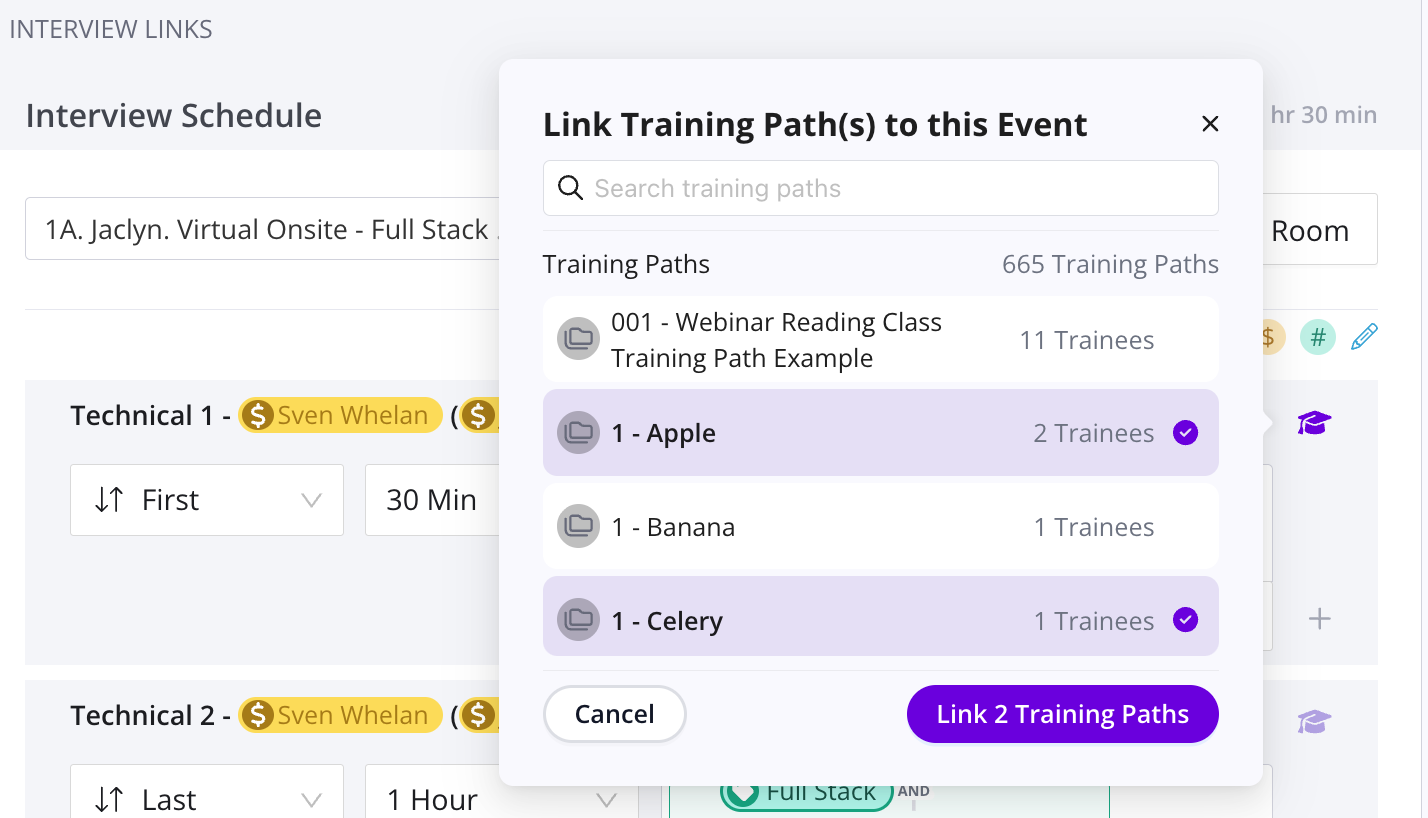
We’ve all scheduled an interview and wanted to add a trainee last minute, only to remember that the trainee has not been enrolled in their training path yet. Now you can do it on the fly!
Why this is awesome: This update makes it way faster to enroll the new trainee and avoids having to disrupt your scheduling flow. A smoother user experience that also saves you a ton of time.
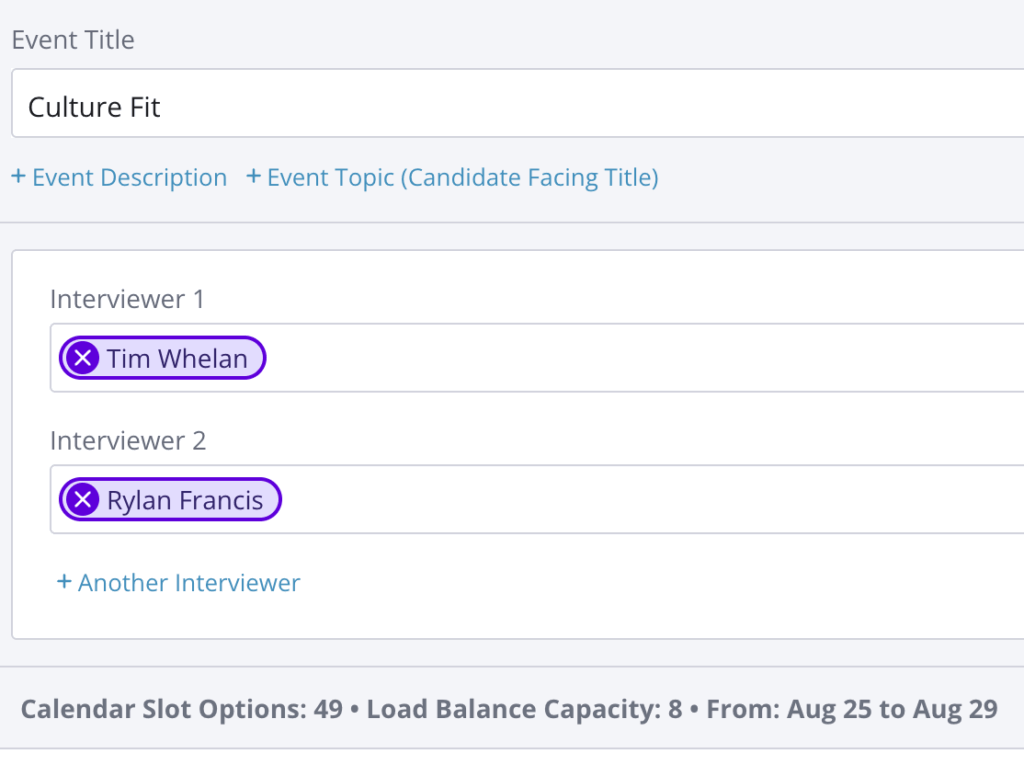
Interview Load Balance Report Updates
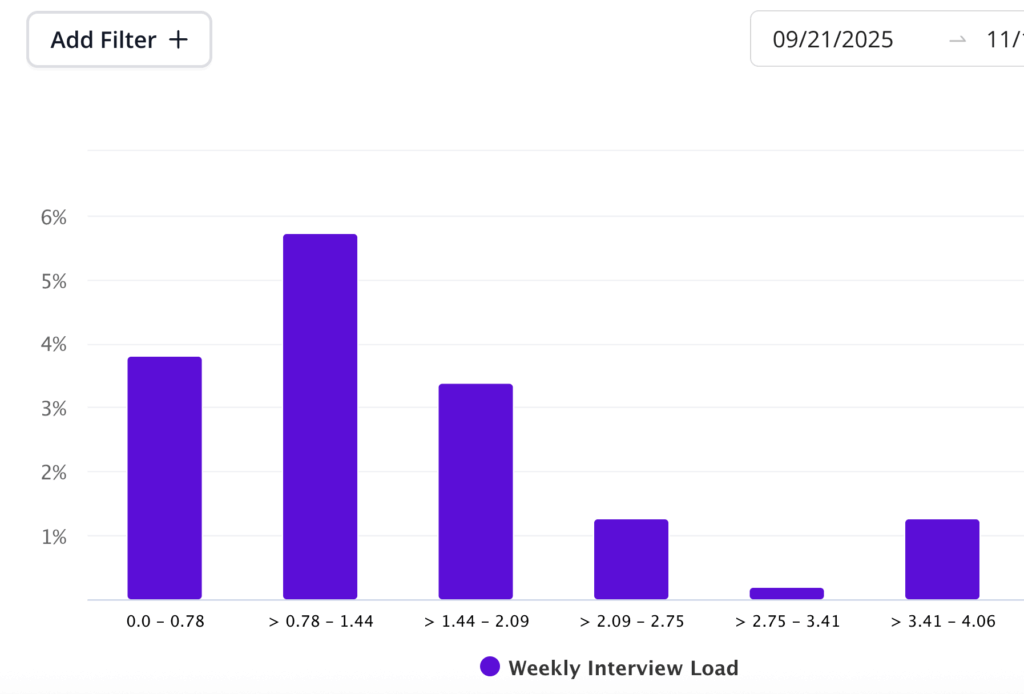
The Interviewer Load Balance Report can now see into the future. Monitor the planned, but not yet completed workload for your different teams in order to make any necessary adjustments (up to 4 weeks into the future).
Why this is awesome: This update helps keep an eye on workload distribution not just for what has happened, but what is coming in the future so that you can take action before it’s too late.
Rename & Delete Folders
Last month we introduced folders to GoodTime’s Interview Templates. As a small update, we want to make sure you know that you can rename and / or delete these folders as well.
Why this is awesome: Mistakes happen and things change. Renaming and delete capabilities just make things easier.
New Rich Text Editor for Superdays
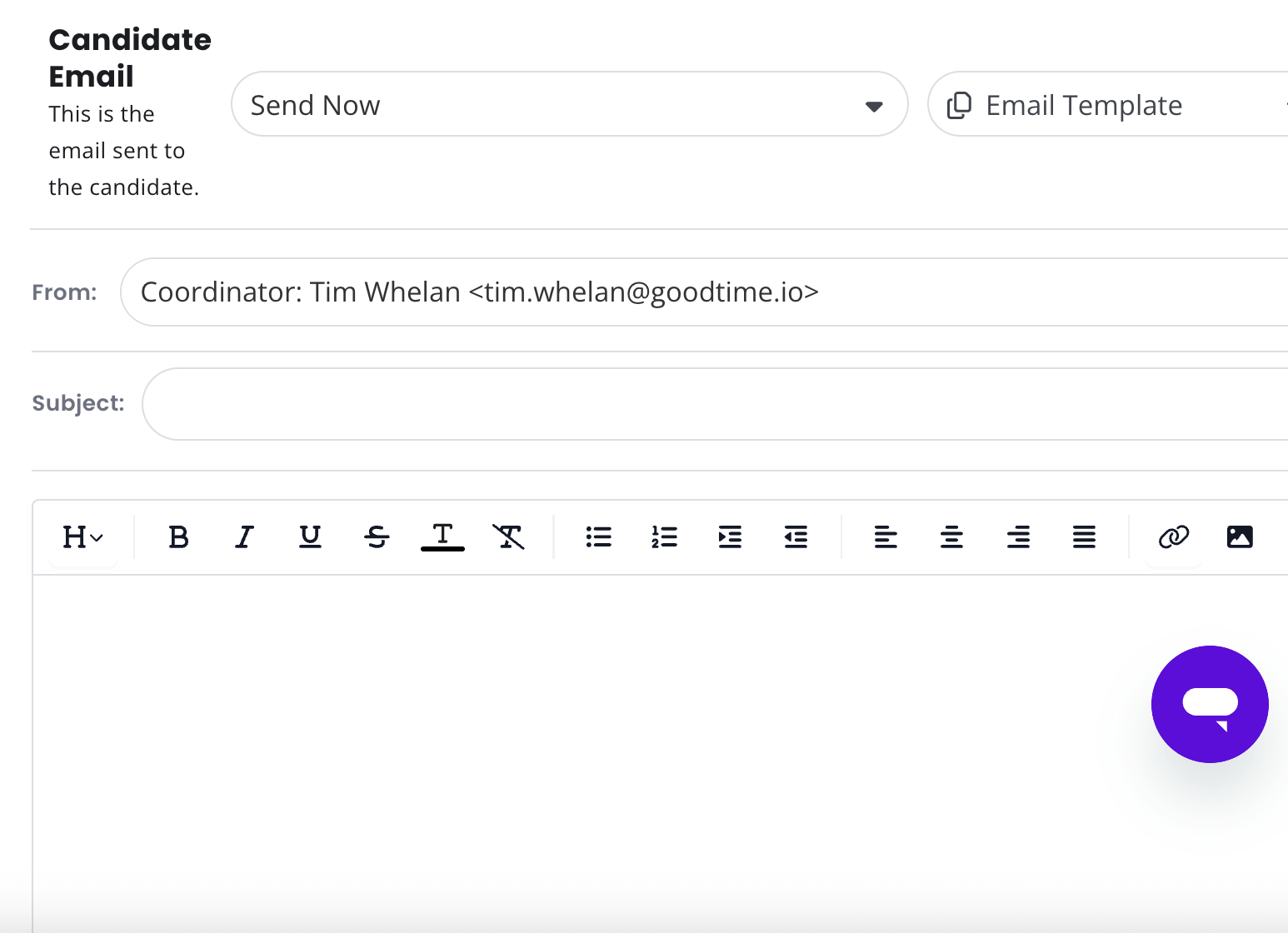
Superdays is one of the best ways to schedule and communicate large volume of interviews in one go. Now it’s possible to do with the all new Rich Text Editor from GoodTime that supports embedding of images, more formatting than ever and much more.
Why this is awesome: This new update ensures that your Superdays scheduling conform to your other GoodTime communications and leverages your upgraded templates.
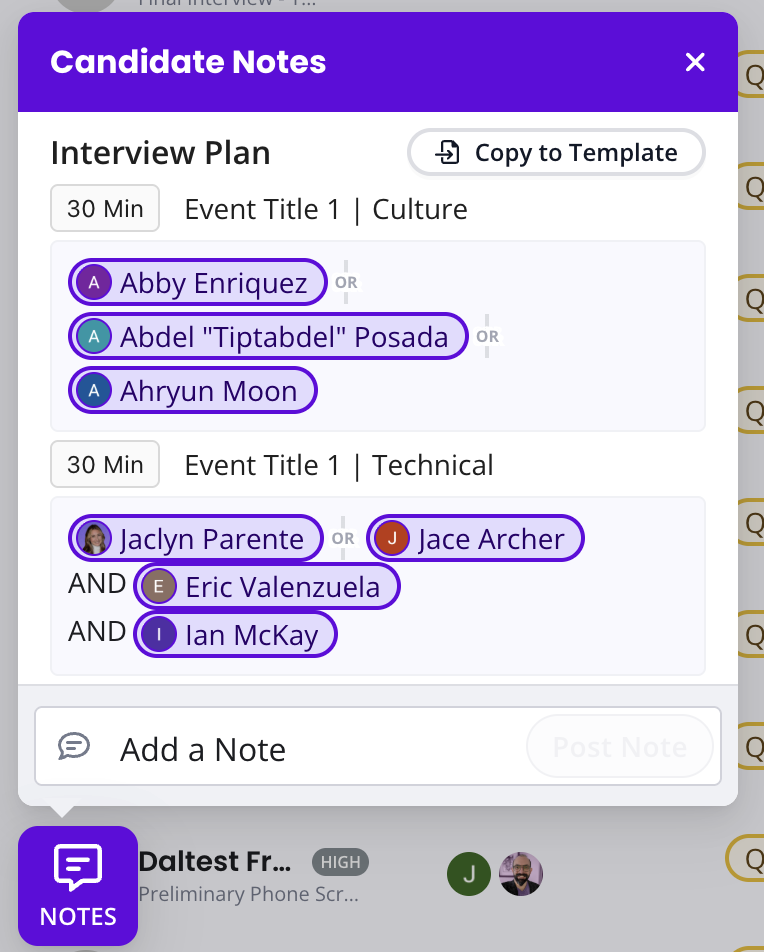
Handoff Interview Plans
Recruiters can now create structured interview plans directly in GoodTime including topics, event order, duration,
number of events, interviewers, and even tags. No more buried Google Docs or note-hunting, everything is captured in a clean interface that coordinators can instantly import into their interview templates.
Why this is awesome: Interview plans are finally centralized and actionable resulting in clearer recruiter → coordinator communication and fewer scheduling mistakes.
Queue Balancing
A new automation that distributes interviews evenly across coordinator groups using round-robin assignment, with an optional mode that only assigns to coordinators during their working hours which prevents interviews from landing on someone who’s off and reduces the need for manual pickup.
Why this is awesome: Handoffs become balanced, fair, and predictable. Teams avoid accidental weekend/after-hours assignments and coordinators get an equal, workload-aware distribution of interviews.
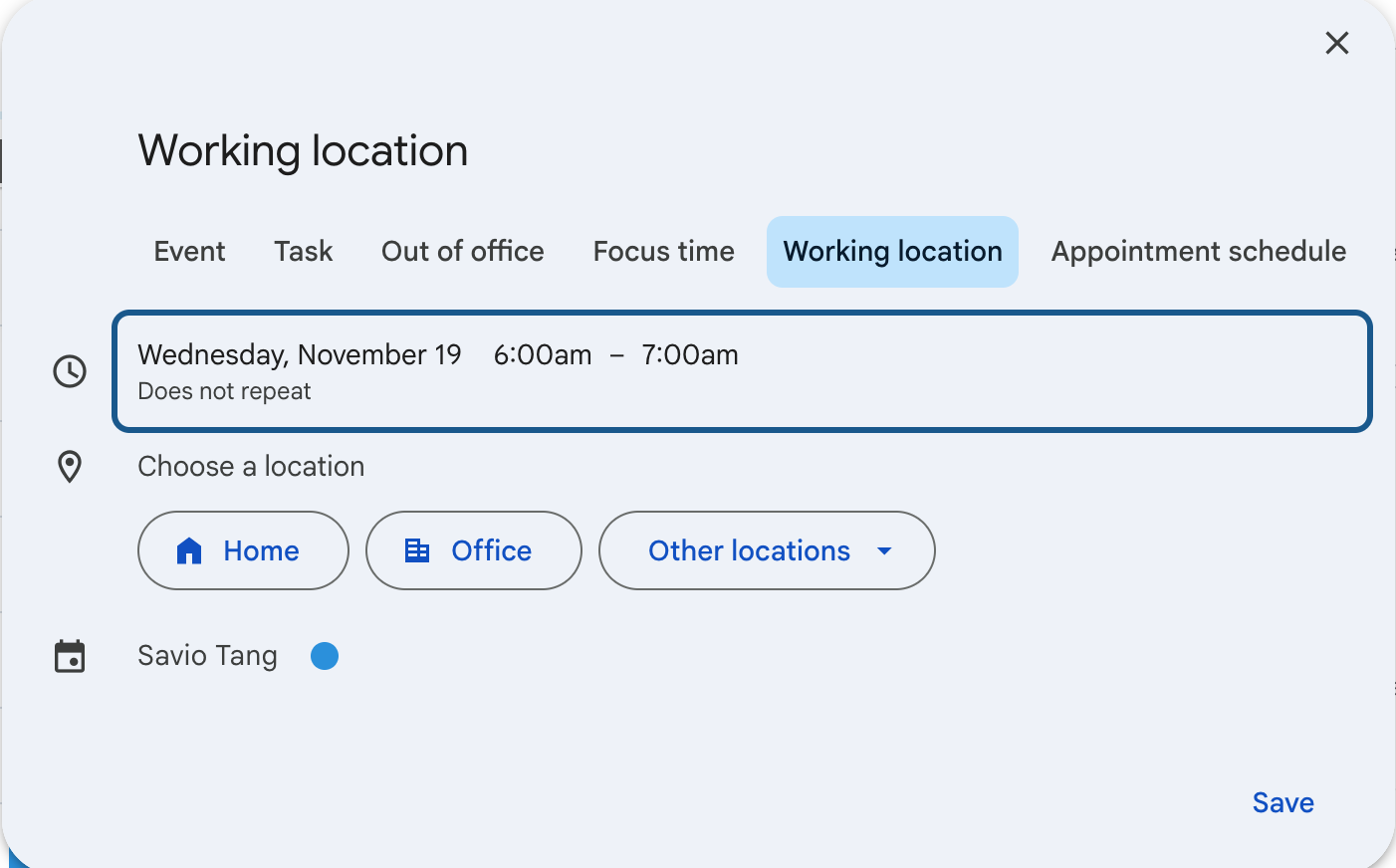
Support for “work from elsewhere”
Why this is awesome: Both Google Calendar and Microsoft Outlook support a setting that indicates a person working from home or elsewhere. GoodTime is adding support for those settings.
CodeSignal Integration
We enhanced our Integration with CodeSignal.
Why this is awesome: Easily generate a Coding Test session that is linked to predefined Coding Test Template in CodeSignal.
Start using the latest GoodTime features!
We want to help you evolve and take full advantage of the latest upgrades and improvements to our platform. Check out the GoodTime support center for tutorials and tips to help you stress less and get more done!
Our October Product Update Webinar introduced smarter scheduling and stronger insights to make hiring more efficient. Highlights included On-the-Fly Template and Training Path Linking to streamline interviewer training, and a redesigned Candidate Surveys page that gives clearer visibility into response rates and overall candidate sentiment.
Let’s dive into what’s new this month.
Watch the full October 2025 GoodTime product updates webinar or keep scrolling for highlights
On the Fly Template<>Training Path Linking
Sometimes everything doesn’t go as planned. Like when you want to schedule a trainee and you haven’t linked your path to your template. Now this problem disappears with On the Fly Template linking!
Why this is awesome: Achieve your scheduling goals and crank out more trained interviewers without slowing down to leave your scheduling flow.
Job Pipeline Scorecard Results
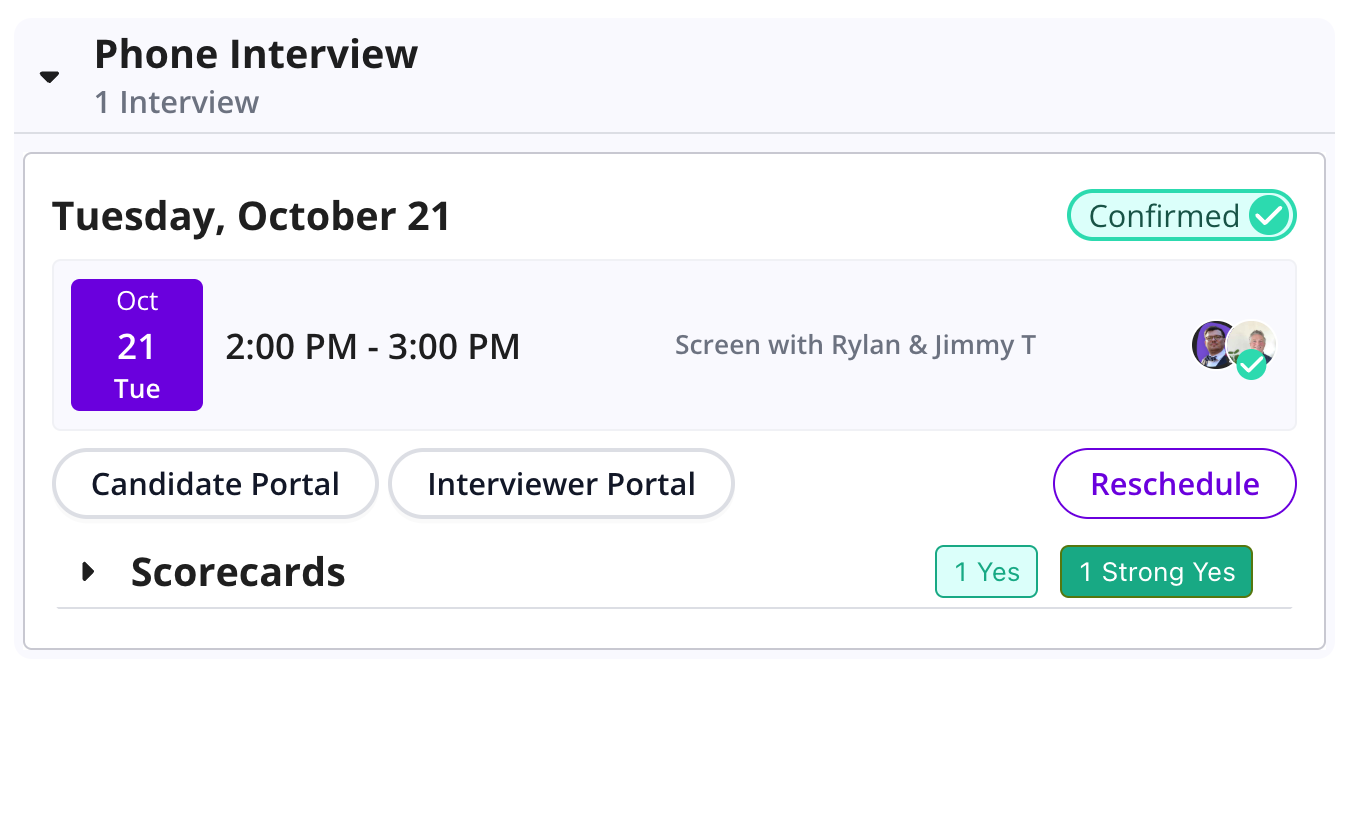
Scorecard results from Greenhouse and Questionnaires / Competencies from Workday now show up automatically in the Job Pipeline so that you can make critical decisions faster with more certainty.
Why this is awesome: The number one way to secure top talent is to move fast and that starts with quick decision making and stage advancement / rejection.
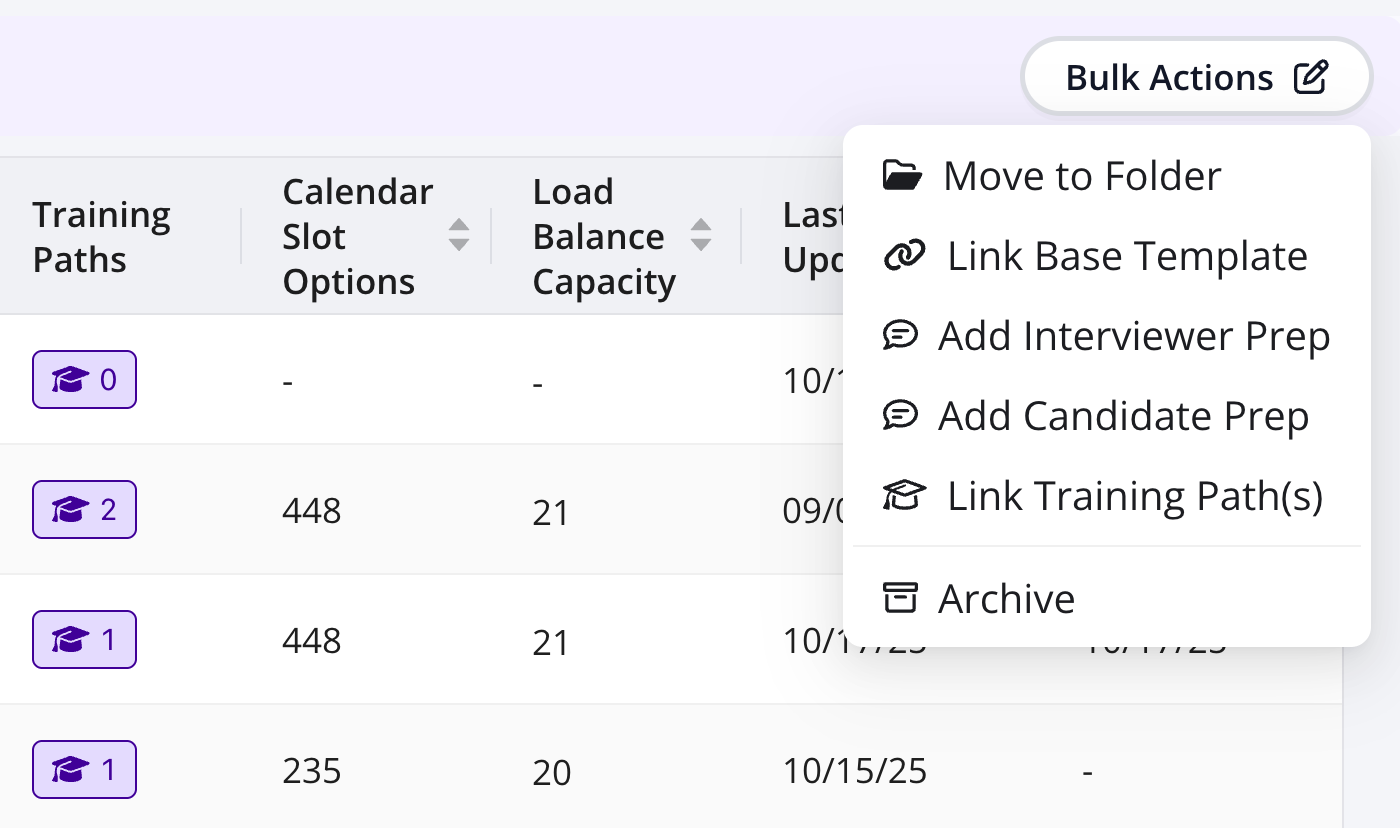
Interview Template Folders
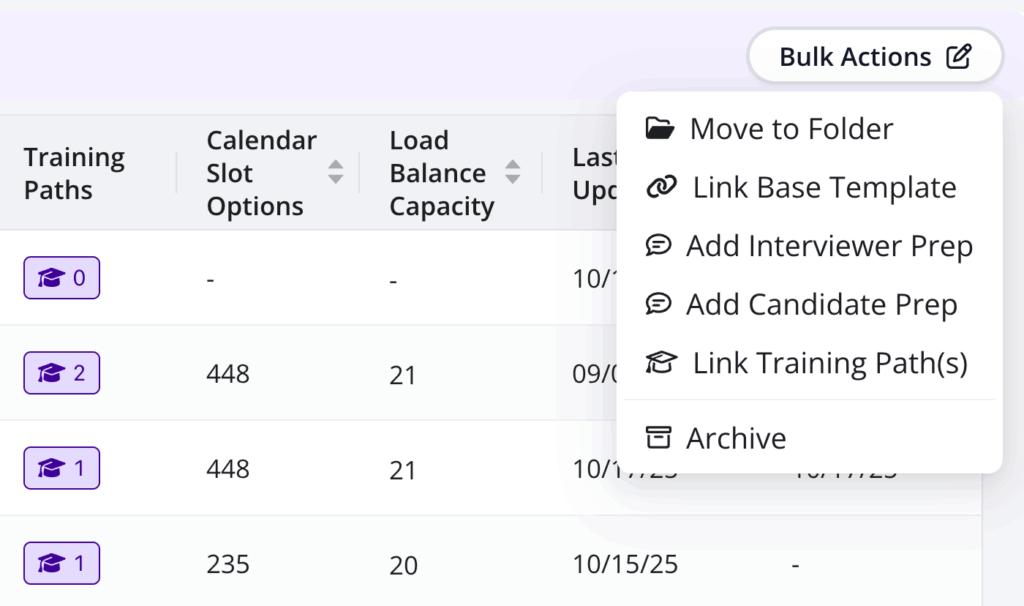
Brought to you by popular demand, Interview Templates now have folder organization, last used data and bulk actions.
Why this is awesome: These tools will not only enable you to focused on your used folders and clear out the clutter of the non used ones, but also let you assign surveys, prep forms and training paths to hundreds or thousands of templates in seconds.
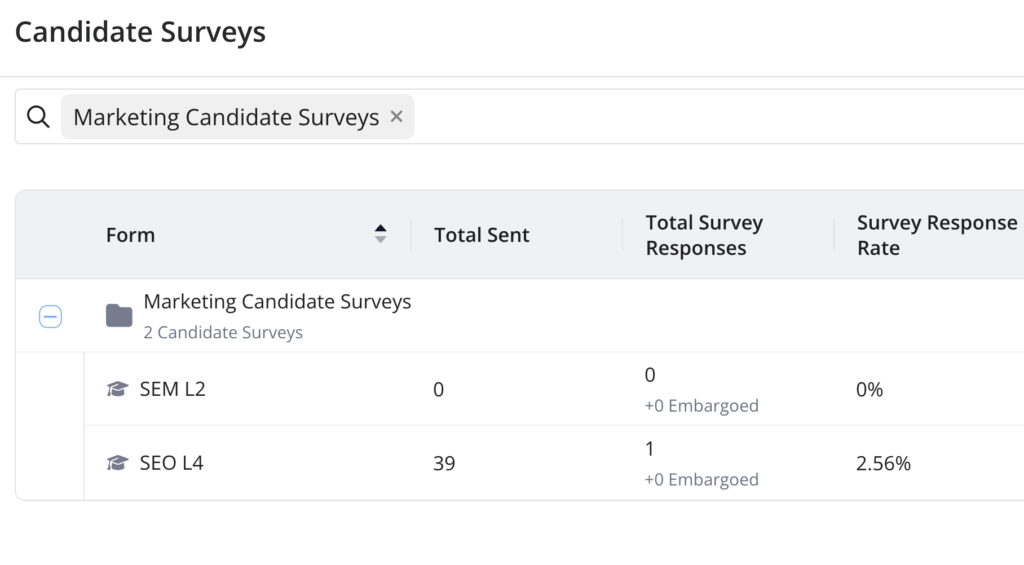
New Survey Page
The Candidate Surveys page has been revamped to provide all the necessary insights such as number of sends, response rates, embargo volume and associated cNPS score.
Why this is awesome: This data brings clarity to where surveys responses are high, where there may be survey fatigue or if a certain cluster of surveys has unusually high or low performance.
Start using the latest GoodTime features!
We want to help you evolve and take full advantage of the latest upgrades and improvements to our platform. Check out the GoodTime support center for tutorials and tips to help you stress less and get more done!
For global enterprises, hiring has always been a high-stakes balancing act. The scale and complexity of operations demand efficiency and precision, yet the best talent decisions are made through empathy, relationships, and human insight. Talent acquisition leaders are constantly being asked to do more with less — to move faster, with smaller teams, and to deliver exceptional candidate experiences across dozens of time zones and functions.
Now, a new force is reshaping what’s possible. Intelligent AI agents — not static chatbots or basic automation, but software that can think, act, and orchestrate work — are quietly transforming the foundation of enterprise recruiting.
As Hung Lee, founder of Recruiting Brainfood and moderator of a recent fireside chat with S&P Global, put it, “2025 may be the year we look back on as when AI agents truly arrived in our day-to-day work.”
That prediction is already proving true at S&P Global, where a sweeping transformation led by Tiffany Clark, Global Head of People Solutions & Wellbeing, has redefined what enterprise hiring looks like at scale. Facing a post-merger hiring surge and 41-step interview scheduling processes, her team embraced AI-powered orchestration to remove 80% of manual work — and, in the process, unlocked a more human experience for candidates, hiring managers, and recruiters alike.
What makes this story worth studying isn’t just the technology. It’s how S&P Global approached transformation: methodically, people-first, and focused on redefining how humans and AI can collaborate. This is the new frontier of talent acquisition — where enterprise consistency meets empathy, and AI acts as the digital workforce behind every great hire.
Unlock 2026’s top hiring strategies: Insights from 500+ TA leaders
Be the first to uncover deep hiring insights specific to your sector — straight from the highest-performing TA teams.
The catalyst for change: Mergers, scale, and opportunity
For S&P Global, the push toward transformation wasn’t born from curiosity about new technology — it came from necessity. When S&P Global merged with IHS Markit in 2022, the combined organization suddenly spanned six global regions, with thousands of hires flowing through an already complex talent ecosystem. Processes were duplicated, tech stacks were fragmented, and hiring coordination had become an operational bottleneck.
As Tiffany Clark recalls, the merger was both a challenge and an opportunity.
“When we merged with IHS in 2022, our volume skyrocketed — more processes, more workflows. We needed to unlock productivity for our people team, not just add more steps.”
The new scale exposed what many enterprise TA leaders already know: complexity compounds fast. Even with the best recruiters and systems, manual coordination across continents can slow everything down — eroding candidate experience and putting hiring teams under pressure to deliver results faster than ever.
Rather than layering on another tool or hiring wave after wave of coordinators, Clark and her team made a bold decision: to reimagine their hiring operations from the inside out. That meant moving beyond traditional automation — which only pushes buttons faster — and embracing an approach that could think, act, and orchestrate across their entire ecosystem.
It was the start of a journey toward what Clark describes as “human-centered automation” — powered not by macros and workflows, but by intelligent AI agents capable of understanding context, making decisions, and freeing people to focus on the work that truly matters.
From automation to orchestration: What agentic AI really means
Across enterprise HR, automation has long promised relief from manual busywork — yet for many teams, it only accelerated the motions of outdated processes. Email templates, workflow triggers, and reminders can make hiring faster, but not necessarily smarter. That’s the distinction Tiffany Clark draws when describing what separates “traditional automation” from the new era of agentic AI.
“Traditional automation is linear — it moves steps along the process. Agentic AI orchestrates all those activities, making decisions and acting across systems in real time.”
At S&P Global, this distinction was more than technical — it was cultural. Instead of treating AI as a background efficiency tool, Clark’s team saw it as a partner in transformation. The AI agents deployed through GoodTime didn’t just automate reminders or schedule requests; they learned, reasoned, and acted. They could analyze calendars, coordinate time zones, update systems, and optimize interview sequences — all while keeping recruiters and hiring managers informed.
“It’s how the agents unlock productivity,” Clark explained. “They handle orchestration, not just execution — leveraging data and insights to make more informed decisions.”
For Charles Mah, GoodTime’s Chief Operating Officer, that’s precisely where the shift becomes profound.
“Automation is great at linear transactions,” he noted. “But agentic AI acts like a partner — it thinks through the edge cases, adapts dynamically, and drives better results.”
That dynamic intelligence is what turns technology from a task executor into a digital teammate. It’s not about removing people from the process — it’s about letting humans focus on moments that matter, while AI keeps the machinery of hiring in sync.
In essence, agentic AI doesn’t just assist recruiters; it augments them. It replaces friction with flow — and transforms enterprise hiring from a series of handoffs into a coordinated act of orchestration.
The first win: Tackling interview scheduling chaos
Every major transformation starts with a single, solvable pain point. For S&P Global, that was interview scheduling — an everyday task that had quietly become a massive drain on time, energy, and morale.
Before introducing AI agents, scheduling a single interview required an astonishing 41 steps. Recruiters, coordinators, hiring managers, and candidates were locked in endless loops of emails, calendar conflicts, and time zone mismatches. Each interview could take half an hour to coordinate — multiplied by hundreds of hires a month across regions, the inefficiency was staggering.
Tiffany Clark and her team saw an opportunity to test AI orchestration where it mattered most.
“It took 41 steps to schedule one interview,” she recalled. “With AI agents handling orchestration, we cut that to eight — and scheduling time dropped from 30 minutes to five.”
The use case was strategic: scheduling was high-volume but low-risk, a perfect sandbox for deploying AI without disrupting sensitive HR decisions. The result was immediate. GoodTime’s AI agents — part of its Orchestra platform — took on the complex coordination work, reading calendars, booking rooms, and updating interviewers automatically.
Clark emphasized that success depended on careful deployment and partnership.
“Particularly when we rolled out GoodTime, we did it in phases,” she explained. “We started first in the Americas, where we knew we had high enough volume but less regional complexity. Then we rolled out to APAC and EMEA, and finally to India.”
That phased approach, she noted, allowed the team to refine workflows and adapt the solution to regional nuances without disrupting hiring continuity.
The impact rippled outward:
90% reduction in scheduling time
2,400+ hours of annual productivity returned to S&P’s Candidate Care team
A measurable boost in recruiter satisfaction and candidate experience
Just as importantly, it proved a broader hypothesis: when AI agents orchestrate the operational layer, human teams can refocus on strategic, high-value work.
What began as a pilot in scheduling soon became a blueprint for rethinking the entire hiring lifecycle — from first contact to final offer — through the lens of orchestration rather than automation.
What changes when AI takes on the busywork?
Once the scheduling burden shifted from humans to AI agents, the real transformation began. For Tiffany Clark and her team, automation wasn’t the end goal — it was the beginning of a mindset shift about what talent acquisition work could look like when people weren’t buried in logistics.
“Our coordinators can now focus on the interactions that matter,” Clark said. “Guiding candidates, coaching hiring managers, and refining the experience instead of chasing calendars.”
That shift in focus became a powerful cultural signal. The team wasn’t just getting time back — they were getting purpose back. Conversations that used to center on bottlenecks began to focus on candidate experience, hiring manager enablement, and strategic workforce alignment.
As GoodTime’s CEO Ahryun Moon reflected during the conversation, this is where AI’s true potential shows up — not in what it automates, but in what it enables.
“AI won’t be able to replace the human touch,” Moon said. “It gives us time to be more human again — to excite candidates, understand their needs, and create experiences that feel personal and connected.”
That theme — the return to “being good at being human” — resonated throughout the discussion. Efficiency gains can easily become a numbers game, but Clark’s team made a deliberate choice to reinvest their time into empathy and connection.
GoodTime COO Charles Mah took it a step further, noting that the shift to higher-value work also demands new leadership behaviors.
“We’ve spent years incentivizing recruiters on speed and volume,” he said. “Now we need to reward the relationship work — the quality of the experience, even for candidates who aren’t hired.”
It’s a point that reframes the ROI of AI. When technology handles the repeatable, humans can elevate the irreplaceable — the conversations, coaching, and empathy that define world-class talent acquisition.
At S&P Global, that’s become the true measure of progress: not just faster hiring, but more human hiring at scale.
Leading through transformation: Change management at scale
Scaling innovation across a global enterprise is rarely just a technical challenge — it’s a human one. For Tiffany Clark, the success of S&P Global’s AI transformation hinged on how well her team could navigate both.
“We always start with the standard process,” she explained. “Then we work our way back from the nuances — asking why something is different, and whether there’s a true business or regulatory reason for it.”
This approach — global first, local second — helped S&P Global strike the right balance between consistency and adaptability. Too often, Clark noted, regional teams defend their way of working out of habit rather than necessity.
“People have a tendency to lead with exceptions,” she said. “But when you start asking why, you often find that what feels unique is actually aligned with the global process.”
That disciplined curiosity became a guiding principle for rolling out GoodTime across the organization. Rather than launching everywhere at once, Clark’s team phased implementation region by region — beginning in the Americas, then expanding to APAC, EMEA, and finally India.
“We started where we had high enough volume but fewer complexities,” she said. “Each rollout taught us something we could apply to the next one.”
The team’s phased rollout wasn’t just about geography; it also reflected product maturity.
“We went with GoodTime Meet first, and then we launched GoodTime Hire,” Clark shared. “That gave us the flexibility to refine workflows and support change management along the way.”
Equally critical was what happened after launch. Clark’s team implemented what she called a “hypercare period” — a structured window of extra support immediately following each regional deployment.
“That hypercare period allowed teams to identify challenges early,” she said. “It gave them the confidence to iterate quickly and feel supported while adopting something new.”
The impact of this approach went beyond process improvement. It built trust. By inviting local teams to contribute feedback and see their input reflected in subsequent rollouts, Clark’s group turned change management into change ownership.
And when resistance inevitably surfaced? Clark relied on what she called a “show and tell” philosophy.
“You have to be comfortable trying something,” she said. “If it doesn’t work, pull it back and pivot. That flexibility builds trust.”
It’s a leadership playbook that feels tailor-made for the AI era — pragmatic, transparent, and rooted in collaboration. At S&P Global, it’s also what transformed a global rollout into a lasting cultural shift.
Building trust in AI: Transparency and partnership
For all its promise, AI adoption in HR often stumbles on a single word: trust. Not trust in the math or the mechanics — but trust in how technology interacts with people’s work, judgment, and accountability. Tiffany Clark approached that challenge head-on.
“When you talk about AI, it’s the trust element that really drives adoption,” she said. “You have to be comfortable trying something new. If it doesn’t work, pull it back — then try again.”
That pragmatic openness defined S&P Global’s rollout. Clark’s team positioned AI agents not as a replacement for human decision-making, but as a partner — one that could handle orchestration and complexity while keeping people firmly in control. It was a principle reflected in every phase of deployment: start small, show results, and invite feedback.
“I like to use the term ‘show and tell,’” Clark said. “Let’s try it. If it works, great. If not, we adjust. That’s how you build credibility and confidence.”
Her emphasis on transparency extended to vendor collaboration as well. S&P Global’s partnership with GoodTime and its Orchestra AI agents was treated not as a handoff to technology, but as an ongoing dialogue between systems, teams, and outcomes.
“We really looked at three things,” Clark explained. “How does this integrate with our existing tech stack? How agile is it to grow and mature with us? And does it align with our organization’s priorities?”
That intentional vetting — grounded in business strategy, not hype — helped ensure that AI fit into S&P Global’s ecosystem rather than sitting on top of it. Clark also emphasized the importance of working hand-in-hand with internal technology partners.
“We needed strong partnership with our digital solutions and IT teams,” she said. “Understanding where they’re headed helps ensure what we adopt supports that journey too.”
By treating AI adoption as a shared enterprise effort, not an HR side project, Clark’s team helped normalize technology as a trusted collaborator. The result: smoother adoption, stronger partnerships, and an AI system that felt like an extension of the team — not an intrusion.
“Trust comes from transparency and iteration,” Clark said. “You bring people with you — not just onto the platform, but into the process.”
Reinvesting saved time into better hiring experiences
Efficiency is only half the story. The more profound outcome of S&P Global’s AI transformation wasn’t just speed — it was what the team did with the time they got back.
By automating 80% of manual scheduling and coordination, Tiffany Clark’s team reclaimed thousands of hours once spent on repetitive, transactional work. That reclaimed capacity didn’t go toward doing more of the same — it went toward doing better, more human work.
“Our coordinators can now focus on the interactions that matter,” Clark said. “They’re spending more time guiding candidates, coaching hiring managers, and improving the experience instead of chasing calendars.”
That reframing of productivity — from task completion to relationship quality — reflects a growing movement across enterprise HR. When the operational noise fades, teams can finally hear the signals that drive lasting impact: empathy, connection, and experience.
GoodTime CEO Ahryun Moon captured this shift perfectly.
“AI won’t replace the human touch,” she said. “It gives us time to be more human again — to excite candidates, understand their needs, and create experiences that feel personal and connected.”
This re-centering of humanity in hiring is more than a philosophical point — it’s an operational advantage. As AI handles the repetitive, recruiters can act as true advisors, managers can engage more deeply, and candidates feel valued from the first touchpoint to the offer stage.
GoodTime COO Charles Mah added that this change must be reflected in how talent teams are measured and rewarded.
“We’ve spent years incentivizing recruiters on speed and volume,” he said. “Now we need to reward the relationship work — the quality of the experience, even for candidates who aren’t hired.”
That simple shift — from efficiency metrics to experience metrics — could redefine what success in TA looks like.
At S&P Global, it already has. Time saved has become time invested — back into people, experiences, and the moments that shape lasting impressions of the brand. For Clark, that’s the real promise of AI: not just faster hiring, but more meaningful human connection at scale.
The enterprise playbook: Lessons for TA leaders
For enterprise talent leaders, the story of S&P Global’s transformation isn’t just about technology — it’s a roadmap for what it takes to make large-scale change real. Tiffany Clark’s experience offers a set of lessons that extend well beyond AI or scheduling software. They’re about leadership, experimentation, and staying human in the face of complexity.
1. Anchor on a clear use case
Big transformations begin with small, solvable problems. For S&P Global, that was scheduling — a universal pain point that touched every recruiter and region.
“Start with something tangible that everyone can rally around,” Clark advised during the session. “Once you show results, momentum builds on its own.”
2. Standardize globally, flex locally
Clark’s mantra — “start with the standard, then work back from the nuance” — became a cornerstone of the rollout. It helped the team maintain global consistency while allowing local teams to adapt where it truly mattered.
“People lead with exceptions,” she said. “But when you start asking why, you often find what feels unique isn’t so different after all.”
3. Build trust through iteration
AI adoption isn’t a one-and-done implementation — it’s a relationship. Clark’s “show and tell” approach emphasized experimentation, learning, and visible course correction as a way to build confidence.
“You have to be comfortable trying something,” she said. “If it doesn’t work, pull it back and pivot. That flexibility builds trust.”
4. Treat AI as a teammate, not a tool
S&P Global’s success hinged on seeing GoodTime’s AI agents as partners, not utilities. They orchestrated work while keeping humans in control — an approach that encouraged ownership, not resistance.
“We really looked at how the technology would grow and mature with us,” Clark noted. “It wasn’t about replacing work; it was about elevating it.”
5. Redefine success metrics
Speed and volume still matter, but they’re no longer the full story. As Charles Mah noted, the next wave of TA excellence will measure the quality of relationships — even with candidates who don’t receive offers.
“Efficiency opens the door,” he said. “Experience builds the brand.”
Together, these lessons form a new playbook for modern TA leaders: start small, stay transparent, move fast, and always center people — both in your teams and in your candidate journeys.
At S&P Global, that philosophy didn’t just make hiring faster; it made it better. It’s a reminder that the best technology transformations are, at their core, human transformations.
The future of hiring orchestration
For years, enterprise recruiting has been caught between two forces: the relentless need for speed and the human desire for connection. S&P Global’s transformation shows that these aren’t opposing goals — they’re complementary when orchestrated through intelligent AI.
What Tiffany Clark and her team achieved wasn’t just a process upgrade. It was a redefinition of how work gets done — where people lead, and AI acts as the digital workforce operating in sync behind them. The results were clear: faster hiring, fewer bottlenecks, and a renewed focus on human experience at every stage.
“The goal isn’t just speed,” Clark said. “It’s to free people to focus on what matters most.”
That simple statement captures the promise of AI-powered orchestration. When technology becomes capable of action — not just reaction — it allows organizations to operate with the agility of a startup and the humanity of a trusted employer brand.
Moderator Hung Lee closed the conversation with a prediction that felt less like speculation and more like a statement of fact:
“This is the moment when AI agents stop being a concept and start becoming part of how teams work.”
If that’s true, S&P Global’s journey offers a glimpse of what’s next for every enterprise TA leader: a world where digital and human workforces operate side by side, where transformation is continuous, and where hiring finally feels as connected as the people it brings together.
September has been a month of powerful upgrades at GoodTime, all designed to take the busywork out of hiring and give teams a faster, more seamless experience. From fully automating complex interviews and training feedback to richer email customization, sharper reporting accuracy, Superday scorecards, and scheduling directly inside your ATS, this release is packed with features that help recruiters move faster, grow stronger interview pools, and focus on what matters most — people.
Let’s dive into what’s new this month.
Watch the full September 2025 GoodTime product updates webinar or keep scrolling for highlights
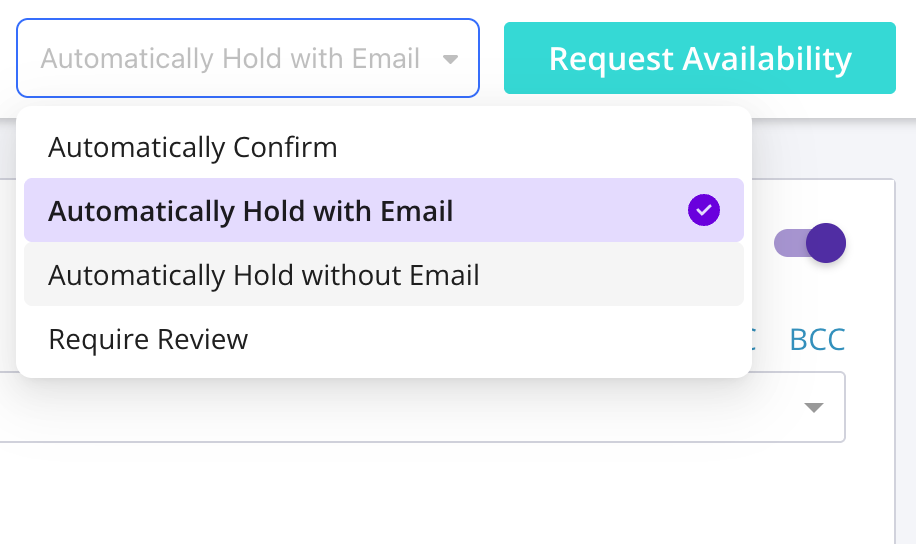
Automatically Hold Interviews
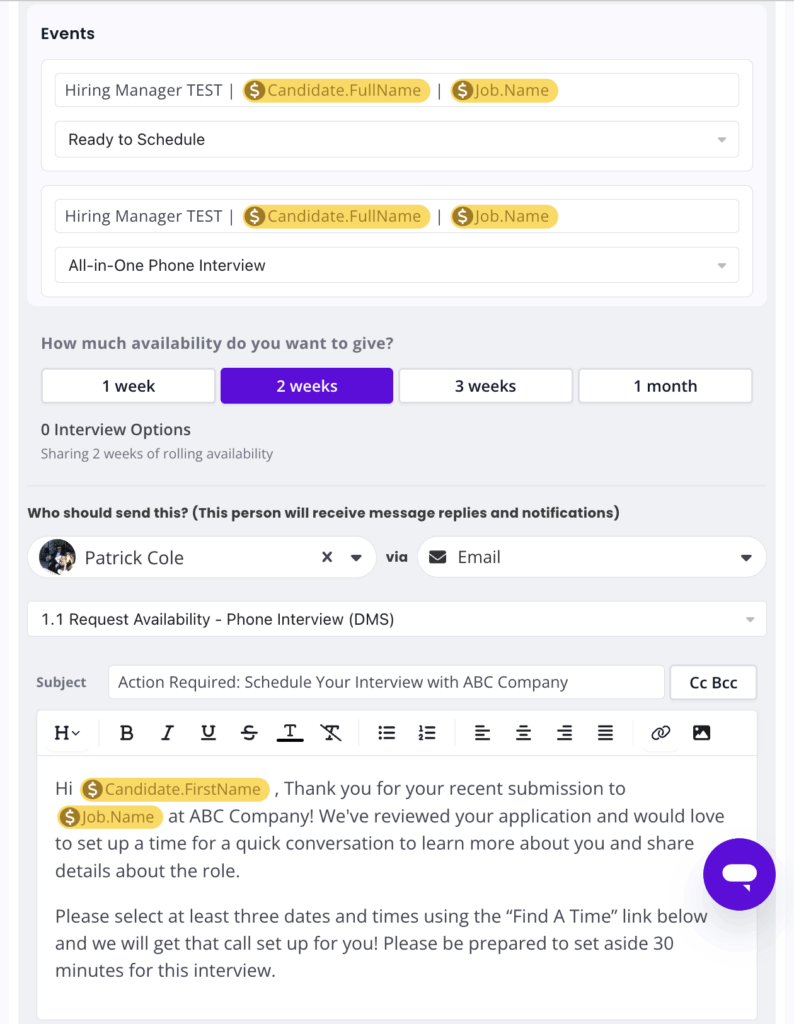
A new automation workflow is now available where you can configure interviews to automatically Hold after candidate provides availability.
Why this is awesome: This feature automates the step of the Coordinator having to manually look at each submitted availability in order to put the interview on Hold. It pairs perfectly with the recently released Auto Confirm Hold Interviews feature.
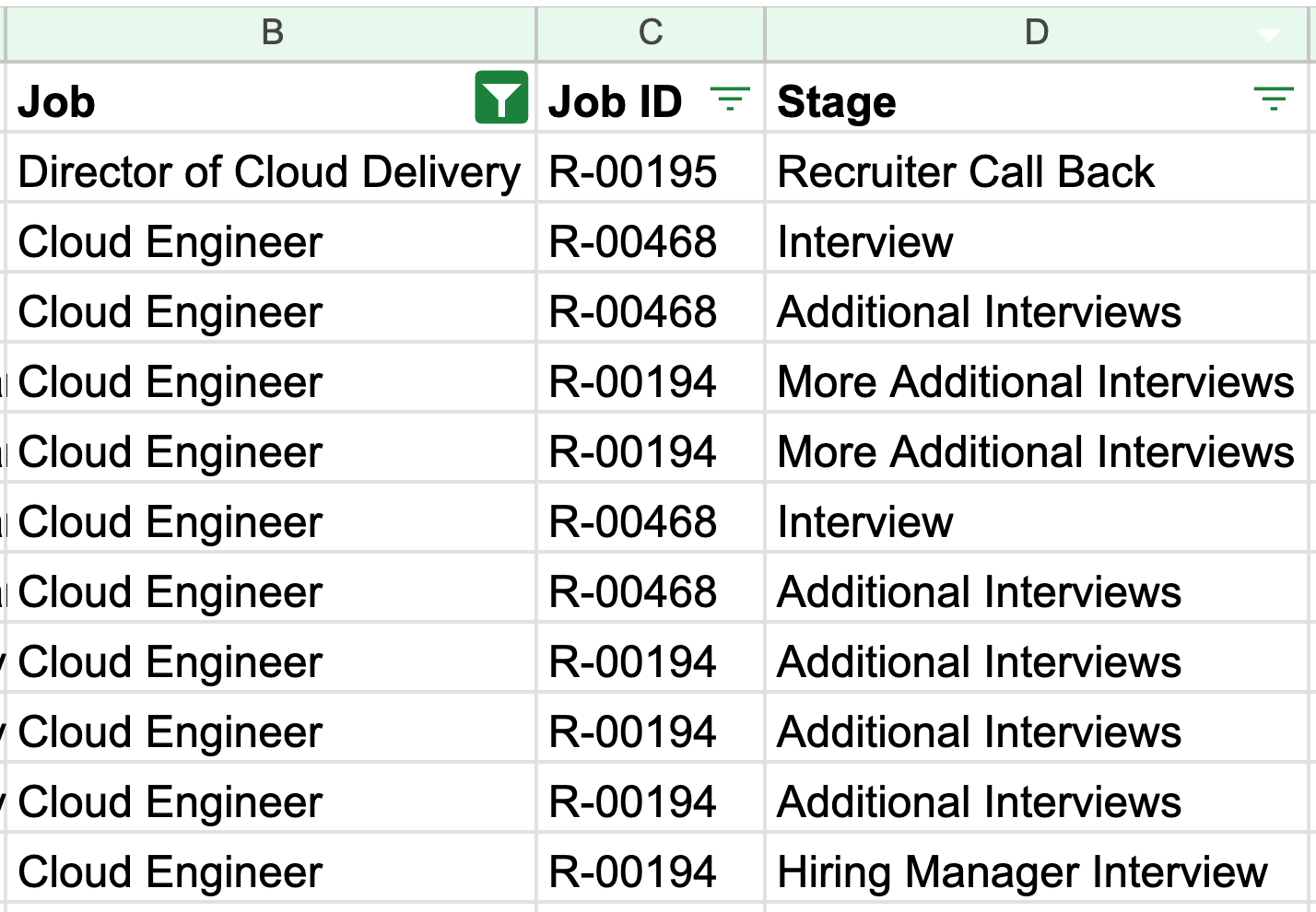
Requisition ID in Insights
All CSV downloads from Insights, that show a Job name, now also include the requisition or job ID from your ATS. This helps definitively measure jobs with names that are not unique, and track jobs whose names have changed over time.
Why this is awesome: More accuracy than ever before with the ability to measure the whole job journey or just a part of it.
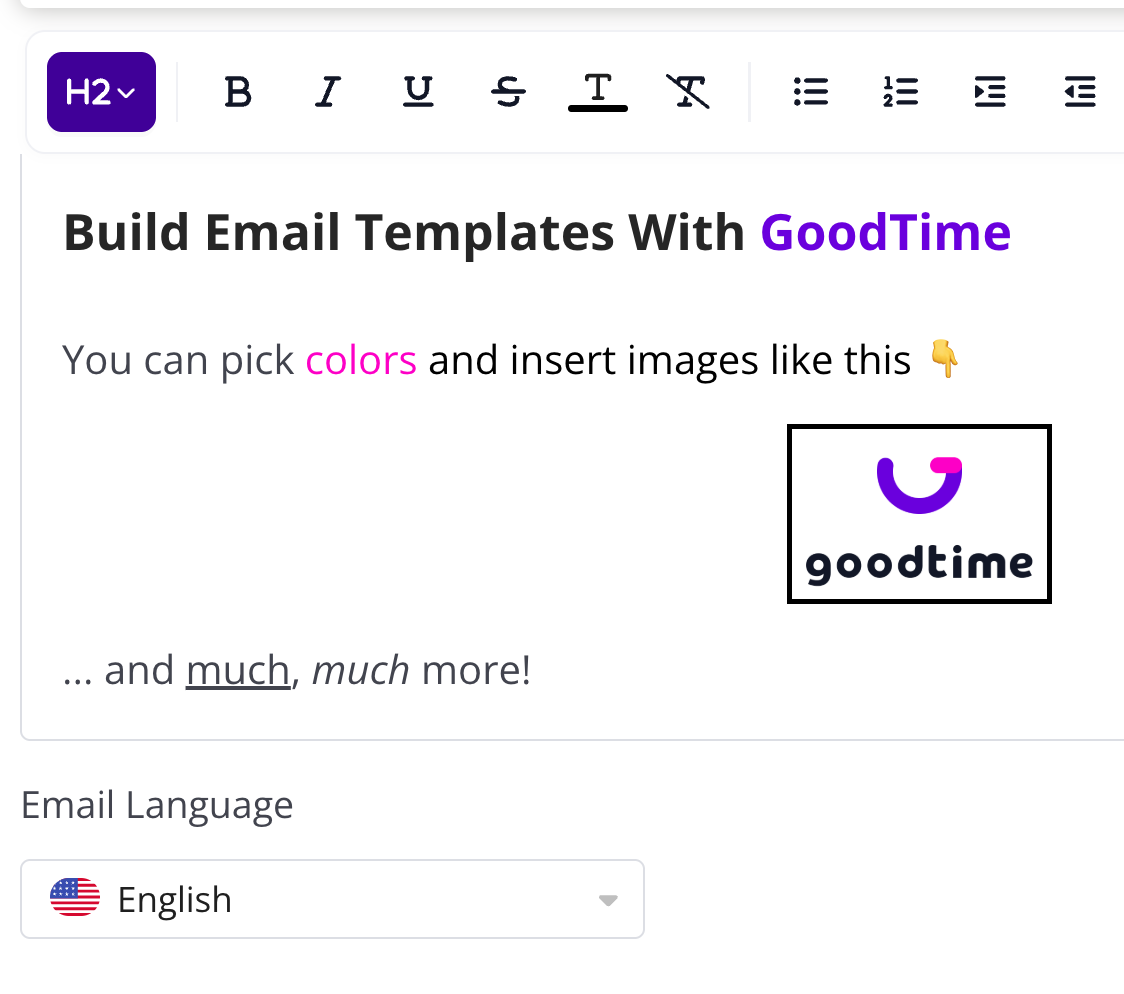
New Rich Text Editor for Emails
Email templates (both candidate & interviewer facing) are now equipped with the all new GoodTime Rich Text Editor.
Why this is awesome: Take your email format to that ultimate level where you can embed images, use your corporate font colors and much more.
Enhanced Training Feedback
The automation of Training assessments continues and you can now automatically share the interviewer feedback with the trainee, and also ask the trainee whether they are comfortable advancing.
Why this is awesome: Our design partners have demonstrated that doing this manually not only takes up a huge amount of time but also slows down training and leads to mistakes. Grow your interview pools faster & hire the best candidates!
Superday Scorecards
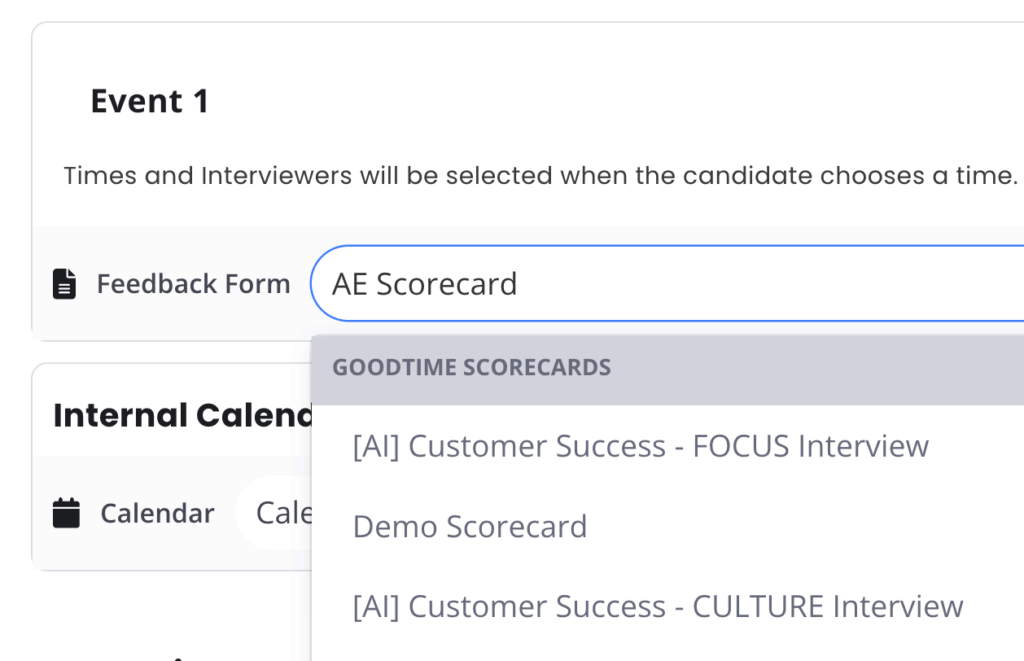
Experience+ customers can now enjoy GoodTime’s scorecards in Superday interviews. After your Superday, access each interview result individually with the AI summary, or download a CSV with all feedback in one place.
Why this is awesome: Faster evaluations lead to less administrative work and faster hiring.
Stage Change Automation for Complex Interviews
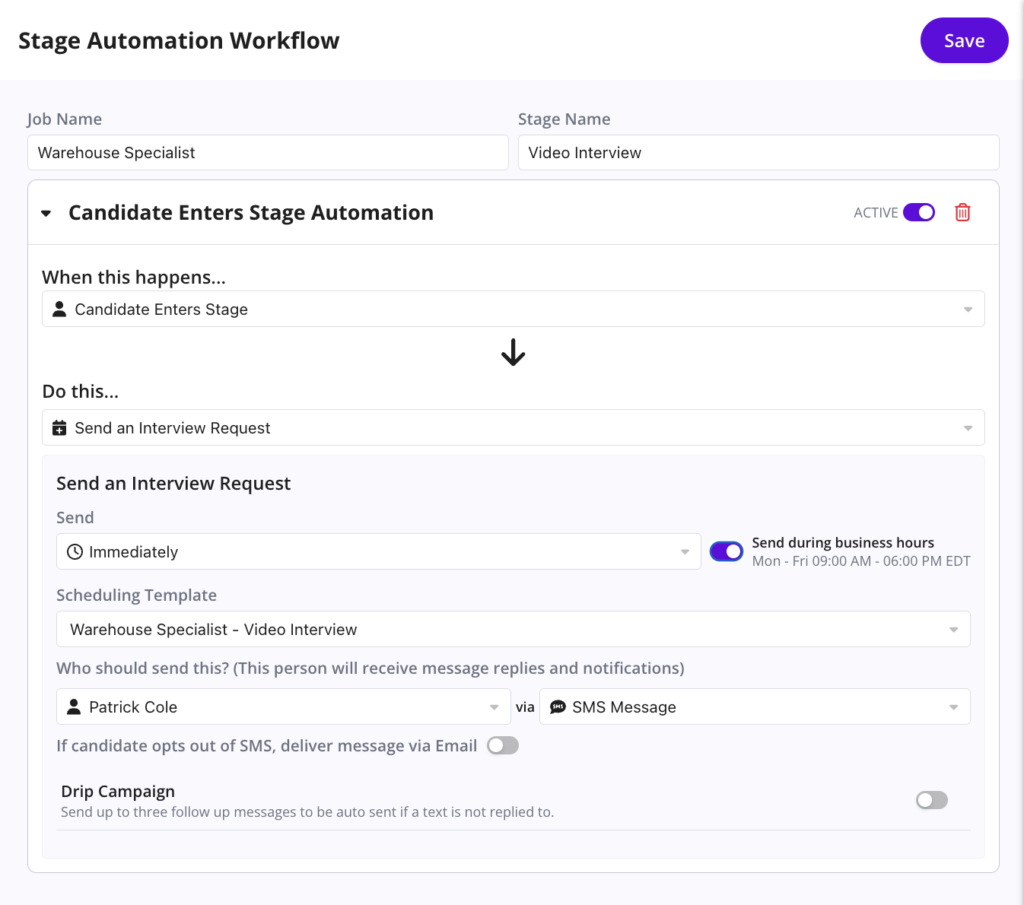
Complex interviews are now fully automated! You can assign the hiring team, select any interview or email template, and streamline the entire process from hello to hire.
Why this is awesome: Teams can eliminate manual clicks and workflows, saving hours while ensuring every step is consistent and error-free.
Schedule Interviews Inside your ATS
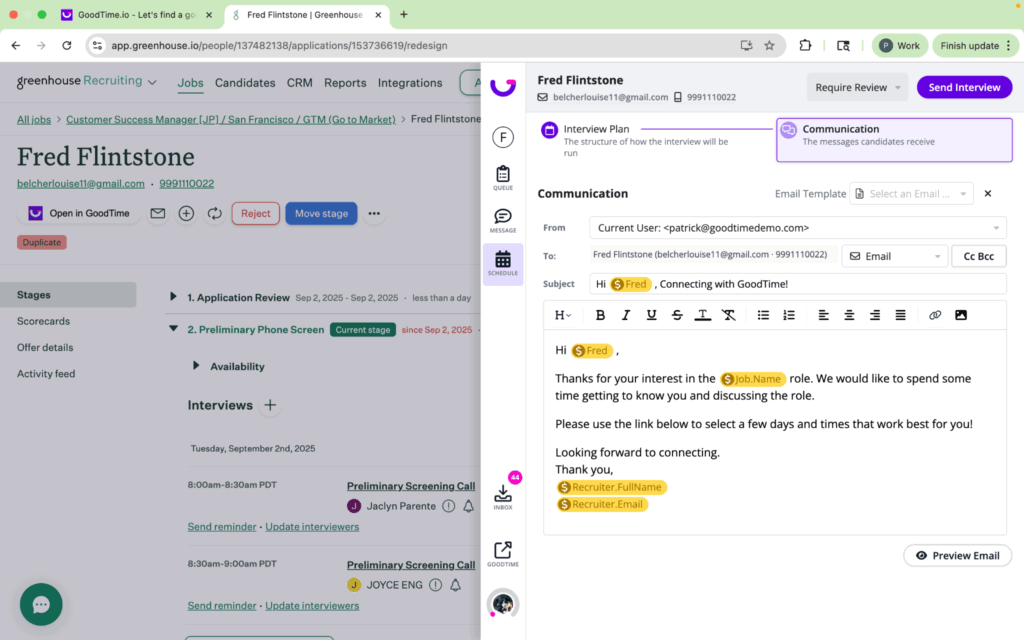
Our Chrome extension now lets you request candidate availability and schedule, all without leaving your ATS. No more switching tabs or extra clicks.
Why this is awesome: Eliminate context-switching and speed up scheduling will save recruiters and coordinators valuable time.
Start using the latest GoodTime features!
We want to help you evolve and take full advantage of the latest upgrades and improvements to our platform. Check out the GoodTime support center for tutorials and tips to help you stress less and get more done!
Candidate experience has become one of the most important differentiators in hiring. For job seekers, the way they are treated throughout the process says more about a company than polished employer brand campaigns. In many ways, the experience is the brand.
And expectations have changed. Candidates now expect the same responsiveness and personalization they receive as consumers. They can track a delivery in real time, get instant updates from a rideshare app, and chat with customer support 24/7. When they apply for a job, they expect nothing less: fast responses, clear next steps, and communication that feels relevant to them.
Recruiting leaders understand this, but delivering on those expectations at scale is another matter. With leaner teams and heavier req loads, even the most candidate-first organizations struggle to keep up. The result is a widening gap between what candidates want and what most teams can realistically provide.
This is where AI agents are stepping in to improve candidate experience — not by replacing recruiters, but by filling the gaps that leave candidates waiting, wondering, or walking away.
Unlock 2026’s top hiring strategies: Insights from 500+ TA leaders
Be the first to uncover deep hiring insights specific to your sector — straight from the highest-performing TA teams.
A decade ago, candidates might have tolerated waiting a week for an email. Today, that same delay feels like rejection. Modern candidates expect:
Responsiveness. A long silence after applying signals disinterest. Without timely updates, top candidates often move on to another offer.
Personalized communication. Generic auto-replies are no longer enough. Candidates want outreach that reflects their role, stage in the process, and individual context.
Clarity. Knowing what happens next, how to prepare, and when they will hear back reduces anxiety and builds trust.
These expectations are shaped by daily digital experiences. Ordering food, booking a flight, or streaming a show is instant and seamless. Candidates now expect their job search to feel just as smooth.
Meeting these expectations consistently is where teams stumble. Recruiters spend a disproportionate amount of time juggling calendars, rescheduling interviews, and repeating answers to common candidate questions. Every hour spent on admin is an hour not spent connecting with people.
Global and high-volume hiring makes the challenge even harder. Time zones create unavoidable delays. A candidate may send a question in the middle of their workday but not receive an answer until a recruiter on the other side of the world is back online. High-volume recruiting compounds the issue — one recruiter managing hundreds of candidates cannot possibly keep everyone warm and engaged.
The outcome is familiar: candidates stuck in silence after applying, waiting days for an update, or left unprepared for interviews. Each of these moments chips away at trust and damages the employer brand.
Elaine Orler, SVP Consulting at Cielo, emphasized the importance of measuring candidate experience across multiple touchpoints, not just at the end of the hiring process:
“The ability to measure the candidate experience itself, at different touch points in the process can be incredibly valuable insight—especially around the more specific candidates that you might be trying to cultivate into your organization versus those that are just applying to the organization,” she told us. “We need to be more effective in the way we measure and then how we analyze that data and that information to drive better decisioning.”
How AI agents fill the candidate experience gap
AI agents offer a way to bridge the gap between rising candidate expectations and limited recruiter bandwidth. The best of these agents do more than respond to prompts. They act — proactively moving processes forward and ensuring candidates feel supported throughout the journey.
Here is how they help:
Always-on communication. Candidates receive instant answers to FAQs and timely updates, even when recruiters are offline.
Interview scheduling without delays. Agents coordinate interviews and reschedules instantly, removing frustrating back-and-forth.
Guidance at every stage. From reminders and prep notes to post-interview follow-ups, candidates get the clarity they need.
Consistency at scale. Every candidate feels acknowledged and informed, no matter how many reqs are open.
Without AI, candidates wait. With AI, candidates know. That difference is what builds confidence and keeps top talent engaged. Unlike basic chatbots that only react to inputs, modern AI agents are designed to act. They take initiative, stepping in to keep processes moving and to ensure no candidate feels overlooked.
By filling these communication and coordination gaps, AI agents elevate the overall experience. Recruiters can then dedicate their time to meaningful human interactions, like building trust with top candidates or advising hiring managers, while knowing every candidate is still receiving care and attention. Why always-on support matters most in global and high-volume hiring
For global organizations, candidates are often awake and asking questions when recruiters are offline. For high-volume hiring, recruiters are managing hundreds of applicants simultaneously. In both cases, coverage gaps are inevitable — unless AI agents step in.
With AI, candidates can get what they need in the moment: an immediate answer, an updated schedule, or a reassurance that their application is still moving forward. This kind of responsiveness prevents disengagement and shows candidates that their time is respected.
In high-volume environments, the benefits multiply. Agents can handle routine but essential touchpoints like confirming interview times, delivering reminders, troubleshooting tech issues, or rescheduling conflicts. What would overwhelm recruiters instead becomes a seamless experience for every candidate.
The impact goes beyond efficiency. Always-on support signals to candidates that the company values them as individuals, no matter where they are or how many others are in the pipeline.
Balancing automation with human touch at HubSpot
The fear that automation makes the hiring process feel less human is common. But leading companies like HubSpot prove that the opposite is true when automation is designed thoughtfully.
Becky McCullough, HubSpot’s VP of Talent Acquisition and Mobility, put it simply: “AI is going to play a key role in automating a lot of those repetitive tasks that can oftentimes slow down a talent acquisition team.” By freeing recruiters from reschedules and admin work, HubSpot’s team reclaimed time to focus on building genuine connections with candidates.
Since adopting GoodTime’s Orchestra, HubSpot has seen a 75% increase in team productivity, a 30% boost in scheduling speed, and a 152% increase in active interviewers across 15+ countries.
The numbers tell one story, but the experience tells another: “After implementing GoodTime, we’ve not only seen faster interview scheduling — we’ve seen happier candidates, happier interviewers, and a happier coordination team,” Becky said.
Jennifer Walker, HubSpot’s Global Talent Acquisition Coordination Manager, added: “We need automation, but also empathy. We want to be where those two things meet.” For HubSpot, that balance means candidates get timely, transparent updates, while recruiters have the bandwidth to engage in meaningful conversations.
This approach proves that automation does not erase the human element — it amplifies it. By eliminating repetitive work, AI creates more space for authentic human touchpoints. Candidates feel cared for, recruiters feel less burned out, and the overall experience becomes a competitive advantage.
“We need automation, but also empathy. We want to be where those two things meet.” -Jennifer Walker, Global TA Coordination Manager, HubSpot
Orchestra: AI agents in action
GoodTime’s Orchestra illustrates how AI agents can act as a digital workforce that complements, rather than replaces, the recruiting team. Orchestra is not a single feature or chatbot. It is a coordinated set of agents designed to keep hiring fast, human, and in sync.
For candidates, Orchestra functions like a 24/7 concierge:
Answering questions with company-specific information.
Scheduling and rescheduling interviews instantly.
Sending reminders and preparation resources so candidates feel confident.
Gathering feedback after interviews to help teams continuously improve.
For recruiters, Orchestra removes the heavy administrative load. It screens applicants, surfaces top talent, manages scheduling, and flags bottlenecks — all while keeping the team in the loop. Recruiters still own the relationship and decision-making, but they can do so with more focus and less stress.
The result is a hiring journey where candidates feel supported every step of the way, and recruiters regain the time to deliver the personal touch that defines a strong employer brand.
Human-first AI as the future of candidate experience
Every unanswered question, every delayed update, and every scheduling hiccup leaves an impression on candidates. Those impressions add up, shaping how they view your company and whether they want to work there.
AI agents are not a replacement for recruiters. They are the safety net that ensures no candidate feels forgotten, and the partner that keeps hiring in sync. For candidates, this means a faster, clearer, more personal journey. For recruiters, it means peace of mind that every touchpoint is covered, even when bandwidth is stretched thin.
The future of candidate experience is not humans versus AI. It is humans and AI working together — delivering the responsiveness candidates expect while preserving the meaningful connections that make them feel valued.
August has been a month of powerful upgrades at GoodTime, all designed to give recruiting teams more control, more insight, and a smoother experience from start to finish. From brand-new scheduling flexibility to deeper reporting filters, enhanced prep tools, and a completely reimagined Candidate Inbox, this release is packed with features that make every step of the hiring process smarter and more seamless.
Let’s dive into what’s new this month.
First, watch highlights from Orchestra, our workforce of AI agents
This month’s Orchestra Agent Update is all about making interviews more human-centric while fully automating the process end-to-end. From smarter scheduling that leverages executive interview blocks and white space on calendars, to a unified inbox for every candidate message across channels, Orchestra is redefining efficiency with a personal touch. Beautifully designed prep guides, rich training content, and location-based reporting give teams and candidates an elevated experience without extra work—because great hiring should feel seamless.
Watch the full August 2025 GoodTime product updates webinar or keep scrolling for highlights
Hybrid Interview Block Search
Until now, Interview Blocks could be on or off for the whole interview template. Today GoodTime is excited to launch the ability to leverage Block availability for some interviewers and white space for others, in the same search!
Why this is awesome: This granularity creates the ultimate flexibility and lets you adjust on the fly while scheduling.
Office / Location Filters for Insights
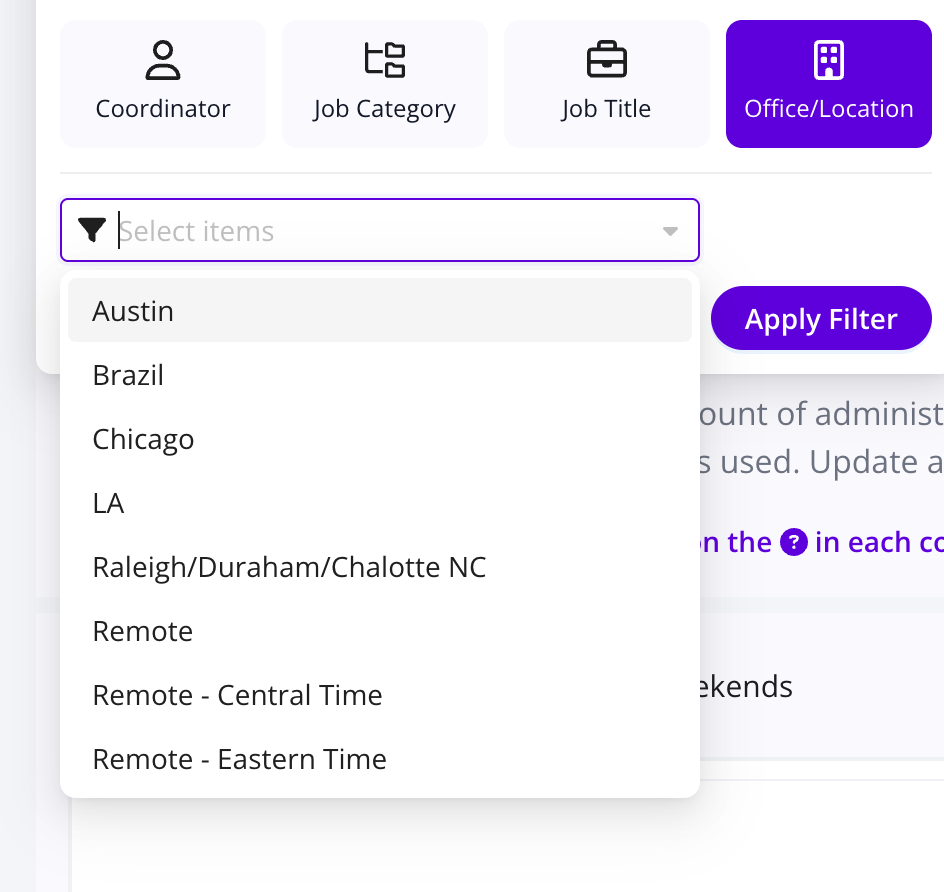
The major Insights reports can now be filtered on the ATS Office or Location assigned to jobs.
Why this is awesome: This allows you to create, save and share custom reports that pertain to specific locations, compare performance by location and the best part is that it’s all automatically ingested from your ATS data so no effort is required to use the filters.
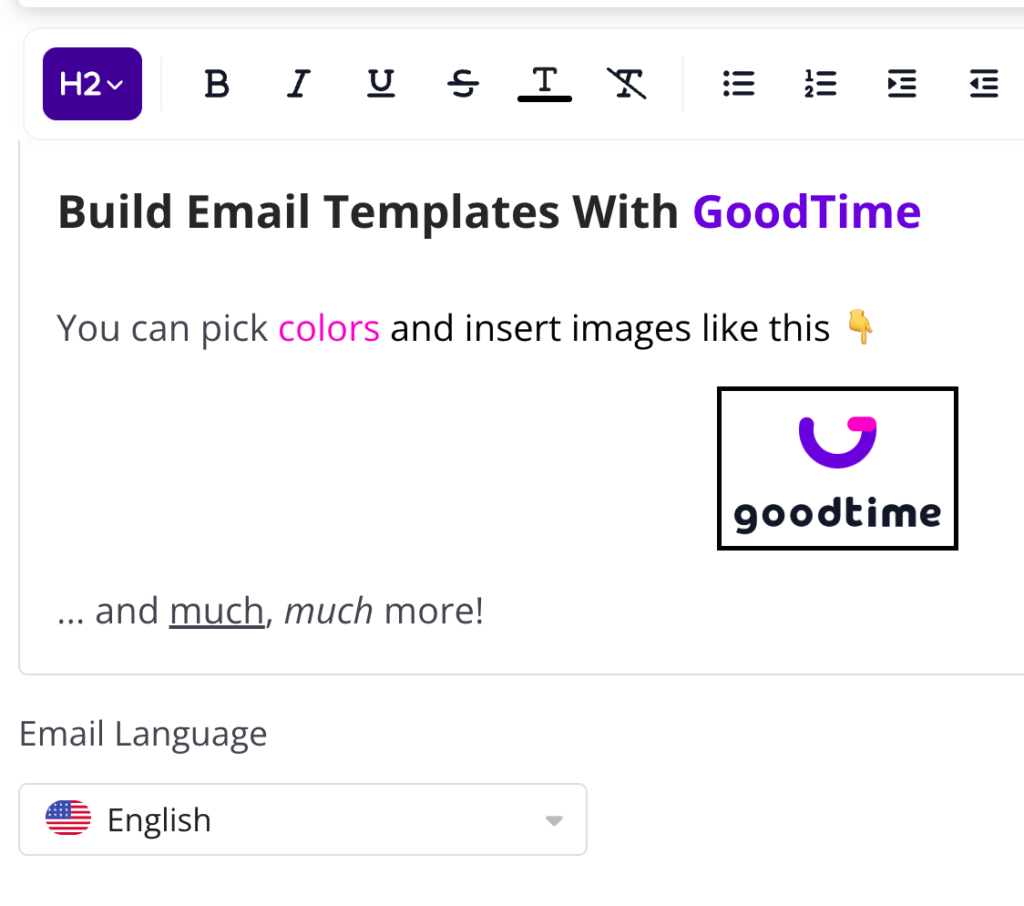
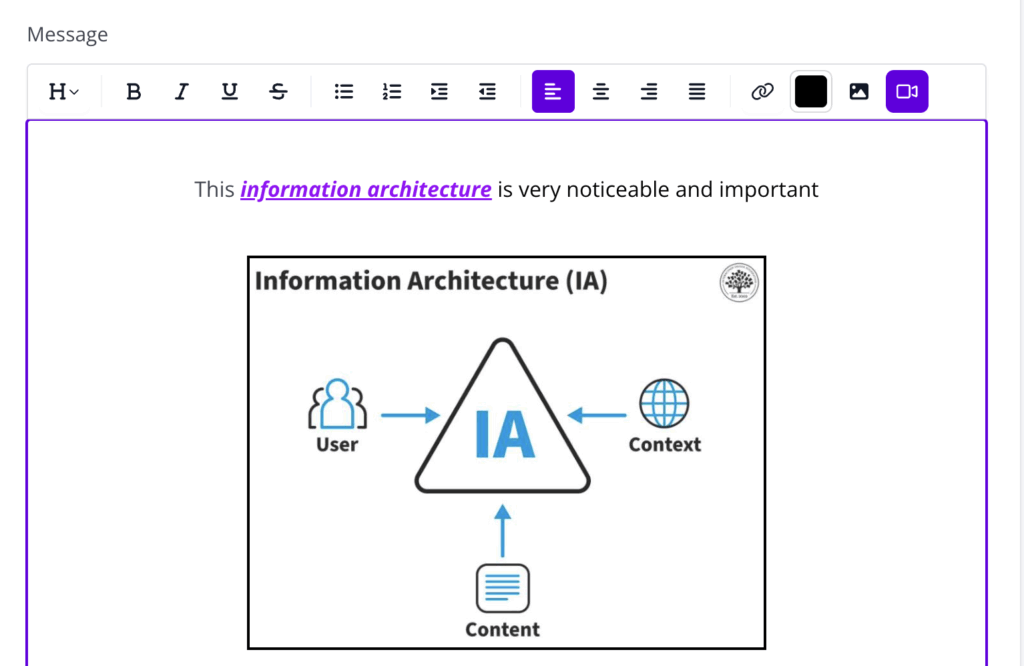
Rich Text Editor
Training Classes, Interviewer Prep & Candidate Prep have all been leveled up with GoodTime’s all new Text Editor that supports image & video embedding, color pickers and much more.
Why this is awesome: Besides being able to match the esthetics and designs of your company branding, embedding video and photo really takes the capabilities of Interview Prep and Training Classes to the next level.
Overlap Analysis in Capacity Planning
GoodTime’s Capacity Planning now considers only the overlapping availability when 2 or more interviewers are required in the same event, as well as Interview Block availability.
Why this is awesome: This updates in real time and gives an early forecast on what the true scheduling capacity of templates is.
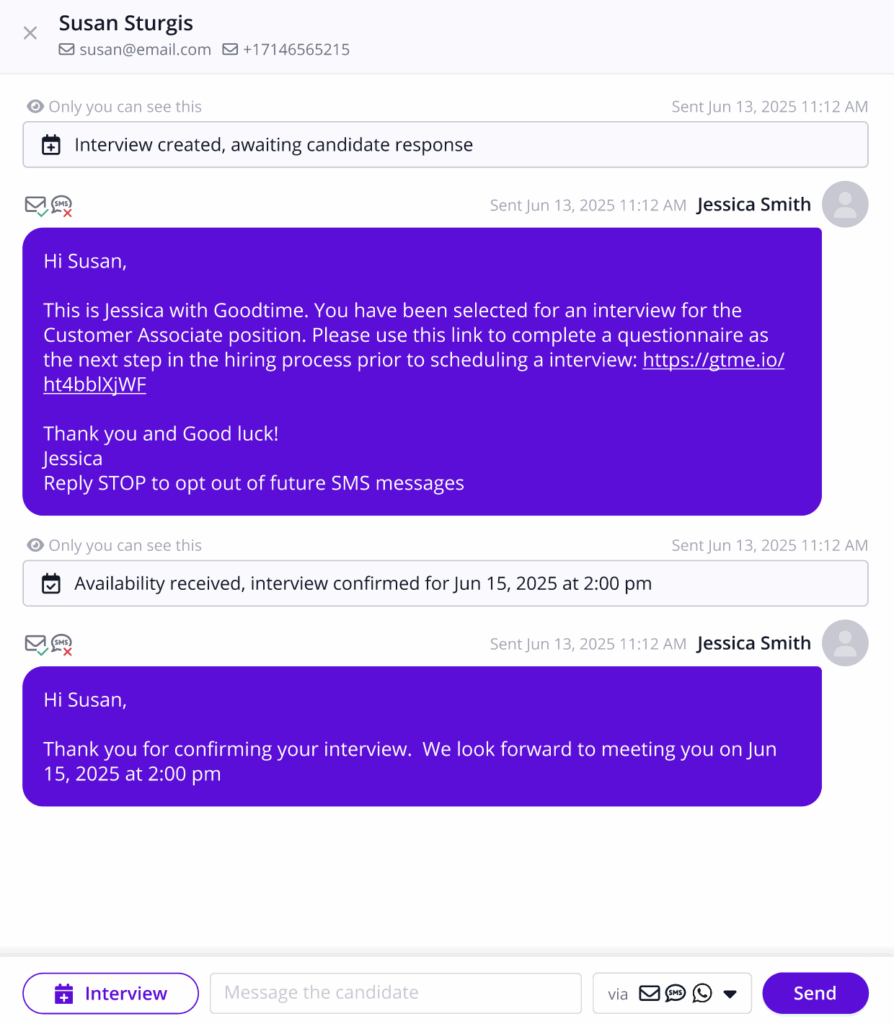
New Candidate Inbox
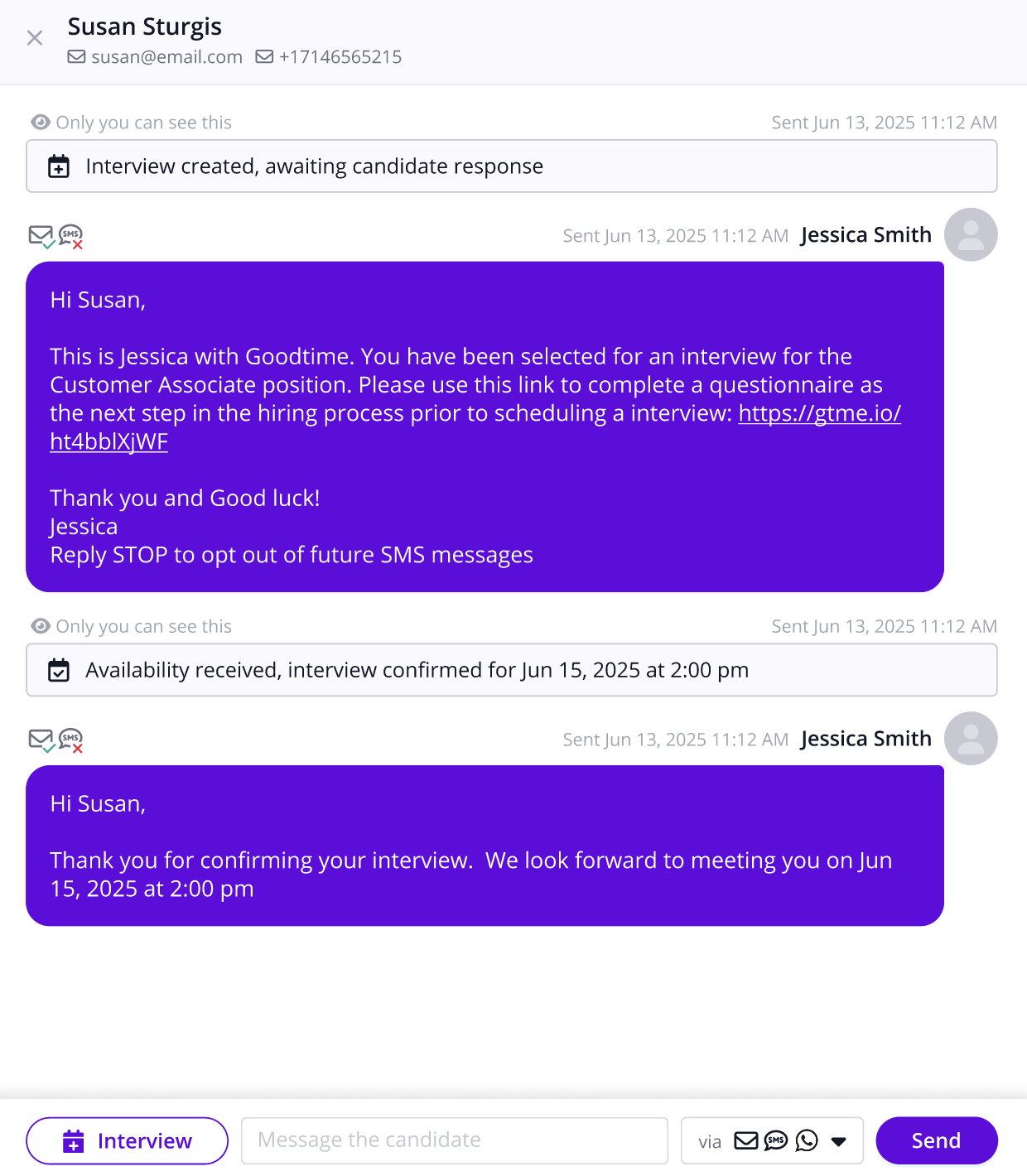
The Candidate Inbox has been completely overhauled for a smoother, more unified experience. See all candidate communications—text, email, and portal—in a single thread, whether you’re in the Chrome extension or the GoodTime app.
Why this is awesome: One inbox, all your messages—so you never miss a candidate update again
Start using the latest GoodTime features!
We want to help you evolve and take full advantage of the latest upgrades and improvements to our platform. Check out the GoodTime support center for tutorials and tips to help you stress less and get more done!

 Efficiency
 Experience
 Intelligence