Candidate Experience: Tips You Can Use to Wow Top Talent

Candidate experience is all about how an applicant feels during interviews, onboarding, and other stages of the recruitment process. A positive experience can make a candidate feel satisfied and more likely to accept your job offer. A negative experience reflects poorly on your company and can lead to a candidate going elsewhere.

Below, learn why candidate experience is so important, how to improve it, and how the latest technology can help. You’ll also find top candidate experience best practices and expert insights on this topic. 
Unlock 2026’s top hiring strategies: Insights from 500+ TA leaders

Be the first to uncover deep hiring insights specific to your sector — straight from the highest-performing TA teams.

Why candidate experience is important

Think about a time you had a bad candidate experience. Perhaps the recruiter didn’t communicate with you properly or wasn’t very welcoming during your interview. That experience might have impacted your perception of the company, making you think twice about whether you even wanted the job.

Candidate experience can influence almost every aspect of the recruitment process. When applicants have a positive experience, they are more likely to want to work for your organization, leading to higher engagement and productivity. When applicants have a poor experience, they might develop a negative perception of your company. Too many bad experiences can affect your reputation and damage your employer brand, making it harder to acquire talent.

A growing number of recruiters understand the importance of a good candidate experience. According to Good Time’s 2024 Hiring Insights Report, 35% of talent acquisition leaders said improving candidate experience was one of the top focus areas in the past 12 months.

“Candidate experience will play a tremendous role in sourcing and hiring the best talent because communication will always be important,” says recruitment operations consultant Jeremy Lyons. “Candidates talk, hiring managers talk, people in networks talk. Communication will always be important, and if people are having a terrible or extremely positive experience, others will know about it. If organizations want to improve this, then starting with communication is where it all begins, and that starts with no ghosting and open and honest communication.”

Best practices for improving candidate experience

Creating positive experiences for candidates is a lot easier than you think. Here are the three essential recruitment best practices to help you do it:

Communicate with candidates

One of the biggest pet peeves for job applicants is a lack of communication from recruiters. For example, waiting weeks or months to hear back after an interview or not hearing back from recruiters at all can make candidates feel undervalued.

Communicating regularly with everyone who applies for a job can be tough, especially if you have hundreds of applications. However, you can set clear expectations about different hiring process steps from the first interaction with a candidate. For instance, you can give an estimated timeline for how long each stage of recruitment will take, including pre-screening, interviews, and onboarding. This helps candidates understand the hiring process and resolves their concerns that employers may be completely disregarding them. 

Also, consider automating low-level recruitment tasks such as interview scheduling so you can free up time to communicate more with candidates. Many applicants expect quick replies to any questions or queries, and providing timely feedback can lead to more positive hiring outcomes.

According to our 2024 Hiring Insights Report, talent acquisition (TA) teams think they need to focus on the following communication areas in the next 12 months:

  • Quickly connecting with candidates (46%)
  • Spending more time building meaningful relationships with candidates (45%)
  • Increasing the number of candidate touchpoints in their process (42%)

“One of the simplest things an organization can do to build up their recruiting brand is putting an emphasis on communication—style, tone, consistency, and frequency,” says Geva Whyte, recruiting coordinator with experience at Lyft, Stripe, and OpenAI.

“Communication gives candidates an idea of the kind of culture they will be stepping into. In your communication with candidates, are you coming off friendly and inviting? Stiff and robotic? Are you sending follow-up emails? Are you using the default boilerplate ATS rejection email if things don’t work out? One of the biggest and easiest pain points to solve is recruiters ghosting on candidates.”

Personalize communication

Personalized communications and positive candidate experiences go hand in hand, and for good reason. Tailoring emails, texts, and other messages to each job applicant proves you care about them as individuals, not just potential additions to your workforce.

There are various ways to personalize communications, from the initial touchpoint when a candidate applies for the job to the final step when you present a job offer or reject or welcome a person to your organization. For instance, you can:

  • Include someone’s first name or preferred name in messages rather than a generic “sir,” “madam,” or, even worse, “candidate.”
  • Refer to where candidates are in the recruitment process in messages to manage expectations.
  • Reference specific information about why someone did or didn’t get a job in offer and rejection letters. This can help candidates identify areas of strength or things they need to improve.

According to our most recent Hiring Insights Report, 36% of TA leaders are upgrading their hiring technology to increase personalization.

Respect candidates’ time

Candidates are humans, not just names on resumes. A job seeker might spend hours writing a job application and preparing for the interview process with your company, so it’s only right that you respect their time and effort.

One way to show respect is to avoid distractions during an interview with a candidate. Put your phone away, listen to what they say, and stay engaged. Even if someone might not seem like a good fit at first, you should hear them out and get to know them a little more.

Sending “thank you” emails to candidates at different stages of the recruitment process is also respectful. You can thank an applicant after submitting their resume, attending an interview, and at other touchpoints.

The role of technology

Upgrading your hiring technology helps you enhance the candidate experience. The tools below can streamline various tasks that result in more satisfied applicants.

  • An applicant tracking system (ATS) centralizes recruitment tasks into a single system, making it easier to track candidate applications. Job seekers can also check the statuses of their applications without having to contact you.
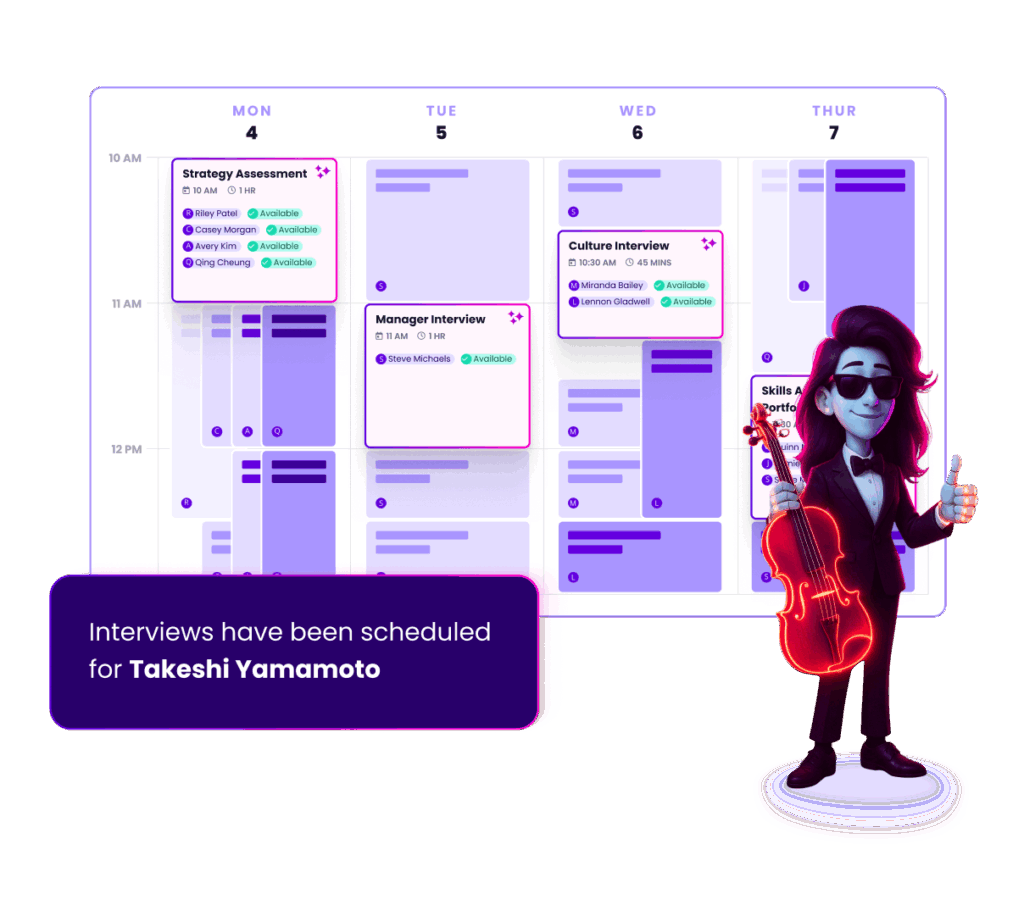
  • Interview scheduling tools remove the back-and-forth between candidates and recruiters. GoodTime, which integrates with top applicant tracking systems, allows candidates to choose interview dates, reducing no-shows and improving efficiency.
  • An Interviewer portal contains interview info, hiring team profiles, and important resources in one place. Built-in feedback collection and messaging options ensure an impressive, best-in-class candidate experience every time.

While new technologies require an outlay, you could generate a return on your investment by optimizing candidate experience and retaining more talent.

Consider balancing the need for automation with the human touch. The tools above can streamline various processes, but most candidates enjoy developing human connections with your recruitment team. Sixty-six percent of Americans say they wouldn’t want to apply for a job with an employer that solely uses AI for hiring

Measuring and improving the candidate experience

Finding out whether candidates have a good experience can enhance your future hiring practices. Discover what job seekers think about your company by leveraging:

Surveys

Candidate experience surveys let you collect feedback from candidates at different recruitment stages, making job seekers feel like you are listening to them. You can use insights from surveys to fine-tune your recruitment process.

Net promoter score

A net promoter score (NPS) is an effective tool for measuring and improving candidate experience. It asks candidates how likely they are to recommend your company to other people on a scale of 1 to 10. You can then calculate the average of scores from multiple candidates to determine collective perceptions of your company.

Social media sentiment

Tracking sentiment on social media reveals what people say about your recruitment processes online. For example, you can find out if previous candidates had positive experiences when interviewing with your team.

Consider refining your measurement techniques to continuously improve candidate experience. Over time, you’ll know which technologies and key recruitment metrics are most valuable for determining candidate satisfaction and engagement.

Candidate experience FAQs

What is candidate experience?

Candidate experience refers to how job applicants feel throughout the recruitment process, including interviews and onboarding.

Why is candidate experience important?

A positive experience increases the likelihood that a candidate will accept your job offer, while a negative experience can harm your employer brand and deter talent.

How can I improve candidate experience?

Communicate regularly with candidates, personalize your messages, and respect their time during the recruitment process

How does technology enhance candidate experience?

Tools like applicant tracking systems (ATS) and interview scheduling platforms streamline processes, allowing candidates to track their applications and schedule interviews easily.

What are knockout questions in candidate screening?

Knockout questions eliminate applicants who don’t meet essential qualifications early in the hiring process, making it more efficient.

How can I measure candidate experience?

Use surveys, net promoter scores (NPS), and social media sentiment to gather feedback and make improvements to your hiring process.

Why is personalization important in candidate communication?

Personalized messages show candidates that they are valued as individuals, improving their overall experience and engagement with your company.

How does improving candidate experience give companies a competitive edge?

Positive experiences encourage candidates to accept offers and can lead to referrals, helping you attract top talent and stand out from competitors.

Gain a competitive edge in your candidate experience with GoodTime

Improving the candidate experience can make your company more attractive to job seekers and prevent them from seeking out your competitors. Good experiences may also lead to other talent wanting to work with your team.

“The talent pool isn’t as big or as deep as organizations like to believe—candidates talk to each other,” adds Whyte. “Even if a candidate doesn’t make it to the offer stage, they will still mention a positive interviewing experience, which could lead to them referring people they know.”

If you want to create positive candidate experiences and gain a competitive edge, consider using GoodTime’s candidate experience platform. GoodTime allows candidates to schedule their own interviews, connect with your team, and receive personalized communications through a candidate portal, resulting in a smoother and more efficient hiring process that improves perceptions of your company.

GoodTime expands human capabilities instead of replacing them, allowing you to engage with applicants on a deeper level. Get a demo now to learn more.

Additional resources to continue learning:

HR Technology’s Evolution: Building the Perfect HR Tech Stack

From paper-based systems and basic software to AI and the cloud, HR technology has evolved significantly in recent years. It is now critical for automating workflows and improving the employee experience. According to our 2024 Hiring Insights Report, 38% of talent acquisition (TA) leaders said upgrading their hiring tech was a top priority in the previous 12 months. Respondents thought this task was more important than building client relationships, improving overall efficiency, and other hiring processes.

Whether it’s a learning management system, interview scheduling software like GoodTime Hire, or another tool, modern HR wouldn’t be what it is without the latest tech! But what are the benefits of these platforms, and how can you incorporate them into your organization? Find out below, as well as the challenges of implementing HR tech.

Unlock 2026’s top hiring strategies: Insights from 500+ TA leaders

Be the first to uncover deep hiring insights specific to your sector — straight from the highest-performing TA teams.

Key benefits of HR technology

HR technology primarily refers to software and systems that automate various functions in human resources, such as screening resumes, interviewing candidates, and tracking applicants at different recruitment stages. 

Improving efficiency

Using HR technologies can make your day-to-day talent operations more efficient. The best software eliminates paperwork, reduces human error, and simplifies workflows, enhancing performance and productivity.

Improving efficiency with HR tools can lead to other benefits, such as reducing operational costs and increasing profitability. Although the best technologies require an outlay, you could generate a return on your investment over time.

Reducing manual tasks

HR technologies automate various manual tasks carried out by your team, including communicating with applicants and identifying their skills and capabilities. By eliminating repetitive jobs, you can save time and dedicate your resources to other things in your business, such as enhancing the candidate experience.

Take GoodTime Hire, for example. This software uses human-centric AI to automate and optimize interview scheduling and management, allowing TA teams to focus on more strategic tasks.

Enhance decision-making

With HR technology, you can make smarter decisions that benefit your organization. Various software tools now include data analytical features, allowing you to generate insights and recruitment metrics. You can view this information on charts, graphs, and other data visualizations, improving visibility into your TA processes.

Optimize the employee experience

HR technology can also improve experiences for your TA team, making it easier for them to recruit and onboard new hires and manage their work. For example, performance management tools allow team members to track tasks and set goals.

Building an effective HR tech stack

Different HR tools serve different functions, so you’ll need to integrate various platforms into your organization for the best results.

Applicant tracking systems

An applicant tracking system (ATS) automates multiple hiring processes, such as collecting resumes and managing applicant profiles. As a result, you can find the most qualified talent for an open position and build stronger teams.

“As businesses continue to emphasize agility and data-driven decision-making, ATS software is set to play an increasingly pivotal role in shaping the future of HR and recruitment,” says Murtaza Faisal Pal, an expert in human resources management.

Examples of ATS systems include Workday, iCIMS, and SuccessFactors.

Payroll software

Payroll is one of the most essential tasks in your organization, and the latest software makes it easier. Tools like QuickBooks and Paychex streamline payroll tasks, such as generating payroll checks and approving employee timesheets. As a result, you can ensure your team gets paid on time and without issue.

Learning management systems

A learning management system (LMS) is essential for employee training and development. Whether you’re using Docebo, TalentLMS, and iSpringLearn, or something else, the right software can manage learning tasks, identify skills gaps in your team, and help employees progress their careers through e-learning programs and other initiatives.

Employee engagement tools

If you want to improve employee engagement, these platforms can help. The latest software makes it more convenient for team members to communicate, track their progress, and, essentially, do their jobs!

Employee engagement tools fall into various categories. For example, communication tools like Slack and Microsoft Teams allow team members to exchange real-time information, while project management platforms like Asana and Monday.com track workplace activities and tasks.

Whatever tools you choose, you’ll want ones that scale and grow with your organization. Cloud-based systems are advantageous if your TA team is remote, allowing employees to collaborate from different locations.

AI, recruiting analytics, and other developments have improved the functionality of software and systems. Let’s take a look at some of the hottest trends in HR tech right now.

AI and machine learning

Artificial intelligence and machine learning can improve HR in various ways, such as reducing workloads for team members and enhancing candidate sourcing. This technology automates resume screening, interview scheduling, and other time-consuming tasks, improving workflows. According to our 2024 Hiring Insights Report, 42% of TA leaders want to utilize AI over the next 12 months to make hiring more efficient.

Source: 2024 Hiring Insights Report, GoodTime

Human-centric AI tools enhance candidate and employee experiences while maintaining the human touch. For example, GoodTime Hire doesn’t seek to replace your TA team but to strengthen it by offering features that grow your business, such as personalized bulk texting, high-volume interview scheduling, and workflow automation.

Data analytics

Data analytics processes large volumes of data, resulting in valuable insights about your business. You can predict future HR challenges, identify cost-cutting measures, and collect other information that informs decision-making in your organization. According to a study conducted by EY, 93% of companies plan to continue increasing their data and analytics investments.

Automation

Automation tools streamline all the TA tasks your team might not have the time or resources for, including benefits management.

“In the realm of employee benefits administration, the ultimate goal is to achieve a system that is both highly efficient and user-friendly,” says people strategist Steve Taylor. “The integration of technology offers a clear path to simplifying and enhancing this crucial aspect of workplace management.”

By automating core TA processes, you can also free up time and minimize human error.

Mobile HR tools

Mobile technologies allow employees and job candidates to carry out functions on a smartphone or tablet. For example, texting software lets you communicate with applicants via SMS or WhatsApp.

Technologies for remote and hybrid teams

The latest HR software supports remote and hybrid workforces by allowing employees to communicate and collaborate when away from the office. According to the Pew Research Center, around a third of workers with jobs they can do remotely are working from home all the time — up from 7% before the COVID-19 pandemic.

Challenges of implementing HR technology

Adding new HR technologies to your business may lead to several problems:

  • Integration issues: The newest HR software might not be compatible with your existing tools, resulting in challenges such as data loss and delayed workflows. Ensure a new product integrates well with your current technology before investing in it.
  • Poor user adoption: Technologies with a steep learning curve can be complex for your team, leading to poor adoption rates. Investing in proper training whenever adding a new tool to your stack can overcome this challenge.
  • Security risks: Moving information from existing systems to new tools can increase the risk of data loss and theft, so always develop an effective migration strategy. You’ll also want to work with secure HR tech vendors that take data security seriously. HR teams can be extremely vulnerable to cybersecurity risks, including phishing and ransomware.

HR tech FAQs

What is HR technology?

HR technology includes tools and software that automate, streamline, and enhance various HR processes like recruiting, employee management, and benefits administration.

How does AI benefit HR teams?

Human-centric AI tools, like GoodTime, enhance candidate and employee experiences without replacing the human touch, automating tasks like interview scheduling and personalized communications.

What is the role of data analytics in HR?

Data analytics processes large amounts of data to provide insights that inform decision-making, predict challenges, and identify cost-saving opportunities.

How does automation improve HR processes?

Automation reduces manual tasks and minimizes human error, allowing HR teams to focus on higher-value work, like employee engagement and strategic planning.

What are mobile HR tools?

Mobile HR tools let employees and candidates manage tasks via smartphones or tablets, such as communicating through SMS or completing applications on the go.

How does HR technology support remote and hybrid work?

It enables seamless communication and collaboration for remote teams, ensuring employees stay connected regardless of location.

What are the challenges of implementing HR technology?

Common challenges include integration issues with existing systems, poor user adoption due to complexity, and increased security risks during data migration.

The future of HR technology

HR technology can improve efficiency, reduce manual tasks, and provide other benefits for employees and job candidates. Whatever tools you choose, HR technology will likely continue to support TA teams and leaders in the future, with new products emphasizing adaptability and continuous improvement.

Right now, one of the most exciting innovations is human-centric artificial intelligence, which everyone at GoodTime Hire passionately believes in. Unlike conventional AI, this technology augments human capabilities rather than replaces them, benefiting your employees.

Want to learn more about GoodTime’s human-centric AI tools? Discover how our software automates interview management, enhances high-volume scheduling, improves workflows, and allows team members to communicate with candidates via SMS and WhatsApp. We create technological solutions for HR professionals in various industries, including manufacturing, healthcare, retail, and financial services.

Additional resources to continue learning:

Upgrade your hiring journey with AI

GoodTime’s AI agents orchestrate the entire hiring journey — screening, scheduling, messaging, and more — so talent teams hire faster with a better candidate experience.

Candidate Screening: Best Practices and Ways to Pre-Screen

Finding the perfect candidate for a position can sometimes feel a little maddening, especially as applications start flooding in. You want to give everyone a fair chance but must also control your time-to-hire. 

What if there was a simple way to streamline your essential hiring process steps and get the most out of each one? You can’t skip steps like skills assessment and interviewing, but you can speed the process with candidate screening.

A candidate screening process lets you check applicant credentials against set criteria. Those who meet those criteria move forward in the system. Given a clear hiring rubric and an effective screening system, you can quickly identify the best-fit candidates and filter out those less qualified. The result is a better candidate experience with streamlined time-to-hire.

Unlock 2026’s top hiring strategies: Insights from 500+ TA leaders

Be the first to uncover deep hiring insights specific to your sector — straight from the highest-performing TA teams.

Best practices for screening candidates

Candidate screening quickly filters out unqualified applicants, freeing up more time to build relationships with stronger candidates. The key is to define your standards as clearly as possible.

According to Sara Ashraf, talent acquisition specialist and assistant manager of HR operations at Big Immersive, clear standards make the screening process optimally efficient and effective:

“Before delving into candidate evaluation, it’s crucial to outline the key skills, qualifications, and attributes that align with the position’s requirements. Establish measurable benchmarks for comparison and identify deal-breakers that warrant automatic disqualification. By articulating screening standards from the outset, organizations enhance efficiency and ensure a targeted and purposeful candidate selection process.”

With a defined set of criteria, you can implement any candidate screening options into your hiring workflow. 

Resume screens

As a TA pro, you know how time-consuming it is to review every resume that comes in manually, and the time burden is only increasing. According to LinkedIn data, the number of applicants per job has risen significantly in the past few years. U.S. companies receive an average of 2.5 applicants per job in 2024, compared to 1.5 in 2022.

Resume screening lets you automatically filter incoming resumes for selected skills and abilities. Screening tools scan resumes for variations on keywords and phrases related to job requirements. 

As the human in the room, you tell automated screeners what phrases signal a qualified candidate. It’s important to standardize your criteria and filter by skills and experience, avoiding any standards that could introduce bias. A fair and objective filter can effectively bring qualified candidates through the pipeline.

Phone screens

As you know, some job candidates have the right skills on their resumes but aren’t suitable for the position. Phone screens let you filter out those candidates and highlight people who are a better match, both skills-wise and in terms of personality.

These screens should go beyond what’s on a candidate’s resume while still being standardized. The Society for Human Resources Management (SHRM) recommends standardized phone screening questions with a ratings “scorecard,” meaning every phone interviewer evaluates candidates based on the same criteria.

However, because this is the first chance for a back-and-forth conversation, screening interviewers should be ready to ask follow-up questions if something important arises. An unexpected detail, prompted by initial questioning, can be the defining factor that moves someone forward. 

Structured interviews

A structured interview is a standardized assessment of how candidates behave in certain situations. All candidates answer the same questions in the same order, and evaluators grade responses using a standard rubric.

The strength of a structured interview is that it takes an otherwise subjective competency, like interpersonal skills and collaboration, and makes it measurable. The main requirement is a detailed evaluation guide and well-trained evaluators.

Leveraging technology for efficient screening

Top teams are focusing most on improving efficiency in hiring, according to GoodTime’s 2024 Hiring Insights Report:

Technology can make the interview process significantly more efficient. In the screening process, artificial intelligence (AI) and automated systems process responses and sort candidates faster than human eyes.

“By incorporating [screening] tools, recruiters can efficiently narrow down the pool of applicants, saving time on reviewing resumes, expediting interview scheduling, and promptly identifying potential concerns or gaps in candidates’ profiles. This proactive approach enhances the overall efficiency of the screening process and ensures a more targeted and informed selection of candidates for further evaluation.”
-Sara Ashraf  

Tools like applicant tracking systems (ATS) and recruiting automation solutions incorporate screening into workflows. Events within the hiring process trigger the sending of a screener, so HR teams don’t have to do so manually for every applicant. With those time savings, teams can focus on pre-qualified candidates.

According to our Hiring Insights Report, candidate review is the most popular application of AI in recruitment:

automation and AI
Source: 2024 Hiring Insights Report, GoodTime

Those 45% of respondents benefit from having fewer administrative tasks on their plate. With that freed-up time, they can spend more time with top candidates and cultivate meaningful relationships.

Methods for pre-screening candidates

There’s a screening method for anything your organization needs to evaluate, from niche technical skills to interpersonal competencies. Here are several of the most common.

Knockout questions

Knockout questions immediately eliminate candidates who don’t meet essential requirements. You can use them at any point during the application process to narrow your candidate pool, sometimes significantly.

Knockout questions should have definitive acceptable and unacceptable answers. For example:

  • Do you hold [certification]?
  • How many years of experience do you have in [industry or type of role]?
  • Are you comfortable with [essential task]?
  • Are you physically able to [essential task]?

Knockout questions are easy to work into your application workflow. You can send one question or several as long as your software knows what to do with each response.

Skills assessments

As you may have noticed, there’s a strong push in the HR world to focus on candidates’ skills and practical experience instead of background or credentials. Ninety-four percent of surveyed employers believe skills-based hiring reflects success better than resume review, and 81% describe their hiring as skills-based. That percentage is up from 73% in 2023 and just 56% in 2022.

Skills assessments evaluate a candidate’s proficiency at key job functions. They often take the form of hands-on tests or knowledge-based quizzes. The results let you easily compare candidate competencies and offer insights into potential future performance.

Cultural fit questions

If culture fit is a priority in your hiring process, screening for it can help you streamline your candidate pool and save valuable interview time. It’s much more efficient to send these questions automatically to people who reach a certain point in the interview process than to ask the same question in every interview.

Automated screeners also reduce bias that can creep into cultural fit assessments. With a screening tool, you can standardize the questions you ask and the answers you prefer.

Behavioral interviews

Behavioral interviews use a candidate’s past experiences to assess their chances of success in a role. By asking about how a candidate handled a particular situation, you can predict the choices they’ll make in the future.

For this type of interview to work, you need focused questions and behavioral interview training for your team. Interviewers must understand how to interpret answers and craft meaningful follow-up questions to get the most valuable information from each response.

Challenges and common pitfalls in candidate screening

Candidate screening can make your hiring workflow more efficient, but it’s essential to distinguish efficiency from speed. Efficiency requires high-quality results, which respondents to our Hiring Insights Report identified as the most crucial success metric in HR:

recruitment plan metrics
Source: 2024 Hiring Insights Report, GoodTime

Candidate screening can improve hire quality by eliminating unqualified candidates. It also gives you more time to focus on top candidates, allowing you to ensure the right person for the job. For that to happen, you need to avoid “convenience traps” — screening design mistakes that fail to filter out poor candidates. Those traps include:

  • Over-reliance on keywords: If you use an ATS, it’s tempting to center your resume screening process on keywords that match the job description. Keyword scanning can be part of the process, but candidates may describe their qualifications differently. Search for all variations of each keyword you filter for, including alternate phrasing, and avoid letting a single keyword be the reason you eliminate a candidate.
  • Failing to dig deeper: Screeners should move people forward based on their skills and experience, but you must verify that those skills will translate to job success. Keep asking questions until you fully understand a candidate’s skill level and what their experience has taught them. In short, be sure they have the abilities they claim.

Screeners are valuable tools, but their ultimate purpose is to free up time for the human element of hiring. Don’t get so caught up in the efficiency of automation that you forget to connect.

Candidate screening FAQs

What is candidate screening?

Candidate screening is the process of evaluating applicants against predefined criteria to quickly identify the most qualified candidates for a job.

Why is screening important?

Screening saves time and improves hire quality by filtering out unqualified candidates early in the process, allowing recruiters to focus on the best-fit applicants.

What are some common screening methods?

Popular methods include resume screens, phone screens, skills assessments, and structured interviews. Each method helps assess different aspects of a candidate’s fit for the role.

How do knockout questions work?

Knockout questions are specific questions that eliminate candidates who don’t meet essential requirements. They are used to quickly narrow down the candidate pool.

How does automation help in screening?

Automation tools, like applicant tracking systems (ATS), streamline the screening process by scanning resumes, administering assessments, and managing applications efficiently.

How can I ensure my screening process is fair?

Standardize your criteria and use objective filters, such as skills and experience, to avoid bias. Make sure screening tools are aligned with job requirements.

What is a skills assessment?

A skills assessment evaluates a candidate’s abilities through tests or quizzes related to the job, providing insight into their practical capabilities.

How do I avoid common screening pitfalls?

Avoid over-reliance on keywords and ensure you dig deeper into a candidate’s experience to verify their qualifications and skills.

Building an effective screening process

As job seekers flood employers with more applications, efficiency will become more critical. Fortunately, this problem has developed alongside a valuable solution: AI-driven automation. 

Automated screening tools let you process more candidates in the same amount of time without sacrificing the quality of your hires. The right screeners at the right time can even improve hire quality by flagging promising candidates that human reviewers might miss.

GoodTime’s interview scheduling software seamlessly integrates screening into your hiring workflow with customizable knockout questions and other application review features. You pop them into your process where they make sense and get a more refined hiring funnel, with the potential for shorter time-to-hire and less processing time per application. Give it a try today and see how it can transform your process.

Upgrade your hiring journey with AI

GoodTime’s AI agents orchestrate the entire hiring journey — screening, scheduling, messaging, and more — so talent teams hire faster with a better candidate experience.

Social Recruiting: Use Social Media to Fill Your Candidate Pipeline

Top candidates are on every talent acquisition (TA) team’s wish list, and proactive outreach is critical to attract them. The challenge is identifying where to do that outreach for optimum visibility. How can TA teams find top talent sooner and bring them into the pipeline more efficiently?

Social recruiting is a simple and effective solution. As of 2024, nearly 95% of all internet users visit social platforms at least monthly, with the average user spending over two hours daily on these sites. Whoever your candidates are, they’re on social media.

Social recruiting gives your employer brand a presence on popular social media platforms, allowing you to build key connections with target talent. Learn why one leading expert says social recruiting is essential today and how to integrate it into your TA pipeline.

Unlock 2026’s top hiring strategies: Insights from 500+ TA leaders

Be the first to uncover deep hiring insights specific to your sector — straight from the highest-performing TA teams.

What is social recruiting?

Social recruiting uses social media platforms to promote your employer brand, reach top candidates, and build relationships that lead to hires. It’s a proactive approach combining best practices in social media marketing with a clear understanding of your ideal candidates. When done well, it reaches the right candidates with the right message at the right time.

Why social recruiting is essential for modern hiring

Social media recruiting works as a valuable tool in today’s competitive networking and candidate sourcing environment. TA has come a long way from the traditional methods of filing cabinets full of resumes and Rolodex files packed with contact information that might lead a recruiter to the perfect match for a company.

When everything shifted to digital and the cloud, companies’ scope of talent acquisition expanded dramatically. Today’s TA teams can search extensive databases for the ideal talent match, and companies vie for candidates’ attention on digital platforms, including social media.

The result is a much more competitive hiring environment and a focus on personalization. In the GoodTime 2024 Hiring Insights Report, 46% of TA leaders said that candidate relationships have become more critical in the past 12 months, while the landscape itself has become more competitive:

Social media recruiting provides TA teams with advantages on both fronts. Giving candidates curated insights into who you are as a brand strengthens your employer brand to position you ahead of the competition. It also builds positive candidate relationships through back-and-forth conversations.

Best practices for social media recruiting

Here are the best practices to make your social recruiting strategy efficient and effective.

Develop a long-term strategy

Social recruitment works best as part of recruitment marketing, a multi-platform process that engages top talent and inspires them to approach you. 

Before starting to formulate a social recruiting strategy, consider your high-level TA goals and how marketing fits in. Social media will be particularly well-suited to some objectives, such as securing a target number of inbound inquiries. Identify what will signify your social recruiting strategy has succeeded, and build your plan around that goal.

Leverage each platform’s strengths

Each social media platform satisfies different user needs and targets different demographics. Understanding those needs and demographics lets you place content where it will have the greatest impact.

For instance, LinkedIn appeals particularly to professionals in their 30s and 40s with higher levels of formal education. According to the Pew Research Center, 53% of Americans with bachelor’s degrees use LinkedIn, compared to just 10% of those with a high school degree or below.

Here are a few other demographic insights from the same source:

  • Adults with six-figure incomes are more likely to use Twitter
  • Women use Pinterest far more than men
  • YouTube is the most popular platform overall by 15 percentage points
  • New grads and earlier-career professionals, ages 18 to 29, gravitate to Instagram and TikTok

Content format also matters. Instagram is image-heavy and ideal for building your employer brand, while Facebook and LinkedIn are more text-friendly and suitable for thought leadership.

Emphasize authenticity

One of the main purposes of recruitment marketing content is to showcase an employer’s authentic identity. Almost 95% of surveyed students think it’s essential for an employer to be authentic and genuine with candidates. Social recruiting helps TA teams establish that connection from the first touchpoint.

Value-centered content helps employers communicate authenticity and connect with candidates. According to the Society for Human Resource Management (SHRM), the most popular type of recruitment marketing content speaks to employer values. Forty-five percent of job seekers flagged it as “important,” placing it above content related to the company’s purpose and culture.

Engagement strategies on social media

Engagement is the main purpose of social recruiting. It’s the spark of connection that encourages candidates to reach out and connect, especially if the person isn’t actively job-searching.

Connecting with passive candidates

In a Boston Consulting Group survey, 41% of job seekers described themselves as not currently searching but “open to a job change if presented with a good offer.” What constitutes a good offer varies by person and position, and it’s up to TA teams to uncover those motivations.

The first step is opening the lines of communication with value-rich content focused on something other than recruiting or hiring. Examples include:

  • Highlighting recent employee achievements
  • Sharing company updates
  • Welcoming new team members with celebratory posts
  • Discussing industry news and developments

Remember that passive candidates may not be actively networking. The TA professional’s job is to start a conversation by sparking the candidate’s interest.

Starting and continuing conversations

Stacy Donovan Zapier encourages recruiters and TA pros to put the “social” first in social recruiting.

“Every recruiter should absolutely engage on social media,” she says. “Just get that dialogue, that conversation started. That’s what great recruiters do. We’ve always been social; social media just allows us to do that more effectively.”

Connecting with candidates on social media requires patience, especially when working with passive job seekers. SHRM encourages TA teams to be patient and continue offering valuable interactions. The key is to continue the back-and-forth until an appropriate opportunity arises, or you can add them to your pipeline organically.

The role of employer branding in social recruiting

Candidates need to trust brands that reach out to them on social media. The first step to earning that trust is showing them who you are as a company. 

Doing so requires strong, clear, and consistent employer branding. Clarifying your brand is an essential first step to recruiting on social media, where candidates will get all their context clues from your text and visuals.

How does employer branding work?

Employer branding communicates your culture, interaction style, and value to employees. What you say is part of the picture, but so is how you say it and how you look doing it. 

Picture a job candidate scrolling their LinkedIn feed and seeing a few organizations engaged in recruitment marketing. One offers a sense of warmth and connection, posting frequently about team community service outings. The other emphasizes fun and celebration, with bright colors and employees at exciting events.

Even with this simplified example, you likely feel one or the other drawing you in. That’s the importance of employee branding. It shows what someone can expect from you as an employer, first as a candidate and later as an employee.

Stacy Donovan Zapar agrees, offering this explanation:

“Employer branding is absolutely key. Candidates want to see what it’s like to work at your company… They want to peek between the blinds and see what it’s really like to work there. That’s what strong talent branding is all about.”

Incorporating employer branding into social recruiting

Understanding your employer brand is step one. It’s essential to understand the message you send with your recruitment marketing materials, regardless of whether employer branding has been an intentional part of your TA process.

Consider the image style, color scheme, and tone you use when communicating with candidates and employees. Those elements make up your consumer brand, and it’s important to incorporate them as consistently as possible. 

Finally, clarify your employee value proposition. Know what you offer candidates and aim for your social recruiting strategy to communicate that value.

FAQs about social media recruiting

What is social media recruiting?

It’s the practice of using social media platforms like LinkedIn, Facebook, and Instagram to promote jobs, connect with talent, and build your employer brand.

How can social media improve my employer brand?

By sharing authentic content like employee stories and company updates, social media helps showcase your culture and values, building trust with candidates.

Which platforms are best for recruiting?

LinkedIn works well for professional roles, while Instagram and TikTok attract younger audiences. Facebook is great for a broader reach, and Twitter is useful for thought leadership.

Can social media engage passive candidates?

Yes, it’s a great way to connect with candidates who aren’t actively job hunting but might be interested in the right opportunity.

How do I measure success in social media recruiting?

Track follower growth, engagement rates, and the number of applications or inquiries generated from social media posts.

How can I keep my strategy authentic?

Share real employee experiences and behind-the-scenes content, and avoid overly promotional posts. Authenticity builds trust with candidates.

Is paid advertising necessary?

While organic posts help, paid ads on platforms like LinkedIn can boost visibility and target specific candidates, especially for niche roles.

How do I start a social media recruiting strategy?

Identify your target audience, create a content calendar, and tailor your posts to each platform. Track results and adjust as needed.

Leverage social media sourcing to improve TA outcomes 

TA teams are now focusing on improving overall efficiency, upgrading the hiring technology, and building candidate relationships to keep up with an increasingly competitive landscape, as GoodTime’s 2024 Hiring Insights Report reveals:

Social recruiting moves companies toward each of these needs. It provides a richer candidate experience, with job-seekers getting a better sense of the company through more personalized content.

However, remember that as powerful as social recruiting is, it only makes up part of the candidate experience. GoodTime’s candidate experience platform allows you to provide applicants with a seamless recruiting experience, complete with a single hub of contact where they can manage interview schedules, view feedback, and more.

Get a demo today and see how exceeding candidate expectations can help you improve hire quality and build strong employee relationships early.

Upgrade your hiring journey with AI

GoodTime’s AI agents orchestrate the entire hiring journey — screening, scheduling, messaging, and more — so talent teams hire faster with a better candidate experience.

How Employee Benefits Drive Talent Acquisition

Between 2021 and 2022, the US was in the midst of the “Great Resignation,” a period of high job turnover in which employees sought better opportunities. Along with that, market competition rose and the battle for top talent became more and more intense.

Companies are looking for new and innovative ways to attract and retain top talent and avoid the high rates of turnover we’ve seen in recent years. Salary is part of it, but the secret weapon is employee benefits.

Benefits have always held value for employees as part of a competitive compensation package, but the specific benefits have changed. The right combination of benefits can help your company stand out to the top candidates.

Unlock 2026’s top hiring strategies: Insights from 500+ TA leaders

Be the first to uncover deep hiring insights specific to your sector — straight from the highest-performing TA teams.

Attracts a wider pool of talent

Employee benefits used to be a one-size-fits-all package. Now, candidates are looking for versatile benefits packages that they can cultivate to suit their individual needs. If you offer personalized benefits packages, you can make your company appealing to a wide variety of candidates.

For example, someone with a chronic health condition or high medical expenses may want a health savings account (HSA) to set aside pre-tax funds for their qualified medical expenses, while someone with no health concerns may prefer a high-deductible plan with a low monthly premium for basic medical care.

This extends beyond just healthcare, however. Some candidates may be seeking opportunities to advance their careers, such as tuition reimbursement or on-the-job training and mentoring. Offering these benefits can appeal to ambitious professionals looking to further their skills and knowledge.

Demonstrates your company culture

A positive company culture is a crucial part of increasing employee engagement and retention. Employees who feel connected to the company culture are more likely to be engaged in their work and invested in long-term business success.

When you offer benefits that extend beyond the standards like healthcare and life insurance, you show that your company values the holistic health of its employees and is committed to a supportive work environment beyond just professional contributions. For example, offering mental health days or wellness programs gives current employees and new hires a sense of what’s important to you.

Benefits that cater to diverse needs, such as childcare services or paternal leave, can also make your employees feel valued and included. These benefits reveal a commitment to an inclusive workplace that supports all employees.

Another aspect of your company culture that attracts both talent and customers is corporate responsibility. You can weave these values into your benefits package by nurturing a culture of “giving back” and making a positive impact on society. Volunteer time off, matching charitable donations, and creating sustainability programs can attract candidates who share these values and ideals.

Improves brand image

A strong benefits package can help your company’s employer brand and reputation within your industry. Companies that offer comprehensive and attractive benefits packages are often revered as some of the best places to work, setting benchmarks for others to follow. This positive image can go a long way toward attracting top talent – and keeping them loyal to your company.

Better yet, employees are likely to discuss their positive experiences with benefits, both within their networks and on platforms like Glassdoor or Indeed. Positive reviews and word-of-mouth referrals from current employees can attract new talent and build a strong employer brand that appeals to top talent.

Increases employee morale and loyalty

As mentioned, employees are more likely to stay with a company that keeps them engaged and makes them feel valued. Comprehensive benefits contribute to higher job satisfaction by addressing more than just the basics. Instead, they cover virtually every aspect of an employee’s life, from their health and well-being to their financial stability, family needs, and future career goals.

Satisfied employees are more committed to their employer, reducing turnover rates and your costs for recruitment and training. In addition, investing in employee well-being through benefits creates a positive work environment that fosters loyalty. Long-term benefits, such as career development opportunities or tuition reimbursement, show employees that the company is invested in their future and wants them to succeed.

Leads to better productivity and performance

Benefits that support mental health, physical wellness, and financial stability can lead to higher productivity. For example, employees who have access to mental health support are better equipped to handle stress and remain focused on their tasks. If they begin to feel overwhelmed or burned out, they know they have support and where to turn for help.

Other initiatives related to health can help with productivity and performance. For example, fitness programs and wellness initiatives can improve employees’ physical health, reducing the number of sick days they take and enhancing overall performance. Mental health resources can help employees manage stress and stay positive, which can directly enhance their work performance and creativity.

Creates a competitive edge

It’s one thing to offer a comprehensive and attractive benefits package and another to make it simple and convenient for employees. Best-of-breed benefits technology can simplify the administration of benefits, making it easier for employees to understand what’s being offered, educate themselves on their options, and access their plan details. This not only helps employees but reduces the administrative burden on HR teams and improves overall efficiency.

On the HR side, benefits technology often includes data analytics tools that help organizations track benefits usage trends and gather insights. This data can help you make decisions about which benefits employees appreciate and which benefits offer a good return on investment. With these insights at your fingertips, you can ensure that your offerings align with employees’ needs and preferences – while keeping an eye on your bottom line.

The ROI of employee benefits

Employee benefits have the potential to attract the best talent on the market and build a happier, healthier, more engaged workforce. Instead of thinking of benefits as a bonus for employees, you should view them as strategic components of your total compensation.

Employee benefits play a role in shaping your company’s image to prospective candidates, positioning your company as the employer of choice. You can attract and retain the talent you need to reach your business goals, scale, and succeed. Benefits contribute directly to your company’s growth and sustainability, and tailoring them to meet the expectations of discerning candidates can improve your hiring outcomes and overall company health.

Create a benefits package that draws talent in

A diverse and comprehensive benefits package does more than provide support to employees. It attracts top talent, keeps employees satisfied and committed to your company, boosts your brand reputation, and offers a competitive advantage. When you invest in benefits that are the best for your employees, rather than sticking with the industry standard, you can create a compelling value proposition that attracts top talent and fosters a thriving, engaged workforce.

GoodTime Product Updates: What’s New from October 2024

End of year slowdown? Not here! We’ve kept cranking out the features you’ve ben asking for and today we’re so excited to share:

  • Scorecard Submissions are now displayed in the Roundup area and generate email notifications with AI-based summaries to critical stakeholders
  • Workday Questionnaires are now supported in the GoodTime Notetaker, complete with AI summaries, grammar correction and auto-save
  • Our New GoodTime Chrome Extension provides you with up-to-date candidate & interview information while taking action like messaging or queueing, all without leaving your ATS
  • Generative AI for Candidate Availability allows you to copy and paste candidate availability and automatically update it in GoodTime
  • Interview Plan Handoff allows recruiters to recommend interview plans when queueing and allows coordinators to import that plan directly into their scheduling workflow

And that’s not all, so let’s get into it! As always you can watch our full product updates webinar below or scroll for the TL;DR.

Watch the October 2024 GoodTime product updates webinar or keep scrolling for highlights

Scorecard submission emails

GoodTime scorecard submission emails

Hiring Managers & Recruiters are now notified by email when a scorecard has been submitted. When all scorecards are submitted, an easy-to-read AI summary is included straight into the email for fast & easy assessment.

Why this is awesome: Immediate notifications enable you to act fast on the sharpest talent without requiring multiple system accesses.

Workday questionnaires in GoodTime Notetaker

GoodTime Notetaker

Our Notetaker now allows Workday Questionnaires to be filled out, polished, and AI-summarized in GoodTime, and it’s all baked into the Interviewer Portal.

Why this is awesome: A one-stop shop for interviewers means faster submissions while AI boosts the quality and quantity of submissions.

Enhanced decline and reschedule reasons flow

GoodTime rescheduling reasons

GoodTime now asks for Interviewer Decline reasons when replacing a declined interviewer and a Reschedule Reason when moving an event.

Why this is awesome: More data captured on time spent administering interviews, empowers you to tighten up the hiring process where time is wasted.

New GoodTime Chrome extension

We’ve overhauled our Chrome Extension to allow every user to see candidate details, queue interview requests, and message candidates!

Why this is awesome: Whether you are in your ATS or other webpages, you can quickly review candidate status or queue interviews without leaving your workflow.

Generative AI for candidate availability

Generative AI for candidate availability

Everyone can now leverage the power of AI when inputting candidate availability! Copy and paste from sources or use contextual writing to have the availability automatically show in GoodTime.

Why this is awesome: No more manually inputting availability — just copy and paste to have availability automatically appear!

Interview Plan Handoff

Recruiters can now recommend interview plans when queueing interviews to the RC team! This makes the handoff process a breeze while allowing the coordination team to import that plan directly into their scheduling workflow

Why this is awesome: No more manually inputting interviewers or asking which interviewer did the recruiter mean!

Other notable enhancements

More Cancelation Reasons

Cancelation Reasons have been expanded to include “Candidate Has Different Career Goals”, “Would Prefer Different Role” and “Unable to move to location”.

Slack Integration Enhancements

– The resume variable $Candidate.Resume.URL ack Channel creation now supports T to include a link in the resume in the welcome message

– Video conference variables are now supported in the Channel Creation welcome messages

– For Slack Channels, multiple notifications are now supported when modifying the interview. Rescheduling, swapping out interviewers, removing/adding events, and changing event times now automatically update the Slack channel with the relevant information about the interview

– When rescheduling or editing interviews, if interviewers are adjusted GoodTime automatically adds the new interviewers to the Slack channel

– When a roundup is scheduled on an interview with a Slack channel, a notification is delivered to the channel indicating a roundup has been scheduled with the date/time

– Support more notifications over Slack including when a candidate sends an email or message via the messenger and also when a candidate submits availability and enters Pending Review status

– Users have the ability to not opt in/out of Slack notifications including receiving candidate messages, receiving candidate availability, when tagged in a note, and when queued to an interview

Start using the latest GoodTime features!

We want to help you evolve and take full advantage of the latest upgrades and improvements to our platform. Check out the GoodTime support center for tutorials and tips to help you stress less and get more done!

Recruitment Best Practices To Elevate Your Hiring Strategy

Every company, whether a startup or an established firm, wants the best talent on their payroll. But how do you achieve this? You need a winning talent acquisition strategy that helps you identify, hire, and retain top talent.

Attracting and retaining competent talent is important for the long-term success of any business. In truth, organizations face many challenges when it comes to recruitment, including a lack of job clarity, toxic work environments for employees, a lack of recognition, and few advancement opportunities. As a talent acquisition professional or HR leader, you can adopt and implement recruitment best practices when hiring employees to mitigate these challenges and retain top talent in your organization.

In this comprehensive guide, we’ll explore the recruitment best practices you can use to streamline your hiring process and enhance your candidate experience.

Unlock 2026’s top hiring strategies: Insights from 500+ TA leaders

Be the first to uncover deep hiring insights specific to your sector — straight from the highest-performing TA teams.

The foundation of effective recruitment

You should redefine your company’s recruitment goals and expectations to avoid recruitment challenges, such as a lack of qualified candidates and candidates not showing up for interviews. To do this, you must first understand your recruitment needs.

Chart: Top recruitment challenges
Source: 2024 Hiring Insights Report, GoodTime

Understanding your recruitment goals

To hire top talent in the recruitment process, you need to take a step back and define your goals and how they will align with your overall business objectives. Recruitment goals are basically strategic goals that guide you in attracting and retaining top talent. They are pivotal in aligning the hiring process with your firm’s broader strategic ambitions, ensuring new recruits contribute to your company’s overall growth and success.

Setting SMART goals — specific, measurable, achievable, relevant, and time-bound — and aligning them with business objectives can give your company a competitive edge. A proactive recruitment approach can help your organization target the right candidates, reduce turnover, and refine your brand image. 

Building a strong employer brand

We’ve all dreamt about working for a particular company, be it a multinational e-commerce company or a local restaurant. Why? Mainly because their brand inspired you. 

If you want to attract top talent, candidates need to understand why they should choose your company instead of your competition. Organizations that invest in employer branding are more likely to attract many candidates and make quality hires. Your employer brand is a direct reflection of your identity and reputation.

Some of the ways to build a stronger employer brand include:

  • Asking and acting on employee feedback
  • Creating a positive recruitment process
  • Having a meaningful onboarding experience
  • Using social media for brand promotion
  • Updating company policies and prioritizing company culture for better work-life balance
  • Investing in your team

Streamlining the recruitment process

Every talent acquisition manager yearns to interview top talent and hire the best and most qualified for the job. To achieve this, it’s important to leverage technology and use data-driven insights to make the best recruiting decisions.

Utilizing data-driven recruiting

As a hiring manager, one of the recruiting best practices you should leverage is data-driven recruiting. Data-driven recruiting helps you use tangible facts and statistics to inform your hiring decisions. It can help you allocate your recruitment budget, unearth hiring issues, reach objective hiring decisions, and forecast your hiring needs.

Top recruitment metrics
Source: 2024 Hiring Insights Report, GoodTime

Data-driven recruiting ties into strategic workforce planning. By tracking recruitment metrics such as time-to-hire, cost-per-hire, quality of hire, candidate experience scores, and job offer acceptance rates, you can identify bottlenecks in the recruitment process, improve hiring efficiency, and make better hiring decisions for your company. Data-driven recruiting eliminates guesswork, guaranteeing your efforts are aligned with business objectives.

Leveraging technology for recruitment

Modern tools and solutions, such as applicant tracking systems (ATS), recruitment marketing platforms, and artificial intelligence (AI) for screening and interview scheduling, can help you streamline and enhance your recruitment process. Consider implementing an ATS for efficiency when managing applications, tracking candidates, and automating tasks. This eliminates considerable paperwork when hiring.

Recruitment marketing platforms, on the other hand, help you reach more candidates through targeted job advertisements. AI recruitment tools take a data-driven approach to analyzing candidate information and predicting whether they are a perfect fit for the job.

Enhancing candidate experience

As a recruiter, making the hiring process seamless and enjoyable for candidates is in your and your company’s best interest. This can go a long way towards building a stronger employer brand and attracting top talent to your organization.

Creating a positive candidate journey

seamless candidate experience can turn candidates into brand ambassadors, whether they are hired or not. In today’s competitive job market, being curious, friendly, and professional is important while prioritizing clear and consistent communication during the recruitment life cycle. To achieve this, you should simplify the application process, provide clear job descriptions, personalize interactions, and respond to candidate concerns in a timely manner.

The role of communication and feedback

No one likes to be left hanging, wondering whether an employer received your application or whether they’ve scheduled you for an interview. 

Recruitment operations consultant Jeremy Lyons explains that candidate experience “will play a tremendous role in sourcing and hiring the best talent because communication will always be important. Candidates talk, hiring managers talk, people in networks talk. Communication will always be important and if people are having a terrible or extremely positive experience, others will know about it. If organizations want to improve this, then starting with communication is where it all begins and that starts with no ghosting and open/honest communication.” 

Recruiting coordinator Geva Whyte, who has experience at Lyft and OpenAI, also says, “Communication gives candidates an idea of the kind of culture they will be stepping into. In your communication with the candidates, are you coming off friendly and inviting? Stiff and robotic? Are you sending follow up emails? Are you using the default boilerplate ATS rejection email if things don’t work out? One of the biggest and easiest pain points to solve is recruiters ghosting on candidates.”

Regular, transparent communication with candidates can build trust and interest while positively impacting your brand and reputation.

Best practices for interviewing

Effective hiring process steps can include preparing adequately for the interview, creating a comfortable interview environment, providing clear information about the role, and asking the right questions. Ultimately, a well-structured interview will help you find top talent to fill vacant roles.

Structured interviews and assessment techniques

A structured interview involves asking all interviewees identical predetermined questions in the same order to overcome the limitations and biases of traditional interview approaches. When implemented correctly, this assessment technique measures job-related competencies, reducing the likelihood of a bad hire. Incorporating situational and behavioral questions and case studies can help to assess how candidates may handle real-world scenarios relevant to the role.

A great situational question in this context would be, “What would you do if you made a mistake and no one noticed?” or “What would you do if you noticed your colleague is acting inappropriately in the workplace?”

Training interviewers and eliminating bias

Interviewers are human, and they can form unconscious biases during the recruitment process. Unconscious bias can easily influence the outcome of interviews, even when hiring managers have the best interests at heart. To avoid hiring candidates based on bias, companies should automate interviewer training to help them recognize and overcome biases. Using structured interviews, focusing on role-related criteria, and promoting diversity in the hiring panel are effective ways to make the recruitment process fair for all candidates. This helps hiring managers make objective hiring decisions that can lead to your company’s growth and success.

Post-hire strategies

Now that you’ve hired the A team, what’s next? How do you make them feel at home? How do you help them fit in with your company’s culture from their first day on the job? Effective post-hire strategies, including training new hires on your standard operating procedures and soliciting their feedback, are necessary if you want to keep new employees.

Effective onboarding programs

To retain top talent in your organization, it’s important to develop a comprehensive onboarding program that makes new employees feel welcomed, supported, and informed about your business processes. You can offer training programs regarding your firm’s technology, provide mentorship opportunities, and give new hires a chance to socialize with your team. It’s also necessary to have check-ins with new hires and ask them how they are settling in to understand where you can chip in to offer support now and then for a smooth transition.

Continuous improvement of recruitment practices

Recruitment isn’t static but rather an evolving process that needs continuous refinement. You should collect feedback from candidates using anonymous questionnaires to identify gaps and opportunities in areas that require improvement. It’s also important to stay abreast of industry trends, from the retail sector to the manufacturing sector, as well as emerging recruitment best practices. You should regularly review your recruitment metrics and be open to evolving your practices to adapt to the competitive job market.

Recruitment best practices to streamline your hiring process

As we look to the future, it’s evident that recruitment will never be the same again, especially with the rise of AI and automation tools. This is why you need to adopt hiring best practices that prioritize innovation, adaptability, and efficiency.

That’s where GoodTime comes in. We can help streamline your talent acquisition process and lead you to your next great hire. From high-volume hiring software to integration services with applicant tracking systems, GoodTime helps you manage every aspect of the recruitment lifecycle.

Schedule a personalized demo with the GoodTime team to discover how they can help.

Upgrade your hiring journey with AI

GoodTime’s AI agents orchestrate the entire hiring journey — screening, scheduling, messaging, and more — so talent teams hire faster with a better candidate experience.

Job Requisitions: Template, Tips, and FAQs

Imagine this: you’re deep into the hiring process, reviewing candidates, conducting interviews, and suddenly you realize that the role you’re hiring for isn’t exactly what you or your team had in mind. The qualifications seem off, the budget doesn’t line up, and the skills the candidates bring to the table aren’t what the team really needs. How did this happen? Nine times out of ten, it traces back to the job requisition.

A job requisition isn’t just a formality or a routine document—it’s the cornerstone of an effective talent acquisition strategy. Done right, it lays out everything you need to get hiring approval, secure the right budget, and define the role with crystal clarity. Done poorly, it can lead to misalignment between departments, unrealistic candidate expectations, or worse—costly hiring mistakes.

Recruiters know that getting the job requisition right from the start prevents major headaches later on. From getting buy-in from HR and finance to keeping your team on the same page, a well-thought-out job requisition is the first step to making a successful hire. In this guide, we’ll break down everything you need to know to create a rock-solid job requisition, complete with a template you can use today.

Unlock 2026’s top hiring strategies: Insights from 500+ TA leaders

Be the first to uncover deep hiring insights specific to your sector — straight from the highest-performing TA teams.

What is a job requisition?

A job requisition is the formal request to initiate the hiring process for a new or replacement position within an organization. It’s a detailed document, often completed by a hiring manager, that serves as a proposal to HR and finance teams. The purpose of this document is to get internal approval for hiring by outlining key aspects of the role—such as job title, department, budget, and specific responsibilities.

A well-structured job requisition (also known as a job req) provides clarity and alignment among all internal stakeholders. It asks for more than just the “what” and “who”—it dives into the “why” of the hire. For example, are you filling a critical gap in skills? Is the role part of a long-term growth plan? This clarity ensures that the HR team and finance department have a full understanding of the role’s importance before they sign off on the request.

Skipping or mishandling this step can result in budget overruns, delayed hires, or hiring misfits. If there’s no clear vision upfront, the entire recruitment process can stumble before it even starts.

The difference between a job requisition, job description, and job posting

Although the terms “job requisition,” “job description,” and “job posting” might sound interchangeable, they refer to three different pieces of the hiring puzzle:

  • Job requisition: The internal request submitted to HR or finance for approval to hire a new employee.
  • Job description: A more detailed outline of the role, including duties, required qualifications, and reporting structure. It’s the blueprint for creating the job posting and can help guide the interview process.
  • Job posting: The external advertisement that is shared on job boards or the company’s career site to attract candidates. It condenses the job description into a more marketing-friendly format, highlighting the most appealing aspects of the role to potential applicants.

Understanding these distinctions ensures the hiring process is organized and that everyone knows their role at each stage.

Steps to create an effective job requisition

A well-executed job requisition doesn’t just secure approval—it sets the foundation for attracting the right talent. Below are the steps to follow when creating a job requisition that streamlines the hiring process and ensures all internal stakeholders are aligned.

1. Assess the need for the role

Before drafting a job requisition, it’s essential to critically evaluate the need for a new hire. Is this a new role, or are you replacing someone? How does this position fit into the broader organizational goals? Conduct an analysis with your team to identify specific gaps in skills, workload distribution, and upcoming projects that may require additional resources. By understanding the true need behind the requisition, you can craft a more compelling justification, which is a key component for securing approval from finance and HR.

2. Collaborate during the intake meeting

The intake meeting is crucial to developing a quality job requisition. During this meeting, recruiters should sit down with the hiring manager and relevant team members to discuss the position’s specifics, team dynamics, and long-term goals. This conversation allows you to gather insights on the qualifications, skills, and experience needed for the role, and how the new hire will integrate into the existing team. It’s also an opportunity to clarify reporting structures, budget expectations, and timelines.

By collaborating early on, you ensure that both the recruiter and the hiring manager are aligned, preventing any miscommunication that could slow down the hiring process later.

3. Define the role and responsibilities

One of the most critical components of the job requisition is defining the role itself. This goes beyond a generic job title. You’ll need to specify the job’s core responsibilities, required skills, and any qualifications or certifications necessary. Be as detailed as possible. For instance, instead of listing “strong communication skills,” outline what that looks like in practice (e.g., “experience leading cross-functional meetings” or “ability to present to senior leadership”).

Additionally, describe how this role contributes to the broader goals of the department and the company as a whole. The clearer the description, the easier it will be to filter candidates and ensure the right person is hired.

4. Set a budget and determine compensation

Establishing a budget for the role is a key part of the job requisition. This includes salary, benefits, and any additional costs associated with onboarding the new employee. Work with the finance department to confirm that there’s enough budget allocated to support this hire and verify that the salary range aligns with current market standards. Miscommunication at this stage can lead to approval delays or hiring freezes if the salary is later deemed unrealistic.

5. Justify the requisition

Every job requisition needs a clear justification to explain why this hire is necessary. Is the role essential to completing upcoming projects, or is it a replacement for someone leaving the company? Providing a strong business case not only speeds up the approval process but also builds confidence among stakeholders that the hire is strategic and necessary.

The justification should include:

  • The role’s impact on team performance and company objectives.
  • The costs of not filling the role (e.g., lost productivity, delays in project completion).
  • Data or metrics that support the need for additional headcount (e.g., increase in workload, expanding client base).

6. Submit for approval

Once all the details have been gathered and the budget confirmed, it’s time to submit the requisition for approval. Depending on your organization, this might involve several layers of sign-off from HR, finance, and sometimes executive leadership. Be prepared to answer questions or provide additional justification to move the process forward quickly.

This structured approach to crafting job requisitions ensures clarity, alignment, and efficiency from the very start. Once the requisition is approved, you’re ready to proceed with job postings and candidate sourcing.

Key components of a job requisition form

A job requisition form is more than just a document—it’s a structured roadmap that guides both HR and the hiring manager through the approval and hiring process. A well-prepared requisition form ensures that everyone involved in the process has the information they need to make informed decisions and move forward efficiently. Below are the essential components every job requisition form should include:

1. Job title and department

The title of the role should be precise and accurately reflect the position’s responsibilities and level within the company. It’s also important to include the department this role will be part of, as this provides context for both the hiring manager and HR team. For example, “Senior Marketing Manager” is much clearer than simply “Manager.”

2. Hiring manager

Identifying the hiring manager helps streamline communication and ensures accountability. This is the person responsible for overseeing the recruitment process, conducting interviews, and ultimately making the hiring decision. Listing the hiring manager makes it easier for HR to know who to contact for follow-ups or clarifications.

3. Job description

A detailed job description lays out the role’s responsibilities, day-to-day tasks, and expectations. The description should be specific enough to attract candidates with the right skills and experience. This section also includes the required qualifications, including education, certifications, technical skills, and any prior work experience necessary for the job. A well-crafted job description is a crucial part of filtering candidates and ensuring only the most relevant applicants proceed through the hiring process.

4. Type of employment

Is this a full-time, part-time, or contract position? Clarifying the type of employment helps align expectations, not only for the candidates but also for payroll and HR teams that need to structure compensation packages and benefits accordingly.

5. Justification for hire

This section answers the “why” behind the job requisition. Whether you’re filling a new role due to company growth or replacing a departed employee, providing a clear rationale for the hire strengthens the business case. A strong justification, especially if backed by data (like an increase in workload or a critical skills gap), can speed up the approval process.

6. Budget and compensation

The budget section should include the salary range for the position as well as any additional costs, such as bonuses, benefits, and equipment expenses. Collaborate with finance to ensure the salary is aligned with both the company’s budget and market standards. This step prevents potential issues later in the hiring process when compensation offers are made.

Compensation is key to align on as part of the job requisition process
Source: Hiring Insights Report, GoodTime

7. Employment duration (if applicable)

For temporary or contract roles, it’s important to specify the expected duration of employment. This avoids confusion later and helps ensure that both the hiring team and candidates are aligned on the length of the employment period from the start.

8. Required start date

Including the desired start date helps recruiters and the HR team prioritize the role’s urgency. It also sets expectations for when the candidate needs to be onboarded, which is especially important if the hire is tied to a time-sensitive project.

9. Approval signatures

Finally, every job requisition must go through an approval process. This section includes space for necessary signatures from HR, finance, and sometimes senior leadership, depending on your company’s approval workflow. These signatures signify that all key stakeholders have reviewed and approved the hire, allowing the recruitment process to move forward.

Bonus tip: Automation in requisition forms

In many organizations, the job requisition process is becoming more automated, especially in larger companies with robust HR technology. Automating the approval process, tracking budgets, and integrating with Applicant Tracking Systems (ATS) can save valuable time and eliminate administrative errors. As you develop your job requisition form, consider ways to integrate recruiting automation for faster processing.

Upgrade your hiring journey with AI

GoodTime’s AI agents orchestrate the entire hiring journey — screening, scheduling, messaging, and more — so talent teams hire faster with a better candidate experience.

Job requisition template 

To make the process of creating a job requisition easier, here’s a simple, customizable template that you can adapt to suit your needs. This template ensures that all the essential details are captured, allowing for a smooth and efficient approval process. Whether you’re filling a new role or replacing a departing employee, this form covers all the critical areas required to get your requisition approved quickly and accurately.


Job Requisition Template:

  1. Job Title:
    Example: Senior Software Engineer
  2. Department:
    Example: Engineering
  3. Hiring Manager:
    Example: Jane Doe, VP of Engineering
  4. Type of Employment:
    Full-time/Part-time/Contract (Select one)
  5. Job Description:
    Provide a detailed list of responsibilities, duties, and any specific tasks the employee will be expected to complete. Include an overview of the role and how it contributes to the organization.
  6. Required Qualifications:
    • Minimum education level
    • Certifications (if any)
    • Years of experience
    • Technical skills (if applicable)
  7. Preferred Qualifications (Optional):
    • Additional skills or qualifications that would be nice to have but are not essential.
  8. Justification for the Hire:
    Explain why this role is necessary. Is it a new position due to company growth or a replacement? Include any specific business goals or challenges that this hire will help address.
  9. Budget and Compensation:
    Salary range (base and bonus if applicable), plus any other costs associated with this hire, such as equipment or relocation expenses. Make sure this is aligned with the finance department.
  10. Employment Duration:
    Only if the role is temporary or contract-based, specify the start and end dates.
  11. Desired Start Date:
    Example: November 1, 2024
  12. Approval Signatures:
  • Hiring Manager:
  • HR Representative:
  • Finance Approval:
  • Executive Leadership (if needed):

By filling out this form with accurate and detailed information, you set the stage for a smooth hiring process. Clear, aligned expectations prevent bottlenecks and miscommunications, which often cause delays in the recruitment process.

Job requisition FAQs

What’s the difference between a job requisition and a job description?

A job requisition is an internal request to hire, while a job description outlines the role’s responsibilities and qualifications for potential candidates.

How do I justify a job requisition to upper management?

Provide a clear business case, using data such as workload increases or project delays. Emphasize the costs of not filling the role and how the new hire will benefit the company.

Can I reuse the same job requisition for different roles?

In general, no. Each role requires a unique requisition to reflect its specific qualifications, responsibilities, and budget needs.

What happens after a job requisition is submitted?

The requisition is reviewed by HR and finance for approval. Once approved, recruitment begins with posting the job and sourcing candidates.

How does an open requisition differ from a closed one?

An open requisition is active, meaning the job is still being filled. A closed requisition means the position has been filled or is no longer needed.

Job reqs are so much more than a formality

A well-prepared job requisition is much more than just a step in the hiring process—it’s the foundation that sets your recruitment efforts up for success. By ensuring alignment across departments, clarifying the role’s requirements, and justifying the need for the hire, you can avoid unnecessary delays and ensure you’re attracting the right talent.

From the outset, tools like an interview scheduler can streamline coordination between teams and keep the process on track. Remember, taking the time to fine-tune the requisition early on saves countless hours later in the hiring process. With the right preparation, a job requisition becomes a strategic tool that ensures every hire is the right one.

Hiring Managers: Understanding Their Role in the Recruitment Process

The hiring process is a partnership, and at the heart of that partnership is the dynamic between recruiters and hiring managers. While recruiters handle sourcing, resume screening, and guiding candidates through the pipeline, hiring managers play a critical role in defining job requirements and ultimately making the final hiring decision. Yet, for this collaboration to work smoothly, both sides must be in sync—something that doesn’t always come easily.

Hiring managers are the experts in their specific departments, making them crucial to identifying the right talent. However, managing them can be challenging for recruiters, especially when there are communication gaps or misaligned expectations. This article will explore the essential role hiring managers play in the recruitment process, common pain points recruiters face, and how to improve this collaboration for better hiring outcomes.

Unlock 2026’s top hiring strategies: Insights from 500+ TA leaders

Be the first to uncover deep hiring insights specific to your sector — straight from the highest-performing TA teams.

What is a hiring manager?

A hiring manager, simply put, is the future manager of a new hire. As such, they are also the person responsible for overseeing the recruitment process for specific positions within their department or team. They typically work alongside recruiters to determine job requirements, evaluate candidates, and make the final hiring decisions. Their role is crucial because they have firsthand knowledge of the skills and traits needed for the role, ensuring that the new hire will integrate well with the team.

While recruiters handle the logistical hiring process steps— like candidate sourcing, conducting initial screenings, and facilitating communication—hiring managers focus on defining what “success” looks like for the role. From creating detailed job descriptions to conducting interviews and deciding which candidate fits best, their input shapes the direction of the hiring process.

A common misunderstanding is that hiring managers only come into the picture at the interview stage. In reality, their involvement begins much earlier, often starting with creating or reviewing the job description to reflect the exact needs of the team.

By setting clear expectations, hiring managers ensure that both the recruiter and the candidates have a transparent understanding of the role. Yet, this responsibility also opens the door to challenges, especially when their vision for the ideal candidate isn’t clearly communicated.

 Common challenges recruiters face with hiring managers

While hiring managers are essential to the recruitment process, the relationship between recruiters and hiring managers can often be challenging. Misalignment of expectations, lack of timely feedback, and poor communication are common pain points.

1. Misaligned expectations

One of the primary challenges is a disconnect between the recruiter’s understanding of the role and what the hiring manager truly wants. Geva Whyte, a Recruiting Coordinator with experience at Lyft, Stripe, and OpenAI, highlights this: “It’s not enough for a hiring manager to say ‘I want a great engineer.’ The criteria for a ‘great engineer’ is outdated…hiring for soft skills like communication, collaboration, and mentorship is the actual important stuff.”

When hiring managers don’t clearly articulate their needs, recruiters end up searching for candidates that miss the mark, prolonging the hiring process and frustrating both parties.

2. Lack of feedback

Recruiters frequently face delays in receiving feedback after submitting candidates for review or after interviews. When hiring managers don’t provide timely feedback, candidates either lose interest or move on to other opportunities. This delay can lead to candidate drop-off, wasted recruiter effort, and longer time-to-hire metrics.

3. Unrealistic timelines

Hiring managers often expect the recruitment process to be quick and seamless without fully understanding the complexities involved. For recruiters, balancing the speed of delivery with finding quality candidates becomes challenging when hiring managers push for tight deadlines that don’t allow adequate time for sourcing and vetting.

4. Poor communication

Jeremy Lyons, a recruiting operations consultant, underscores the importance of communication in the recruitment process: “Candidate experience will play a tremendous role in sourcing and hiring the best talent because communication will always be important. If organizations want to improve, then starting with communication is where it all begins…no ghosting and open, honest communication.”

When hiring managers don’t communicate well, it can result in misunderstandings and missed opportunities for top candidates.

Strategies for managing hiring managers effectively

Building a strong working relationship with hiring managers is key to overcoming the challenges recruiters face. By establishing processes that streamline communication and set expectations early, recruiters can help guide hiring managers to make better, faster decisions.

1. Conduct thorough intake meetings

Intake meetings are critical for setting the foundation of the recruitment process. A successful intake meeting ensures that both parties are aligned on the job description, candidate persona, and the hiring timeline. This meeting should cover the specific skills (both hard and soft) that the hiring manager is seeking, as well as any must-have qualifications. It’s also essential to establish clear expectations regarding communication cadence and feedback turnaround times.

During the intake meeting, recruiters should take the opportunity to clarify any ambiguous job requirements and align with the hiring manager on what success looks like in the role. If the hiring manager is struggling to articulate specific needs, encourage them to focus on real-world examples of what makes their best employees successful, as this can help pinpoint the most relevant skills and attributes.

2. Training hiring managers on interview best practices

Interviewing is a skill, and not all hiring managers are naturally great at it. In some cases, hiring managers may prioritize technical skills over culture fit or overlook soft skills that are crucial to a candidate’s long-term success. Offering interview training to hiring managers on interview best practices can help ensure that they assess candidates holistically and avoid biases.

Training topics could include structured interviewing techniques, using standardized interview questions, and focusing on behavioral indicators to evaluate soft skills such as communication and collaboration. This approach can lead to better decision-making and a more consistent interview experience for all candidates.

3. Implementing efficient debrief sessions

Interview debrief meetings allow for timely and well-rounded evaluations of candidates. After each round of interviews, it’s essential to conduct debriefs to discuss the strengths and weaknesses of each candidate. These debriefs should be scheduled shortly after the interviews to ensure the impressions are fresh and decisions can be made promptly.

It’s also beneficial to standardize the debrief process. For example, using a scorecard or predefined criteria can help ensure that all hiring panel members are evaluating candidates against the same standards. This structured approach helps avoid gut-feeling decisions, leading to more objective outcomes.

Technology and tools to improve collaboration between hiring managers and recruiters

Technology can dramatically improve the recruiter-hiring manager relationship by streamlining communication and automating repetitive tasks. With the right tools, teams can reduce friction, save time, and maintain a smooth hiring process.

AI-assisted scorecards

AI-powered scorecards help hiring managers assess candidates consistently by providing a structured framework for feedback. These tools can analyze responses in real time, flagging key skills or attributes based on predefined criteria. This ensures standardized evaluations across all interviews and removes bias, enabling faster and more informed decision-making.

AI Scorecards for Hiring Managers

Interviewer portals

Interviewer portals offer a centralized hub for hiring managers to access interview materials, candidate profiles, and scheduling information. This tool ensures that managers are well-prepared for interviews, as it provides a quick overview of the candidate’s background and any pre-existing notes. By centralizing this information, hiring managers stay on track throughout the process and can seamlessly provide structured feedback through integrated scorecards.

Hiring manager portal

Automating scheduling and reminders

Automated interview scheduling tools, integrated with AI-driven reminders, help both recruiters and hiring managers reduce the time spent coordinating interviews. These platforms not only automate the logistics of scheduling but also ensure that interviewers receive timely reminders and access to interview preparation materials ahead of time, keeping the process efficient.

Stat: Companies that automated interview scheduling hit more of their hiring goals.
Source: 2024 Hiring Insights Report, GoodTime

Data-driven reporting and insights

Advanced tools offer real-time recruiting analytics and metrics, such as hiring speed, candidate feedback, and the time each hiring manager spends on recruitment tasks. This allows recruiters and hiring managers to identify inefficiencies and optimize their approach, leading to faster hires and improved candidate experiences.

When recruiters and hiring managers work in harmony, the results are evident in both the speed and quality of hires. A strong partnership can transform the hiring process from a series of disjointed steps into a smooth, efficient operation.

1. Faster time-to-hire:
When both recruiters and hiring managers are aligned from the outset, decisions are made faster, reducing the overall time-to-hire. Automated scheduling, standardized feedback through AI scorecards, and clear communication channels help eliminate bottlenecks, allowing teams to fill roles quickly without compromising on quality.

2. Improved candidate experience:
A seamless hiring process, driven by well-prepared hiring managers and streamlined communications, results in a better candidate experience. A positive candidate experience not only helps attract top talent but also builds a strong employer brand.

3. Higher quality hires:
When recruiters and hiring managers are on the same page regarding the necessary skills and attributes for a role, they make better hiring decisions. Structured interviews, powered by AI-assisted scorecards, ensure that every candidate is assessed fairly and consistently, leading to hires that are a better fit for the company culture and role requirements.

4. Increased retention rates:
A strong partnership reduces the risk of hiring mismatches, leading to higher employee retention rates. Candidates who are carefully selected based on a clear, aligned vision between the recruiter and hiring manager are more likely to succeed and stay in their roles long-term.

FAQs on hiring managers

What is a hiring manager?

A hiring manager is the future supervisor of a new hire, and oversees the recruitment process for specific roles within their team, collaborating with recruiters to define job requirements, interview candidates, and make the final hiring decisions.

How do hiring managers and recruiters work together?

Recruiters source and screen candidates, while hiring managers define the role’s requirements and assess candidates during interviews. Successful collaboration ensures a smooth hiring process.

What are the key challenges in managing hiring managers?

Common challenges include misaligned expectations, lack of timely feedback, poor communication, and unrealistic timelines.

How can recruiters improve collaboration with hiring managers?

By conducting thorough intake meetings, offering interview training, using AI-driven tools for feedback, and automating scheduling, recruiters can enhance communication and ensure a smoother hiring process.

Better hiring managers, better hires

Building a strong partnership with hiring managers is essential for recruiters to succeed in today’s competitive talent market. By setting clear expectations, leveraging technology, and fostering open communication, recruiters can guide hiring managers toward better hiring outcomes. It’s about working together to reduce inefficiencies, enhance candidate experiences, and make data-driven decisions.

Superdays and Interview Day Events: How Recruiters Can Make the Most of Them

When companies need to interview a large number of candidates and recruit multiple people on the same day, they often hold hiring events like Interview Days and Superdays. 

However, high-volume hiring can be a real challenge, especially if you don’t prepare properly or lack the right tools. For example, if interviewers aren’t on the same page about what makes a candidate a good fit, you might end up hiring the wrong people. And without appropriate technology to streamline things, your recruitment events could drag on or become unmanageable altogether.

What if you could turn that chaos of high-volume hiring into an efficient recruitment process? You’d cut through the complexity of mass recruitment and find numerous top-notch candidates quickly.

That’s exactly what this post will help you achieve. Dive in to learn why Superdays and Interview Days are essential and how to optimize your recruitment process during those events. 

Unlock 2026’s top hiring strategies: Insights from 500+ TA leaders

Be the first to uncover deep hiring insights specific to your sector — straight from the highest-performing TA teams.

What are Superdays and Interview Days?

Superdays and Interview Days are hiring events. They involve assessing and recruiting a large group of candidates quickly, even within a day. Instead of candidates getting interviewed by just one person, they rotate between interviewers for a well-rounded assessment. 

Organizations usually hold these events when they want to hire several interns, recruit multiple seasonal workers, or quickly hire a large number of people in a short time. 

Both Superdays and Interview Days involve a candidate meeting multiple interviewers, often back-to-back and in a specified time frame.

While the two are mostly similar, there are subtle differences between them. For instance, Superdays are common in financial services recruitment, while Interview Days are typical across industries. Additionally, Superdays are fast-paced and more intense — they often involve three to five rounds of 30-60-minute interviews on the same day. Interview Days, on the other hand, are shorter and less intense. 

By the time candidates get to the Superday or Interview Day, they’ve already gone through phone screening or other methods of verifying qualification. 

Key components of Superdays and Interview Days

Interview Days and Superdays boil down to three primary things: 

1. A group of interviewers

Superdays and Interview Days have multiple interviewers, each responsible for assessing specific skills and qualities in candidates. 

For example, a company might split a 1.5-hour interview for design interns into three parts. Someone from HR may meet with each candidate for 30 minutes to determine cultural fit. The candidate can then undergo a half-hour creative thinking assessment with an interviewer from the design team. The final 30-minute interview might be with a design manager to discuss the candidate’s favorite past projects. 

Depending on your hiring requirements, you can further break the interview for each role into multiple separate meetings led by different team members. 

2. A set time frame

With Superdays and Interview Days, you don’t accommodate candidates’ schedules like in standard job interviews. Instead, you set a specific period for all the interviews and let the job seekers work around that. 

For instance, a company can inform candidates that all interviews for design intern positions will take place on Monday and Tuesday between 1:00 and 5:00 pm EST. 

3. A pool of candidates

Before hosting recruiting events, organizations typically roll out a marketing campaign to promote their high-volume hiring. By the time Superdays and Interview Days arrive, they’ll have already attracted and pre-qualified as many candidates as possible. 

Benefits of hosting Superdays and Interview Days

Chart: 44% of TA Leaders say hiring is more competitive than ever
Source: 2024 Hiring Insights Report, GoodTime

The talent market is super competitive. In GoodTime’s 2024 Hiring Insights report, nearly half of recruitment leaders said the war for top talent in the labor market has been fiercer than ever in the past 12 months. With Superdays and Interview Days, you can obtain the best candidates faster and stay ahead of the competition. Here’s how: 

Speed up recruitment

Superdays and Interview Days are all about getting things done quickly. Instead of dragging the hiring process out for weeks, you interview and hire multiple candidates in a day (or a few days). 

The faster your hiring process, the higher the chances of landing top talent before the competition does. 

“The fastest hiring team typically gets the best candidates. GoodTime helped us accomplish that.”  

— Erika Thorson-Garay, Head of Talent Acquisition at LiveRamp

Keep things running smoothly

Managing interview schedules for each candidate individually can be hectic. You have to deal with different times and dates while trying to accommodate everyone’s availability. 

Superdays and Interview Days simplify this process. Instead of trying to work around separate schedules, these events let you bring in numerous candidates on the same day and interview them in a specific timeframe. This way, you avoid the hassle of coordinating individual interview dates. 

Improve candidate experience

Recent research shows that talent acquisition leaders across all industries agree on one thing: great candidate experience is crucial for staying ahead in an increasingly competitive job market. 

Superdays and Interview Days can improve candidate experience. How? When candidates move quickly through the hiring process, you show respect for their time, which reflects positively on your organization. This can be a powerful way to strengthen your organization’s employer brand.  

Preparing for Superdays and Interview Days

If you don’t prepare properly, your hiring events can easily go off the rails. Schedules can overlap to cause inefficiencies, and interviewers might not know what the organization wants in candidates. Worst of all, candidates could walk away with a bad impression of your company.

So, how do you make sure you’re ready for a Superday or Interview Day? 

Setting clear objectives and planning the day

Determine the specific roles you’re hiring for and how many candidates you need to fill them. 

Also, what skills will your back-to-back interviews focus on? Maybe you want to test technical knowledge, cultural fit, or the ability of a candidate to work with a team.

Once you know your objectives, use them to plan the day. For instance, if you aim to test cultural fit, technical skills, and team fit, you can divide Superday interviews into three segments, each focusing on one of these areas. 

Remember to determine when each interview segment will begin and how long it will last to establish a flow of events. You can add breaks between the segments if you wish. 

Selecting and training interviewers

Pick interviewers based on their departments and the criteria you want to test candidates against. For example, a company hiring engineering interns may include the following people in an interview panel: 

  • HR professional to test cultural fit and soft skills
  • Someone from the engineering team to assess a candidate’s technical skills
  • Engineering manager to discuss a candidate’s personal engineering work or any previous projects they may have worked on

After creating panels for different roles, you need to educate interviewers on expectations and best practices. The interview training doesn’t have to be a full-day workshop or a complete course. A little preparation material that gets everyone on the same page about what you’re evaluating for each job position will do the trick. 

Creating a welcoming environment for candidates

Superdays and Interview Days can be a bit intense for candidates — multiple back-to-back interviews and packed schedules. Setting the stage for a welcoming experience, even before the event, can make a huge difference. 

For instance, a day or two before the event, you can send a friendly SMS, email, or text. In your message, remind them the big day is around the corner and that you’re looking forward to having them. You can also tell them what to expect so they can come well-prepared. 

However, sending reminders manually to numerous candidates is tedious and time-consuming. High-volume hiring software like GoodTime allows you to send reminders in bulk at the click of a button, which saves time and makes your recruitment tasks more efficient. 

Best practices for successfully running recruiting events

A Superday or Interview Day is a big deal. What can you do to prepare properly and ensure everything runs smoothly when the mass hiring day comes? 

Manage time effectively

Back-to-back interviews are already intense for candidates. And if the events run longer than planned, interviewees may feel drained and frustrated.  

To prevent that, interviewers should know in advance how much time they have with each candidate and how to keep things moving without making anyone feel rushed.

Take advantage of technology

99% of TA teams are now utilizing AI and automation to do more with less
Source: 2024 Hiring Insights Report, GoodTime

Did you know that 99% of talent acquisition teams use automation and AI recruitment tools to do more with less? That means if you don’t use technology in your mass hiring events, your competitors might leave you behind. 

Powerful, high-volume recruitment software like GoodTime helps you schedule Superdays and Interview Days quickly and easily. It allows you to bulk schedule interviews and automatically send calendar invites, agendas, or interview reminders to candidates.

You can also monitor your team’s scheduling activity in one place and automatically collect feedback from candidates at every step of the way. 

This recruiting automation minimizes the time and effort wasted on manual processes. As a result, you can focus more on what really matters — evaluating candidates quickly and hiring the best talent without a hassle. 

Provide a positive candidate experience

You can improve the experience of candidates by removing any unnecessary stages in hiring, which speeds up your recruitment process. Recruitment analytics can help you identify stages that are causing delays. 

“Platforms like GoodTime massively increase our visibility into key recruiting metrics like time-to-hire. They allow recruiting teams to not only see overall time-to-hire, but also pinpoint specific areas that might be causing delays.”

— Dallas Frazer, former Recruitment Operations Lead at Shopify

The easy way to manage Superdays and Interview Days

Hiring candidates in large numbers and within a short time can be challenging, especially if you don’t know where to begin. Technology is one of the best solutions to make high-volume hiring faster and more efficient. Leverage it to complete mass recruitment tasks at scale and provide exceptional hiring experience to your pool of candidates. 

Want to automate high-volume hiring and streamline your recruitment process? Check out GoodTime’s interview scheduling software and see how it can help you acquire the best talent faster. 

Upgrade your hiring journey with AI

GoodTime’s AI agents orchestrate the entire hiring journey — screening, scheduling, messaging, and more — so talent teams hire faster with a better candidate experience.