More data, more scheduling power, and more flexibility. We’ve been hard at work taking your GoodTime features wish list and making it a reality.
And we’ve got some pretty exciting updates to share if we do say so ourselves. Catch our full September Product Updates webinar below or scroll on for the main highlights, including:
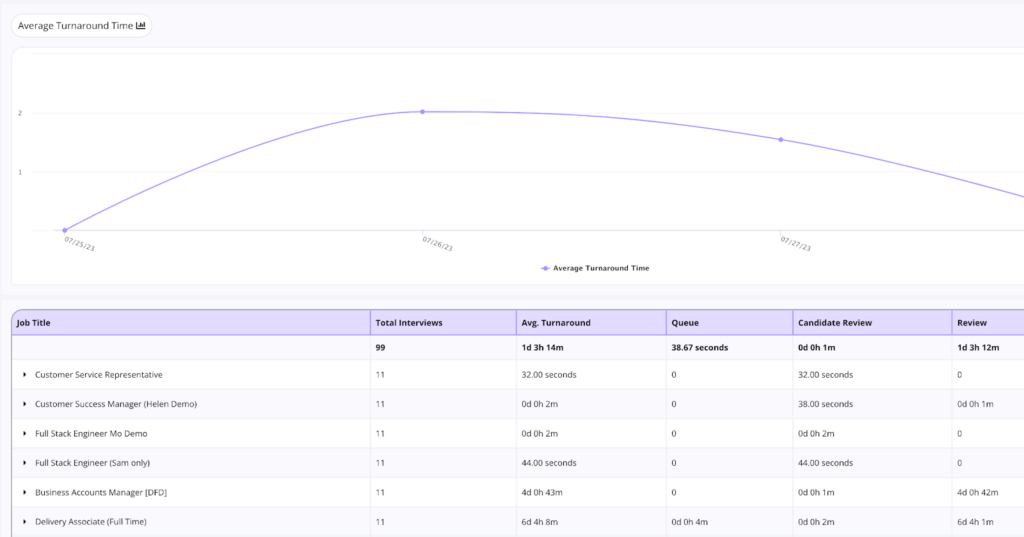
Turnaround Benchmarking – Now you can not only see how much time is spent in each phase of your interview process, but also compare your performance to that of market-leading companies right within GoodTime.
Cancellation and Reschedule Reasons – Track the reasons for all your cancellations and reschedules, to optimize your hiring process more than ever before!
Interview Day Scheduling -Schedule complex superday and interview day interviews through our new scheduling workflow.
Scheduling Links that sync to ATS – Create static links associated with jobs and stages. Embed or send these links to get interviews scheduled and synced back to your ATS.
For GoodTime Meet – Routing history to gain added clarity on lead assignments, and Insights updates to help you do more with your meeting data.
Let’s dive in!
Watch the September 2023 GoodTime product updates webinar
GoodTime Hire updates
Turnaround Time Report benchmarking and filters
The Turnaround Time Report now supports benchmarking and can be filtered by different jobs and RCs.
Why this is awesome: Now, you can objectively assess how strong your interview scheduling performance is compared to the industry standard and drill it down to specific areas of improvement.
AI-powered Job Categories
We’re proud to announce Job Categories. Through the power of Natural Language Processing, all job titles are now categorized automatically, which allows you to benchmark job performance based on the type of job.
Why this is awesome: Hiring for different jobs varies tremendously based on the type of job, so it’s crucial to be able to sort your reporting accordingly. Over the upcoming weeks, this filter will be applied to all applicable GoodTime reports.
Training tag improvements
The logic for which trainee gets selected when tags are used has been completely optimized to prioritize graduation progress, timezone proximity, and much more.
Why this is awesome: The best talent gets snagged the fastest. That’s why it’s important to interview quickly. The training tag improvements increase your graduation rate and let you interview faster than ever before.
Cancelation and reschedule reasons
Now you can record the reason for each interview cancellation and reschedule.
Why this is awesome: The volume of cancellations and reschedules on their own do not tell the story of why they’re happening. By tracking the reasons, you can actually drill down on how to improve your process.
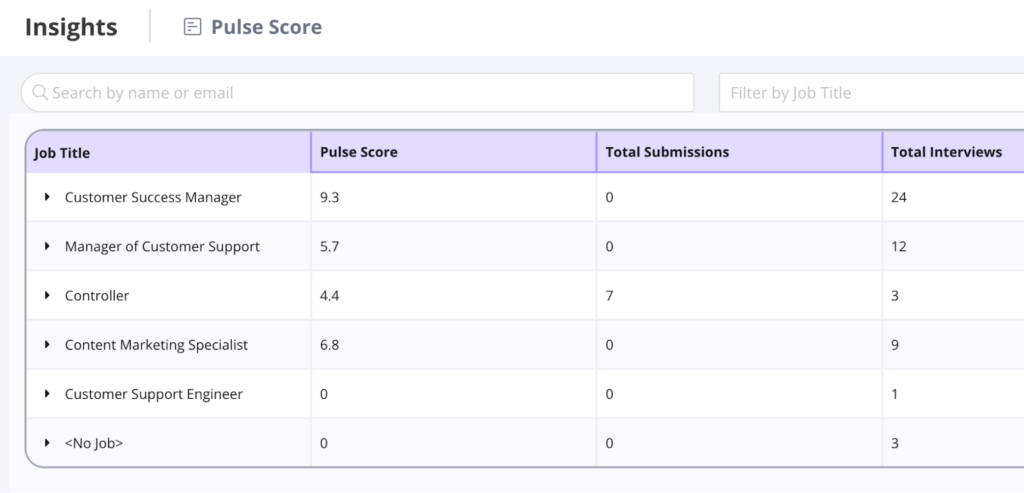
Pulse Score visualization
The Pulse Report now shows how your Pulse Scores fluctuate over time with an all-new line chart that can be filtered by different job titles. This can be aggregated to daily, weekly, or monthly averages.
Why this is awesome: Now you can see how changes in your operations affect Candidate satisfaction over time and drill down sources of low scoring.
Slack Integration v2
We are upgrading our existing Slack Integration and adding support for creating Slack channels for interviewers.
Why this is awesome: We heard you! Having a Slack channel for your interviewers to collaborate with each other is very helpful. It used to be done manually, but we now automate it for time savings that really add up!
Hire for High Volume updates
Event and superday scheduling
Schedule complex superday and recruitment event interviews through our new scheduling workflow!
Why this is awesome: GoodTime supports interview days to streamline the scheduling process for your coordination teams. No more Excel spreadsheets and manual emails!
Scheduling links that sync to your ATS
Create static links associated with jobs and stages. Embed or send these links to get interviews scheduled and synced back to your ATS. This workflow is perfect for recruiting and sourcing teams!
Why this is awesome: Top-of-the-funnel interviews can now be scheduled, tracked in GoodTime, and synced back to your ATS all through a customized static link.
Even more updates and improvements!
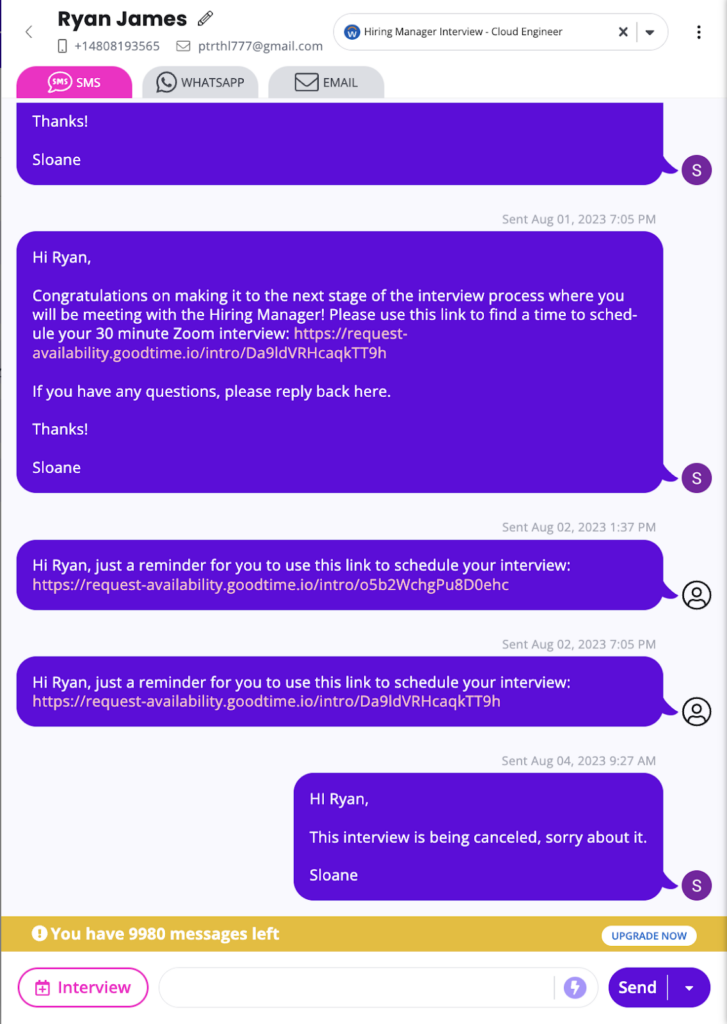
Improved messaging for candidates
Updated interview confirmation link to display to the user the email address and to check their email for interview details
Updated reminders and confirmation messages to be more clear to candidates to check their email for their interview information
Message Blurb and Interview Template search, sort, and filtering
Pre-filter message blurbs to only show created ones by users
Users can now search and archive message blurbs to stay organized
Enhanced stage change automation logic
Now automations execute when merged candidates enter a Job/Stage where automation is present
Now automations execute when newly applied candidates enter a Job/Stage without the ATS seeing the candidate had changed stages
Meet updates
Routing History
Ever wondered why someone was assigned a lead. Wonder no more! With Routing History, a digital paper trail of lead assignments, reassignments, and integration updates makes it easy to see what happened and when.
Why this is awesome: Routing History makes it easy to audit how the Routing automation is working to drive trust in the team and root out any unexpected issues.
Insights Dashboard updates
The GoodTime Insights Dashboard received an upgrade with a high-level categories breakdown, top scheduling links chart, and top companies chart.
Why this is awesome: The new dashboard allows for segmentation of your scheduling data, making it easier to see how your team invests their time.
Take advantage of everything GoodTime has to offer!
We want to help you evolve and take full advantage of the latest upgrades and improvements to our platform. Check out our support center for tutorials and tips to help you stress less and get more done!
Many talent teams successfully waded their way through a muck of unpredictability over the last few years — just to be met with more challenges on the other side. But the truth is — hiring will always be a challenge, won’t it?
Talent teams today are leaner and meaner than they’ve had to be in a long time, yet are striving for the same results they got with budgets twice as big. So how do hiring teams tackle the current landscape head-on so they can find the quality talent they so desperately need?
We spoke with the experts who are keeping TA efforts resilient at their companies. In this article, we’ll cover the biggest challenges hiring teams are facing today — plus, expert tips for overcoming these hiring challenges moving forward.
In some industries, there’s still a shortage of talent
Where did all the talent go?
This is a question that hiring leaders across the globe are still grappling with — especially in industries like healthcare, retail, and manufacturing.
In the case of these high-volume industries, there’s simply a shortage of qualified talent. For other industries like tech, we’re not saying quality candidates aren’t out there. They are. However, talent teams are still struggling to attract the right candidates, the right way.
GoodTime recently surveyed over 500 TA leaders in the U.S. and found that 24% of respondents identified a lack of qualified candidates as one of their top hiring challenges. These same survey respondents ranked quality-of-hire as their top focus in hiring metrics — so clearly it’s top of mind.
For starters, it’s important to understand that candidates have changed. And with that change comes a new set of demands.
The newest generation of job seekers has no desire to work 20 to 30 years in the same position. They’re looking for a place that meets their expectations, and honestly, they’re not willing to settle. So if companies aren’t bringing their A game, talent will say no.
Unlock 2026’s top hiring strategies: Insights from 500+ TA leaders
Be the first to uncover deep hiring insights specific to your sector — straight from the highest-performing TA teams.
There’s one thing talent leaders need to understand: using past solutions to fix future problems won’t work. It’s a new world of work and with that comes new hiring strategies.
But to really understand how to fix the lack of quality talent, we must first address the challenges below. Once these common challenges are handled, top talent will not be so hard to come by.
There’s a growing skills mismatch
Skills have become a hot topic in the hiring industry — and rightfully so. With the rapid development and implementation of new technology, we’re seeing a gap between the skills candidates possess and the skills they need to operate and innovate in the modern economy.
But when we talk about skills, it’s more than just technical skills. Soft skills, such as adaptability, problem-solving, and communication, have become equally important in the workforce. With the right skills, workers can adapt and change as quickly as our environment is changing.
To add to the skills gap dilemma, hiring teams are also running into another skills issue — padded resumes. In fact, it’s the top hiring challenge our survey respondents experienced over the last 12 months. One in four companies said that candidates padded their resumes, making it difficult to know who they are really hiring.
With the rise of AI technology, like Chat GPT, candidates may use it to write their resumes and cover letters, or even to aid them live during an interview. The problem is that candidates often fail to fact-check these tools. Whether padded resumes are intentional or not, tightening up how candidates are assessed for skills is critical right now. And that starts with standardization
What can you do?
Define a clear standardized process for selecting and vetting candidates. Then, train your interviewers on how to ask the right questions for certain skills. Additionally, an interviewer selection tool can quickly find the best interviewer based on the skills you need.
We spoke with veteran recruiting consultant Jenny Jongejan about tech hiring challenges and the right way to identify and vet candidates and she emphasized the importance of standardizing the entire process, including the questions your interviewers ask: “Before you even open a role and begin sourcing, it’s so important to know why you’re hiring. What are the business objectives that the role is going to impact? So if this is a software engineer position, is it a backfill, is it a skills gap? Are you up-leveling the team with somebody who has more leadership skills? Or, is it a new product and you need someone with niche skills?”
Jenny went on to share how having that conversation about qualifications up front will inform the questions you ask: “Based on those predetermined skills and behavioral attributes, figure out exactly who on your interview panel is going to be able to evaluate the candidate on those particular focus areas and assign the right focus areas to the right interviewers and even assign them the questions that they will ask every candidate.
I know sounds incredibly prescribed, but, research does show that structured interviews are 81% more accurate in predicting job performance than unstructured ones. So having a set of standard questions that interviewers ask every candidate really ensures that interviewers don’t insert their own biased set of criteria and leads to better hires.”
The last step is making sure that you’re having a productive, clear post-interview debrief with the hiring team.
If you can’t find the right candidates with the right skills, consider upskilling current employees. Training and development is one of the best ways to retain current employees and build a pipeline of skilled workers.
You may also consider looking beyond traditional sources of recruitment and explore other options, such as freelancers or contractors. Not only does this open the doors to a more diverse team, but it’s likely that you’ll find what you’re looking for simply by expanding your search.
Having a set of standard questions that interviewers ask every candidate really ensures that interviewers don’t insert their own biased set of criteria and leads to better hires.
Jenny Jongejan, Senior Recruiting Consultant
Opinions on work flexibility are polarized
In the last few years, there’s been a dynamic shift in where and when we work — largely due to the pandemic. Once things settled, many employers tried to force their employees back to set hours and a set office space while others embraced the change as the new normal.
The reality is that candidates demand flexibility, whether that’s working remotely or just the ability to come and go from the office as they please.
And truthfully, this is no surprise to employers. More than half of the TA leaders we surveyed said flexibility is their biggest selling point when it comes to attracting top talent.
With that in mind, organizations need to adopt and embrace a flexible working model so candidates don’t take their skills elsewhere.
What can you do?
A successful work model is more than simply allowing remote work or flexible office hours.
Employers must first listen to the needs of their employees. Then, build a set of guidelines that give employees greater freedom to decide when, where, and how to work.
There’s not a one-size-fits-all flexible work model. Every industry and every employee is different. What one employee wants may not be what another one wants. A flexible work model that works for your company will likely take some adaptability and experimentation.
However, the best model for workplace flexibility will always balance the needs of employees with the company’s goals — fostering an atmosphere of engagement, productivity, and adaptability.
There’s no question that technology should play a part in this workplace model. With tech, employers can address scheduling, productivity, and communication. And in hiring, tech can help assess the candidate’s ability to be successful in remote, hybrid, or flexible working schedules.
Time-to-hire has increased
We’re a generation that has zero patience for lag time. And with the rise of high-speed technology, this impatience has only compounded.
So it may be a little surprising to hear that it’s actually taking TA teams longer to hire, not shorter. Yes, Josh Bersin’s newest report recently reported 44 days to fill a vacant spot. This is up from 43 days just a year ago.
GoodTime’s survey shows the same results, with 71% of TA leaders saying their time-to-hire has increased in the last year — up from 60% just a year earlier.
If we step back for a minute and take a look at what’s happened over the last few years, we can see a couple of factors play into this.
With the struggle to land quality talent, employers are slowing down and making more calculated decisions — rather than just trying to fill empty seats fast. On the other end of the spectrum, talent is more picky and won’t jump into a job unless it offers perks, like flexibility and upskilling opportunities.
It feels like leaders are put between a rock and a hard place, especially since 49% of job seekers say they’ve turned down a job offer due to a bad hiring experience.
71% of TA leaders reported that their time-to-hire increased in 2022 — up from 60% just a year earlier.
GoodTime’s 2023 Hiring Insights Report
What can you do?
Time-to-hire matters. If you’re not tracking it, you should be. We asked Dallas Frazer, the former Recruitment Operations Lead at Shopify and current Senior Customer Success Manager at GoodTime, about the importance of time-to-hire and how to use it to improve your hiring process.
Here’s what Dallas had to say: “One of the key metrics recruiters will want to track is time-to-hire. If you find your process dragging on for longer than necessary, it’s a clear sign you might be investing too much time and effort in certain stages. It’s also crucial to compare these timings across different roles for context. If time-to-hire is consistently higher for one role type versus another, it’s worth looking into and saying what part of that role’s hiring process isn’t working. What can you learn from other roles with a faster time-to-hire?”
But of course, time-to-hire is only important as a way to ensure you’re securing the right talent for the right role. The more seamless the hiring process, the more appealing your company looks to top candidates.
How do you get that seamless hiring process? Start by using tech to maximize your resources and complete tasks in half the time. A great example of this is automated scheduling. Our survey shows that there was a 5% increase in interview scheduling time over the last year — something that can easily be fixed with the right interview scheduling software.
Automation takes over time-consuming tasks so talent teams can focus on getting top candidates to the final offer much faster. Yes, you can simultaneously focus on hiring speed and quality hire.
Does interview scheduling automation make sense for my team?
ROI is key. This is not a time to invest in software that won’t bring you immediate value. So let’s eliminate the guesswork with our free ROI calculator.
When asked what challenges they expect in the next 12 months, 27% of our survey respondents ranked “limitations in their current hiring technology” as their top concern.
As technology quickly advances, the fear that their current technology won’t keep up is definitely valid. Especially since technology is changing how companies hire — and if you don’t keep up, you’ll lose your talent to those who do.
But with all the options out there, it’s hard to know what your organization needs to excel.
What can you do?
We spoke with Jonathon Wall, a seasoned TA professional with over 20 years of experience leading recruiting teams, about what TA pros can do to keep up with evolving tech. He told us, “If you’re not upskilling, if you’re not preparing yourself for what’s next, you’re probably falling behind. If you’re not ready to really take advantage of the scalability that you get with automation and AI, watch out because somebody is.”
But it wasn’t just a warning. Jonathon is very optimistic about the potential these tools have to improve the lives of recruiters: “We should be leveraging automation and AI to do those things that aren’t fun — the repetitive tasks. Leverage all of those tools so that you can have higher-quality human interactions. And If you’re not leveraging those tools, then you’re really draining all of that life force, the energy that you’re going to share with candidates, and the enthusiasm that you’re gonna bring to your profession.”
You can watch the highlights of our conversation below:
Automation and AI recruiting tools can quickly and efficiently streamline the recruitment process. But every company is different so it’s critical to understand your needs and adopt the tools that will boost your hiring experience.
39% percent of our survey respondents said they worked to improve the overall efficiency of their hiring process in the last year. It’s a great start, but there’s still lots of work to do.
As we look to 2024 and beyond, hiring teams need to be agile and quick to react as the workplace constantly evolves. This means staying on top of the most current technology to speed efficiency and land quality talent.
If you’re not preparing yourself for what’s next, you’re probably falling behind.
Jonathon Wall, Principal, The Cassillon Group, Inc.
Stay adaptable in 2024 and beyond
If you only take one thing away from this article, it should be that the number one determinant of TA success in 2024 will be your ability to adapt to change.
If you haven’t done so already, it’s time to standardize your interview and hiring processes, embrace work flexibility as a key selling point, and address the prolonged time-to-hire issue through technology-driven solutions.
With GoodTime Hire, you can speed up your hiring process and land top talent 50% faster. Our smart scheduling automation streamlines the interview process so talent teams can focus on what they really enjoy — hiring the right people!
More data you can actually use, more automation to make your life easier, and a polish to some of the features you already love. It’s time to check out our last product releases of the summer, including:
Turnaround Time Report – All new report that drills down how much time your team spends in each phase of scheduling an interview, by job and stage!
Candidate Pulse Report – Capture and analyze Candidate Pulse scores to find the highs and lows of your candidate experience
Interview Blocks – You can now set up interview blocks in your calendar and have GoodTime schedule only during those hours
High Volume + Workday – Workday users can now send SMS and WhatsApp messages, and automate tasks like sending interview requests as soon as candidates enter a stage
For Meet, we’ve added built-in To-Do Lists and are introducing an I9 Verification Playbook
Get all the details below!
Watch the August 2023 GoodTime product updates webinar
Check out the full webinar below, or keep scrolling for the top highlights.
GoodTime Hire updates
Introducing the Turnaround Time Report
This all-new report breaks down how much time your team is spending on each phase of scheduling an interview.
Why this is awesome:
For the first time, you can drill down and find your fastest and slowest scheduling flows and use this information to lock down top talent faster than ever.
Built-in benchmarking
Benchmarking allows you to look at any of the new GoodTime reports and compare your company’s performance to other market leaders.
Why this is awesome:
Many times we work in the dark and it’s difficult to assess whether metrics are irregular or not. Benchmarking gives you a clear insight into whether you are on track or if there’s a need to make some improvements.
Candidate Pulse Report
The Candidate Pulse score is the fastest and most unbiased way to track candidate experience through every part of your hiring process. We’re excited to share that the first iteration is now available in GoodTime Hire!
Why this is awesome: There are so many moving parts in the end-to-end hiring process. The Pulse Report will allow you to drill down to a higher granularity than ever and find your highest performers as well as areas for improvement.
Hire for High Volume updates
Our high-volume hiring features keep getting better and better. Here’s our latest round of upgrades:
Workday ATS support
Use our Workday integration to send SMS and WhatsApp messages and automate activities like sending interview scheduling requests as soon as candidates enter a new stage of your process.
Why this is awesome: Workday ATS customers now can now use high-volume hiring features like texting, WhatsApp, and workflow automation to hire even faster!
Outlook email support
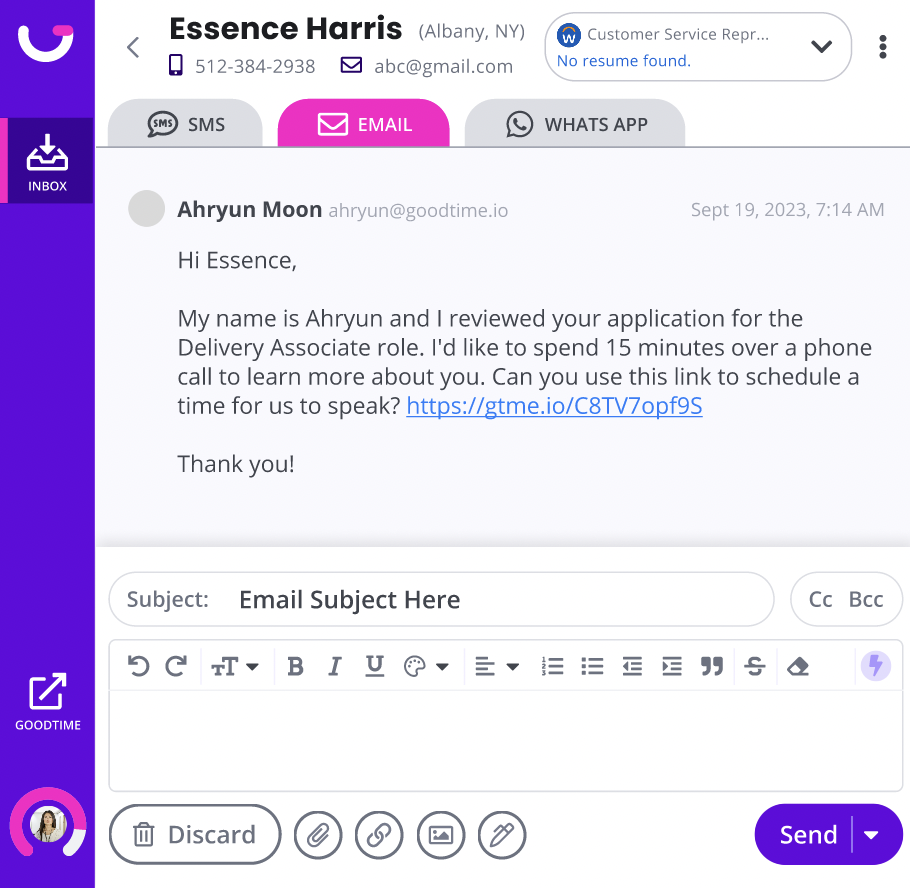
Integrate your Outlook account to send standalone emails and scheduling requests to your candidates in GoodTime with just one click.
Why this is awesome:
You can now communicate and schedule interviews with your candidates however they (and you) prefer!
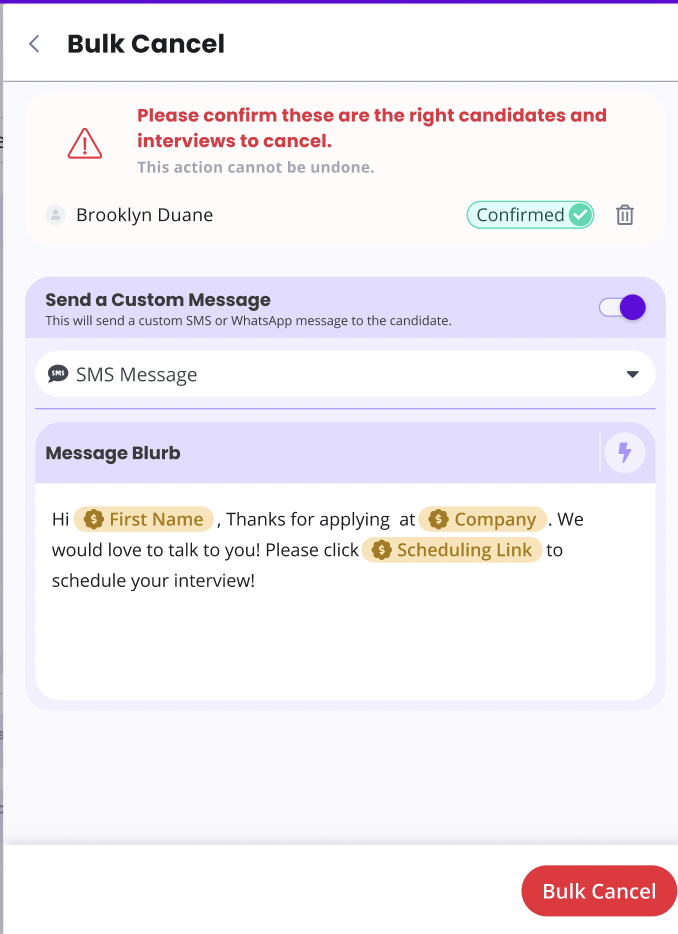
Bulk cancel interviews
Select candidates from the Job View page to bulk cancel old interviews or if you need to close a requisition and have interviews still scheduled.
Why this is awesome: In a couple of clicks, you can now bulk cancel dozens of interviews and provide a custom cancellation message to your candidates.
Even more updates!
Enhanced Email Design & Functionality
Format emails with bolding, italicizing, numbered orders, etc.
Customize subject lines for interview requests and one-off emails
BCC and CC any email address in your outreach
Email Message Templates
Create specific email templates for formatting, subject lines, and CC and BCC inclusions
New User Onboarding improvements
Save message templates in the current workflow
Apply message templates in the communication to schedule blurbs
Added filter for High Volume templates in the interview templates setting section
Meet updates
We’ve got more features to make meeting scheduling a breeze — no matter the situation.
To-Do Lists
Quickly create To-Dos and reminders to help you get work done directly from your Meet calendar.
Why this is awesome:
No need to bounce between apps! To-Dos is built straight into GoodTime Meet so now you can share availability, book meetings, and create action items all in one place.
Get our I9 verification playbook
If you’re all done with I9 verification, huge kudos to you and your team! Many teams today are rushing to complete I9 verification to meet government-mandated requirements by the August deadline. If you’re still catching up yourself, we’ve put together an I9 verification playbook for you.
Why this is awesome: Quickly and efficiently schedule thousands of mandatory in-person or remote I9 Verification interviews using a few quick Meet scheduling links.
More updates to Meet
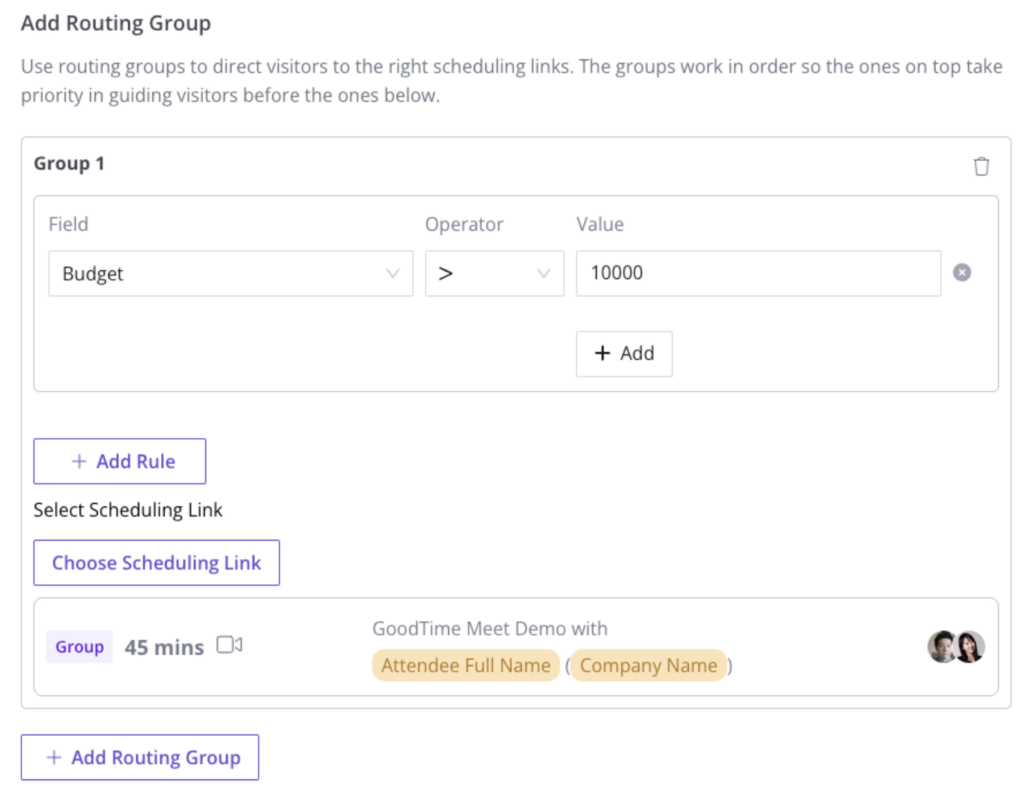
Routing – Support for split default actions
After users complete your route, you can now assign different default actions (such as redirects, thank you messages, and pages) depending on whether the user was qualified.
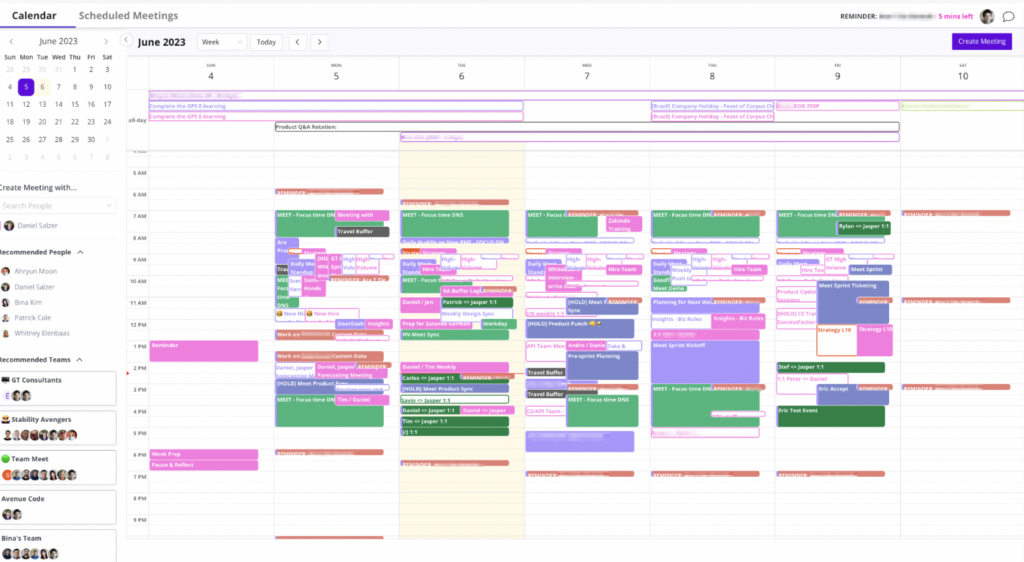
Calendar – invite external guests
You can now quickly invite guests to your calendar events outside of your organization. Simply add their email address.
Calendar – Drag and drop
Drag and drop calendar events to reschedule them and also change their duration.
Enterprise billing page
Company Admins on Enterprise accounts can quickly assign and re-assign licenses to their teammates without having to reach out to support.
Looking to make the most of GoodTime?
We’re always adding new features to help you hit your goals and stress less. Check out our support center for tutorials and tips to help you take advantage of everything GoodTime has to offer!
It’s almost becoming a joke — “do more with less.” It’s basically the mantra of the tech world right now, but it’s rare that anyone tells us what it actually means. We do know budgets are tighter. We know teams have been reduced. And we know that making the best possible hire is more important than ever.
So we spoke with the experts to go beyond “do more with less” and reveal real, practical ways that tech hiring teams can hit their goals in the midst of tech hiring challenges. Watch the full conversation below or keep reading for the key takeaways.
Introducing the experts:
Ahryun Moon is Co-Founder & Head of Company Strategy at GoodTime. As the leader of a company that helps teams hire 50% faster by automating interview scheduling, she has deep insight into the importance of digital transformation in recruiting.
Amanda Richardson is the CEO and Head of People at CoderPad. With a background in product management, Amanda’s focus at CoderPad is on enhancing the hiring process for technical roles.
Jenny Jongejan is a Senior Recruiting Consultant. With 17 years of talent acquisition experience, Jenny has worked extensively with Bay Area startups, enabling efficient, standardized processes.
Unlock 2026’s top hiring strategies: Insights from 500+ TA leaders
Be the first to uncover deep hiring insights specific to your sector — straight from the highest-performing TA teams.
WeOne of the most significant challenges facing tech recruiting teams is the need to adapt to constantly changing priorities. Just in the past couple of years, tech recruiters have dealt with explosive hiring, then the great reshuffle, then hiring freezes and team reductions. As the economic landscape fluctuates, teams must remain flexible, adapt to leaner budgets and smaller teams, and be prepared for still more changes in the future.
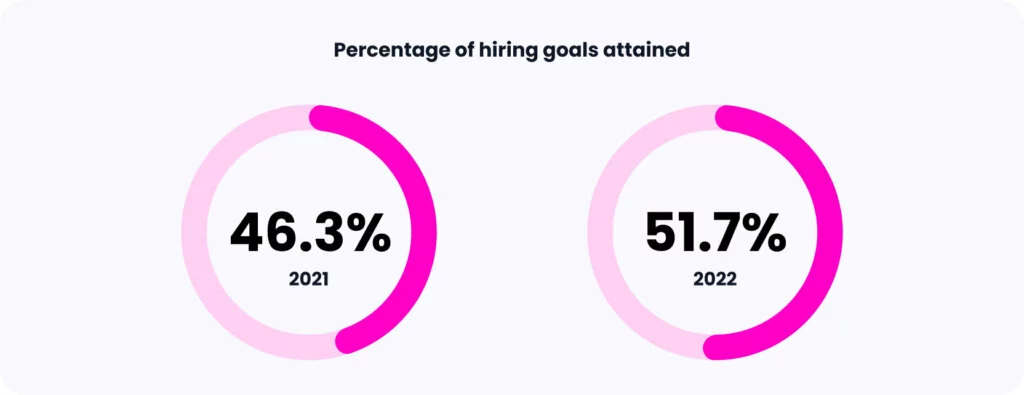
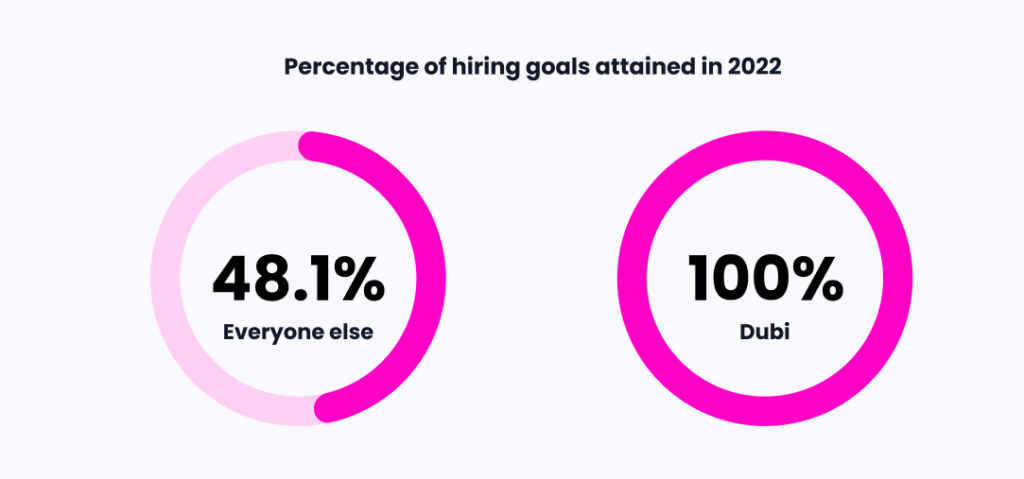
Our latest report on tech hiring trends showed that on average, tech teams are hitting just around half of their hiring goals.
Ahryun Moon summarized the current tech hiring landscape: “With some layoffs and a downturn in the economy recently, the recruiting teams have received a big blow. Team size is getting much smaller than before, but quite a lot of recruiters are still being told to hit pretty lofty recruiting goals. A lot of recruiters are also becoming full cycle recruiters, without RC support, so they’re doing the entire process. That’s why a lot of teams are looking into automation and AI.”
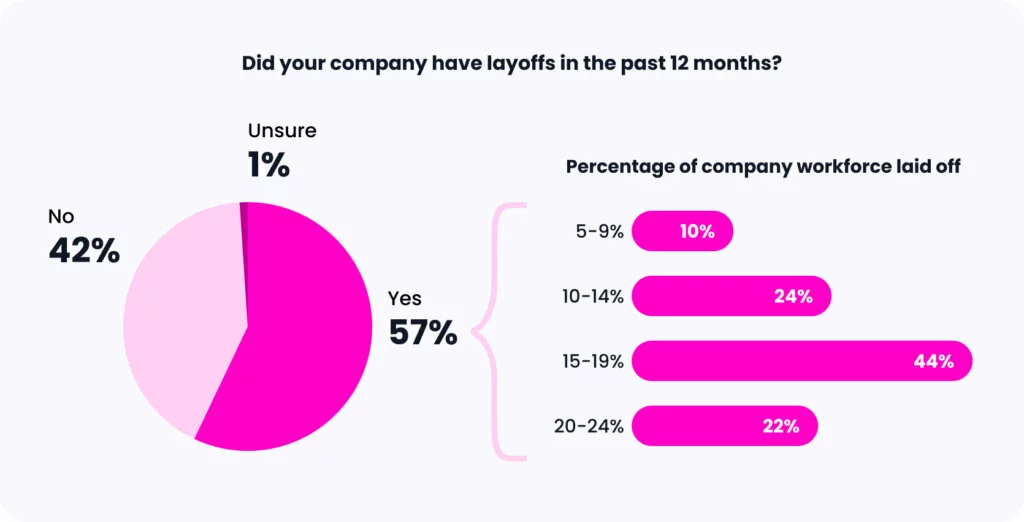
Indeed, layoffs hit tech recruiting teams particularly hard this year. Our Hiring Insights Report found that 44% of companies had cuts that affected 15-19% of their headcount, and 22% reduced over 20% of their company’s total workforce.
Ahyun emphasizes that digital transformation has long been an aspirational talking point for companies, but in the “do more with less” era, it’s become a must-have, where recruiting teams are charged with bringing in crucial technology to fill in new gaps.
Standardization and automation: the dynamic duo to address tech hiring challenges
In the wake of tech’s hiring challenges, standardization and automation have emerged as essential priorities for tech recruiting teams.
Amanda Richardson defines these concepts for us: “Standardization is doing the same thing, having a standardized process. Automation is about making that process more efficient — whether that’s with scheduling or assessments — whatever tooling you can use to do the same repeated tasks more efficiently.”
Having clearly defined and standardized processes in place is crucial before you can effectively automate.
Jenny Jongejan, a seasoned talent acquisition expert, shares her four-step framework for an effective standardized recruitment process. She says when you’re standardizing, it’s important to first become crystal clear on:
Why you’re hiring: What objective is this role going to impact?
Who you’re hiring: What skills and experiences and behavioral attributes do you need?
How you’ll assess the candidate: For each stage in your interview process, how will you determine if the candidate is a fit?
Your evaluation criteria: How will you define what an okay answer looks like versus a great answer?
“I know that sounds prescribed,” Jenny acknowledges, “but research does show that structured interviews are 81% more accurate in predicting job performance than unstructured ones.”
There’s a reason why recruiting AI and automation are taking the spotlight. Ahryun stresses the importance of leveraging tech recruiting software to optimize the recruitment journey with limited resources: “There’s a lot of different places in the process that we can automate all the way from the top of the recruiting funnel to the middle and bottom. At the top of the funnel, there’s candidate nurturing. Tools like ChatGPT can help you with the content side of that. At the middle of the funnel, definitely interview scheduling. And at the bottom of the funnel, there’s background checks and onboarding.”
Remember: AI won’t replace human recruiters. Rather, leveraging basic AI tools can help with personalization and initial communication with candidates, providing time-saving and efficient solutions for recruiters. Those wishing to cut their middle- and bottom-of-the-funnel efforts in half, without sacrificing the quality of their process, can find immense ROI in AI-based scheduling, assessment, and onboarding tools.
Balancing candidate experience, personalization, and efficiency
In today’s leaner economic environment, tech recruiters often struggle to balance personalization and efficiency in their processes. While automation and standardization offer efficiency gains, personalization remains vital in creating a positive candidate experience.
Jenny emphasizes the significance of personalizing outbound communication: “Knowing your candidate profile and personalizing the message in a way that is going to tug on somebody’s individual heartstrings […] is going to actually get more quality candidates into the top of the funnel.”
The role of candidate experience in a lean market
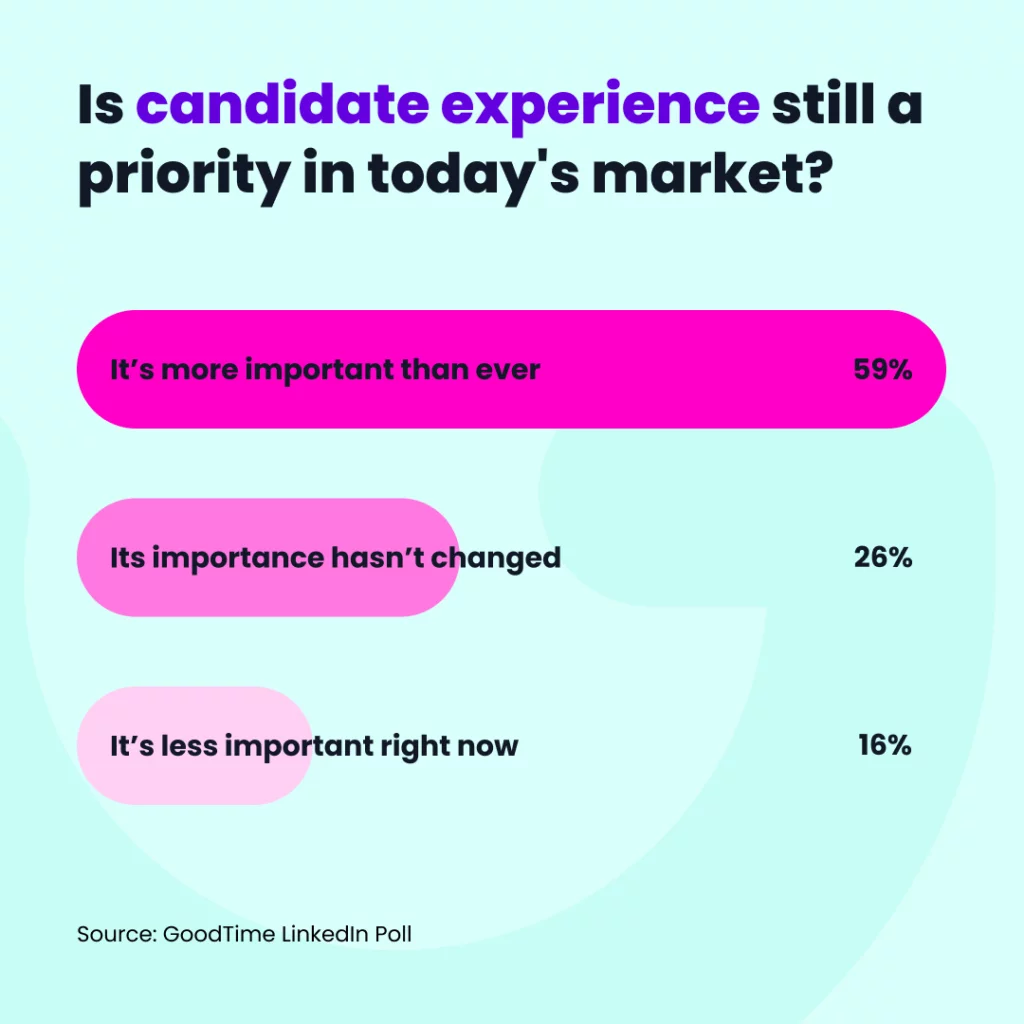
TA leaders agree with Jenny. In our own poll, 85% of respondents said candidate experience is still a priority in today’s market, with 59% saying it’s actually more important than ever before.
The experts on our webinar emphasized the importance of transparency throughout the hiring process, starting from the job posting itself. By providing detailed information about compensation, benefits, and the hiring timeline, candidates have a clearer understanding of what to expect, and it starts the process off on the right foot.
Amanda also shares one of our favorite quick tips for improving candidate experience: “I would challenge every recruiter to apply to a job on their website and then apply to a job on their competitor’s website.”
She recommends as you go through both processes, ask yourself:
Is this interesting?
How does it feel?
Is the experience smooth and easy to navigate?
Does it feel like you’re being treated as one in a million or like one in a herd of cattle?
“Just spend the time going through and understand what your process is already and you will immediately find ways to improve your candidate experience,” she says.
A holistic approach to quality of hire
In lean times, hiring decisions become even more crucial. Ahryun emphasizes this point: “With the number of candidates in the market now, every single hire that you make actually becomes even more important.” Standardized processes, personalized engagement, and leveraging AI-driven tools all contribute to enhancing the quality of your hires, but all of these efforts need to work holistically and cohesively together.
Setting clear criteria for tech roles
Defining clear evaluation criteria is crucial to ensure that everyone involved in the hiring process is on the same page.
Ahryun stresses the importance of an intake meeting and highlighted the value of having a shared understanding of the definition of a “top performer” from the very beginning of the hiring process. By collaboratively defining the standards for quality hires, recruiting teams can mitigate the temptation to compromise quality for quantity. Amanda adds, “Being transparent and clear along the way really goes a long way to align the recruiting team and the business team around what our objectives are.”
Jenny emphasizes the significance of standardized, fair questions in accurately evaluating candidates’ fitness for a role: “Implementing an assessment tool that is fair versus asking questions that may be more gotcha questions or have more subjective answers is going to help improve your process significantly.”
Minimizing mis-hires with smart standardization
Mis-hires can be costly and detrimental to a company’s growth. To avoid them, tech recruiting teams must focus on standardized processes and structured interviews.
Amanda doubles down on standardization as a way to prevent mis-hires, saying, “Having a standardized process is incredibly hard. It sounds easy, but really forcing people to ask candidates the same questions in the same order every time is really hard. But that, to me, will actually solve a lot of the mis-hires.”
Unlock tech’s top hiring strategies in 2025
Our study of 100 tech TA leaders reveals how to hit your hiring goals in a challenging market.
Given the uncertainties of the economic landscape, it’s difficult to speculate on when hiring might regain its momentum. Still, Ahryun makes a data-informed guess on when we might see another hiring boom:
“Hiring will pick back up when we think the economy will pick back up. Unemployment is still low, and inflation has been tamed. We are already actually seeing from our interview data an uptick from a lot of companies, so it seems like that positivity and optimistic feeling about the future is starting to come back.”
Better tech recruitment now and in the future
To successfully address tech hiring challenges now, and into the future, teams must prioritize clarity in their process and value in their tech stack — in that order. Here’s a roundup of the must-knows from our panel discussion:
Standardization and automation work together to streamline processes and enhance hiring efficiency.
Adaptability remains crucial amid changing priorities and economic fluctuations.
Embrace digital transformation and harness AI to bridge resource gaps.
Candidate experience still matters, and can actually be improved through standardization.
Transparent communication (internally and externally) and holistic assessment foster quality hiring.
By integrating these takeaways, tech recruiting teams can chart a course toward success, adeptly managing challenges in an ever-evolving industry.
As the U.S. grapples with an escalating shortage of health aides, nurses, and physicians, GoodTime secures HIPAA certification, enabling more health organizations to fill roles quickly with fewer resources.
August 8, 2023, SAN FRANCISCO – GoodTime (goodtime.io), a leading provider of AI-powered scheduling software, proudly announces the achievement of HIPAA/HITECH Type 1 Compliance. With this certification, GoodTime empowers more healthcare organizations to fill roles faster in the face of a healthcare labor shortage by utilizing Hire, the company’s flagship interview scheduling platform.
Addressing the Healthcare Labor Shortage
Amidst a severe shortage of health aides, nurses, physicians, and other healthcare professionals, GoodTime’s HIPAA certification brings a timely solution to hiring teams in the healthcare industry. Consulting firm Mercer projects a shortage of over 400,000 home health aides and 29,400 nurse practitioners by 2025. The Association of American Medical Colleges (AAMC) predicts a potential shortage of up to 122,000 physicians by 2032. This scarcity of healthcare professionals has intensified the competition for talent, making it crucial to fill open roles quickly to meet the needs of healthcare companies and the patients they serve.
Enhanced Possibilities with GoodTime’s HIPAA Certification
Healthcare organizations are already bound to strict HIPAA guidelines for any systems that directly handle sensitive patient information. As an extra measure of security for all protected health information (PHI), many of these organizations strive to only use HIPAA-compliant systems, even when those systems don’t directly interface with patients.
GoodTime’s certification is a significant milestone that re-affirms the company’s commitment to healthcare organizations and sets them apart as the only interview scheduling provider that is HIPAA-compliant. By adhering to the highest industry standards for data security and privacy, GoodTime helps healthcare talent acquisition teams streamline and automate their hiring workflows, minimize resource requirements, and fill roles faster in the midst of the labor shortage.
Ahryun Moon, GoodTime Co-Founder and CEO, expressed enthusiasm about the recent HIPAA certification, highlighting its importance for healthcare organizations. Moon stated, “We are thrilled to have obtained the HIPAA certification, as it strengthens our dedication to healthcare organizations during this challenging time. With secure, automated, and efficient scheduling, healthcare hiring teams can fill open positions swiftly, without all the manual work, and ultimately deliver exceptional care to patients.”
Purpose-Built Features for High-Volume Healthcare Hiring
GoodTime Hire leverages AI to revolutionize the healthcare hiring process, particularly for high-volume roles in the context of the labor shortage. Healthcare organizations use Hire to significantly reduce time-to-fill and provide a standout candidate experience, even as talent acquisition teams have become leaner. Teams hiring for high-volume healthcare roles benefit from features like:
SMS/WhatsApp messaging: Reach candidates via texting and WhatsApp to increase response rates and schedule faster.
Workflow automation: Auto-trigger messages and reminders to candidates and hiring managers — and automate the entire interview process with an intuitive workflow editor.
Screening and knockout questions: Stay focused on what matters and identify the most qualified talent automatically with screening questionnaires and knock-out questions.
About GoodTime
GoodTime helps people and companies drive better outcomes from their most important meetings by automating coordination, making sure the right people are in the room, and providing actionable meeting insights to hit goals faster.
The company’s flagship product, GoodTime Hire, helps hiring teams go beyond candidate experience and make every interview count. Hire uses AI to automate interview coordination, build better relationships during interviews, and deliver insights to continuously optimize the hiring process. Over 300 companies around the world like Slack, Box, HubSpot, Spotify, Okta, and Pinterest are getting to “yes” up to 70% faster with Hire. Learn more at goodtime.io.
Learn more about how GoodTime can help your organization with healthcare recruiting.
Get pumped for some updates that will make your work life a whole lot easier. We’ve been hard at work rolling out some much-anticipated features this month, including:
A new Recruiting Leaderboard to give you performance benchmarks and actionable data at a glance.
Workflow automation for email so you can further automate interview requests, reminders, and even drip campaigns
International language support so all your messages and reminders can be sent in 10 different languages.
For Meet, AI-powered round-robin scheduling and lead routing lets you automatically set meetings with the right person at the right time and balance the meeting load across your teams.
We’re excited to show it all to you, so let’s jump right into it!
Watch the July 2023 GoodTime product updates webinar
Check out the full product update walkthrough below, or keep scrolling for the top highlights.
GoodTime Hire updates
Let’s start with our flagship product — GoodTime hire. You know it and love it, but it’s getting even better every month. Here are this month’s highlights.
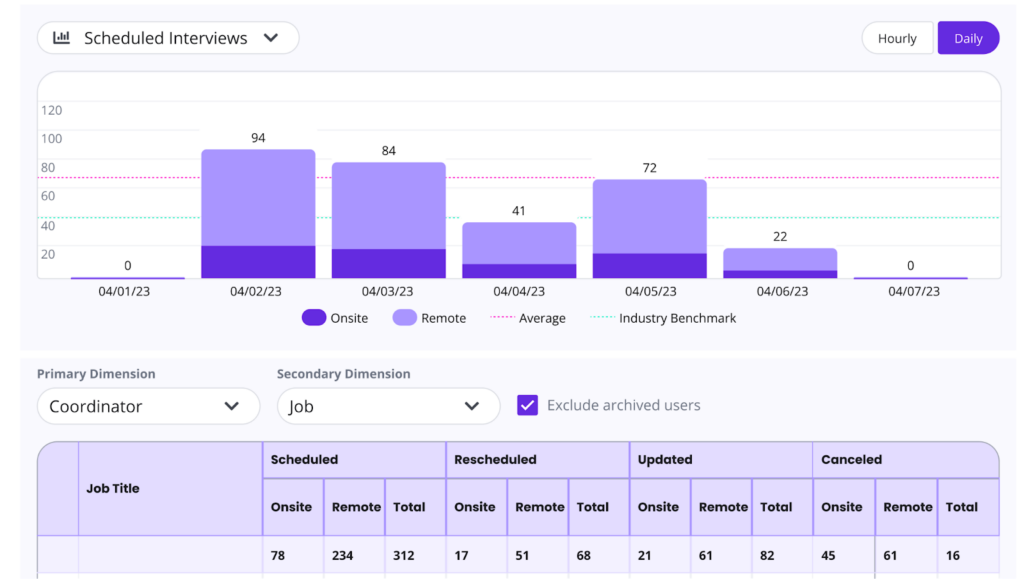
A new Recruiting Leaderboard
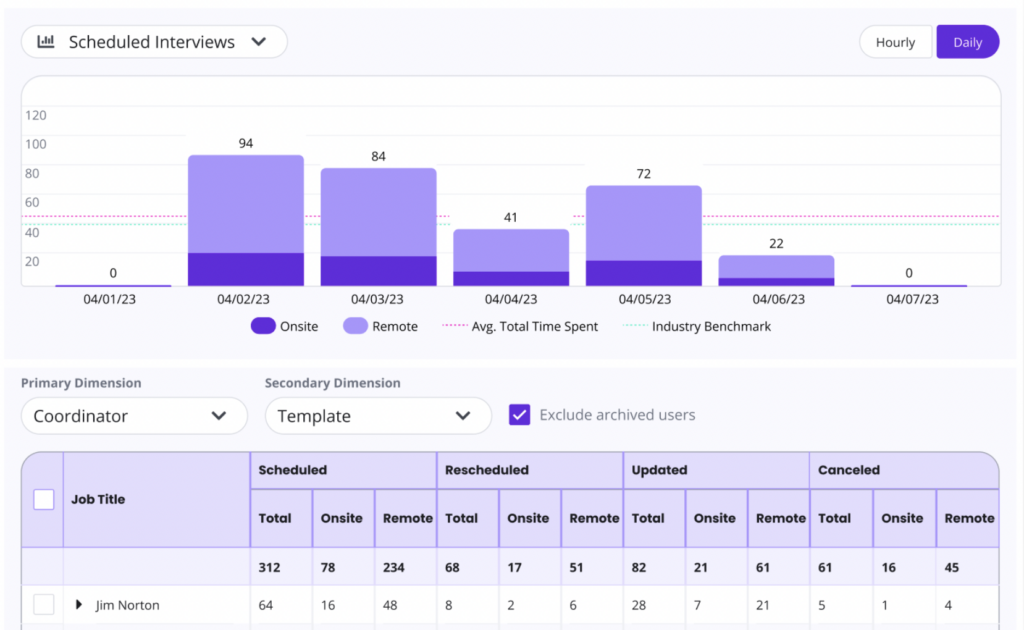
The all-new Recruiting Leaderboard lets you plot scheduling data on bar charts, for any of the metrics you chose like Schedules, Reschedules, Updates, and Cancellations.
You can also sort by any metric needed and compare your company average with industry averages.
Why you’ll love it:
Easily identify areas of high performance, and areas of need for improvement, as well as understand how your org performs to similar companies in your industry.
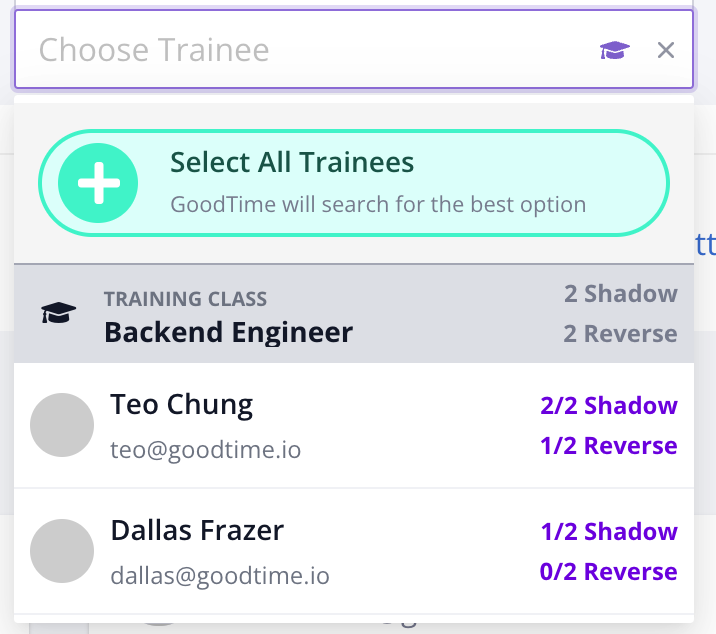
Enhanced trainee assignment
Assigning Trainees is now more straightforward with a clearer visual experience. It’s now a breeze to select trainees and see their current progress.
Why you’ll love it:
This update makes scheduling training and shadowing sessions much faster and easier to understand.
Hire for High Volume updates
Are you using our high-volume hiring features yet? Because they’re only getting better! Here are this month’s updates.
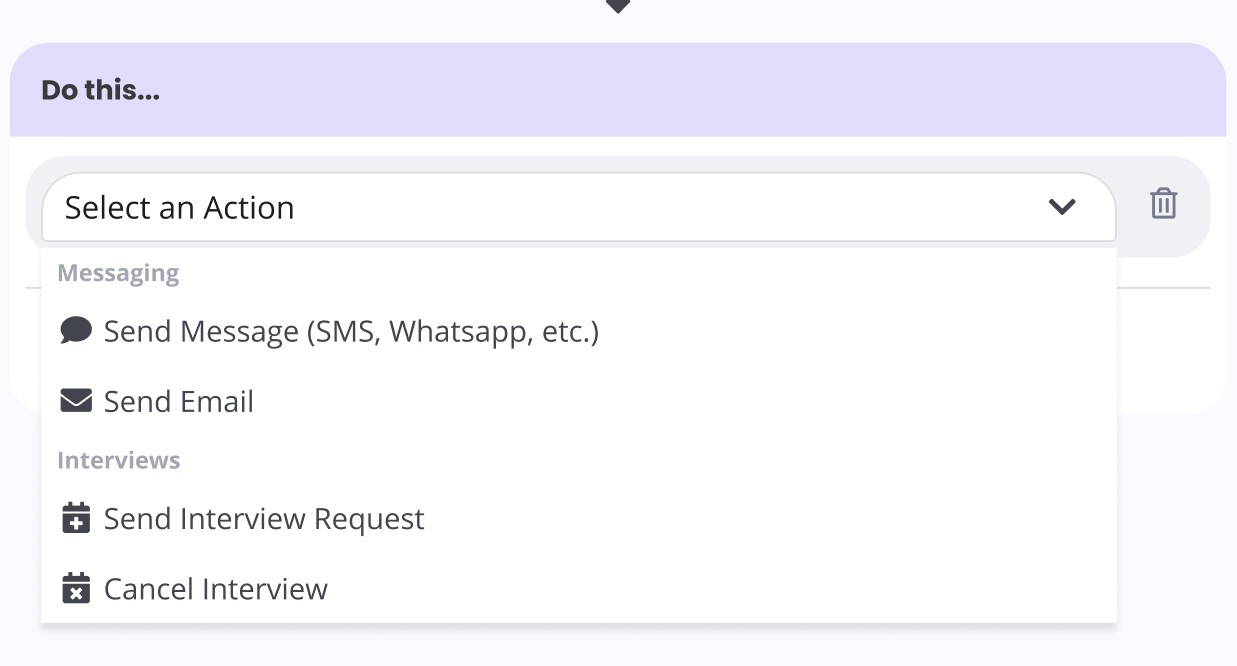
Workflow automation for email
We now support workflow automation via email, including one-off emails, interview requests, and drip campaigns!
Why you’ll love it: Create the same workflows you have in SMS/WhatsApp, but now through email if that is your preferred communication channel with candidates.
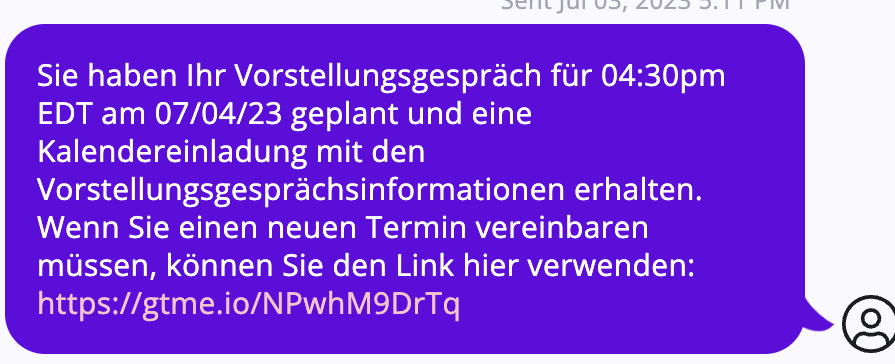
International language support
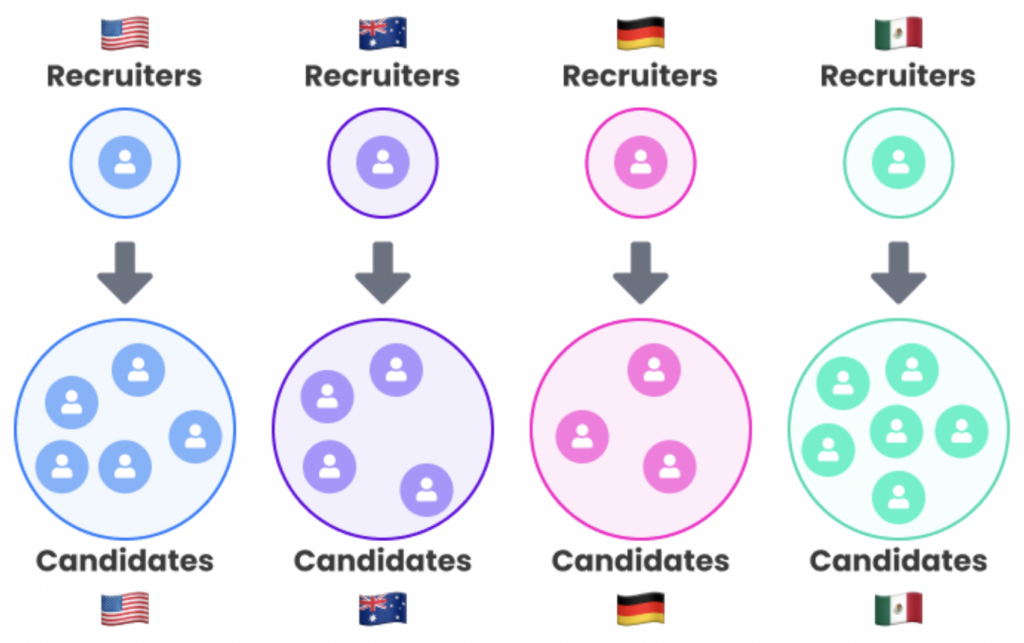
All system messages such as reminders, confirmations, and reschedule messages are now supported in 10 different languages.
Why you’ll love it: Companies with a global footprint can now conduct all candidate-facing communication in the candidate’s respective language. It’s a better experience overall and allows you to optimize your hiring process in more geos.
Enhancements to the Quick Menu
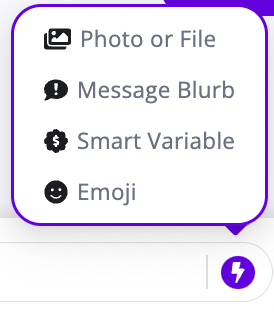
You can now insert files, emojis, variables, or message blurbs with one click from the Quick Menu.
Why you’ll love it: Set up Message Blurb templates to contain emojis, variables, and even files quickly and easily from the Quick Menu. This saves you even more time in bulk messaging and automating candidate communications.
More updates
Here are a few smaller, but mighty updates to Hire for High Volume.
Generate WhatsApp Templates inside the application
Create WhatsApp Message templates on the fly and see their approval status without needing to contact GoodTIme.
Mark Messages as Unread
Mark a message as unread with a candidate to remember to follow up at a future date.
Notifications when candidate numbers do not exist
Display and notify users when an SMS or WhatsApp number is not valid and a message could not be sent.
Meet updates
Our product team is on fire with the updates to Meet lately! We’ve got two major releases this month.
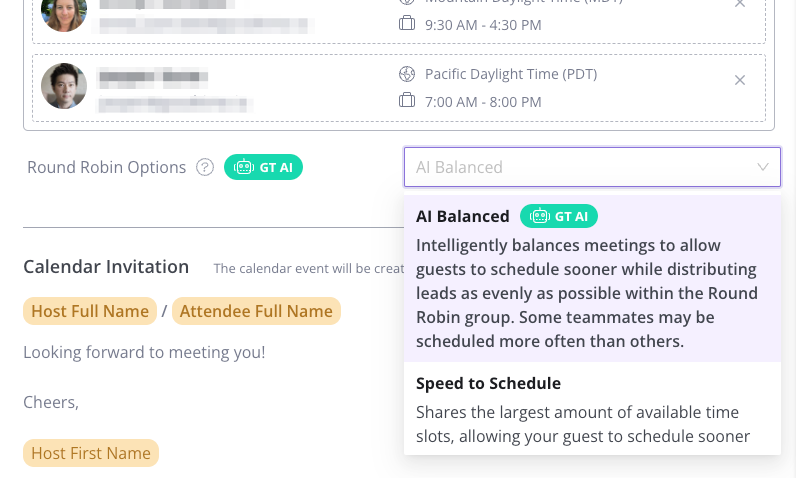
AI-Powered Round Robin scheduling
Round Robin links get a serious AI-powered update this month. You can now pick your favorite distribution algorithm, so you decide how to optimize for speed of scheduling versus load balancing.
Why you’ll love it: Using AI to balance Round Robin links allows teams to fairly distribute leads or inbound requests while providing the maximum flexibility for guests who are scheduling
Routing updates for Sales teams
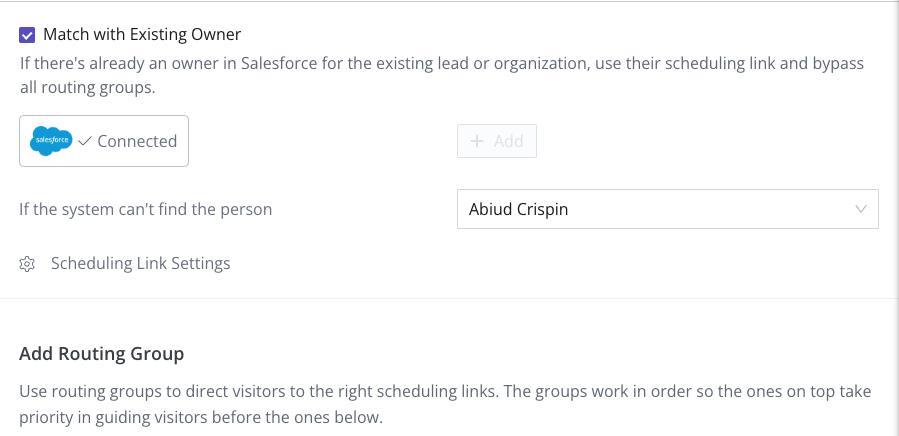
We’re continuing to build out and enhance the Routing functionality in GoodTime Meet. This month, we’re introducing Salesforce Owner Sync.
Why you’ll love it: By automatically assigning leads to existing owners in Salesforce, operations teams can automate the process of lead assignment without worrying about double assigning a lead.
Even more updates to Meet
Embedebble GoodTime Meet lead capture forms
Create native embeddable custom forms that you can use to capture and route leads from your website.
Routing: Owner sync back to Salesforce
After routing a lead, the system can now sync the assigned owner back into Salesforce, further automating the lead routing process.
Routing: Deep linking
Deep linking to a route makes it easier for teams to collaborate. You can now share route settings with teammates via the browser URL.
Database Infrastructure Updates
With the increased demand on GoodTime Meet services, we upgraded our databases to better manage the additional traffic.
Still scheduling meetings manually?
You don’t have to do that anymore! See you you can tap into all the features above and a whole lot more.
Here’s how teams are crushing their goals with GoodTime:
Get excited: our team is always hard at work in making GoodTime the best it can be, and we’re here to share the latest product updates from June 2023. We have a brand new Interviewer Leaderboard, you can now schedule messages in the High Volume product, and more. Buckle up, let’s review!
Watch the full product updates walkthrough
Want the entire scoop on our latest and greatest product updates? Check out June’s product update webinar below. Keep scrolling to read the biggest highlights.
GoodTime Hire updates
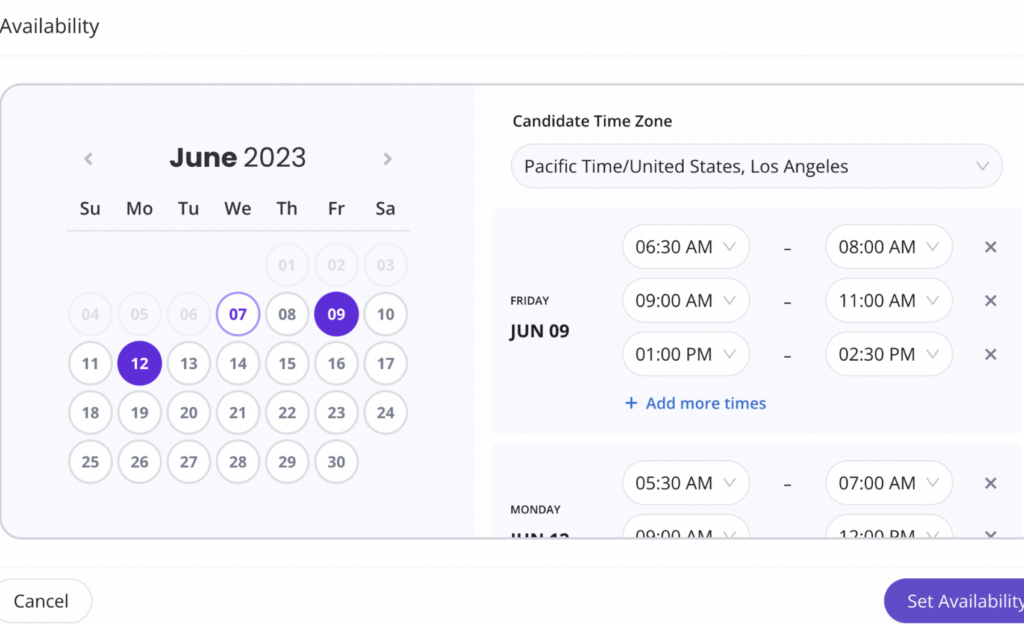
We’ve polished the Schedule Now flow, improved the Interviewer Leaderboard, and added to the Request Availability function.
Enhanced Schedule Now flow
We’ve simplified and updated the time and time zone selection for Schedule Now so that you can spend less time updating time zones and clearing up misunderstandings, and more time getting interviews on the books.
New Interviewer Leaderboard
The Interviewer Leaderboard just got a facelift. This new leaderboard enables data to be pulled faster for any size organization. You can also slice interviewer data in new ways with dimensions like jobs and tags, all while getting instant graphic representation to share with your organization.
Optional or no interviewers
The Request Availability feature is now fully functional without assigning interviewers, or making them optional while ensuring that potential business hours are respected. Collecting candidate availability before knowing exactly who will interview them is key to moving fast for high-priority hires.
GoodTime Hire for High Volume updates
Send SMS to candidates from localized country codes, leverage drip campaigns for workflows, and more in our High Volume product.
Localized phone numbers
Global recruiting teams can now use localized country code phone numbers to message candidates.
Drip campaigns for workflows
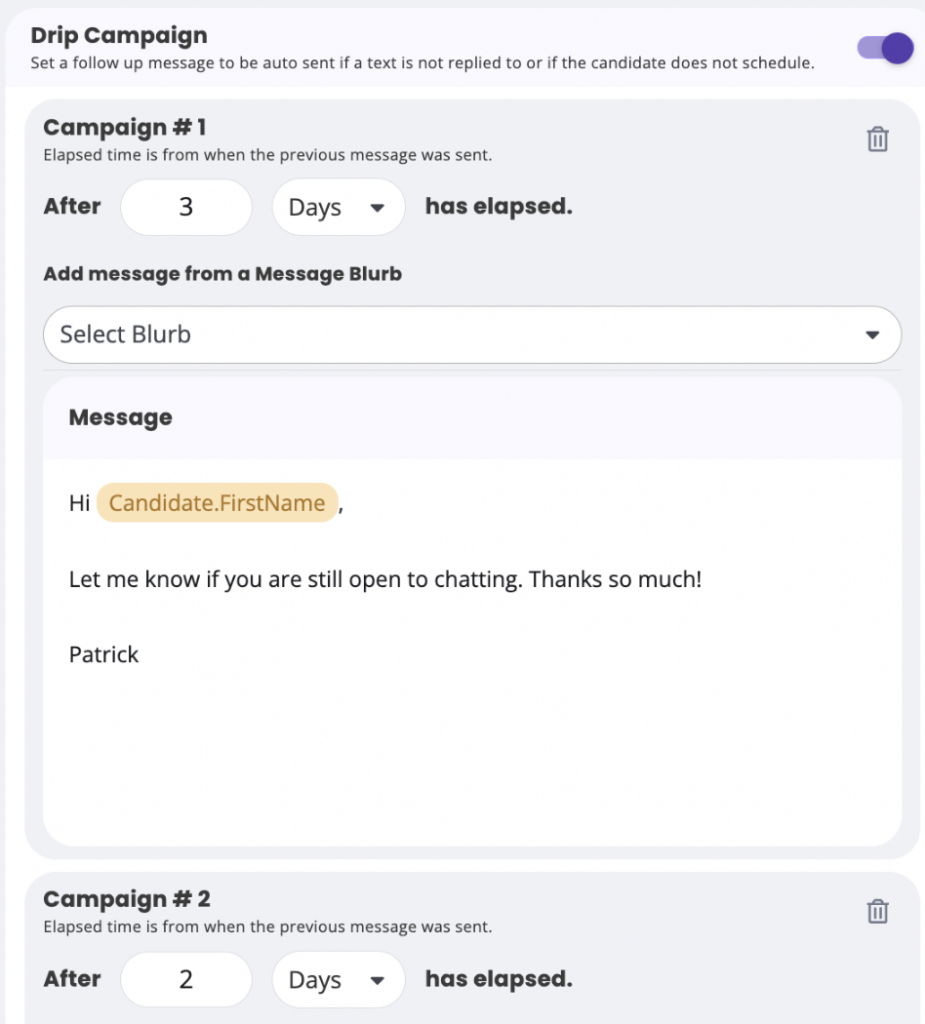
With workflow automation, you can now set up single or multiple nudges, AKA drip campaigns, to automatically follow up with candidates. Keep unresponsive candidates engaged without lifting a finger.
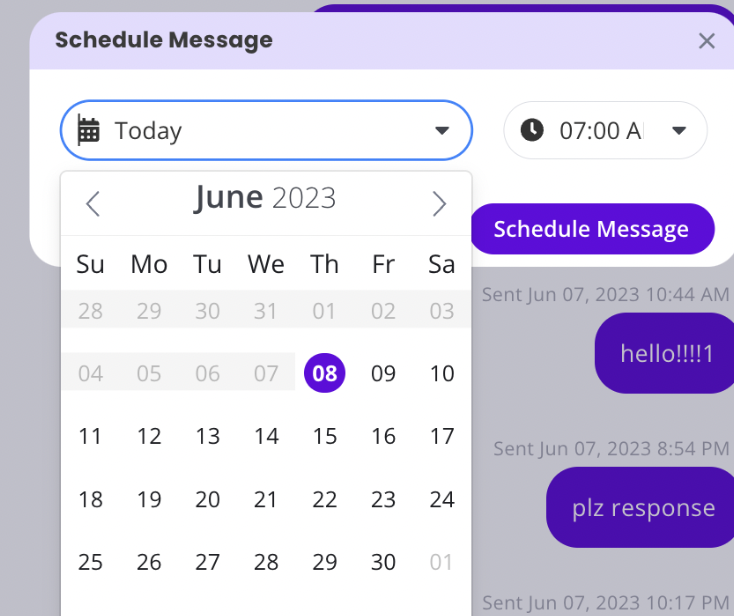
Send later
Working late or on weekends, and don’t want to send messages right away? Schedule your SMS/Email/WhatsApp messages to send out at a future date and time.
Other notable updates
Shortened URL links when texting candidates: When sending URLs, we’ve shortened the URLs for candidates to be a gtme.io URL
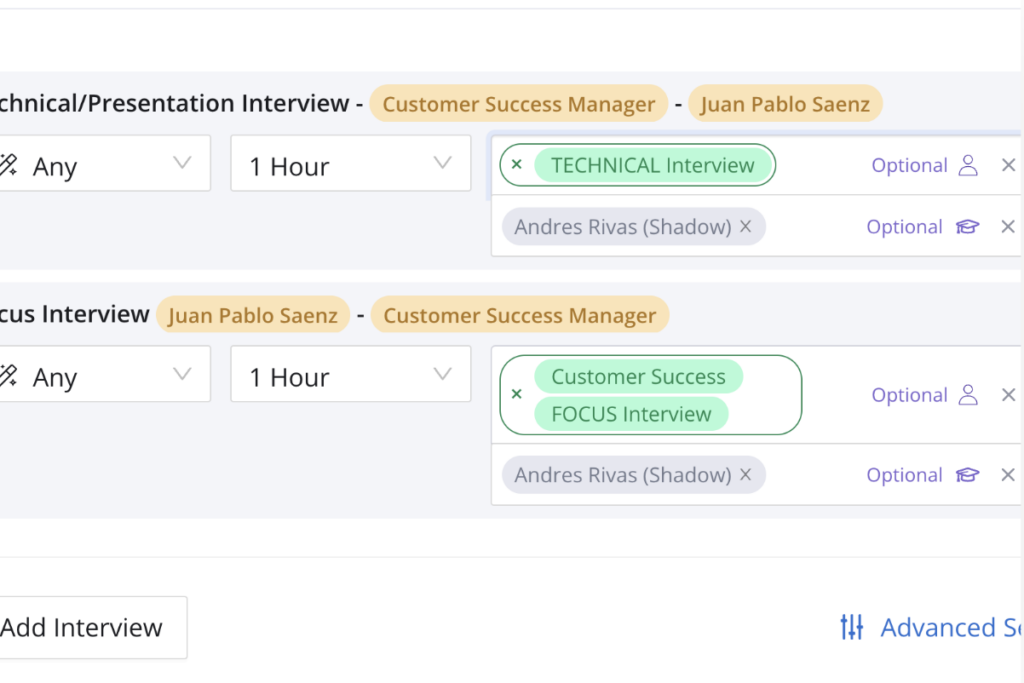
Round robin & group interview support: Create interview templates that have multiple interviewers (round robin or group interviews)
WhatsApp workflow automation & reminders: Select WhatsApp as a communication channel for sending messages and interview requests
GoodTime Meet updates
A new routing feature, a useful way to collaborate on scheduling links, and more.
Routing
Route leads from your website to the correct people on your team and get them instantly scheduled. This way, once a potential customer or candidate has expressed interest, you can increase your chances of closing them by allowing them to immediately schedule with the right people on your team.
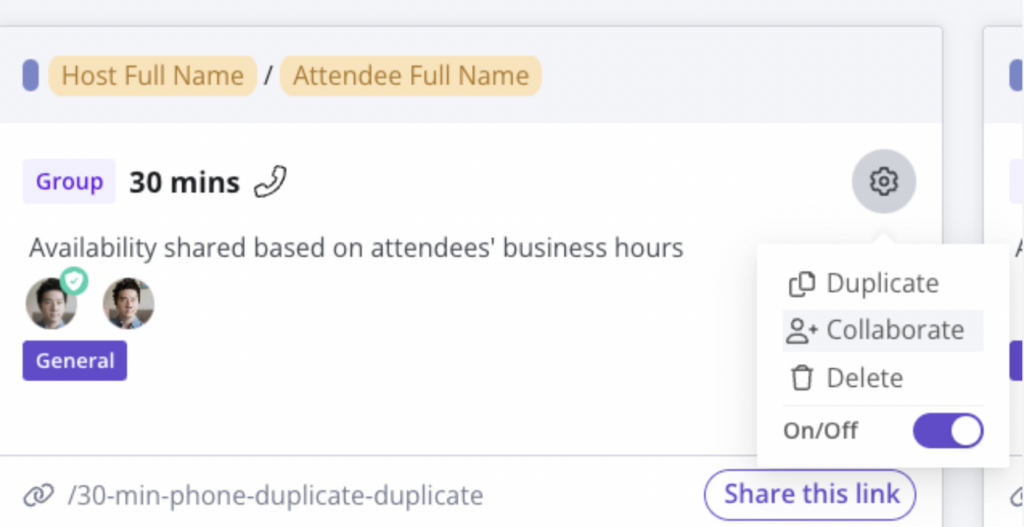
Scheduling link collaboration
Easily collaborate on scheduling links to enable others to quickly update and edit links. Share and delegate the operational load of managing important schedulings and provide visibility into your link settings.
Virtual team free/busy calendar
Share your free/busy time slots with people outside of your organization to find times when everyone is free.
Other notable updates
Enterprise account provisioning: Companies can now purchase an enterprise account and assign licenses to teammates
Company meeting categories: Standardize meeting categories at the company level that can be used by all teammates
Not Part of the GoodTime Family Yet?
It’s time to change that. With GoodTime, you can get better outcomes from your company’s most important meetings. For interviews, GoodTime Hire helps you schedule 40% faster, hire 50% more efficiently, and 5x team productivity. (Seriously.) For every other meeting, GoodTime Meet provides beautifully-branded scheduling links to schedule internal and external meetings faster than ever.
If you’re a TA professional, there’s a high chance that the economy is at the forefront of your mind — and it’s easy to see why. As the challenging economic climate forces companies to tighten their spending, talent teams everywhere have gotten leaner, and the pressure has mounted to operate more strategically and efficiently than ever before.
With mounting concerns for the economy and increasing pressures to “do more with less” — as if you haven’t heard that phrase enough already — you’re probably putting a lot of thought into how you can drive success in recruiting during a recession (Is that what’s happening?), and what TA should even look like now.
For starters, you can breathe a sigh of relief: experts say we’re not actually in a recession. But still, we’re in lean times that call for greater resourcefulness and efficiency. TA leaders must adjust their strategies to the current market if they want to meet their goals.
Want to learn how to run a successful TA program even in a lean economic environment? Keep reading.
Unlock 2026’s top hiring strategies: Insights from 500+ TA leaders
Be the first to uncover deep hiring insights specific to your sector — straight from the highest-performing TA teams.
An expert’s take on the role of recruiting in lean times
While a downturn certainly isn’t ideal for TA teams, Socotra’s Head of Talent Acquisition Dubi Ben-Shoham believes that it also presents opportunities for talent leaders to become more strategic, focused, and efficient.
And if you ask us, we trust his advice. Dubi’s team hasn’t missed a hiring goal in four years. Meanwhile, the 500+ organizations surveyed in our Hiring Insights Report missed over half of their hiring goals on average last year.
Dig into the video below to hear Dubi’s full perspective on recruiting during tough economic times.
The state of the tech industry
What goes up must come down. After 2021’s rapid-fire hiring, soaring startup valuations, and wild rides on Wall Street, the tech industry’s growth is losing momentum. With evidence of declining sales and profit margins across the US, and worries that they might’ve hired too rapidly and expanded too much last year, tech companies are bracing for rough waters.
Companies have trimmed their budgets and their workforces to cope with the economic uncertainty. Each passing month brings more high-profile tech layoffs. In 2023, over 167,000 workers in the tech industry have been laid off. Twitter, Netflix, Snap, and Robinhood are among the organizations that have made cuts.
1 in 5 tech companies feels they are not prepared for a recession. There’s palpable stress and confusion in the air (“Is this a recession?” “What’s even going on?”). Yet talent teams should take comfort in knowing that the economy is constantly ebbing and flowing. The sooner that teams learn how to navigate the tides, the better off they’ll be.
So you’re recruiting in a potential recession. Now what?
No matter if your company is hiring in full force or if you’ve slowed down your operations, now isn’t the time to sit around. Tech recruitment will inevitably rebound. And when it does, you’ll want to be in the best position possible to secure the top candidates.
The tech downturn offers a golden opportunity to optimize your hiring process to guarantee future success.
When recruiting during a recession or downturn, we recommend that you focus your efforts on these areas:
Optimize the hiring process
When recruiting during a downturn, talent teams need to go full throttle on optimizations. Now is the time to audit your current processes and identify opportunities for improved recruiting efficiency and other approaches you can take to optimize workflows.
“It becomes more strategic,” Dubi says. Look for ways to free up your team’s bandwidth and save valuable time and money. For instance, automation-based HR tools eliminate manual tasks so that teams can shift their focus to high-value projects that will create better business outcomes.
“Being able to do the job is not a high enough bar. We need to say, ‘We cannot afford to not hire this person.'”
– Dubi Ben-Shoham, Head of Talent Acquisition at Socotra
Focus on in-house recruiting
In-house recruiting is an essential component of TA for companies of all sizes, and it’s even more critical when you need to function as a lean, mean, hiring machine. Keeping everything in-house helps you attract the best talent possible with skilled TA professionals who have intimate knowledge of your company’s needs, culture, and values.
And when budgets are tight, bad hiring decisions become even more costly. Hiring a new employee costs around 1.25 to 1.4 times the base salary; you need to make every new hire count.
“Being able to do the job is not a high enough bar,” Dubi said. “We need to say, ‘We cannot afford to not hire this person.’”
Dubi’s team does everything in-house. They combine the expertise of a hybrid recruiter/RC (who spends a lot of time leveraging GoodTime’s interview scheduling) and a sourcer. According to Dubi, relying on external recruiting firms wouldn’t yield the same high-caliber of candidates that they aim for.
Get strategic with behavioral interview questions
Another way to make the best hiring decisions possible during this downturn is to equip your interviewers with the right resources. Here’s one crucial tool for their toolbox: behavioral interview questions that perfectly align with the attributes of your ideal candidates.
Dubi wanted to ensure his interviewers evaluated candidates with the right traits in mind, and he set out to achieve just that. To start, he had all of Socotra’s executives fill out a questionnaire about the traits they think their teams should have. Then, Dubi took those traits and turned them into behavioral interview questions.
Aligning your interview questions to your ideal candidate might seem like a minor task, but trust us — it comes with a big payoff. Not only do you stand a better chance at hiring the most qualified talent, but you’re also more likely to produce an efficient process by avoiding delays caused by misalignment.
“Connecting with a candidate on the first call is such a difference maker when it comes to the candidate experience in the process. Have a lot of fun with that call.”
– Dubi Ben-Shoham, Head of Talent Acquisition at Socotra
Remember: the candidate experience still matters
When there are fewer job openings and more job seekers, the job market tends to shift towards an employer’s market. Candidates might not have the upper hand as they did before, but make no mistake — the candidate experience still matters in the recruiting industry during a recession or downturn.
The quality of your hiring process can make or break a candidate’s hiring experience (yes, the pressure is on). One of the most telling signs of a high-quality process is its ability to create strong relationships between candidates and your hiring team.
Candidates expect to be seen as more than just a number; they want to feel that their time and talents are valued.
Keeping the candidate experience top of mind reflects positively on your employer brand and helps you stand out to in-demand talent who are interviewing at multiple companies. At Socotra, they deliver a memorable candidate experience by creating a personable, warm first impression.
“Don’t underestimate the importance of having senior recruiters do phone screens,” Dubi said. “Connecting with a candidate on the first call is such a difference maker when it comes to the candidate experience in the process. Have a lot of fun with that call.”
Dubi tries to research the candidate before he speaks with them so that he can bond over their background and interests. It’s all about making interviews feel less intimidating and formal, and more welcoming and human.
Where to improve your candidate experience
If all hiring teams had time to improve their candidate relationships, then everyone would do it. That’s the endless struggle for these teams: too many initiatives to implement, and not enough time.
Luckily, today’s slower-paced tech hiring environment opens the door for teams to focus on this task (thanks, tech recession).
Here are several ways to help your candidate relationships flourish:
Train all interviewers on proper interviewing etiquette. They’re your brand ambassadors!
Be ready to get transparent; candidates don’t want to beat around the bush on salary expectations.
Use AI for an efficiency boost
AI in recruiting is the latest hot topic in the TA community, and for good reason. AI-powered tools come with substantial benefits, especially when “doing more with less” is imperative. AI automates your most tedious recruitment tasks so you can save time and money, reduce your time-to-hire, and maximize your resources.
Dubi is a fan of AI in recruitment when leveraging AI for communication. For instance, he likes to use AI for efficiently drafting repetitive candidate emails. He’s also asked ChatGPT to assist him in writing an elevator pitch for Socotra that would entice candidates to work for them.
But still, Dubi recognizes the immense value that human recruiters add to the hiring process, a value that AI can’t replicate. AI can speed up workflows and improve productivity, but recruiting is a human-oriented endeavor that requires a human touch. AI is most useful when it’s used as a recruiter’s assistant — not their replacement.
Our Hiring Insights Report found that in the past year, improving overall hiring efficiency was the main focus area for tech companies (39%). Likewise, this is still their biggest priority for the next 12 months (41%).
Greater efficiency reduces your time-to-hire. So, where did the tech industry’s focus on improving efficiency lead them? Here’s a hint: probably not where they’d like to be. Nearly half of talent teams said that their time-to-hire increased. Just 11% saw it decrease.
Whether economic conditions have shifted your attention from hiring fast to hiring with precision, or if hiring at the speed of light is still your goal, hiring efficiency shouldn’t sit on the back burner.
Speed to hire should always be a critical KPI for tech companies. Here’s how to optimize your hiring efficiency:
Automate, automate automate. Implement interview scheduling software to reduce the time spent coordinating interviews. (The right tool can help you save major time and money along the way.)
Use email templates to standardize your communications with top talent.
Make data your best friend; dig into your hiring analytics to identify efficiency gaps.
Making the case for HR tech during budget cuts
When recruiting budgets are being slashed, it may seem counter-intuitive to look for new software, but that’s not often the case. We spoke with Valeria Stanga, Senior Talent Acquisition Partner at HelloFresh, about why she believes it’s crucial to seek new tech-forward solutions during a downturn.
Hit a recruiting high note, even during a downturn, with advanced HR tech
If you’re barely keeping pace with your TA goals in this challenging economy, you’re not alone. Times might be tough, but that doesn’t mean you have to let your recruiting projects flounder and your productivity plummet.
Adopting smart strategies, like thoughtfully curating your interview questions and using AI as a helping hand, is crucial to running a TA program that creates meaningful business outcomes. And just as important — if not more — is upgrading your recruitment tech stack.
When TA teams want to do more with less, they use GoodTime Hire. Hire helps you schedule interviews 78% faster, hire 50% more efficiently, and 5x team productivity. No simple scheduling tools here.
Does interview scheduling automation make sense for my team?
ROI is key. This is not a time to invest in software that won’t bring you immediate value. So let’s eliminate the guesswork with our free ROI calculator.
We get it — recruiting teams are going through it. You’re strapped for time and adapting to working leaner with smaller teams and fewer resources. Simultaneously, companies increasingly want to hire unicorn candidates who can do what used to be the job of three different people. It’s a lot.
Luckily, in the same time period with all these shifts, AI recruiting tools arrived to help you adapt. But with all the noise about AI recruiting (and AI in general), it’s tough to know what actually matters. What will help you solve your challenges and what will turn into another big, expensive, time-consuming project?
I’ve got you covered. In this article, we’ll give you a clear-cut rundown on AI recruiting, its advantages and limitations, and how you can use it to help you reach your hiring goals and keep your sanity.
Unlock 2026’s top hiring strategies: Insights from 500+ TA leaders
Be the first to uncover deep hiring insights specific to your sector — straight from the highest-performing TA teams.
AI recruiting involves leveraging AI-powered tools to automate time-consuming recruiting tasks, extract meaningful insights from large datasets, and make data-driven decisions when managing and evaluating candidates.
In an economic climate that calls for greater productivity, AI recruiting gives your team a much-needed efficiency boost. While AI handles your repetitive and tedious duties like scheduling interviews, sending reminders, and drafting simple messages, you can spend more time on high-value strategic work.
In the video above, we asked Socotra’s Head of Talent Acquisition, Dubi Ben-Shoham, how he’s using AI in his recruiting process today.
Advantages of AI for recruiting teams
In today’s tough hiring environment, recruiting professionals need all the extra help they can get. According to our Hiring Insights Report, organizations hit just 51.5% of their hiring goals last year — a modest lift from the year prior, but still well off target.
Enhanced efficiency: AI streamlines the recruitment process by automating tasks such as resume screening, interview scheduling, and candidate sourcing. This saves valuable time and allows recruiters to focus on engaging with candidates.
Reduced recruitment costs: By automating and optimizing your processes, AI helps you make the most of your current resources and reduces your reliance on additional staff. Plus, AI’s ability to accelerate the hiring process and cut down your time-to-hire saves you both time and money.
Improved quality of hire: AI can analyze vast amounts of candidate data, including resumes, job applications, and online profiles, to identify the most suitable candidates for specific roles. Using AI in the candidate screening and selection process helps improve your quality of hire.
Less bias:Human bias in hiring can unintentionally influence decision-making and hinder DE&I efforts. AI recruiting helps mitigate bias by relying on objective data analysis and predefined criteria. This ensures a fair and consistent evaluation of all candidates.
More data-driven decisions: AI enables recruiters to make more informed decisions by extracting key insights from datasets. These insights can reveal patterns, trends, and correlations that might not be immediately apparent from a human perspective. Data-driven decision-making improves the accuracy and effectiveness of candidate evaluations.
Measurable results of implementing AI recruiting
The specific results you can expect depend on your company, your processes, and which AI tools you choose to adopt. But just to give you a taste of the impact recruiting teams are creating with AI, let’s focus on one of the recruiting tasks most ripe for automation: interview scheduling.
By using GoodTime Hire to automate interviews:
Zoom coordinated five times more interviews per quarter.
Pinterestreduced their average time-to-fill by 50%.
Now that you understand the potential benefits of AI in recruiting, there are some challenges you should be aware of. But first, let’s clear up some common misconceptions.
Misconceptions about AI
AI will replace recruiters: Recruiting is a sensitive, human-oriented endeavor, and there’s no removing the humans from that process. AI recruiting tools are designed to help human recruiters by automating and optimizing parts of the hiring process, so they can focus on things like strategic decision-making and candidate engagement.
AI alienates candidates: When implemented thoughtfully, AI in recruiting actually enhances the candidate experience. AI delivers heightened personalization, efficiency, and speed that provides candidates with a smooth, streamlined process. Plus, with more bandwidth, recruiting teams can refocus on creating memorable candidate experiences.
AI possesses human-like intelligence: Despite advancements in AI, current AI systems lack true consciousness and human-like intelligence. AI is based on algorithms and data processing; while it can perform specific tasks exceptionally well, it does not possess emotions, subjective experiences, or a comprehensive understanding of the world as humans do.
AI is inherently biased and discriminatory: AI systems can be biased, but they can also play a crucial role in fighting bias and creating a more equitable hiring process. AI with algorithms that prioritize equal treatment empowers recruiters to make informed decisions based on objective criteria.
Challenges of AI
Ethical considerations: AI in recruiting raises several ethical concerns, especially around privacy, consent, and the potential misuse of personal data. Be sure to partner with technology providers committed to upholding ethical practices, ensuring the responsible use of AI algorithms, and safeguarding the privacy of personal data collected throughout the hiring process.
User acceptance and trust: There may be resistance from members of the hiring team and HR leaders to fully trust AI-driven processes. Educating yourself on the benefits of AI and proactively addressing concerns will make you better prepared to advocate for its use.
Securing buy-in from stakeholders: To gain buy-in from stakeholders, it’s essential to demonstrate the value and ROI of your desired tool. Be prepared to present compelling business cases that showcase how AI can enhance efficiency, accelerate time-to-hire, improve quality of hire, and lower recruitment costs.
AI’s impact on the role of recruiters/RCs
AI recruiting is quickly picking up steam. A SHRM survey found that out of the HR departments that use AI, 79% of them leverage it for hiring. As we start to see AI’s impact on the role of recruiters and recruiting coordinators, we must emphasize that recruiters and RCs remain indispensable.
Human talent acquisition professionals are irreplaceable when it comes to understanding candidate motivations, assessing cultural fit, and making critical hiring decisions. Think of AI as a valuable assistant — not a replacement.
With AI as their ally, recruiters and RCs can navigate the challenging landscape, unlock new possibilities, and make a significant impact. Within all of this, there are several ways that AI impacts the duties of recruiting teams.
Shifting priorities
If anything is certain, it’s that AI will shift the priorities of recruiters and RCs. With AI-powered tools automating everyday tasks, recruiters can redirect their focus to bigger projects. This may include engaging candidates in creative ways, optimizing their talent acquisition strategy, and making more data-driven decisions.
Data analysis and strategy
AI generates a wealth of data throughout the recruitment process. Recruiters and RCs will need to become proficient in analyzing and interpreting this data to gain insights into sourcing channels, candidate preferences, and the effectiveness of their strategies.
As a whole, AI-driven analytics platforms empower recruiters to leverage data for refining their approaches, optimizing hiring processes, and improving overall talent acquisition outcomes.
Human-AI collaboration
As AI takes on administrative and repetitive tasks, recruiters and RCs will find themselves collaborating more closely with AI-powered tools. Specifically, they’ll play a part in managing AI-driven processes to ensure accuracy, fairness, and compliance.
TA professionals will also play a critical role in adding a human touch to AI-powered candidate experiences by designing personalized interactions with candidates, providing support, and addressing any concerns that may arise.
Continuous learning and skill development
To make sure they’re leveraging technology effectively, safely, and fairly, recruiters and RCs need to stay updated on the latest technologies and trends (more on that later).
Understanding the capabilities and limitations of AI in recruitment empowers recruiters to make smart decisions and contribute to the success of their organizations.
Use cases for AI recruitment
AI’s diverse range of applications empower TA professionals to do their best work in the smartest way possible — even with reduced budget or headcount. From streamlining interview scheduling to optimizing candidate sourcing and screening, AI is here to make waves in recruitment.
AI-powered interview scheduling
Few recruiting teams would claim interview scheduling as their favorite activity — and for good reason. Without the help of technology, manually scheduling interviews (and managing reminders, no-shows, and rescheduling) is a time-consuming, headache-inducing task.
But when you combine AI with scheduling, calendar coordination becomes all the more fast and efficient. GoodTime Hire’s Scheduling AI allows TA teams to quickly coordinate the best possible interview time and set of interviewers — no matter the complexity.
With Hire, recruiters and RCs can automate scheduling to meet goals such as reducing time-to-hire, load-balancing interviewers, and increasing candidate and interviewer engagement.
AI-generated job descriptions, candidate communications, and more
If you want to attract the right candidates, you need a compelling and accurate job description. You’ve certainly heard of ChatGPT, the AI chatbot. It can assist recruiters in quickly generating job descriptions that are engaging, informative, and tailored to the right audience.
Asking ChatGPT to write a customized job description allows recruiters to complete what was previously at least a one-hour task in a matter of seconds. Think of ChatGPT as your recruiting sidekick, freeing up your bandwidth by taking tedious work off your hands.
3 more ways to use ChatGPT for recruiting
The use cases for ChatGPT don’t just end at job description generation. Here are several other ways recruiting teams can benefit from the tool:
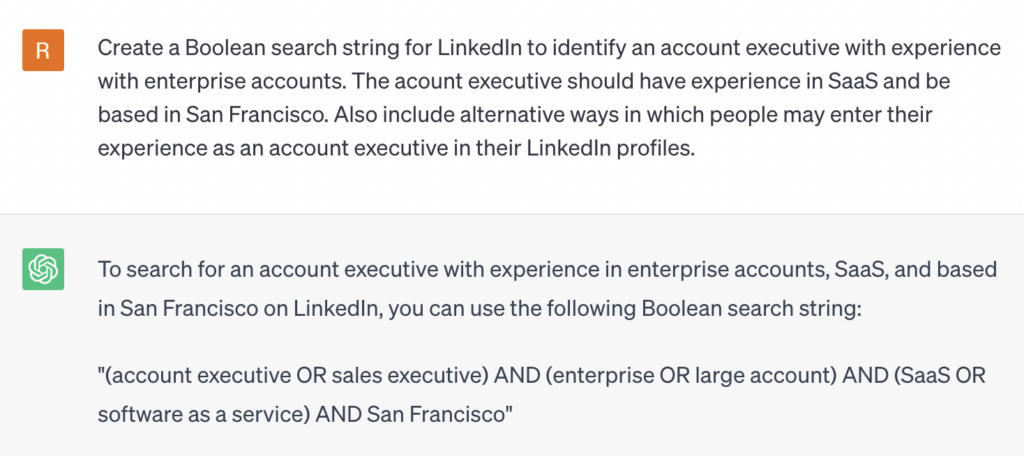
Candidate searching: Use ChatGPT to generate Boolean search strings (a search query with specific keywords and phrases that can help you find your ideal candidate)
Interview preparation: Ask ChatGPT to generate a list of interview questions based on job requirements, candidate profiles, and/or desired skills
Email communication: Instruct ChatGPT to draft a range of email templates that you can use in different scenarios when communicating with candidates
AI-based candidate sourcing & outreach
Identifying and engaging the best talent from a vast pool of applicants can quickly become overwhelming. That’s where AI-based sourcing and outreach tools come in.
Gem’s talent engagement platform helps to streamline the sourcing process and automate personalized outreach. The product’s AI-powered, auto-generated outreach sequences help recruiters create customized and compelling outbound messages.
AI-enabled background check & screening
A sluggish, inefficient background check and screening process is a major roadblock in onboarding promising talent. AI solutions like Checkr are here to help speed up your team’s workflow.
Checkr uses AI to automate background checks, credential verification, and reference analysis, improving the accuracy and efficiency of screening. With Checkr, talent teams can quickly gather the reliable information that they need to confidently welcome new talent.
How to implement AI recruiting
Nearly 100% of organizations will be using AI by 2025, but successfully implementing AI for recruiting requires a thoughtful approach. After all, every organization is different, every candidate is different, and recruiting is sensitive, important work.
Use these essential steps to guide you through the implementation process:
1. Assess organizational needs and goals
Don’t just embrace AI for AI’s sake. Think about what you actually need to achieve. Before implementing AI in your recruitment process, assess your organization’s specific needs and goals. Identify pain points and areas where AI can make the most significant impact, such as:
Improving the efficiency of the hiring process
Maximizing team-wide productivity
Reducing time-to-hire/time-to-fill
Enhancing the candidate experience
Aligning AI initiatives with your broader recruitment and business objectives will help ensure a focused and effective implementation.
2. Choose the right AI tools and platforms
The market offers such a wide range of AI recruiting tools that it can get overwhelming. When selecting the AI solution that’s right for you, focus on these factors:
Features and functionalities that align with your needs
Scalability for future growth
Vendor reputation
Accessibility to customer support
Compatibility with your organization’s existing integrations
3. Consider data privacy and compliance
As AI in recruitment heavily relies on collecting and analyzing candidate data, it’s crucial to prioritize data privacy and comply with applicable regulations. You want a secure AI recruitment solution that you can trust.
To make this a reality, ask your potential technology vendor about their information security program. This can encompass topics such as data encryption, data privacy, data security, data ownership, and physical security. And depending on your industry, you’ll want to ensure compliance with other regulations, such as HIPAA.
4. Integrate AI with your existing recruiting processes
AI tools should work with your existing processes and platforms. It’s important to define clear workflows and roles for AI tools and recruiting teams, ensuring the most fruitful collaboration between the two.
If you’re a talent/HR leader, provide training and support to your recruitment team to show how AI tools can enhance their effectiveness and enable them to leverage AI to its full potential.
The future of AI in recruiting
AI is rapidly evolving, and several upcoming trends will shape the future of recruiting as we know it. Understanding these trends helps you stay ahead and adapt to the ever-changing landscape.
AI agents
AI agents for recruiting are intelligent, task-driven tools that automate and optimize key parts of the hiring process — from scheduling to candidate engagement — freeing up teams to focus on strategic, high-impact work.
By handling repetitive tasks and personalizing communication at scale, these agents improve efficiency, reduce time-to-hire, and create a better experience for both candidates and recruiters. As AI continues to advance, these agents will become even more adaptive, proactive, and essential to competitive hiring teams.
AI-driven personalization
Recruitment teams are increasingly recognizing the importance of personalization, with AI taking on a key role in delivering tailored, engaging candidate experiences. AI can analyze candidate preferences, behavior, and feedback to provide personalized job recommendations and career guidance.
By leveraging AI to understand the needs and aspirations of talent, organizations can create a more meaningful and personalized recruitment experience. Ultimately, this leads to higher candidate satisfaction and improved talent acquisition outcomes.
Advanced Natural Language Processing
Natural Language Processing (NLP) is a branch of AI that focuses on understanding and processing human language. Advancements in NLP enable AI tools to analyze text-based data more accurately. In the world of recruiting, this includes resumes, cover letters, and social media profiles.
As NLP continues to evolve, recruiters can expect more sophisticated language processing capabilities, leading to enhanced candidate screening, sentiment analysis, and improved candidate matching.
Augmented reality and virtual reality
Combining Augmented Reality (AR) and Virtual Reality (VR) can bridge the gap between a remote hiring process and an in-person job experience. For instance, AI-powered AR and VR experiences can provide immersive simulations of job environments, allowing candidates to experience a virtual workplace and perform tasks relevant to the position.
These engaging, realistic experiences help candidates keenly understand the job requirements, showcase their skills in a true-to-life setting, and provide employers with a robust assessment of their capabilities. In turn, AR and VR assist in attracting top talent and facilitating better hiring decisions.
Upgrade your recruiting process with AI
In short — if you’re wondering what AI can do for your recruiting team, the better question is, “What can’t AI do?”
With AI by your side, you can enhance team-wide efficiency, offload tedious tasks, maximize existing resources, and accelerate progress toward your goals. And when you’re ready to give your interview scheduling process a major AI-powered boost, check out GoodTime Hire.
Hire’s Scheduling AI helps you coordinate 78% faster, hire 50% more efficiently, and 5x team productivity. No simple scheduling tools here.
You already know that interviewer training doesn’t stop after the interviews begin, but are you putting enough focus on your interview debrief? Too many recruitment pros run debriefs that essentially consist of asking hiring managers how the interview went. Respectfully, that is not going to do much to help your process.
Interviewers and hiring managers need a little more hand-holding. They need pointed, guided, specific questions to help them determine how an interview went. They might have a gut feeling, but as we all know, hiring with your gut is often not the best way to secure long-lasting, high-performing hires.
To eliminate biases, remain objective, and make the best possible hiring choice, it’s key to standardize your entire hiring process, starting with an effective intake meeting and rounding out with a post-interview debrief.
There are tons of articles for candidates about how to nail the all-important interview, but there’s a surprising lack of information for interviewers about how to run a productive interview debrief with the hiring team. But we’ve got your back.
We’ve collected five key expert-vetted questions to help you run efficient and effective debriefs.
Unlock 2026’s top hiring strategies: Insights from 500+ TA leaders
Be the first to uncover deep hiring insights specific to your sector — straight from the highest-performing TA teams.
1. Did the candidate seem excited about working here?
While some individuals are just naturally reserved, it’s easy to tell if someone is excited at the prospect of working for your company if you know what to look for. Little things like sustaining eye contact, asking questions, and trying to start a conversation are all baseline metrics.
Other tell-tale signs are making references to research they did about your company. This should go beyond just knowing when you were founded or your CEO’s name and can include referencing events that involve the team, your company’s core values (and how they align with them), and more.
Above all, if you ask them why they want to work there, they should have an answer.
2. Should anyone else interview the candidate?
Besides the obvious individuals who they should speak to (their potential manager, team members, someone to interview for a core values-fit, HR phone screen, etc.), there might be an additional person that the HR Manager wants them to speak with before proceeding with an offer.
Bringing this up during the post-interview roundup helps you avoid a potential backlog when it comes to bringing an offer (or not) to a candidate. After all, we’re living in a job market where candidate relationships are key, and this means fostering a smooth and swift interview process.
3. Is the candidate able to cope with failure?
As you undoubtedly learned in training on conducting stellar interviews, the questions that you ask provide a window into a candidate’s future performance. Bouncing back from failure is an essential skill, yet only 27% of employees have high levels of resilience. Failure, and the candidate’s reaction to it, is a crucial topic to broach both during the interview and the debrief.
4. Do they align with the attributes we’re looking for?
Defining your focus is incredibly important when it comes to making sure your post-interview roundup runs quickly and smoothly. When as much as 80% of employee turnover is due to bad hiring decisions, thoughtfully considering your ideal candidate’s qualities can translate to better employee retention.
The first step is setting a candidate scorecard through your Applicant Tracking System. A candidate scorecard will give you and the other interviewers different categories and subcategories to focus on during the roundup, such as whether the candidate was collaborative, analytical, and receptive to feedback.
We recently spoke with Jenny Jongejan, a deeply experienced senior recruiting consultant and standardization fanatic about how standardization prevents mis-hires. She shared a four-step framework for standardizing your process that starts with aligning on key attributes. Getting everyone on the same page about these upfront is a great way to jumpstart your entire process and have an effective debrief conversation.
You can check out her full four-step framework in the short clip below.
5. Do we want to hire the candidate for the right reasons?
Join a community just for talent pros
GoodTime Talent Innovators is an online community for TA professionals to engage in discussions, network with one another, and discover exclusive events.
You never want to hire someone just because everyone’s feeling the strain left by the open position. With poor hiring decisions costing companies up to $240,000, the harm of hiring someone who’s a bad fit is astronomical and way more costly than the interview process as a whole.
Taking a step back and discussing with each other if you want to continue with the candidate because they’re a good fit or just because there’s a critical need will save your company upwards of millions of dollars in the long run.
You’ve aced the post-interview debrief. Now, let’s optimize the entire process.
We all want to excel at our jobs. But sometimes, you need a little extra firepower in your corner. That’s what GoodTime Hire is here for.
Hire elevates your team’s interviewing skills with interviewer training paths that broaden your pool of interviewers and reduce each person’s load. Remove bottlenecks, increase interviewer diversity, and take your interviewing process to the next level.

 Efficiency
 Experience
 Intelligence