Recruiting in a Potential Recession: Experts Share Their Advice

If you’re a TA professional, there’s a high chance that the economy is at the forefront of your mind — and it’s easy to see why. As the challenging economic climate forces companies to tighten their spending, talent teams everywhere have gotten leaner, and the pressure has mounted to operate more strategically and efficiently than ever before. 

With mounting concerns for the economy and increasing pressures to “do more with less” — as if you haven’t heard that phrase enough already — you’re probably putting a lot of thought into how you can drive success in recruiting during a recession (Is that what’s happening?), and what TA should even look like now. 

For starters, you can breathe a sigh of relief: experts say we’re not actually in a recession. But still, we’re in lean times that call for greater resourcefulness and efficiency. TA leaders must adjust their strategies to the current market if they want to meet their goals. 

Want to learn how to run a successful TA program even in a lean economic environment? Keep reading.

Unlock 2026’s top hiring strategies: Insights from 500+ TA leaders

Be the first to uncover deep hiring insights specific to your sector — straight from the highest-performing TA teams.

An expert’s take on the role of recruiting in lean times

While a downturn certainly isn’t ideal for TA teams, Socotra’s Head of Talent Acquisition Dubi Ben-Shoham believes that it also presents opportunities for talent leaders to become more strategic, focused, and efficient. 

And if you ask us, we trust his advice. Dubi’s team hasn’t missed a hiring goal in four years. Meanwhile, the 500+ organizations surveyed in our Hiring Insights Report missed over half of their hiring goals on average last year.
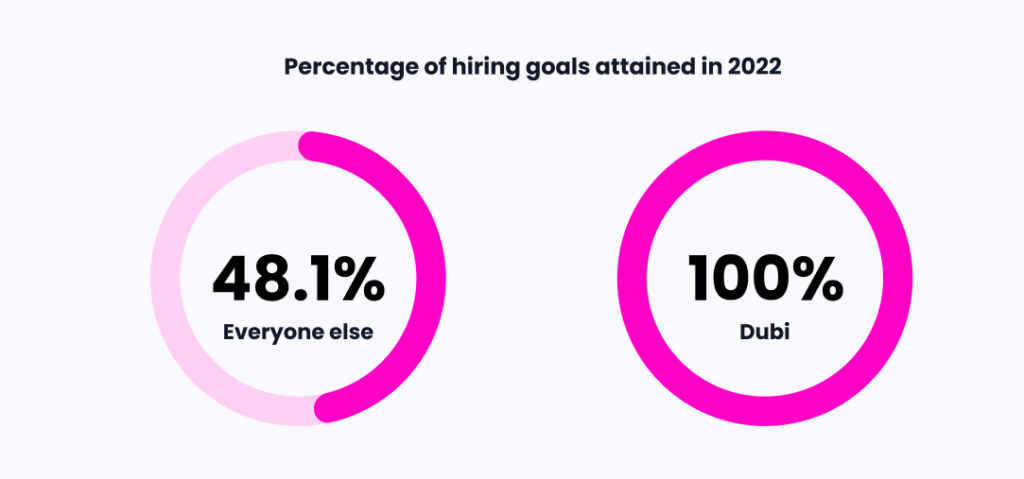
Data from GoodTime's Hiring Insights Report and from Socotra's talent acquisition team

Dig into the video below to hear Dubi’s full perspective on recruiting during tough economic times.

The state of the tech industry

What goes up must come down. After 2021’s rapid-fire hiring, soaring startup valuations, and wild rides on Wall Street, the tech industry’s growth is losing momentum. With evidence of declining sales and profit margins across the US, and worries that they might’ve hired too rapidly and expanded too much last year, tech companies are bracing for rough waters.

Companies have trimmed their budgets and their workforces to cope with the economic uncertainty. Each passing month brings more high-profile tech layoffs. In 2023, over 167,000 workers in the tech industry have been laid off. Twitter, Netflix, Snap, and Robinhood are among the organizations that have made cuts.

1 in 5 tech companies feels they are not prepared for a recession. There’s palpable stress and confusion in the air (“Is this a recession?” “What’s even going on?”). Yet talent teams should take comfort in knowing that the economy is constantly ebbing and flowing. The sooner that teams learn how to navigate the tides, the better off they’ll be.

Read more of what the experts had to say about addressing tech hiring challenges.

So you’re recruiting in a potential recession. Now what?

No matter if your company is hiring in full force or if you’ve slowed down your operations, now isn’t the time to sit around. Tech recruitment will inevitably rebound. And when it does, you’ll want to be in the best position possible to secure the top candidates.

The tech downturn offers a golden opportunity to optimize your hiring process to guarantee future success.

When recruiting during a recession or downturn, we recommend that you focus your efforts on these areas:

Optimize the hiring process

When recruiting during a downturn, talent teams need to go full throttle on optimizations. Now is the time to audit your current processes and identify opportunities for improved recruiting efficiency and other approaches you can take to optimize workflows.

“It becomes more strategic,” Dubi says. Look for ways to free up your team’s bandwidth and save valuable time and money. For instance, automation-based HR tools eliminate manual tasks so that teams can shift their focus to high-value projects that will create better business outcomes. 

“Being able to do the job is not a high enough bar. We need to say, ‘We cannot afford to not hire this person.'”

– Dubi Ben-Shoham, Head of Talent Acquisition at Socotra

Focus on in-house recruiting

In-house recruiting is an essential component of TA for companies of all sizes, and it’s even more critical when you need to function as a lean, mean, hiring machine. Keeping everything in-house helps you attract the best talent possible with skilled TA professionals who have intimate knowledge of your company’s needs, culture, and values.

And when budgets are tight, bad hiring decisions become even more costly. Hiring a new employee costs around 1.25 to 1.4 times the base salary; you need to make every new hire count.

“Being able to do the job is not a high enough bar,” Dubi said. “We need to say, ‘We cannot afford to not hire this person.’”

Dubi’s team does everything in-house. They combine the expertise of a hybrid recruiter/RC (who spends a lot of time leveraging GoodTime’s interview scheduling) and a sourcer. According to Dubi, relying on external recruiting firms wouldn’t yield the same high-caliber of candidates that they aim for. 

Get strategic with behavioral interview questions

Another way to make the best hiring decisions possible during this downturn is to equip your interviewers with the right resources. Here’s one crucial tool for their toolbox: behavioral interview questions that perfectly align with the attributes of your ideal candidates.

Dubi wanted to ensure his interviewers evaluated candidates with the right traits in mind, and he set out to achieve just that. To start, he had all of Socotra’s executives fill out a questionnaire about the traits they think their teams should have. Then, Dubi took those traits and turned them into behavioral interview questions.

Aligning your interview questions to your ideal candidate might seem like a minor task, but trust us — it comes with a big payoff. Not only do you stand a better chance at hiring the most qualified talent, but you’re also more likely to produce an efficient process by avoiding delays caused by misalignment.

“Connecting with a candidate on the first call is such a difference maker when it comes to the candidate experience in the process. Have a lot of fun with that call.”

– Dubi Ben-Shoham, Head of Talent Acquisition at Socotra

Remember: the candidate experience still matters

When there are fewer job openings and more job seekers, the job market tends to shift towards an employer’s market. Candidates might not have the upper hand as they did before, but make no mistake — the candidate experience still matters in the recruiting industry during a recession or downturn. 

The quality of your hiring process can make or break a candidate’s hiring experience (yes, the pressure is on). One of the most telling signs of a high-quality process is its ability to create strong relationships between candidates and your hiring team.

Candidates expect to be seen as more than just a number; they want to feel that their time and talents are valued. 

Keeping the candidate experience top of mind reflects positively on your employer brand and helps you stand out to in-demand talent who are interviewing at multiple companies. At Socotra, they deliver a memorable candidate experience by creating a personable, warm first impression.

“Don’t underestimate the importance of having senior recruiters do phone screens,” Dubi said. “Connecting with a candidate on the first call is such a difference maker when it comes to the candidate experience in the process. Have a lot of fun with that call.”

Dubi tries to research the candidate before he speaks with them so that he can bond over their background and interests. It’s all about making interviews feel less intimidating and formal, and more welcoming and human.

Where to improve your candidate experience

If all hiring teams had time to improve their candidate relationships, then everyone would do it. That’s the endless struggle for these teams: too many initiatives to implement, and not enough time. 

Luckily, today’s slower-paced tech hiring environment opens the door for teams to focus on this task (thanks, tech recession). 

Here are several ways to help your candidate relationships flourish: 

  • Train all interviewers on proper interviewing etiquette. They’re your brand ambassadors!
  • Collect candidate feedback. How else will you know if your relationships are translating?
  • Be ready to get transparent; candidates don’t want to beat around the bush on salary expectations.

Use AI for an efficiency boost

AI in recruiting is the latest hot topic in the TA community, and for good reason. AI-powered tools come with substantial benefits, especially when “doing more with less” is imperative. AI automates your most tedious recruitment tasks so you can save time and money, reduce your time-to-hire, and maximize your resources.

Dubi is a fan of AI in recruitment when leveraging AI for communication. For instance, he likes to use AI for efficiently drafting repetitive candidate emails. He’s also asked ChatGPT to assist him in writing an elevator pitch for Socotra that would entice candidates to work for them.

But still, Dubi recognizes the immense value that human recruiters add to the hiring process, a value that AI can’t replicate. AI can speed up workflows and improve productivity, but recruiting is a human-oriented endeavor that requires a human touch. AI is most useful when it’s used as a recruiter’s assistant — not their replacement.

Read more about why AI won’t replace recruiters.

The data on hiring efficiency

Our Hiring Insights Report found that in the past year, improving overall hiring efficiency was the main focus area for tech companies (39%). Likewise, this is still their biggest priority for the next 12 months (41%). 

Greater efficiency reduces your time-to-hire. So, where did the tech industry’s focus on improving efficiency lead them? Here’s a hint: probably not where they’d like to be. Nearly half of talent teams said that their time-to-hire increased. Just 11% saw it decrease.

Source: 2024 Hiring Insights Report

Where tech hiring must improve

Whether economic conditions have shifted your attention from hiring fast to hiring with precision, or if hiring at the speed of light is still your goal, hiring efficiency shouldn’t sit on the back burner. 

Speed to hire should always be a critical KPI for tech companies. Here’s how to optimize your hiring efficiency: 

  • Automate, automate automate. Implement interview scheduling software to reduce the time spent coordinating interviews. (The right tool can help you save major time and money along the way.)
  • Use email templates to standardize your communications with top talent.
  • Make data your best friend; dig into your hiring analytics to identify efficiency gaps.

Making the case for HR tech during budget cuts

When recruiting budgets are being slashed, it may seem counter-intuitive to look for new software, but that’s not often the case. We spoke with Valeria Stanga, Senior Talent Acquisition Partner at HelloFresh, about why she believes it’s crucial to seek new tech-forward solutions during a downturn.

Hit a recruiting high note, even during a downturn, with advanced HR tech

If you’re barely keeping pace with your TA goals in this challenging economy, you’re not alone. Times might be tough, but that doesn’t mean you have to let your recruiting projects flounder and your productivity plummet. 

Adopting smart strategies, like thoughtfully curating your interview questions and using AI as a helping hand, is crucial to running a TA program that creates meaningful business outcomes. And just as important — if not more — is upgrading your recruitment tech stack.

When TA teams want to do more with less, they use GoodTime Hire. Hire helps you schedule interviews 78% faster, hire 50% more efficiently, and 5x team productivity. No simple scheduling tools here.

Discover how AI-powered interview scheduling software can supercharge your recruiting process.

Does interview scheduling automation make sense for my team?

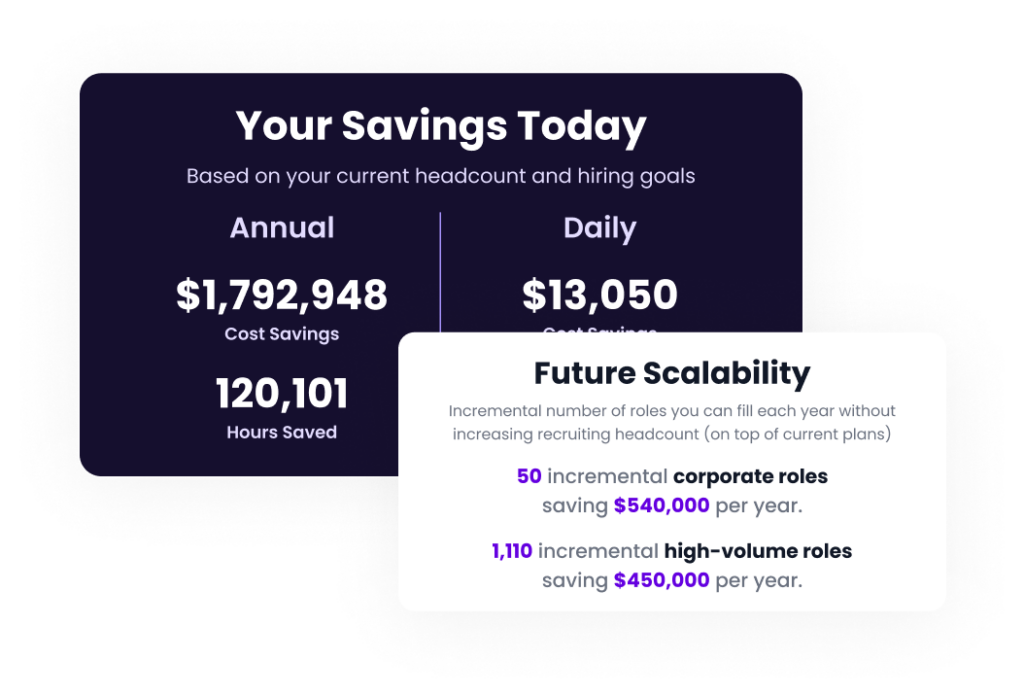
ROI is key. This is not a time to invest in software that won’t bring you immediate value. So let’s eliminate the guesswork with our free ROI calculator.
AI Recruiting: How TA Teams Do More with Less

We get it — recruiting teams are going through it. You’re strapped for time and adapting to working leaner with smaller teams and fewer resources. Simultaneously, companies increasingly want to hire unicorn candidates who can do what used to be the job of three different people. It’s a lot.

Luckily, in the same time period with all these shifts, AI recruiting tools arrived to help you adapt. But with all the noise about AI recruiting (and AI in general), it’s tough to know what actually matters. What will help you solve your challenges and what will turn into another big, expensive, time-consuming project?

I’ve got you covered. In this article, we’ll give you a clear-cut rundown on AI recruiting, its advantages and limitations, and how you can use it to help you reach your hiring goals and keep your sanity.

Unlock 2026’s top hiring strategies: Insights from 500+ TA leaders

Be the first to uncover deep hiring insights specific to your sector — straight from the highest-performing TA teams.

What is AI recruiting?

AI recruiting involves leveraging AI-powered tools to automate time-consuming recruiting tasks, extract meaningful insights from large datasets, and make data-driven decisions when managing and evaluating candidates.

In an economic climate that calls for greater productivity, AI recruiting gives your team a much-needed efficiency boost. While AI handles your repetitive and tedious duties like scheduling interviews, sending reminders, and drafting simple messages, you can spend more time on high-value strategic work.

In the video above, we asked Socotra’s Head of Talent Acquisition, Dubi Ben-Shoham, how he’s using AI in his recruiting process today.

Advantages of AI for recruiting teams

In today’s tough hiring environment, recruiting professionals need all the extra help they can get. According to our Hiring Insights Report, organizations hit just 51.5% of their hiring goals last year — a modest lift from the year prior, but still well off target.

Percentage of hiring goals attained from 2021 to 2024
Source: GoodTime’s 2025 Hiring Insights Report

But with the assistance of AI, talent teams can effectively course-correct themselves and reclaim their time, energy, and headspace.

Teams who leverage AI recruitment tools are seeing:

  • Enhanced efficiency: AI streamlines the recruitment process by automating tasks such as resume screening, interview scheduling, and candidate sourcing. This saves valuable time and allows recruiters to focus on engaging with candidates.
  • Reduced recruitment costs: By automating and optimizing your processes, AI helps you make the most of your current resources and reduces your reliance on additional staff. Plus, AI’s ability to accelerate the hiring process and cut down your time-to-hire saves you both time and money. 
  • Improved quality of hire: AI can analyze vast amounts of candidate data, including resumes, job applications, and online profiles, to identify the most suitable candidates for specific roles. Using AI in the candidate screening and selection process helps improve your quality of hire.
  • Less bias: Human bias in hiring can unintentionally influence decision-making and hinder DE&I efforts. AI recruiting helps mitigate bias by relying on objective data analysis and predefined criteria. This ensures a fair and consistent evaluation of all candidates.
  • More data-driven decisions: AI enables recruiters to make more informed decisions by extracting key insights from datasets. These insights can reveal patterns, trends, and correlations that might not be immediately apparent from a human perspective. Data-driven decision-making improves the accuracy and effectiveness of candidate evaluations.

Measurable results of implementing AI recruiting

The specific results you can expect depend on your company, your processes, and which AI tools you choose to adopt. But just to give you a taste of the impact recruiting teams are creating with AI, let’s focus on one of the recruiting tasks most ripe for automation: interview scheduling.

By using GoodTime Hire to automate interviews:

  • Zoom coordinated five times more interviews per quarter.
  • Pinterest reduced their average time-to-fill by 50%.
  • Box spent 40% less time scheduling interviews.
  • Deliveroo hired 700+ new employees.

Learn how interview scheduling software helps recruiting teams do more with less.

Misconceptions and challenges of AI in recruiting

Now that you understand the potential benefits of AI in recruiting, there are some challenges you should be aware of. But first, let’s clear up some common misconceptions. 

Misconceptions about AI

  • AI will replace recruiters: Recruiting is a sensitive, human-oriented endeavor, and there’s no removing the humans from that process. AI recruiting tools are designed to help human recruiters by automating and optimizing parts of the hiring process, so they can focus on things like strategic decision-making and candidate engagement. 
  • AI alienates candidates: When implemented thoughtfully, AI in recruiting actually enhances the candidate experience. AI delivers heightened personalization, efficiency, and speed that provides candidates with a smooth, streamlined process. Plus, with more bandwidth, recruiting teams can refocus on creating memorable candidate experiences.
  • AI possesses human-like intelligence: Despite advancements in AI, current AI systems lack true consciousness and human-like intelligence. AI is based on algorithms and data processing; while it can perform specific tasks exceptionally well, it does not possess emotions, subjective experiences, or a comprehensive understanding of the world as humans do.
  • AI is inherently biased and discriminatory: AI systems can be biased, but they can also play a crucial role in fighting bias and creating a more equitable hiring process. AI with algorithms that prioritize equal treatment empowers recruiters to make informed decisions based on objective criteria.

Challenges of AI

  • Ethical considerations: AI in recruiting raises several ethical concerns, especially around privacy, consent, and the potential misuse of personal data. Be sure to partner with technology providers committed to upholding ethical practices, ensuring the responsible use of AI algorithms, and safeguarding the privacy of personal data collected throughout the hiring process.
  • User acceptance and trust: There may be resistance from members of the hiring team and HR leaders to fully trust AI-driven processes. Educating yourself on the benefits of AI and proactively addressing concerns will make you better prepared to advocate for its use.
  • Securing buy-in from stakeholders: To gain buy-in from stakeholders, it’s essential to demonstrate the value and ROI of your desired tool. Be prepared to present compelling business cases that showcase how AI can enhance efficiency, accelerate time-to-hire, improve quality of hire, and lower recruitment costs. 

AI’s impact on the role of recruiters/RCs

AI recruiting is quickly picking up steam. A SHRM survey found that out of the HR departments that use AI, 79% of them leverage it for hiring. As we start to see AI’s impact on the role of recruiters and recruiting coordinators, we must emphasize that recruiters and RCs remain indispensable. 

Human talent acquisition professionals are irreplaceable when it comes to understanding candidate motivations, assessing cultural fit, and making critical hiring decisions. Think of AI as a valuable assistant — not a replacement. 

With AI as their ally, recruiters and RCs can navigate the challenging landscape, unlock new possibilities, and make a significant impact. Within all of this, there are several ways that AI impacts the duties of recruiting teams. 

Shifting priorities

If anything is certain, it’s that AI will shift the priorities of recruiters and RCs. With AI-powered tools automating everyday tasks, recruiters can redirect their focus to bigger projects. This may include engaging candidates in creative ways, optimizing their talent acquisition strategy, and making more data-driven decisions.

Data analysis and strategy

AI generates a wealth of data throughout the recruitment process. Recruiters and RCs will need to become proficient in analyzing and interpreting this data to gain insights into sourcing channels, candidate preferences, and the effectiveness of their strategies.

As a whole, AI-driven analytics platforms empower recruiters to leverage data for refining their approaches, optimizing hiring processes, and improving overall talent acquisition outcomes.

Human-AI collaboration

As AI takes on administrative and repetitive tasks, recruiters and RCs will find themselves collaborating more closely with AI-powered tools. Specifically, they’ll play a part in managing AI-driven processes to ensure accuracy, fairness, and compliance. 

TA professionals will also play a critical role in adding a human touch to AI-powered candidate experiences by designing personalized interactions with candidates, providing support, and addressing any concerns that may arise.

Continuous learning and skill development

To make sure they’re leveraging technology effectively, safely, and fairly, recruiters and RCs need to stay updated on the latest technologies and trends (more on that later). 

Understanding the capabilities and limitations of AI in recruitment empowers recruiters to make smart decisions and contribute to the success of their organizations.

Use cases for AI recruitment

AI’s diverse range of applications empower TA professionals to do their best work in the smartest way possible — even with reduced budget or headcount. From streamlining interview scheduling to optimizing candidate sourcing and screening, AI is here to make waves in recruitment. 

AI-powered interview scheduling

Few recruiting teams would claim interview scheduling as their favorite activity — and for good reason. Without the help of technology, manually scheduling interviews (and managing reminders, no-shows, and rescheduling) is a time-consuming, headache-inducing task. 

But when you combine AI with scheduling, calendar coordination becomes all the more fast and efficient. GoodTime Hire’s Scheduling AI allows TA teams to quickly coordinate the best possible interview time and set of interviewers — no matter the complexity.

With Hire, recruiters and RCs can automate scheduling to meet goals such as reducing time-to-hire, load-balancing interviewers, and increasing candidate and interviewer engagement.

A preview of GoodTime Hire's AI-powered interview scheduling interface.

AI-generated job descriptions, candidate communications, and more

If you want to attract the right candidates, you need a compelling and accurate job description. You’ve certainly heard of ChatGPT, the AI chatbot. It can assist recruiters in quickly generating job descriptions that are engaging, informative, and tailored to the right audience. 

Asking ChatGPT to write a customized job description allows recruiters to complete what was previously at least a one-hour task in a matter of seconds. Think of ChatGPT as your recruiting sidekick, freeing up your bandwidth by taking tedious work off your hands.

3 more ways to use ChatGPT for recruiting

The use cases for ChatGPT don’t just end at job description generation. Here are several other ways recruiting teams can benefit from the tool:

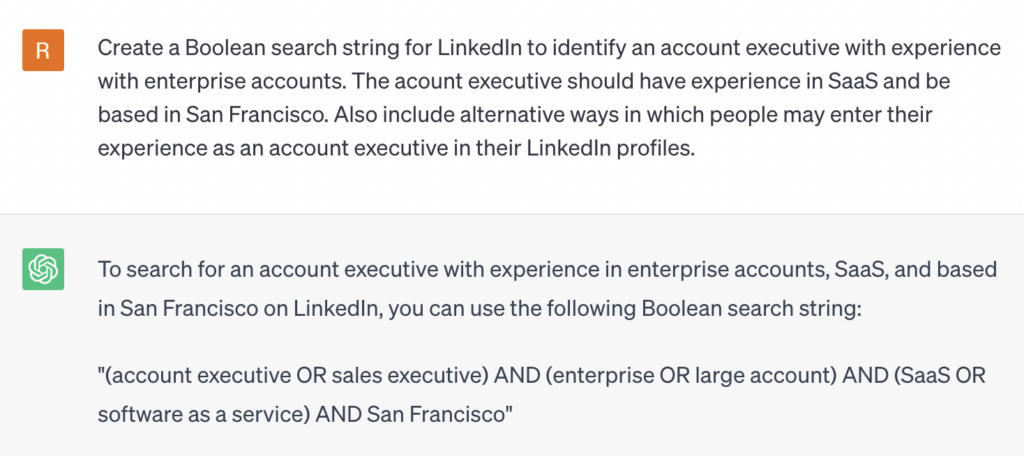
  • Candidate searching: Use ChatGPT to generate Boolean search strings (a search query with specific keywords and phrases that can help you find your ideal candidate)
  • Interview preparation: Ask ChatGPT to generate a list of interview questions based on job requirements, candidate profiles, and/or desired skills
  • Email communication: Instruct ChatGPT to draft a range of email templates that you can use in different scenarios when communicating with candidates
An example of how to use ChatGPT to help in AI recruitment.

AI-based candidate sourcing & outreach

Identifying and engaging the best talent from a vast pool of applicants can quickly become overwhelming. That’s where AI-based sourcing and outreach tools come in. 

Gem’s talent engagement platform helps to streamline the sourcing process and automate personalized outreach. The product’s AI-powered, auto-generated outreach sequences help recruiters create customized and compelling outbound messages. 

AI-enabled background check & screening

A sluggish, inefficient background check and screening process is a major roadblock in onboarding promising talent. AI solutions like Checkr are here to help speed up your team’s workflow.

Checkr uses AI to automate background checks, credential verification, and reference analysis, improving the accuracy and efficiency of screening. With Checkr, talent teams can quickly gather the reliable information that they need to confidently welcome new talent.

How to implement AI recruiting

Nearly 100% of organizations will be using AI by 2025, but successfully implementing AI for recruiting requires a thoughtful approach. After all, every organization is different, every candidate is different, and recruiting is sensitive, important work.

Use these essential steps to guide you through the implementation process:

1. Assess organizational needs and goals

Don’t just embrace AI for AI’s sake. Think about what you actually need to achieve. Before implementing AI in your recruitment process, assess your organization’s specific needs and goals. Identify pain points and areas where AI can make the most significant impact, such as:

  • Improving the efficiency of the hiring process
  • Maximizing team-wide productivity
  • Reducing time-to-hire/time-to-fill
  • Enhancing the candidate experience

 Aligning AI initiatives with your broader recruitment and business objectives will help ensure a focused and effective implementation.

2. Choose the right AI tools and platforms

The market offers such a wide range of AI recruiting tools that it can get overwhelming. When selecting the AI solution that’s right for you, focus on these factors:

  • Features and functionalities that align with your needs
  • Scalability for future growth 
  • Vendor reputation
  • Accessibility to customer support
  • Compatibility with your organization’s existing integrations

3. Consider data privacy and compliance

As AI in recruitment heavily relies on collecting and analyzing candidate data, it’s crucial to prioritize data privacy and comply with applicable regulations. You want a secure AI recruitment solution that you can trust. 

To make this a reality, ask your potential technology vendor about their information security program. This can encompass topics such as data encryption, data privacy, data security, data ownership, and physical security. And depending on your industry, you’ll want to ensure compliance with other regulations, such as HIPAA. 

4. Integrate AI with your existing recruiting processes

AI tools should work with your existing processes and platforms. It’s important to define clear workflows and roles for AI tools and recruiting teams, ensuring the most fruitful collaboration between the two. 

If you’re a talent/HR leader, provide training and support to your recruitment team to show how AI tools can enhance their effectiveness and enable them to leverage AI to its full potential.

The future of AI in recruiting

AI is rapidly evolving, and several upcoming trends will shape the future of recruiting as we know it. Understanding these trends helps you stay ahead and adapt to the ever-changing landscape. 

AI agents

AI agents for recruiting are intelligent, task-driven tools that automate and optimize key parts of the hiring process — from scheduling to candidate engagement — freeing up teams to focus on strategic, high-impact work.

By handling repetitive tasks and personalizing communication at scale, these agents improve efficiency, reduce time-to-hire, and create a better experience for both candidates and recruiters. As AI continues to advance, these agents will become even more adaptive, proactive, and essential to competitive hiring teams.

AI-driven personalization

Recruitment teams are increasingly recognizing the importance of personalization, with AI taking on a key role in delivering tailored, engaging candidate experiences. AI can analyze candidate preferences, behavior, and feedback to provide personalized job recommendations and career guidance.

By leveraging AI to understand the needs and aspirations of talent, organizations can create a more meaningful and personalized recruitment experience. Ultimately, this leads to higher candidate satisfaction and improved talent acquisition outcomes.

Advanced Natural Language Processing

Natural Language Processing (NLP) is a branch of AI that focuses on understanding and processing human language. Advancements in NLP enable AI tools to analyze text-based data more accurately. In the world of recruiting, this includes resumes, cover letters, and social media profiles. 

As NLP continues to evolve, recruiters can expect more sophisticated language processing capabilities, leading to enhanced candidate screening, sentiment analysis, and improved candidate matching.

Augmented reality and virtual reality 

Combining Augmented Reality (AR) and Virtual Reality (VR) can bridge the gap between a remote hiring process and an in-person job experience. For instance, AI-powered AR and VR experiences can provide immersive simulations of job environments, allowing candidates to experience a virtual workplace and perform tasks relevant to the position. 

These engaging, realistic experiences help candidates keenly understand the job requirements, showcase their skills in a true-to-life setting, and provide employers with a robust assessment of their capabilities. In turn, AR and VR assist in attracting top talent and facilitating better hiring decisions.

Upgrade your recruiting process with AI

In short — if you’re wondering what AI can do for your recruiting team, the better question is, “What can’t AI do?” 

With AI by your side, you can enhance team-wide efficiency, offload tedious tasks, maximize existing resources, and accelerate progress toward your goals. And when you’re ready to give your interview scheduling process a major AI-powered boost, check out GoodTime Hire.

Hire’s Scheduling AI helps you coordinate 78% faster, hire 50% more efficiently, and 5x team productivity. No simple scheduling tools here.


Discover how GoodTime Hire’s interview scheduling software can supercharge your recruiting process.

Experience AI-powered scheduling for your recruiting team

Lean team? Sky-high goals? No sweat. Secure top talent 50% faster with AI-powered scheduling automation that handles even the trickiest interviews.

The Post-Interview Debrief: 5 Questions to Ask

You already know that interviewer training doesn’t stop after the interviews begin, but are you putting enough focus on your interview debrief? Too many recruitment pros run debriefs that essentially consist of asking hiring managers how the interview went. Respectfully, that is not going to do much to help your process.

Interviewers and hiring managers need a little more hand-holding. They need pointed, guided, specific questions to help them determine how an interview went. They might have a gut feeling, but as we all know, hiring with your gut is often not the best way to secure long-lasting, high-performing hires.

To eliminate biases, remain objective, and make the best possible hiring choice, it’s key to standardize your entire hiring process, starting with an effective intake meeting and rounding out with a post-interview debrief.

There are tons of articles for candidates about how to nail the all-important interview, but there’s a surprising lack of information for interviewers about how to run a productive interview debrief with the hiring team. But we’ve got your back.

We’ve collected five key expert-vetted questions to help you run efficient and effective debriefs.

Unlock 2026’s top hiring strategies: Insights from 500+ TA leaders

Be the first to uncover deep hiring insights specific to your sector — straight from the highest-performing TA teams.

1. Did the candidate seem excited about working here?

While some individuals are just naturally reserved, it’s easy to tell if someone is excited at the prospect of working for your company if you know what to look for. Little things like sustaining eye contact, asking questions, and trying to start a conversation are all baseline metrics.

Other tell-tale signs are making references to research they did about your company. This should go beyond just knowing when you were founded or your CEO’s name and can include referencing events that involve the team, your company’s core values (and how they align with them), and more.

Above all, if you ask them why they want to work there, they should have an answer.

2. Should anyone else interview the candidate?

Besides the obvious individuals who they should speak to (their potential manager, team members, someone to interview for a core values-fit, HR phone screen, etc.), there might be an additional person that the HR Manager wants them to speak with before proceeding with an offer.

Bringing this up during the post-interview roundup helps you avoid a potential backlog when it comes to bringing an offer (or not) to a candidate. After all, we’re living in a job market where candidate relationships are key, and this means fostering a smooth and swift interview process.

3. Is the candidate able to cope with failure?

As you undoubtedly learned in training on conducting stellar interviews, the questions that you ask provide a window into a candidate’s future performance. Bouncing back from failure is an essential skill, yet only 27% of employees have high levels of resilience. Failure, and the candidate’s reaction to it, is a crucial topic to broach both during the interview and the debrief.

4. Do they align with the attributes we’re looking for?

Defining your focus is incredibly important when it comes to making sure your post-interview roundup runs quickly and smoothly. When as much as 80% of employee turnover is due to bad hiring decisions, thoughtfully considering your ideal candidate’s qualities can translate to better employee retention.

The first step is setting a candidate scorecard through your Applicant Tracking System. A candidate scorecard will give you and the other interviewers different categories and subcategories to focus on during the roundup, such as whether the candidate was collaborative, analytical, and receptive to feedback.

We recently spoke with Jenny Jongejan, a deeply experienced senior recruiting consultant and standardization fanatic about how standardization prevents mis-hires. She shared a four-step framework for standardizing your process that starts with aligning on key attributes. Getting everyone on the same page about these upfront is a great way to jumpstart your entire process and have an effective debrief conversation.

You can check out her full four-step framework in the short clip below.

5. Do we want to hire the candidate for the right reasons?

Join a community just for talent pros

GoodTime Talent Innovators is an online community for TA professionals to engage in discussions, network with one another, and discover exclusive events.

You never want to hire someone just because everyone’s feeling the strain left by the open position. With poor hiring decisions costing companies up to $240,000, the harm of hiring someone who’s a bad fit is astronomical and way more costly than the interview process as a whole.

Taking a step back and discussing with each other if you want to continue with the candidate because they’re a good fit or just because there’s a critical need will save your company upwards of millions of dollars in the long run.

You’ve aced the post-interview debrief. Now, let’s optimize the entire process.

We all want to excel at our jobs. But sometimes, you need a little extra firepower in your corner. That’s what GoodTime Hire is here for.

Hire elevates your team’s interviewing skills with interviewer training paths that broaden your pool of interviewers and reduce each person’s load. Remove bottlenecks, increase interviewer diversity, and take your interviewing process to the next level.

Discover how GoodTime Hire’s interview scheduling software creates empowered interviewers.

GoodTime Product Updates: What’s New From May 2023

Get excited: our team is always hard at work in making GoodTime the best it can be, and we’re here to share the latest product updates from May 2023. Expect some exciting GoodTime Hire automation features, enhancements to Flexible Scheduling, and new GoodTime Meet company admin controls. Buckle up, let’s review!

Watch the Full Product Updates Walkthrough

Want the entire scoop on our latest and greatest product updates? Check out May’s product update webinar below. Keep scrolling to read the biggest highlights.

GoodTime Hire Updates

We’ve amped up the logic behind GoodTime’s algorithm, introduced additional features to help large enterprises hire with greater efficiency, and more.

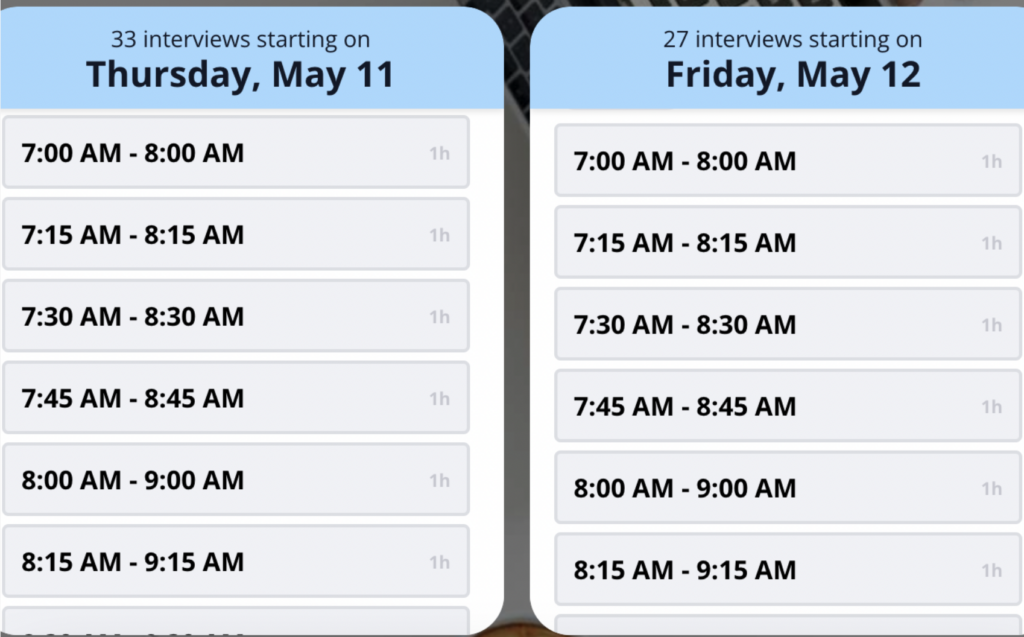
More Time Slots

The processing power and logic of GoodTime’s algorithm got a major boost. Now, GoodTime’s Flexible Scheduling produces more time slot options than ever before. That means more flexibility, faster interview scheduling, and reduced time-to-hire.

GoodTime Hire's new time slots feature

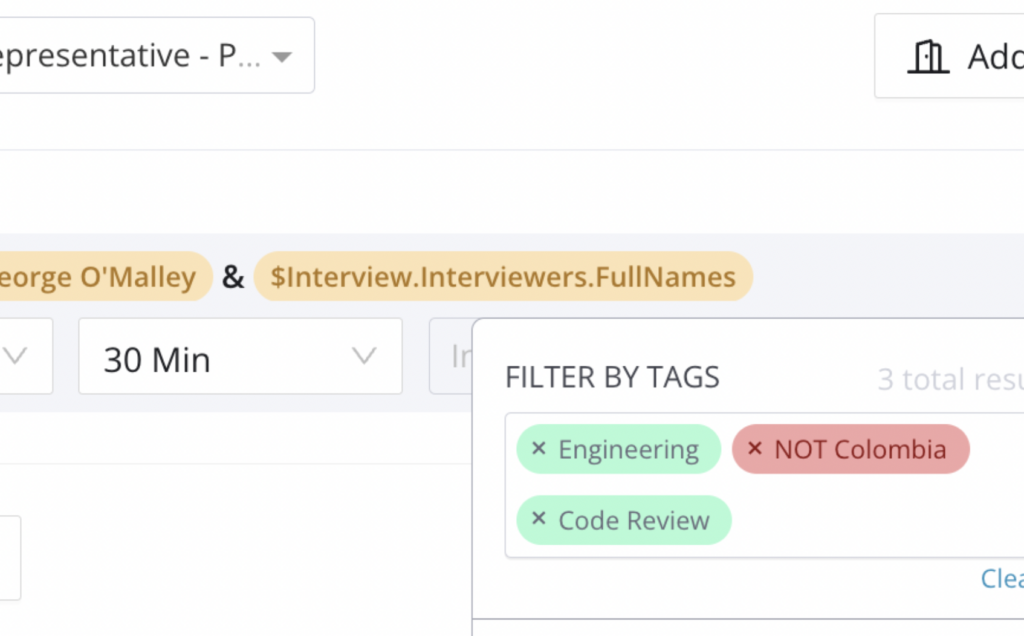
Optimization for Large Tags

We’ve now revamped the way tags operate. Interviewers who are low on interviews and closer in time zone get prioritized until enough times are found. Candidates now get time slots that are most suitable for their time zone and all interviewers get a chance to contribute. 

GoodTime Hire's optimization for large tags feature

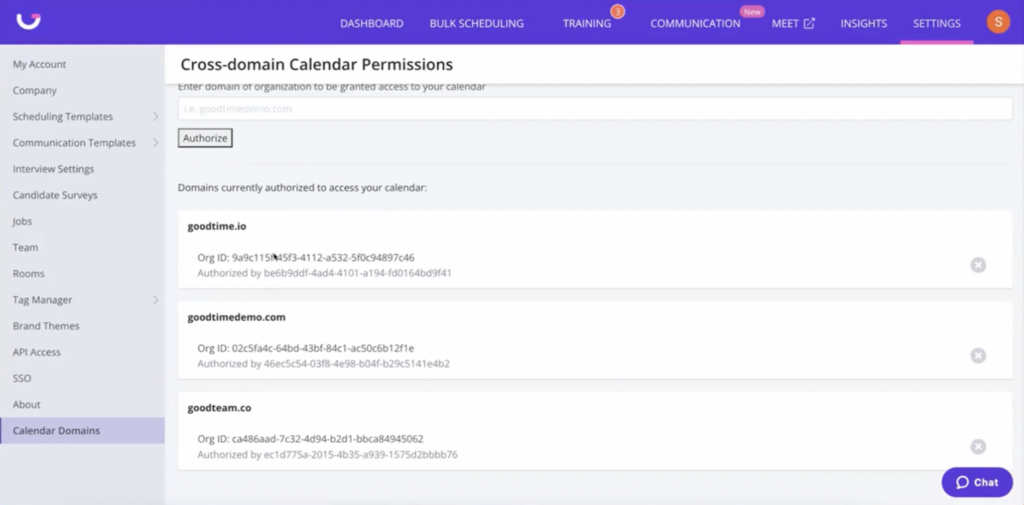
Multiple Calendar Tenants Support

Large enterprises often have a number of subsidiaries or business units that are on separate domains and calendar services. Talent teams can now serve multiple subsidiaries within the corporation, as GoodTime supports calendar visibility across various calendar tenants.

GoodTime Hire's multiple calendar tenants support feature

Other Notable Updates

  • Auto Load Time Slots: Days and times now automatically open as the candidate uses their Request Availability link
  • Time Zone Mandatory for Onsite Interviews: When you make an interview or template “onsite” it is now mandatory to set a time zone. This prevents the suggestion of inappropriate times.
  • More Accurate Assignment of Candidate Time Zone: GoodTime now reassesses the time zone of each candidate every time they open the Request Availability link. This keeps details more up-to-date than ever for accurate scheduling.

GoodTime Hire for High Volume Updates

We’ve introduced a new automation feature, implemented additional support for emailing in bulk, and more.

Workflow Automation

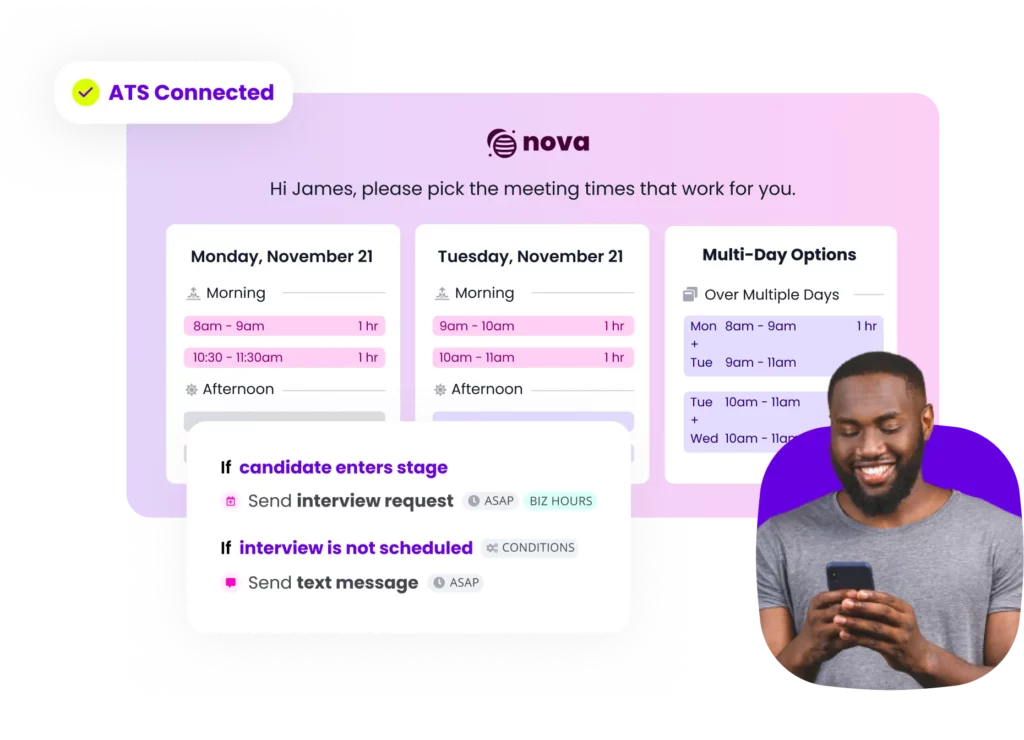
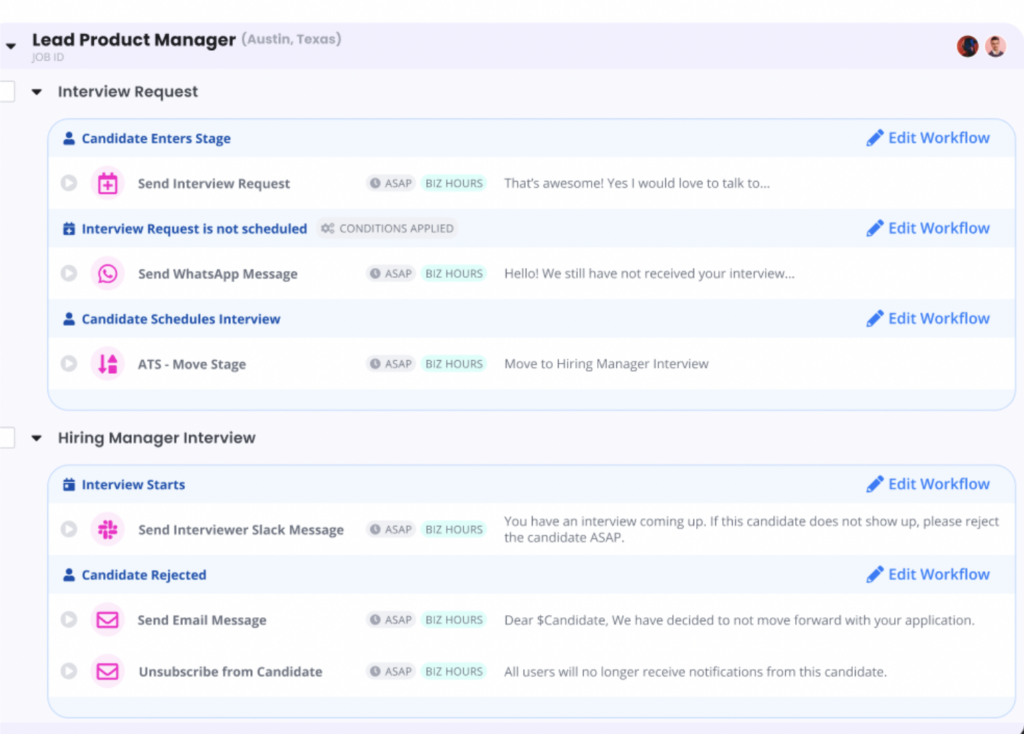
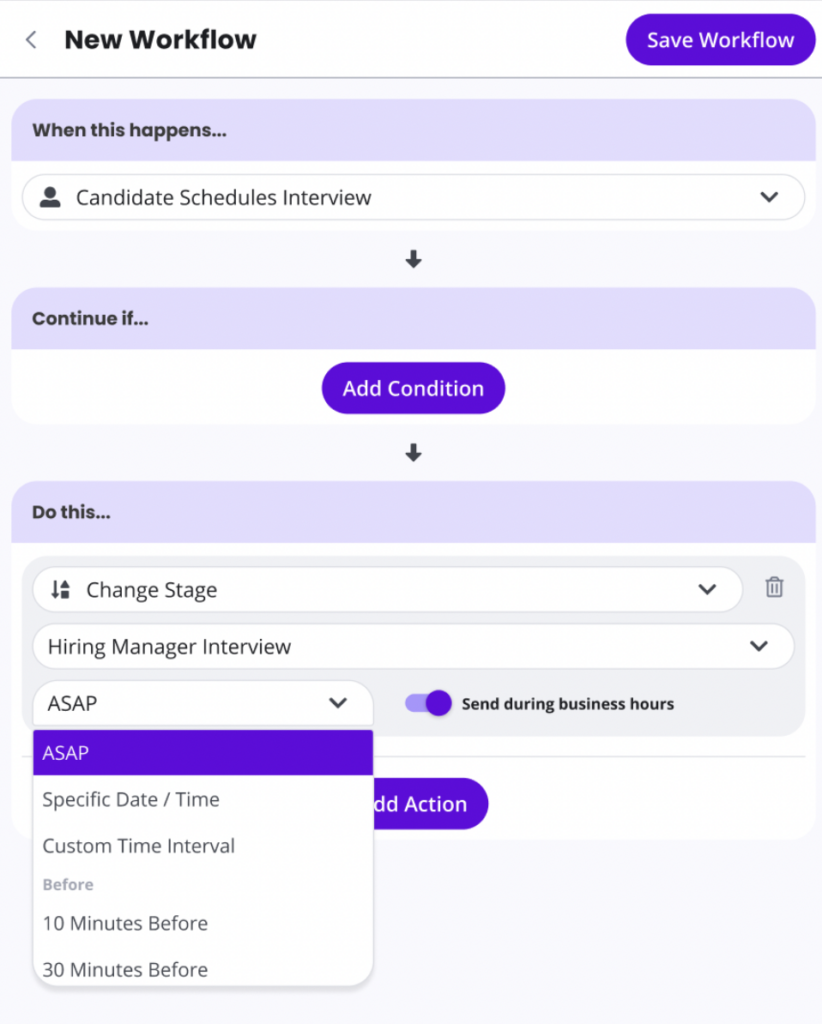
Automate as little or as much of your recruiting process with Hire for High Volume’s newest feature, Workflow Automation. You can automate tasks such as sending an interview request as soon as a candidate enters a stage.

GoodTime Hire for High Volume's workflow automation feature

Trigger Actions in Business Hours

Workflow Automation also allows you to trigger actions to only occur during business hours. For instance, set communication with your candidates to only occur during Monday-Friday, 9 a.m.-5 p.m.

Another one of GoodTime Hire for High Volume's workflow automation features

Bulk Email Support and Chrome Extension

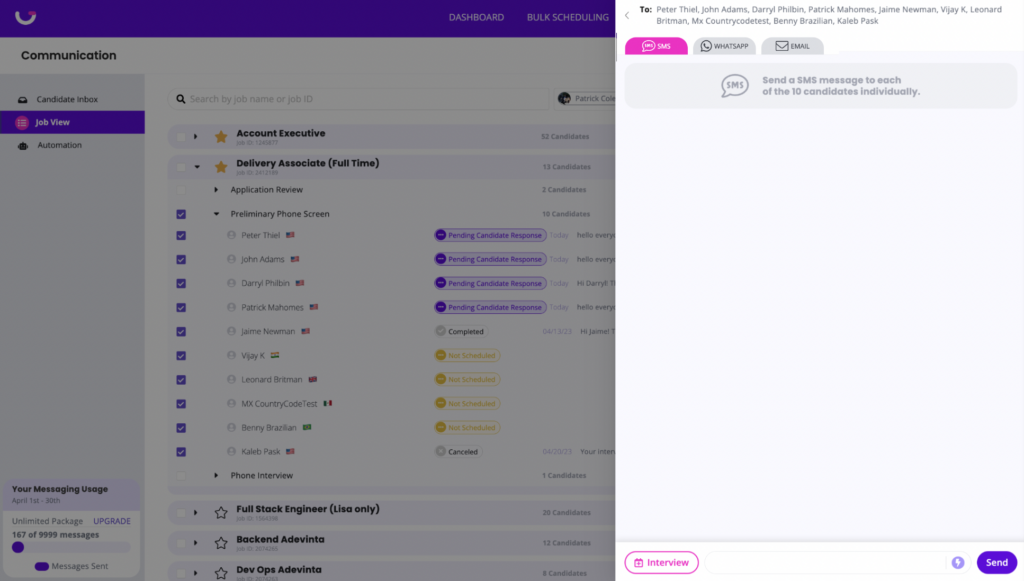
Quickly send 1:1 emails to candidates via the Chrome extension or dozens of emails to dozens of candidates at once through our new Bulk Email feature.

GoodTime Hire for High Volume's bulk email support feature

Other Notable Updates

  • Updating Phone Numbers Before Workflow Automation: We’ll ensure candidates receive your messages by updating their phone numbers
  • Multiple Reminders Delivered: Candidates receive reminders 24 hours before an interview and one hour before an interview
  • Display Icons for No Phone Number/Invalid Phone Number: See in the Job View page when a candidate has no phone number versus an invalid phone number

GoodTime Meet Updates

Company admins, feast your eyes on some new updates just for you. Plus: enjoy a new interface for taking a quick peek at your calendar. 

Company Agenda Templates

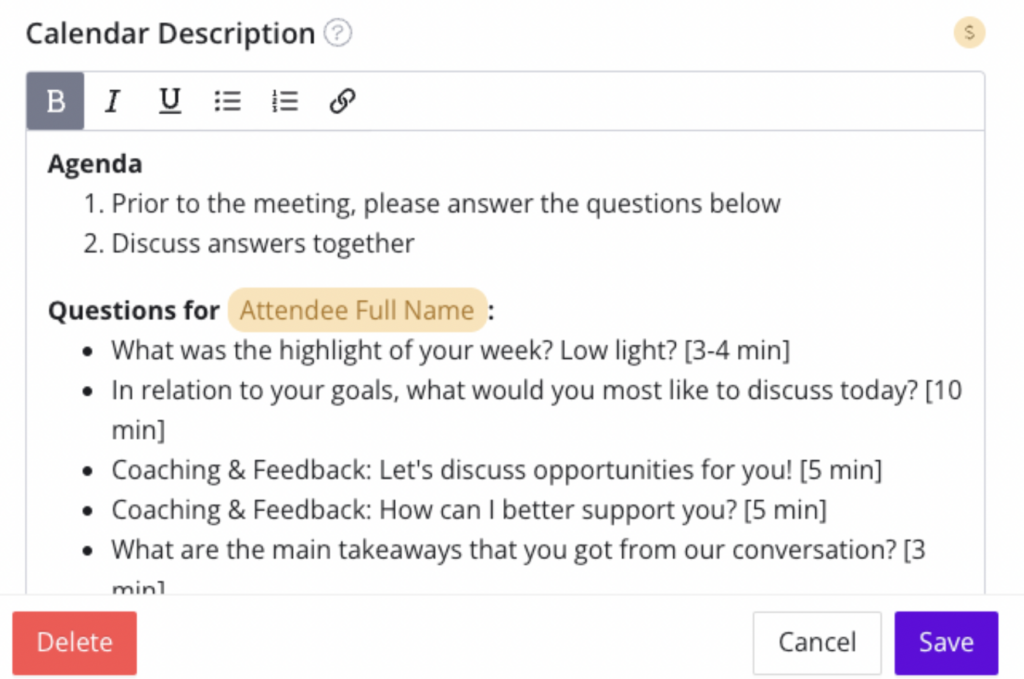
Company admins can create agenda templates to share with the entire company. Maintain consistency and save your team’s time.

GoodTime Meet's company agenda templates feature

Company Branding

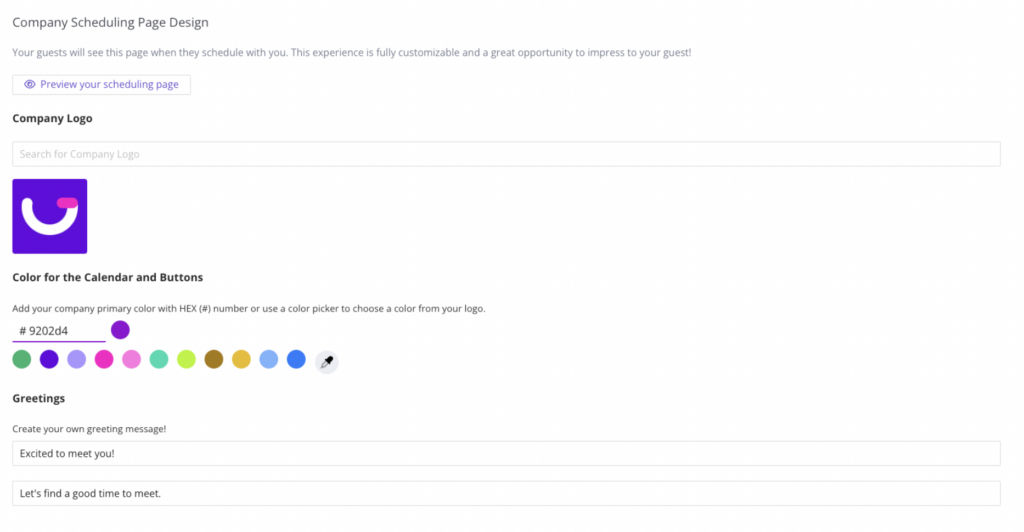
Company admins can set branding default images and colors used by the entire company. Ensure all employees use the same branding when sharing Meet scheduling links.

GoodTime Meet's company branding feature

Calendar Quick View

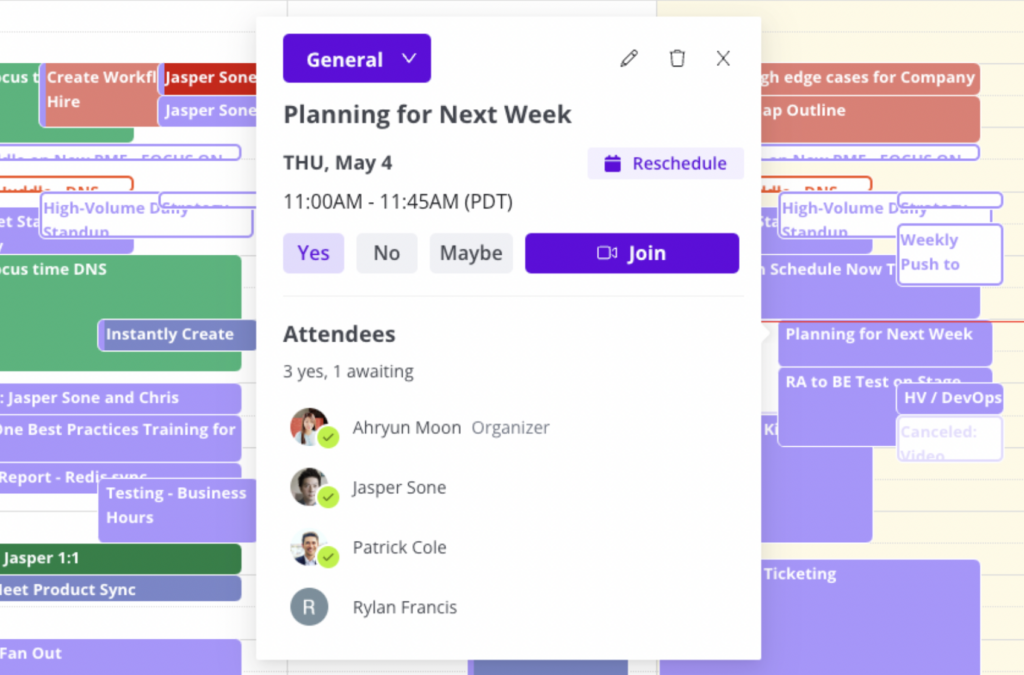
View the most important details on your calendar events in a fresh new interface. Join meetings in a single click, quickly update RSVPs, reschedule meetings, and get back into action without wasting time.

GoodTime Meet's calendar quick view feature

Other Notable Updates

  • Meet Calendar Performance Updates: We’ve made several performance updates to decrease loading times for calendar pages
  • Meet Calendar Event Edit Updates: Add more capabilities to the calendar event edit page such as adding rooms, rescheduling, marking events as public/private, changing the calendar written to, and much more.

Not Part of the GoodTime Family Yet?

It’s time to change that. With GoodTime, you can get better outcomes from your company’s most important meetings. For interviews, GoodTime Hire helps you schedule 40% faster, hire 50% more efficiently, and 5x team productivity. (Seriously.) For every other meeting, GoodTime Meet provides beautifully-branded scheduling links to schedule internal and external meetings faster than ever.

Learn more about how Hire can transform your interview scheduling.

Learn more about how Hire for High Volume can revolutionize your high-volume hiring.

Learn more about how Meet can revamp your meeting scheduling.

Work Smarter, Not Harder: The Benefits of HR Automation

​​Blog written by Lever – Lever, an Employ Inc. brand, is a leading Talent Acquisition Suite that makes it easy for talent teams to reach their hiring goals and to connect companies with top talent.

Less paperwork, stress, and headaches, plus more free time to spend on tasks that really matter: that’s the high-level benefit of leveraging human resources (HR) automation.

Zoom in a bit further, though, and you’ll see that HR automation software not only leads to fewer manual HR processes (including those owned by the talent acquisition arm of your HR function) but also an opportunity to address and optimize other key workforce tasks.

The Burden of Manual Processes

Human resources management encompasses a number of important initiatives: from executing the entire employee onboarding process, to aiding people managers with employee training, to helping the C-suite enhance the employee experience.

On the recruiting and hiring side of the HR department, HR automation tools play a pivotal role in talent acquisition success. Notably, these solutions eliminate time-consuming, manual labor—like scheduling interviews with candidates—to help teams save major time and money.

Consider the non-automated process of connecting with both job seekers and hiring team members who will take part on a given interview panel and speak with a prospect:

  • The talent specialist who is running the recruitment process must work their you-know-what off just to identify and engage candidates of interest. A not-so-small task—and one that, as you well know, takes a lot of time and effort.
  • After finally identifying a small group of top-tier talent who seem like optimal fits for an available position and screening them, it’s time to advance them to the interview process. And that means coordinating a lot of schedules.
  • Once interviewers are selected (ideally, by using software that helps you load-balance interview panel participation), you need access to find available slots on all panelists’ calendars and send out the official invite to the candidate

This may not seem like an arduous task on its face.

However, if anyone knows how frustrating it can often be to find that magical 30- or 60-minute time slot during which everyone on your interview panel is free (and the pain of having an unorganized interview scheduling process, in general), it’s recruiters.

That’s where HR automation can help (and alleviate stress for talent teams).

Does interview scheduling automation make sense for my team?

ROI is key. This is not a time to invest in software that won’t bring you immediate value. So let’s eliminate the guesswork with our free ROI calculator.

The Outsized Impact of HR Automation

Leveraging an HR process automation solution that has built-in interview-scheduling functionality to help facilitate the planning of all interviews in a given recruitment cycle means:

  • Members on the recruiting side of your HR staff don’t have to poke and prod interviewers every time they need access to their schedules to set up calls with candidates
  • You can realize quicker recruiting cycles by arranging chats with your active opportunities and, after interviewing each, advance the right candidate to the offer stage
  • More satisfied hiring managers, given you’re able to drive down time-to-hire/fill for their roles
  • The ability to shift gears and focus on other equally essential recruiting-related duties

“The more day-to-day responsibilities talent leaders and specialists automate, the more time they can allocate to other daily activities and long-term objectives,” Lever Sr. Product Marketing Manager Roy Reif shared in their guide on the power of recruitment automation for candidate engagement.

See how the TA team at HelloFresh used the time they saved with HR automation to up-level their candidate experience:

Specific Use Cases for HR Automation in Hiring

Interview scheduling is a highly specific example of HR automation in action.

While it’s important for every talent acquisition specialist on your HR team to utilize automation in the interview process, there are benefits to utilizing recruiting automation technology for other hiring-centric activities.

Archiving and Advancing Job Applicants

Talent teams with LeverTRM, Lever’s native ATS + CRM solution, utilize the platform’s many distinct recruiting automation capabilities to tackle several different tasks—and lessen the need to conduct those tasks manually.

One such task? Automatically “archiving” (i.e., tagging poor-fit prospects with specific designations and marking them as cold opportunities) and advancing applicants, based on defined knockout questions and related criteria (e.g., must have X years of experience and Y certification).

Personalizing Messaging to Job Prospects

Recruiting organizations with LeverTRM can deliver bespoke nurture emails to passive candidates in their pipeline and feature beautifully branded interview scheduling links created via GoodTime within those emails to boost their lead-to-screen conversion rates.

As Lever’s eBook on the (many) pros of talent nurturing explains, “You need a carefully constructed, workflow-based, automated email-nurturing strategy … to stay top of mind with individuals of interest in your talent pool and, ultimately, convert high-quality candidates.”

Setting Up Custom Recruitment Workflows

Custom-tailored interview workflows (e.g., auto-assign panelists in your bullpen of interviewers to calls with candidates) are highly beneficial for your hiring team. But, HR automation workflows can also help with the later stages of a given interview process.

For instance, LeverTRM users set up custom approval chains that automatically alert relevant hiring stakeholders that an action is needed on their part to either approve a new requisition, job posting, or prospective offer to a lead.

Similarly, interview panelists can automatically get “nudged” with notifications and reminders within LeverTRM and/or connected communications tools like Slack to provide timely candidate feedback and scores. (And prevent prospects from exiting the recruiting cycle because it was taking too long).

Delivering Candidate Experience Surveys

The interview process has ended. You’ve either hired or rejected candidates you’ve spoken with during that time. Now, you need to send surveys to each prospect you engaged for an open role to get their thoughts on the recruitment process and meet with your interview panel.

Using LeverTRM, you could auto-deliver CX surveys to all candidates in the days following the end of the recruiting cycle to have them rate your interviewing efforts and offer general feedback in an open-text field — info and insights that can help you improve your candidate experience efforts.

Evaluating the HR Automation Tech Landscape

The sheer number of activities your average recruiter conducts daily is substantial.

That’s why it’s so important for talent specialists to use technologies to streamline much of their day-to-day work, reduce the occurrence of human error, and make speedy but smart hires.

Human resources practitioners at your org who are more focused on your existing workforce and not prospective employees leverage automation for various HR management use cases (e.g., auto-sending exit interview questionnaires to employees during the offboarding process).

Your talent team would be wise to do the same. Use filters, rules, and triggers in your automation tech of choice to streamline daily tasks, make work much simpler (and more enjoyable), and provide an increasingly better candidate experience.

Watch the on-demand webinar featuring experts from Lever and GoodTime to learn how today’s talent acquisition teams improve their quality of hire with leading recruitment tech.

15 Text Recruiting Templates for High-Volume Hiring

High-volume recruiters, get your texting fingers ready. When you need to fill roles fast and efficiently, text recruiting is the way to go. (It’s the digital age—every candidate’s on their phone.) But you know what’s even better? Using text recruiting templates.

Why settle for crafting individual messages when you can templatize every single one, from the initial outreach to the offer letter? To save both time and effort, here are our 15 crucial text recruiting templates.

If you’re interested in even more ways to elevate your hiring, check out our collection of key high-volume recruiting strategies.

Essential Text Recruiting Templates

Want to reach out to an employee referral and avoid the awkwardness? Or maybe you want to reject a candidate while keeping the good vibes going? We’ve got a template for that.

1. Initial Outreach

Introduce yourself to the candidate and gauge their interest in working for your company.

Hi [Candidate’s Name]! This is [Your Name] from [Company Name]. I came across your profile and was impressed by your qualifications. We have a job opening that aligns perfectly with your skills. Would you be interested in discussing this further?

2. Job Opportunity 

Highlight a specific job opportunity and ask to schedule a call.

Hi [Candidate’s Name]! [Your Name] here from [Company Name]. We have a [Job Title] role that matches your expertise. The position involves [brief description]. If you’d like to learn more, let’s schedule a quick call.

3. Employee Referral Outreach

Reach out to a candidate that you’ve sourced via an employee referral. 

Hi [Candidate’s Name]! [Employee’s Name] spoke highly of you and recommended you for a [Job Title] role at [Company Name]. Can we set up a time to chat and discuss the details? 

4. Networking Event Outreach

Connect with potential candidates you met through networking events.

Hi [Candidate’s Name], this is [Your Name]. It was great to meet you at [Networking Event]. I was impressed by our conversation and thought you might be a great fit for a position at [Company Name]. Let’s schedule a call if you’d like to learn more.

5. Application Reminder

Remind the candidate about their partially completed application and encourage them to continue.

Hi [Candidate’s Name], [Your Name] here from [Company Name]. We noticed you started an application for [Job Title]. We’d love to learn more about you and see if you’re a good fit for the role. Please reach out with any questions; we’re here to help!

6. Application Received

Confirm receipt of the candidate’s application.

Hi [Candidate’s Name]! Just a quick message to let you know we received your application for the [Job Title] position at [Company Name]. We appreciate your interest and will be in touch soon if there’s a match. Thanks!

7. Application Status Update

Inform the candidate about the status of their application.

Hi [Candidate’s Name]! I wanted to update you on the status of your application. At this time, we are still in the process of reviewing applications and will be in touch soon with further updates. We appreciate your patience and interest in joining [Company Name].

8. Scheduling the Phone Screening

Schedule an initial phone screening after reviewing a candidate’s application.

Hi [Candidate’s Name]! Thanks for your interest in the [Job Title] position at [Company Name]. I’d love to connect with you for a quick phone screening. Please book a time that works best for you: [Scheduling Link]

9. Scheduling the Next Interview 

After the phone screening, extend an invitation for an interview with the team. 

Hi [Candidate’s Name], we’d love to move you to the next round of interviews with the team. Please book a time that works best for you: [Scheduling Link]

10. Interview Confirmation 

Confirm a candidate’s upcoming interview and offer the option to reschedule if needed.

Hi [Candidate’s Name], we’re looking forward to continuing the conversation with you! Your interview with [Interviewer Name] is scheduled for [Date] at [Time]. Please reach out if you have any questions. You can use this link if you need to reschedule: [Scheduling Link] 

11. Interview Reminder

Remind a candidate of the details for their next interview.

Hi [Candidate’s Name], friendly reminder that your interview with [Interviewer Name] for the [Job Title] role is coming up. We’re excited to speak with you on [Date] at [Time]. Please let us know if you have any questions. You can reschedule if needed here: [Scheduling Link]

12. Job Offer 

Extend a job offer to the candidate and provide details for further discussion.

Hi [Candidate’s Name], great news! We were impressed by your skills and would like to extend a job offer. I’ve attached the details, including the offer letter. Looking forward to hearing your decision!

13. Follow-Up After Job Offer

Check-in with the candidate who hasn’t accepted or rejected your job offer yet. 

Hi [Candidate’s Name]! I wanted to touch base and see if you have any additional questions or if there’s anything else we can provide to help you make your decision. We look forward to hearing from you!

14. Onboarding

Provide essential information and instructions to candidates who have accepted the job offer.

Hi [Candidate’s Name], congratulations once again on accepting our job offer! We’re thrilled to have you join our team. To kickstart the onboarding process, I’ve attached a detailed outline of what to expect. We’re excited to welcome you!

15. Rejection Notice

Inform the candidate that they were not selected to move forward.

Hi [Candidate’s Name], thank you for your interest in [Company Name]. After careful consideration, we have decided to not move forward with your application. We appreciate your time and wish you the best in your job search. Keep an eye on our future opportunities!

Amp Up Your High-Volume Recruiting

Text recruiting and high-volume recruiting go together like peanut butter and jelly. But text recruiting templates is the secret ingredient you’re direly missing.

With these 15 versatile templates, you can save time and engage with mass amounts of candidates more efficiently. And if you want to take your high-volume recruiting game to the next level, we have just the tool for you.

GoodTime gives talent teams advanced automated interview scheduling for high-volume roles through SMS, WhatsApp, and email messaging. Reach out to candidates quickly, schedule interviews effortlessly, and let automation take care of the rest.

See how we can revolutionize your high-volume recruiting.

Human-centric AI to crush your high-volume hiring goals

Engage candidates immediately via SMS and WhatsApp, harness instant bulk scheduling, and automate hiring workflows.

The True Cost of Switching Recruitment Technology Providers

Thinking about replacing your recruitment technology? While a new tool might seem enticing during a sales call, you shouldn’t rush into any decisions. Before moving forward, consider this crucial element: the cost of switching.

We don’t just mean financial costs—we mean all of the switching costs. To help you make an informed decision and avoid potential setbacks, let’s delve into the various factors that contribute to the total cost of changing your recruitment technology. 

(Spoiler alert: You might end up spending much, much more than you bargained for.)

But First: A Note on the Capabilities of Your Tech Stack

Before we explore the cost of switching recruitment technology, we must emphasize how vital it is to evaluate technology with a focus on capabilities and efficiency. 

Some talent leaders seek to spend more on a new tool with additional features that would increase their team’s productivity. On the flip side, other leaders seek to lower expenses through cheaper technology alternatives.

Unfortunately, the latter often results in leaders evaluating a tool that’s lower priced yet comes with fewer features and efficiency improvements. (The rumors are true: you get what you pay for.)

Buying a lower-priced solution with fewer functionalities puts you in a lose-lose situation. When you account for all of the additional switching costs, you’re still spending a significant amount—yet now your technology has fewer capabilities than before. 

What’s more, by having your already stretched-thin team implement new software that is ultimately less efficient, you impede their efforts to hit their goals and risk employee burnout.

In short: don’t fall for the trap of lower upfront software fees. Reflect on the features, impact on efficiency, and hidden costs of switching to ensure you make a smart business decision.

Now, about those switching costs. What are they?

What Are Switching Costs?

The cost of switching refers to all the expenses and efforts involved in transitioning from one product or service to another. Switching costs are divided into two main types: hard costs and soft costs. 

Hard costs encompass the direct financial expenses incurred during the switch, such as licensing fees, onboarding and implementation costs, and training expenses. 

Soft costs include intangible investments such as time, effort, and the short and long-term impacts on productivity. You won’t find soft costs on a software invoice; they’re expenses that people typically don’t consider, yet they seriously add up. 

8 Factors That Impact the Cost of Switching

1. Pricing

Pricing is the most apparent cost when switching recruiting tools. It involves the cost of procuring the new technology, which typically includes an annual or periodic fee. 

Keep in mind that pricing can be deceiving. Initial discounts on new technology are often short-lived before the price is ramped back up. If the software you switched to has fewer capabilities, then you’re locked into a contract with a higher price tag for an inferior tool.

Beyond the cost of your potential new software, evaluate if it would deliver additional business value and revenue through improved capabilities and features. Would any cost savings be eroded by decreases in efficiency due to the loss of critical features?

Before making any decisions, it’s crucial to examine if the switch would yield a significant return on investment (ROI) and provide long-term benefits.

2. Efficiency Gains and Losses

One of the most significant costs of switching HR tech solutions is the loss of key features that your current technology provides. For instance, your existing tool may offer a user-friendly interface, automation, customization options, analytics, and other crucial recruiting features.

If the replacement technology lacks these capabilities—as is often the case when jumping to a lower-priced tool—it may decrease efficiencies, increase day-to-day operational costs, and cost you more than any perceived savings upfront.

Ultimately, when you factor in the significant savings gained through increased efficiencies, a tool with higher upfront costs and more features may actually be the most cost-effective option.

Compare the feature set of your existing technology to what the new technology has and doesn’t have. Are you willing to leave behind the capabilities of your current technology? How would this impact your recruitment goals, both long-term and short-term?

3. Time, Cost, and Effort of Implementation

While you might feel tempted to switch to a lower-priced solution, it’s crucial to remember the substantial time, effort, and money involved in the implementation process. 

Making the switch means not only grappling with the challenges of adopting new technology but also bidding farewell to all the hard work and resources invested in implementing your current system.

When implementing new technology, you must undergo data migration, integration setup, and training—not to mention paying for implementation fees. This is time-consuming, sometimes requiring a dedicated team to ensure a smooth transition. 

4. Workflow Disruptions

Switching technology providers can lead to operational hiccups that impact productivity and revenue generation during the transition period. Employees may need to adapt to new workflows and processes, resulting in a temporary decrease in output and quality of work. 

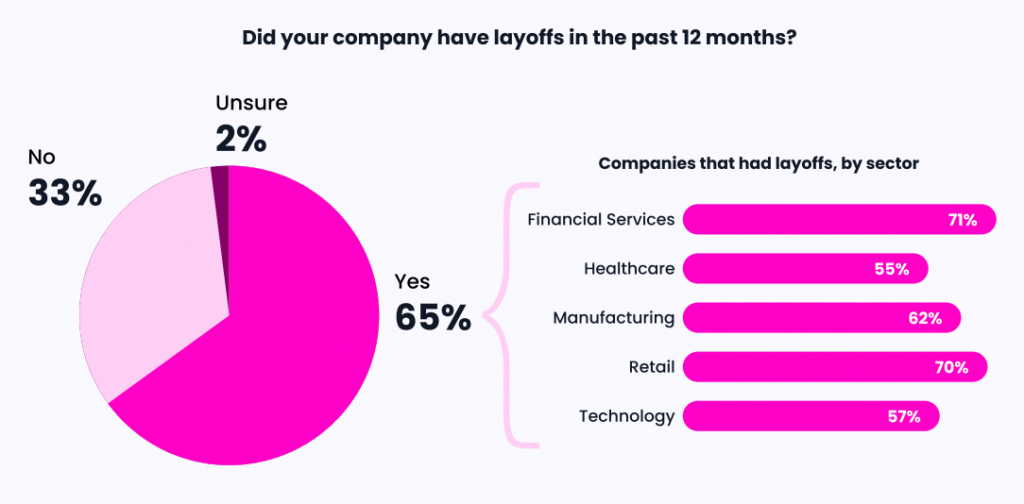
If your talent team is already overburdened, familiarizing themselves with a new tool becomes even more daunting. This is a reality for the majority of teams; according to the 2023 Hiring Insights Report, waves of layoffs impacted 65% of companies last year.

A chart using layoffs data from the 2023 Hiring Insights Report.

Amid these headcount and resource reductions, grappling with change management—without losing sight of hiring objectives—isn’t easy. This ultimately elevates the likelihood and impact of workflow disruptions. 

5. Learning Curve

Familiarizing yourself with a new interface and product features is a tedious process that impacts efficiency. Learning how to use a new product effectively requires dedicated time for training, which places additional demands on talent professionals.

You’ll need to divide your attention between learning the new technology and fulfilling your regular responsibilities on the hiring team. This can slow down productivity, lengthen time-to-value, and affect your ability to meet deadlines and deliver optimal results. 

Depending on the type of technology you acquire, external teams along with key end users, such as hiring managers, might also have to undergo training to use the tool. This could require you to create and disseminate comprehensive learning and development resources. Assess whether you have the time and capacity for the education that the transition phase requires.

6. Data Migration

Migrating data from your current recruitment technology to a new provider is complex and challenging. In some cases, data migration may not be permitted, or possible, or could be fraught with issues such as data integrity concerns or the loss of valuable historical data. 

Investigate the feasibility and implications of data migration before making the switch. Consider what data you would need to transfer, the level of effort, and the impact on ongoing operations. If you risk losing historical data, what is the value of this data to your team and the wider organization?

7. Loss of Integrations

Many recruitment technologies offer integrations with other tools and platforms, enhancing their functionality and efficiency. When switching providers, you risk losing these integrations, which can disrupt workflows and increase costs through manual, time-consuming activities. 

Examining the availability and compatibility of integrations with the new technology is essential to determine the impact on your recruiting process. Evaluate whether or not a potential new provider supports your essential integrations.

8. Future Proofing

Consider not only your talent team’s immediate needs but also their future requirements in an ever-changing economic landscape. It’s crucial to choose a technology that supports your team’s growth and adaptability in the long run.

The capabilities of your new tech should offer scalability for the future so that you can keep pace with the changing landscape while maintaining an efficient operation. If the replacement technology can’t scale as you grow, you risk incurring additional costs down the road due to efficiency bottlenecks that require more headcount, or other new tools, to overcome. 

Overall, a provider that prioritizes innovation, regular product updates, and feature expansions ensures the most long-term value in a shifting job market. 

Don’t Get Stuck With Buyer’s Remorse

The cost of transitioning to a new recruitment technology extends beyond the initial financial investment. Carefully assess all possible switching costs before making a decision.

And while pricing is important, remember: the capabilities of your tech stack are paramount. Strive for a comprehensive solution that elevates the productivity of your team and the effectiveness of your operations, now and well into the future. 

Speaking of advanced recruiting technology: ever heard of GoodTime Hire?

Our fully automated interview scheduling software helps you coordinate faster, hire twice as quickly, and boost team productivity. No simple scheduling tools here.

Discover how GoodTime Hire can help you revolutionize your interview scheduling.

Does interview scheduling automation make sense for my team?

ROI is key. This is not a time to invest in software that won’t bring you immediate value. So let’s eliminate the guesswork with our free ROI calculator.
Remote Candidate Experience: 3 Simple Things You Can Do Today

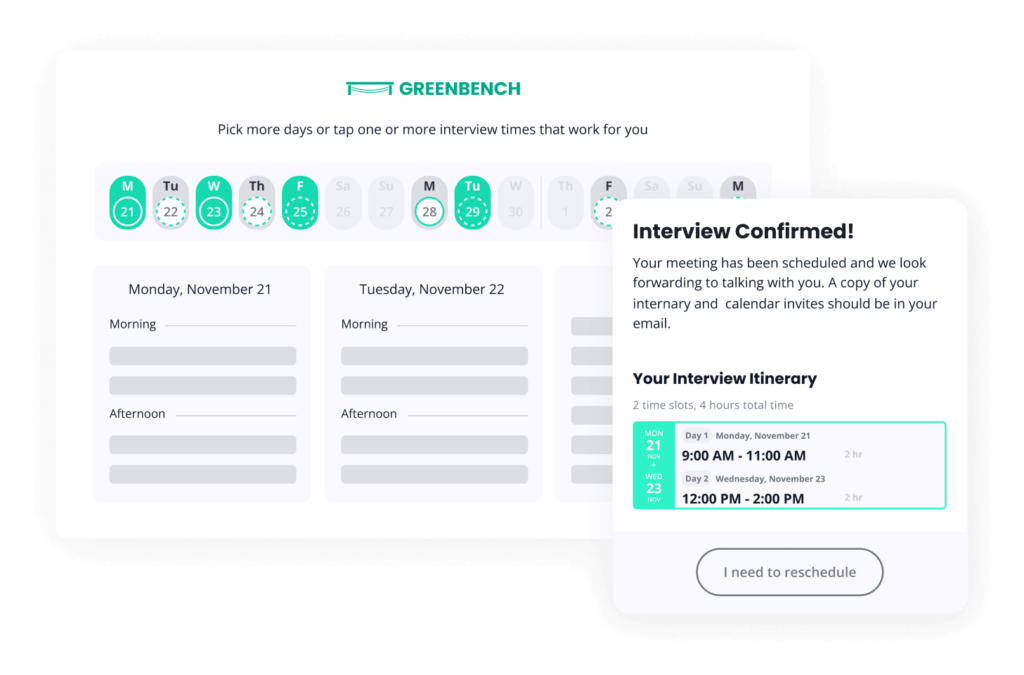
Remote work is here to stay. That means competition for top talent just took a hard left turn. Now more than ever, hiring leaders are stepping up their game to create a best-in-class remote candidate experience.

Over the past year, economic and social challenges drove many of us to reconsider how we spend our time, revisit our values, and hit the reset button on our lives. Our 2023 Hiring Insights Report found that 25% of hiring leaders found remote and hybrid work to be a major challenge this year.

Many high-performing job candidates who wouldn’t have previously considered remote work as an option now welcome the opportunity to work from anywhere.

That means if candidate experience mattered before…it really matters now. These candidates understand that the way they’re treated as a remote candidate is the way they’ll be treated as a remote employee. Do they have access to the information they need? Are their time and talents valued? Do they feel connected to the company’s people, its mission?

If you lead a remote team, here’s a quick guide to stepping up your game and creating a best-in-class remote candidate experience.

1. Make it easy for candidates to show off

Many of us became remote office pros over the past year. Creating lighting that flatters, troubleshooting our own technology woes, finding that elusive mute button, we’re doing it all. But that’s not the case for everyone. When interviewing candidates virtually, don’t assume they’re already remote work experts. 

Instead, when you’re hiring remotely, go overboard with clarifying the ins and outs of the virtual interview process. Make it easy for candidates to self-schedule their interview at a time they’ll feel their best. Give tips on background, lighting, and audio settings that will set candidates up for success. Take it from Blinkist, a nonfiction book summary service, who’s leading the way in remote candidate experience. 

Before interviews, a Blinkist recruiter sends each candidate an overview of what to expect, along with tips for a successful interview, information on the company’s mission and values, and names of the people they’ll meet throughout the process. As a result, candidates go into interviews confident, prepared, and ready to make their best impression.

Even better, the intention and thought they put into the process enables Blinkist to make a positive lasting impression on all candidates — even those who don’t get the job.

Expert take: The importance of the first call

We spoke with Socotra’s Head of Talent Acquisition, Dubi Ben-Shoham, about the role of candidate experience during a downturn. He shared that even in a so-called “employer’s market”, it’s important to prioritize candidates, and that starts with creating a great impression on your first call.

He shared with us, “Don’t underestimate the importance of having senior recruiters do phone screens. Connecting with a candidate on the first call is such a difference-maker when it comes to the candidate experience of the process. I have a lot of fun with that call. That is why we hit every single one of our hiring goals. Interviewing is stressful. If you can, get rid of the stress right off the bat.”

You can watch the highlights of our conversation with Dubi below.

Learn more about recruiting in a downturn or potential recession.

2. Can’t bring a remote candidate to the office? Take the office to them

Many candidates are most eager to learn about your company culture by touring company headquarters. When bringing everyone to the office isn’t an option, take the office to them.

Share company social media accounts with candidates so they can get to know you, send a video of colleagues introducing themselves, or put together a live employee panel event for post-interview Q&A.

Or, learn from Jet.com and their use of virtual reality to create a “show, don’t tell” experience for candidates. This online retailer’s immersive welcome experience enables candidates to get a full view of the company’s culture, people, and workspace—all through video. From observing a meeting with the CEO, to participating in a company-wide happy hour, this remote candidate experience leaves nothing lacking.

3. Be upfront about your commitment to DE&I

Representation matters before, during, and after the interview process. We built GoodTime to keep tech companies from losing top female tech talent when those women didn’t see females on interview panels. 

Demonstrate that your team is committed to Diversity, Equity, and Inclusion in your hiring process. Build diverse interview panels that prove your commitment to different points of view. Follow Intel, who diversified their interview panels and saw the number of female and people of color new hires jump from 32% to 45% in two years.

The bottom line? It’s beyond time to prioritize remote candidate experience.

Whether your candidate experience is in-person or online, one of the best ways to stand out is to respect your candidate’s time.

GoodTime makes it easy to deliver seamless interview scheduling, automation, and relationship building, helping you attract and impress today’s top-notch talent. 

Learn more about how GoodTime can supercharge your talent acquisition process today.

Automated interview scheduling at warp speed

Lean team? Sky-high goals? No sweat. Secure top talent 50% faster with smart scheduling automation that handles even the trickiest interviews.

A New World: How Manufacturing Recruiters Must Evolve Their Processes

Let’s cut to the chase: manufacturing isn’t known for being on the cutting edge. The sector is typically slower to adapt to changes in the world of hiring. And these days, hiring seems to evolve at the speed of light—leaving most manufacturing recruiters in the dust. 

Recruiters must contend with new work structures, hiring policy standards, and expectations from candidates. AKA: your hiring team’s current way of doing things probably isn’t up to snuff. But don’t stress yet; we’re here to show you the way forward.

After surveying 531 talent acquisition leaders across sectors for our 2023 Hiring Insights Report, we’ve released the report’s manufacturing edition. Based on responses from 106 talent leaders in manufacturing, the report shows how they’re winning talent in the modern world (and much, much more hiring insights).

What challenges will define manufacturing? How will hiring change? And most importantly: how can manufacturing recruiters evolve their processes to overcome whatever is thrown their way? 

We’ve rounded up all of those crucial insights. Read on.

The Difficult Future for Manufacturing Recruiters

Another year, another set of obstacles. According to our survey, respondents expect to get hit by new challenges and shifts in the landscape this year.

If manufacturing recruiters want to overcome these forces, they’ll have to reassess their current processes. But first, what can teams expect in the evolving world of hiring?

Manufacturing’s Biggest Challenges

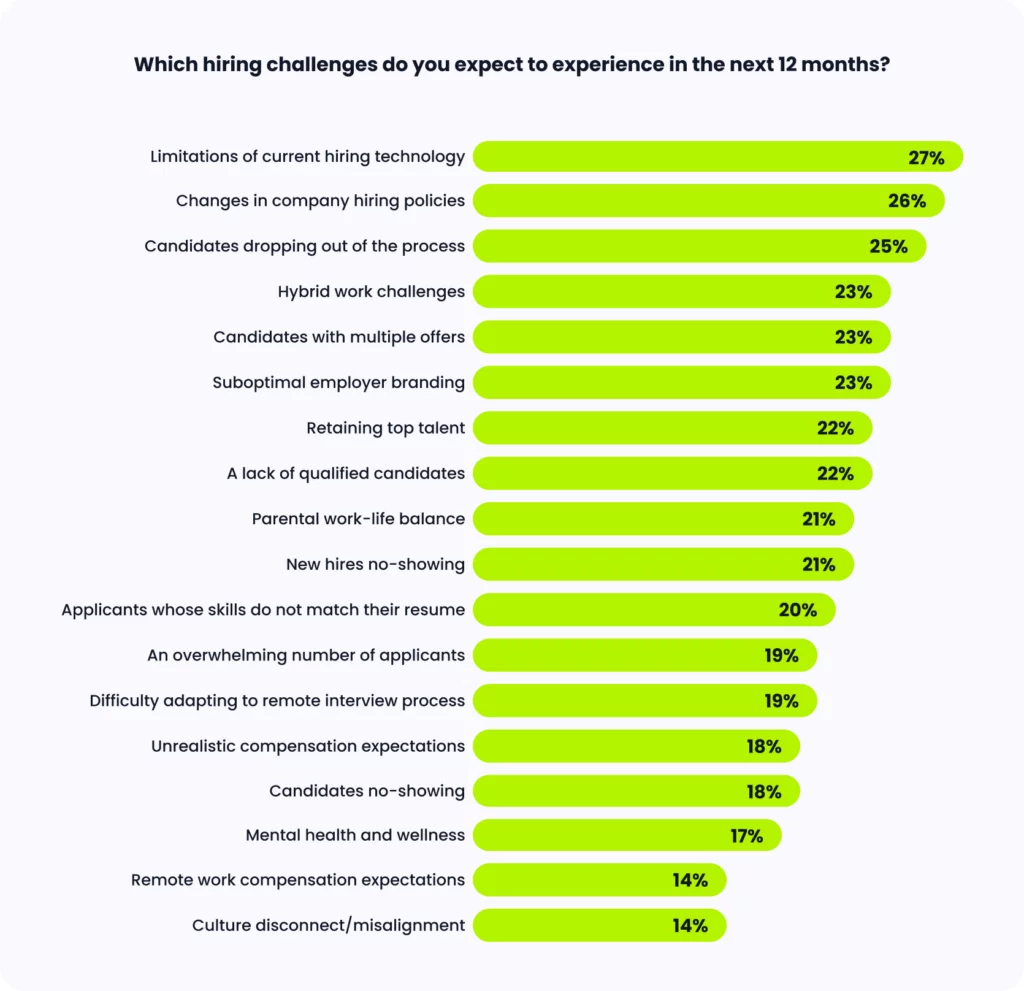
Limitations of Hiring Technology

Talent leaders in the manufacturing sector anticipate a major challenge in the coming year:
“limitations of current hiring technology” (27%). This ranked as their top concern. 

Talent teams within manufacturing and beyond have faced considerable turnover and budget cuts. In the aftermath, teams recognize that without the assistance of an airtight tech stack, they will struggle to meet their goals.

Slow, outdated technology acts as a massive roadblock for a high-volume hiring sector like manufacturing, where speed is the name of the game. But with purpose-built manufacturing recruiting software that enables efficiency and productivity, teams can keep candidates engaged and win them over in record time.

Bar chart showing what challenges manufacturing talent teams expect in the future.

Changes in Company Hiring Policies

In today’s shifting hiring landscape, manufacturing companies need to stay agile and adjust their hiring policies accordingly. Talent leaders are well aware of this; they ranked “changes in company hiring policies” as their second biggest upcoming challenge (26%). 

It’s only natural for hiring policies to evolve in response to a transforming landscape, especially in a sector that has already undergone significant changes. Manufacturing no longer resembles what it was years ago. Traditionally viewed as an “in-person sector,” companies are slowly but surely embracing remote and hybrid work models.

This newfound flexibility in work structures gives manufacturers a competitive edge in attracting candidates and aligning with the values of emerging talent in the market. Yet to effectively support remote and hybrid work, hiring and HR teams must establish the right policies.

Does interview scheduling automation make sense for my team?

ROI is key. This is not a time to invest in software that won’t bring you immediate value. So let’s eliminate the guesswork with our free ROI calculator.
Manufacturing’s Biggest Shifts

Competitive or Uncompetitive Landscape? It’s Up for Debate

When it comes to upcoming changes in the hiring landscape, talent leaders have mixed opinions that really highlight the divide. 

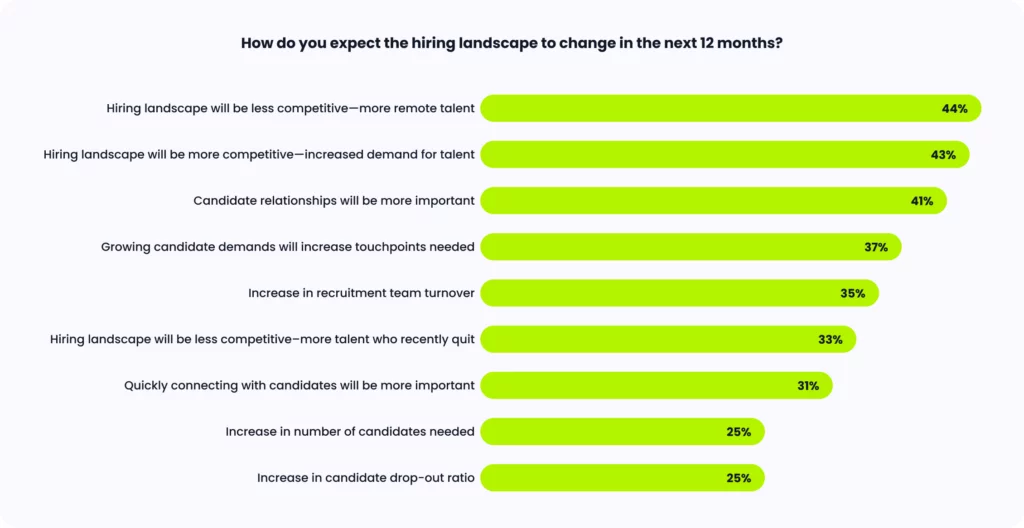
On one hand, 44% believe that the landscape will become less competitive because of the increase in available remote talent. On the other hand, 43% believe that the landscape will actually become more competitive due to the rising demand for talent as a whole amdist a manufacturing labor shortage

With new challenges looming, the future feels quite uncertain to today’s teams.

Bar chart showing how hiring teams expect the landscape to change.

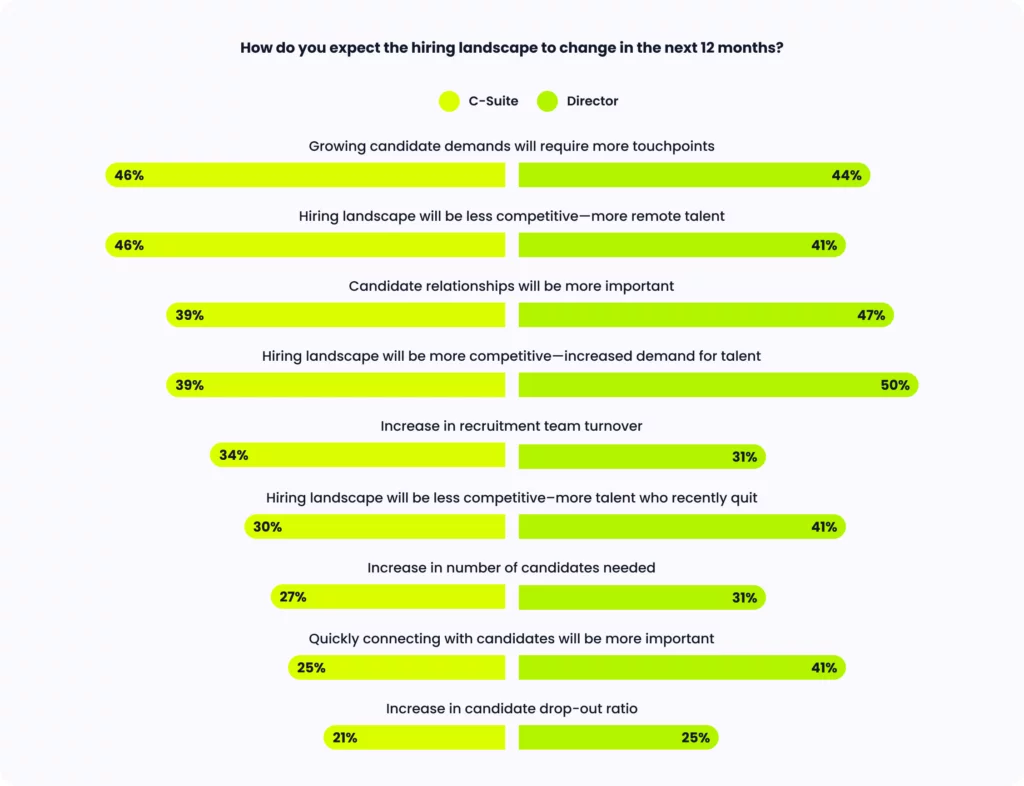
Directors and the C-Suite Say…

When we look at the data broken down by seniority level, we see an intriguing split. Let’s analyze.

Most directors believe that the landscape will become more competitive because of the growing demand for talent (50%). However, most C-suite executives think that the landscape will become less competitive as remote talent becomes more available (46%).

It’s worth noting that directors have good reason to anticipate increased demand for talent. They understand the ongoing impact of the current skills shortage and the increase in job vacancies resulting from retirements and the sector’s rapid expansion.

C-suite executives are banking on the surge in remote talent to alleviate competition. But here’s the question: Are they ready to embrace remote work within their own organizations? Manufacturing is still new to the concept of flexible work; the C-suite might be more optimistic than directors about their progress in establishing remote structures.

Bar chart showing how directors and the C-suite expect the landscape to change.

How Manufacturing Recruiters Must Respond

We now have a feeling for what’s ahead in the hiring world. So, what’s a recruiter to do? To help inform your strategies moving forward, here’s how talent teams from our report plan on conquering recruitment.

Emphasize Time-to-Hire and Candidate Relationships

Topping the list at 36% each, talent leaders believe that reducing time-to-hire and fostering candidate relationships are the key areas that they must prioritize in the coming months. By improving these aspects, teams can establish a well-rounded hiring process.

Candidates want a process that moves swiftly, signaling that they are a priority and their time is valued. But speed alone isn’t everything. Candidates also crave the opportunity to establish a genuine connection with the hiring team and get a glimpse into the company’s work culture and its people.

Bar chart showing what TA leaders plan on improving in the future.

Don’t Forget About the Tech Stack

To create this comprehensive candidate experience, teams have another priority in mind: upgrading their tech solutions, which comes in at 31%. Utilizing advanced tech tools would actually help teams improve all of the top five areas they plan to focus on.

An upgraded hiring tech stack streamlines the hiring process for candidates and boosts the efficiency of hiring teams. As a result, teams can dedicate more time to building meaningful connections with potential hires. 

And the big payoff? Ultimately, this effectively addresses talent leaders’ biggest anticipated challenge: the limitations of their current hiring technology.

Manufacturing Recruiters: Want More Insights?

2022 brought a shaky economy, sweeping reductions in force, and a challenging hiring landscape. The pressure is on to attract qualified candidates, deliver an efficient hiring process, and leverage hiring tools that drive success. Are you ready to succeed in 2023? 
To dive deeper into these insights and much, much more, get the manufacturing report today.

5 Reasons Why High-Volume Hiring Teams Miss Their Goals

Ah, high-volume hiring; your inbox is overflowing with resumes, your calendar is jam-packed with interviews, and your stress levels are off the charts. Or, maybe you’re on the opposite end of the spectrum and can’t seem to find enough applicants to fill your endless vacancies. 

Hitting hiring goals amid all of this chaos can quickly become a real challenge—especially with limited time and resources. But luckily, we’re here to help make sense of it all. 

Here are five common reasons why high-volume hiring teams miss their goals, along with key solutions to help you improve your recruitment process.

Reason 1: Slow, Inefficient Communication With Candidates

Let’s face it—maintaining consistent communication is hard. And when you’re trying to coordinate interviews with countless candidates, things can quickly spiral out of control. 

Gaps in communication and slow response times are bad, bad news for a high-volume hiring process. This can cause delays in scheduling interviews, lower response rates from candidates, and missed opportunities with stellar talent.

Pro-Tip: Leverage Email/SMS Templates and Automation

Templatizing your communication—whether that’s through email or text message—and utilizing a healthy dose of automation is the recipe for success. This way, candidates stay informed and engaged throughout the process.

Communication templates eliminate the manual work involved in drafting up a whole new message for every candidate in your pipeline. Even better, tech tools that enable automation reduce the time and effort required to send messages and coordinate with applicants, all while ensuring consistent communication.

Human-centric AI to crush your high-volume hiring goals

Engage candidates immediately via SMS and WhatsApp, harness instant bulk scheduling, and automate hiring workflows.

Reason 2: Limited Time and Resources

Time is of the essence and helpful resources are essential when you’re a high-volume recruiter. Yet of course, these are the two elements that today’s teams lack the most. 

The current hectic economic landscape has dealt a heavy blow to many recruiting teams, slashing budgets in half and reducing headcount in one fell swoop. High-volume hiring was hard before, and it’s even harder now.  Teams must manage multiple candidates and coordinate a variety of interviews with less bandwidth and support to do so. 

Pro-Tip: Streamline the Screening and Scheduling Process

To improve your efficiency and make the most of your resources, consider using technology to fast-track some of the most tedious, manual parts of the hiring process. For many recruiters, this means the resume screening and interview scheduling process.

That’s where your applicant tracking system (ATS) comes in. And if you don’t already have one, it’s time to change things. Here are our ATS recommendations. An ATS helps recruiters quickly filter through large volumes of resumes and identify the most qualified candidates.

But an ATS can’t do it all on its own. An advanced interview scheduling software automates the entire process of getting interviews on the books, from gathering a candidate’s availability to finding the best available interviewers. That way, recruiters have more bandwidth for the most high-value tasks.

Reason 3: Lack of Organizational Planning

High-volume hiring is oftentimes chaotic. And when you’re dealing with hundreds of candidates, it can feel hard to stay organized and on top of everything. But without a solid plan in place, you’re already setting yourself up for failure.

That’s why effective organizational planning is absolutely essential for successful high-volume hiring. Without a well-defined hiring process in place, recruiters may struggle to manage their time effectively, communicate with stakeholders, and make informed hiring decisions. 

Pro-Tip: Align and Define the Stages of the Hiring Process

If you want to amp up your organizational planning, consider creating detailed hiring plans that outline each stage of the hiring process and the specific roles and responsibilities of each stakeholder. 

For example, a hiring plan might include a timeline of each hiring stage, from candidate sourcing to final offer acceptance, as well as the specific actions and tasks required for each stage. By having a clear plan in place, recruiters can manage their time and resources more efficiently, communicate more effectively with stakeholders, and make better hiring decisions. 

Reason 4: Candidates Dropping Out

When you’re managing such a large talent pool, many—or most—applicants that you come across just aren’t going to be the right fit. Yet even if you get a dazzling resume, there’s so many opportunities throughout the hiring process for qualified talent to become disengaged and drop out altogether. 

Having candidates occasionally drop out is expected when you’re a high-volume recruiter. The quick, simple application process sometimes means candidates aren’t as invested in moving forward. However, failing to address the faults in your process makes it that much harder to win qualified talent.

Pro-Tip: Simplify the Hiring Process

We could go on and on about the variety of ways that recruiters can prevent candidates from dropping out. In fact, implementing all of our previously mentioned pro-tips amounts to a better candidate experience and a higher likelihood of securing the best candidates.

However, there’s one tip that we haven’t mentioned yet, and it’s an important one: simplify the hiring process. High-volume recruiting isn’t the place for an overly-complicated process. You want to get talent in the door fast, and candidates want to get to work ASAP. 

Simplifying the hiring process can take many shapes. For instance, recruiting via SMS or WhatsApp allows candidates to quickly go through the hiring process via the device that they have on them at all times: their phone. 

Reason 5: Not Enough Leads in the Funnel

When it comes to high-volume hiring, having a strong recruitment funnel with a pipeline of potential candidates is essential to success. But for some high-volume recruiting teams, generating a consistent flow of leads is a major challenge. 

Without a steady stream of qualified candidates, recruiting efforts can quickly become stalled, and positions may remain unfilled for longer periods of time.

Pro-Tip: Improve Employer Branding

Investing in your employer brand proves that sometimes it’s worth it to play the long game. When candidates have a positive perception of your employer brand, they’re more likely to apply for open positions and recommend your company to their networks. 

So, how do you build up your employer brand? To start, conduct a brand audit to assess your company’s current reputation and identify areas for improvement. This could involve gathering feedback from current and past employees, analyzing online reviews and ratings, and researching how your company is perceived in the job market.

Once you have a better understanding of your company’s brand perception, you can start taking steps to improve it. This could involve investing in employee engagement initiatives, such as offering professional development opportunities or creating a more flexible work environment. 

Transform Your High-Volume Hiring Today

Leveraging advanced hiring technology gives talent teams the best chance to hit their hiring goals and fill high-volume roles faster and more efficiently than ever before.

GoodTime Hire is the high-volume recruiting software that provides talent teams with advanced automated interview scheduling for high-volume roles through SMS, WhatsApp, and email messaging. Quickly reach out to candidates, schedule interviews effortlessly, and let automation take care of the rest.